

Comics have been a storytelling medium for a long time, even dating back to Roman history, although today we often associate it with the mass media publication of superheroes. Since the introduction of Superman and other icons, comics have largely centered on superheroes and their fictional endeavors.
For a long time, comics were sold on newsstands (not in dedicated shops) and their audience was largely made up of younger readers. It wasn’t long before a lot of people had opinions about what comics should and shouldn’t be allowed to do, because of those audience assumptions. That partially led to the original comics code. While the artform has also garnered a more sophisticated following, people haven never stopped having strong opinions about (and objections to) the content of comic books.
In fact, many of the most vocal critics of comics are the readers themselves. Readers feel like they’ve grown up with their favorite superheroes, and it can be devastating when those characters are put into situations where they fail to live up to decades’ worth of backstory. A lot of disturbing things have happened in the history of DC Comics, but only so many have caused enough of an uproar to be labeled a controversy. We ranked the 10 most gnarly DC comics events, exploring the issues surrounding them.
10. The Saga of Swamp Thing #29 (1984)
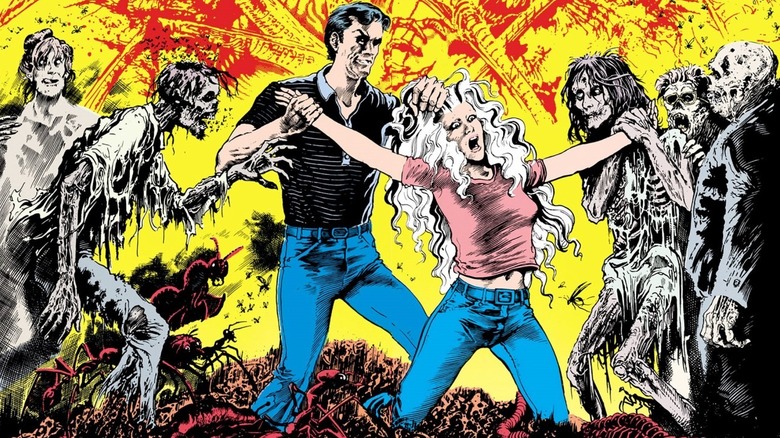
Alan Moore’s 1984 run of DC’s “The Saga of Swamp Thing” was popular with adult comic readers. It offered a dark history about a complex character, and Moore’s writing was as excellent for “Swamp Thing” as it would be for his most famous work, “Watchmen,” published a few years later. Unfortunately for DC, Moore’s “Swamp Thing” was so ghastly that it attracted the attention of the Comic Code Authority (CCA), who refused to grant a seal of approval for “The Saga of Swamp Thing” #29. Until that point, the Authority had only leafed through the title, unaware of Moore’s grim style.
Issue #29 includes a full-page spread showing people imperiled by rotting corpses, and it caught the eye of the folks on the CCA. Upon further investigation, the group also found that the book contained overtones of incest and promptly withheld their seal.
It became the first issue of a DC comic to run without that all-ages seal of approval, and even though the next one— issue #30— got that seal back, DC ultimately decided to run the series without CCA approval. Moore never meant for the story to be read by children (the audience the CCA was created to protect), and even though this was an explosive, controversial moment for the comics industry, the book has long since been considered a classic.
9. Green Lantern Volume 3, #54 (1994)
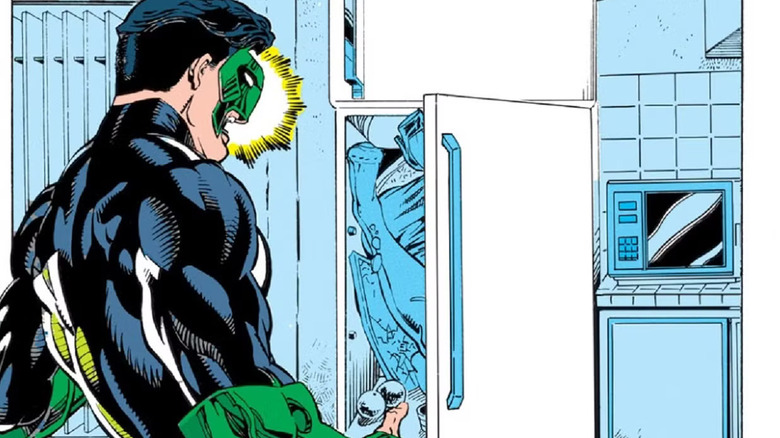
In 1999, Gail Simone founded WomenInRefrigerators.com. The site houses a list of all of the female comic characters she had realized were assaulted, brutalized, or otherwise harmed in service to a more complex narrative designed for a central male character. The title of the website comes from a specific comic, “Green Lantern” #54, in which an Earth-based Lantern named Kyle Rayner arrives home to find that his longterm girlfriend, Alex DeWitt, had been murdered. After Alex was slain, her body was shoved in a fridge, and that’s how Kyle discovered her.
Today, many people use the term ‘fridging’ without realizing that it originates with this issue. Simone’s definition of what it means still stands, too. While the writer first came up with the term for the exhausting, often male-writer-dominated world of comics, it’s a phrase that has since transcended the medium and been applied to film, television, and literature. Issue #54 was, in a way, par for the course at the time. It provided a visceral, destructive example of the way comics treat (and dispose of) female bodies, and therefore has maintained a lasting legacy of what controversy can mean, and what it can tell us to improve.
8. The New 52
Most of the stories on this list are smaller runs and individual issues from the DC superhero universe, but “New 52” was a complete lore overhaul. Around 2010, DC decided that, because its characters had become so mired in continuity conflicts, it needed to relaunch the entire DC superhero universe with new origin stories and books. They branded this launch as DC Comics’ “New 52,” referring to the 52 monthly titles that they were using to launch their plan.
If there’s one thing comic fans care about, it’s continuity of characterization. With heroes like Superman and Wonder Woman, characterization and origin are practically synonymous. The “New 52” run saw Green Arrow and Black Canary’s decades-long partnership erased, had Martian Manhunter removed from the Justice League’s origin story and replaced with Cyborg (who had been crucial to the Teen Titans’ reunification following a call for help from Raven), and even erased Wally West from Barry Allen’s history as The Flash.
Fans were outraged by the changes, although some individual books were well-received. DC is still cleaning up the fallout today. One Redditor, ashmaht, commented that it “was wildly inconsistent. It was supposed to be a hard reboot … except for Batman and Green Lantern. Which meant the timeline no longer made sense (4 Robins in 5 years??).” Another (a now-deleted user) summed up the controversy well: “[The New 52] succeeded in alienating old fans and making access for newer fans more difficult.”
7. Heroes in Crisis (2019)
The most recent story on our list is a nine-issue miniseries written by Tom King with art from Clay Mann. The series centers on characters Harley Quinn and Booster Gold, who were convalescing with others at Sanctuary, a special facility for traumatized heroes. Unfortunately, the plot hinges on a massacre that both Booster Gold and Harley Quinn remember the other committing. Everyone else at Sanctuary is dead, but outside investigators eventually discover that the culprit is a deeply depressed and traumatized Wally West.
“Heroes in Crisis” is a story that the DC Cinematic Universe should avoid at all costs, not just because of its grim subject, but also because of how fans reacted to it. The series hinges on the belief that Wally West is so traumatized by his pain that he goes ballistic and loses control of the Speed Force, driving him to massacre over a dozen people. It’s Wally’s attempts to cover up the crime and pin it on Harley Quinn and Booster Gold that feels particularly insulting to the integrity of a beloved character, one who has also long been associated with a congenial, optimistic disposition. Fans hated the wasted deaths, Wally’s character assassination, and DC’s lack of nuance in its exploration of mental health and trauma.
If you or someone you know needs help with mental health, please contact theCrisis Text Lineby texting HOME to 741741, call theNational Alliance on Mental Illnesshelpline at 1-800-950-NAMI (6264), or visit theNational Institute of Mental Health website
6. Batman: Death in the Family (1988)
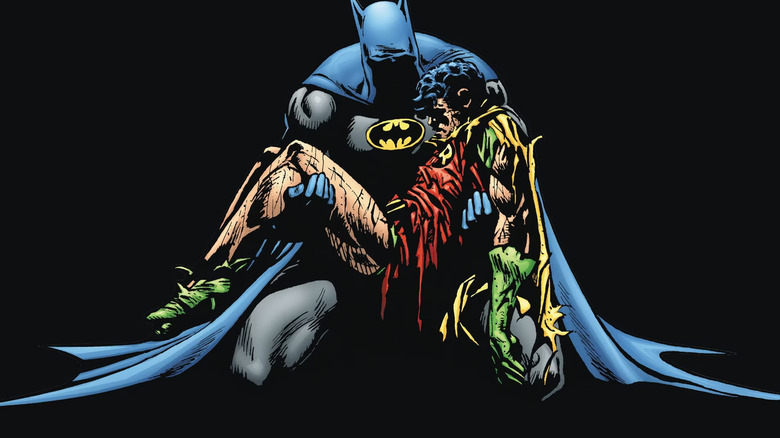
It may surprise some fans of Batman to know that there have been five canonical Robins: Dick Grayson, Jason Todd, Tim Drake, Stephanie Brown, and Damien Wayne. Of all five, Stephanie’s term was the shortest, but Jason Todd was by far the least popular, and remains one of DC’s most hated characters ever. It didn’t help that he was the replacement for a decades-old favorite, but Dick Grayson couldn’t stay a teenager forever. Jason Todd came from an unstable family situation and few social or financial prospects, but his natural intelligence and aptitude — and his audacity in attempting to steal the Batmobile’s rims — attracted the mentorship of Batman.
The fans didn’t like Jason’s attitude. Because of their vocal dislike of the character, DC Comics actually ran a telephone poll. They designated a 36-hour period for readers to call a 1-900 number and vote for the outcome of their ongoing Batman storyline, “A Death in the Family.” Callers were offered a phone number to vote for “letting Jason die” and a phone number to vote for “saving Jason,” and the former won out — though possibly not via a clean poll. It was easier to spoof calls back then, and a dedicated hater could do a lot.
It was quite a controversial stunt: Jason Todd was a young teenager under Batman’s wing. He was still young when he was brutally beaten to death with a crowbar by the Joker, but only after his (recently rediscovered) biological mother had betrayed him, too. No wonder his return as the Red Hood made him so grumpy.
5. Green Lantern & Green Arrow: Snowbirds Don’t Fly (1971)
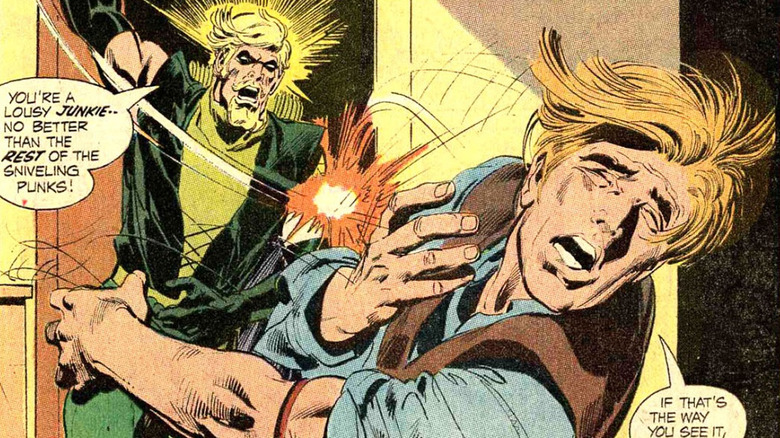
In the early ’70s, Green Lantern and Green Arrow were some of the most progressive superheroes in comics, thanks in large part to writer Denny O’Neil and artist Neal Adams. Green Lantern — Hal Jordan, specifically — contended with many social issues, including race, wealth inequity, and sexuality. The most controversial story O’Neil ever wrote was “Green Lantern” #85, “Snowbirds Don’t Fly,” wherein Green Arrow’s sidekick and ward, Speedy, struggles with drug addiction.
Speedy, aka Roy Harper, was a founding member of DC’s Teen Titans. He, alongside Aqua Lad, Robin, Wonder Girl, and Kid Flash, were the first generation of teen superheroes in DC, and as such were beloved characters to many readers. It was shocking, then, for executives at DC to see the cover of “Snowbirds Don’t Fly”, which depicted Roy Harper caught in the act of shooting up heroin. Neal Adams talked about pushback within DC at the time, saying he brought it into his editor, Julie Schwartz. “… [Julie’s] hand grabbed it [the cover art] very briefly and then dropped it on the desk as if it were on fire.”
DC execs were only willing to publish the story after Marvel beat them to the punch with a different drug-related issue. Marvel ran, without CCA approval, a storyline where Peter Parker’s friend Harry Osborn deals with a pill addiction. When they received no real consequences, the decision-makers at DC scrambled to lobby for a CCA code change to allow the depiction of drug use. “Snowbirds Don’t Fly” hit newsstands with the CCA stamp, and the cover art became a classic.
If you or anyone you know needs help with addiction issues, help is available. Visit theSubstance Abuse and Mental Health Services Administration websiteor contact SAMHSA’s National Helpline at 1-800-662-HELP (4357).
4. Identity Crisis (2004)
The Justice League of America is meant to maintain integrity in the face of villainy, but Brad Meltzer’s limited 2004 series “Identity Crisis” changed that. The series begins as an investigation into the murder of Sue Dibney, the wife of Justice League member Elongated Man. As readers and characters learn more, it emerges that Dibney was once sexually assaulted by the villain Doctor Light inside the Justice League’s satellite headquarters. This makes Doctor Light a prime suspect in her murder, but it also unravels a web of deception years in the making.
After Doctor Light attacked Sue, he was apprehended by most of the Justice League, who took a vote and decided to have Zatanna erase his memories of the attack, plus any identifying details about the League’s members. Essentially a magical lobotomy. Later, it comes to light that Batman walked in while Zatanna was working and aggressively attempted to halt the spell. Zatanna thus erased Batman’s memories as well.
This was an intriguing storyline, opening the door for a nuanced discussion of the morality of DC’s superheroes, but fans were outraged that the resolution of the incident had almost nothing to do with Sue or Doctor Light. Sue’s prior assault was shamelessly leveraged to provide a compelling red herring in the story, and her murder — as well as the following murder of Tim Drake’s father, Jack — was a botched attempt by Ray Palmer’s estranged ex-wife to get back in touch with her former husband.
If you or anyone you know has been a victim of sexual assault, help is available. Visit theRape, Abuse & Incest National Network websiteor contact RAINN’s National Helpline at 1-800-656-HOPE (4673)
3. Nightwing #93
Dick Grayson was Batman’s first Robin. A bright, talented young man who was orphaned under tragic circumstances, Dick was adopted by Bruce Wayne and trained with the caped crusader for years. In the 1980s, Dick rebranded himself as Nightwing and settled in Blüdhaven, Gotham’s sister city. He fought crime not just as a superhero, but as a police officer under his own name. Along the way, Dick made an enemy named Blockbuster.
Blockbuster discovers Nightwing’s identity thanks to a nosy reporter and sets about tormenting Dick by violently going after everyone he cares about. After Blockbuster blows up Dick’s apartment building — killing over a dozen residents in the process — Nightwing finds the perpetrator, who describes all the ways he’ll ruin Dick’s life. Tarantula, a lethal vigilante based in Blüdhaven, offers to kill Blockbuster. Despondent, Dick steps aside and lets her take the shot.
Dick is so upset about his moral failings and Blockbuster’s campaign of terror that he enters a nearly catatonic state, and Tarantula takes advantage of this. Tarantula has sex with Dick, who is too emotionally wrecked to physically fight her off, much less consent. Fans were disgusted by the incident, and even more disgusted that writer Devin Grayson only admitted it “wasn’t consensual,” in 2014, 10 years later.
2. Emerald Twilight (1994)
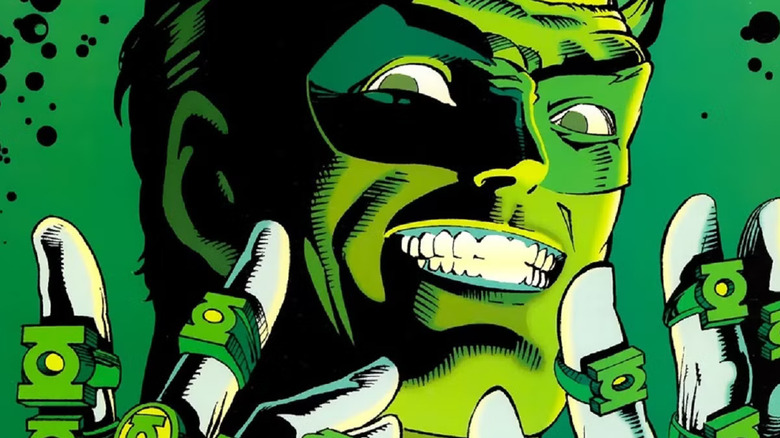
One of the scariest and most powerful villains in the DC Universe is Parallax, the living embodiment of fear and the the power source for the Yellow Lanterns. Parallax is capable of possessing and mimicking anything, and for a long time, chose to live deep inside the mind of Hal Jordan, one of the most formidable Green Lanterns in the galaxy. But that’s the retconned version. See, in 1994, Green Lantern Hal Jordan is emotionally devastated by the complete destruction of his home, Coast City (pop. 7 million), by an alien named Mongul.
Hal is so affected by this loss that he attempts to recreate Coast City and its people with just his Green Lantern ring. When he runs out of power, the other Lanterns attempt to stop him. Doing so sets him on a path of violence and destruction. Hal flies to the planet of Oa and wipes out the Green Lantern Corps, stealing all of the rings, and slays most of the Guardians themselves. The corrupted Hal eventually dies as Parallax, and he stayed dead for more than a decade.
Hal Jordan fans got organized. In response to their hero’s heel-turn and eventual death, his fans created a group called H.E.A.T. (Hal’s Emerald Attack Team), and established a mission to advocate for the return and exoneration of Hal Jordan as Green Lantern. They took out ads in magazines, flooded DC with letters, and ultimately got their wish. Hal was restored to glory alongside the rest of the Green Lanterns in Geoff Johns’ seminal Green Lantern run, which also blamed the rewritten version of Parallax, now that separate and demonically-styled fear entity, for that Emerald Twilight.
1. Batman: The Killing Joke (1988)
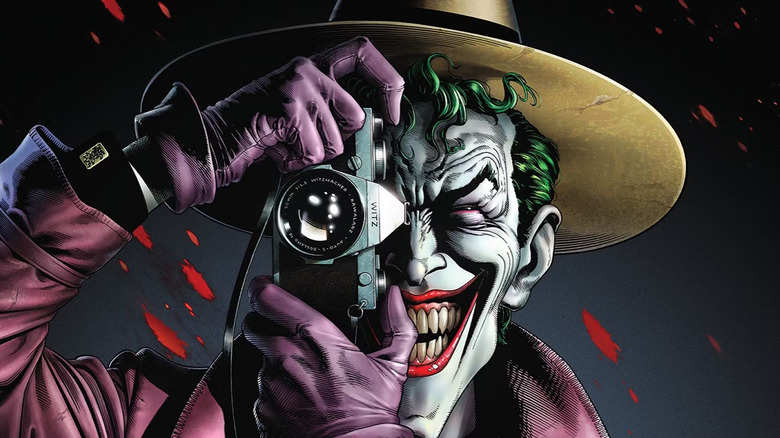
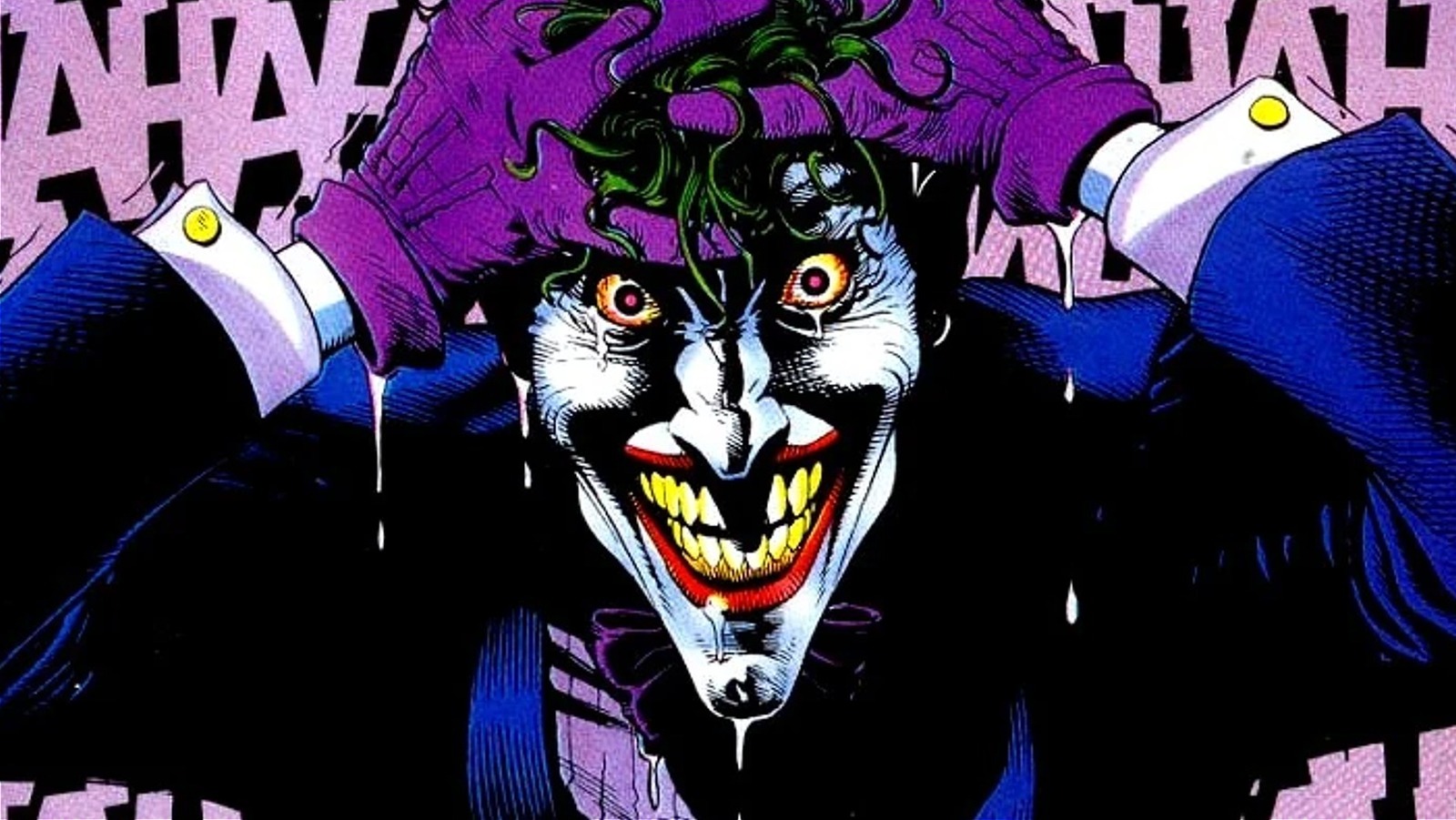
Alan Moore once called “The Killing Joke” the worst thing he’s ever written, which is understandable if hyperbolic. The story centers on the Joker and how his particular madness relates to Batman’s never-ending quest to protect the people of Gotham. For all of its flaws and merits (particularly the artwork from Brian Bolland), “The Killing Joke” is an iconic story; one that has inspired discourse in and outside of the comic industry. Moore has offered critiques of his work, but much of the controversy around the book hinges on its treatment of Barbara Gordon.
In “The Killing Joke,” the Joker — in an effort to traumatize Gotham police commissioner Jim Gordon — attacks Gordon’s daughter, Barbara, as she’s enjoying a quiet night at home. The Joker breaks in and shoots her in the spine. He then took photos of a vulnerable and wounded Barbara, later using them to torment Gordon. Joker didn’t even know that Barbara Gordon was Batgirl, by the way, he just went after her because of her father.
Because Batman and Jim Gordon needed to feel really dark feelings, Moore’s Joker brutalizes and paralyzes one of the brightest and most capable super-heroines in the DC canon. When Moore asked his editor, Len Wein, if it would be okay to make such a lasting change to a major character, Wein responded, “cripple the b****.” An apex example of the ‘fridging’ from earlier in this piece, it’s a great example of the depths of misogyny that can still influence superhero comics.
