

What makes Amelia’s Escape worth a look is not the premise. It is how the escaping and the story are wound together. The game is the debut commercial release from Reality Syndrome Symphony, and it arrives on Quest and Steam on Thursday, July 23, at $15.99 (or £12.99).

A room, a scientist, and a way out
You play as Amelia, a quiet teenager who likes roller skating and photography and who mostly just wants to get home. Instead she wakes up locked in the workshop of Ron, a scientist with an unhealthy fixation on time travel. The escape is the gameplay. Ron’s backstory is the reason to keep going.
That second half is the part the developer keeps emphasizing, and it is the part that separates a good escape room from a set of padlocks. The puzzles are designed to be solved in whatever order you find them, so there is no single golden path you have to reverse-engineer from the designer’s brain. As you work through them, the story of how Ron ended up here, and what he wants with you, unfolds around the solving rather than in cutscenes bolted on either side of it.
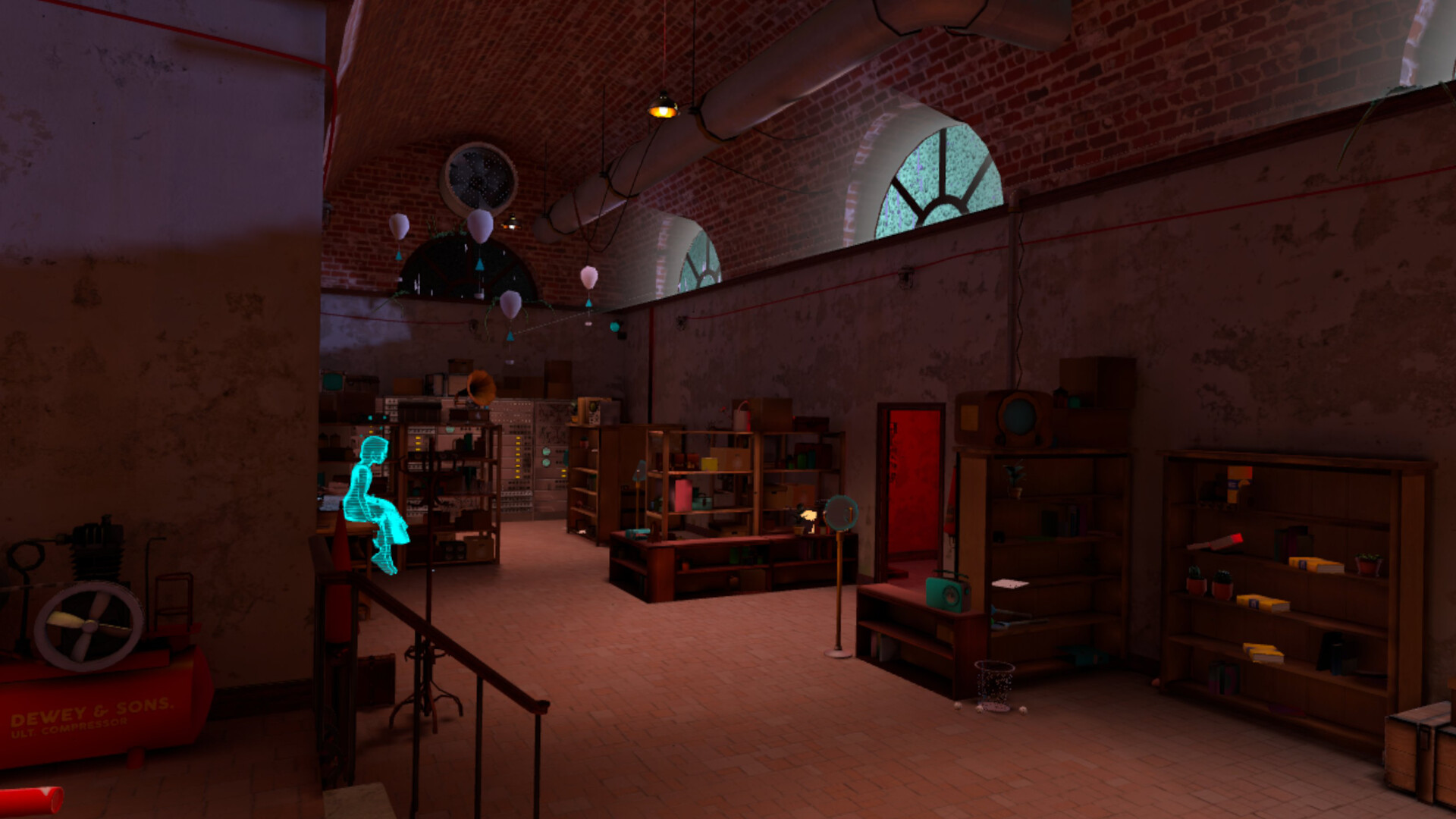
The space itself is doing a lot of the work. It is a vaulted brick basement stuffed with the kind of clutter that rewards a slow look: an old compressor, a wall of patch cables, a chalkboard covered in equations, a basketball hoop that somebody clearly nailed up out of boredom. Cyan holographic outlines float through the room as guides and story beats, which is a clean way to layer a narrative on top of a physical space without breaking the fiction of being locked in one.
The trailer
A room built to be poked at
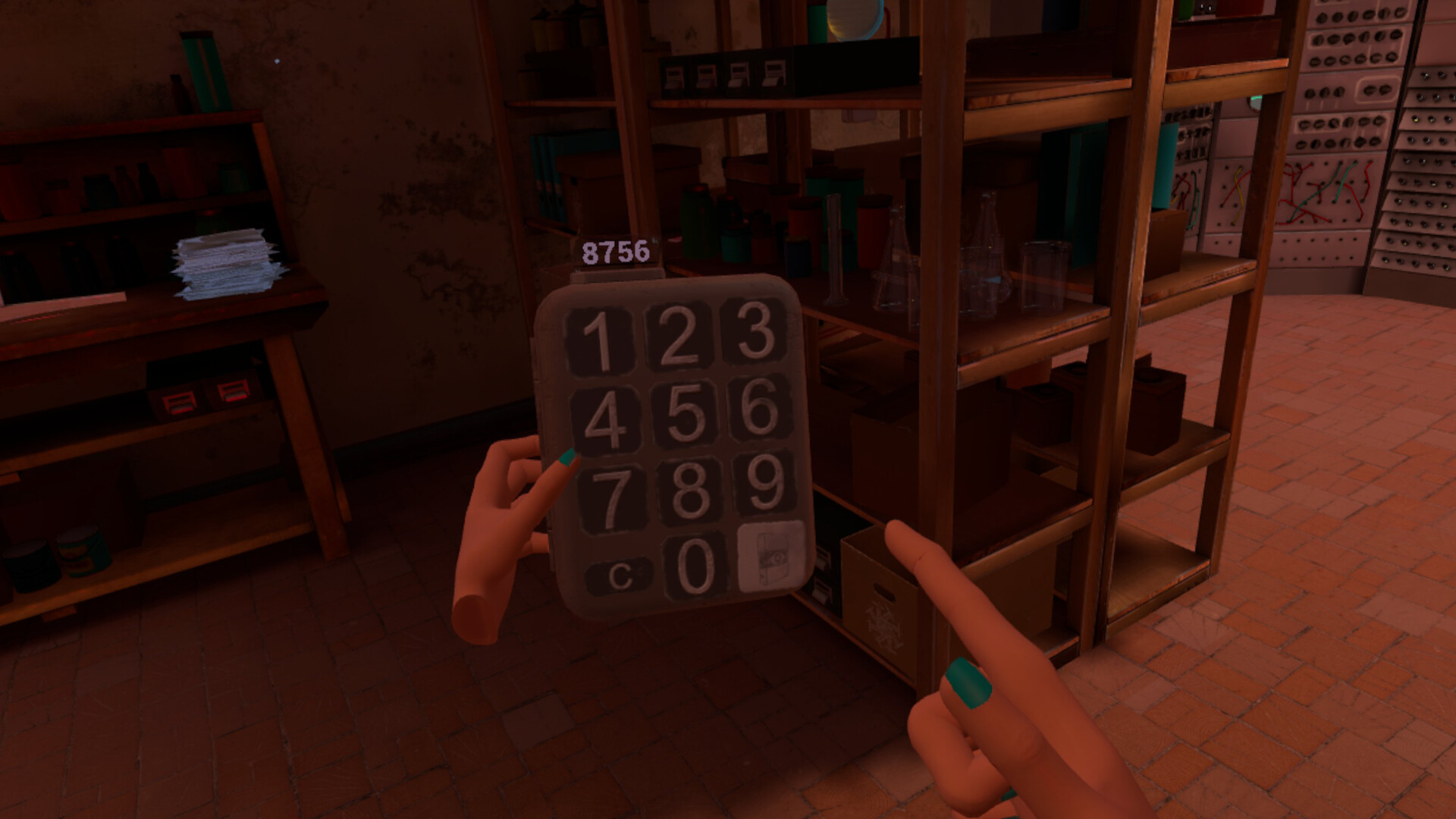
What sells the fiction is how much the room rewards curiosity. Nothing is labeled, nothing waits its turn, and the design trusts you to wander, pick things up, and work out what connects to what. That open structure is the whole appeal of a good VR escape room: the space is the puzzle, and solving it is a physical act rather than a menu you click through.
Because the puzzles are not gated behind a fixed order, two players can take very different routes to the same locked door, and the story fills in around whatever path you happen to take. It is a design that leans on the strengths of the medium, hands and presence and a room you can actually rummage through, instead of fighting them.
Pace it your way
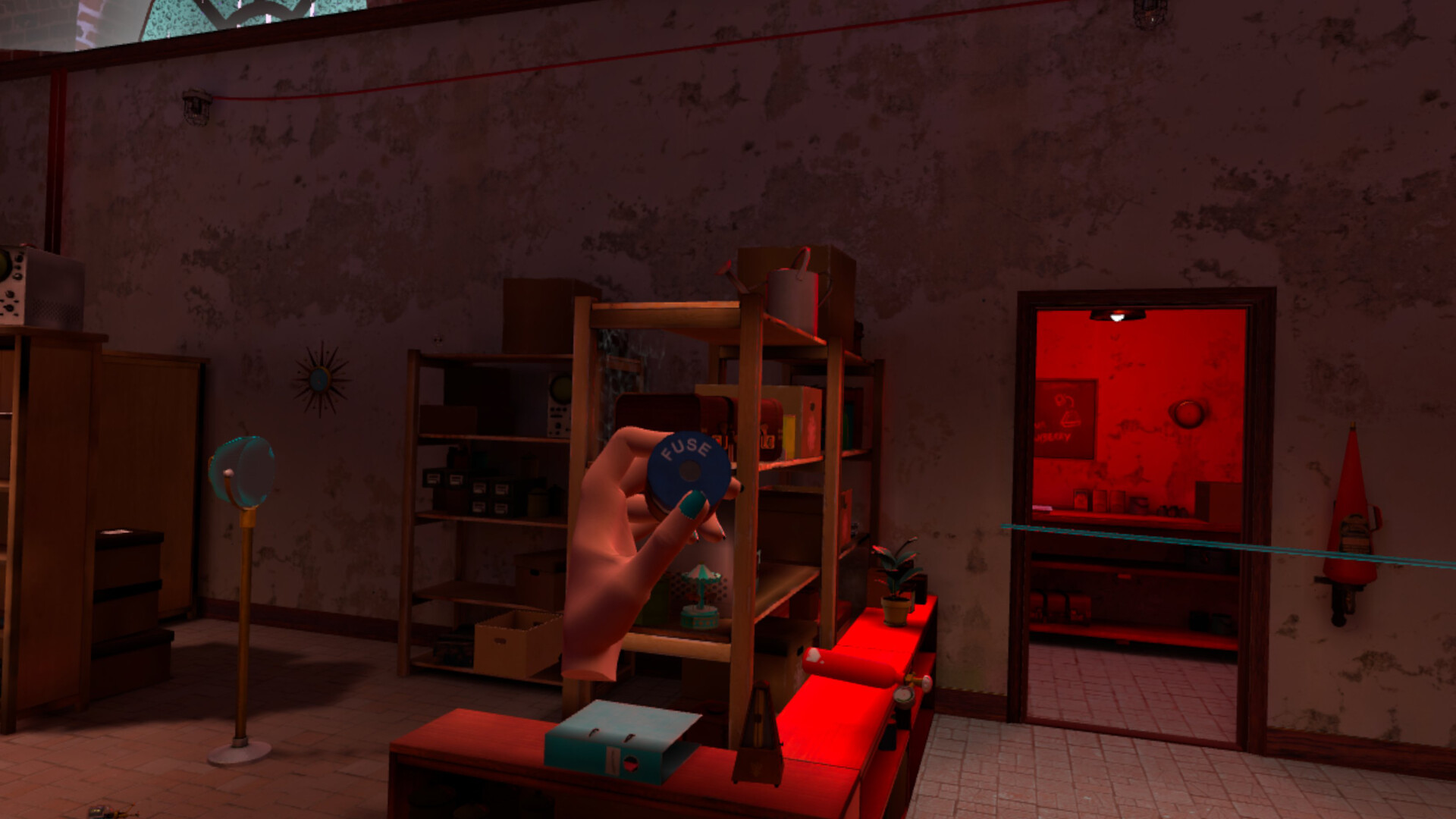
The obvious question with any escape room is how long it lasts, and it is also the wrong one, because the answer changes with the player. Some people chase the solutions in a straight line and are out the door in a hurry. Others slow down, poke at every shelf, follow Ron’s backstory through the room, and get far more out of the same space. An escape room is paced by the person inside it, not by a runtime counter.
It is worth holding the price next to what the thing it is imitating actually costs. A real-world escape room runs $30 to $40 a head, you get one attempt, and you cannot replay it or hand it to a friend afterward. Puzzle games have always been priced closer to an experience than to a content buffet, and a VR escape room in particular lives or dies on how dense and well built the room is, not on how much filler sits behind it. At $15.99 the bet is that the craft carries it.
Whether it does is the whole review, and it is a review we cannot write yet, because nobody outside the studio has played the finished build. We have asked for a key, and once we have actually worked our way out of Ron’s workshop, we will tell you how it holds up.
Where to get it
Amelia’s Escape launches Thursday, July 23, for $15.99 / £12.99. It is single player, VR only, and runs on Quest as well as PC VR through Steam. Both store pages are live now if you want to wishlist it, which genuinely matters for a small studio on launch day.
- Amelia’s Escape on Steam (PC VR)
- Amelia’s Escape on the Meta Store (Quest)
- Reality Syndrome Symphony on Discord, where the developer is looking for playtesters and people who want to follow the project
If you have been waiting for something in the quiet, hands on, figure it out yourself corner of VR to fill an evening, this is a cheap ticket into a room worth exploring.
Disclosure: this preview is based on the trailer, store pages, and press materials provided by the developer. VR.org was not paid for this coverage and has not played the game. A full review will follow once we have hands on the release build.
