

The Twilight Zone was a revolutionary and influential television series. The series was an anthology, meaning that each of the show’s 156 episodes (92 of which were written or co-written by series creator Rod Serling) told a self-contained story with new characters, as well as an opening and closing narration by Serling. Episodes often acted as cautionary tales for the audience, ranging from topics like the importance of human connection and gambling addiction to greed and trusting your gut. The Twilight Zone premiered on October 2, 1959, and ended on June 19, 1964. It is an old series and a lot has changed in the decades since that original run. That has made it so that there are certain episodes that couldn’t be made today. One such episode comes from the series’ second season.
Videos by ComicBook.com
The second season of The Twilight Zone premiered on September 30, 1960. With it came a new theme song, Rod Serling’s first on-camera appearances of the series, and budget cuts resulting in fewer episodes. Despite the budgetary constraints, the season was successful in birthing many of the anthology’s most acclaimed episodes. “Nick of Time” follows a newlywed couple whose car breaks down, resulting in them going to a diner where they become obsessed with the accurate answers of a fortune-telling machine. “Eye of the Beholder” is about a woman who undergoes plastic surgery to look normal; only it fails, and she remains a beautiful person in a world where normal is deformity. “Will the Real Martian Please Stand Up?” is a story about a group of bus riders stuck in a diner near where a UFO crashed, with two troopers trying to figure out who among them could be the occupant. But the most distinctive episode of the season, and one of the most distinctive of the series, is “The Invaders,” and it could never be made in 2026.
Silent Invaders
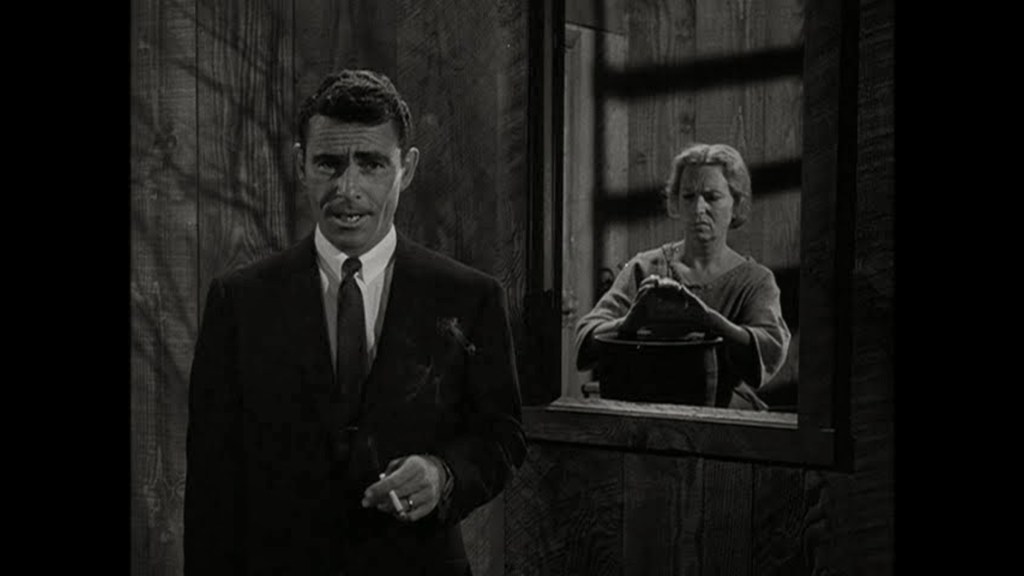
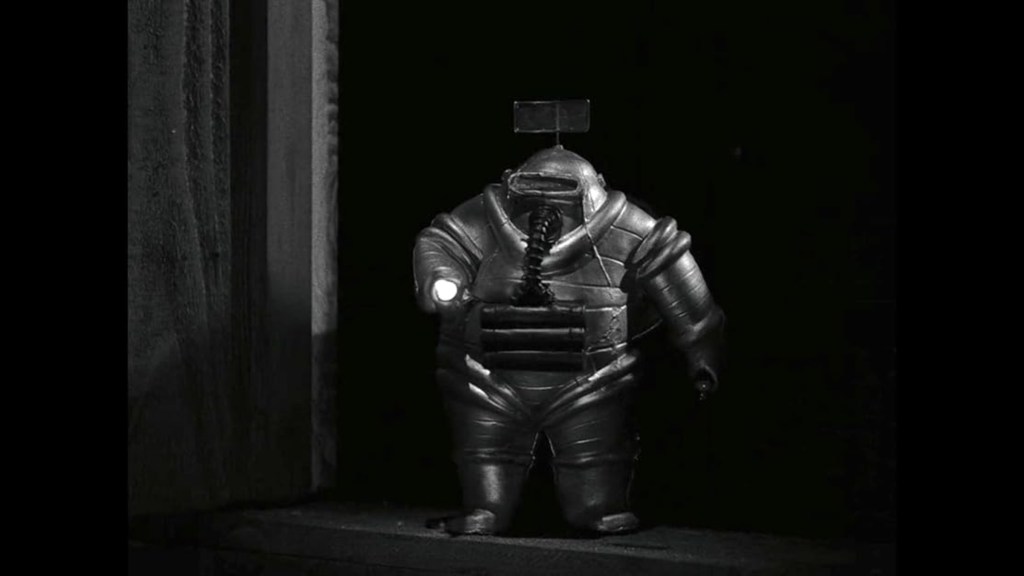
The 15th episode of season two, “The Invaders” aired on January 27, 1961. It centered on a woman who lived alone in a farmhouse in the middle of nowhere. In the episode, the home was invaded by strange beings that began assaulting the home and its occupant. They looked like two miniature robots and emerged from a small UFO that had landed on the roof of the building. Violent, one of them was armed with a strange pistol that fired radiation, the other with a kitchen knife. She killed one with fire, then killed the other by attacking its craft with a hatchet while it was inside. A voice speaking English is heard from within, relaying a message back to its commanders that its partner is dead and that the planet they had landed on was inhabited by a race of giants. It then died too. Words could be seen on the craft that identified it as belonging to the US Air Force. This reveals the big twist of the episode: the woman was an alien, and the invaders were humans from Earth investigating the planet.
What makes “The Invaders” so distinct is the near total lack of dialogue. When movies first began to be made there was no technology available to record and synchronize sound onto film. This meant that, while sound could be recorded on things like records, putting it with moving pictures and being aligned was extremely difficult if not impossible., so everything was silent. Filmmakers relied entirely on visual storytelling, telling a story solely through what can be seen on screen. Once audio could be recorded and synchronized, silent stories became less and less common as Hollywood began to rely more and more on dialogue. “The Invaders” is a fantastic example of that old form of storytelling. Outside of Rod Serling’s monologues, the only dialogue came from the dying invader. The woman at the center of the story never uttered a single word, instead only making exclamations of pain or fear. Otherwise, the events were told in silence, relying solely on the visuals to tell the story. Unfortunately, a lot has changed since the 1960s, meaning an episode like this could never be made today. Not because filmmakers have lost the art of “show, don’t tell.” They are still very much capable of that across all genres. The visual storytelling of recent projects like Lanterns has proven that very well.
The Lost Art of Visual Storytelling
The issue instead lies with the way entertainment is viewed now. Instead of actively watching shows, the audience is on their electronic devices, or they put things on for background noise. This causes details to be missed. That happened quite a bit with Lanterns. Details that weren’t spelled out were often missed, and sometimes even things that were explicitly stated in dialogue were too, simply because people weren’t paying enough attention. Then the social media discourse reflected that lack of attention. This is why Netflix has been pushing towards media that can be watched passively, which is hurting storytelling. If “The Invaders” were to be made today as it was originally, the episode could flop with a lot of viewers, as they would miss all of the storytelling. If it were made more dialogue heavy, it would lose something in translation.
That said, these kinds of projects should be brought back. There is nothing more powerful in storytelling than silence, as it places all of the focus on the acting and allows performers to really show their skills. In recent years, the A Quiet Place film franchise has been very popular, and in those movies, characters make very little noise, especially vocally. If they did, alien invaders would hear them and attack. The third film in the series, A Quiet Place: Day One, had the best opening gross of the franchise when it was released in 2024. If more silent projects were to be made, it could help retrain viewers to focus their attention on it rather than their phones. It would also help the screenwriters to flex their skills as well. Silent stories are challenging to write but very fun and satisfying to see brought to life. Bringing this kind of storytelling back to screens could only be a positive, as long as the focus remains on quality productions that audiences will want to engage with.
Have you ever seen this episode of The Twilight Zone? Leave your thoughts on it in the comments.
TV Changed Forever 67 Years Ago When the Best Sci-Fi Series Premiered With a Perfect Formula
More TV Shows
-
DC Studios / HBO TV Shows
17 hours agoColin Farrell Teases “Discussion” for The Penguin Season 2 Amid DC Studios Fallout
-
TV Shows
19 hours agoVisionQuest Star Reveals the Close Call That Almost Ruined One of the Finale’s Biggest Surprises
-
Image Courtesy of Marvel TV Shows
19 hours agoVisionQuest Showrunner On The Finale’s Long-Awaited Reunion & The One Major Character Who’s Missing: “We Couldn’t Afford That”
-
Image Courtesy of South Park Studios TV Shows
20 hours agoSouth Park Teases Tweek x Craig Return in New Season 29 Episode First Look Trailer – Watch Now
-
Image Courtesy of Fox Movies
21 hours agoOne Marvel Mutant Shouldn’t Be in the X-Men Movie, But Should Fight a Netflix Hero First
-
TV Shows
24 hours ago30 Years Later, This Forgotten Sci-Fi Series Looks Like the Battlestar Galactica Successor We Never Got
-
Marvel Studios TV Shows
1 day agoVisionQuest Ending & Post-Credits Scenes Explained: How It All Connects to Avengers: Doomsday & Secret Wars
