

✦Apply this article to your workGet personalised takeaways tailored to your role and goals↓
A blue tiger that once appeared on a movie screen is now the kind of character someone can put on a desk, attach to a bag or carry home as a plush toy. Those little objects give fans a different way to keep a story close. For MINISO, the latest place for that connection is a store shelf in Kuala Lumpur.
At the MINISO Friends outlet inside LaLaport Bukit Bintang City Centre, a new KPop Demon Hunters collection brings Derpy plushies, HUNTR/X character figures and everyday accessories into a physical shopping setting. The mall’s official promotion lists the collection on October 27, 2026, at Level 1, unit F1-13C.
Table of contents
Why Derpy belongs on a shopping shelf
For someone who knows KPop Demon Hunters, Derpy is easy to recognize without a film poster beside him. The blue tiger is a supporting character in the Netflix animated musical, which follows fictional K-pop performers Rumi, Mira and Zoey as they fight demons. That familiarity makes a small plush, charm or figure feel like an extension of the characters rather than an unrelated object carrying a logo.
A character-led collection also lets different fans choose different kinds of souvenirs. Someone who wants to show their fandom might pick a bag charm. Someone who wants something for a room might choose a plush or figure. Others may prefer stationery they can use every day. Those are potential uses of the products, not evidence of how buyers responded to this particular launch.
For a lifestyle retailer, that range matters. The product can catch a shopper’s attention because it depicts a familiar character, but it still has to make sense as something to buy, display, carry or use.
Inside the MINISO Friends collection
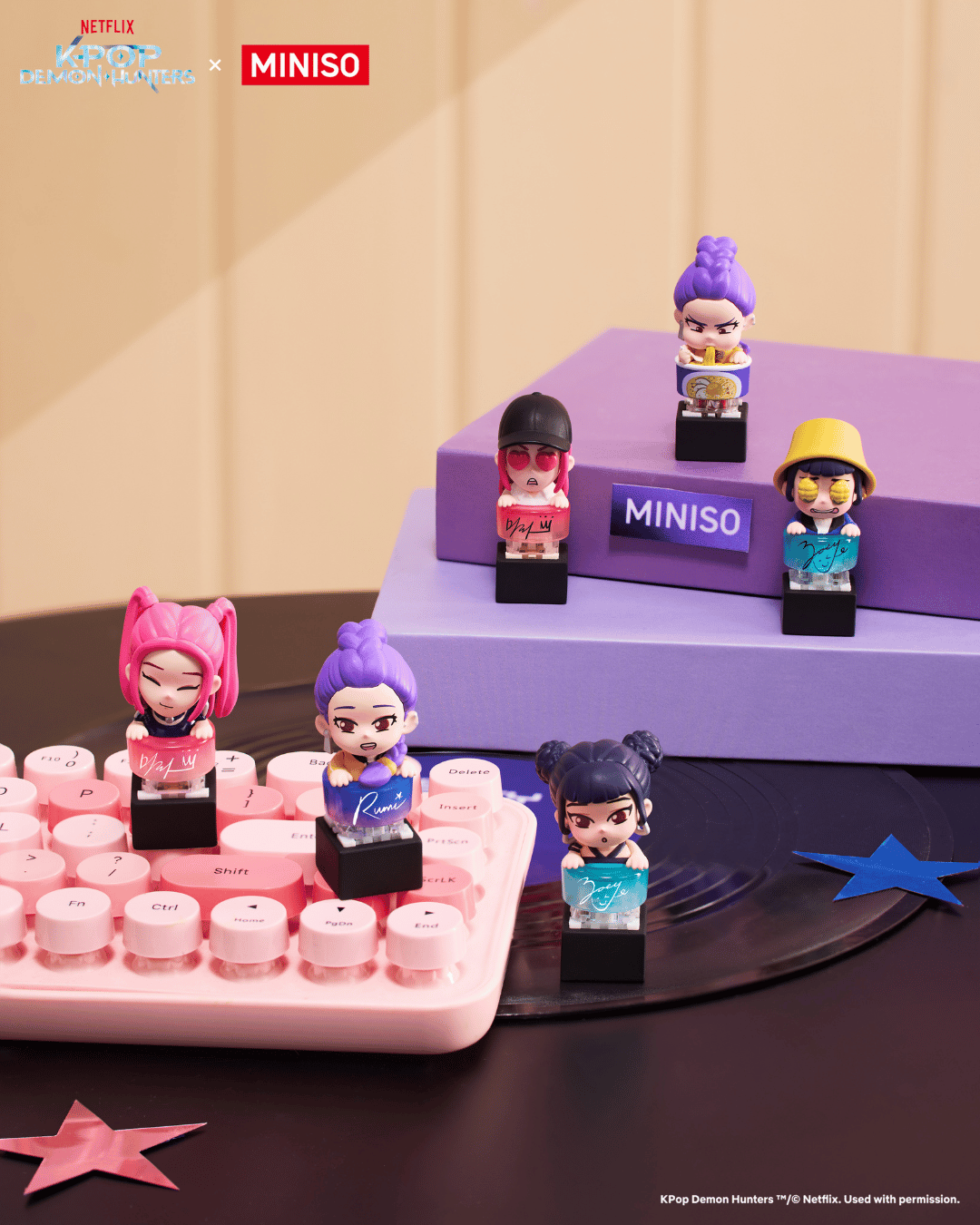
The October 27 promotion at MINISO Friends highlights Derpy plush toys, collectibles featuring Rumi, Mira and Zoey, bags and charms. The store is in Mitsui Shopping Park LaLaport BBCC in central Kuala Lumpur. The verified announcement identifies the location, but does not establish whether the items are exclusive to this outlet, available in every MINISO market or part of a limited production run.
A separate October 27 merchandise report describes additional products on display, including a tote bag, stickers, cups, figurines, notebooks, pens and a pink MINISO keyboard. Together, the two descriptions show how a single entertainment license can reach beyond traditional action figures into smaller gifts and household or desk accessories.
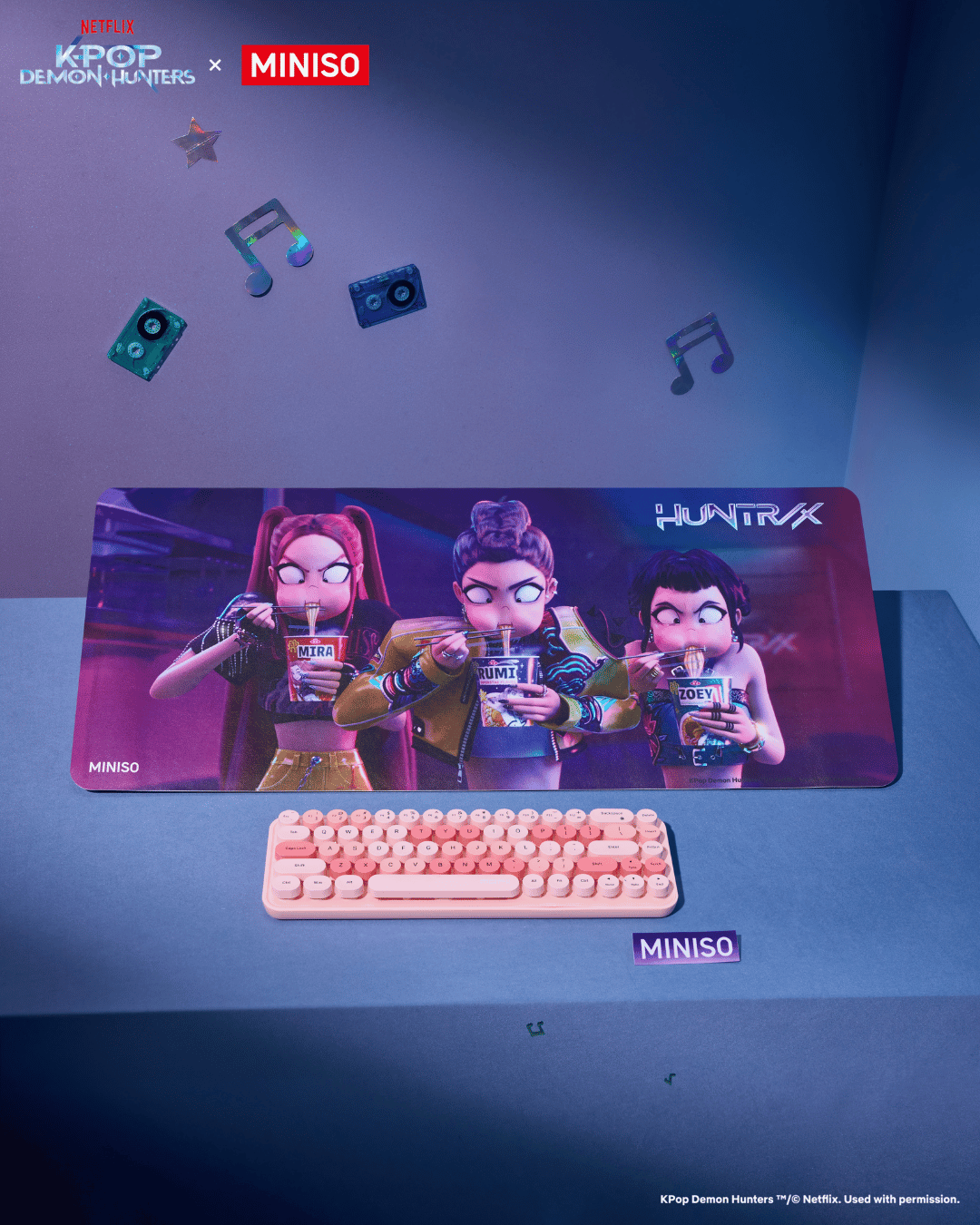
The official mall promotion shows several product images, with merchandise packaged for retail sale. Neither the mall nor the report supplies prices, inventory levels or sales performance, so the immediate story is about the breadth of the range and its location rather than proof of a commercial hit.
From giant LEGO builds to everyday fan objects
Just a day before the MINISO report, another Derpy story surfaced from an entirely different kind of experience. LEGO and Netflix had commissioned a roughly 37,000-piece Derpy Tiger sculpture for LEGO World in Utrecht, displayed from October 15 to 21. That giant construction was intended to be seen at an event, not carried home.
KPop Demon Hunters gets giant LEGO Derpy sculpture
LEGO and Netflix commissioned a roughly 37,000-brick Derpy Tiger for LEGO World in Utrecht, blending fandom with a maker’s showpiece.
ContentGrip
At MINISO Friends, the scale changes. A plush or charm is designed to fit into ordinary routines, while the LEGO installation turned the character into a public spectacle. The two executions are separate. What connects them is the use of the same recognizable character to invite different kinds of participation in the franchise’s world.
Netflix’s wider official merchandise guide shows that this is not an isolated category. It documents toys, beauty products, games and apparel tied to the film. MINISO’s assortment illustrates one retail version of that licensing ecosystem, not a claim that MINISO created it or pioneered the approach.
What retailers can learn from character collectibles
The Kuala Lumpur collection is a modest retail development, but it illustrates several practical decisions that entertainment licensors and lifestyle chains have to make when a screen property moves into shops.
1. Let the recognizable character do the first job. Derpy’s appeal rests partly on being identifiable before a shopper learns the details of the product. A plush, charm and figure each gives that same recognition a different form.
2. Translate fandom into everyday categories. A collection of figures alone reaches collectors. Adding bags and stationery broadens the number of situations in which a character can appear, without claiming that shoppers will buy every category.
3. Make the physical location easy to discover. LaLaport’s listing provides a clear store, floor and unit number. Those details matter when an entertainment product is promoted to people who may want to see it in person.
The larger comparison is between temporary visibility and repeatable personal use. A giant sculpture can become a destination for fans and event visitors, while the smaller object remains with its owner after the visit. Neither automatically makes a campaign successful. Each offers a different answer to why a familiar character deserves physical space.
For marketers, that is the more useful question behind another KPop Demon Hunters merchandise drop: not simply how many licenses a popular film can sell, but whether each partnership gives people a distinct way to spend time with the characters they already know.
This article is produced by ContentGrow. We’re building branded media outlets for B2B companies. Interested in learning more? Learn more.

