This 1966 toy put Godzillabehind the wheel, and allegedly, put its manufacturer in the hot seat. Its version of the King of the Monsters was so off-model that it was taken off the market almost immediately, incidentally turning it into the single rarest American Godzilla toy ever produced. Released as part of Aurora’s “Monster Rods” line of model kits, “Godzilla’s Go-Cart” was an effort to combine the popularity of the manufacturer’s hot rod kits with their monster models. The result are some the strangest toys ever produced, featuring classic monsters driving custom racers. Six kits were issued in the short-lived line, which consisted of “Frankenstein’s Flivver,” the “Mummy’s Chariot,” “Dracula’s Dragster,” the “Wolf Man’s Wagon,” “King Kong’s Thronester,” and “Godzilla’s Go-Kart.”
Videos by ComicBook.com
All six Monster Rods are rare to find in loose, built-up or packaged condition, and are passionately collected by the sixties kids who grew up on them. They’re a bizarre curiosity that could only have come from the mid-sixties era of Adam West’s Batman, when high camp was in vogue and you couldn’t tell who was in on the joke. Godzilla’s Go-Cart and King Kong’s Thronester were added to the line in 1966, and are the most sought-after items in the line. According to some sources, Toho disliked the light-hearted interpretation of Godzilla featured in the line, and requested it be discontinued. Godzilla’s Go-Cart was on shelves for less than a year, and today, even the empty box for this elusive toy can be worth up to $1k. Next month, Hakes is set to auction not only a loose, complete Godzilla’s Go-Cart kit, but a mint-in-box, unopened sample.
How Aurora’s “Godzilla’s Go-Cart” Became the Rarest Godzilla Toy Ever Produced – Even After It Was Reissued
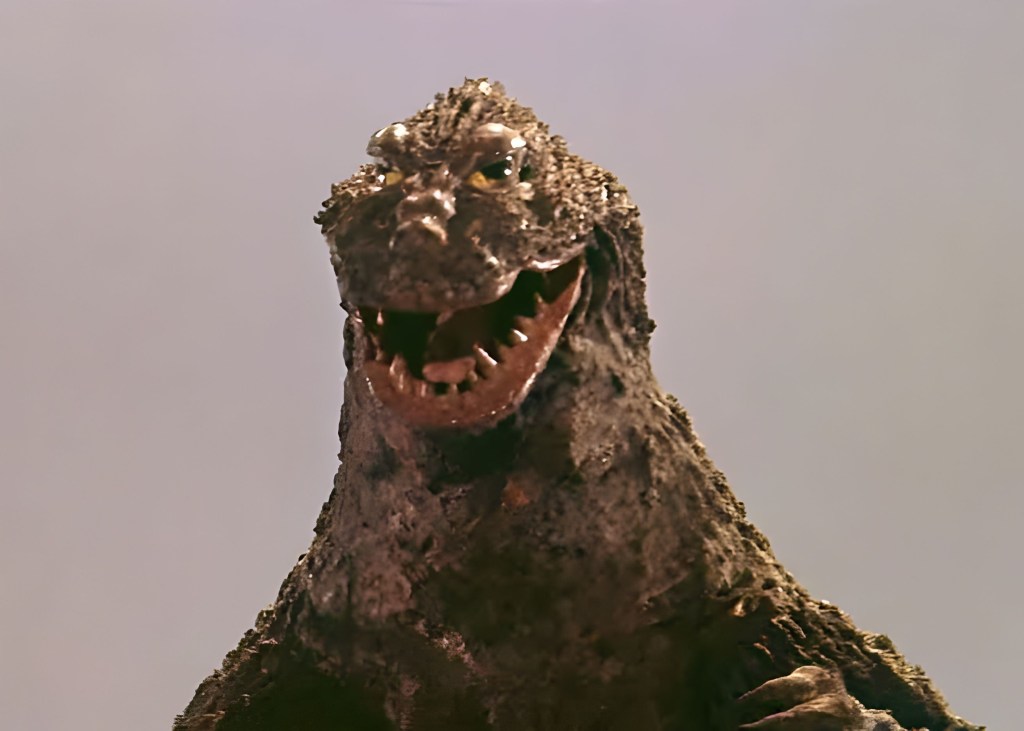
Image Courtesy of Toho.
The 1964 Monster Rodskits are the most common on the secondary market, available until roughly 1967. For lines of this era, especially from defunct manufacturers like Aurora, it can be difficult to nail down definitive dates of when production started or ended on an item. All four are replete with elaborate original tooling, featuring an oversized, caricature version of their monster behind the wheel of an elaborate, monster-themed vehicle. The “Frankenstein Flivver” is equipped with skulls on its hubcaps and a tombstone for a grille, and the Frankenstein driving it is the least stylized of the monsters. In an odd touch, he’s been given a yo-yo to dangle off the end of his finger. If that’s some kind of specific reference, its origin is lost on this author. Dracula’s Dragster is far more cartoonish, with its big-headed, scally-cap wearing Dracula driving with one hand on the wheel and another on a chalice overflowing with blood. The dragster itself is coffin-shaped, with a bat for a hood ornament. The grille is sculpted to resemble Drac’s fangs on its downward-facing side, and its upward end burning candles.
A hunched-over Wolf Man could perhaps use a more appropriately-scaled set of wheels than his wagon, which is the most traditional “hot rod” of the set. Its only horror motif is the addition of a scattering of rats, including one perched on the wagon’s hood. The Mummy’s Chariot resembles just that, with its compact, chariot-shaped cabin and long rods separating the front axel, which are adorned with dual cobras. These four were rereleased in 1996 by “Polar Lights,” a company who had acquired the defunct Aurora’s sculpts and materials from the 60s and 70s. King Kong’s Thronester and Godzilla’s Go-Cart were added to the line in 1966, and were only on shelves for around a year. Both are exceedingly rare, but Godzilla’s Go-Cart is almost mythical to Aurora collectors.
The kit depicts a goggle and helmet-clad Godzilla hunched over and hitting the gas of a wild, mismatched car that looks like it was assembled out of spare parts and trash. It’s a sight to behold, and certainly the weirdest thing that had been done to the character up to that point – though it would be eclipsed in decades to follow by a number of officially-licensed TV commercial appearances, as well as several of Godzilla’s own films. It’s apocryphal (though a great story) that Toho requested the toy be discontinued, but what they diddo was prevent Polar Lights from reissuing the kit in 1999. Polar Lights tried to release the kit as-is, just without Godzilla’s name on the packaging, simply referring to it as “the Go-Cart.” Toho’s legal department intervened, and the kit was swiftly discontinued. Despite this, the reproduction remains fairly easy to come by on the secondary market, even with the fervor around collecting the original.
Why the Godzilla Go-Cart Has Fascinated & Baffled Collectors For Sixty Years & Counting
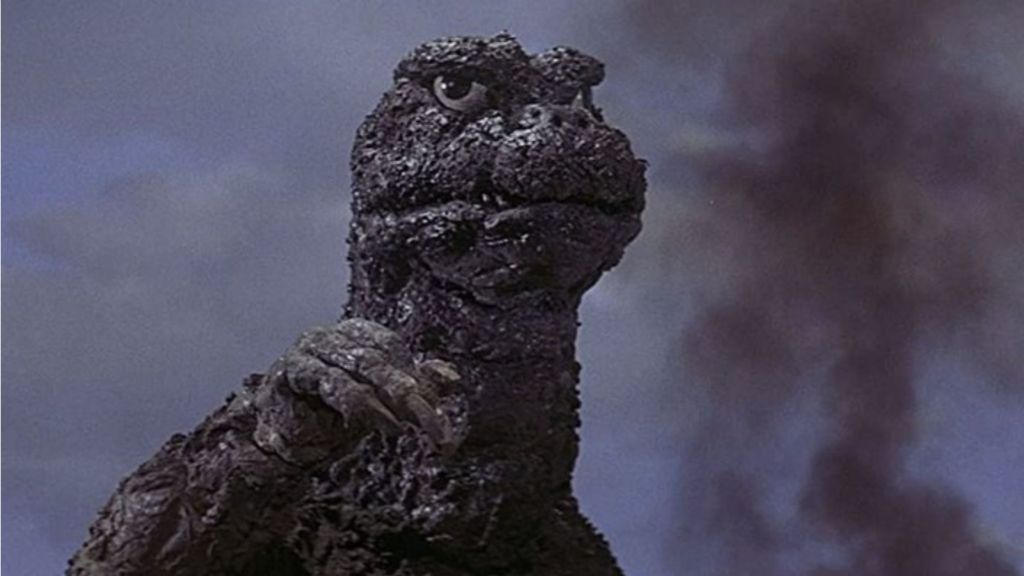
Image Courtesy of Toho
Off-model depictions of iconic, generation-spanning pop cultural mainstays always manage to build a reputation, whether that’s a gun-totting Spider-Man or a go-cart racing Godzilla. Especially in the modern era, when it feels like the public image of these properties is tightly controlled, it can feel almost surreal to see what licensors used to be able to get away with. The urban legend that Toho had Godzilla’s Go-Cart discontinued speaks to the appeal of these relics from the “wild west” era of licensing. Every time you come across a new one, your first question is: “how did they get away with making this?” Toys like the Godzilla Go-Cart leave you stunned that no one intervened and said no, and owning one feels almost like getting away with something. The story that thiswas the toy that went too far, the one that actually made the license-holder stand up and take notice, is at the heart of its cult favorite status.
Regardless of if that story is true, the fact of the matter is that Godzilla’s Go-Cart isvanishingly rare. It’s actually difficult to properly assess its value because of just how rare it is. The most recent sale of a mint-in-box sample was through Hakes in 2024, and it finished at an eye-popping price of $36k – literally almost 20k higher than the upwardend of Hakes’ estimated final price. Conservatively, Hakes estimates a $4k-7k close for this sample, as well as for the King Kong Thronester on auction alongside it. For items like these, auctions are often precendent-setting in regard to price: they come up for sale so infrequently that each sale establishes a new standard of fair market value. What these two kits sell for will become the metric of their value for years to come – and it will be yearsbefore collectors have the chance to bid on them again, helping drive that value up. After all, with something this rare, it’s difficult to really overpay.
What’s your favorite Godzilla collectible? Leave a comment below and join the conversation now in the ComicBook Forum!
This 1963 Board Game is a Surprisingly Important Part of Godzilla History (& You Won’t Guess the Reason Why)
<img src="https://comicbook.com/wp-content/uploads/sites/4/2026/10/Man-Thing-1-1979.png?w=300" alt="An MCU Fan Favorite’s First Appearance Is Hiding in This Unexpected Piece of Marvel History”>
Collectibles
3 days ago
An MCU Fan Favorite’s First Appearance Is Hiding in This Unexpected Piece of Marvel History
Collectibles
3 days ago
Star Wars Once Gave Away Boba Fett for Free, But That Surprising History Makes This Jawa Even More Valuable
Collectibles
3 days ago
Return of the Jedi Inspired One of Star Wars’ Rarest Toys, & You’ve Probably Never Heard
Collectibles
4 days ago
A Forgotten Pokémon Card Collection Just Sold for Millions, and Collectors Will Wish They Had One
Collectibles
4 days ago
New LEGO Report Reveals Extensive Details on 2027’s Huge Superman Set
Image Courtesy of Filmation
Collectibles
4 days ago
This Masters of the Universe Figure Is a Collector’s Dream
Courtesy of The Walt Disney Company
Collectibles
4 days ago
This Iron Man Helmet Could Be the Ultimate Marvel Collectible (& There’s a Good Reason Why)
Collectibles
4 days ago
A Misunderstanding About Wonder Woman Accidentally Created a Teen Titans Icon (And Confused DC for Years)