

We may receive a commission on purchases made from links.
After purchasing a 4K 32-inch OLED monitor earlier this year, I thought screen technology must have reached its apex, and I had a hard time imagining there would ever be a better monitor. With this in mind, I was somewhat skeptical going into testing the Alienware AW3226Q for this review. After all, what could a monitor with a similar spec sheet provide that the one I already own doesn’t?
On paper, the Alienware AW3226Q is both spectacular and also simultaneously very typical of this type of monitor. It delivers 4K visuals at 165Hz on an OLED panel with a high degree of color accuracy. Essentially, that’s everything you want in screen like this, and it’s what you expect to find. However, there are two specific things that stood out to me — a relatively affordable price tag, and Tandem RGB Stripe OLED technology.
That last point is particularly exciting, as the tech involved is designed to significantly improve OLED monitors, and I was excited to try it out. With that in mind, the question I set out to answer is whether or not the Alienware AW3226Q stands out from the crowd, or if it’s just another OLED monitor.
Stunning image quality
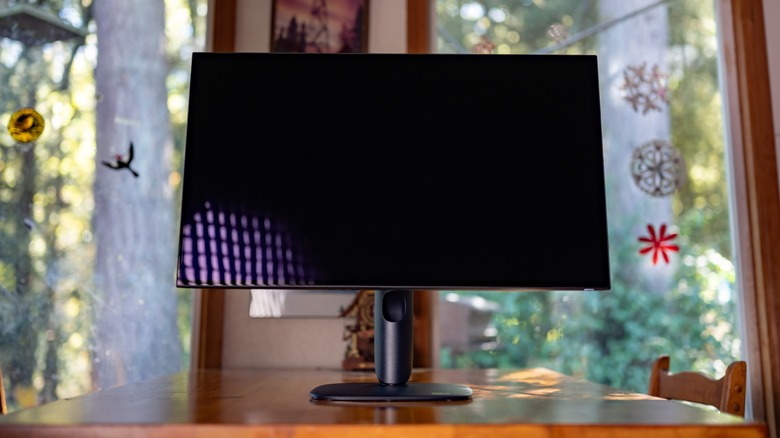
Right out of the box, what immediately struck me is that this panel is pitch black. OLED panels are known for their deep blacks, but the Alienware AW3226Q is noticeably darker than other OLED screens I’ve tested. My MSI OLED monitor panel and the OLED panel of my Asus ProArt laptop are both noticeably lighter in tone when powered off than the Alienware AW3226Q. These deep blacks continue when the monitor is powered on, and the contrast between those deep blacks and the 1000 nit peak brightness is genuinely jaw dropping.
It’s bright enough to fight back against daylight and bright lights in the room, and my only nitpick might be that the external material of the screen is slightly more reflective than I’d prefer. However, that complaint feels very petty in the face of the sharp realism of the imagery that the Alienware AW3226Q provides.
That sharpness is another thing that stands out about the Alienware AW3226Q. From text to video to still photos and video games, the monitor depicts exquisite detail. This sharpness is paired with 99% DCI-P3 color coverage and Delta Extagstartz2 color accuracy, something that is vital to me as a photographer and video content creator.
Tandem OLED tech deserves the hype
Keep in mind, I’ve been using an MSI MAG 321UP QD-OLED 32-inch monitor up to now, which is very comparable to the Alienware AW3226Q. However, the Alienware AW3226Q is noticeably better in terms of image quality compared to my MSI, and that’s likely down to the Tandem RGB Stripe OLED technology in the Alienware that stacks RGB pixels and eliminates the white pixels found in other OLEDs. This technology is purported to deliver the sort of impressive results which I’ve observed on the Alienware AW3226Q display.
Having connected the Alienware AW3226Q to my desktop PC alongside the MSI MAG 321UP, I spent a good deal of time swapping between the two. Text is sharper on the Alienware AW3226Q, colors are more vibrant (without that vibrancy impacting accuracy), and black areas are far darker on the Alienware AW3226Q. I also prefer the darker tone of the bezels on the Alienware AW3226Q, as it helps them to be less noticeable than the more pale tone of the MSI MAG 321UP bezels. Between the panel tech and the complementary bezel design, the Alienware AW3226Q really is striking.
Design, hardware, and in-screen software
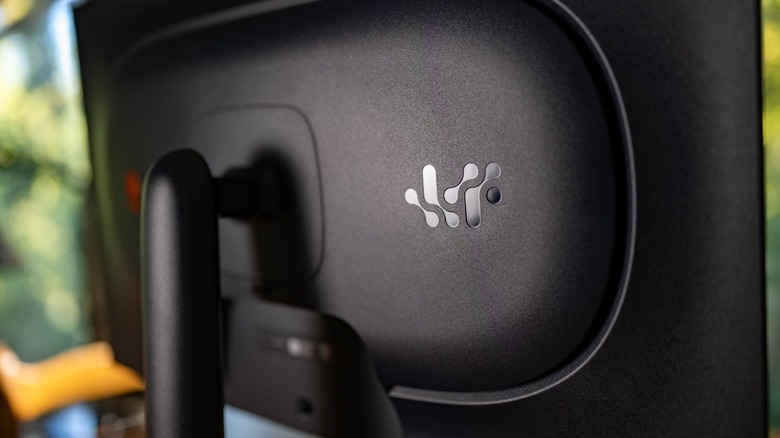
Buttons and menu navigation on the Alienware AW3226Q are great, though not particularly remarkable. Everything you’d expect to be there is present, and it’s easy enough to jump between them and dial-in your preferred settings. When it comes to port selection, you get two HDMI ports and one DisplayPort, as well as a USB Type-A downstream port and a USB Type-B upstream port, both rated to 5Gbps.
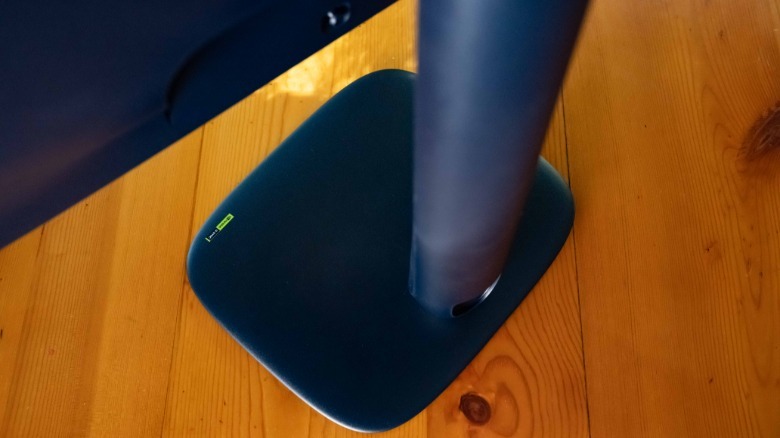
Happily, the Alienware AW3226Q features a VESA compatible mount, meaning that it can be attached to a wide range of stands which support that standard. The stand itself is sturdy and high quality, though I do wish it offered a little more flexibility and could be extended to a greater height. With that said, I and most everyone else I know choose to attach their monitorser level of adjustment than any stand could
I very much admire the thin bezels of the Alienware AW3226Q. Compared to most other monitors I’ve tested over the years, the Alienware AW3226Q has very thin bezels that are made very subtle by their design. It’s also necessary to talk about burn-in here. Theoretically, the Tandem OLED technology should help in this regard, and Alienware has measures running in the background to help prevent burn-in.
The screen also comes with a 3-year warranty, which includes burn-in protection. I’d still utilize the same tactics to help avoid burn like I do on my other OLED displays (hiding the task bar, not placing icons on the desktop, not using a desktop background, always turning it off when not in use), but hopefully it does indeed prove more resilient to burn-in.
Remarkably affordable price point
Before I saw the price of the Alienware AW3226Q, I had guessed it would cost around $1,000 or more, but in fact, it goes for $699.99. That’s much less than I was expecting, and a lot less than the MSI MAG 321UP QD-OLED monitor I bought earlier this year. It doesn’t surprise me to find that MSI is currently offering that monitor on sale for $699.99 as well, but if I had to choose between the two right now at the same price point, I’m going with the Alienware.
With the cost of everything else skyrocketing, it’s nice to see new products launch for less than I would expect, and I like being able to test and write about a new product that’s both excellent at what it does and relatively inexpensive.
With that said, $699.99 is still certainly far from what anyone would call cheap. High-refresh rate 4K OLED monitors may be creeping down in price, but they are still clearly premium products. Keep in mind that something like the basic 27-inch Samsung monitor at Best Buy can be found for less than $200 and still provides a great experience for the average user. However, put side by side with the Alienware AW3226Q, the difference is stark. You definitely get what you pay for with the Alienware.
Conclusions
If you’re in the market for an OLED monitor, then I heartily recommend the Alienware AW3226Q. It’s one of those rare devices I review where I just have nothing negative to say about it. The experience it delivers is simply spectacular, and it’s what I’d describe as a true no-compromise monitor. You’re getting an extremely high level of performance and quality at a very reasonable price point.
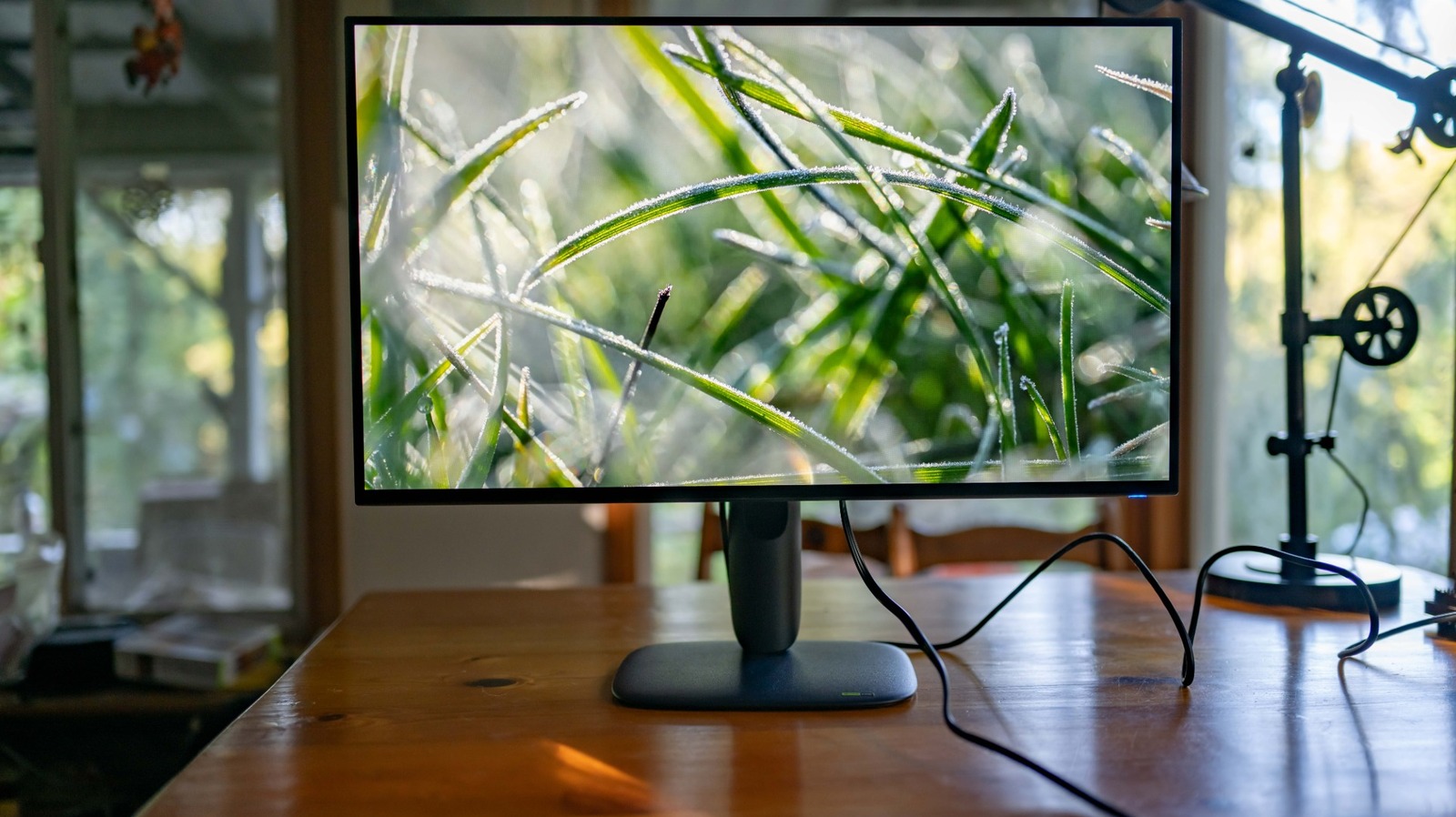
I think my first impressions of the monitor say the most about it. Having thought myself jaded with high-end displays, I was caught off guard by how striking the Alienware AW3226Q really is in person. In particular, it showed its capability to its fullest degree when I played a timelapse video I filmed of melting frost on a winter morning. This was a passion project of mine, and I had watched the footage many, many times during the process of creating it and in the years after. I’m not exaggerating when I say that watching this video on the Alienware AW3226Q was like seeing it for the first time. I’m embedding it here so you have an idea of what I’m talking about:
The bottom line is that where I had anticipated just another OLED panel, the Alienware AW3226Q is something special. Even though it costs about what you’d pay for a new graphics card, most people are going to see a more significant improvement in their gaming setup from purchasing this screen, particularly if they are still using an old-fashioned LCD display. For professionals, the detail and color accuracy are a valuable tool, and it’s obviously fantastic for general media consumption. For those able purchase a monitor in the $500-$1,000 price bracket, the Alienware AW3226Q is the one I’d recommend without hesitation.
