

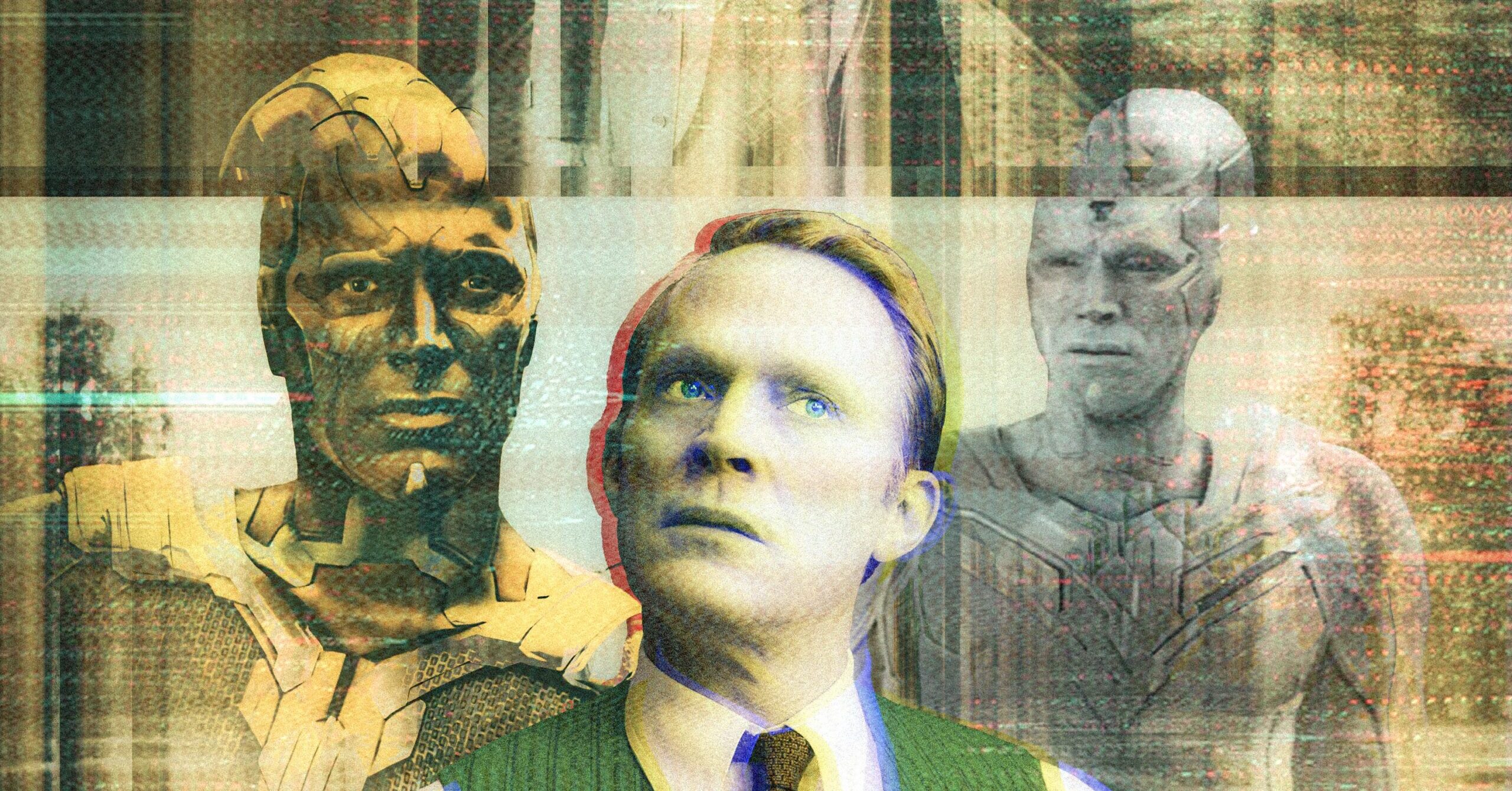
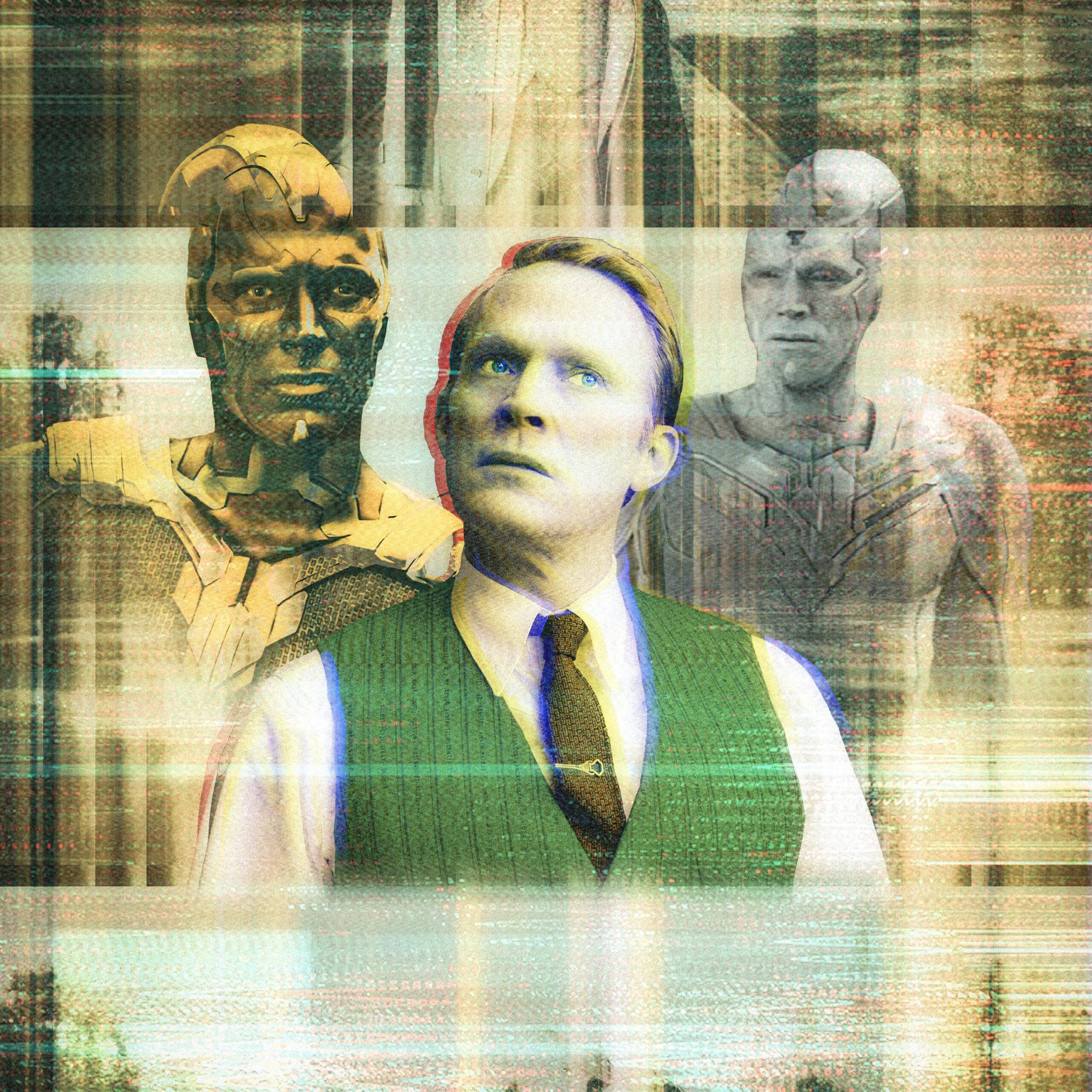
‘VisionQuest’ Is a By-Product of a Bygone MCU Era
Marvel’s new series is a sendoff for an approach to TV that never found the right vision
ByDaniel ChinOct. 14, 1:46 pm UTC
• 7 min
In 2021, Marvel Studios released its first TV series: WandaVision. The Emmy-winning miniseries, created by Jac Schaeffer, set a high bar for the studio’s fledgling TV division. WandaVision capitalized on the success of the MCU’s Infinity Saga to become appointment viewing on Disney’s then-two-year-old streaming service. It was a delightfully strange, and charming, mystery-box series that took full advantage of the TV format while cleverly paying homage to the history of the medium itself.
However, with perhaps the sole exception of Loki, Marvel Television has never been able to recapture the (chaos) magic of its pilot program. Although Marvel has produced some fun TV shows since then, the sheer volume of middling small-screen projects has diluted the brand to the point that one of its best series to date—January’s Wonder Man—went largely unnoticed by the masses after the show’s unceremonious eight-episode dump. And despite all the chatter about Marvel overhauling its TV business in 2023, the studio appears to be grinding its live-action output to a halt just three years later: The company recently confirmed that the upcoming third season of Daredevil: Born Again will be its last, and it announced only one new series in development, Zodiac (which is slated for 2028).
Amid the uncertainty surrounding the future of Marvel Television, the studio now returns to the world of WandaVision to release the conclusion to the WandaVision Trilogy: VisionQuest. Five years and 17 TV shows after WandaVision premiered on Disney+, VisionQuest arrives as a solid, if unspectacular series that serves as a fitting end to an uneven era of MCU TV.
Created by Terry Matalas, VisionQuest is technically a follow-up to 2024’s Agatha All Along, but it has little to do with the events of Schaeffer’s witchy Agatha Harkness spinoff and everything to do with WandaVision. The eight-episode miniseries, whose first two installments premiered on Tuesday night, stars Paul Bettany, who reprises his role as the titular Vision. After being resurrected by the government agency S.W.O.R.D. toward the end of WandaVision, the now-white synthezoid seeks to reclaim his identity and purpose in the world in the absence of the Avengers, Wanda Maximoff, or his children. And to do so, Vision has gathered his AI family of Tony Stark creations, who appear as human avatars in Vision’s visualized, virtual mind (known as the Mindspace): J.A.R.V.I.S. (James D’Arcy, kinda reprising his role in AgentCarter), F.R.I.D.A.Y. (Orla Brady), the inseparable duo of D.U.M.-E and U. (Henry Lewis and Jonathan Sayer, respectively), E.D.I.T.H. (Emily Hampshire), and the villainous Ultron (James Spader).
‘VisionQuest’ Episodes 1-2 Instant Reactions
‘VisionQuest’ Episodes 1-2 Instant ReactionsThe Midnight Boys
The Midnight Boys• Oct. 14• 1 hr 16 min
‘VisionQuest’ Episodes 1-2 Instant Reactions
‘VisionQuest’ Episodes 1-2 Instant ReactionsThe Midnight Boys
The Midnight Boys• Oct. 14• 1 hr 16 min
Pop Culture
‘VisionQuest’ Episodes 1-2 Instant Reactions
‘VisionQuest’ Episodes 1-2 Instant ReactionsThe Midnight Boys
The Midnight Boys• Oct. 14• 1 hr 16 min
If that sounds like a lot of narrative baggage for any series to carry into a fresh start, well, it certainly is. All of these humanized AI programs had played a part in at least one previous MCU film before VisionQuest, albeit only in audio form in certain cases. And in addition to its ties to WandaVision, VisionQuest is connected to the events of 2015’s Avengers: Age of Ultron, which introduced Vision and the genocidal AI who created him, Ultron (voiced by Spader then as well). When you add on the original Vision’s death in 2018’s Avengers: Infinity War, the reintroduction of Billy Maximoff in Agatha All Along, and the appearances of a few familiar supporting MCU characters and locations across the season, you might need a minor in MCU History to fully appreciate all of the moving parts that are reassembled in VisionQuest. This is not a “Marvel Spotlight” series.
The weight of that backstory immediately makes itself felt in the show’s shaky two-part premiere, which opens with a prolonged recap of Vision’s story—narrated by Bettany—that stitches together clips from the character’s Infinity Saga appearances and WandaVision. Vision later sits in a theater of his memories, rewatching the highlights of his life (and Westview afterlife) as a continued refresher for the audience and a table-setter for the existentially lost former Avenger as he prepares to embark on the season’s emotional journey. (We even hear the iconic WandaVision line, “What is grief, if not love perservering?”) That journey sets him on a collision course with his long-lost son, Tommy (Ruaridh Mollica), who’s in the midst of rediscovering himself as well after experiencing a complicated rebirth of his own.
The way that VisionQuest builds on MCU lore is very similar to the formula established by the studio in Phase 4, as early MCU TV shows like WandaVision and The Falcon and the Winter Soldier—and 2019’s Spider-Man: Far From Home before them—reckoned with the aftermath of Infinity Warand Avengers: Endgame by exploring the grief of the superheroes who survived Thanos. The miniseries attempts to piggyback the traumatic events of the past to land many of its emotional beats, both out of the gate and as the season progresses. But VisionQuest takes this narrative strategy a step further by reaching as far back as Age of Ultron to help establish the show’s central relationship between Vision and his pseudo-father Ultron, and then linking it to the Multiverse Saga by using WandaVision to set up Vision and Tommy’s growing dynamic as they begin to reconcile their new realities side-by-side.
Yet just as Vision struggles to understand the nuances of human emotion, VisionQuest often fails to properly calculate the impact of its emotional storytelling. This is true particularly in the early stages of the season, such as when the death of one of Vision’s AI helpers at the end of the second episode lacks any of the dramatic tenor or shock factor that the series tries to sell. VisionQuest’s overreliance on its convoluted backstory makes it difficult to connect with the new narrative. Part of the problem is the timing of the series’ release, five years after WandaVision and more than a decade removed from Age of Ultron, a lackluster Avengersmovie. As if the series is aware of the extended passage of time since Vision’s last on-screen appearance, the synthezoid laments how much the world has passed him by in the premiere.
“It’s been years,” Vision says to J.A.R.V.I.S. “I’m no longer on anyone’s proverbial radar. Every government agency, S.W.O.R.D. included, has given up trying to find me. There isn’t an enemy, an acquaintance or … or even an Avenger trying to find the Vision.”
VisionQuest is the by-product of a bygone era of the MCU that left some loose threads. The series probably would’ve landed much better had it arrived on the heels of WandaVision’s success rather than during this strange transitional phase for the studio, as Marvel continues to rework its approach to TV and gears up for the final stretch of the Multiverse Saga that will begin with December’s Avengers: Doomsday. Just as the much-delayed Ironheart (2025) came too long after Riri Williams’s introduction in 2022’s Black Panther: Wakanda Forever, VisionQuest is late to the party. Still, despite the show’s flaws and a lack of synergy with the cinematic universe that presently surrounds it, VisionQuest has plenty of redeeming qualities that place it far above many of its Disney+ predecessors.
Those merits begin with the performances behind Vision and Ultron, as Bettany and Spader share a captivating antagonistic, yet often comedic, chemistry that sets the quirky tone for this odd miniseries that explores a cycle of bad robot dads. What with the acting freedom that accompanies Ultron’s presentation as a human avatar, Spader is granted the opportunity to show off the sardonic wit of a cynical android who once tried to extinguish the entire human race, but who’s now limited to enjoying humanity’s art while imprisoned in the quantum matrix of Vision’s mind. VisionQuest succeeds both in upcycling Ultron by repositioning the Marvel villain as an adversary to Vision, and in centering Vision as the star of the show instead of as an extension of Wanda’s mourning process. The show breaks down what makes the synthezoid tick, piece by piece, as it explores the full breadth of his complicated family tree. That extends to the resurfacing of Mollica’s Tommy, whose return has accelerated Vision’s journey of rediscovery.
VisionQuest doesn’t reach the heights of WandaVision, but like Agatha All Along, it emulates the first MCU TV series’ eccentric spirit enough to serve as a worthy, if somewhat derivative, sequel. The miniseries boasts some visually striking production and set designs, including the clever manifestation of Vision’s Mindspace as a Victorian home with bright, bold tones befitting a former superhero whose colors were once pink, green, and yellow but are now a pallid white. The Mindspace is stunning and beautiful, yet also slightly off, which is reminiscent of the way that AI models will often miss the finer details of human life. (For instance, the Mindspace’s fireplace is filled with a pixelated flame instead of a simulation that appears hot to the touch.) VisionQuest leans into its technological subject matter with some fun and abstract concepts—though it does also deploy enough cutesy computer puns and sci-fi technobabble to overload your brain by the end.
Over the next four weeks of its eight-episode run, VisionQuest may be able to leverage any lingering nostalgia that viewers have for WandaVision and a former Avenger to become a surprise hit for Disney+, or it may just come and go as the final whimper of an obsolete approach to making MCU TV. The miniseries, and how it aligns with the rest of the WandaVisionTrilogy, ironically offers what could have been a successful streaming model had the studio prioritized multi-season series or interconnected small-screen stories from the jump. Instead, Marvel Television unleashed a cascade of one-off miniseries that either relied too heavily on adjacent movies, or introduced new superheroes who have yet to appear again. Consequently, it lost much of its audience somewhere along the way.After recently canceling both an Emmy-nominated series in Wonder Man and the Netflix revival that was Daredevil: Born Again, the studio appears to be entering a new chapter in its ongoing reboot. But before that happens, VisionQuest offers one last chance to say farewell to an era of Marvel TV that never could find the right vision.
Daniel Chin
Daniel ChinDaniel writes about TV, film, and scattered topics in sports that usually involve the New York Knicks. He often covers the never-ending cycle of superhero content and other areas of nerd culture and fandom. He is based in Brooklyn.
