

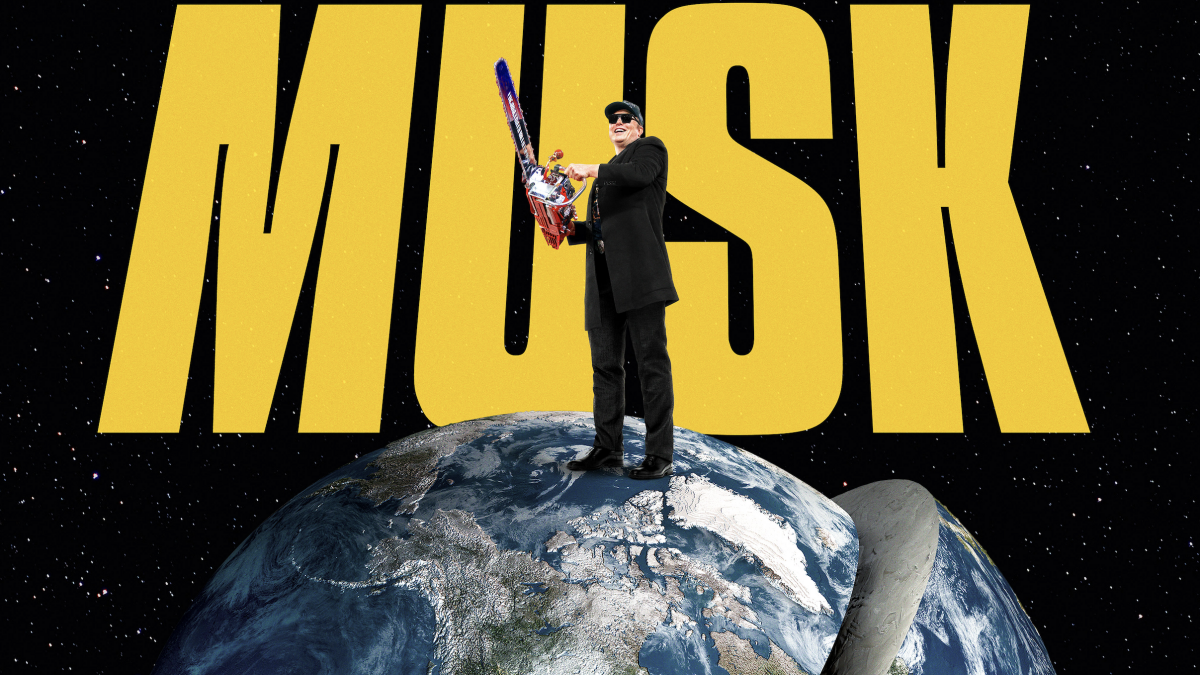
There likely isn’t anyone left on earth who doesn’t know who Elon Musk is. Yet, the new documentary titled Musk from filmmaker Alex Gibney is able to take this man, who has his tentacles in seemingly everything, and brutally break him down in a revealing four-hour-long extravaganza.
Yes, that’s right. The Musk documentary clocks in at close to four hours, including a 10-minute intermission at the halfway point of the film. But there’s so much packed into the film, you may just leave wanting even more.
While Gibney is clearly a critic of Musk, and I did just describe the doc as brutal, I want to be clear: The film is very fair to Musk, regardless of the fact that he called out Gibney for pursuing the movie, which Musk has previously described as a “hit piece” before production was even wrapped. It’s brutal in the sense that it features Musk, and over again
Musk is brutal and accurate.
The film starts off with Musk’s belief that we are living in a simulation. He has mentioned this through his life, time and time again. Gibney takes this simulation idea and uses it to give an overall theme to the documentary to tie things together.
Remember, Musk isn’t in the movie. He called Gibney a “douche” on X for even making the film, which the filmmaker includes in the film. So, Gibney employs lots of archival footage, including quite a few clips I’ve never even seen before.
Since Musk himself isn’t interviewed, Gibney created an animated video game version of Musk to act as his onscreen avatar. This Musk simulation character is voiced by Musk, using the archival footage, and chimes in throughout the film in order to give Musk’s “perspective” and tie all the different pieces of his life together.
From there, Gibney runs through Musk’s business history, and most of it is there: his start with Zip2, his X/Paypal merger, how he got involved with Tesla, the founding of SpaceX, the acquisition of Twitter, his Starlink satellites, xAI, and Grok. Neuralink even gets a mention, although it mostly serves as a vehicle to introduce Shivon Zilis, the mother of four of Elon’s children. There is a glaring omission in the film when it comes to Musk’s companies, which I’ll get to later.
Like I said, the film is fair to Musk, and there is no better example of this than the segment on SpaceX. Gibney includes clips of Musk, clearly emotional, in the early days of SpaceX during the first three failed rocket launches. It’s probably the most human-like that Musk has ever seemed. There was a moment where I forgot this was Elon Musk and nearly empathized with him. And when SpaceX succeeds in launching reusable rockets? This specific scene in the film was so celebratory of Musk that one could imagine Elon sharing the clip on his own X account if it was sent to him… and if he didn’t know that Gibney’s film was the source.
But that also just reflects reality. Up until recently, SpaceX was the least problematic of Musk’s companies. Once the film moves to Tesla, things take a real turn. As someone who has covered both Musk and Tesla, I knew these stories. However, the way Gibney assembles the Tesla footage is particularly damning. Gibney uses real footage of the fatal crashes that came as a result of Musk’s overselling the car’s self-driving capabilities, alongside the promo videos created to misrepresent what the cars could do, followed by Tesla claiming not to have access to crash data in a specific case — a claim which later turns out to be false. It seems hard for even the biggest Musk fan to walk away not thinking that it’s Elon Musk who is the “douche” in this situation.
Gibney also delves into Musk’s personal life, his early childhood and his “legion” of children. It culminates with his entrance into right-wing politics and the pro-Trump world, the Nazi salute, and his government takeover with DOGE, which further empowered the most powerful unelected man in the world.
Mashable Top Stories
By clicking Sign Me Up, you confirm you are 16+ and agree to our Terms of Use and Privacy Policy.
The film’s intermission comes at the halfway point, and the two halves really feel like they’re about two different Elon Musks. The first half focuses on Musk as an unscrupulous businessman, doing whatever necessary to find success with SpaceX and Tesla, even if it means he’s a bad father and a terrible partner. There’s a number of wealthy figures who fit that mold. However, the Elon Musk of the second half is much more nefarious, as Gibney accurately covers the acquisition and dismantling of Twitter, then shows how Musk used the same playbook to basically acquire and dismantle the federal U.S. government (via DOGE and other projects) in search of total power.
Going back to the four-hour running time, I wonder if this film would’ve been better served as a TV series, splitting up each of Musk’s companies or projects into their own episode. There’s just so much, and Gibney still couldn’t get to it all.
While the documentary wasn’t able to nab interviews with Musk, it does have an impressive list of interviewees such as Elon Musk’s father Errol; Musk’s first wife, Justine Musk; the actual founder of Tesla, Martin Eberhard; and the mother of Musk’s most recent(?) child, Ashley St. Clair. The interviews with engineers who left their job after the DOGE takeover and Twitter employees who were laid off after the acquisition really helped add human faces to the stories we’ve read over the past few years.
St. Claire has been making the media rounds recently. She’s a former right-wing influencer who, in her own words, fell for Musk before discovering he wasn’t the person he presented himself as after their child was born. Regardless of what your personal feelings about her are, she’s one of the few interviews in the film who really shares her firsthand account of Musk in private life, including private messages between the two regarding the 2024 presidential election. (The story of Musk listening to a podcast about Kublai Khan while they were laying in bed together was certainly a bizarre factoid.)
I’m personally so entrenched in Musk’s world as I cover it, so I don’t believe there was any breaking news in the doc itself, but there were definitely details I hadn’t previously been familiar with. For example, St. Clair also provides Gibney with audio recordings, which includes a shocking phone call with Jared Birchall, who is described as Musk’s “fixer.” In the call, Birchall describes the mother of three of Musk’s children, Claire Boucher aka Grimes, as “a drug-addled musician” who he doesn’t believe is “capable of finding true happiness.”
Even if I was familiar with these stories, others watching the film were audibly surprised at numerous parts of the film. Going back to how this would’ve perhaps been better served as a series, it would be unfortunate if the four-hour run time was information overload to some, obscuring some of these revelatory nuggets about Musk.
Where I wanted more Musk.
As someone who has covered Musk extensively, I do not want to nitpick with my criticisms of the film. But there are some areas where I felt the film dropped the ball.
Even in a four-hour movie, you still can’t fit it all in. Unfortunately, Gibney leaves one of Musk’s companies entirely out of the documentary. The Boring Company may not be Musk’s most famous or successful endeavor, but it’s central to Musk’s story and really helps define him too. Musk used the Boring Company to launder his vision for traffic-solving tunnel systems, raised billions, and in turn helped destroy investment into high-speed rail. His underground tunnels, his Hyperloop, none of this ended up coming to fruition. Musk’s one tunnel that’s open to the public exists in Las Vegas, connecting a few hotels and the convention center with a single lane of human-driven Tesla vehicles. Yes, one of the company’s products, the “Not-a-Flamethrower” flamethrower certainly makes an appearance in clips, but if Gibney referenced The Boring Company any further, I must’ve missed it — and it’s a fairly big omission.
Unfortunately, the only parts of the film that didn’t work are scenes that are core to the narrative of the documentary, and they’re scattered through the movie. I’m speaking of the “simulation Musk,” an animated version of Musk that’s used throughout the film to provide a visual to words Musk previously spoke.
The idea to tie the whole film together using Musk’s own belief that we are living in a simulation is certainly clever. The device itself didn’t hurt the film, but the Musk animation just did not work. Even though the filmmaker says that they utilized an animation studio, the simulation Musk just comes off looking AI-generated, so it’s a bit jarring. They were going for a video game aesthetic to really hone in on the idea that Musk views himself as living in a Ready Player One-type world. However, the end product doesn’t come off that way to me. It just has an uncanny valley, generative AI presence, which is sort of counterintuitive to the film’s messaging.
Finally, I have to add that it was disappointing to see renowned tech journalist Kara Swisher provide little substance in her onscreen contributions to the film. She is one of, if not the first people interviewed, and she appears throughout the film, up until the very end. Swisher is someone who has covered Musk for years and helped launder the reputations of Musk and many other wealthy tech billionaires in the media. Yet, all those interactions with Musk and her knowing the man seem completely moot for the purpose of the film. She provides little more than color commentary that, while accurate, could’ve been provided just the same by individuals without the personal Musk connection.
With that said, Gibney’s Musk is a fantastic portrayal of Elon Musk and should be considered required viewing material for anyone interested in understanding more about the most powerful man in the world, who is only amassing even more power. The film will leave you truly wondering what exactly Musk’s endgame is and just how much power he truly has being at the helm of things like Starlink.
Musk opens in select theaters in New York and Los Angeles on Oct. 9 and will open nationwide on Oct. 16.Recommended deals for you
HBO Max
—
top pick for premium content
Disney+
—
best for families
Hulu
—
popular choice for originals
Peacock
—
low-cost choice for live sport
TopicsDocumentariesFilmSpaceXTeslaX/TwitterElon Musk
Matt Binder joined Mashable’s tech vertical in 2018, where he covers social media, tech policy, cybersecurity, online scams, cryptocurrency, AI, creator news, weird tech, and other related tech beats.
