

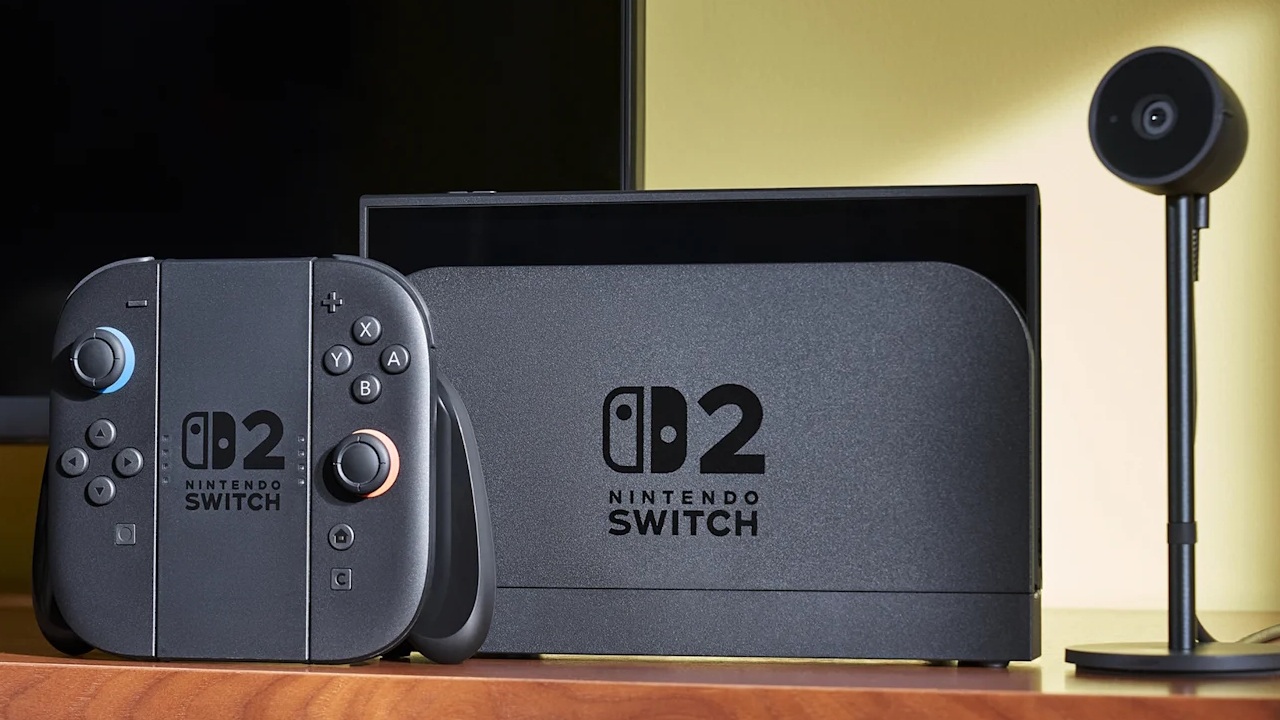
Nintendo reveals GameChat origins including Switch 1 prototype, started working on Switch 2 features in 2020
Posted on October 2, 2026 by Brian(@NE_Brian)
in News, Switch, Switch 2
A staffer at Nintendo’s planning and production department has spoken extensively about GameChat, revealing the origins of the Nintendo Switch 2 feature and even the prototype used on Switch 1.
We’ve often heard that once one system ships, hardware manufacturers already start working on the next one. This is unsurprising in a way, but still interesting to hear that Nintendo started developing features for Switch 2 around 2020.
Nintendo started out by trying things on PC. Later on, however, a special prototype was made for the original Nintendo Switch. Today’s piece goes into the difficulty of making that prototype happen, but once everything was running, it confirmed “the appeal of chatting while sharing the game screen”.
Creating new features for Nintendo Switch 2
When you turn on the game console, the “Home Menu” appears, displaying game icons, system settings, an album, and more. My role is to develop the main functions of the game console, including this Home Menu.
These functions are something that every customer who owns a game console will interact with. The development involves members in various roles, including product managers, engineers, designers, and sound creators.Development of features for the Nintendo Switch 2, which was released in 2025, began around 2020. At that time, we didn’t even know what the next dedicated gaming console would be like. From that stage, we considered “integrating communication features that work together with games into the console” as one of our major themes.
As the engineering leader, I was in charge of this feature. This ultimately took shape as “GameChat.”
First, we created a prototype on a PC and tried playing games while using voice chat and video chat. Through trial and error, we realized that sharing the game screen would be a major feature of this function.
Our PC-based prototype demonstrated the appeal of chatting while sharing the game screen. However, a PC cannot replicate the behavior of a game and chat running simultaneously on a dedicated gaming console. To determine if it’s possible to switch between the game and chat without interrupting gameplay, and how this transition affects the overall experience, we needed a prototype running everything on a dedicated gaming console.
Therefore, to explore the experience of integrating GameChat into a dedicated gaming console, we decided to integrate GameChat functionality into a development kit based on the already released Nintendo Switch and create a prototype.
Combining games and chat into one experience
The Nintendo Switch console wasn’t designed to allow simultaneous use of voice chat, video chat, and game screen sharing while playing a game. Therefore, we collaborated with various teams, including those responsible for firmware, servers, and cameras, to explore ways to achieve this.
The turning point was the “Quick Settings” feature (a function that appears when you long-press the Home button and allows you to adjust brightness and volume). Quick Settings is designed to be accessible at any time while using the device. By utilizing this feature, we realized we could create a chat UI and operation that works simultaneously with games and can be accessed at any time.
However, there was another major problem. The Nintendo Switch has limitations on system reon, it was not possible to run all the GameChat functions simultaneously with the game
Therefore, to first verify the value of the experience, we made maximum use of red the system ret. With this special Nintendo Switch prototype we built, we managed to actually run the GameChat . The moment we were able to experience the experience we had been aiming for for the first time gave us a great sense of accomplishment
Using the completed prototype, we tested the usability of the GameChat while playing various types of games. As a result, we confirmed that the enjoyment we saw in the PC prototype was not lost on a dedicated gaming machine, and that it was possible to switch between games and chat without interrupting gameplay. We also found that playing games and chatting were seamlessly connected, and that both could be enjoyed naturally as a single experience.
People naturally gather even without a specific reason, and play games together. Sometimes, each person concentrates on their own gameplay and spends time quietly. We became confident that we could create such a “clubroom-like space” as an extension of this prototype.
Confirming the value of GameChat through the prototype allowed us to move on to full production. From here, development accelerated even further, and we repeatedly implemented, tested, and evaluated ideas. The more we discussed while actually interacting with a working product, the clearer the outline of the experience we were aiming for became.
In developing the core functions, we consider “what kind of experience we want to deliver to our customers,” create prototypes if necessary, and refine them while verifying their value. As in this case, we sometimes start creating new experiences using existing consoles and technologies even before a development unit for the next dedicated game console exists. The real thrill of working as an engineer involved in the development of these functions is being able to work on the system in depth, create a successful prototype, and concretely shape the experience we will deliver to customers in the future.
We’ve got plenty of other Nintendo Switch 2 news for you here.
