

You know what they say: one man’s trash is another man’s treasure. Or, in this case, another man’s music.
Content creator and Chinese culture enthusiast “Foreigner Hat” recently went viral for explaining the little-known Dakou movement, in which damaged, discarded CDs from the U.S. created a giant counterculture movement.
Trash bins full of banned music presented a unique opportunity
Beginning in the mid-’60s, China’s Communist Party heavily restricted or outright banned Western music (even instruments like pianos were frequently destroyed or condemned), which was viewed as a symbol of capitalist decadence and bourgeois values.

However, by the 1990s, Western music trickled in through a unique underground phenomenon known as dakou. Essentially, American record companies damaged their excess CDs by cutting or drilling holes (dakou) in them, then sold them as trash scrap to Chinese third-party markets.
“A lot of these ended up in Guangdong [province], where people quickly realized something,” shared ForeignerHat. “A CD plays from the center out, so if the hole was near the edge, you might have just lost the final minutes of it.”
“But the kids didn’t care,” he continued, “because for 10 to 20 yuan, they not only could get an album that might otherwise cost over 100, but also music that was difficult or impossible to legally access in China, and so a huge black market grew around these damaged records.”
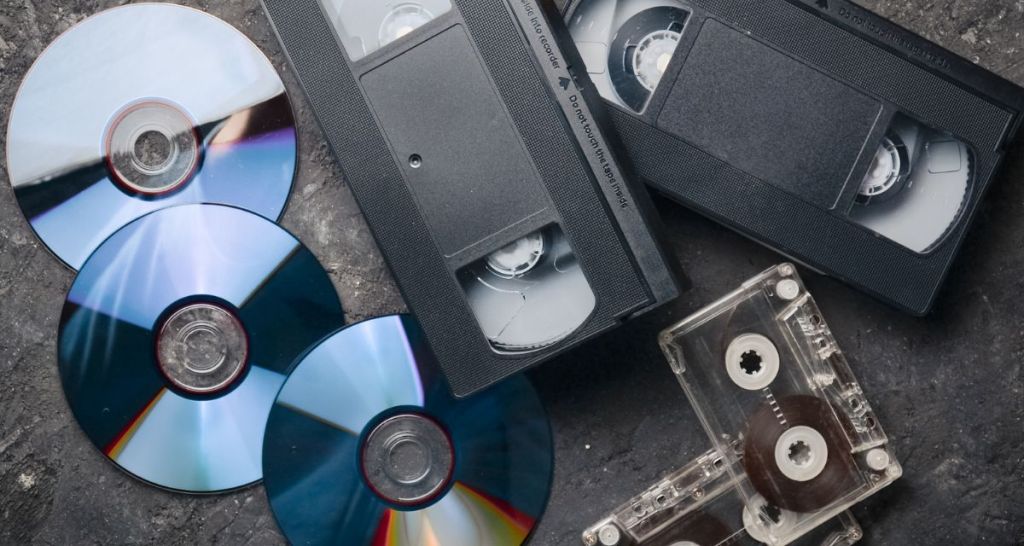
The Dakou movement got so big that by the mid-’90s, these damaged CDs were “95 percent of all Western music in China.”
Viewers reflect on the Dakou movement
The now-viral video reached several folks in the Dakou movement, and they shared heartwarming memories of discovering their passion for Western music staples through it.
“Filled my whole middle school to high school days. That’s how we first got into Eminem, Linkin Park, Coldplay, James Blunt, and literally anything. I can’t imagine what my life would’ve become without running into these. But honestly, I never knew why they’re called 打口碟 until right now 😂”
“I was one of these kids. Dakou CDs were the only affordable access to Western music. Now I’m a music professor in the U.S., thanks to these ‘plastic trash.’”
“I have an uncle who taught me this when I was a kid. Haven’t heard this word for years. I’m gonna give him a call now. Thank you for sharing.”
“Dakou CDs are my entire ‘Green Days.’ Big thanks to the ‘trash from the West’ 😂”
“This inspired a whole generation of cool kids in China. In the 90s, most of the music critics were the first people to go to the harbor, [and] dig into the cargos loaded with Dakou tapes from ships overseas. They picked the best out of each batch, and the rest went to the black market, like alleys behind middle schools and universities; there were stores exclusively selling them. I remember a Nirvana’s Bleach tape cassette was 7.5 Yuan, about 1 USD.”
“Back in high school, I took one summer working part-time at a famous Dakou CD store in Xi’an. Basically listening to all kinds of music all day and categorized them into genres. Met many music lovers, rock band players, and all kinds of interesting souls. Wonderful memory.”
“I was born in 1988, that was my only way to reach Western music. Me and my friends went to the Dakou CD shop, and the boss’s daughter, who was probably 7 or 8 years old at the time, was listening to blues. We were so jealous that she had access to this kind of music so early in her life. Definitely some of the best memories in my life; we shared headphones while listening to CDs on the bus. 😢”
There’s something especially fitting about this very cool bit of history coming from someone who also found inspiration in a culture beyond their own. After all, that’s one of the beautiful things about culture: something created halfway around the world can still miraculously find its way into our lives and make the world feel a little more connected.
Give ForeignerHat a follow for even more cool stuff about Chinese underground music.
