

“I represent the musicians who are supposed to get recognized but often get overlooked. All I have to do is keep the IRS at bay.”
Photo: Per Ole Hagen/
Todd Rundgren’s Midas touch is that everything he works on turns into Technicolor. It’s been like this his whole life — as a singer-songwriter, multi-instrumentalist, producer, and the recipient of 30 Rock’s best joke. For six decades, Rundgren has sought comfort in being a self-governing cult figure in an industry that often values conformity above all else, a position he was able to carve out in the 1970s thanks to a studio system that doesn’t quite exist anymore: He would engineer albums in exchange for being left alone to release his own stuff, such as the era-defining Something/Anything?and A Wizard, a True Star.Rundgren could write commercial hits all day if he wanted to, hello, but his most fulfilling work came from weird sonic experiments and an enthusiastic acceptance of everything technology had to offer, a calling that persists to this day and inspired myriad artists with this DIY approach. “It’s because I have that freedom that I can do things that other artists can’t do or won’t do. I’m sort of obligated to do it,” he tells me. “I’m obligated to go places where other artists wouldn’t go. Otherwise, I’m just going over the same territory that everyone else is and not taking advantage of that freedom.”
Rundgren is a constant, exuberant fixture on the road — I’ve seen him perform four times in four years and continue to feud with Carnegie Hall for not letting people stand up and dance to his set — but right now he’s taking a breather before resuming his Damned If I Do Tourin October on the West Coast. “I find that the show is exercise few people my age get,” he says. “It’s very good for me.” Returning to his Hawaii home last week after a few gigs in Europe, Rundgren was faced with no power for five days, which forced him to slow down further and reacquaint himself with old habits. “When I first moved here, I used to camp out a lot,” he recalls. “So the sound of the generator is somewhat comforting.” He breaks into a wry smile of sorts. Maybe the generator’s hum will make it onto the next album.
You’re someone who doesn’t worry about your legacy because you’re always touring and doing interesting stuff. Where does the discipline come from to keep working when many of your contemporaries are choosing to stop?
Well, the IRS is a factor. They never go away. They’ve been my lifelong partners. As much as I would like to retire, they’ve made it more or less impossible for me to do so. So that’s one practical reason. But I suppose there can be any number of factors that cause somebody to slow down or retire. There’s health things, and I’m fortunate that I haven’t suffered any health catastrophes of any kind. I feel good when I do a show. I’m getting my aerobics in. People also retire because they’ve written everything they can think of and now can’t think of anything else to write. Writing becomes more and more challenging the more that you’ve already written. And sometimes people will find a different career path, although that seems to be more of a modern thing. Because of the way that people make money on the internet, music is only one way to get your foot in the door.
Ultimately, a lot of younger artists or younger creatives want their own brand, and anything could be under that brand. It could be shoes, it could be a scent, it could be anything. They want to act. Music isn’t enough. So in the modern sense, people may move out of the music business and into another one. But age is probably the biggest factor. People just get older and get tired of doing it. I’m just not tired of doing it yet.
What does a typical Todd Rundgren fan look like to you? Do you see yourself as a vessel for a certain type of subculture?
I’m still learning about all that. But up until fairly recently, the shows that I would do would often be based around whatever the latest music I was making or some other kind of concept I would have. I wouldn’t think much about what audience expectations might be coming into the show. But I’ve tried to analyze it a little bit more carefully in putting together the more recent show and came to realize that in anybody’s audience, there are probably at least two kinds of fans. The fans who come to see the performance, and they’ll accept whatever it is you do because they want to see you. Then there are fans who come to hear a particular song or a couple of songs, and the longer you go through the show without playing that song, the more annoyed they get. So trying to figure out how to satisfy both these components is the top-level consideration.
Then you can break it down even further. There’s second- and third-generation fans. Their parents started listening to me back in the ’70s, and then they indoctrinated their kids, so their kids would come to the shows, and then their kids had kids, and I’m now seeing the grandkids. I have some very old fans and very young fans as a result. I’m starting to attract an independent thinking group of younger fans who discover you through the internet. Listen, I had my heyday long before they started listening to music seriously. There’s a percentage of people in any particular generation who just get tired of listening to what everybody’s listening to and want to find something different. You can’t travel into the future, so you go to the past.
I’ve been through several of those phases. Hell, the cocktail-music phase. When CDs came out, especially in Japan, they would find every obscure record that was ever made on vinyl and convert it to a CD. Suddenly, you’ve got all of this cocktail-bachelor-pad music that I wasn’t paying much attention to when I was growing up. But when you listen to it now, you think, This is some remarkable music. Juan García Esquivel, Arthur Lyman, and people like that who would make this type of exotica music. I made a whole exotica album influenced by music that was done before I ever started recording.
Young people may develop an interest in the greater history of music and want to go back to listen to older artists. Fortunately, I’m still performing so that I can take advantage of that.
Your reputation for being an unpredictable and do-it-all weirdo precedes you. How often did you feel out of step with the rest of the industry’s demands?
I’ve had a freedom that other artists didn’t have, because when my first band, Nazz, broke up, I got into record production and was pretty successful at it. So I’ve never felt the impending doom that most artists feel if they don’t have a commercially successful record — they always feel like it’ll be their last. You get two flops in the record industry and then you have to start looking for another label. I had a relationship with Bearsville Records where I would produce a lot of artists on the label in exchange for getting to make my own records. And then accidentally, sometimes I would get a single or a hitsingle, but that wasn’t enough to sway me away from my essential reasons for making music.
What musical innovations and techniques, especially the ones you’ve pioneered in your career, do you feel are taken for granted in the industry today?
I did some fairly conventional recording in my first two records. I was playing most of the instruments. I would have a rhythm section and more session players, but I was filling in a lot of the gaps in the music. I was playing everything except the bass and drums. And then when I got to my third record, Something/Anything?, I’d start out playing everything. There’s an advantage to that — you’re not being distracted by other people or by the demands of objectivizing what you’re thinking. In other words: If you’re working with other musicians, you often have to write out what you want or you have to explain and show them what you want them to play. It would be something simple enough that I could just play it myself. So I said, “Well, why not do that?” The end result is you’re making music from a much more personal standpoint. It remains subjective throughout the process. As time has gone on, I’ve depended more and more on my subconscious to be the initial creative spark. That only works if you can get all those other distractions out of your life so that the noise floor of your brain starts to produce these ideas.
As far as other techniques, by the time I got to A Wizard, a True Star, that was really when we started to go crazy. We had our own studio and would do all kinds of things. Sometimes there would be happy accidents we would get along the way. You do a bounce and forget to put the noise reduction in, and it would make everything sound really bright and great.
But maybe the biggest thing was thinking of albums not necessarily as cuts but as a sound space that you can fill any way you want. So we filled it completely. Each side was filled with music with almost no breaks in it. I tended to do that on records after as well. I did a bunch of that on the following record, Todd, and it came to a culmination when I produced XTC’s Skylarking. The whole album is one musical thought running into each other. It was a shame that we had to break it up into two sides, otherwise it would’ve been one long, continuous piece of music. I did a similar thing with the Tubes on Love Bomb — the second side was all continuous music. So it’s a combination of hearing it a certain way and then using the techniques to blend everything together, and those varied with the technology available.
When I was doing A Wizard, a True Star, for instance, we had no MIDI. MIDI didn’t exist yet, so everything had to be hand-synchronized. You had to play exactly in tempo with something else. Eventually, we would take advantage of any technological advances to make that process easier.
Is there a technological advance in music that you’d like to see realized in your lifetime?
There are some algorithms that do a pretty good job of breaking down a stereo mix into its components. I don’t have access to any of the master tapes from A Wizard, a True Staror Something/Anything?. Part of it was the original media decaying. At one point, we made copies onto other media, and then that media started to decay because the records were done so long before digital. If you put something on a hard disc, that’s pretty much going to stay there. Any of these other analog media, they all decay. So if I would like to go back and remix an old record, to be able to get a really good, sophisticated breakdown of everything — not just voice and bass — and break it down so that you got each individual instrument so you could make an old record sound better.
It’s getting more sophisticated all the time, but most of the commercially available algorithms make assumptions that you’re just going to want the voices, guitar, and drums. Usually you get four, maybe five options at most. I worked with a lot more instruments than that. I think every artist would want that so they could go back to previous stuff, improve the sound of it, and bring the sound up-to-date.
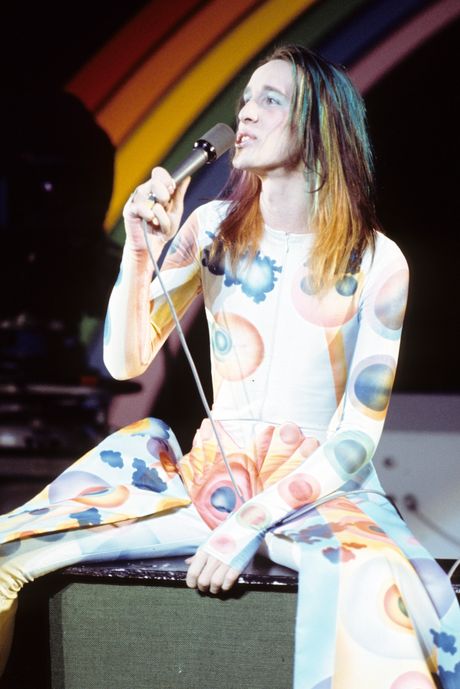
Rundgren in particularly colorful costumes while performing in the 1970s. From left:Photo: Michael Ochs ArchivesPhoto: ABC Photo Archives/Disney General Entertainment Content via Getty Images
Rundgren in particularly colorful costumes while performing in the 1970s. From left:Photo: Michael Ochs ArchivesPhoto: ABC Photo Archives/Disney Gene…Rundgren in particularly colorful costumes while performing in the 1970s. From left:Photo: Michael Ochs ArchivesPhoto: ABC Photo Archives/Disney General Entertainment Content via Getty Images
When you produced Meat Loaf’s Bat Out of Hell, you said at the time that you didn’t care if it succeeded or not, because you just wanted to make fun of Bruce Springsteen. If you produced an album in 2026 to make fun of an artist, who would be your target?
Taylor Swift, of course. There’s an argument to be made that she ruined music. It’s an understandable phenomenon. It’s just that, to me, Taylor Swift is the apotheosis of mediocrity. It’s the era of the female artists. The biggest artists in the world are female artists at this point, and that’s because of video games. Back in the ’90s, boys stopped spending money on music and started spending it on video games, and that left the music market with, “Well, where do we go here?” And they said, “Well, there’s all these young girls and they’ve got their allowances, too. Why don’t we start making music for young girls instead of Pearl Jam or something like that?”
So you got Lady Gaga, Taylor Swift, P!nk, and many artists of that ilk. Lady Gaga, she’s a real musician. She’s a classically trained piano player. Taylor Swift doesn’t do anything particularly great except grow hair. She’s not a great singer. She’s not a great songwriter. She’s not a great dancer. She’s a role model for what was a very young generation of women, and now for those women’s daughters as well, because it’s mothers and daughters going to Taylor Swift shows.
You’ve always struck me as someone who could have performed on The Last Waltz given your history with the Band. Did you ever ask any of those guys if an invite got lost in the mail?
They were looking for a real A-list artist. I’m, to this day, something of a fringe artist. I do have my devoted following so that I can continue to tour, but I don’t do arenas, stadiums, or anything like that. I’m lucky to get out of the clubs and get onto a real proscenium stage. So in that sense, the Band could only have so many people there, and a lot of those people were more or less direct influences on them. Certainly Bob Dylan and Dr. John. The Band were the backup players for a Canadian rockabilly artist named Ronnie Hawkins, and when Dylan tapped them to be his backup band for the Newport Folk Festival, that changed everything for them. They had to suddenly invent a whole new sort of musical history that wasn’t there before.
And essentially, that’s what Robbie Robertson did. He wrote Levon Helm’s biography into their music, because they were all from Canada. Levon was the only one who was from Arkansas, really from the South. So singing about the Civil War and stuff like that, that’s part of his history, not part of the rest of the band. It was a very interesting experience to be in the studio with them for Stage Fright. I had some of the guys play on my records, and I’ve done tribute shows with Garth Hudson playing accordion and things like that. I got along with the guys mostly, but there was already a rift forming. It’s a typical thing that happens. When one guy writes all of the music, as was the case with Robbie, it isn’t long before the rest of the band realize that he’s making all the money. And then it’s not long before the band breaks up because they want to write their own songs and make some of the money. I’m not sure how Neil Diamond got in that Last Waltzmix, though. I was there in spirit.
You were a member of Ringo Starr’s All-Starr Band through a few distinctive periods of time, starting in 1992 and leaving in 2017. What motivated you to say yes to begin with, and how did that experience enhance the creative trajectory you were already on?
I have an interesting history with Ringo. My manager was friends with him as well as Bill Wyman of the Rolling Stones. There was this thing called the Jerry Lewis MDA Telethon, and by the late ’70s, the producers of the telethon thought they weren’t reaching young people. So Ringo helped out and said, “Why don’t we put a band together? We’ll have a dance party for Jerry.” It wasn’t in the auditorium but rather one of these open spaces in Las Vegas. They set us up there, and we put together a supergroup with Ringo, Bill, Dave Mason, me, and the guys from Utopia. The thing was, Ringo hadn’t played in years. After the Beatles were done, he recorded some stuff but didn’t go out on tour. He was too stage shy. So we had so much fun doing that telethon. Cut to ten years later, and Ringo decides that as part of his rehabilitation he’s going to start playing again. He got into real big trouble because when he stopped playing, he didn’t know what to do with himself. He started hanging around with Harry Nilsson and getting into all sorts of mischief, and he realized that he was probably going to die unless he got into rehab. Part of the rehab was to start the All-Starr Band.
So he asked me if I wanted to play in the very first All-Starr Band, but I was out with Utopia at the time, and it was a long tour. I just couldn’t make the timing work. He asked me again to be in the third iteration, so I did that one, and I was one out of five guitar players. I wound up strumming acoustic guitar through most of the show. But it was a fun thing. It was fun to travel the way that Ringo travels.
I got asked again in 2012. By then, Steve Lukather and Greg Rolie were playing, and it was a whole different kind of band. Everybody got along so well that at the end of the tour, Ringo, instead of doing what he usually does — “We should break up the band and get a whole bunch of new guys” — kept the same band together for four and a half years. It was great because you fly by private jet everywhere you go and stay in the same hotels as Ringo. You live like a king. The only problem for me was after nearly five years, it’s exactly the same show every night with the same jokes and everything. At a certain point, I just couldn’t handle it anymore. I need to feel like I’m moving and evolving to a certain degree.
What would be your performance review of Ringo as a boss?
Ringo was maybe the only one who survived the Beatles. All the other guys had some sort of issues they had to deal with. Paul McCartney, even today, is so afraid that people forget who he is that he’ll show up at a mall opening. Ringo finally got over being a Beatle and became Ringo — and just Ringo, because there was a time early on during the All-Starr tours where he was afraid that if he stopped anywhere in public that he’d be mobbed to death. So he would ignore everybody. By the time he got around to the last couple of tours that I did with him, he was out there palling around with the fans and comfortable with himself. He has his own regimen, and he’s so freaking healthy. It’s unbelievable how well he takes care of himself. He’s great to work with. Listen, he’s the boss. Everyone knows he’s a boss. But everyone gets treated the same, and it’s a great gig if you can get it.
Youoncedescribed Laura Nyro as being in a pantheon of artists who exist to influence others, and to go where others won’t and show them how. I’m thinking back to what you said earlier about having an obligation to experiment with your music because not every artist is as fortunate. Do you view yourself through a similar lens?
I realized that I had a responsibility to take advantage of the freedom I had in the ways that a classical musician would. Classical musicians, like Bach or Beethoven, didn’t go out and gig. Often they would make money as a copyist — writing out the music for other composers, things like that, just to get paid and make money. Because otherwise, they would be pandering. The music would naturally be pandering to the audience to ensure that they would get fed or paid. They realized that you don’t have to quit your day job. In that sense, I always see myself not as a pop musician, because a pop musician is trying to figure out what the popular meme is.
I’m a musician, but that allows me to represent the concerns of musicians. I can afford not to show up at my Rock & Roll Hall of Fame ceremony because it’s so bogus and because artists like Bettye LaVette and Taj Mahal aren’t in there. What business have I got being in there? I represent the musicians who are supposed to get recognized but often get overlooked. All I have to do is keep the IRS at bay.
The Wizard of Rock Would Like a Word

2 Comments
Pingback: 7 Romances that Define the X - Comic Vibe
Pingback: Former AKB48 star Abe Maria announces marriage, pregnancy - Comic Vibe