

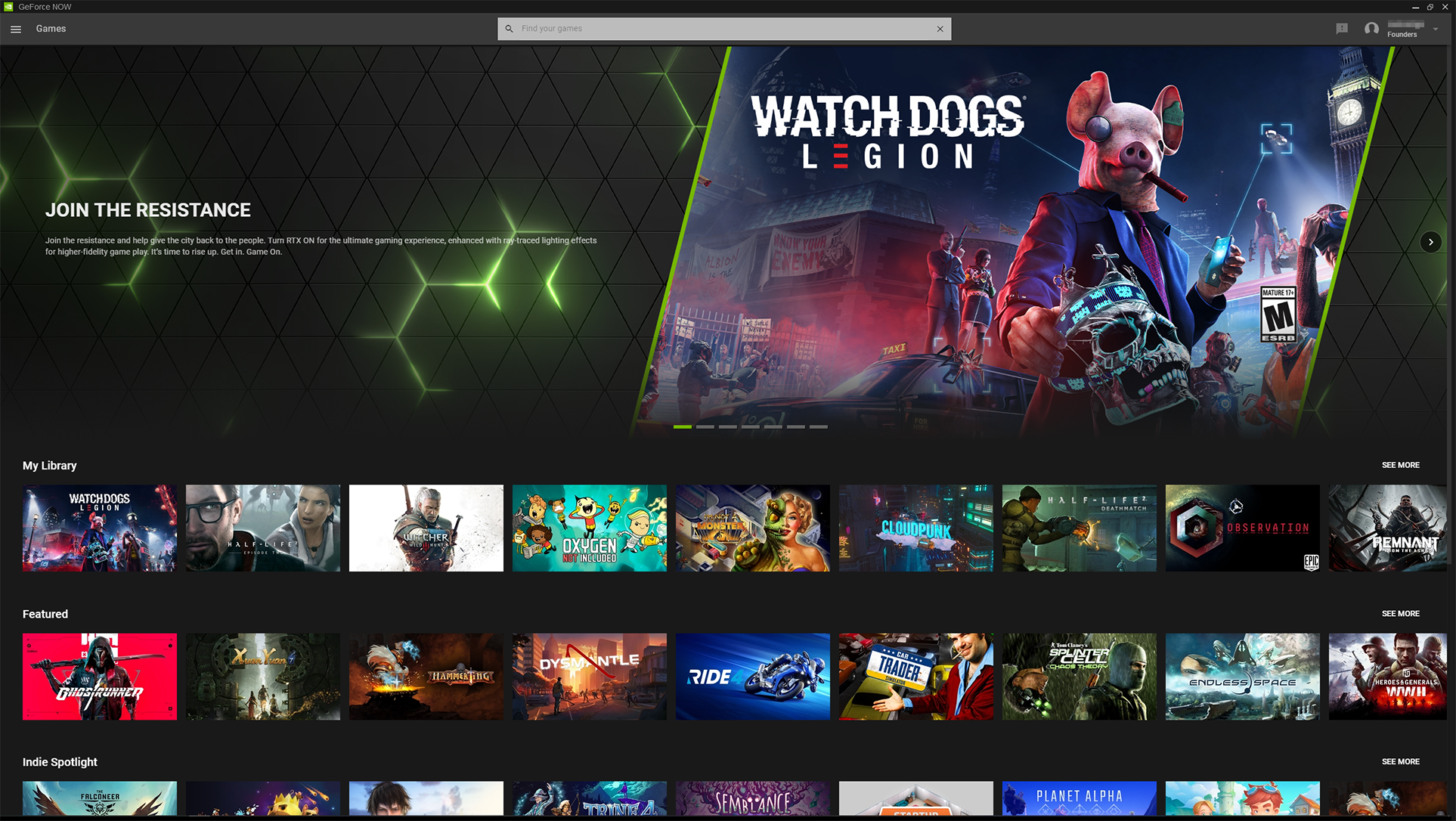
Despite never gaining the same traction as major gaming consoles or premium gaming PCs, cloud gaming services have steadily persisted since their rise in the 2010s. Cloud gaming services let people play video games by streaming them live over the internet. The pitch is that you don’t have to buy expensive PC gear or invest in a game console plus the price of individual titles to play AAA (or lots of not-quite-AAA) games; you just need to stream them with a subscription.
Sure, Google’s ambitious Stadia gaming service shut down in 2023, but similar services that offer streaming video game play over an internet connection from Nvidia, Microsoft’s Xbox, Sony’s PlayStation and Amazon’s Prime have kept the dream alive.
But cloud gaming services have struggled to go mainstream due to the inherent challenge of delivering consistent gameplay in an inconsistent world of laggy internet connections and millions of hardware options. (A recent New York Times headline: The Best Cloud Gaming Services Aren’t Great (Yet).) And now they may be facing an even bigger challenge: the cost of providing their services is skyrocketing, as demand for AI compute power and other data needs is making the services that data centers provide much more expensive.
As Chris Plante, co-founder of Polygon and writer and podcaster at Post Games, describes it, cloud gaming has been a “white whale” for gaming companies for the last decade. However, demand has fallen short of expectations, and costs are now rising.
“Companies sold audiences on the idea of cheaper compute that could be leased from a data center, only for data center compute to become more expensive than ever, leaving those companies with a sales pitch that no longer adds up,” Plante said.
The idea that the math behind cloud gaming no longer makes sense is starting to ring alarm bells in gaming communities. A <a href="https://www.theguardian.com/games/2026/sep/09/streaming-from-the-cloud-was-meant-to-changes-games-forever-what-happened” rel=”nofollow noopener” target=”_blank”>recent Guardian story asked simply, “What happened?” to the promise of cloud gaming, and pointed to limits imposed on services like Nvidia’s GeForce Now and Xbox Cloud Gaming this year as an indicator that we may see some options disappear. A BigGo Finance analysis published this week said cloud gaming is being squeezed by big tech’s AI infrastructure needs, with some of that demand driven by the same companies that offer these cloud gaming subscriptions.
What’s changed this year in cloud gaming?
At the start of the year, all users of Nvidia’s GeForce Now, including those who’d been grandfathered in for the prior year, were subject to playtime limits on their accounts: 100 hours, with the option to roll over 15 hours of unused time per month.
That meant players who were already paying $10 to $20 a month for one of the game streaming plans would need to pay an additional $3 to $6 for an extra 15-hour block of time, depending on their tier.
Also this year, Microsoft’s overhaul of its Game Pass program, which has included price reductions, placed similar limits on Xbox Cloud Gaming usage that will go into effect in November. When that happens, Game Pass Ultimate subscribers will be capped at 15 hours of cloud gaming per month, while Premium and Essential subscribers will get 10 and 5 hours, respectively. All tiers will have the option to pay extra for more cloud gaming, but Microsoft has not revealed what overages will cost. The company said at the time, “Moving to monthly limits allows us to keep offering the service while continuing to invest in its reliability and performance. We understand that for some players the practical result is a higher cost.”
When the change was announced, Microsoft tipped its hand about how unpopular the service is, revealing that only 4% of Xbox users would be affected.
Rumors swirled earlier this year that Xbox Game Pass would be able to select an ad-supported tier offering discounted subscriptions, similar to what Netflix and Amazon Prime Video offer, but that hasn’t materialized yet. Microsoft confirmed over the summer that it’s testing out an ad tier.
Microsoft declined to respond to questions about more recent reports suggesting it might separate Cloud Gaming from Game Pass entirely and make it an add-on for an additional fee. “We will share more details about the cloud updates that we announced earlier this month closer to November’s launch,” a spokesperson said in an email.
Amazon pushes back on the cloudy outlook for game streaming
Over the last few years, perhaps because of the attention Amazon’s other business segments receive, the company’s Luna game streaming has not drawn a lot of attention. But the retail giant has been making a lot of changes since last year, rolling its Prime Gaming service into Luna and premiering original games like Courtroom Chaos with Snoop Dogg, as well as popular third-party titles like Hogwarts Legacy and Indiana Jones and the Great Circle.
In its most recent update, Luna added Star Wars: Outlaws and Avatar: Frontiers of Pandora for streaming at no added cost to anyone with an Amazon Prime account. It’s also been introducing multiplayer games that can be played through its Prime Video app, similar to the way Netflix offers video games (or links to app downloads) in its video streaming apps.
The head of these efforts, games industry veteran and head of Amazon Gaming Jeff Gattis, told CNET that Amazon’s AWS service allows it to operate Luna “efficiently at enormous scale, and that scale is exactly what makes a service like Luna
Gattis said that what’s missing in the doomsaying about cloud gaming is the recognition that there’s a large segment of gamers, perhaps casual ones, who can’t keep up with the rising costs of gaming hardware.
“We actually see this as cloud gaming’s moment,” Gattis said. “The cost of entry for players keeps climbing with console hardware prices rising, high-end PCs costing more than ever, and games themselves getting more expensive. For a lot of people, that’s becoming a real barrier.”
At least for Amazon, he said, cloud gaming is not going away anytime soon.
“Amazon has a long track record of building services for the long term, and Luna, powered by AWS and integrated into Prime, is built to last as an accessible and affordable way to play,” he said.
