

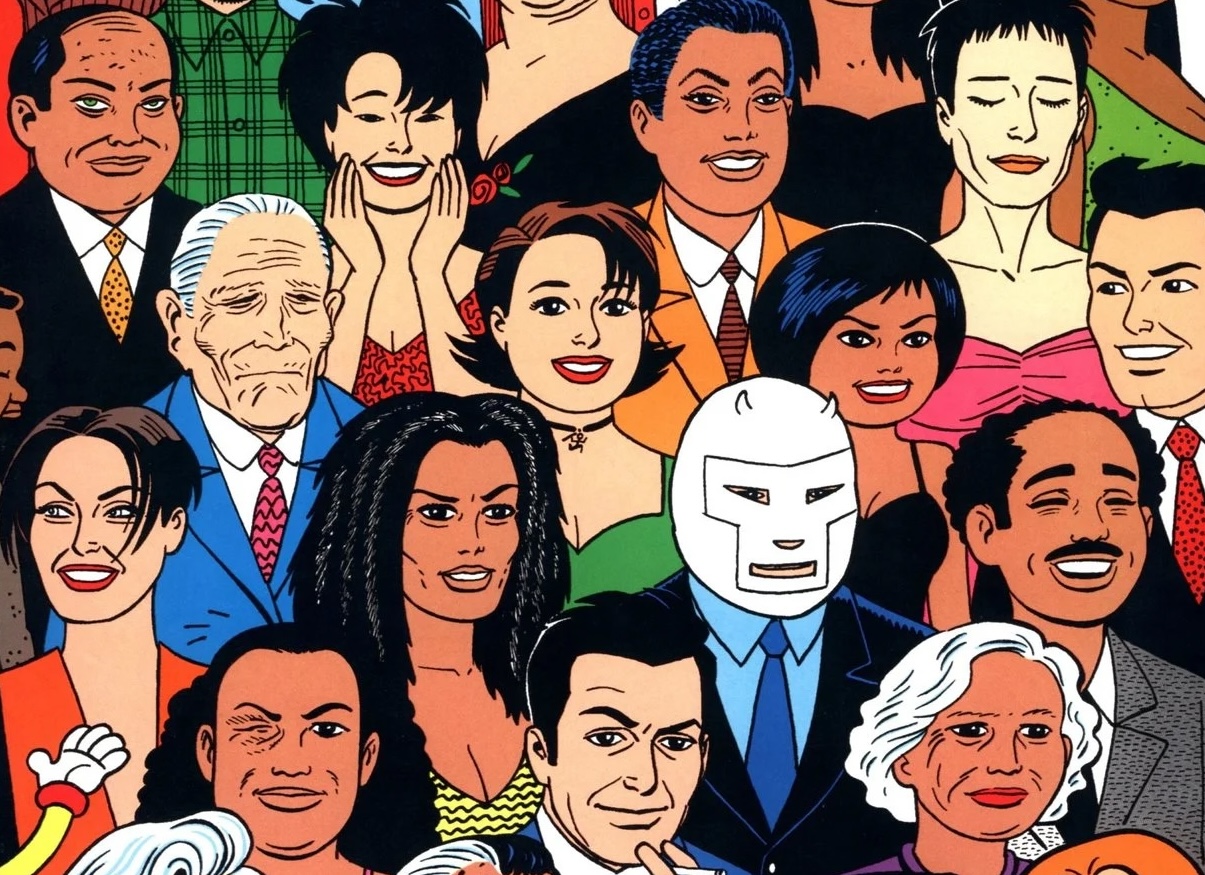
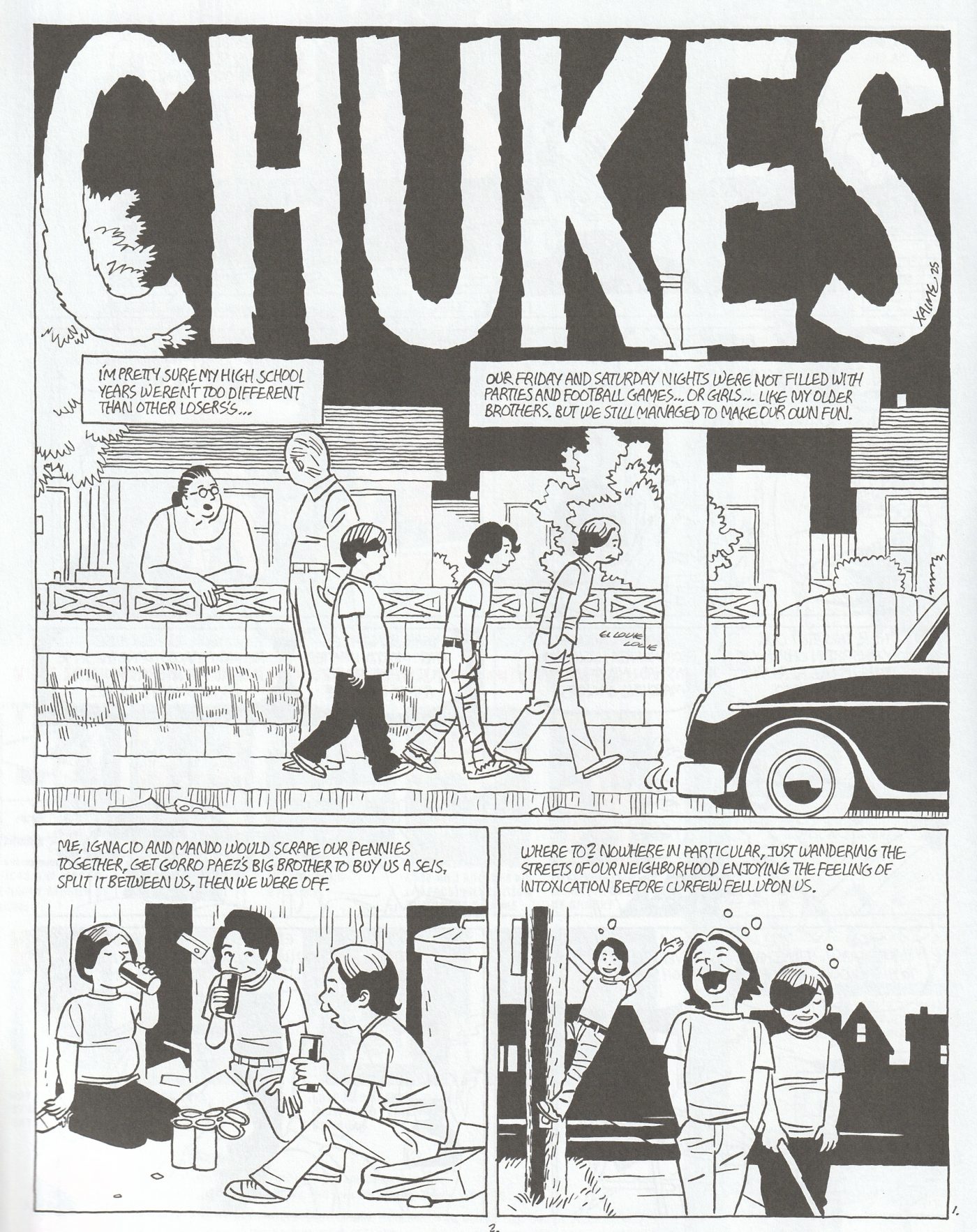
The following conversation took place on April 19 at the Ray Stark Family Theater at USC during The Los Angeles Times Festival of Books.
JORDAN CRANE: Good afternoon, everybody. Hello. This afternoon, we have the distinct pleasure and honor of speaking with the two greatest cartoonists to have ever worked in the medium. They’ve been publishing for about 45 years now. You can call it a legacy or a body of work, yet it maintains a vibrancy and immediacy that is unparalleled in many artists’ history of working. It’s constantly challenging the reader with new things, changing and growing as artists. We as readers adapt and change with them. Which is an incredible relationship, authentic and beautiful.
So we’re very happy to be here with them today. Thanks to both of you for being here with us.
Many artists working in any medium might get kind of attached to what works, what people like. It doesn’t seem like either one of you has that issue. Gilbert, you’re drawing comics at the rate of, like, the house is on fire. And Jaime, you know …
JAIME HERNANDEZ: Slow.
You say you’re slow, but you’re still putting out comics at a faster rate than most of my generation.
GILBERT HERNANDEZ: It’s just avoiding yard work. If I work all the time … the dishes? Nah, I gotta go finish this graphic novel.
My brain is like a runaway train. It just won’t stop. I have that kind of brain, and it just keeps pumping out stuff. A lot of it’s probably not worth anything, but it does come out. It just keeps rolling out. I work seven days a week ’cause I can’t stop. I can’t stop. I get stuck, and I like to take breaks and hang out with my wife and daughter and go out and do stuff, but most of the time, if I’m home during the day, I’m just working constantly. Nothing gets finished. You’re just always going around in circles, doing stuff. But eventually it gets there.
You have several stories going at once?
GILBERT: I’m usually doing three comics at once.
What happens is that if I stop one I could be there for days or weeks, just not knowing what to do next. So I’ll just jump into another comic, and your brain resets. But pretty soon, you’re doing three comics you can’t finish. So you have to emphasize one, but you have to stop. But what’s good about it is, you finish that one and you go back and look at the other two, and they’re half done.
It works out, but you have to slow down. I can’t just barrel through like that for the rest of my cartoon career.
Why not?
GILBERT: Burnout. We haven’t stopped writing and drawing for 45 years. We’ve never stopped, you know, we might have shifted to other comics or this and that. So think about that: “Oh, the legacy of Love and Rockets.” We, as human beings, haven’t stopped.
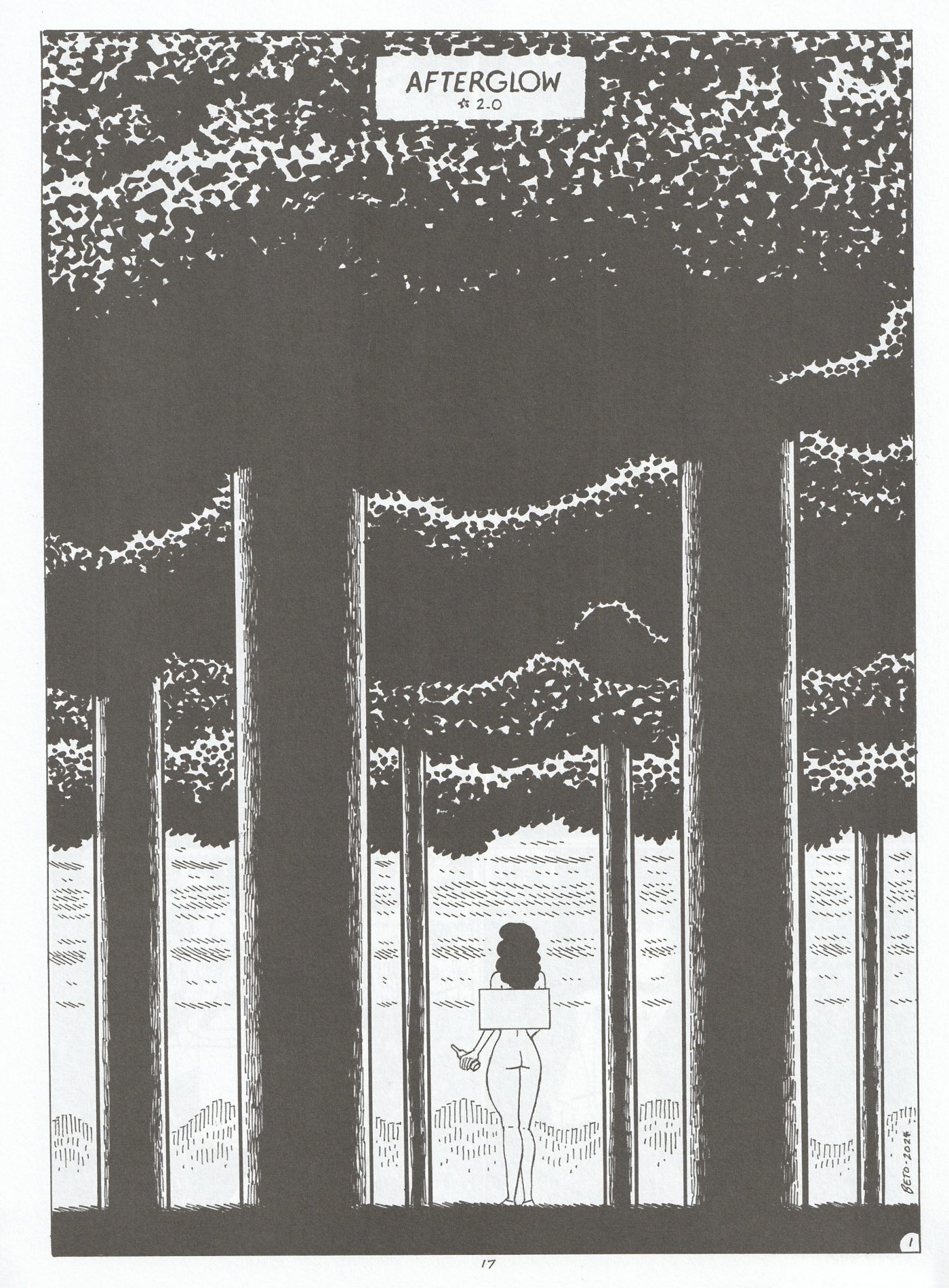
JAIME: What’s my question?
So you’re the slow one, right?
JAIME: Yeah, yeah, right. I just don’t have the thing he has. I wasn’t born with that runaway train thing. But if I get into what I’m doing, then it rolls and it rolls, and it creates in my head. I’m always surprising myself because I’m letting it write itself, but I’m trying to catch up to doing it. I’m still working in my head all the time, while I’m doing the dishes, that kind of thing.
Because I created these characters that I know so well I’m just thinking about what they’re up to today. And even if I’m not doing, let’s say, my character Maggie, I still know where she is while I’m doing some other characters. I still know where she lives. I know, “Oh, what’s going on? Oh, someone’s sick. Okay. All right. But I’ll get to that later because I’m working on these other characters.”
So that helps me keep the ideas going. Just getting it to get to the page is harder for me than it is for him. But like I said, when it clicks, then I can go crazy and I can finish a comic really quickly. The rest of the time I’m just sitting there going, “Oh my God, this thing’s never gonna come out. I’ve got all these characters. Why don’t they write their own stories?” And they do, but if I let them it’s like, “You’re gonna what, drive a tractor? I’m not gonna draw a tractor. Sorry.” You know, I argue with them like I know them.
The thing that slows me down is I’m 66 years old, and I’ve been doing this for over 40 years. I’m just like, “God I’m so tired. I don’t want to draw that. Wait, haven’t I drawn that picture of someone walking in front of a store before?” I think that everything that’s going on in my head, that the readers are doing it too. Like, “Oh, I’ve seen that. He already did that. 20 years ago, 30 years ago.” But I have to get past that fear of repeating. Humans, really … their personalities make them repeat things. So it’s good. I go, “Why didn’t I think of this two months ago?”
It’s just an interesting dynamic I have with myself. My wife, Katie, she does her comics. I go, “What are you doing tonight?” She goes, “Yeah, I’m gonna draw.” And then I turn away for two minutes, and I look, and she’s at the drawing board drawing. I’m like, “How do you do that?” So it’s funny. I can’t do that like they can.
GILBERT: After a while, I figured out that I can start fast and do a bunch of stuff, but it takes me forever to finish. Jaime takes a long time to figure out what he’s gonna do, and once he knows, he finishes. So we’re the opposite.
It sounds like both of you, in your own way, it doesn’t shut off. You were saying, the burnout…
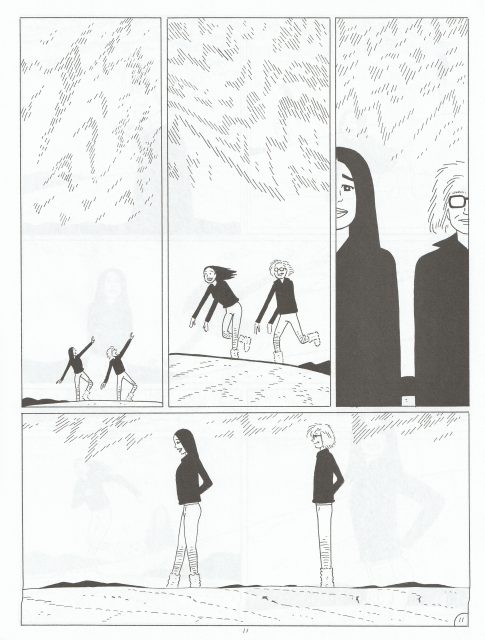
GILBERT: Well burnout meaning physically burnt out, ’cause you did something exhausting. And then you just relax and then you come back to it later. Yeah, not that burnout, like, “What shall I do? My body’s failing, my brain.” It’s not a real burnout — it will be someday, you know — I’m 69. There will be a burnout someday, but I don’t feel it. I don’t think it, so … we’ll see.
So there’s all these quotes about comics by cartoonists that seem embittered in one way or another. From memory as best I can, I think Jack Kirby says, “Comics will break your heart.”
GILBERT: Yeah. The business will.
And then Schulz said something similar along the lines of, “Comics will destroy you.”
GILBERT: Hold up. Hold up there, Charles. You created Peanuts. Come on, Charles. Don’t give me that fucking … you created Peanuts, dude.
Wally Wood famously said, “If I had it to do again, I would chop my hands off.” And then shortly thereafter, he killed himself.
GILBERT: Yes. Well, Kirby and Wood basically reshaped comic books from the ’60s, and they got no money. That’s what that’s about. They were just not paid well.
And so there’s this thing. John Stanley said, “Comics is a young man’s game.” And then he quit comics, and for the remainder of his years, he screen printed steel rulers for Fairgate.You can buy them. Look on eBay, you can get yourself a John Stanley-printed ruler.
GILBERT: John Stanley, actually, his most famous comics were Little Lulu comics. He didn’t create them, but he wrote them —
Incredibly.
GILBERT: Some of the best comics for kids. Ever. A lot of times they say, “Oh, read this old comic,” you know, “it has interesting art or something.” But it doesn’t really. These are just as good now. John Stanley wrote for the ages.
My children read them in stacks.
JAIME: Mine too.
GILBERT: And then John Stanley would do side projects, and they’d say he was fast, so he would edit science fiction horror comics that had no violence in them, but they’re some of the best horror comics I’ve ever seen. They’re great, but they’re not violent at all. It’s all [within the comics] code.
So anyway, he was bitter.
JAIME: I hate to say it, but in a way, the difference between me and Gilbert and them, these great men that I hold way up high, is that they have someone bugging them, constantly. Editors. And we don’t have that so much.
Crumb also said, “Comics is a young man’s game” years ago. Back when he was a young man, I guess. But, when he thought he was old. Now he’s 82. He just put something out now.
JAIME: I just came to a conclusion that Gilbert and I were very serious about doing this, and we were great self editors. So after a while, our editors at Fantagraphics just backed off and waited for it to be finished. That was it. And I think that was pretty cool, because I’m not a bitter cartoonist. I’m bitter at myself. (laughs)
Comic books are the best thing in the world because I didn’t get that grief. Or not as much as they did. I mean, guys like Kirby went from a publisher to publisher and they treated him like dirt. Even if he was the leader, the guy creating worlds.
It was a pretty big money medium at the time. It was probably a lot like music where a lot of the people at the top of the company are making a bunch of money, and then the people who are actually making the art are kind of down there, like, “Oh …”
GILBERT: I was just going to say, the music business is the same thing. We met a guy in Texas who actually worked with Chuck Berry and Little Richard and Bo Diddley. And he said, “The reason those guys were pissed off and alcoholic druggies was because they never got paid.” Chuck Berry toured until he was 90. He was terrible by then, but didn’t have any money. Same with Little Richard. Every time he was interviewed, he was crying because they were playing his music, they were doing all this, and he got no money.
Anyway, that’s the hard reality of it. And that’s in comics, too. And you know, when you have bosses and the bosses check, that’s hard. So Jaime and I are just weird. We just kept doing it despite that problem, yeah.
I think that contributes to your vigorous longevity. The freedom that you have to choose what you’re doing.
GILBERT: It’s easy to take that for granted, let me tell you.
What do you mean, it’s easy?
GILBERT: Sometimes you just think, “Oh, I’m just doing my comics. I don’t need to fucking worry about bills. I don’t need to worry about nothing.” That was in the early days. Yeah, you do. You gotta worry about real life.
Going from this story to this story, you know, this story stops talking to you and you can go over and listen to this one for a while. That freedom wouldn’t come with an editor.
Something I’m curious about is a ride-along. Would you show us what a week looks like? How do you do a week in terms of, “I need to get this done.”
JAIME: Right. For me, it’s kind of like, “Okay, I’m gonna start on my comic today.” And then I get breakfast out of the way, shower, whatever. And then I sit there and twiddle my thumbs with a blank paper, and I’m going, “Um, okay, um…” And then you realize it’s getting dark. It’s like, “Okay, I’ll do this tomorrow. I’ll start fresh tomorrow.” Then two weeks go by. “I think I’ll call Jordan and see what he’s up to.”
Like I said, it clicks, and just this past week, the new one I’m working on clicked. All of a sudden, this has a purpose. So, I’m on the downhill now. You know, just because for some reason, I believed in it. And so, when that happens, the week is, like, I can sit there for a few hours, and do a comic, and then not worry about getting up to eat lunch, or, you know, whatever. But then most of the time, I’m just like, “Oh, God, it’s five hours before dinner. What am I gonna do?”
So what do you do? I mean, do you wander around? Do you just sit there? You said twiddling your thumbs, obviously, it’s…
JAIME: Yeah. I channel surf. (laughs)
Oh, so you’re looking at other things.
JAIME: I’m looking at other things, I’m looking at a recent comic I bought, or a magazine, or I go ask Katie, “Do you need anything from the grocery store?” It’s so organic. Whatever helps, whatever works. The only part I’m guilty about is that it’ll happen for three weeks and I’ll go, “Oh, shit.”
Did you say three or 30?
I keep talking about this but if the creativity is there, I’m at the board, you know? And I’m writing and rewriting, ’cause when I started doing the comic back in ’81, ’82, it was, like, “Okay, what am I gonna do on this page?” And I would do a panel in the corner, and I’d go, “Hey, cool, I’ll put a dinosaur in the background. Hey, cool.” And then I’ll add another panel until the page is full.
Now, I write stuff, and then I’m gonna put it on the page, but I can’t picture all the images or the settings where they are. I know who the characters are, and I do the word balloons and the drawings of all the word balloons now. And so I’m always like, “Okay, how do I position them?” Maggie’s got the first balloon, so she’s on this side of the page. Another person is answering her, and they’re on this side of the page. But the next panel is, like, “Oh, but Maggie’s interrupted.” Okay, I gotta put a person here, and now Maggie’s on the other side of the scene, so I turn the room around.
And that’s how my comics are now. I’m following what the words are doing. And that didn’t used to be. And I kind of like it, ’cause it’s controlling, it helps me keep it in control. And they’ll go, “Wow. Wow, that was a great panel, you did,” and I go, “Wow, that was hard, because I had to put the person that was in the center, I had to turn it and make the person over there,” and stuff like that. And that’s fun, actually, for me. But I just needed to find those basic rules to do my comic. I need that, someone telling me what I have to do. You know, even if it’s me telling me what to do.
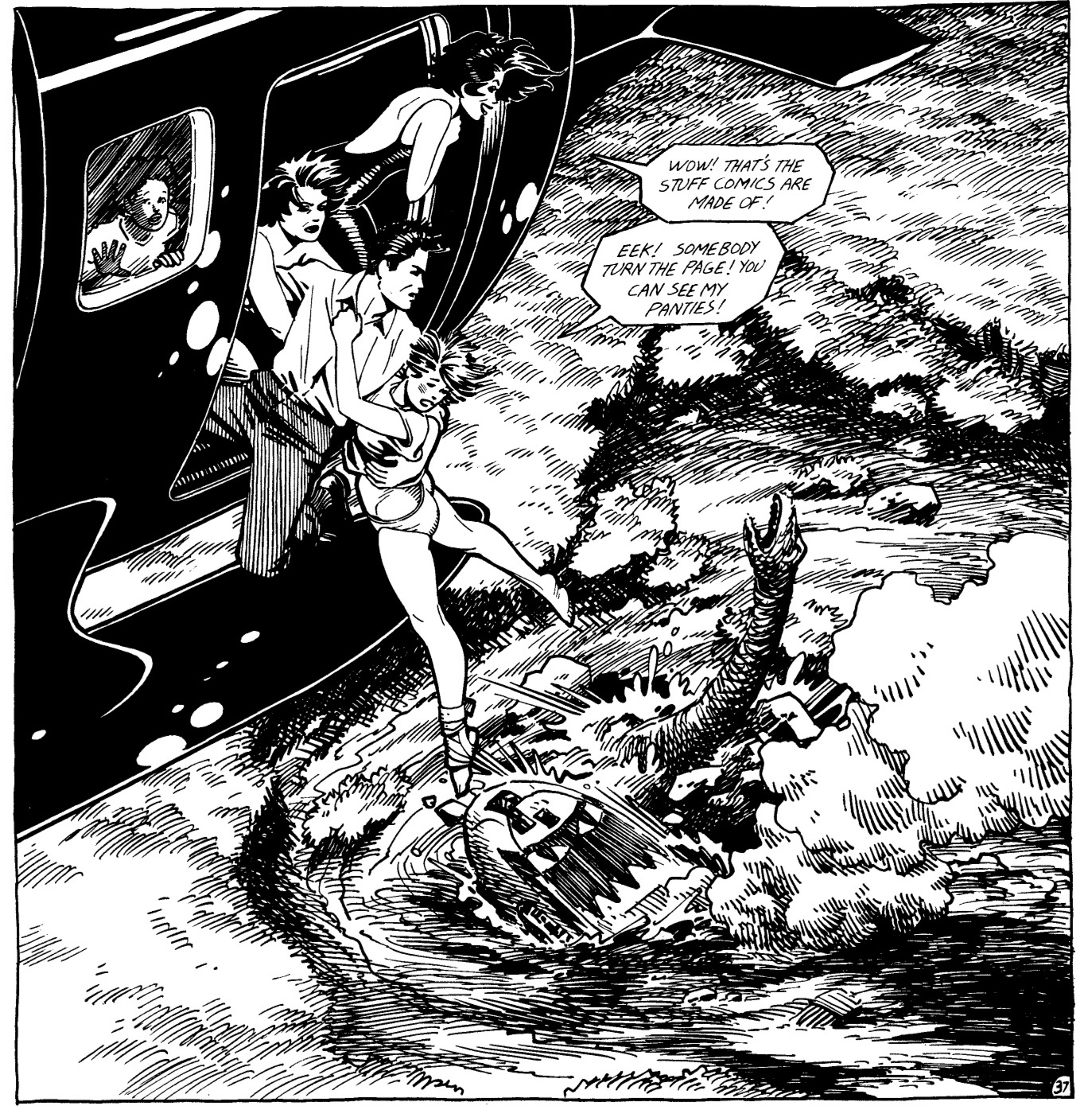
GILBERT: You know what’s heartbreaking is when you do that dinosaur, and then by the time you get to the end of the page, it doesn’t belong there.
GILBERT: What I’ve done before, I actually came up with an eight-page story to fit that dinosaur into. And that makes you create a story. See, that’s why I don’t fear it or make fun of myself. “Oh, you stupid idiot.” Well, I am a stupid idiot, but the thing is that now you have a dinosaur story. Or you do the old photocopy it, snip it, and then stick it somewhere else. It’s heartbreaking, ’cause it’s like, “That’s the best dinosaur I ever drew!”
Jaime, I think you write all of your story out on a legal pad, yeah? To work out scenes. And Gilbert, I don’t know how you do it now, but a while ago I read that you don’t want to know how it ends, because you want to find out.
GILBERT: That was back then.
Okay, that was then. How about now?
GILBERT: Now, okay, this is creepy. I just draw the things not knowing what they’re about. At all. Just drawing the characters moving here, moving there, moving there. So I pick a setting where I can just repeat what they’re doing, except change their clothes, or, you know, emphasize something else. But a lot of times, it’s just, like … what are they talking about?
Because I’ve written so much stuff that it comes slower now. Because there’s so much stuff to do. Because before, I was just doing the Palomar stories. Everything went in. And then a couple of side stories. But I didn’t worry about them because nobody was looking at them, scrutinizing like they do Palomar. Then after a while, I started doing it for everything. I started putting myself into everything, and I gotta slow that up, because I gotta use some of those ideas for this part, that part. Sometimes I’ll take whole sections out.
And now the way movies are, so many popular movies, especially the A24 ones, are so much influenced by indie comics from the ‘90s, because that’s where all the directors and screenwriters started reading comic books. So there’s so much of those crazy wacko Yorgos Lanthimos movies that they’re just like independent comics. Like, whoa, now what do we do? Because now you’re seeing Emma Stone do this stuff, you know?
So anyway, that’s a concern of mine. Not a worry, but like, I can’t just be wacky anymore because it’s in the films and it’s winning Oscars. So I gotta think of new things.
JAIME: We always had that thing in our head, I don’t know if you still do, but where we always go, “This has got to be better than other entertainment.” We gotta do it, even if it’s our little drawings in our little comic. We still gotta be, somehow, ahead of the curve. And I’m starting to get to, like, “Ah, forget that.” [laughs)]
But there was always a thing pushing us like, okay, so TV’s catching up. Movies are catching up.
Do you think so? I hear you about the A24.
GILBERT: I think Dan Clowes’s graphic novel Monica had just come out, and it had the scenes in it where they’re in a cult place, and they have to wait to go inside this, I don’t know, a men’s room or something like that. And so I watched Kinds of Kindness and that has the exact same scene! Maybe a lot of people enjoying these films don’t recognize it, but I do because I’m close to it.
Oh, especially FX channel. There’s the guy Ryan Murphy. He swiped so much shit from me forAmerican Horror Story. Literally the dialogue and scenes that I’m like, my head spun. Okay, he reads my comics. You know, and then I’m thinking like, I don’t read a lot of comics now. How much more are they taking from?
We don’t think about it so much anymore because, you know, we’ve been doing it for so long, but when we first started doing it, and our comics started catching on, it’s about Latinos, and nobody else is doing it like this, and nobody else is bringing it home the way we did. So that was what we were talking about. Well, we’re gonna do it. ‘Cause TV’s not gonna do it. Or you couldn’t do it at the time. You can do it now. Because things have changed, because of streaming and all that shit, but back then, it was like, no, they’re not doing it right. And they weren’t.
You watch, let’s have some Latinos on a TV show, ha ha ha, they’re idiots, they’re gang guys. Okay. And then there’s this, or else they’re poor, and they have to struggle, and this and that. Yeah, fine, that’s reality, but there’s also people just living lives. It’s kind of what we wanted to emphasize, you know?
JAIME: One of the advantages we had early on was to just tell an old story and put Latinos in it. And they think it’s the newest thing!
That was one of the things that I really appreciate in the way you tell stories is that it feels like it’s coming from your direct experience, in a real way.
GILBERT: This is who we are, and it’s just easier to think of what our cousin did when we were 10 years old. It’s just more fun. To just think about the adventures we had with a lot of our high school friends, I used to hang out with low riders and stuff. They were wild nights, man, let me tell you. That kind of stuff. And that ended up in our comic. And then, we would hang out with our uncle one night, or one day he drove us around because our parents were busy. And, you know, we come back with just nice stories, or hanging out with your cousins. That was why so much of that was in our comics, that’s why it came out as original, because they’re not stories. They’re stuff that we experienced.
And then you change it. And you don’t do the exact story. So that’s, like I said, the runaway train brain. It just slides through and takes all the victims with it, you know?
Did you ever see that show This Fool?
GILBERT: Oh, yeah.
You know, he’s a big fan, obviously.
GILBERT: Yeah, yeah. Chris [Estrada] is a good guy.
There’s not many things like that on TV. They only had two seasons, and they were strong seasons, but that’s it. Do you really think TV is catching up?
Gilbert, there’s a wide variety to the stories you do, and definitely some of them aren’t gonna be on TV, for sure. The stories themselves, but more the vast relationships and the communities in your stories. It’s not something we see, especially in movies, they don’t have that scope.
GILBERT: It’s not normal. It’s not the normal person’s brain. It’s his brains or her brains or my brains just got that lump that’s just gonna do this stuff, but it doesn’t know when to quit. There’ll be a time I slow down. But we’ll see.
Right now, how do you feed it? How do you feed it and take care of it so that it can do its thing and not railroad the rest of your life?
GILBERT: I guess I’ve backed off on the destructive … the hard part about it. That you get confused, you get angry, and don’t know where to go and the existential crap
What was the hard part and how did you drop it?
GILBERT: This was years ago when I was doing the story Poison River, and that is so dense. I couldn’t even put splash pages. The page would just start with a nine panel grid and so much dialogue that I just overloaded with this stuff because as I was writing it, it would edit itself. I would go through the whole story because it was done in chapters in Love and Rockets, and so I’d go through this 16-page story and there’d be no room. But that was just how the story worked out for me.
What Jaime used to do, I don’t know if he still does, was write dialogue out on legal pads just to get them talking, and then you edit it. I didn’t do that. I would just write, this is what I want them to say, but I would put it in the panel, I wouldn’t write it on a sheet of paper or whatever. And pretty soon I would just get so clogged, I go, “I gotta do it Jaime style.” Let it happen and just take what you need and spread out the panels. Do a nine panel grid instead of 59 words in a balloon, that three panel sequence can be a page. That’s all. Things like that. I learned the hard way. It was so hard and so crazy. I’m surprised I finished it and people liked it.
So that was the worst of it. I learned to back down after that. Just take the same ideas and don’t crowd it.
For some reason, people love crowded underground comics. When they like underground comics, the more detailed the better. Just overly rendered goo. [laughs] And that’s kind of where I was at the time, so I had to stop. Birdland was like that too.
So to a more enjoyable way of working. A way of working that feels more comfortable. Friendly.
GILBERT: I look at old EC comics and skip half the balloons. They just talk so much. And then I go, I’ve done this. I used to do this.
Jaime, what about you, how do you feed it? How do you take care of yourself through the difficult parts? I’ve talked to you where you’re like, “That’s it! Guess I’m done. No more comics in here.” But you get through that. How do you do it?
JAIME: I think the bottom line is I’m here to do a job. I’ve gotta do this, one after the other. When I’m done with one, I’m onto the next, no matter how much trouble it’s gonna be. The bottom line is, I love these characters so much. Or, some characters better than others.
I’m here also because I wanna know how this turns out. I’m still doing it 44 years later because I want to know what happens. I’m outside of me, I’m inside of me. I have five people arguing constantly inside my head to see what’s the right move. And sometimes when it’s done it’s like, I don’t remember the last three weeks. How did this end up like this? I like it, and it works and everything, but I don’t know how it started.
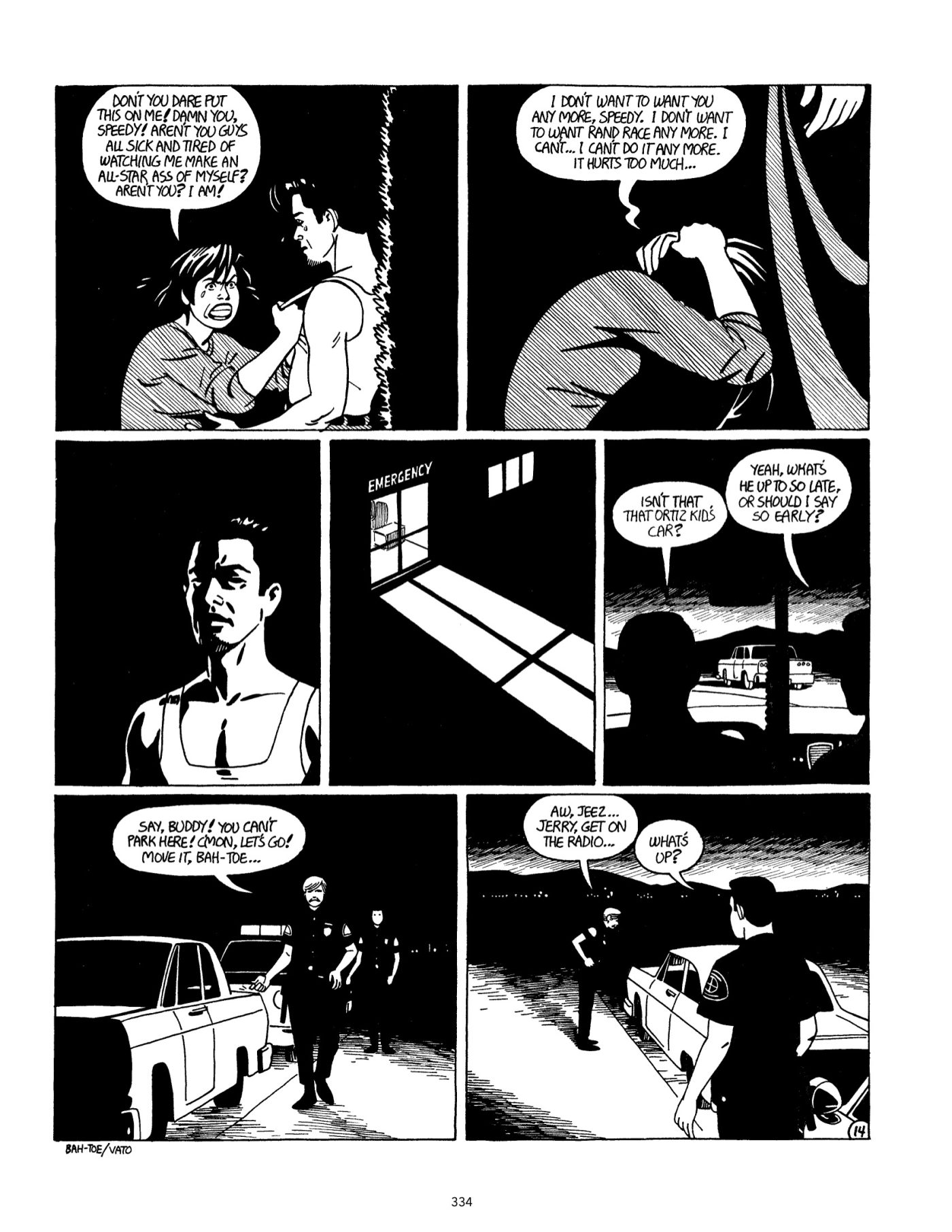
I think about my older stories like The Death of Speedy, one of my first real coveted pieces. And every once in awhile, I’ll think back and go, “Oh yeah, that was gonna be in Death of Speedy.” I forgot and it just became something else. So every story I tell wasn’t supposed to be that, it just became that. For the better, hopefully.
So you’re moving through it basically in a fugue state.
JAIME: I let it take over me. But that’s when I have an idea. The other couple of months is just blank. “I’m over, it’s over!”
And then I’ll write a balloon, and it will just be a thought I wrote on a Post-It note, like, I’m never gonna use this. And I put it in, and it just blew up. Now it’s becoming a big thing. Boy, has that saved me.
It’s like kindling. It’s like the dinosaur in the corner.
JAIME: Yeah. Yeah, like he was saying, that dinosaur. I could use that for something down the road.
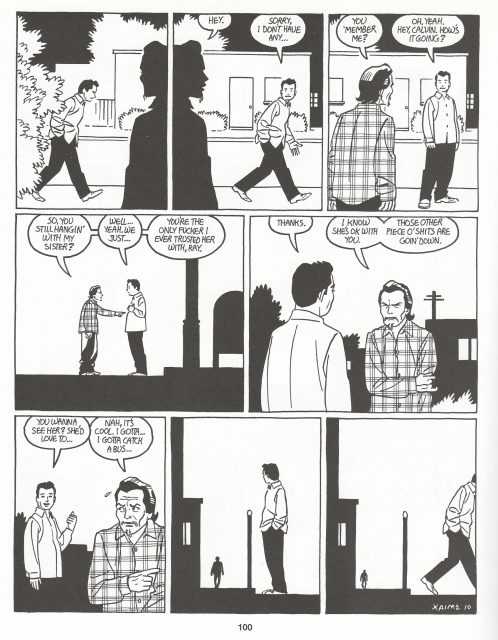
I wrote a couple of my best stories ever by fucking up. By giving the wrong information. And it was basically how I did “Browntown” in The Love Bunglers. I said, “Okay, I have Maggie’s family now. I know her brothers, her sister, I know everything. The family of five, ha ha ha.” I just happened to look back at a really early issue and there were six.
So what did I do? I go, “Okay, one of them ran away.” There’s always the troubled brother. So I created a whole story about Calvin, her brother who fucks up, who goes through a lot of abuse, sexual abuse, and then ends up this really troubled guy. And so he’s kind of kicked out of the family.
GILBERT: What’s hard for me too in the same area is to kill a certain character from the past that you need. You go back and go, “Okay, how’d they screw up? How did he not die?” But that’s just a TV plot.
So anyway our stuff is soapy. It gets you wondering.
JAIME: I remember Gilbert and I talking on the phone, God, twenty years ago, and I killed Speedy. He killed Tonansín, one of his beloved characters. And we just spent an hour going, “Why did we kill them?”
GILBERT: “What have we done? I need them!”
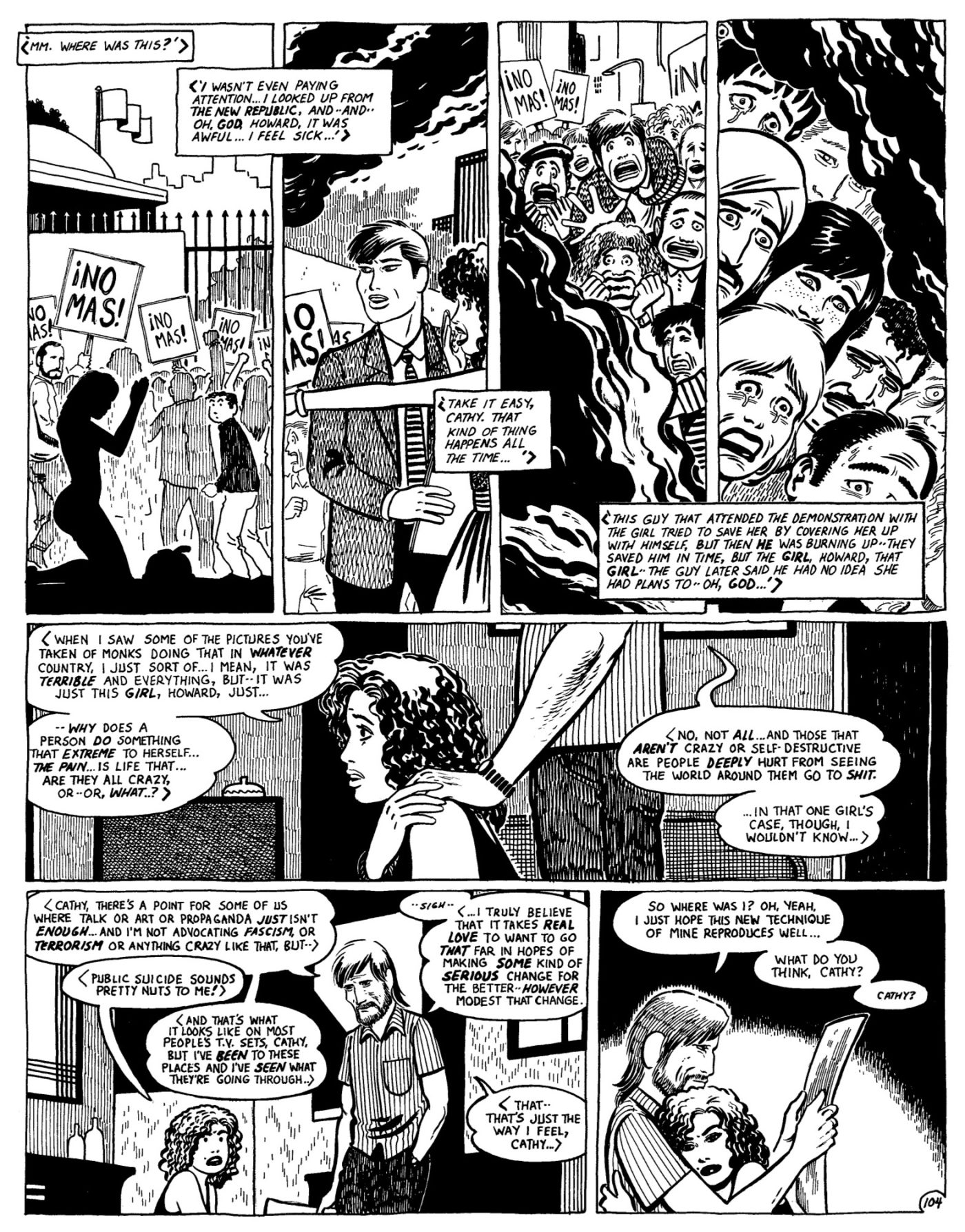
This is the hard part. The character Tonansín, she had supposedly died setting herself on fire at a protest, and apparently she didn’t know what she was even doing, but she did it … or did she?
See, that’s the thing about creating these characters and owning your universe. I didn’t show it happening. They talked about it happening. You saw a silhouette of a person, and they talked about it, and she could have just been so humiliated about the whole thing and just disappeared. I could do that. But that is a ripoff. What I went through to do that story, what the readers went through to read that story, that cheapens it.
After a while, you settle down in it, let it happen. But you do question it while you’re doing it.
That’s something you both do so well, is have these characters that feel so grounded. Sublime storytelling chops. This intuitive, “This is what a story’s shaped like, this goes here, this goes there.”
GILBERT: This is what happens as you’re doing a story though. It never happens before. “Oh, I’m gonna package this all.” Rarely.
I remember having this idea when I was younger of, “Okay, first, all I need to do is figure out, write the whole story out, and it’s easy from there. Then I just draw it, then it’s done.” That’s not how it happens.
GILBERT: Not for me.
From personal experience working through it and reading about other artists, that’s just never how it happens. It doesn’t happen until they start talking to you.
GILBERT: That’s why pitches are really hard. “What’s it about?” You don’t wanna say, “I dunno.” Sometimes you make up a bunch of shit that you actually use. The classic story is Matt Groening made up The Simpsons on the spot because he couldn’t sell this other idea so he’s sitting there in the waiting room and came up with The Simpsons. That’s the story anyway.
So it can just happen. You can’t count on it, but it can happen.
How are we on time? 10 minutes. Let’s have some questions.
AUDIENCE QUESTION: What about editing how you’re writing something? Do you use the collections to revisit a story, to add or take things out?
GILBERT: Sometimes it works as it is, but then the way we work, so much stuff is left out. And sometimes it just needs a little bit more information that you couldn’t get in, or information that you realize you didn’t put in in the original printing.
And so what’s great about the collections. If you want, you don’t have to do it. You can add pages. And even if it’s like two pages, it takes care of all the problems.
That’s great. Sometimes I end up adding 20 pages, it works for you that way. That’s why I add pages. You can finish what you don’t need to continue in the next book. Otherwise, you’d have to.
JAIME: It’s also kind of like a character is sad and moping and you give them one panel to do it. And then you go later, “No, no, no.” There’s a feel — you have to torture this person. Torture. Sometimes it’s that.
Oh, did you say collections can sometimes offer, like it’s a second draft?
JAIME: Sometimes, yeah. But the trouble for me is, I draw, I edit these comics so tightly sometimes there’s no room to add anything.
You’ve got to add a whole page.
GILBERT: Two pages.
JAIME: Or you can’t find the place to cut in. And I do that a lot. I used to do it more loosely and I used to be able to go, “Hey, I’ve got that in three pages.”
GILBERT: When you add pages, it has to be in two’s because then you’ll ruin the rhythm of the rest of the pages that you’re working on. And sometimes you find the spot where I can squeeze it in here. It works. Sometimes it just elongates a previous thing. I don’t like doing that because it’s kind of like, they shouldn’t be wearing these clothes anymore. But if it works, it works.
So, you’re thinking in spreads.
GILBERT: Oh, yes, yes, absolutely. It’s almost like two, three, four or five. Because you can’t do it the other way unless it fits the previous panel that you’ve already worked on. And sometimes, well, I’ve got to change this angle of their face. Literally, silly things like that. You’ve got to change their faces and their positions because it’s going to repeat. And then when you get back to the next page that was done previously, you’ve got to go the opposite of that too. There’s some work to doing it that way. Now, if you just do the spread, you don’t have to worry about it.
And that’s what I’m doing right now. I’m actually creating a graphic novel that I’m working on just to get it going. I don’t have a title yet. But everything’s in spreads. Because I don’t really like doing graphic novels cold. I like collections because I can think about what I’m doing. Whereas it’s hard to collect all that stuff all at once. So this time, I put everything in spreads so I can just switch, mix and match. I’ll switch them around. So we’ll see how that works.
AUDIENCE QUESTION: Describe your process. How do you see the story before you put it on paper?
GILBERT: Usually it’s in how the panels, the boxes fall. That’s how the story’s told to me. It’s like, “Okay, this page, I’m going to want to repeat the same boxes.”
And she comes up with different kinds. So you want to put them in different positions and this and that. For me, it’s just literally the figures. The figures write the story. And so I’ll mix it up with different shapes. Sometimes I’ll know what the page is. You know, I’ll go, okay, six panels, and this is what happens. Sometimes I’ll know that. A lot of the other times it’s like, you know, you’re at school. I like to shoot. And then the story goes from there because I like to shoot. I try to keep it serious. I try to contain scenes in one page because I used to do the three panels or a page and a half or this and that.
Sometimes you would do a scene in two panels.
GILBERT: Yeah, I know. It was a bit much. But I was just so eager to get to the next thing.
But it’s incredible. It just snaps your neck. It’s wild.
GILBERT: Yeah. We had great teachers. Those comic book artists we grew up with, man, they could do some stuff, man.
AUDIENCE QUESTION: When you guys were discussing the deaths of characters, I really felt it when I read those deaths on the page. And I appreciated that you left them dead, didn’t go back and change it.
GILBERT: Yeah, it can be done. But no, that was more important for it to happen the way it did.
AUDIENCE QUESTION: Your storytelling abilities, where’d that come from? Was it just comics? Or did you read novels or other things?
GILBERT: Movies, TV, comics, anything visual. We did a lot of play acting. You know, you run with sticks in the air, that kind of stuff. We did a lot of that. I think it’s just a natural thing in our brains to do that. Because we would always, you know, “Okay, we’re going to play army today. All right. Here come the aliens.” And then we’d get into real in-depth, complex things instead of just going bang, bang and running. We’d think, “Oh, the aliens are doing this. You’ve got to climb the tree. You’ve got to do this stuff.”
So we always had that in us to improve the story.
JAIME: Yeah. And it was only recently that one of our brothers just said, “We’re a family of storytellers.”
So when we were little kids making-up, doing our G.I. Joes and stuff like that, we had aunts and uncles and cousins and siblings who just always told the story well. Just like, “When I was little, I did this. And my mom sent me to the store. And then this happened. And then this happened.” And I think that kind of just stuck in our head that, “Oh, we just kind of roll with our imagination.”
GILBERT: I’m paraphrasing Dan Clowes. He goes, “When you watch enough episodes of Mannix when you’re a little kid, you start to learn how to put a story together.” And characters. We watched The Twilight Zone forever, and we learned how to put those stories together. The Flintstones. In early episodes of The Flintstones, first season or so, they’re well told. So we watched them over and over and learned how to bring things together. And that’s how just our junk culture taught us how to tell stories.
JAIME: I found out that I’m a person who rewatches certain episodes or certain shows over and over, where I know the next part of dialogue is coming. And I get criticized for that. Like, “Are you still watching M.A.S.H.?” And I’m going, “Yeah,” It just still works for me. It works. I know exactly what’s going to happen, but I want to hear it. And I don’t think it’s all bad to do that, because if it inspires you …
GILBERT: Just recently, my wife and I, we just watched the entire run of Leave It to Beaver.I like the show no matter what. But we watched it this time. I watched it with adult eyes. And there’s a lot of truth to that show. I think that’s why it’s so good. I mean, it’s a light family, you know, all that stuff.
But the stuff that Beaver goes through, like, it gets worse when you try to weasel out of things. You know? That’s really truthful. And the two guys in it, some of the most truthful characters in TV history are his friend Larry Mondello, that guy, and Eddie Haskell. Eddie Haskell is like the ultimate. I hate to say the first punk, but he was the first, like, true asshole. That’s so truthful. He was a great actor who pulled it off. He’s just a sleazebag. A funny sleazebag. And then Beaver’s friends, always going, “Come on, hey, let’s do this!” and get him into trouble, and leave. There’s a lot of truth to this.
Do we have time for one more question? We’re good? Okay. Okay, yes.
AUDIENCE QUESTION: You talk about storytelling as opposed to art. Can you talk about your origins? What do we call it? Suburban culture. Trash culture. But also the elements of artistry within that you can glean through whatever the superficial message might be.Do you individually have a sense of when you as children, absorbing all this material naturally, began to look at it and … make it into [your own] art or storytelling? Do you have a sense of that transition, of when that might have been?
JAIME: For me, it was always like, this is what I’m supposed to do. I don’t know why, but I have to do this. I found out I could draw. I became the best drawer in my class. That kind of thing. That’s the only reason I didn’t get my ass kicked. Because, “Hey, he draws really good.” But it was a thing that I didn’t think about for the longest time. I just go, “I just want to draw. I don’t know where this is leading. I don’t know what its purpose is. But I just like it.”
The older I got, when we started doing Love and Rockets, I started listening to my storytelling. And it was rough at first. When we started Love and Rockets, I was still in the learning stages. I got the art down, but writing the story was hard for me. It was just a thing that happened. Then I realized, “Oh, the art isn’t important anymore. Now it’s telling the story.” The art has to be in service of the storytelling. And I never thought that would ever happen. Thinking that, “Oh, I guess I’m not just the best drawer in class. I’m a pretty good storyteller.” It’s just something that came along much later.
GILBERT: A big influence on my path was that, yeah — comics, movies, or anything — but in school, when you start learning as a kid about fine art, and you start the greatest hits, Picasso, all those, and then there’s great books. They always kept repeating the same books that were great, and this and that. So I thought that to me, it was alien, but at the same time, it was important.
It was important to get, and I go, “These are important to the world. These are important to schools. This is important to galleries. This is important — more important than comics and TV and this and that.” So even though I didn’t know how to get there, or wouldn’t know how, I just knew that, “Look at that as you grow up, and check it out.” And then you go to museums as you get older, and you see the gigantic Picassos, and you go, “Yeah, that’s the shit.”
Because when you see fine art, and people pass out, it’s because it’s the shit. You’re seeing the shit, man. We just got back from Spain a little while ago, and we saw the real paintings, not reproductions, not PBS shows. And we’re just like, “Yeah, yeah, that’s the shit.”
“You want to go to a comic store?”
So you learn that, and that’s in you, and even if I don’t practice that, or wouldn’t know how, it’s there. It’s important.
Thank you for all the work that you’ve done and for the years you’ve been doing it. Wishing health and goodness of every kind on both of you. Thank you for speaking with us today.
JAIME: And we’ll see you at dinner.
With thanks to Katie Skelly for the transcription.
