

NPR
Pop Culture Happy Hour
Pop Culture Happy Hour
Why Gen Z is movie-maxxing
July 7, 20263:00 AM ET
Gen Z and the movies
Listen·20:5020:50
Transcript
- Download
- Embed
<iframe src="https://www.npr.org/player/embed/nx-s1-5883894/nx-s1-mx-5883894-1" width="100%" height="290" frameborder="0" scrolling="no" title="NPR embedded audio player"> - Transcript
Transcript
STEPHEN THOMPSON: Two big horror films, Obsession and Backrooms, just smashed all box office expectations. Backrooms is A24’s biggest opening in the studio’s history, and Obsession made more than 300 times its small budget. So much of their success has been driven by Gen Z. Gen Z is now the biggest moviegoing demographic, according to a couple of recent surveys by Fandango and Comscore. And not for nothing, both of these movies were directed by Gen Z filmmakers. What makes a movie a Gen Z movie? I’m Stephen Thompson. Today on NPR’s Pop Culture Happy Hour, we are bringing you an episode of It’s Been a Minute. Host Brittany Luse sat down with Sam Adams, staff writer at Slate, and Reanna Cruz, entertainment journalist and critic. Reanna is also a member of Gen Z. Here’s Brittany.
[CLICKING]
[THEME MUSIC]
BRITTANY LUSE: Hello, hello. I’m Brittany Luse, and you’re listening to It’s Been a Minute from NPR, a show about what’s going on in culture and why it doesn’t happen by accident
[THEME MUSIC]
LUSE: Reanna, Sam, welcome to It’s Been a Minute
REANNA CRUZ: So happy to be here. Thank you for having us
SAM ADAMS: Yeah, thank you
LUSE: OK, I’m excited to talk about this. I want to talk about Backrooms and Obsession. Like, these movies have done huge numbers, huge numbers. What did you think about them? Reanna, we’ll start with you
CRUZ: It’s interesting. I’ve had kind of inverse reactions to both of those movies, where I was in the theater for Obsession. I was like, this is pretty good. And then over time, I’ve started to like it less. And I’ve had the opposite experience with Backrooms, where I saw it, and I was like, all right, this is OK. And the more I sit and think about it, the more I like it
LUSE: Mm-hmm
CRUZ: I like a lot of horror movies
LUSE: Me too
CRUZ: We kind of live in horror-maxxing times, which I’m obsessed with. But I think of the two, I’m definitely team Backrooms. I know we don’t want to pick sides, but that’s the side that I’m coming down on, I gotta say
LUSE: I’m going to say, I’m inclined to agree with you. I’m inclined to agree with you. Backrooms, I saw initially, and I was like, this is decent. And then over time, I’ve grown to appreciate it a little bit more. And then I saw Obsession yesterday, and I was like– [CHUCKLES] my husband and I were leaving. He was like, is this a moment where we’re like, [LAUGHS] I’m too old to understand what’s going on? But what did you think, Sam? You saw both of these movies, Backrooms and Obsession. What did you think?
ADAMS: Well, since we’re not picking sides, Team Obsession. Yeah, Backrooms, I think, is an incredible vibe. Like, I love the environment of it, which is what the director, Kane Parsons, kind of comes out of the sort of literal backrooms in it. I think the script, which he did not write, is kind of a mess
LUSE: There’s, like, several monologues coming from a middle-aged man
ADAMS: Yes
LUSE: And I’m like, have you met any middle-aged men before?
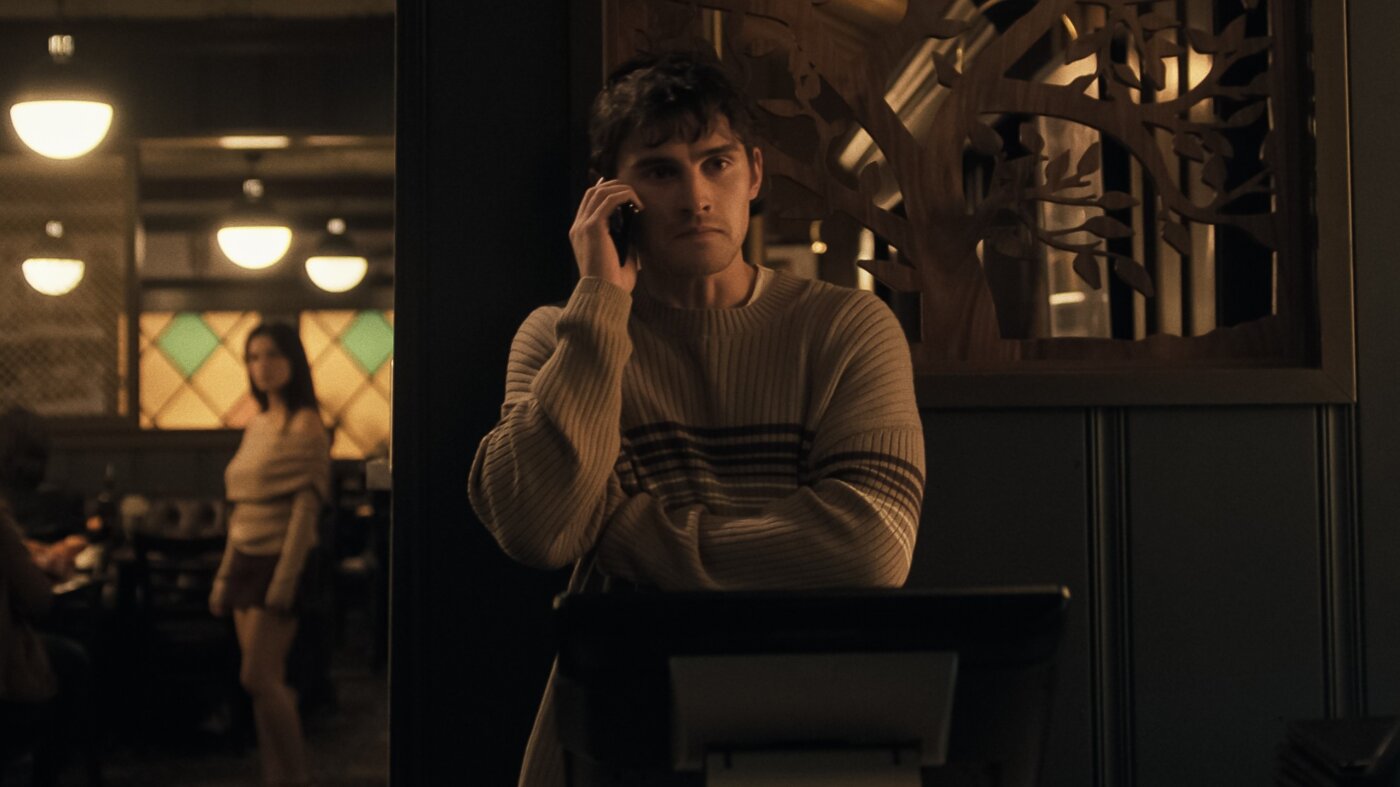
ADAMS: Right. I mean, it’s like you’ve got this wunderkind, and someone decided that the best protagonist for his movie was, like, a 48-year-old divorced guy. I think that’s a bit of a category error right there. Whereas Curry Barker, who made Obsession, I think that’s, like– it’s an imperfect movie, but I think some parts of it really work. It’s like, there’s so many horror movies you see now that just feel like they’re kind of grinding their gears in the first 10, 20 minutes until you start getting to the kills and the premise is established. And I think this is a movie that, like, actually cares about the characters and has– especially in Inde Navarrette, who plays Nikki, I think, has a really, like, stellar, effective performance at the center of it, which has been so key to just the one viral clip of her going sort of, no, no, no. I’m not even going to try to do her performance.
[LAUGHTER]
[AUDIO PLAYBACK]
NIKKI: No, no, no, no, no, no, no, no, don’t do that!
[END PLAYBACK]
ADAMS: That was so key, just in my experience of watching people warm to the movie online. That really seemed to get people’s attention
LUSE: Huh. You know, one of the things that’s interesting is that 75% of Obsession’s audience was 18 to 34 through the second weekend, which is mostly Gen Z
CRUZ: Wow
LUSE: And over half of Backrooms’ first weekend audience was under 25
CRUZ: Yeah. This makes sense to me
LUSE: Yeah, I mean, like, Gen Z, they’re showing up for these films. Why do you think that is? I mean, you say it makes sense to you, Reanna. Why do you think that is?
CRUZ: Well, I think both of these movies have been massive cultural moments. I think both of them have been founded on premises that are easy to convey. You know, I think the marketing for both of those movies has been good, especially on social media, right? And I think it lands really well with audiences that want to be in on the discourse a little bit. Like, I’ve seen a lot of people talking about these films on platforms like TikTok and Instagram Reels and Twitter. It’s interesting to me how many people are showing up because they want a take and they want to comment, right? And I think there’s also an element that, like, horror is very easy to consume. It doesn’t really ask much of its audience. You know, you kind of just show up, and in the case of Backrooms specifically, like, be immersed in the vibe.
ADAMS: You know, when I was growing up, it was like, it’s Friday night. What movie are we going to see?
LUSE: Uh-huh
ADAMS: I don’t think that’s how younger people are approaching it. It’s not the default thing anymore. So they are picking the movies they want to see not just based on, like, do I want to see this thing, but, like, what is going to be an experience to, like, see this in the theater? And horror is the genre where you most feel like you’re in a crowd. People are, like, screaming and gasping and, like, reacting along with you. And it’s just like, the theatrical experience for horror is really special. Like, this feeling of being part of a group is something that especially a generation that, you know, is coming up during the pandemic is really craving that sort of collective experience.
LUSE: Hmm. That’s a really, really, really good point. Obsession was directed by Curry Barker, who is 26, and Backrooms, was directed by Kane Parsons, who is 20. Both of them started out as YouTubers. What do you think about the Gen Z YouTuber-to-director pipeline happening with these films?
ADAMS: Super Mario Galaxy just crossed the billion-dollar mark, so it’s not like everything has changed in Hollywood. But it certainly, like, feels like a moment for these particular kind of movies. I think Gen Z is responding to something that feels like a little bit more theirs, not just that the filmmakers are in their 20s, but also that this is not something that has been, like, shoved down their throat by a major corporation and it feels like something they’re being ordered to see. It feels like something that it’s possible for them to discover. And I just think that’s really, like, intoxicating. And it’s a feeling that’s been missing from moviegoing for a long time.
CRUZ: Over the past few years, there’s been a lot of, you know, the YouTuber-to-director pipeline. I’m thinking of Chris Stuckmann and Shelby Oaks. I’m thinking of the Philippous and Talk to Me and Bring Her Back
LUSE: Such a good movie
CRUZ: Great flicks. Not Shelby Oaks, the other ones
[CHUCKLING]
CRUZ: But I think there is something to the effect that audiences feel, yeah, a little bit of ownership over these creators. You know, there’s a parasocial relationship element, I think, especially when it comes to Backrooms, because– I hate to call it a property, but it is like a thing on YouTube
LUSE: Yeah
CRUZ: Audiences like myself watched it. Backrooms was based on a creepypasta, which is, like, a meme if a meme was scary. Yeah, a Gen Z way of engaging with horror material
[THEME MUSIC]
LUSE: We’re going to take a quick break. But first, you all know I really love hearing from you, and many of you keep leaving the kindest notes for me in the reviews and comments. One listener mentioned that this podcast is the only way to start their day. Forget coffee. Another wrote that if this show is talking about a topic, that that story is worth paying attention to. Listen, I work hard to have my ears to the ground for you, and I am so grateful to all of you for always coming back four times a week. It would also mean so much to me if you could rate and review this show wherever you listen. It helps new listeners discover the show and allows this community we’re building to keep growing. Join the IBAM team. Rate and review this show right now. Thank you so much. Coming up after the break–
ADAMS: I saw something on the internet the other day where someone was saying, like, if you’re in a certain age, like in your mid-20s, like, you’ve just never known a world where people are rewarded for doing good. And I think that feels like something that really runs through in these films
LUSE: Stick around
[THEME MUSIC]
LUSE: Even before these films came out, according to a couple recent surveys by Comscore and Fandango, Gen Z is now the biggest moviegoing audience. I think for a long time, Hollywood was worried that that wouldn’t be the case. But I wonder, what is bringing Gen Z to movie theaters?
CRUZ: I think it’s a lot of things. I think, again, social media plays a big part of it. People want to be in on the discourse
LUSE: That’s how Obsession got me, because I was like, everyone’s talking about it. I’m like, I want to talk to. I want to be included
CRUZ: Well, yeah, exactly. And I think Gen Z is a demographic that uses the platform Letterboxd a lot
LUSE: Ah, yes, Letterboxd
CRUZ: You know, Letterboxd gamifies movie-watching. It rewards you the more movies you watch
LUSE: Yeah. I love logging my watches into Letterboxd. Yeah
CRUZ: Yeah, yeah, it shows off friends how cultured and tapped in you are. You know, there’s something really satisfying about seeing your movie stats go up. It’s a social media platform for movies, and I think that has a lot to do with it. I also think that, like, the idea of these movie subscription services, like AMC A-List, turns the movie, which was previously, in my eyes, like, a solo experience, into something easy that friend groups can do
LUSE: Oh, so you’re an A-Lister. OK
CRUZ: Oh, you know I’m an A-Lister. It’s, for a lot of people, cost-effective. I see a lot of movies with a lot of different people. I have a lot of people on my A-List Entourage. Like, it’s a social element baked into the service
LUSE: What is A-List Entourage?
CRUZ: Basically, all of friends who also have A-List, you can send each other links and, like, add each other on the app so they all populate in your app, right, when you’re buying a ticket. And it’s very, very easy to book tickets for your friends
LUSE: Oh, that makes sense. Sam, what do you think? How do you think Gen Z’s become the largest moviegoing audience?
ADAMS: I mean, I wonder if one of the things that’s maybe going on in this particular moment– sort of like a long-term rant of mine is that people have been complaining for years that movies are too expensive, right? I think what really happened is that people stopped valuing that experience
LUSE: 100% agree
ADAMS: So it wasn’t that they cost too much. It’s that they were like, $15 for a movie when I can wait for it, why would I pay that? Everything else is so much more expensive now that, I think, maybe part of it is people are coming back around to, like, there’s not a lot of other things you can do except for, like, go for a walk that involves, like, paying $15 to do something collective for two hours. Like, you can’t get two beers for that in most cities
LUSE: No
ADAMS: So I think– and especially if you have something, like, you know, a subscription service, which also they often, like, discount popcorn and your soda and whatever
CRUZ: Mm-hmm. Yeah
ADAMS: Like, I think it actually is just sort of like a good value-for-money proposition on top of everything else. And I think part of what’s going on with these movies, too, not just Obsession and Backrooms, but also, like, The Drama a couple months ago, which was another movie that seemed to be a real hit with this demographic, is these are movies that people are, like, discussing. There’s something that you can chew on for days and weeks afterwards, which, again, is like, spend $15, go to a theater for two hours, and you have, like, weeks of, I guess, entertainment.
LUSE: I just saw The Drama a week ago. Gen Z members of the IBAM team have let me know that that was a Gen Z movie. And after I saw it, I was like, oh, I totally get the sensibility. I 100% agree. I think there are certain movies that are of certain generations, regardless of who made them, right? High Fidelity feels very Gen X to me. Mean Girls, made by a Gen X person, but very millennial
CRUZ: For sure
LUSE: Although I think that Everything Everywhere All at Once is a perhaps, like, more apt example of like what a millennial film really is because of, like– it just has this sort of like millennial hopecore kind of vibe running through it
CRUZ: Hopecore, definitely millennial
LUSE: Yeah, exactly. And, like, the millennial directors. It just feels like the generational fingerprint is really on there. What do you think makes a Gen Z movie? Like, what do you think about that?
CRUZ: Backrooms and Obsession are very doomer vibes. That’s definitely part of the Gen Z movie aesthetic. I think as a member of Gen Z, I think there’s two things going on, right? And it’s an “and” or “or” situation. It’s that members of Gen Z have to be featured in the movie. I think that’s why The Drama, in part, is a Gen Z movie
LUSE: I mean, it’s just Zendaya, and she’s on the cusp, right? I think she’s technically a millennial, but only just by a few months, though of course, more culturally, she might be Gen Z. Either one of us could claim her
ADAMS: Robert Pattinson keeps insisting in interviews that he’s Gen Z as sort of like a running joke
[LAUGHTER]
[AUDIO PLAYBACK]
JENNIFER LAWRENCE: Do you wish you were Gen Z? You’re not Gen Z. You’re a millennial. No, you’re a millennial. I believe that you believe that you’re Gen Z
ROBERT PATTINSON: I am Gen Z
LAWRENCE: What year were you born?
PATTINSON: It doesn’t matter
[END PLAYBACK]
CRUZ: I think Gen Z movies have to feature members of Gen Z in some capacity and also have a devotion exploring the digital aesthetic landscape that we find ourselves in. I don’t think Obsession does this. Part of my issue with the movie is that screens are kind of nonexistent for these characters
LUSE: Ah
CRUZ: But I don’t know. I think that’s why The Drama, to me, lands because it features Zendaya. And also, it has a very uniquely Gen Z experience of, like, being on the computer too much and getting really involved in, like, scary communities online. Not saying that happened to me, but I saw that happen to people that I know, where when she was talking in the movie about being obsessed with school shootings, like, I would come across people like that on Tumblr when I was a teenager and be like, whoa, this is really freaky. It’s something that could actually happen. And so that’s why I think, like, the two things are members of Gen Z and/or digital aesthetic, where Backrooms is made by a Gen Z director, but all the characters are not Gen Z, and yet it focuses on, like, digital abstraction.
LUSE: I didn’t even think about that. You’re right. Like–
CRUZ: Well, because we live in a very digital age. You know, as Gen Z, like, we’re the first generation to grow up fully online
LUSE: That part makes sense. But I’m talking about what you said with Backrooms, where it felt Gen Z because it’s got a kind of digitally abstracted aesthetic. I mean, of course, like canonically, it’s taking place in 1990, so no one in the film can be Gen Z. But to me, it’s always kind of fun to see people who were not even born in the 1900s in general try to imagine what it was like back then
CRUZ: Yeah
LUSE: It’s almost like– I don’t know, someone’s trying to go back through– like, when people were obsessed with Egyptology in the 1920s, and they were, like, trying to excavate and figure out what ancient Egyptians were doing. That’s kind of how this movie felt, where it’s like a person who grew up around probably not too many shopping malls or maybe saw a lot of vacant strip malls and is trying to sort of, like, make sense of, like, why that feels so horrifying and what was going on there. It’s funny to me as a person who, like, I’m old enough to remember people shopping in these places. But, like, why would Kane Parsons? Kane Parsons was not born when people were shopping in these places. So it’s kind of interesting to see through the lens of, like, a period film what horror there is to be mined in sort of, like, thinking about the ruins of the world that was.
ADAMS: I mean, one of the recurring explanations in Backrooms that Chiwetel Ejiofor’s character has is it’s like if you described a dog to someone who didn’t know what a dog was and then had them draw a picture of that thing in the backrooms, which is set in sort of shopping malls and these, like, public spaces that are kind of devoid of all meaning. One of the things that I think links certainly the movies that seem to be hitting with Gen Z this year is this total evacuation of, like, any meaning from the world. Like, there are rules, but they don’t work anymore. Even in Obsession, it’s like the rule is, like, take this stick. Like, break it. Wish for what you want. You’ll get it. And Bear, in theory, like, does what the instructions on the package tell him to do, and it does not work out for him. And so these are worlds in which there’s just kind of, like, no pathway to success or happiness anywhere. Like, the world is just fundamentally broken. I saw something on the internet the other day where someone was saying, like, if you’re in a certain age, like in your mid-20s, like, you’ve just never known a world where people are rewarded for doing good. And I think that feels like something that really runs through the sense of the world you’re seeing in these films.
CRUZ: Yeah, that’s what I mean about the, like, doomerism of it, right? Like, I think that’s the dominant vibe that Gen Z finds ourself in. It’s interesting to see that conveyed in movies. And I don’t think that there has been anything to accurately portray that hopelessness so far. So I think that’s a really great point, Sam
LUSE: One of the things about Obsession is that the film kind of starts off with a group of four friends who all work at the same job that none of them are fulfilled by or seem to particularly like. They’re all kind of lonely in their own individual ways, and they don’t share with each other emotionally as you think that friends might. They’re kind of, like, suffering in silence, even though they’re spending a lot of time together. And what hope for happiness that a couple of these characters have, it gets snuffed out by the events of the film.
ADAMS: Right. I do wonder, also, how much of this vibe that’s coming through is also because horror is, like, one of the few that, like, a young filmmaker who doesn’t have a movie star on board can, like, make an impression and get an audience. Like the fact that Curry Barker was a sort of online sketch comedian. But when he wanted to make features, he obviously knew that, like, horror was the place to break in. Like, I wonder if you gave a Gen Z filmmaker $10 million, like Kane Parsons got for Backrooms, to make, like, a romantic comedy or something, maybe it wouldn’t seem, like, quite so hopeless.
LUSE: I mean, I would totally watch a Gen Z rom com. Like, one of the coolest things for me has been seeing, through different pieces of art made by members of Gen Z, how they’re feeling about their experience of the world. But I’d like to see more perspectives on it. Like, even the YouTuber-to-film-director pipeline, like, it’s still very white and male. I’ll be curious to see if that or how that opens up for Gen Z. I mean, for millennials, we had versions of that. Like, Abbott Elementary is due to the success of Quinta Brunson. She started out doing online videos, as did Issa Rae, who turned an online video series into basically an HBO show. I mean, it was a different kind of era for Hollywood to a certain degree, both in terms of diversity and in terms of trying to mine the internet and video content for potential new stars. I’m hoping to see maybe another cycle of that and some new voices, but Hollywood is obviously paying attention to the success of these movies, right?
ADAMS: Hollywood tends the least disruptive lesson they can from things like this. So in this case, it’s like, get me the next young white guy with a big YouTube presence. And that’s one way to go in this. But the lesson I hope they would take from these is just let younger people kind of, like, represent their experience. I think there’s so few movies just about characters in their 20s doing anything that looks like real life or resembles the way they see the world, and I don’t think that that has to come from YouTube. And Curry Barker had a YouTube following. It’s not enormous. It’s not like the 83 million people who watched the Backrooms video. It’s just enough to give him a leg up, and people are responding to this because it’s a good movie, and it has characters in their 20s whose lives feel like the lives of people in their 20s. And I hope someone, some smart person, will take that lesson from it instead.
[THEME MUSIC]
LUSE: Sam, Reanna, thank you so much. This has, like, been such an enlightening conversation. Y’all brought up so many things I hadn’t even thought of. So thank you both so much for joining me
ADAMS: Thank you
CRUZ: Happy to be here
THOMPSON: That was Sam Adams, staff writer at Slate, and Reanna Cruz, entertainment journalist and critic. This episode of It’s Been a Minute was produced by–
LIAM MCBAIN: Liam McBain
LUSE: Engineering support came from–
TIFFANY VERA CASTRO: Tiffany Vera Castro
LUSE: This episode was edited by–
NEENA PATHAK: Neena Pathak
LUSE: Our supervising producer is–
CHER VINCENT: Cher Vincent
LUSE: Our executive producer is–
BARTON GIRDWOOD: Barton Girdwood
LUSE: Our VP of programming is–
YOLANDA SANGWENI: Yolanda Sangweni
LUSE: All right. That’s all for this episode of It’s Been a Minute from NPA. I’m Brittany Luse. Talk soon
Copyright © 2026 NPR. All rights reserved. Visit our website terms of use and permissions pages at www.npr.org for further information.
Accuracy and availability of NPR transcripts may vary. Transcript text may be revised to correct errors or match updates to audio. Audio on npr.org may be edited after its original broadcast or publication. The authoritative record of NPR’s programming is the audio record
