

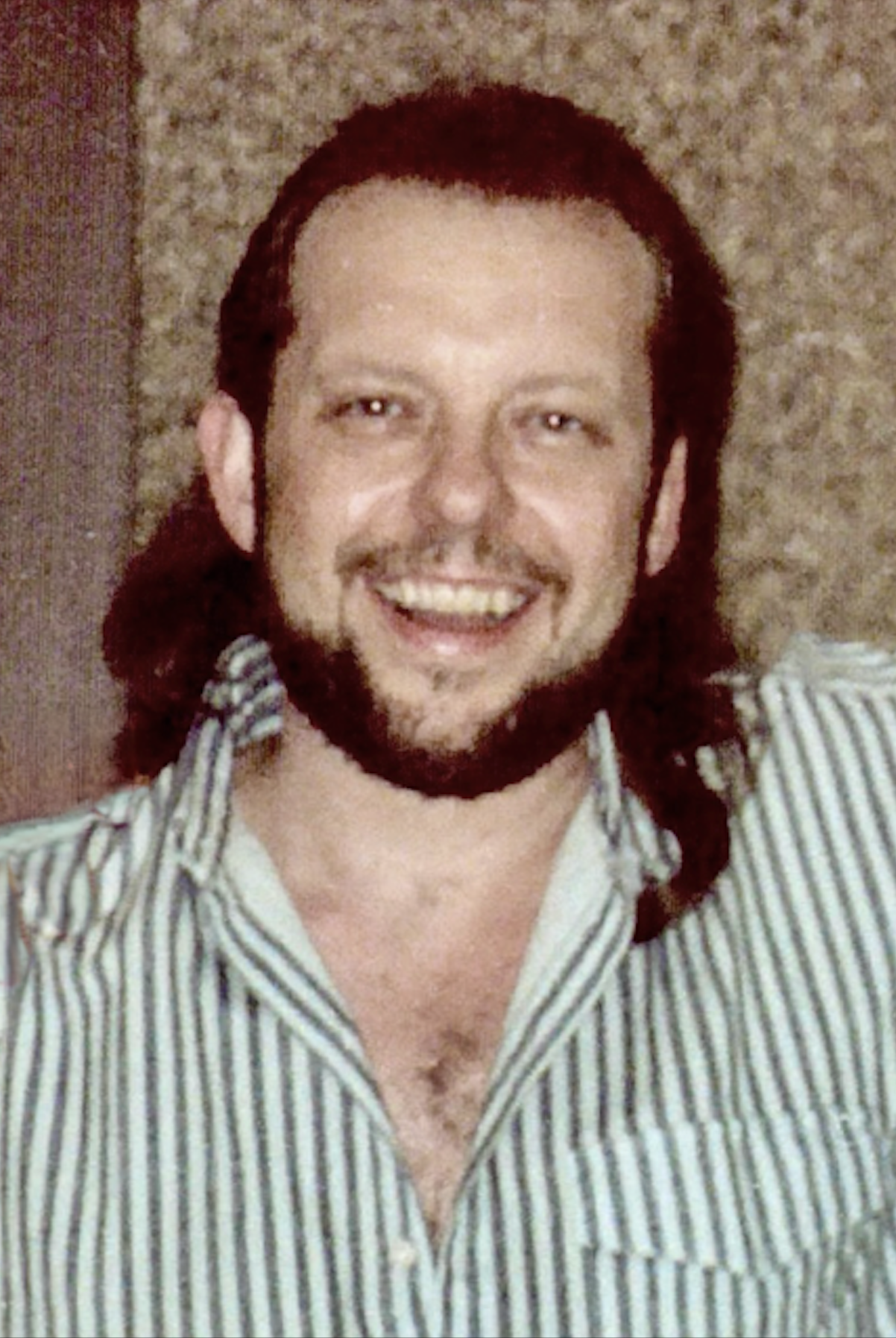
The apex of the DC Comics career of Richard Bruning arrived in 2005 when, after a campaign of 20 years, he finally killed the DC Bullet. Ever since arriving at the publisher for his first tenure as design director in 1985, Bruning had dreamed of the mercy killing. The logo he replaced it with was dubbed the “DC Spin,: and it might have been the best distillation of the ethos Bruning had championed since returning to the company as vice president-creative director nine years earlier.
The Spin featured a central “DC” drawn in thick blue gradients and surrounded by a swooshing orbital ring, was everything the old Milton Glaser design was not: flashy instead of monumental; modern instead of timeless; digital instead of analog; and meant to be easily animated for the slate of movie intro sequences DC Entertainment was planning to roll out. In point of fact, it looked a bit like the logo for DC’s then-owner AOL.com, and the similarity was more than just cosmetic: from the moment he returned to DC in 1996, Bruning was on a mission to create the model of a modern digital comic book business.
During the years between 1996 and 2010, when Bruning exited DC for the second time, he was to become a central player in defining the company’s presence visually, commercially, and in the minds of its readers. It was, for instance, Bruning who created the visual design and branding of the Vertigo line (edited by his wife, Karen Berger), and who pushed adamantly to use it as the springboard for a permanent presence in mainstream bookstores. It was also Bruning who was among the most enthusiastic in moving the company toward a multimedia identity: embracing computer design and production, and stewarding the Zuda Comics line to give DC a presence in the new world of webcomics.
This is not to say that it all went as planned. Take that DC Spin, for example. Before the new icon had even been formally unveiled, online gossip-maven Rich Johnston posted a video on YouTube showing hisbaffled young daughterstruggling to interpret the “DG comics” logo. The jokes on message boards and social media came swiftly after that. Zuda, after a high-profile launch in 2007, struggled to keep itself recognizable in a rapidly overcrowding online market, finally calling it quits less than three years later.
Still, it was clear enough that the DC Entertainment of 2010 was a very different beast from the DC Comics of 1996, and that an old era of comics publishing, for better or worse, had passed into the world of fan nostalgia. In the first part of Bruning’s interview with the Comics Journal, he discussed his time redesigning DC for a new audience in the 1980s. In this second part, he provides a window into the company and its staff during a time of transformation during the 1990s and 2000s, and shares stories about reshaping a company in a world of computer designs, movie tie-ins, and the World Wide Web.
ZACH RABIROFF: When we left off, you were talking about your decision to leave DC in 1990. Talk a little about what motivated that decision.
RICHARD BRUNING: It was a very exciting time as far as technology was going. The late ‘80s, early ‘90s, had an explosion in tools like Photoshop and Adobe Illustrator. And fortunately, being an executive at DC at the time, I got invited to some early previews of this kind of software. From a practical point of view, I had never had anything to do with technology or computers. But I had taken an interest in the Mac early on, and tried to talk DC into using it as a tool around the office. Paul Levitz was adamant that it was just a toy and just for playing games. Ironically, he ended up being the one who played the most games, but he was not initially interested.
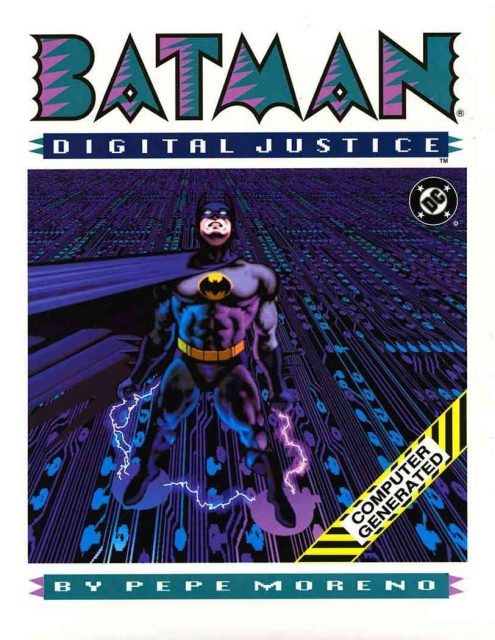
There had been a couple of novelty efforts at computer art in comics by that point. There wasShatterfor First Comics, and then anIron Mangraphic novel [1988’sCrash] at Marvel…
Pepé Moreno approached us afterShattercame out, and we didBatman: Digital Justice. I got to work with him very closely on it, and I started learning a lot about how those tools could work. He and Mike Saenz [artist ofShatterandCrash] were pushing the boundaries of what these machines could handle. I don’t even know how they pulled off what they did, and it was certainly crude in some ways, but it was a necessary step to get to a technological level that would give you art worth looking at. All those things convinced me that this was a real turning point in my industry publication and communication. I was getting very impatient with DC dragging its heels. I had become friends with another graphic designer, Dean Motter from Canada, and we had been talking about forming a business and opening up studios in Manhattan. He was moving down from Toronto and wanted to live in New York.
That was around 1990?
Yeah. I decided to go out on a limb and resign, and then set up a studio with Dean. Fortunately for me, Paul liked what I did, and he signed me up to an exclusive contract for the comic book business [at DC]. I couldn’t work for any other publisher, but I got paid every month whether I worked or not, which was kind of cool, and it certainly helped financially in getting a business started.
You must have made a compelling pitch to him.
I didn’t pitch it, he pitched it to me. I had a very successful run for those five years at DC, and I had become fairly high profile within the company, which was a very small company at that point. I think Paul saw something in me, and he didn’t want Marvel to have it. Basically, he thought it was to his advantage as a businessman to keep me off the market for the competition. That was an incredible honor, and I left on good terms with him. He was happy just to have me still doing freelance work for DC, and not working for Marvel or anybody else.
What was it like forming a new business with Dean?
It was a little challenging. Socially, we got along very well, but Dean wasn’t a great business partner. He was a little spendthrifty, and a little looser on his schedules than I liked. I didn’t want us to get a bad reputation, and if he delivered a job late, it looked bad for everybody. We tried to work through that. We wanted to see if Mark Nevelow – with whom I had done Piranha Press [an imprint at DC] – would be interested in working with us as a business partner. Mark is a super smart guy, and we had become friends. It would be the three of us, Dean, Mark, and I, and [Mark] was up for it. So he joined, and we had a nice studio in midtown Manhattan.
We proceeded along, but then Dean kind of flamed out, and it was just Mark and me. Other designers would come in and work with me, and I’d let them set up in my shop. Ultimately, though, it didn’t really work to have one graphic designer doing the job, and a full-time business partner. There was just not enough for Mark to do. He knew it and I knew it, and we were very straight with each other. He bowed out by 1993 or so, somewhere around there. I continued on by myself, and did a lot of work for DC: I did a lot of the covers, and I did all the Vertigo work in the beginning, developing the format for the books, and the interiors, and the promotion. That was great fun. I was working with Karen [Berger, Vertigo’s editor], so we had close to free rein.
How were you first approached for that?
Tell me about the process of developing the Vertigo design. Was the idea that you wanted to set this off as visually something distinct from the main DC branding?
Yes, that was one of the things we decided early on. We did not want the DC bullet on the Vertigo books.
You said that you always had problems with that bullet.
Paul thought that some identification to DC [was necessary]. I didn’t integrate it into the Vertigo logo per se, on the covers and such, but there’d be a little “DC” in a different typeface just right above or right below the Vertigo logo on the covers. There was that presence or indicator that DC was part of it. We worked that out with Paul, and it worked out fine. It was just a matter of figuring out how to do a line of books that people know are from DC, that will appeal to people who don’t read DC comics. How do we get them to want to try it out? Creating a specific identity was really important.
One of the ways was we did this was to use only painted covers. There were very few painted covers on regular comic books, partially because they are not economically feasible, and also because people wanted their line art to maintain [consistency] for the superhero titles. We were able to start commissioning painters to do covers, and that immediately gave the book a different feel and look. The editorial stuff was all Karen.
If you could talk philosophically, what are the elements that go into creating a good design for something like Vertigo?
That’s a good question. One thing was to handle all the elements of the book with greater sophistication than we had done in the past. So any interior pages shouldn’t look like the letter columns or the promotional pages that you’d see if you were flipping through a superhero comic book. The idea being, if you flip through one of these books, the ad flats would be for more mature material, they wouldn’t have ads for superhero books in them. We would try to maintain a higher standard, even in terms of the placement of the credits and that kind of thing.
We were working with top-tier talent, which was great, but sometimes required a certain amount of relearning for people who had only done superhero books. You have to visually describe the tonality of what you want the books to represent. Up to that point, they had been referring to Karen’s books as “sophisticated suspense,” which was one way to try to distinguish them. And then you had the billing “suggested for mature readers,” which was on all the covers of the Vertigo books, no matter what the content was.
Years later, there was a little to-do over that one. I forget the name of the book, but none of the material inside warranted a mature reader’s label. Still, Paul wanted to be consistent with it, so he could point to that and say, “if it’s Vertigo, pay attention.”
So in other words, it would be a given that Vertigo was a mature readers’ line. I would think that would be as much a selling point as a warning to younger readers.
Yes, exactly. And that’s what happened. Teenagers picked up on Vertigo real quickly. We caught the attention of kids who would have dropped off reading superhero comics and moved on to other things, like girls or boys, or other hobbies. Our goal was to try to wedge our foot in there and say, “Hey, you haven’t seen this yet.” Comic folks had been, up to that point, pretty much a joke in publishing or society in general. Every newspaper article that ever mentioned comics always started out with “Zap! Pow!”Batman ‘66and all of that.
That was the stereotypical headline that drove Karen and me nuts, so we worked really hard to avoid it. She didn’t even want to put copy on the covers: “The greatest battle of all time with John Constantine!” We were only using typography. Karen didn’t want to see too many exclamation points on a cover. We disagreed about that, sometimes. But nonetheless, her heart was in the right place, and you had to find every opportunity you could to convince people that these weren’t superhero comics. It was a bit of an uphill battle. The key turning point, I think, was when we started collecting the Vertigo books [in collected editions] so people could buy them by volume, which wasn’t common up to that point.
It seems like that was pretty intrinsic to the Vertigo line from the beginning. There was this system, especially for some of the bigger titles likeSandman, where you would get collections coming out almost as soon as the story arcs concluded in the monthlies.
There was a lot of back and forth on that, because it wasn’t the normal way that DC did things. They usually let time pass. It wasn’t very important when you collected a certain volume ofThe Flash, but we could tell that we were picking up new readers all the time. We didn’t want them to feel out of touch with what was going on in the books as book sales rose. We pushed very hard to get the books collected early. We would go to all the different comic dealer meetings and expos and talk to the retailers about this. The retailers were very explicit about the fact that if we give them volume one, and then three months later we give them volume two, and then volume three, they can push those books out the door all day long. That was the general consensus from the retailers. So we had a really strong ally in that, and it helped us firm that up as a publishing platform.
Was Paul Levitz resistant to that?
To Paul’s credit, he always saw comic books as periodical business. You bought them, you threw them away, whatever. There were no evergreen [comic] titles in bookstores. Those books sell printing after printing; as long as the title stays culturally relevant, it’s a stream of income. The retailers were pushing us really hard on this. It is a higher ticket price, so they make more money off the effort. You don’t make much money off of a single comic book. It was one of the reasons why, after the mom and pop grocery stores died out, and the Targets and the 7-11’s came along, they didn’t want to deal with comic books. They were little ratty things on the rack with people standing around, reading them.
You could make more money by using that same rack space for a bag of M&M’s than you could for a comic book.
Exactly. OrPlayboy. Building up that business was a really important part of Vertigo. And Vertigo’s overall contribution was large, because you saw all the other publishers start to go that way once the retailers started telling us, “Yes, more please, and keep them in print.”
And was there resistance to that at DC or were they on board with it?
They were on board with that. DC’s biggest problem overall was that they would tend to run a little slowly on things. I wanted to have DC be the first one out of the gate, but Paul said to let somebody else do it. That was one area we had to push him a little bit on, because he didn’t want the readers who bought the individual comics to feel burned if the collection came out too soon after they had just bought those issues. And that was always one of our conundrums: are we selling the same material twice to the same customer?
Now, that can be a good thing financially, because you get two hits off of each volume. But he was concerned about how the reader would respond. He was always concerned about that kind of stuff. He never wanted us to put new material in the collected editions because it would be cheating the person who bought the comic version not to have that. When I set the department up, I was commissioning fresh work. Like, we were doing aShadowcollection, and I hired Mike Kaluta to do a six or eight page original story just for the book. I didn’t ask anybody if I could do it. I just kind of did it. It looked great, it was fun to put together. Paul told me that he really wished I hadn’t done that. But, you know, you can’t please everyone.
Would you say that Paul was more reluctant to push for collected editions, while Jenette was more gung-ho in favor of it?
Yes. Jenette was by nature, a very gung-ho person. You could get around Paul by going to Jeanette, and then Jenette would convince Paul that it was a good idea, and he’d throw his hands up and go, “All right, whatever you want.” She was a wonderful agent of change. Without Jenette coming into the company when she did, I doubt DC would still be around. I mean, it almost folded in the late ‘70s. It was her enthusiasm and ability to take a risk – and Paul’s ability to take a risk, too. He was not risk-averse. What you were trying to do just had better be nailed down. Don’t just wing it.
But, really, it was a good time. And the people there – Dick Giordano and everybody – were very supportive. Superhero editors were never very happy with Vertigo. Somehow they saw it as competition, or I think they saw it as thumbing our noses at the superhero books. That wasn’t true. We were just doing our thing.
Which is funny, because there were a number of Vertigo creators who crossed back and forth with the other DC books. It’s not like it was a gated community.
No. And, as a matter of fact, DC certainly profited off of that exchange better than Vertigo did. They stole every good writer that came into Vertigo. They got snatched away almost immediately by the superhero titles once they saw what kind of books these guys were capable of. They began to wonder, what if he did that with Batman? There was a lot of British talent coming to Vertigo, and then the talent was pulled over to the superhero books by a higher page rate.
So it seems like you were making a good living doing all of this in a freelance capacity. What made you come back to DC in ‘96?
The business was doing okay, but the original goal for me had been to set up a shop with a partner or partners; I didn’t really want to do it all by myself. The business stuff ended up taking so much of my day, every day, I didn’t get a lot of time to create as much as I wanted to. And then I went to WonderCon in Oakland, I think it was in ‘96, and Paul was there. He said, “Hey, can we go talk for a minute over here in the lobby of the hotel?”
I went over to the lobby, and he said, “Joe Orlando’s leaving DC, and I would like you to be the new creative director.” I would get a bigger title and more power, and it was a bigger company, and there was more stuff going on, and I thought, “Well, that’s cool.”
Describe to me what it meant to be creative director at DC. The titles can be a little opaque.
Yes, they are. And what an art director does is different in each company. I was very fortunate that I had the support and enthusiasm of management, both in ‘85 and then coming back in ‘96. I was given a lot of leeway to define my job because they knew I could come in and see their weaknesses and strengths, and I knew how to address them. I was good at working with people and pulling people together. I was good at pushing people to try new things. A lot of times people would be afraid to try something new. They worried that they’d get fired or get in trouble. I reassured them that the bosses would yell at me, not at them.
I told them, “I’ll take the hit on this.” And once you tell somebody that you’re willing to take the hit on their risk, they’ll do most anything for you. I established as many relationships like that as I could, because coming back as a vice president gave me a certain hammer that I felt was essential to getting the job done. I was working with all the different departments and I saw things as they happened . Paul might say, “We’re thinking about doing this…”, or, “We’re going to get into gaming.” Or I’d stick my nose in what the licensing department was doing, because every once in a while they get some really bad art going.
I remember when the digital coloring came in, and everything had a glowing round shape. Every muscle would have a highlight to it. It looked godawful, especially if you do it on something like Superman or Batman. It was what Image was doing. A big reason for my coming back in ‘96 was to keep people away from doing the Image thing. That was one trend that popped up at DC when I was not on staff. I abhorred it. Sometimes it was just cheesy, and what they did with women and thongs? Come on, guys.
When you came into the job, did you have an overall vision for what you wanted DC to look like?
I spent a lot of time thinking about what we could do, or what we could do better. I was just responding to what was going on in the company and how we were going to deal with certain changes. My job was delightfully amorphous. I was able to stick my nose anywhere, mostly because of Paul backing me. He always had my back. So if somebody wanted to mess around, he backed my move 95% of the time because I had a reason why we should do it. We increased the sophistication of the books, the stories, the presentation. It was all very organic.
Did you ever encounter resistance from Paul?
Well, one example would be the rendering of the superheroes for licensing. I didn’t run the licensing department, but they needed my approval. I don’t know how to put this – they didn’t run everything past me, but if I saw something, I could go down there and say something. I would find out what they were trying to do and try to show them the positives and negatives of their idea. The negative was the… we’ll call them the balloon-shaped superheroes. They had prepared a whole style guide, and I thought it really looked awful. But they thought that’s what the kids want these days.
Now, of course, these are licensing people, they’re not comic book people. They’re supposed to know what our licensees want, but our licensees don’t know what they want. They just want you to give them good Superman art and Batman art to stick on backpacks and shit. I felt like aesthetically it didn’t work. I brought it to Paul’s attention, and we met with the licensing department. Paul says, “Richard’s right, this doesn’t look like us. You’re trying to be Image Comics. That’s Marvel Comics. We don’t do books that look like that. We don’t need that. Batman doesn’t need to look like he’s an inflatable balloon.”
That’s an example of, I guess you could say, negative impact. But ironically, they were still very rigid about how they would portray the characters. But a lot of times they just couldn’t break out of the Jose Louise Garcia Lopez art model. I mean, Jose is one of the best artists I’ve ever had the pleasure to work with and a wonderful guy.
But he had drawn the style guide back in the ‘80’s.
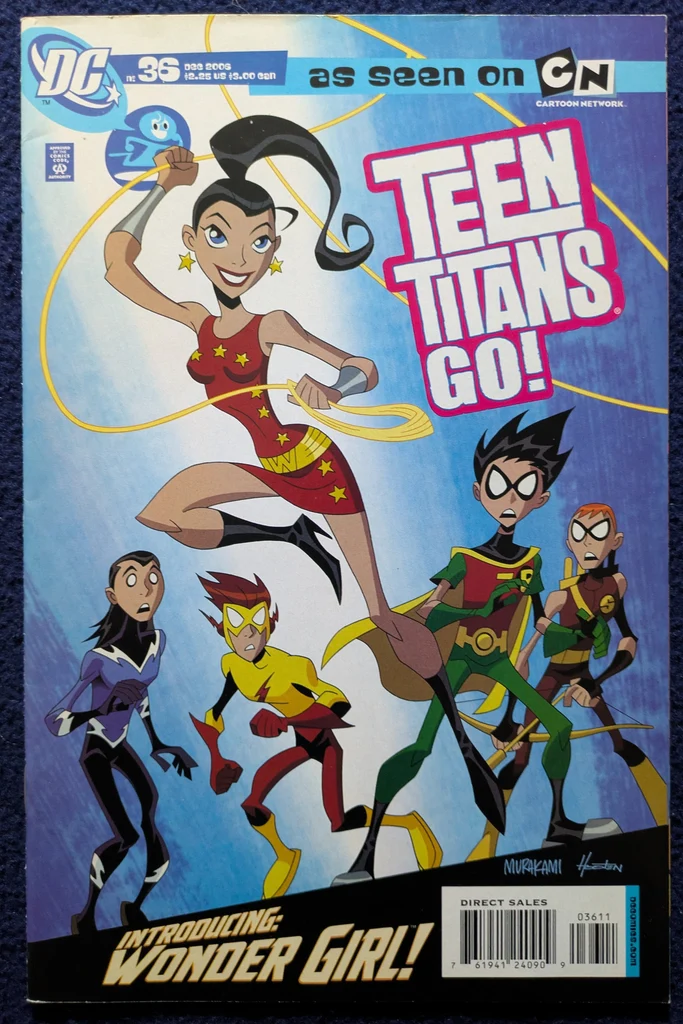
Yes, exactly. I said, “Guys, you can stretch these characters. You can do new things with them.” They showed me the preliminary work that the studio was doing on [the cartoon series]Teen Titans Go, and I thought that was the best fucking thing I’d ever seen. It really took the characters someplace new, but it wasn’t stupid. It was really smartly thought out, and it worked. I remember that we were seeing a preview of the first episode in the executive conference room before the show aired, and the theme song came on, and I fell in love with it. I thought it was just hysterical. It had enthusiasm, you could see the manga influence, but it wasn’t heavy-handed. Other executives were there, asking, “What are we watching? This is terrible. We can’t do this. Look, the characters are all little and weird.” And I thought, “You just don’t understand this. You can stretch the characters. You just have to make sure you do it really well. You have to have a reason, and you have to pull off top quality artwork.” That was the kind of interaction I would have with licensing, specifically, because they had a lot of graphic outputs.
How much did you end up having to work with the editorial teams? There had been some change there [since 1990]. Dick Giordano was gone as executive editor by the time you came back, and I’m not quite sure how the company was organized afterward.
You and me both. Things were a little up in the air when I got back. They had the Triad: [Mike] Carlin, Denny [O’Neil], and Archie [Goodwin] as the co-heads of superhero comics, which was an awkward structure. It was weird. It felt like they didn’t trust one guy to do this, so they had to split it amongst three. They were all very talented people. It wasn’t like you had some hack there, but it was a little weird to have it split up like that.
Did it also slow down the decision making?
A lot of that stuff is under the hood, and I couldn’t really comment on it. I never got very involved in the minutiae or the inner workings of the superhero comics. It was too complex a machine for me to go in and try to noodle this, and noodle that. We never had a consistent presentation of, say, Wayne Foundation or Wayne Industries. So I suggested having a graphic designer create something that all the comics, when they want to have Wayne [brands] on them, looked like the same symbol since, that’s what any corporation would logically do in the real world. That’s the kind of thing I might have input on. But as far as the machinations inside [editorial], I was a total outsider looking in. I would get involved if the packaging became an issue, or formatting, things like that.
Were you working with any of the other imprints at that point? In ‘96, there was Vertigo and Paradox. I don’t know if Milestone was still running.
It was wrapping up. Anything that started after I got there, like the Vertigo crime line, Shelly [Bond]’s imprint Minx. One of the biggest things that took my time and energy in the later years was digital comics. How are we going to get comics on computers? And very early on, we started having some preliminary talks. It was just before the iPhone, which was, like, 2007. I think phone companies were trying to figure out how to put content on the phones. The phones at that time were not a simple rectangular screen. They were a little bit bigger, a little bit narrower, mostly square screens. People were hungry for content to put on the phones, which helped sell more phones, so they were trying to find a way to shoehorn comics into the phones.
They were used to the fact that when you took a TV show or a movie and transferred it over to a phone, it was likely formatted in the wider format that the iPhone came to have. That dictated all other phones then. But comics aren’t that way. Each comic book panel is a different size, different shape, [and there are] full page and double-page spreads. How are you going to accommodate that on a phone? And most business people thought you just cut it up or something. It was a very frustrating period. We were trying to come up with a storytelling method, because you could do that digitally in a way that you couldn’t do in print. Ron Perazza, who was head of creative services under me, he and I spent a lot of time trying to figure out how to do digital comics. We were never able to crack it, if it was even crackable, but ultimately it led to Zuda. That’s where a lot of my energy went at that time. I don’t remember what year.
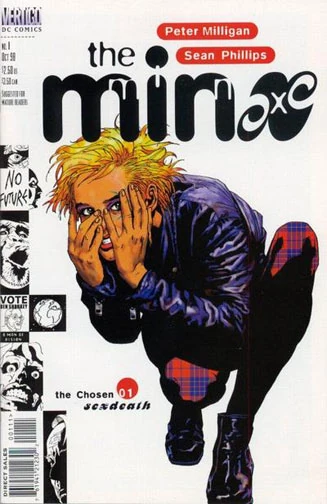
(Vertigo, 1998) cover art by Sean Phillips
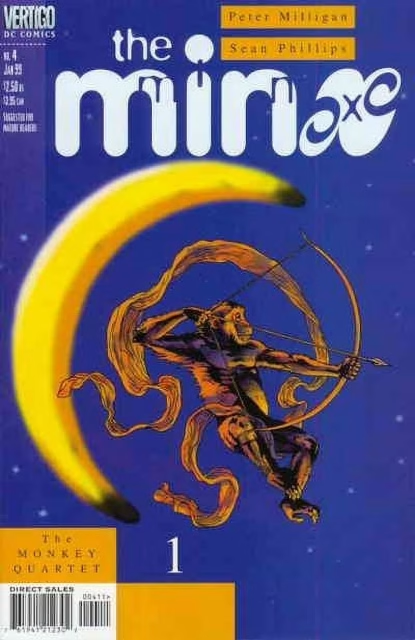
(Vertigo, 1999) cover art by Sean Phillips
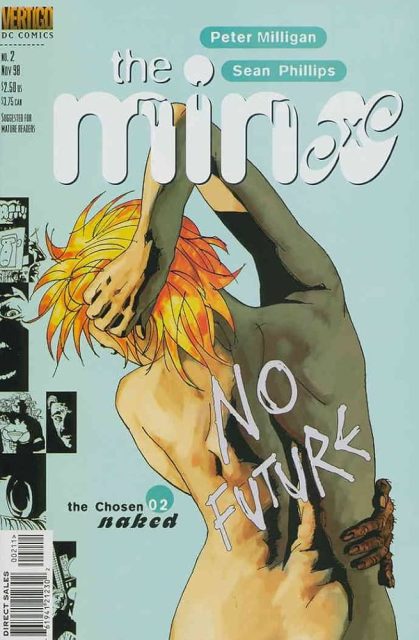
(Vertigo, 1998) cover art by Sean Phillips
Talk a little bit about what led to the genesis of Zuda.
We were never able to fully successfully [adapt comics to phones] because of the inherent nature of the phone screen and its rigidity, versus the non-rigidity of comics. The only alternative was to commission new stories just for that kind of format. So it was “panel, panel, panel, panel,” and no spreads or anything like that. We did a number of Batman [stories] in the animated style. It was very expensive to commission. Everyone thought you could repurpose [comics] the way TV shows and movies could be repurposed without doing much of anything to them. But if you had to build a brand new comic from scratch every time, and it changed the economics of it.
Who at DC was pushing for that – or maybe who at Warner was pushing for that? Where did that impetus come from?
It came from above. At that time, it would’ve been Kevin Tsujihara, the head of the studio, and the people from the studio did not get involved in our business much. Or, if they did, I wasn’t aware of it. It was fairly subtle on some level or another. They let Paul do whatever he wanted to do because he never squandered money. He always met his budgets. Nobody from the West Coast came in and walked around the offices to see who was not working. We were left pretty free and clear, and if there was a battle, Paul would go and fight it. And win or lose, he’d tell us whether we could go ahead or not.
But when Tsujihara came in, he wanted to get very involved. He was younger and more enthusiastic, and he knew what was going on with the digital stuff. He was largely supportive of what we were doing, or what we wanted to do. He was always around – mostly being a positive presence – even though he was a studio executive. He was the one who gave me the thumbs-up on changing the DC bullet. By the time theBatman Beginsmovie came out, he put [the new logo] on that. That put a fire under me to get that whole thing going. I appreciated his support on that.
You finally got to live out your dream of abandoning the bullet after all that time. And of course, it immediately ran into criticism from just about everywhere.
Yep. There is no pleasing people. I stand by my position that if you are stripping away the nostalgia that all of us, including myself, grew up with, the Bullet, structurally, doesn’t work very well. There is too much negative space to it. Everything gets tiny if you start to reduce it. The little hair lines start to break up. It just becomes a little clump of things. And that’s why on the design, I wanted a big clear “DC.” Whereas on the Bullet, the “DC” seems unimportant compared to the band with four white stars on it. I’ve worked with it physically more than most people have. I saw that early on that there were a lot of internal structural problems with the design itself, and I stand by that.
Going back to Zuda, who else was involved with that early development process?
It was my responsibility, and I was very fortunate to have excellent people who were working in creative services. Creative services was the department that took care of all that kind of digital work. It was my little sandbox. I had hired a guy named Ron Perazza, who was a really smart guy: really sharp, no bullshit. If he needed something to get done, he could get it done. We had some wonderful people on the tech side. Dave McCullough was our tech guy. We hired an editor, Kwanza Johnson.
With Zuda, the big thing was: What are we actually trying to do? One of the problems with it was that at that point in time, Flash software was being used for anything that animated on the computer. It was a very, very clunky approach. And using it, you had to sacrifice a lot. But that was one way you could get all the interactive motion thing going. We had to build it on that structure, which ultimately got phased out a few years later.
I originally thought we were just going to look at samples submitted and pick what we thought was good, commission the work, and then have it go up. But Paul said that’s not enough. He wanted us to get something more interactive. He was, again, not a dummy. He realized the interactivity was a key element in something like digital delivery. He said, “You need a contest or something.” He used the various TV shows where you get voted off the island [as a model].
It was a verySurvivor, Mark Burnett era for pop culture.
It was very hot. So at first, Ron and I figured out a way to make it work. What we ended up doing was having people submit whatever they wanted. And then Ron and I would go through them and pick a half a dozen that we thought were usable. In the beginning, Ron or I would take that list of six to Paul. We told him, “You’re not going to want to look through the dozens of bad ones that we didn’t pick.” We had to build a system for this method of voting. And then we were trying to keep our eye on the ball that it would be a good idea to ultimately have a print version somewhere down the line…
That seems like almost an impossible balancing act. On one hand, you’re trying to pursue a format that’s tailor-made to a new medium, but on the other hand, you want it to go back into the old medium later on.
We wanted to have our cake and eat it, too; that’s why we came up with just those little, squat Zuda books. They never really did very well because we couldn’t get the audience to come for comics that weren’t superheroes. Again, we were trying not to do superheroes, trying to do something different, and indie comics was our inspiration for Zuda. So that’s the direction we went, and we got full support from DC and Warner Brothers for a number of years. Ultimately, it didn’t really pan out as a commercial entity. But I’m very proud of the work that we did.
Why do you think it didn’t pan out?
I think some of it was technical. The hardware and the software for viewing the comics online was still not quite there. It was a very clunky process, and it was hard to get people to go online to look for a thing that they didn’t know existed. Partially, it was just a marketing challenge. We were looking for a totally new audience, and I think we were just a little ahead of our time, because a few years later, people started doing what we had tried doing.
Zuda launched the year the iPhone launched.
We were too far ahead of the curve, and the market wasn’t there yet. That’s what I blame it on. But we produced some really good material. It was a lot of fun to do, and it broke us off into some new areas. Doing things differently was the thing that kept me going to work every day.
It’s striking to me that here we are in 2026, and yet after all this time, it feels like publishers have thrown up their hands at the idea of finding a new format that specifically works with digital readers and phones, and everything else. At the end of the day, comics still look like comics did 30 years ago.
Right? It’s a unique format, and it is hard to get it to accommodate other means of presentation. People who buy comics are aware of a certain amount of a collectible nature in them. I think people wanted to be able to buy and hold the comics, and digital comics never gave them that. They didn’t feel like they had anything. Comic book people have a physical collector sort of mentality. And I do, too. I love seeing the books lined up on my shelf. So yeah, that one hasn’t been cracked yet.
Is it still something that you feel like you’d want to try to do, or are you resolved to work in the physical format?
Well, I found that I love print. I’ve always been a big book guy, both as a book reader and as a comic book reader. So I started working in digital, but it never quite felt as satisfying as getting a printed copy put in my hands. The physicality of it does have an effect on us, which I think is going to be a big issue over the long haul for our culture. A lot of what we have now is ephemeral. It’s on a hard drive. It’s on a flash drive. You can’t look at it. There’s no way to look at it unless you have the right equipment, and the day you don’t have the right equipment, that stuff ceases to exist. A book can last a long, long time. And so there’s a certain amount of both the romance and the endurance of print that keeps me happy with what I’ve got right now. If somebody approached me and they wanted to put some real money into [a digital platform], and they had a vision for what they wanted…maybe. But I’ve done that, been there.
Around the same time that Zuda launched, Dan DiDio became executive editor at DC. I’m wondering how that played out in terms of your role.
I was one of the few people who interviewed Dan before he was hired. Paul wanted my take on him. Dan is another super smart guy, knows comics inside and out; he had even been doing a little writing, as well. He was pals with Jimmy Palmiotti, so he’d been given a few assignments here and there. Dan had big ambitions. I was very enthusiastic when he came on board, partially because the whole Mike/Denny/Archie thing hadn’t worked. And then Archie tragically died from cancer. Denny was just – God love him, but he was kind of checked out. The burden was falling on Mike, but Mike had been carrying the ball for years by himself, and it’s a hard job. Marvel couldn’t keep anybody in place for a long time as editor-in-chief. There was turnover every year or two.
When you say that Denny was checked out, what do you mean?
I’m not trying to insult Denny. He was very nice man, but he just didn’t seem like he was engaged in his work, shall we say. When I had a Batman project that I was working on, he felt a little too hands-off for me. At least, that’s how I view what an editor does, and he had his assistant doing most things. Again, I’m not trying to slag him, but just I think he was tired. He was tired of doing superhero comics.
Had you felt that way about him since he got the Batman editorship, or was it something that happened later on?
He always had a very laid back personality. He was very Zen, so you couldn’t look to him for excitement. It was just not his personality. He’d been in the business for longer than I had by a fair amount, and I think it was just a matter of, he was in the groove. He was doing the Batman books. He was thought of as the Batman expert. He was the Batman writer and editor. Maybe too much of a focus on just one character might have bored him. When you think about it, doing that many Batman comics for that long probably wasn’t the best thing. He should have done something else, just to shake it up for him. But stability was a big thing at DC. If it’s working, don’t mess with it.
So it would have been a big deal to push out somebody like Denny during what seems to have been a period when therewasa lot of change in DC leadership.
Denny always had a low profile though; he’d sit in a staff meeting and say nothing. He was just happy just being there. I don’t want to say anything more about Denny.
You said that at that point, Mike had been carrying a pretty heavy load on his own. Is the sense you got that Mike was satisfied stepping out of that role?
I think so. I think he even said that to be able to put that burden onto somebody else and just focus on doing books was a huge load off of Mike’s shoulders. So I know he was fine. “DiDio knows what he’s doing. Go with God.” Dan worked very hard to build camaraderie. His personality could be abrasive, and sometimes that was a little challenging because he’d just push right through. But if you wanted to get done what you wanted to get done, that was his style. That was his way of making it happen.
The other big thing that was going on at that point was the merger of WildStorm into DC, which also brought Jim Lee into the company. How was that playing out?
That was funny. I hadn’t been back long when Paul called me and said, “This is quiet. Don’t tell anybody, but we’re buying WildStorm, and I want you to help be the liaison to their offices to try to integrate them into ours.” We had never tried to do that before. Milestone was the closest thing where they had their own little editorial setup, but Jim had a very well-established shop that did everything. It was Jim that DC seemed to be buying. They were buying more Jim than they were buying WildStorm properties.
I went out to La Jolla every couple of months and just hung around there for three or four days, met with people, asked them if I could help them with anything, and if there was anything New York should be doing for them. We’d go over cover sketches, we’d go over marketing materials, just trying to point them in a direction, not tell them what they had to do.
What was the reception there? Were they wary about the new owners?
I think they were, because they had been their own little shop. It was a very personal environment. The whole staff would go out to lunch together, or Jim would take them all to a ball game. It was very much between Jim and John Nee, who was their business head. It was like a little family.
There was mom and dad, Jim and John. They were cautious. I tried to be very positive, and I tried to do anything I could to make things happen for them so they felt more comfortable with what was going on. I couldn’t control everything, of course, so there was a certain limitation to that. But I got along great with the folks there. They never showed any resentment for my presence, and I never gave them any reason to. I really enjoyed my time working with WildStorm, both visually and creatively.
Was the sense, at least at first, that you wanted to keep them distinct and not to bring them into the wider DC structure?
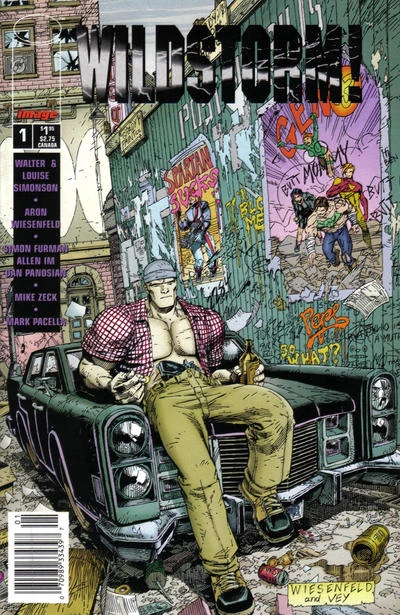
Yeah. Originally the idea was to build WildStorm back up as its own thing. The way we could avoid scaring everybody off was by not making everybody do Green Arrow comics the next day or something. We definitely tried to keep the separation of church and state. I would work with them on developing new trade dress to freshen up the WildStorm brand. But they were largely doing the kind of books they had been doing, with a few exceptions when we ran into different sensibilities, shall we say. But for the most part, WildStorm published what WildStorm published.
That hard wall between the companies seems to have broken down later.Were you privy to any of the thinking behind that?
I wasn’t involved in much of it. I think there was an internal debate going on within editorial as to whether it was better to try to build WildStorm into the DC universe or keep it separate. I really can’t say what specifically was going on at that time.
Toward the end of your time at DC, there were a number of changes at the company. Jim Lee became co-publisher. The New 52 was launched. WildStorm was brought into the main DC publication universe. What was going on behind the scenes during that time?
I don’t know. I wouldn’t assign it to any one thing or another. All those different things that you’re citing happened independently. Looking from the outside, it may look like there was a mass change going on that was very deliberately planned out, but it was more organic than that. People were trying to figure it out day to day; there was no rulebook to follow. And there were new opportunities all the time with the technology changes, with the talent. There was always the competition with Marvel over page rates, which was never ending, because one guy would try to outbid the other guy.
If you look at the way DC looked when you came in ‘96 and the way it was when you left in 2010, do you think your time there was a success or a failure?
I’d like to think there were few failures. Something can be a success and be a commercial failure. If you achieve your creative goals, then it’s a success. If people don’t buy it, they’re stupid. I was very fortunate there. I just felt like they gave me a lot of rope to hang myself, and I never hung myself, and they backed me. Even if I did something really stupid, they would say, don’t do that again, and then let me move on. I’m eternally grateful to people like Jenette, and Paul, and Dick, but Paul probably the most of all. He was the one who brought me back for the 15-year tenure.
I think for me, the end really came when Warner Brothers decided these movies are really fucking big deals. TheBatmantrilogy was just setting the world on fire. That was the clarion call for corporate to come in from the West Coast and start telling us how the new place was going to be run.
That also coincided with another corporate changeover, with AT&T buying the company.
Yeah. Well, first we had to survive the AOL merger, which was a nightmare. AOL was worth billions and billions of dollars. That went down very badly at DC, because you could see it was not a smart move. “Synergy, synergy, synergy, synergy.” Nobody wanted to work with people they’d never worked with before, people who didn’t know what they were doing. It was a manipulation by financial executives to feather their own beds, somehow. There was no practical reason for doing it. It was just a way to get money going from this hand over to that hand.
Did that change significantly the amount of freedom or the amount of interference that you encountered in your job?
Fortunately, I don’t think so. I think the biggest hit was the morale around the company. But as time went on, we all started relying upon email more and more. And when AOL came into the picture, the whole company had to shift over to using AOL mail as their email server. And it sucked compared to whatever the fuck we were using. It was like you took an electric drill out of our hands and gave us a piece of stone, and told us that it will work just as well. And it doesn’t.
I never thought of that, but of course AOL would force everyone to use AOL email accounts.
Exactly. Practically speaking, there wasn’t really much else for them to do. I mean, there were little projects that we worked on together. I barely remember them now. For the most part, AOL didn’t know what we were doing, so they didn’t really matter. The head of Warner Brothers at the time was still the head of Warner Brothers [after the merger], good old Jerry Levin. [Speaking unconvincingly] “It’s all going to be great guys. It’s all going to be great.”
That was just a bad time.The vibe was bad. DC is a very mellow company, very easygoing. But AOL coming in really took us off the tracks for a while. Mostly just emotionally. We didn’t know where we were going, we didn’t know if the big bosses were going to be coming in now or what. It became evident soon after the merger that AOL was going down, not up. All of a sudden you realize, oh my God, we just hooked our wagon to a dying horse.
And it seems like from a historical perspective, the chain of debt and buyouts really hasn’t stopped for Warner from then up to now.
Yeah. It’s just bad debt getting rolled over into more bad debt, getting rolled over into more bad debt.
So what made you decide to leave when you did in 2010?
New management. In the Fall of 2009 new management came in, and we were told that Paul was going to be retiring, which he’d certainly earned. He’d been there since he was 16 years old.
Was that by his choice or was that something that corporate decided?
I’m sure it was worked out, and that Paul did very well from it. I think at that point he was tired of doing it. He had literally been doing it for decades. But that shook all of us up, because DCwas Paul at that point. Jenette had moved out, so Paul had taken both publisher and president roles. We knew Paul had our back, even if we had squabbles with him. He was solid as a rock. We didn’t know these new people. They had nice smiles. They seemed friendly.
Who were those new people, if you can recall?
Diane Nelson was the new head. John Rude was some kind of business manager or something. Those were the two primary players. Diane would’ve been answering to Tsujihara . I think it was Tsujihara who put Diane in charge of DC.
I’d spent a fair amount of time in Burbank, so I knew some of these people. They were perfectly nice people. Mostly it was a meet-and-greet sort of meeting, or general information meetings. No big decisions were made in the room while I was there. But they wanted to restructure the whole thing. In 2009 they promised us that although Paul was leaving, everything was going to be okay. They told us, “If anything, you’re going to have more resources, you’re going to have more support than you’ve ever had before. The studio’s here. We know how valuable you are,” et cetera, et cetera. We lived in this little bubble, floating along for a while, and that was stressful to me. A lot of people looked to me to tell them what the temperature of the room was, and it was very hard to reassure them about people I didn’t really know. I tried to be positive about it. Yes, it would be great if we got more resources. Yes, it would be great if they did this or that or the other thing. And then about a year later, they announced that there’s going to be a big shakeup, and Dan and Jim will be running publishing, and they started whacking out vice presidents.
Why do you think that happened?
They wanted to have their mark on it. West Coast is very obsessed with having the projects betheirproject. Everything needs to be their project. DC had to be Diane’s project, and it had to be rebuilt to reflect that she had changed things for her new vision of the company.
That seems new, though. You’d said that prior to this, Warner had always been very hands-off. Even AOL didn’t make that many changes.
No, this was the biggest change. They wanted to know if I would move to the West Coast if the company was going to move. That was the question burning in everybody’s brain the last year or so: are we going to have to move?
Which, eventually, they did.
Which eventually they did. But it was inconceivable to us, because it’s always been in New York. The comic book industry was in New York. But then Marvel goes to the West coast,1 and we’re sitting around asking ourselves if we want to go to the West Coast? And Karen’s like, “I don’t want to go to the West Coast. I want to stay with my family.” The shit kept hitting [the] fan, and finally I said that I wasn’t interested. And they’re like, “Okay, bye.”
Was there anything in particular that made you decide it was a bridge too far?
I think it was a combination of things. The place felt like it was being gutted. And you knew that there were people at DC who had survived by the kindness of management in some cases, shall we say.
How do you mean?
Somebody that may have had their job a little too long, not doing anything radically eventful. The guy that watches the library: we had a library of all our bound volumes of all of our books. It took a unique sort of fanboy…not in an insulting way, but a unique sort of fanboy who could manage a library like that. Who could know what was in there, actually know which volume, which edition, and which printing it was. The new management basically said, “Bye, thank you so much for all your work, but we don’t need you anymore.”
I was so emotionally hooked into the company that it was starting to really get to me. And it was getting to Karen, too. Karen was going through the same thing. She didn’t know what was going to happen. And it became obvious that if you were not on board with moving at some point, you didn’t know how much of a future you had. Plus, they wanted to get new vice presidents in there so they could be the vice presidents that they assigned to the place.
You’re saying there was a sense that you weren’t one of their people, and they wanted their people there.
That’s the best way of putting it. They were always nice to me, and I left on good terms, but I was not happy because I really, really loved my job, and I really loved what DC had become. I felt like we’d grown up a lot together. There were always new things to do, always new ideas to explore, but not with these guys, not with these new people. So that was bittersweet. That was a tough time.
Where did that leave you?
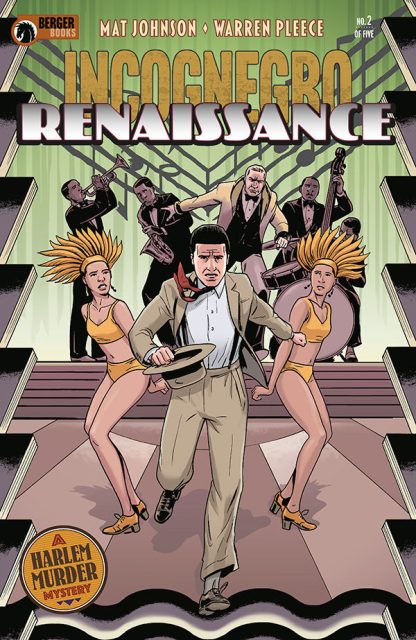
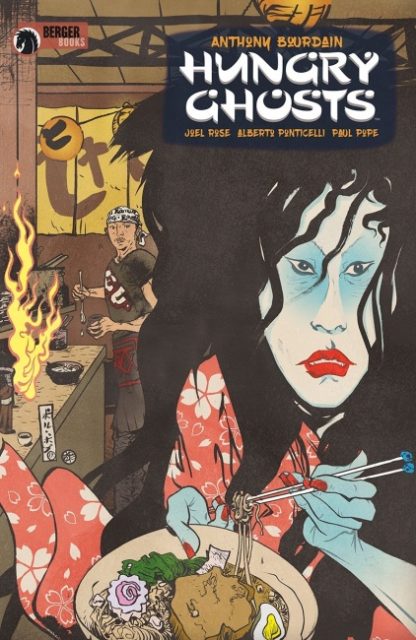
Good question. It left me adrift for a while. I was so connected to my job, and then I started experimenting with writing. I’d always played around with writing. I would get two-thirds of the way through an idea. And then I’d start another one. I started getting more freelance design gigs just to give me something. I mean, fortunately I was well-off enough between Karen and I that we didn’t have to go out and get new jobs right away. Ultimately, Karen negotiated. She was bored with sitting around doing nothing. She was negotiating deals with other publishers for her imprint, which came to be at Dark Horse as Berger Books. And that gave me an art director job back, which was always fun. Especially fun, because this was just Karen and I figuring out what we wanted to do.
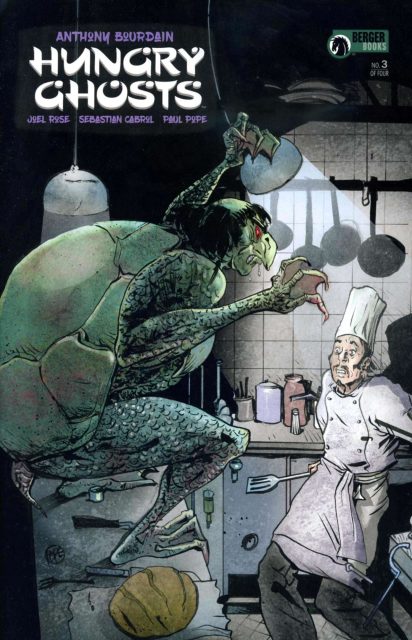

I imagine it was the most creative freedom you’ve had.
Yes, exactly. We’ve done about three dozen books, I guess, of the collected type or original graphic novels. They’re the most fun. And I’m very proud of the work I did there. I took all the stuff I had learned up until then, and I was able to distill it without anybody telling me it had to be a certain way. If it was okay with Karen, then it was okay with the talent, and I don’t think they ever complained. If they wanted to do some of the design or all of the design, that was cool with me: I would just facilitate them getting that through production. A lot of them don’t want to have anything to do with it; they just do their stories and turn it over. But we had a lot of fun with that line.
I would imagine that an artist like David Aja is pretty hands-on with the design.
Yes. Which is perfect.Seedswas a perfect example. He had that fully realized. I don’t think I did much of anything on that book. Maybe a chapter break or something like that. He had that all thought out. It was like Dave Gibbons: Gibbons always had his stuff all figured out. Working with him back onWatchmen, he knew what he wanted. He’d already sketched it. He had already drawn it out. He had enough design sense to know what was going to work.
So what’s ahead for you now?
I don’t know. My original love of all this was cartooning. That’s how I got into it in the first place. When I was a kid, I thought I was going to be a comic book artist. From when I was a kid up through my mid-to-late 20’s. I drew all the time, mostly little cartoony things. I was not very good at doing real people. So I’ve been trying to rekindle that interest, and spend time every day drawing, which has been fun. I feel like I don’t have to get completely back in the saddle yet, but I’ve gone back to reading books that fell out of the way for a long time.
We’re going to end up with another graphic memoir, aren’t we?
Probably not. But you never know. I never know where it takes me.
- This statement is partly true. Although much of Marvel Entertainment is based in Los Angeles alongside its parent company Disney, Marvel Comics retains its publishing operations in New York as of 2026.
