


If you’ve been fortunate enough to attend the Small Press Expo any year since 2011, you’ve likely seen Warren Bernard zipping by, talking to staff, exhibitors, guests, and show regulars. As Executive Director of the longest-running North American indie comics show, Bernard has been instrumental in keeping the organization afloat year after year, even when the pandemic threatened to shut things down for good. I’ve certainly made it a point to seek him out every year for a chat, and every time I have, he’s mentioned that like me, he’s local to the DMV area, and by the way, if I ever want to check out his extensive collection of stuff, to give him a call. It took me a few years, but I did finally take him up on that offer, and reader, I was not prepared for what awaited me.
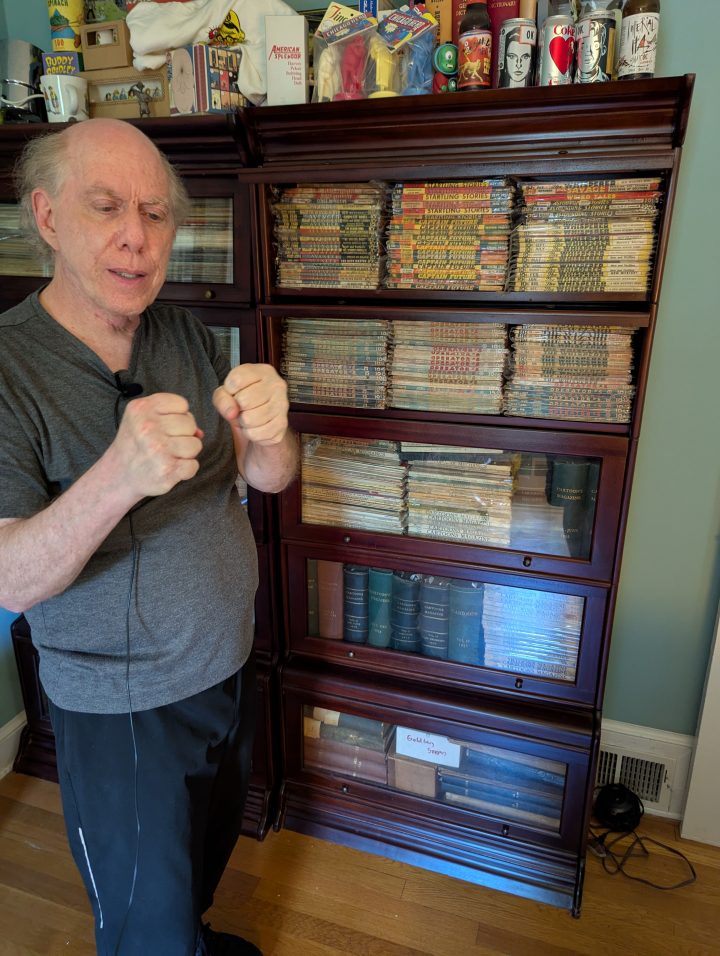
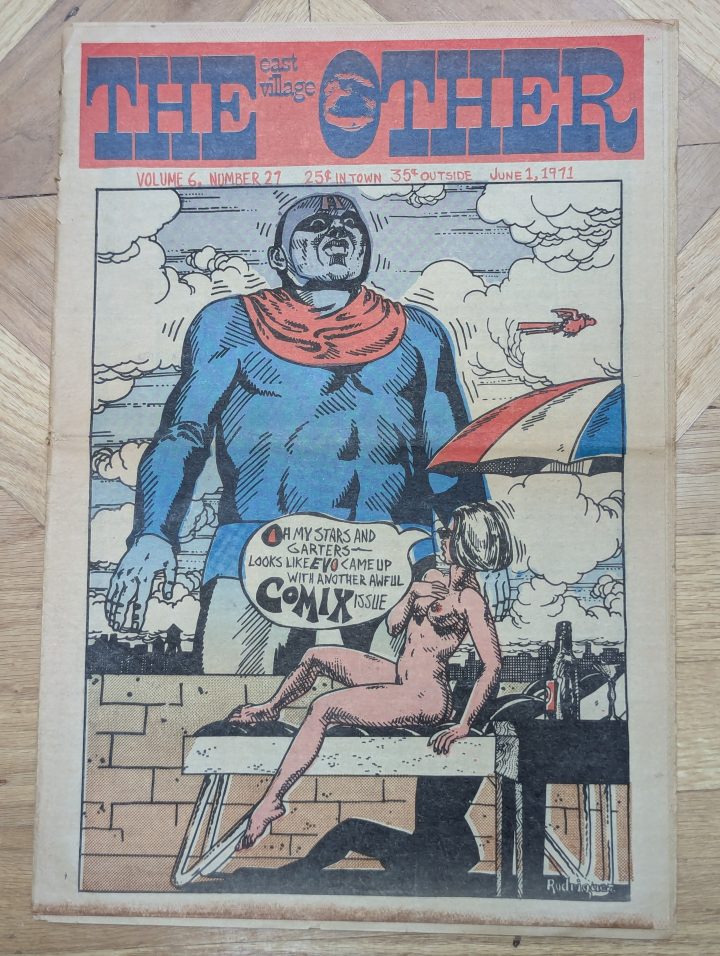
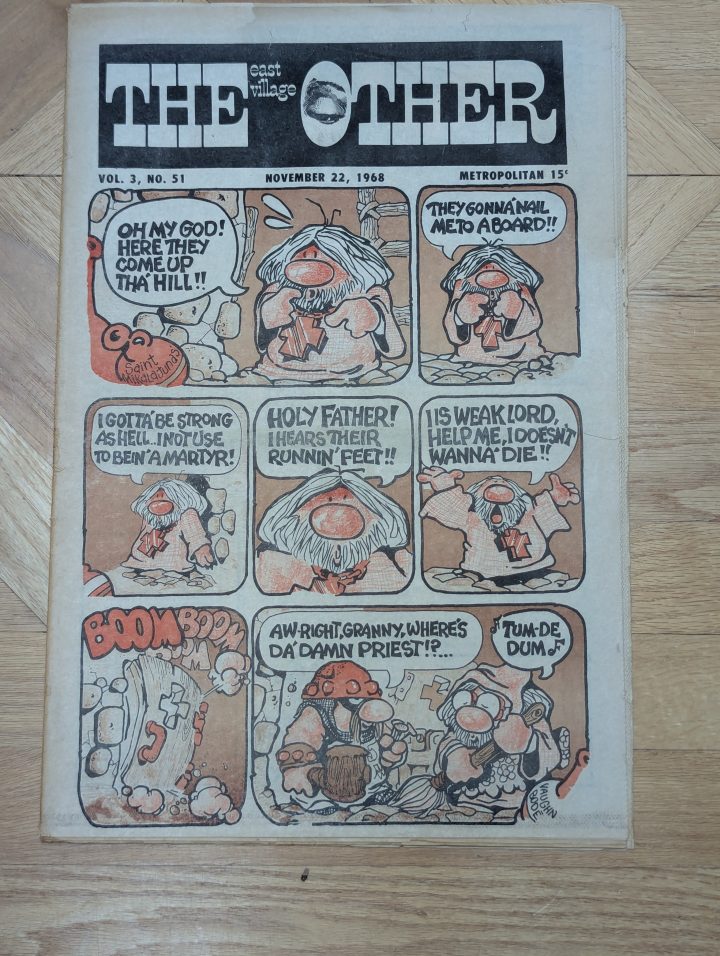
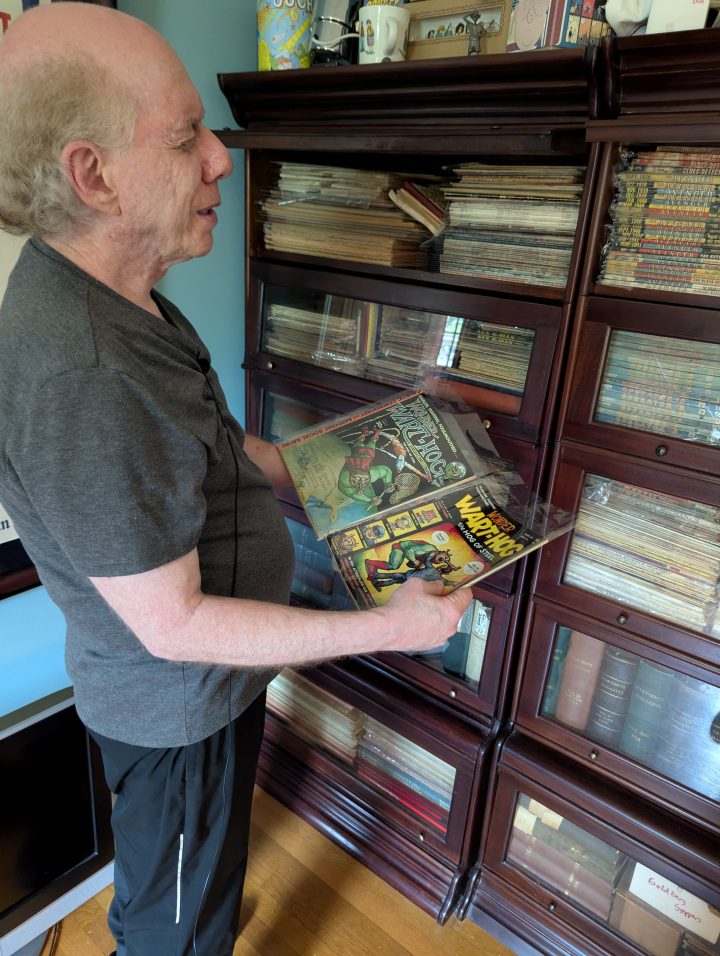
Warren Bernard’s collection is quite frankly, astonishing. It contains, as you might expect, large numbers of mini comics from SPX contributors, but there’s so much more. He has a massive collection of publications with early illustration work by Theodore “Dr. Seuss” Giessel. He has stacks of Sunday comics inserts, and tear sheets of comics going back to the earliest days of the medium. He has a giant collection of World War II cartoons and comics, including the wartime work of Will Eisner. He has collections of leftist newspapers and magazines, all with incredible (and rarely seen) comics. He has shelves and shelves of exceptionally rare books and memorabilia. He has boxes of rare indie comics tabloid newspapers. And that barely begins to describe the scale of what lies within his modest home in the suburbs of Washington D.C. It is a treasure trove of comics history, which is why it’s no wonder he’s loaned out items for multiple museum exhibitions, earmarked large chunks for donation to the Library of Congress, and been used as a resource in dozens of books (most recently Derf Backderf’sThe Dissidents, due out this fall).
On a visit to his home this summer, Bernard was kind enough to show me around and talk to me about his life of collecting. – Jason Bergman
JASON BERGMAN: Tell me about you and collecting. Like, when did you start gathering stuff?
WARREN BERNARD: I blame it on my grandfather, my father’s father. He collected coins and stamps, and when I was a little boy, maybe 9 or 10 years old, I’d go into his bedroom and he’d break out a stamp book or he’d show me coins. So I collected stamps and coins. But then I also started reading comic books around the same time. The first superhero comic I ever read was Superman#162 because I was in the hospital with tonsillitis and my parents brought me a comic book. Their kind of thing was, if you get sick, we’ll bring you a comic book. In there, the first story – my parents didn’t know this – was the death of Ma and Pa Kent. And I’m a little eight-year-old boy, going, “Oh my God, Superman’s parents just died!”
So I collected comics when I was a kid, and it got more serious when I was about 14. I had a bunch of Superman stuff, and at the age of 14, I bought like five or six golden age comics off this guy for $30. In high school I met my buddy John Knott, who I’m still friends with. In my neighborhood in New York, we did not see Marvel Comics. On rare occasions you’d get this torn up, beat up one at the barbershop when you’re waiting there, you know, but I never really read them. So my buddy John, he had a near complete set of Marvels at that time. I’d borrow them, 20 or 30 at a time, bring them home, read them, then bring them back to John. Especially back then there was no thought of, “Oh my god, this is going to be worth a whole bunch.” It just didn’t exist. So that opened my eyes, and I started collecting the Marvel world.
But the other thing that happened is John and I wanted to add to our respective comic book collections. At that time, there was this little booklet five by seven, that came out every month with ads of things for sale. Sort of an analog Craigslist. In there was an ad, comic books for sale. So John’s father brought us over to this guy’s house up in Rockville. We bought the comic books, and after we’re finished with the transaction, this guy’s father comes up to us and says, “You ever seen any pulps?” We went downstairs, he turned on the lights in the basement and stacked floor to ceiling were pulps. All science fiction pulps.

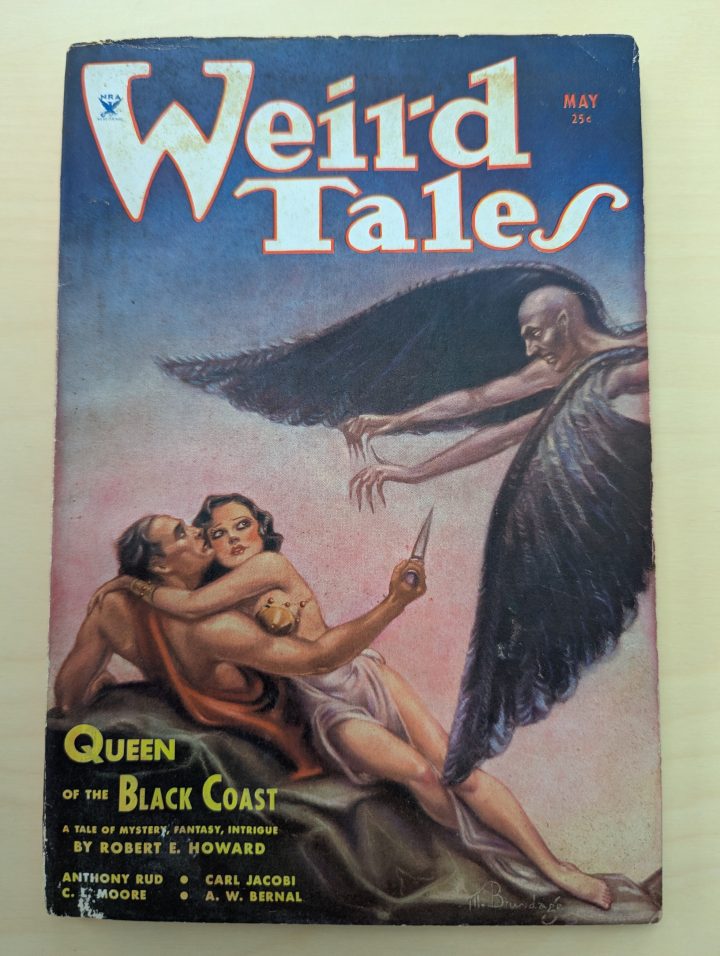
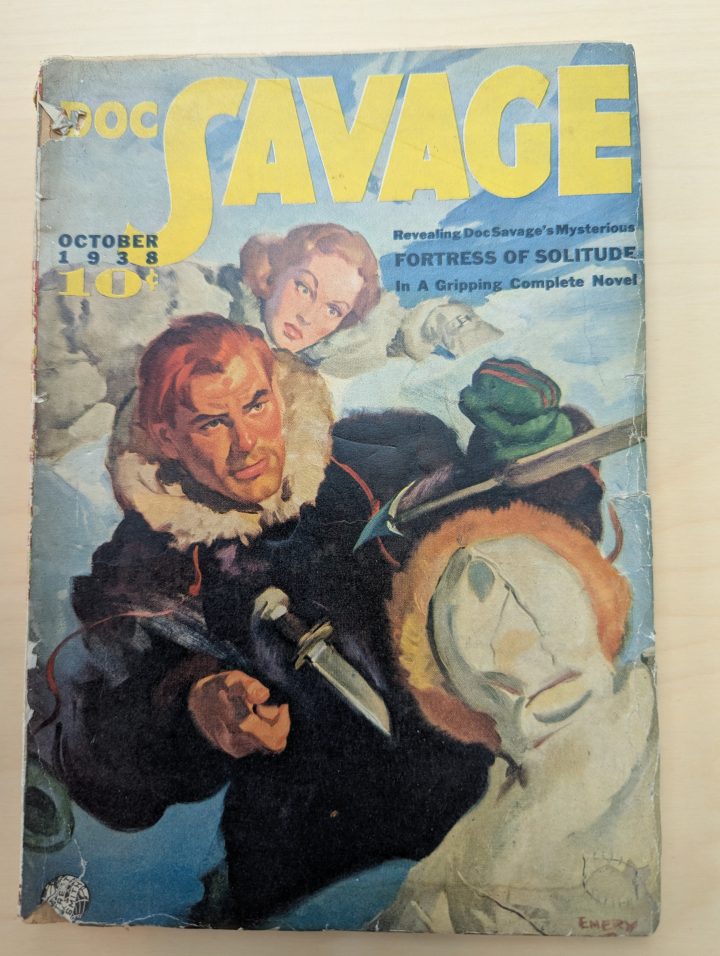
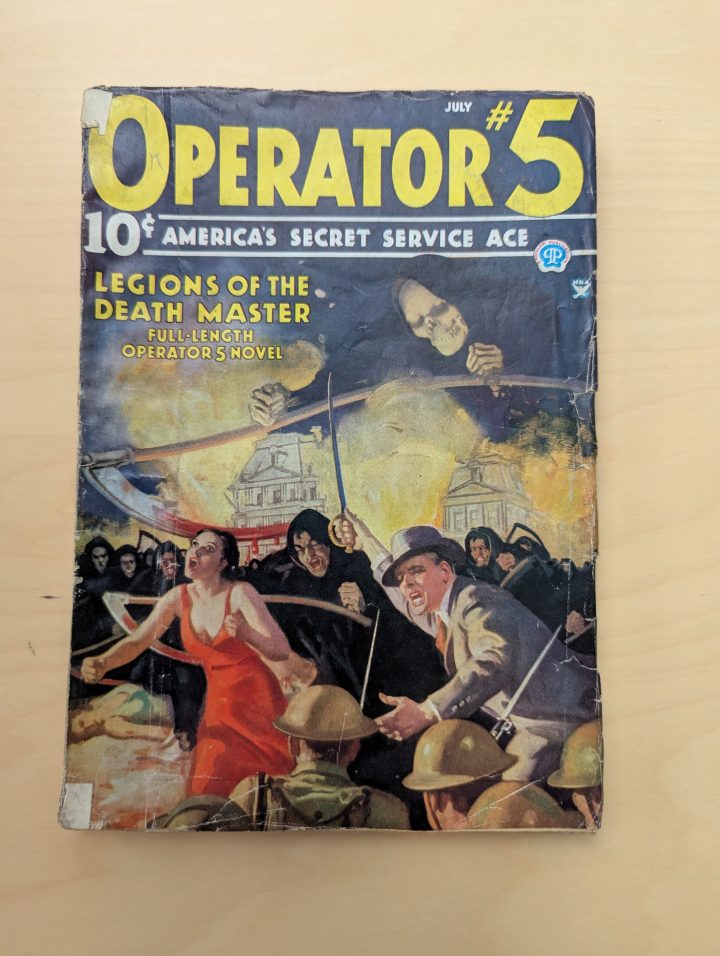
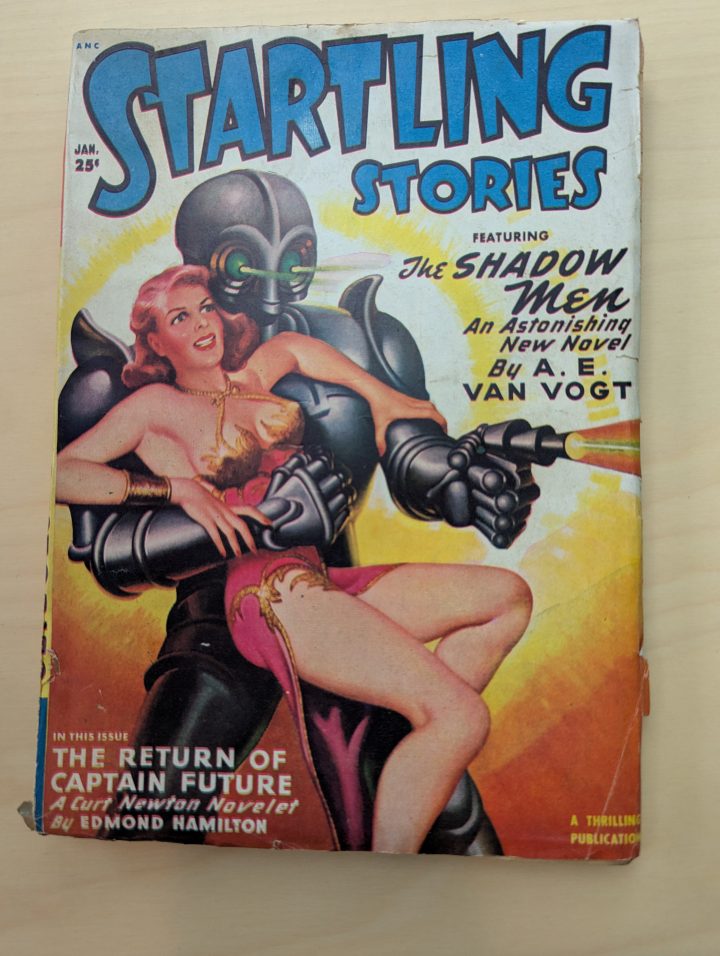
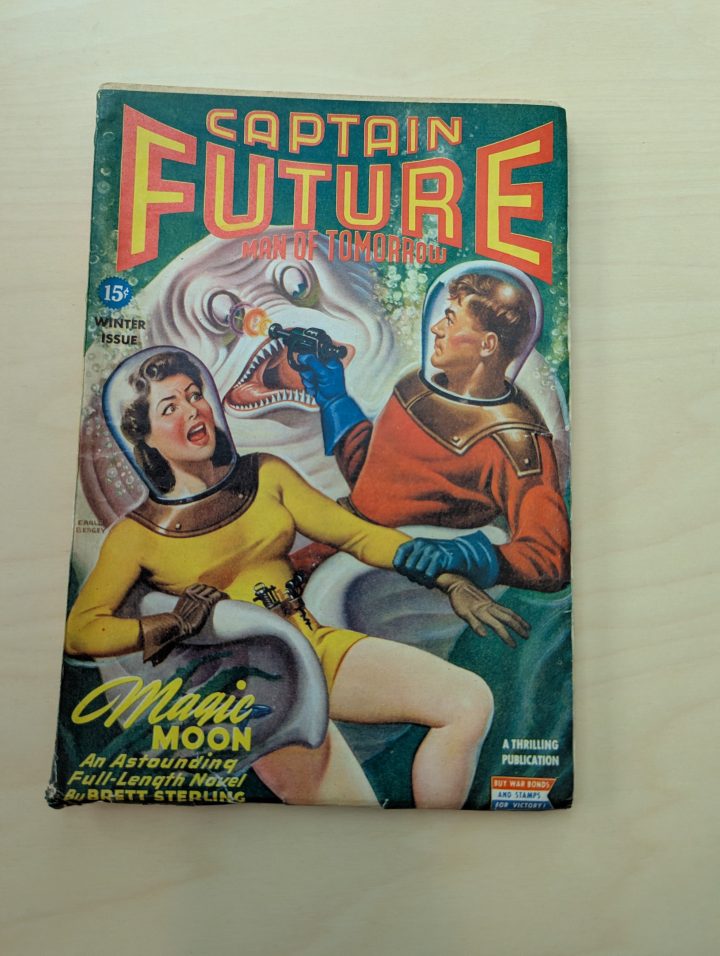
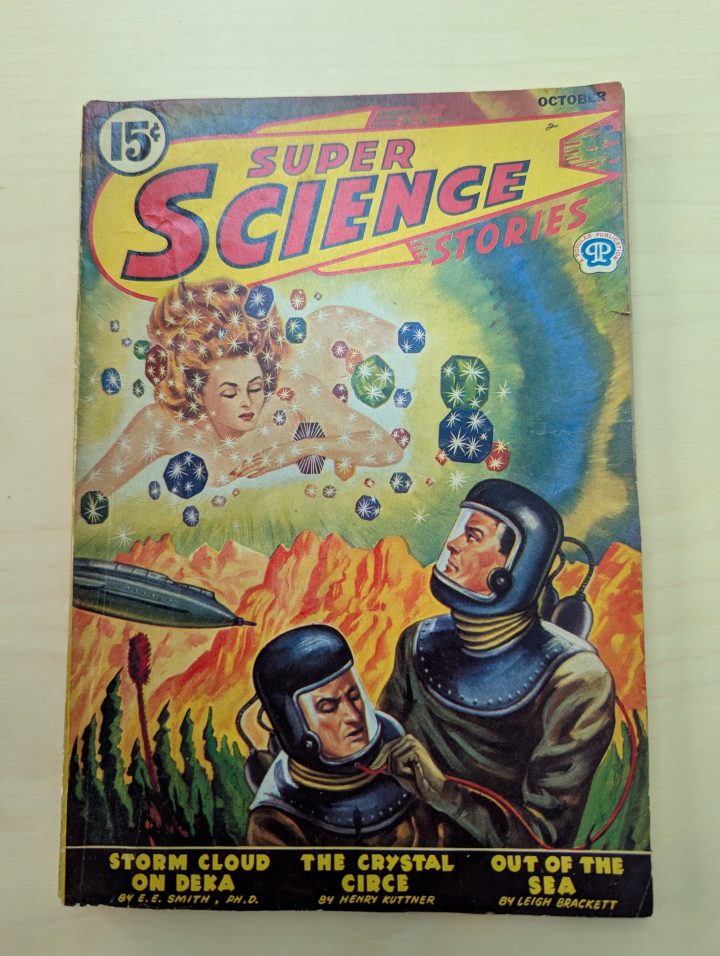
Novels?
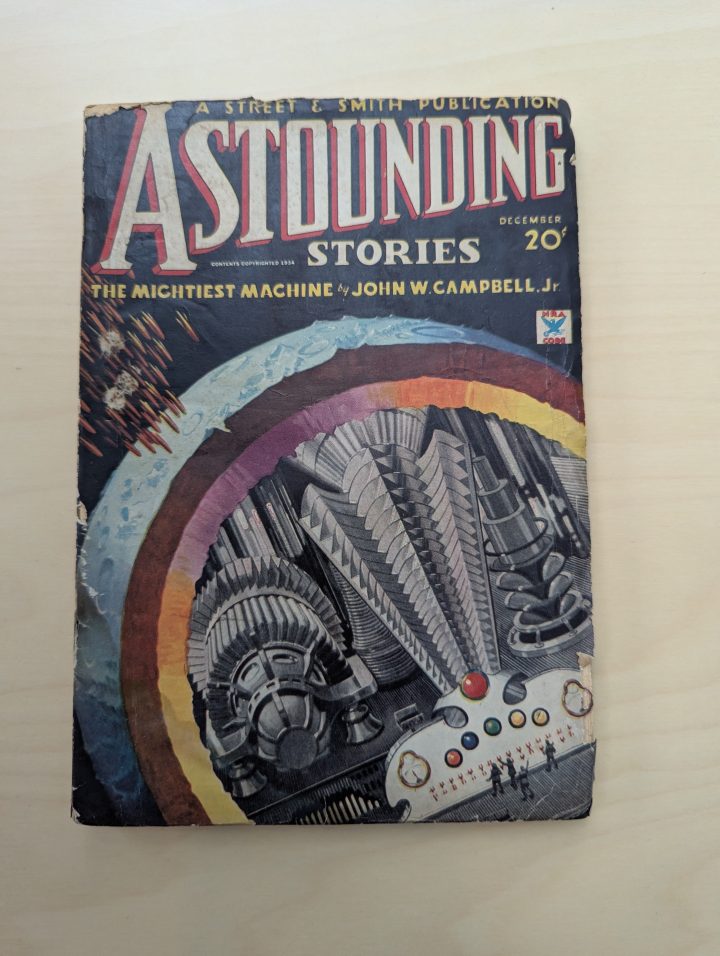
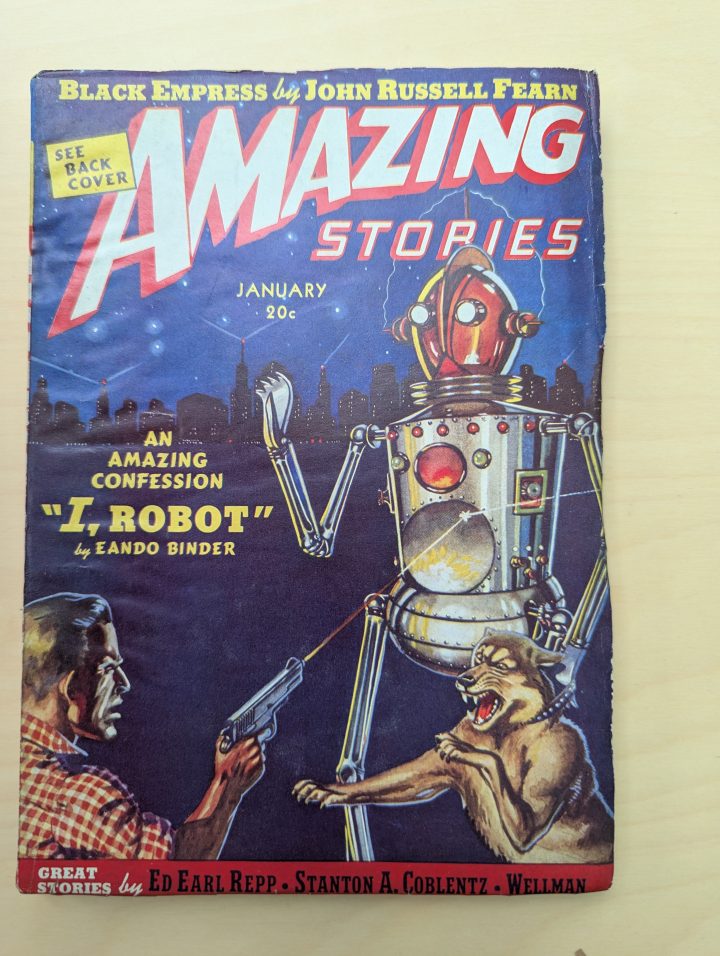
Novels, short stories. This was Amazing, Astounding, Startling, all of those famous science fiction pulp magazines. Bob Madle, that’s the name of this guy, he was actually a member of First Fandom,1 and I started working in his basement helping him fill orders. He was a civil servant, working in the Navy Department doing different kinds of assessments. I would go into his basement and help him out, pulling orders together and stuff like that, and then he’d talk to me about pulps. Instead of taking money I took my pay in pulps, mainly Astounding Stories, the best of the 1940’s scifi pulps.
John and I would help him at conventions and in 1974, the World Science Fiction Convention was here in DC. We’re sitting there behind Bob’s table, so we help with the setup and talk people up [about] pulps and stuff like that. We’re sitting there, and Bob goes, “Isaac! Hey, Isaac,” and over walks Isaac Asimov. Our minds were blown as we talked with one of the greats of science fiction. At this point we’re 18, 19 years old. I had the pleasure of talking with L. Sprague de Camp, Sam Moskowitz, Isaac Asimov, Forrest Ackerman. I spoke with all these guys because Bob Madle knew these guys. John is now one of the top science fiction book dealers in the United States.
Another experience that came into my comic infested life was going to the University of Maryland Comic Arts Society. Yeah, okay, it was a great excuse for everybody to get together, get stoned and talk about comics. That’s just the way it was. I’m not going to sugarcoat any of that stuff. So we get stoned and go down there [with] a couple of friends up in the Silver Spring area. There were a couple people there that were, you know, older than me, pretty much everyone was as I was 17 at the time. The Comic Arts Society is where I learned about EC and underground comics. I also learned a ton about illustrators like Franklin Booth and J.C. Leyendecker. One of those “teachers” was Joel Pollock, who ran Big Planet Comics here for many years and was into the illustrators. There was another guy named Rusty Smith who was into comic strips. And there was another guy there who collected golden age comics, he was trying to complete a set of All-Starcomics.2
I had assembled a pretty good collection of comic books between high school and being a junior in college. I had Fantastic Four#1. I had Avengers #1, Avengers#4. I had World’s Best #1. I also had some good golden age comics like All Select#1 and Superman#20. But my favorite of the superheroes back then was Fantastic Four. Back then, when you were reading Marvel, that was it, that was the top. On the DC side, it was The Flash. I loved The Flash, the Carmen Infantino artwork. Unfortunately by the time I was a junior, a senior, I had to start selling off the comic book collection to afford tuition. [The Flash] was the last collection I sold. But also at that time I’d already been reading superhero comics for nine or ten years. I was losing interest in them.
While in the Comic Arts Society, I got exposed to underground comics, and there used to be two head shops [in the area]. There was A Joint Possession on Route 1, and there was The Electric Head up in Beltsville, not too far from University of Maryland. And The Electric Head had a UV room with dayglow posters. So we’d get stoned, we’d walk in there just to go through the black light room and go to look for underground comics. I really fell in love with Richard Corben science fiction comics, especially the ones written by Jan Strnad. The stories were great, and the artwork was great, and those really got me. I also was a really, really big fan of Gilbert Shelton’s Fabulous Furry Freak Brothers. And, Robert Crumb. I’ve got a pretty nice collection of signed Crumb books. And I loved Mr. Natural.
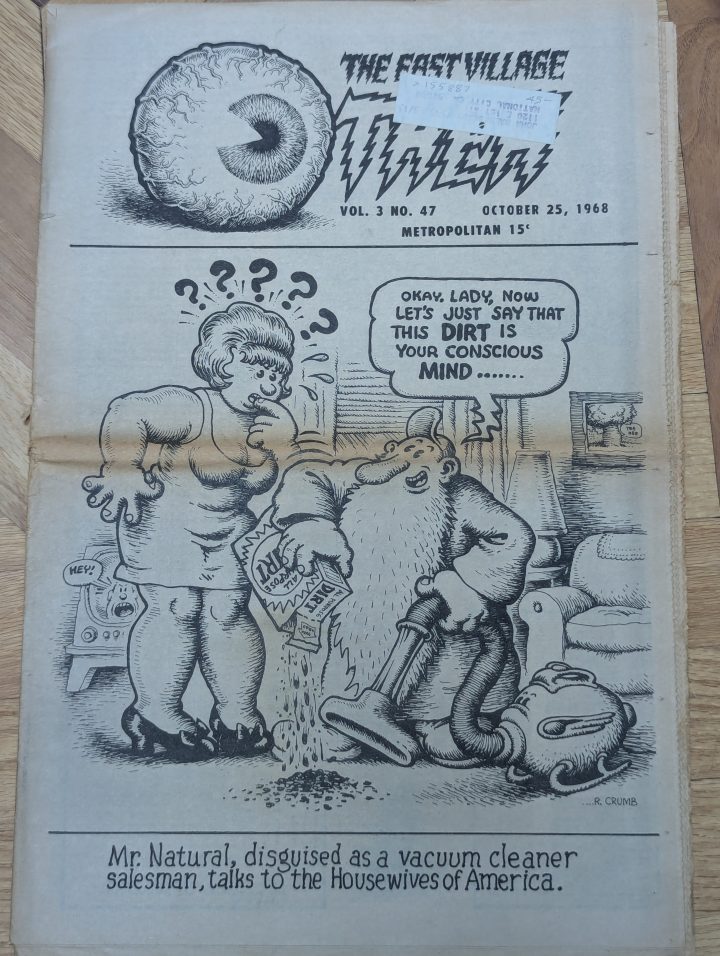
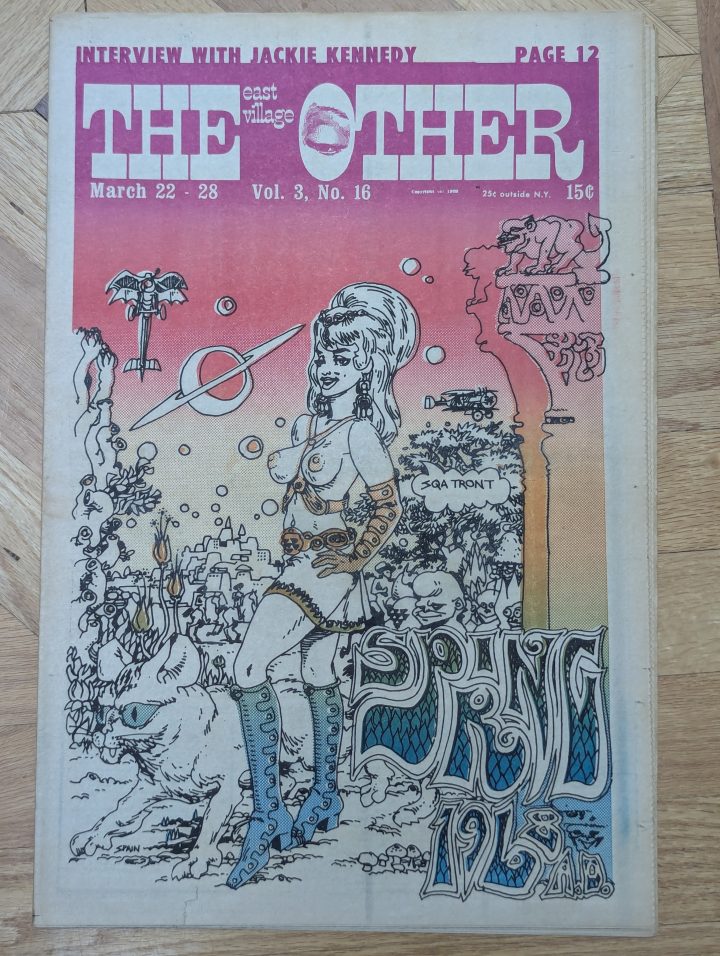
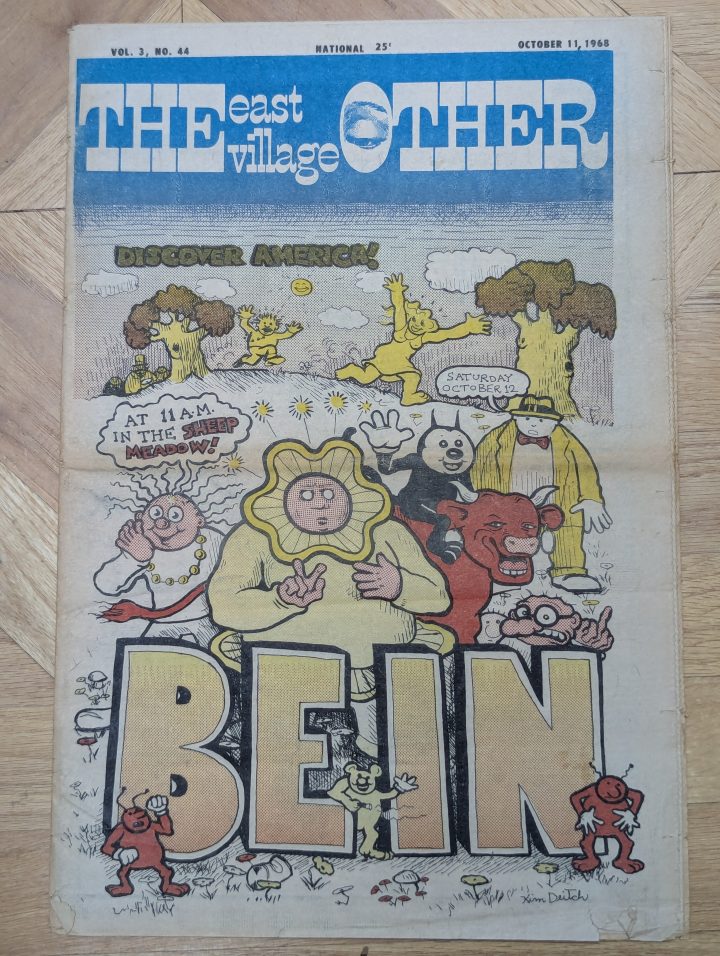
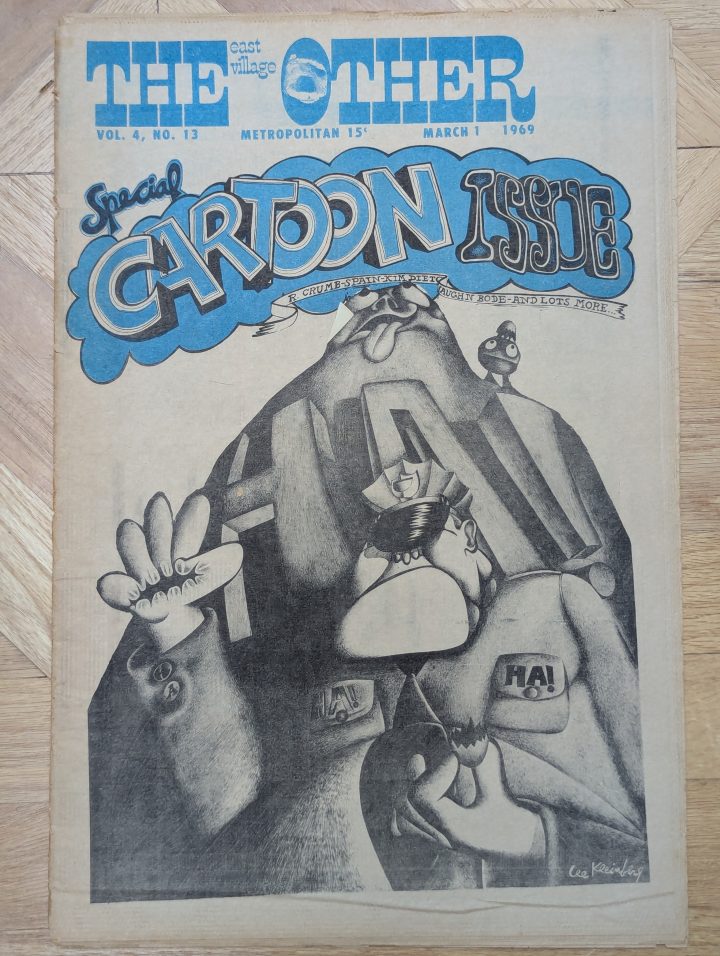
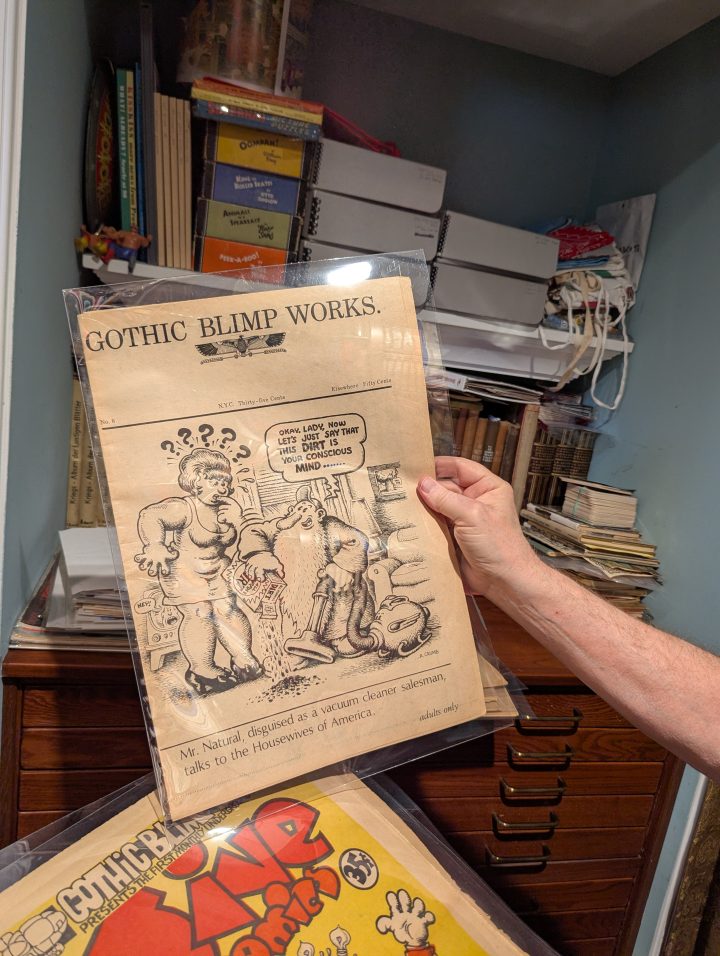
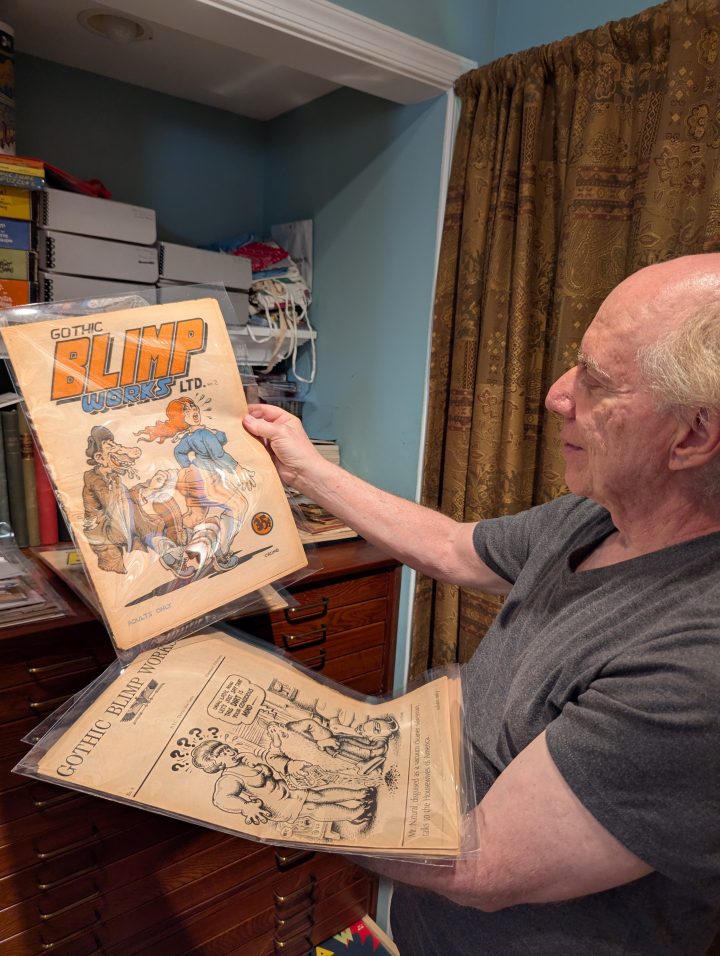
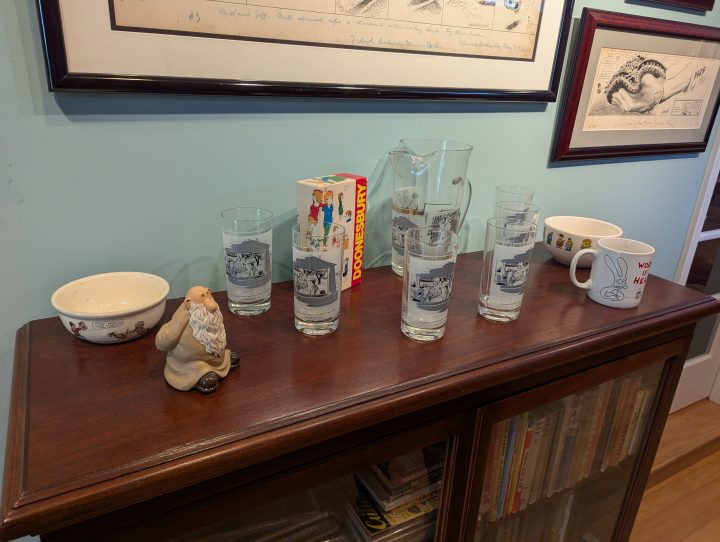
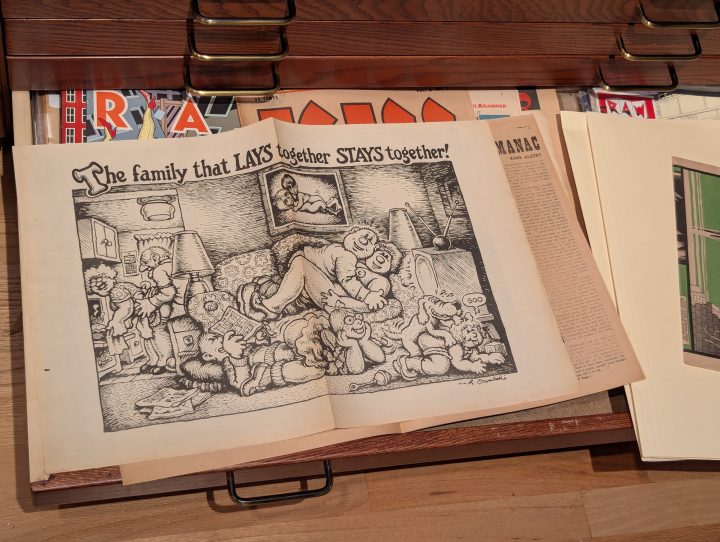
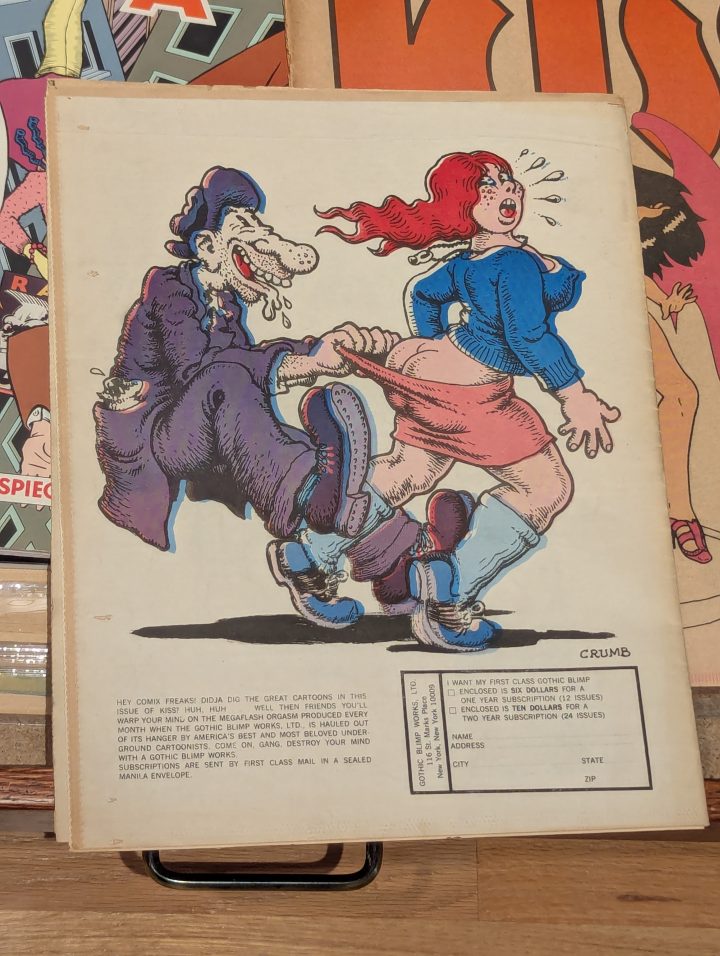
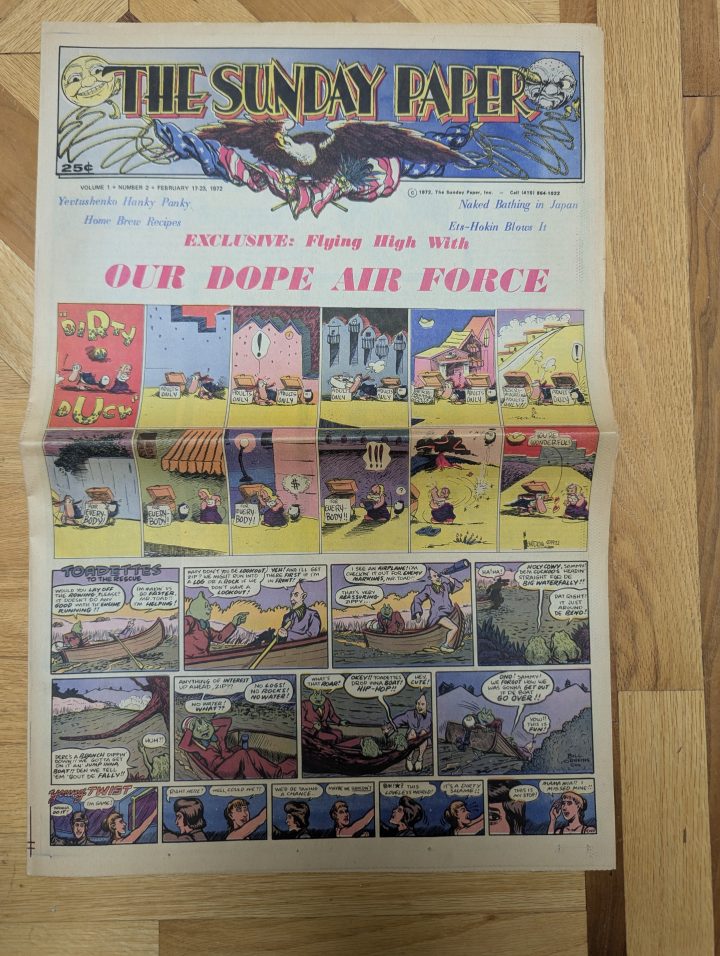
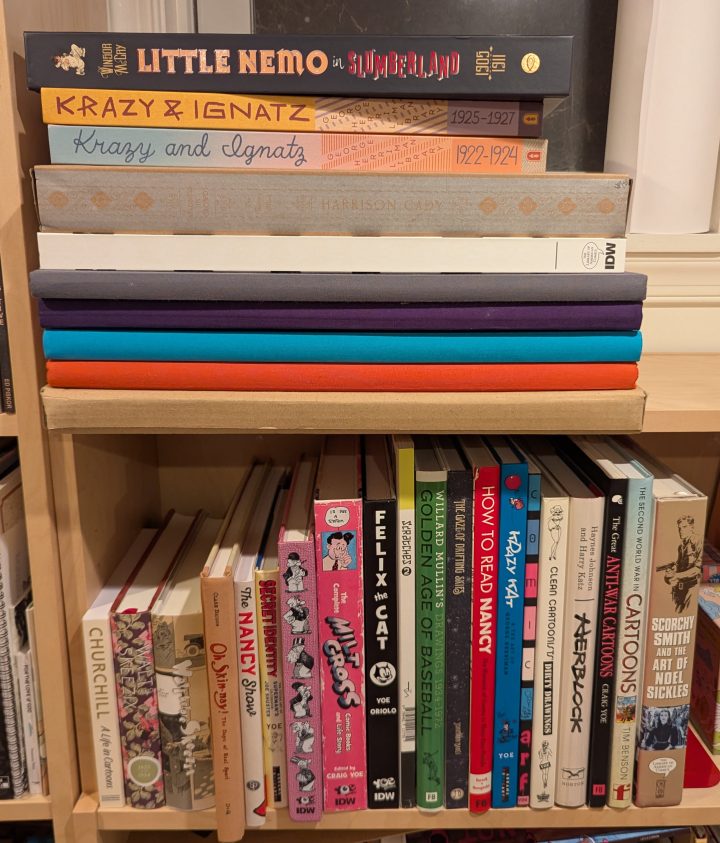
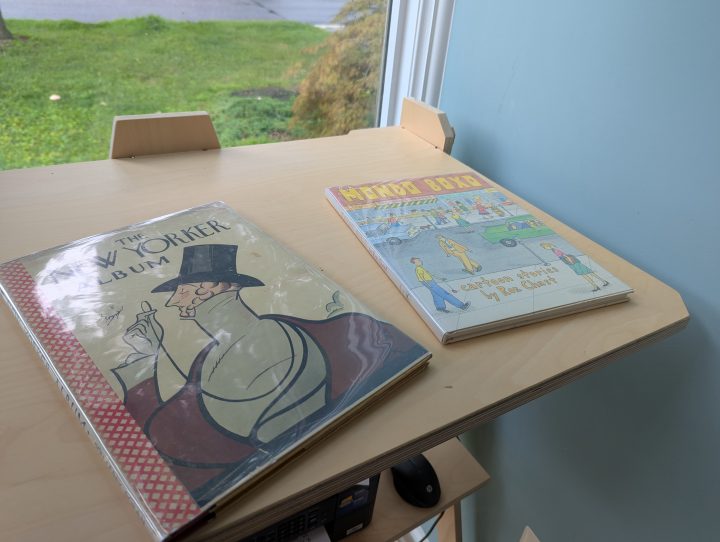
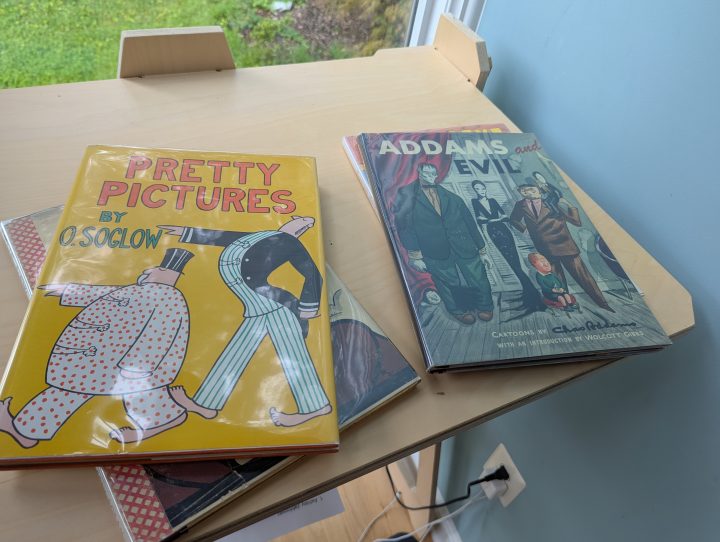
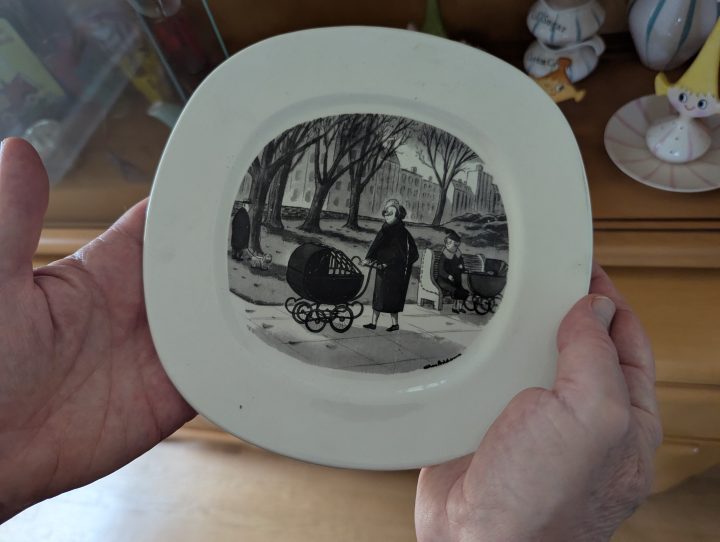
So my tastes were beginning to change, and then I got out of college. By this point, it was like ‘75, ‘76. And what I started to focus on was collecting cartoon books, like the New Yorkeralbums. I guess into the early, mid ‘80s, I started collecting those things as I would antiquarian books. I would go after limited editions. I would go after signed editions. They have to have nice dust wrappers on them. My first SPX I believe was 1997, and the reason why I know that, is I have a Roberta Gregory book signed by her in 1997. So I got into that world. I’ve got a couple of nice different collections.
I was also a fan, well, not a fan, but when I was a little kid on television, there were these absurd comedies, Hogan’s Heroes, and McHale’s Navy. Then there were serious shows like Combat, because that was 20 years after World War II, and so the people who fought in that were getting this TV exposure. At that time was all this World War II stuff, so that that got ingrained into my DNA because of that exposure in the pop culture world. I now have a large collection of comic books, complete Sunday comic sections, and many cartoon books from all over the world from World War II.
I also really enjoyed early Walt Disney. And back in the ‘90s, I used to go through antiques malls because you could find stuff back then. I would find these little booklets called Mickey Mouse Magazinethat were giveaways by different dairies across the U.S., and back then they were 25, 30 bucks a piece. Now they are $400 easy.
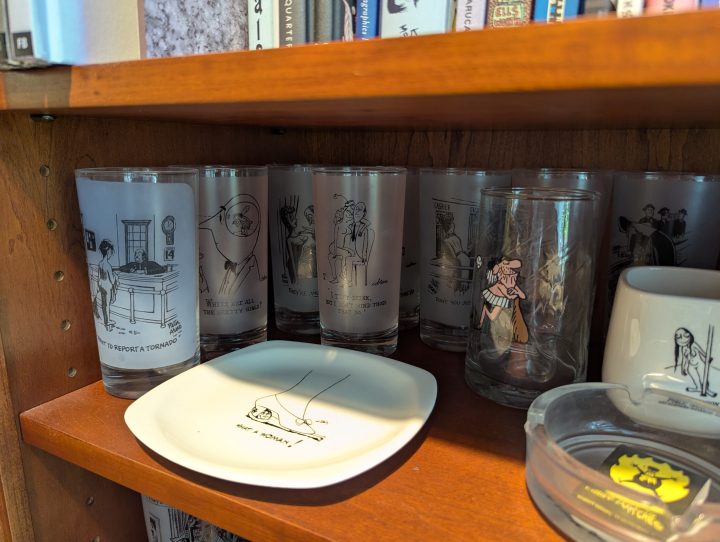
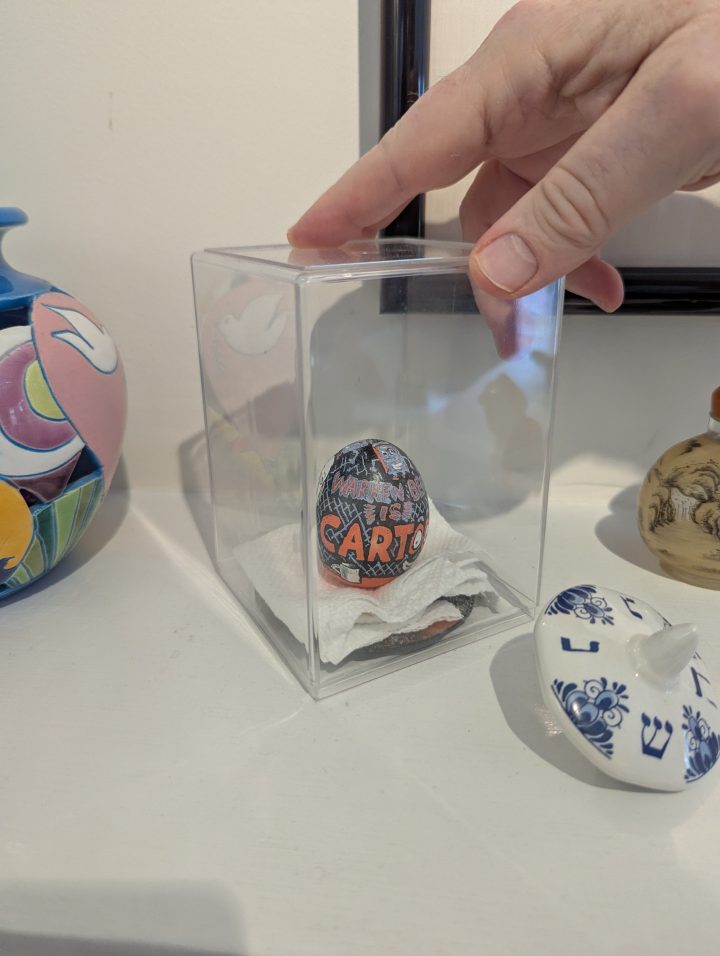
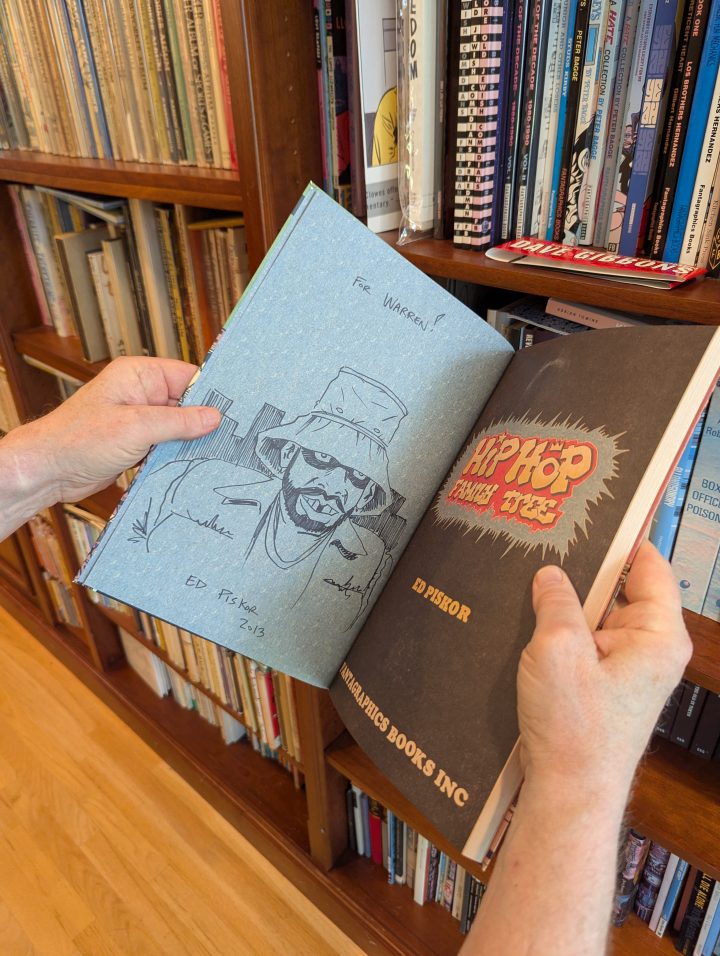
I had this discussion sometime in the late ‘90s with this guy Charlie Roberts, a local collector here who was probably 10 or 12 years older than I am. And we were talking about how there was specialty art drawn by these old cartoonists that was in all these magazines and programs from sporting events and special dinners. So I went off in that direction and started collecting ephemera. I have a whole bunch of material from King Features Syndicates that they sent out to newspapers to promote the comics. Those items have now become impossible to find. It just doesn’t turn up. And oddball stuff would come up like, Arch Dale’s The Doo Dads.3 I started being conscious about getting people’s autographs in books, or getting books that were autographed by people. One friend of mine, that’s all he collects, and he’s got like almost a thousand books that have autographs in them and his focus is New Yorkercartoonists. Mine, as you’ll see, is a little broader than that.
So in the SPX world, one of the things I enjoyed, don’t get me wrong…I love many comics and you’ll see. I’ll give you an idea about my aesthetic with mini comics, but I also enjoyed the larger format and over the years collected a large stack of folio size comics and art books from the indie comics world. I also have a collection of indie comic tabloids. I assume you’ve seen Smoke Signaland Magic Bullet?4
Yeah.
There are a whole bunch of others that came out in other cities in the United States. And during the pandemic, you know, what could you do? So I went downstairs, went through my collection, and I found out I had, like, an issue or two of this, and an issue or two of that. I started sending emails out to different people. And they sent me [laughs] it was, it was really amazing. They sent me all of this stuff that you’ll see downstairs.
About 2006, I started volunteering as a cataloger in the prints and photographs division of the Library of Congress, cataloging political cartoons. One of the things I noticed when I was there was that their comic book and comic art collections basically stopped about the end of the 20th century. I started working with SPX a couple of years before. I was not executive director yet. But what I was seeing was that there was this huge pool of modern comics being created, and I had this huge collecting institution that didn’t have this great material. The issue wasn’t whether or not there was some level of symbiosis between the two, the issue was, how do you cut the deal? And you have to understand that I was working in a federal bureaucracy [laughs]. I started early, and I started with Sara Duke in the Prints and Photographs Division. They have all the posters, prints, and original art. I also met and coordinated with Georgia Higley in the serials division. That’s where all the comic books and newspapers are. It took us a year, but the three of us got it through three levels of management to get this approved.

I had to go up to the general counsel’s office to sign the Memorandum of Understanding between SPX and the Library of Congress. I will never forget going to the General Counsel’s Office and the two lawyers were so excited because what it meant was that the Library of Congress was going to actively collect the output of the SPX community. No one had ever done anything like this before, and my big disappointment is here I am 16 years later, and no one else has replicated it. What frustrates me is, I did it with the federal bureaucracy. So surely someone else can do this.
Fast forward and there’s now I believe 13,000 pieces in the SPX collection, and it’s being actively used not only for display within the Library of Congress when comics exhibits come up, but also researchers are going in and looking at that material. In addition to creating the SPX Collection at the Library of Congress, I’ve also donated material from my collection, so there is now the Warren Bernard Collection at the Library of Congress.5 Actually, the majority of that is an adjunct to the SPX Collection. I’ve collected stuff that they don’t have, and I’ve already given two donations.
That’s all specifically, the SPX community stuff? As opposed to your historical collection.
Yeah. For instance, up until I gave it to them like eight or nine years ago, they didn’t have any Chris Ware or Charles Burns posters in their collection. So that’s been corrected. And I got them into collecting mini comics. I got them into collecting comics on newsprint. Every year anywhere from 4-6 volunteers from the Library of Congress come to SPX to ask for donations to the collection. The response from the creator community to this preservation of their works for future generations has been fantastic.
In 2018 I was approached by my friend Eric Dunham who is a professor of graphic design at Anne Arundel Community College. He’s like, “You know, Warren, you’ve got this great collection. Would you want to do an exhibition?” I really thought about it. What I came up with is the history of comics on newsprint. I actually have, I think it’s three or four copies of theChicago Inter Ocean extra magazine section. They were the first newspaper in the United States to print color cartoons. So I started there with the very first color cartoons printed in the United States. And went all the way up the first issue of LAAB. I think it was like LAAB #4. I don’t know why they did it that way.6 There was one wall where I took double page spreads from LAAB. There was another wall where I put up the front covers of all of these tabloid newspapers that had come out in the community.
I think by now I have lent to five or six museum shows. About three or four years ago, one was on the history of comics in Chicago from 1890 to 1960, and Chris Ware was in charge of that. And then 1960 forward, in charge of that part was Dan Nadell. Chris got a hold of me to give a hand with his part, and says, “Warren, what have you got?” I go, “Chris, I got it. I got a shitload, okay?” [Laughs] I did an inventory of all the stuff I’ve got, and I get this email back. I save emails like this. He’s like, “Holy crap, Warren! I had no idea this stuff existed.” So I wound up lending a bunch of material to that exhibit, with Chris asking me to also write some of the wall text. That was a real honor, to contribute to that exhibition that was held in the Chicago Cultural Center, an amazing building with a dome made by Tiffany and Company.
In 2024, I was approached by the DC Jewish Museum to contribute to the exhibit JewCE: The Jewish Comic Experience. That was a packaged show from NYC and they were looking to add some special items and found their way to me. I lent them a lot of material, some of which I donated to them at the end of the show, so I now have a named collection at the DC Jewish Museum.
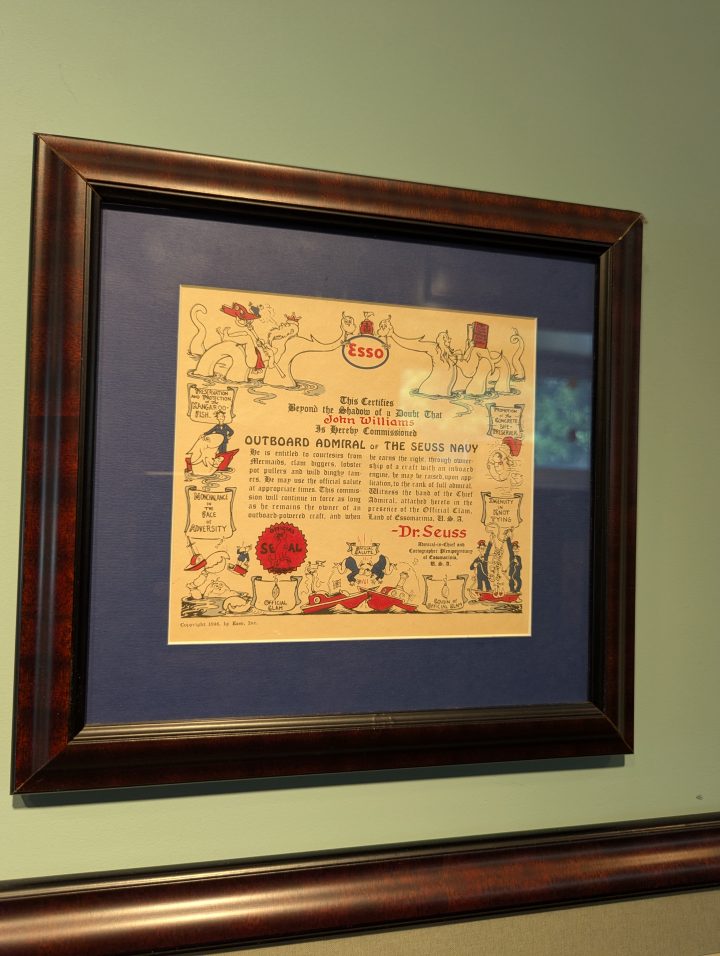
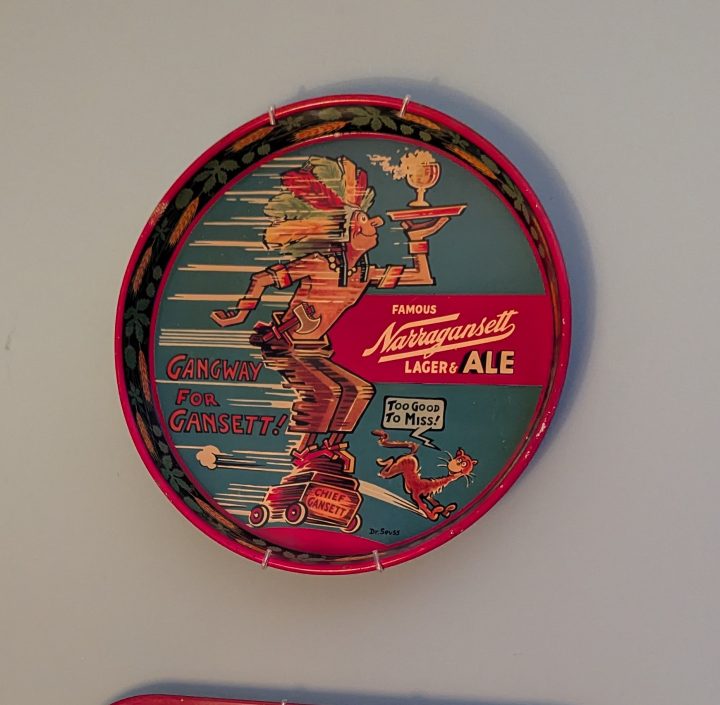
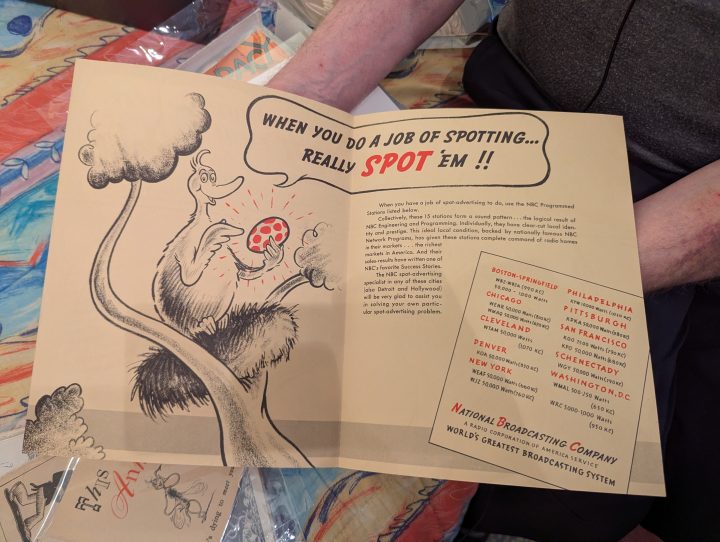
I have a rare Dr Seuss beer tray from 1937, that literally has been around the world. I lent a bunch of rare material to a traveling exhibition of Dr. Seuss material about 25 years ago. I was in downtown Bethesda, there used to be an art gallery down there, and there was a Dr. Seuss exhibit. So I started talking to this guy, and he turned out to be with the company that was putting on the exhibit. I go, “Well, you know, I’ve got this Dr Seuss stuff. Would you be interested?” And they wereinterested. I lent them some rare 1930’s magazines with Seuss covers and my Dr Seuss beer tray. They liked the beer tray so much they asked to put it in an international traveling exhibit. I didn’t see it for a year and a half, it went all the way around the world.
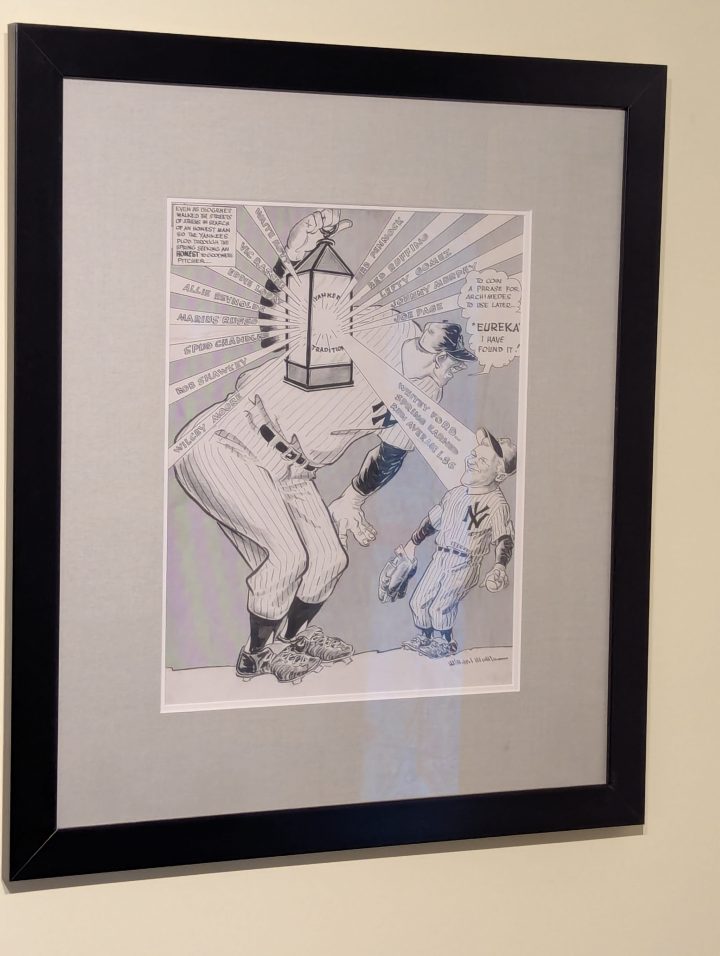
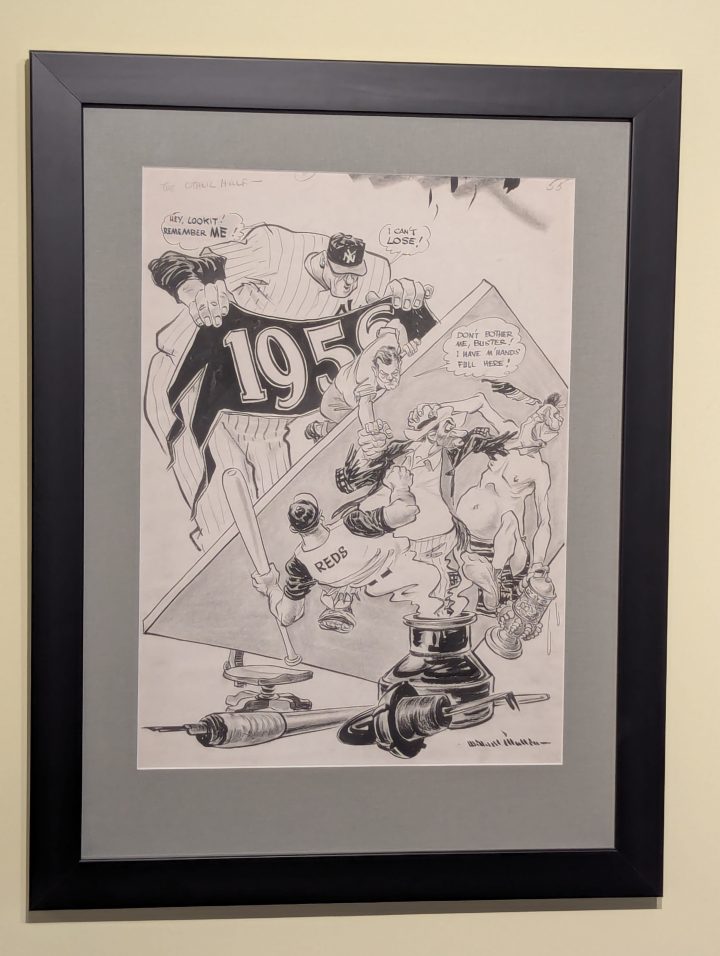
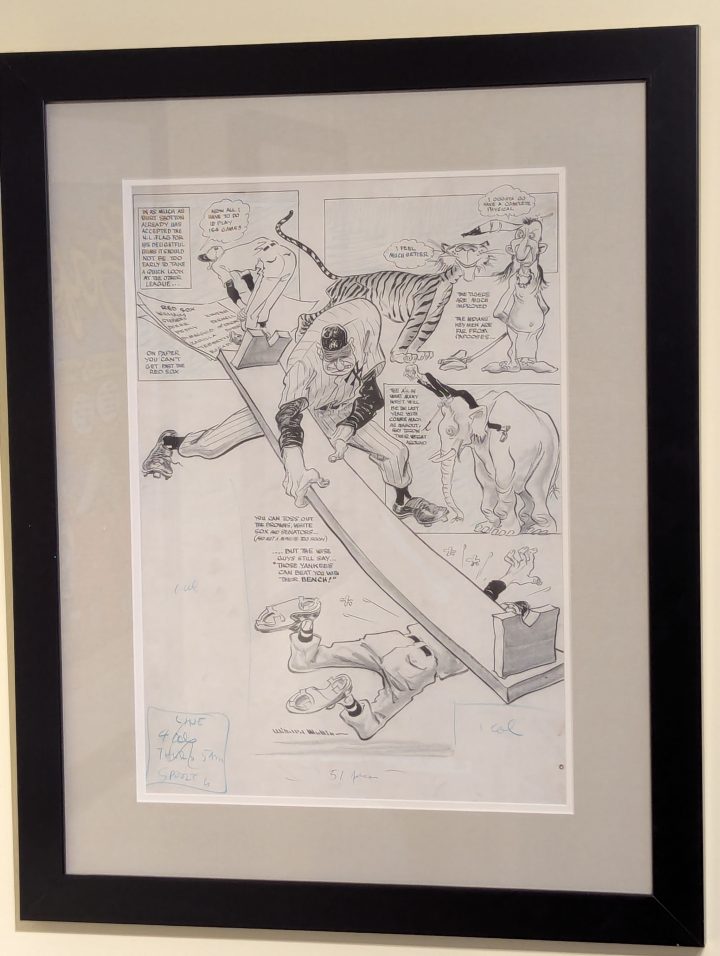
In New York [when] I was 10 or 11 years old, there was a big strike, and the New York World Telegram andSunfolded, and the sports cartoonist Willard Mullin went from there to the Daily News. My parents bought the Daily News. It’s interesting, I’ve spoken to other people my age. When we would see Popeyecartoons, we knew that the black and white ones were good, and the color ones really sucked. I’d be going through the sports page, there’d be Bill Gallo and I think later, Larry Stark, and then there was Willard Mullin. And always the Willard Mullin cartoons were so much better, just like the black and white Popeye. When I was eight or nine, I went to my first baseball game at Shea Stadium, and I brought back the 1964 Mets yearbook with the Willard Mullin cover, and over the next few years, I would come back from Shea Stadium with another program guide with a Mullin cover. So I started collecting him in the late ‘90s. At that time, the Sporting News archives were dumped on the market, and I wound up buying 60 some-odd Willard Mullin originals. He’s the only person I really did that with in terms of collecting original art. But what I also did with Mullin, was I collected ephemera. When all that stuff came out in the late ‘90s, I got to know one of these guys in one of the auction houses and he turned up some amazing stuff that is now impossible to find. The collection wasn’t focused just on sports. It got very big and a couple years ago it was placed with Karen Green up in New York at Columbia University. So, there’s a Warren Bernard collection at Columbia University. I guess a year and a half ago, I also gave Columbia and Karen a half a dozen big platinum age books that came out around 1900-1910. Karen had said she was a big fan of Walt McDougall, and I had a Walt McDougall platinum age book, so I donated those to Columbia University. I’ve got a collection at the Library of Congress, a collection at the DC Jewish Museum, and they’re going to get some more stuff. I was thinking about selling some of my anti-semitic stuff.7 The bad part is that if you sell it today, a real Nazi might buy it. So that material is going to go there [laughs]. I don’t want a real Nazi to get this stuff. I’ve also got other Jewish related cartoon books. I’ve got these pre-Israel Palestinian political cartoon books in Hebrew. Very, very rare. They just don’t show up, and I’ve got like four or five of them, and they’ll get that kind of stuff.
One of the reasons [Columbia] got the Willard Mullin collection is that I wanted that collection to go to New York City. That’s where it belonged. He did program guide covers for the New York Rangers, New York Mets, New York Giants football team, New York Giants baseball team and the Brooklyn Dodgers. It was a stack, you know, it was substantial just for that stuff. Then he did covers for other things, and I tracked most of that down. So I have a bunch of New York stuff in my collection that will find its way up to Columbia University.
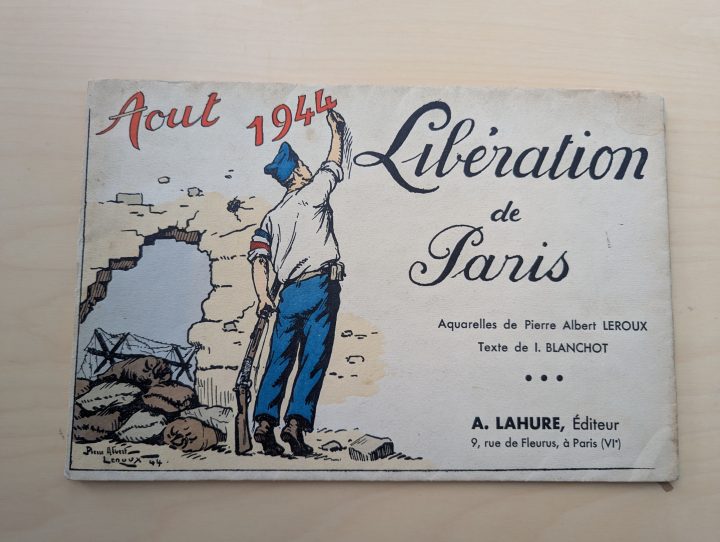
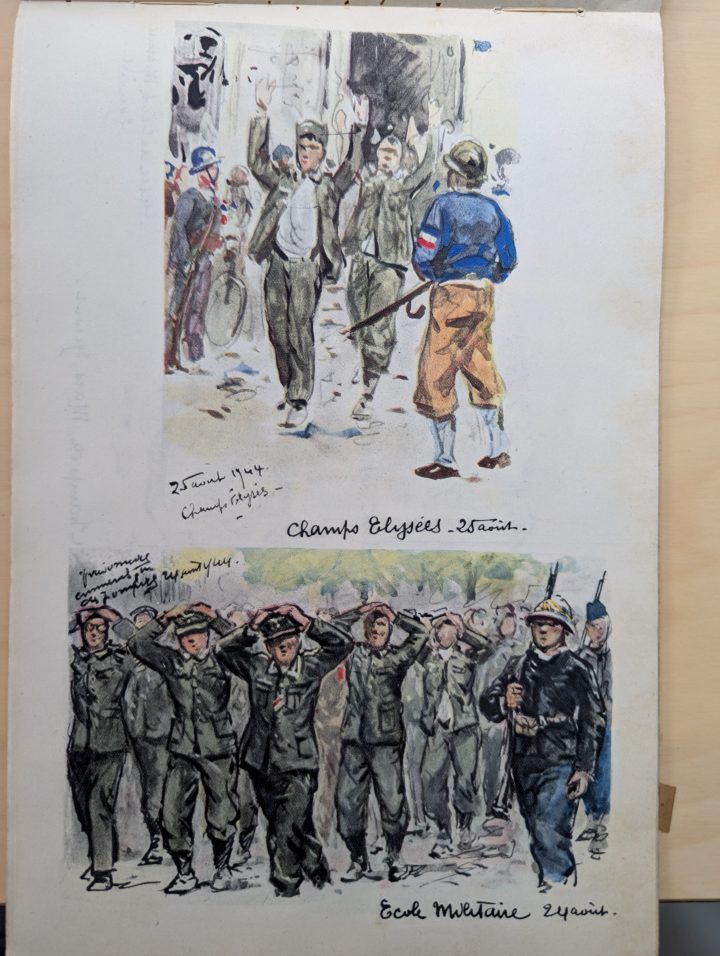
About a year and a half ago, I got introduced to [Stephanie Stillo] the head of the rare books division at the Library of Congress. The first time Stephanie came, I was taking her through the house on a quick tour, and we’re over in my office and I’m showing her some pulps. I’ve got a small pulp collection, not a big one. And out of nowhere, she goes, “Warren, do you have Le Mot?” Le Mot was an avant-garde World War I magazine that was put out by the famous Paul Iribe, who was an art deco designer. He was married to Coco Chanel and apparently died of a heart attack on her tennis court. Whether that’s apocryphal or not, I don’t know. But it’s a great story. And I go, “Yeah, I’ve got a whole run” [laughs]. She looks me in the eye and says “We’ll talk!” and that response today still cracks me up. So she came back, and I sat her down at the dining room table, and she went through my entire set of Le Mot. The other two people went through the collection, and one of them was their children’s book expert. Afterwards they all sent me very nice emails. They were, like, “Oh my God, I can’t believe what you’ve got.” But what he said was very interesting, he said, “Warren, thank you for showing me all these children’s books I didn’t know existed.” Because I collect World War I and World War II children’s picture books. So anyway, now I’ve got three divisions at the Library of Congress that can’t wait for me to die [laughs].
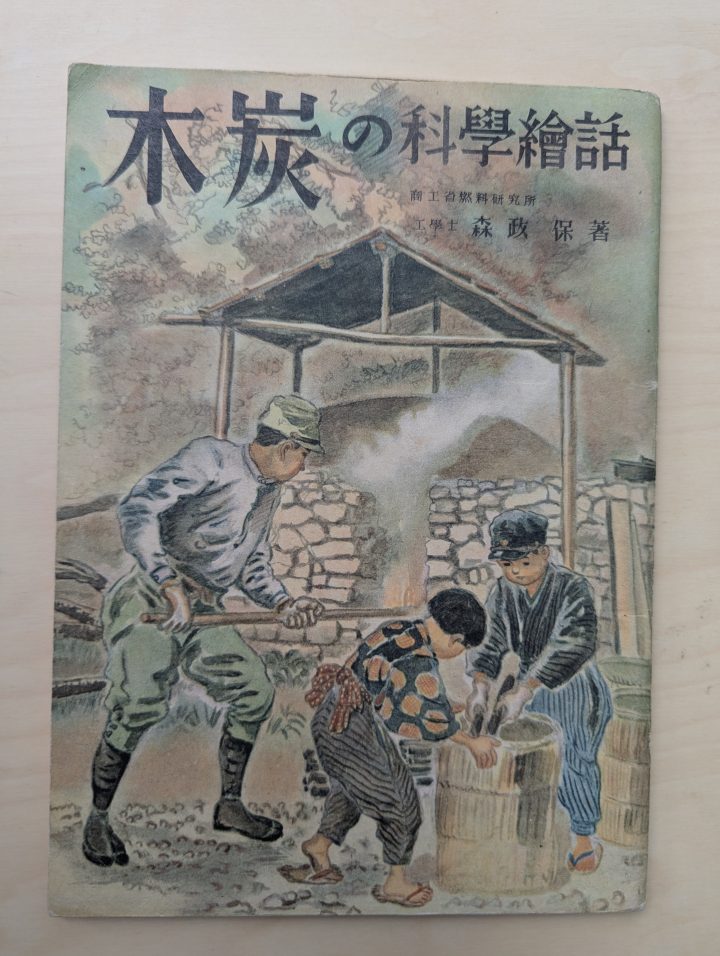
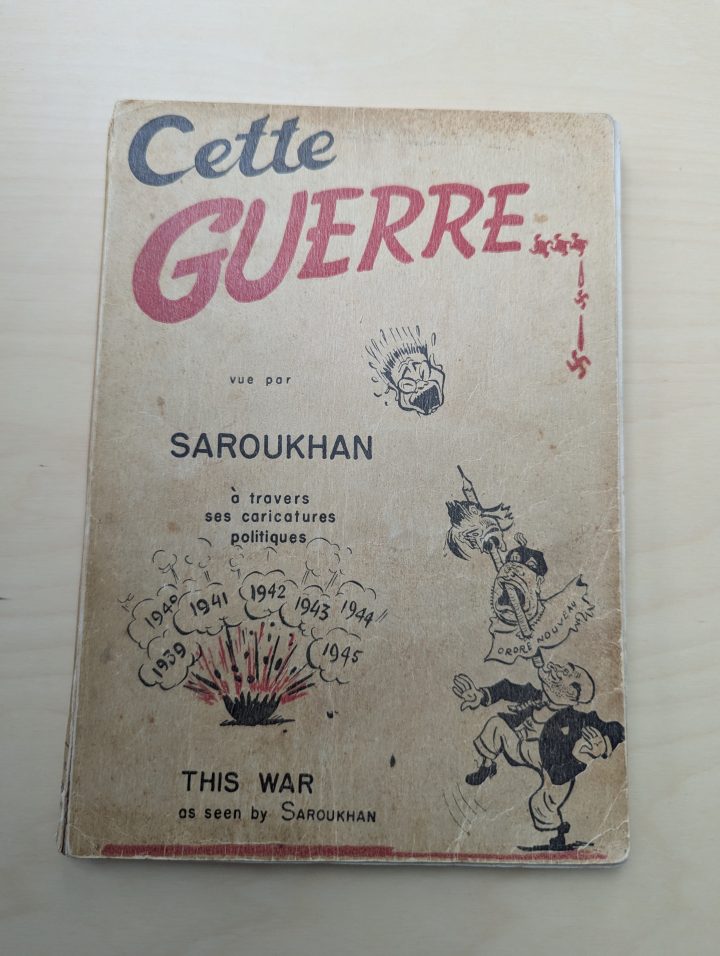
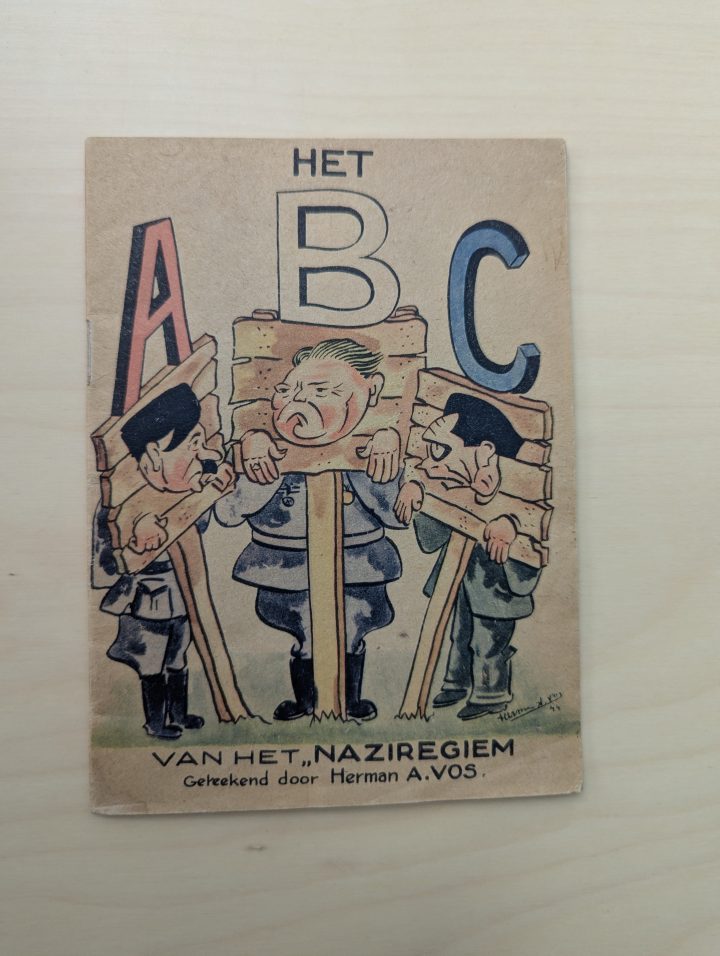
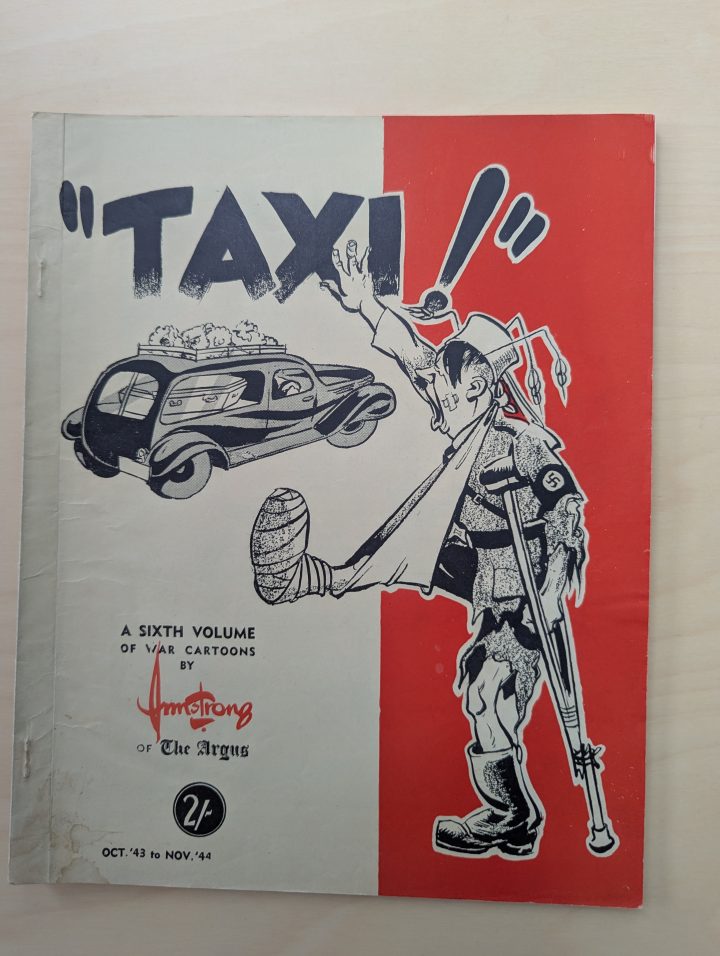
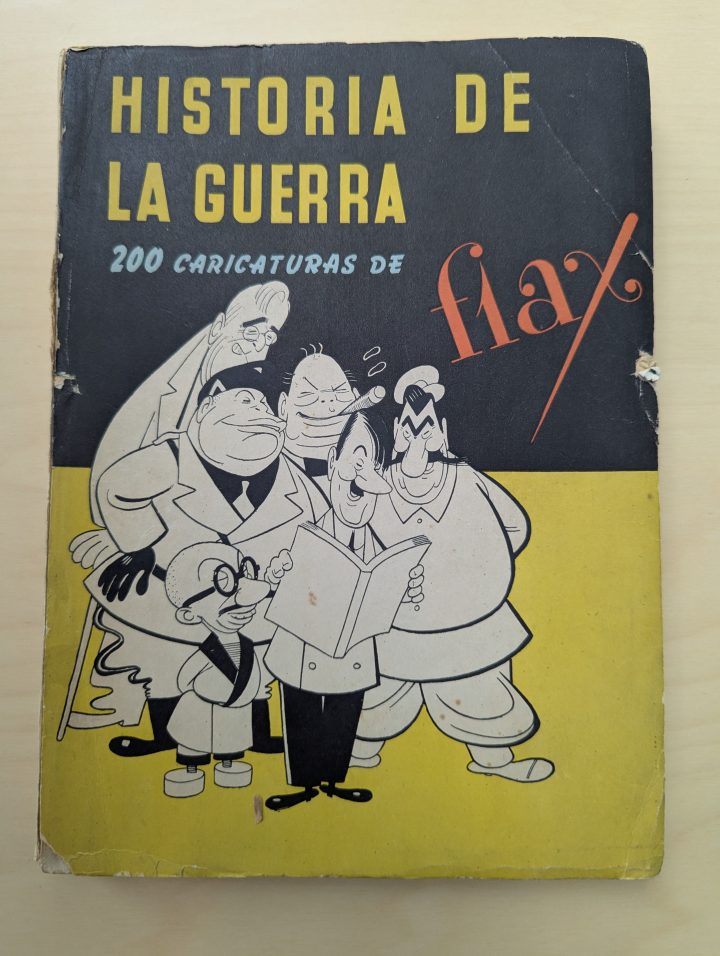
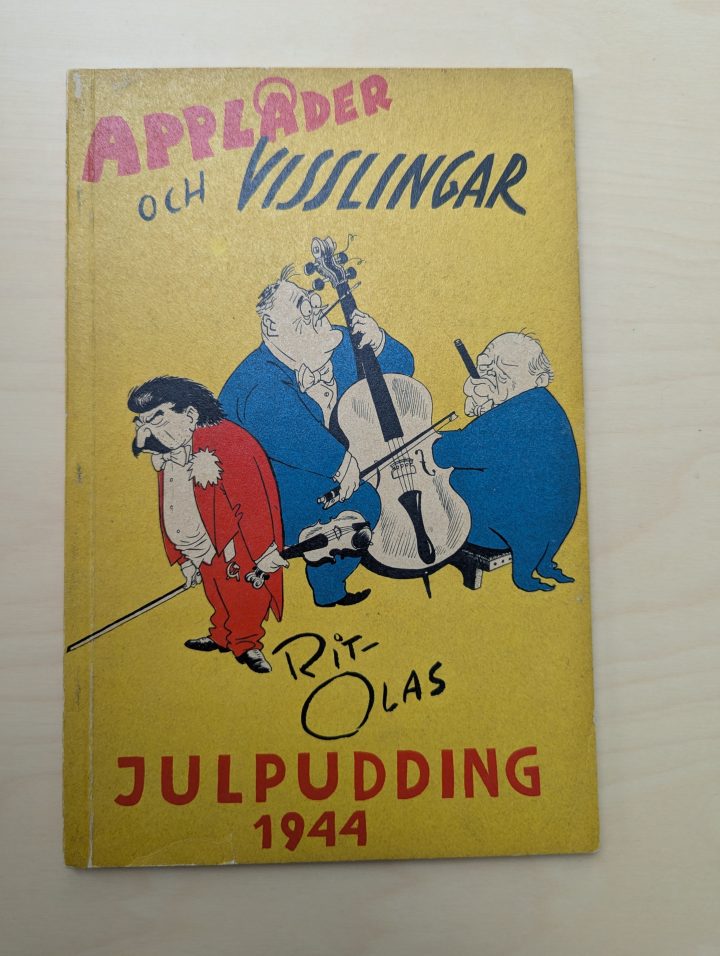
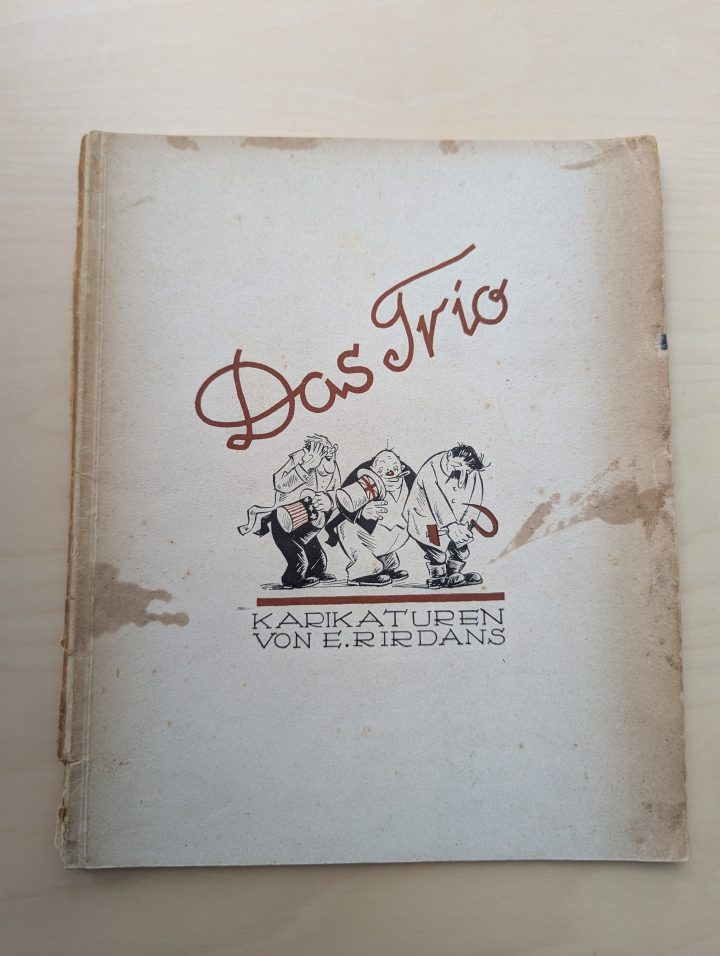
I’ve alluded to a World War II collection, and that’s probably my biggest one. In the early aughts, what I found was there were only about 10 or 12 political cartoon books that came out during World War II. There were some that came out afterwards, but they were 15 or 20 years afterwards, and that kind of doesn’t count from my perspective as I wanted books contemporary to the war. I was on eBay one day, and I put in political cartoons, World War II political cartoons, and up came a scrapbook. So fast forward, I have the largest collection of World War II political cartoons, that are in many cases, the last paper copies available because I started collecting the scrap books. Just a couple of weeks ago I had a ABD PhD student here, doing research in that collection for a dissertation that they’re doing. And two years ago, I had Timothy Benson, head of the Political Cartoon Society of London come here and do research for his two books, Churchill, and a book he did on a cartoon history of World War II. Pieces of my collection are in there, and you’ll see the stack downstairs. To date I’ve contributed images or research from my collection to 33 different books. And this year two more are coming out. Have you heard about Derf’s The Dissidents?
Yeah! I interviewed him last year for his book on Kent State.8
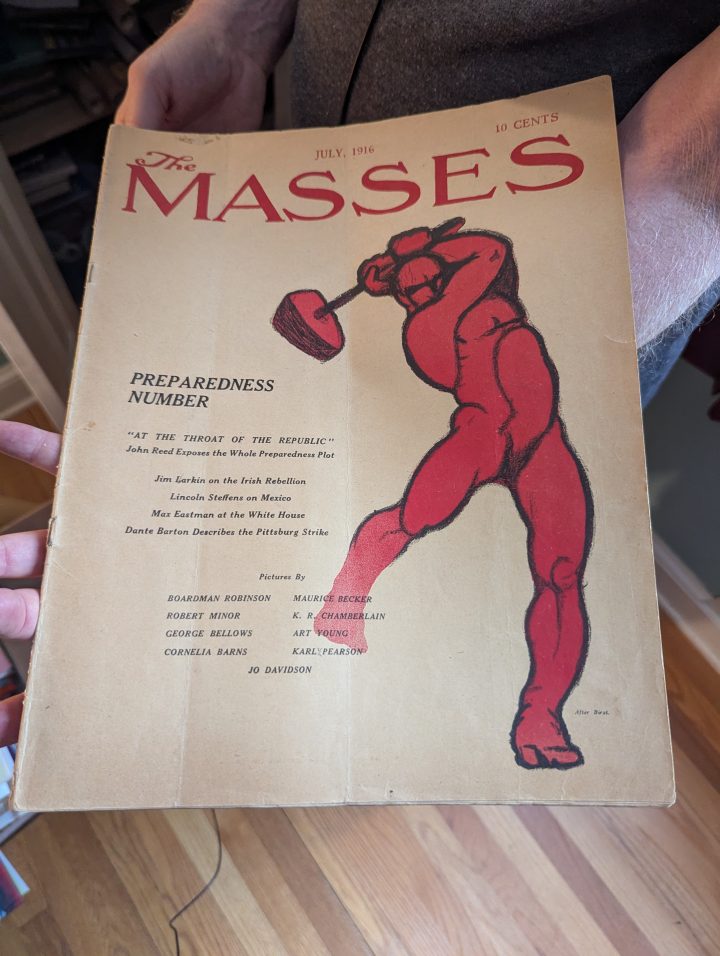
He came here to do research. I really enjoy the left-wing political cartoonists of the first 30 years of the 20th century. Fabulous stuff! You know, William Gropper, Frank Walts, Cornelia Barnes, Wanda Gág, just amazing cartoonists, amazing graphic designers. I have about half the run of The Masses. And that’s what Derf’s book is partially about. So in February, I get an email from Derf, and he goes, “Hey Warren, do you have these two magazines?” One was The Masses and one was The Liberator.I go, “Yeah, I’ve got the one for The Masses, but I don’t have The Liberator.” He says, “Well, can you send me a high-res scan?” So I sent him a scan, and sure enough, a scan of my copy of The Massesis on the front of the book [laughs].
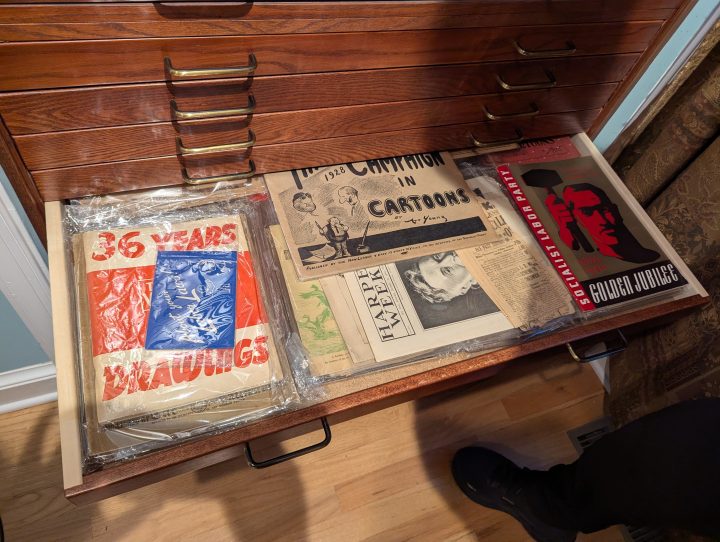
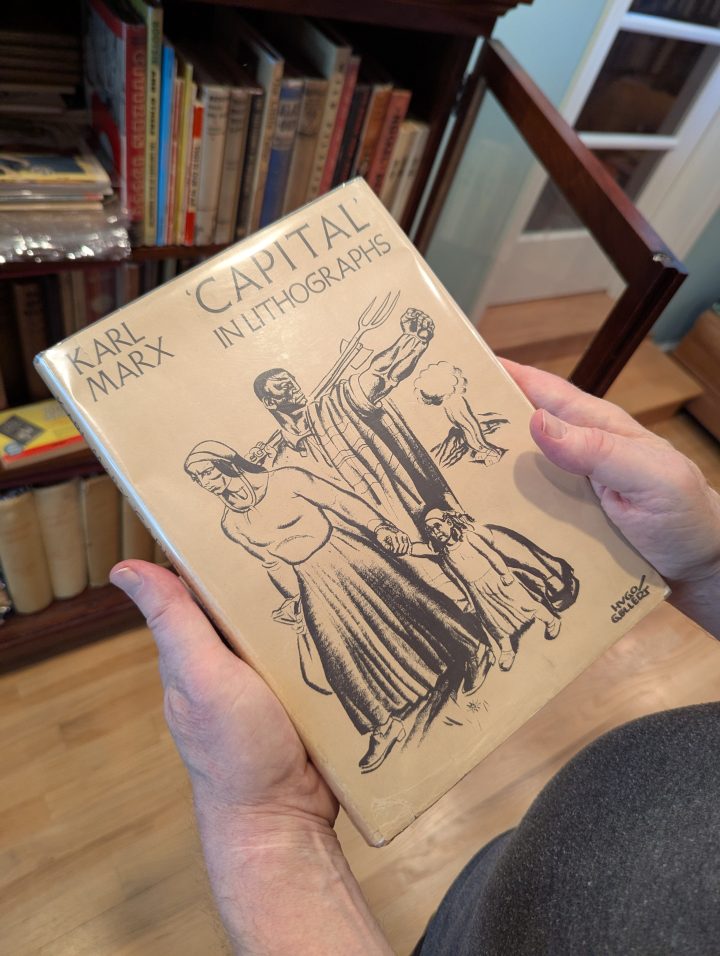
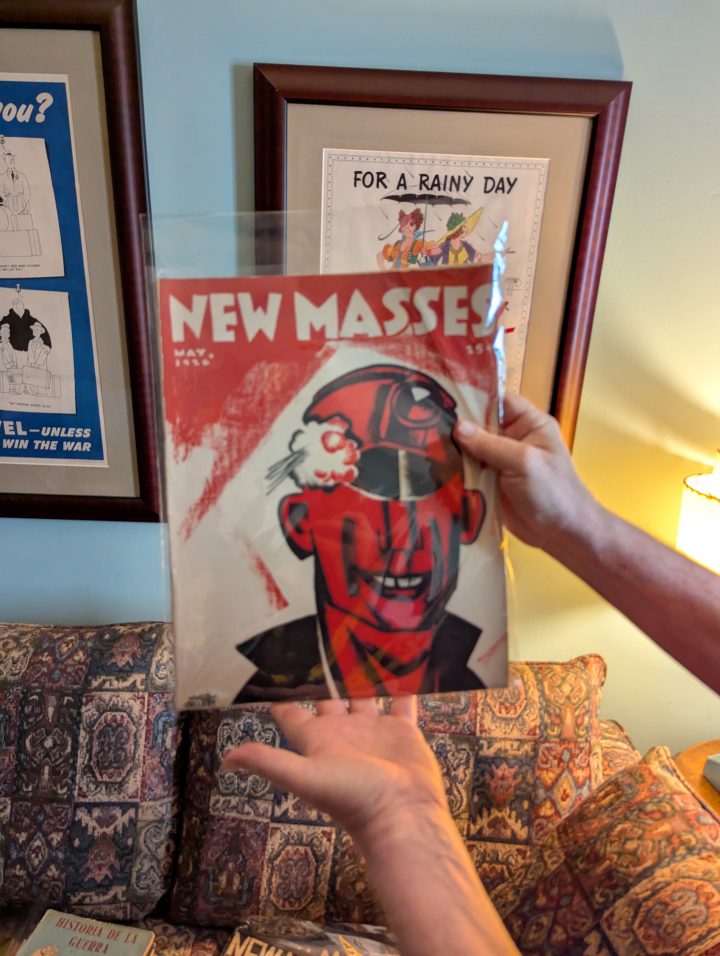
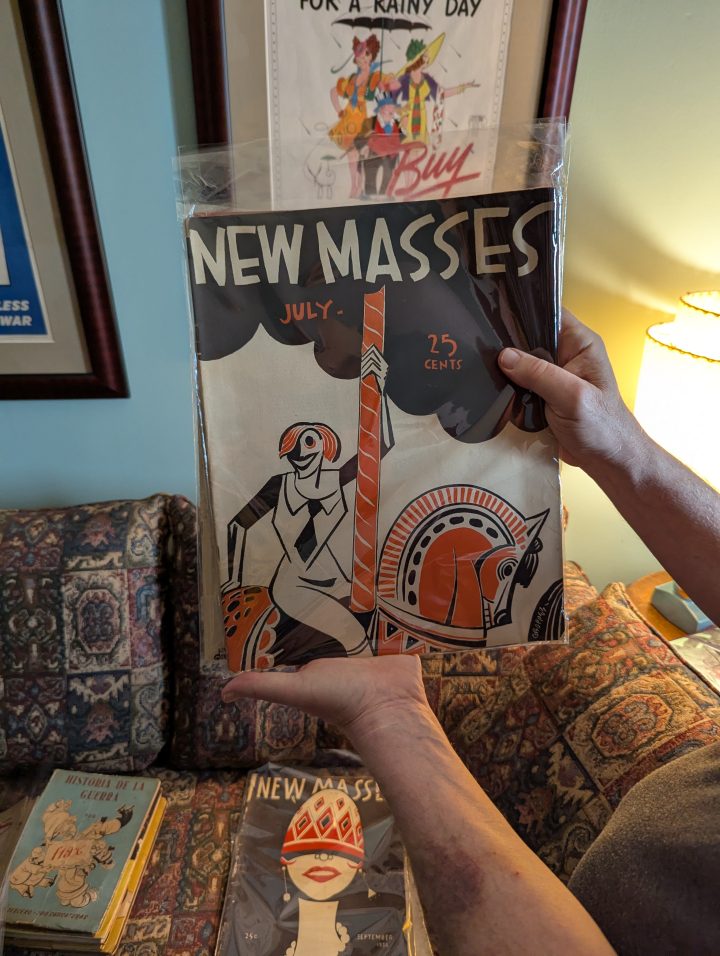
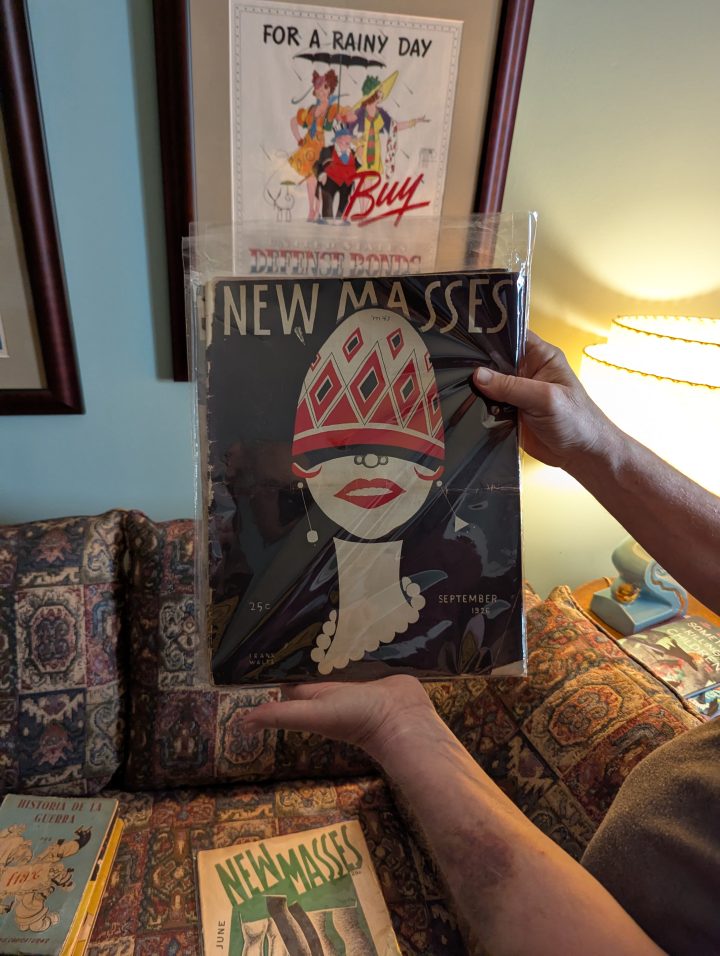
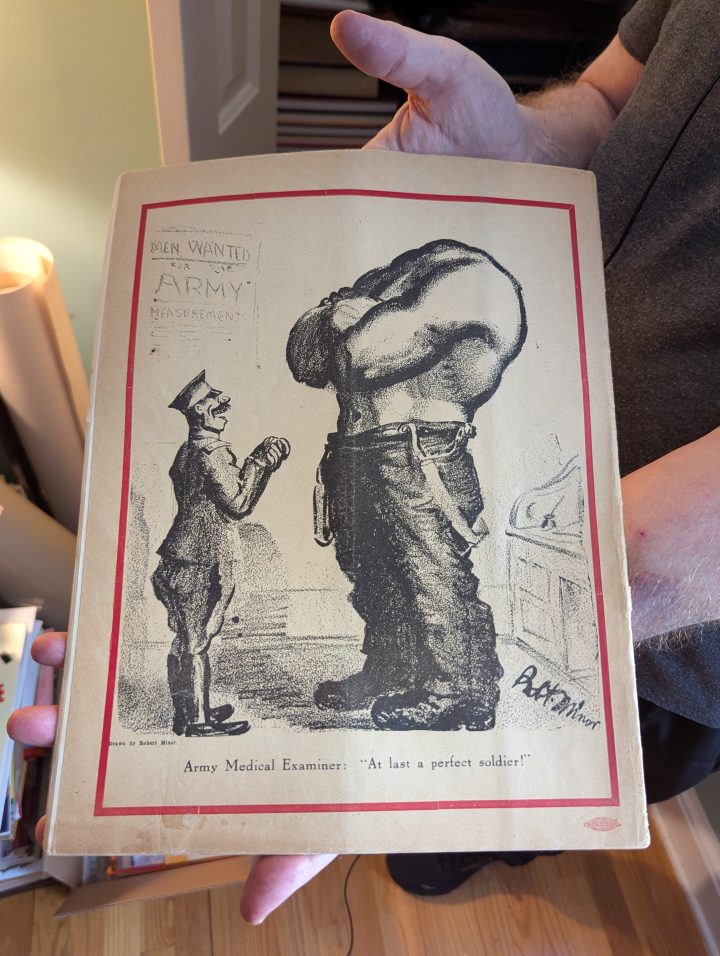
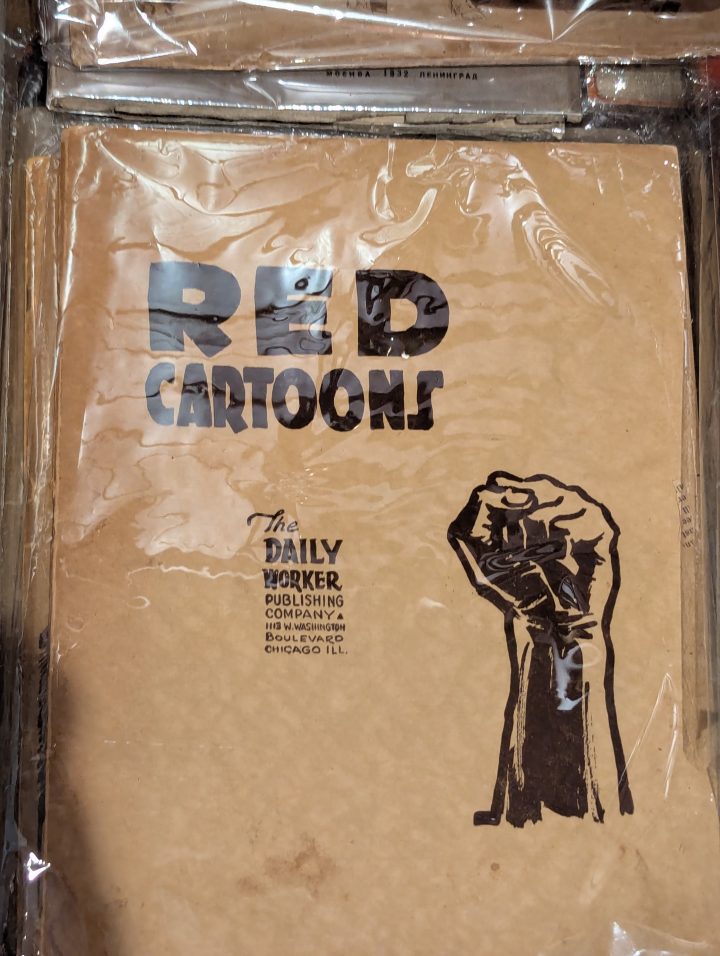
Now let’s circle back to the World War II collection because I don’t want to lose that thought. I did a book with Rick Marschall in 2009, called Drawing Power. And I was at lunch with John Barley and Rick, and I was, like, “No one’s ever done a book on how cartoonists did advertising work.” We pitched it to Gary [Groth, of Fantagraphics] or Rick did, because I had never done a book at that point. We put the book together. Much to our surprise it was nominated for an Eisner. Holy shit. Now we had to stop at 1940, so we went from 1879 with the first ads done by Joseph Keppler in Puckas a true cartoonist, and we stopped right before World War II. So I went to Rick and go, “Look Rick, can I do a book just on World War II.” And he said sure, and I approached Gary. I go, “I want to do a book not about comics, but about the homefront and reflected in comics” and he amazingly enough, agreed right over the phone. My plan was, okay, this is going to be easy. I go out to Ohio State, they’ve got everything, spend four, five, six days, scan a bunch of Sunday comics and I’m done with that part. What wound up at that time, and I don’t think it’s changed, they didn’t have World War II material because Bill Blackbeard stopped collecting in the early part of the 1930s.9 So I was like fuck. What am I gonna do now? First I started collecting just tear sheets, which kind of solved the problem. But then I saw that there were opportunities to collect entire sections, complete comic sections. A lot more comics in there. The context is all there. If you just get this tear sheet, you’re missing all the stuff around it. So I started collecting that. Now I have about 350 complete comic sections from World War II. The resulting book, Cartoons for Victory, that was published by Fantagraphics in 2015 was miraculously also nominated for an Eisner. Holy moly! That was amazing to have lightning strike twice. And you know, I do not care at all that I did not win. Getting nominated was great enough for me.
In addition to the scrap books and Sunday comic sections, I’ve got this great international cartoon book collection from World War II. I have representations of many of the political magazines that came out during World War II. In England with Punch,in Germany with Simplicissimus, Lustige Blätter, and the one of the most infamous ones Die Brennessel, which was actually the one that was put out by the Nazi party. They stopped publication on it, one because people didn’t like it, but also because they had taken over all the other political magazines. So I had that great representation.
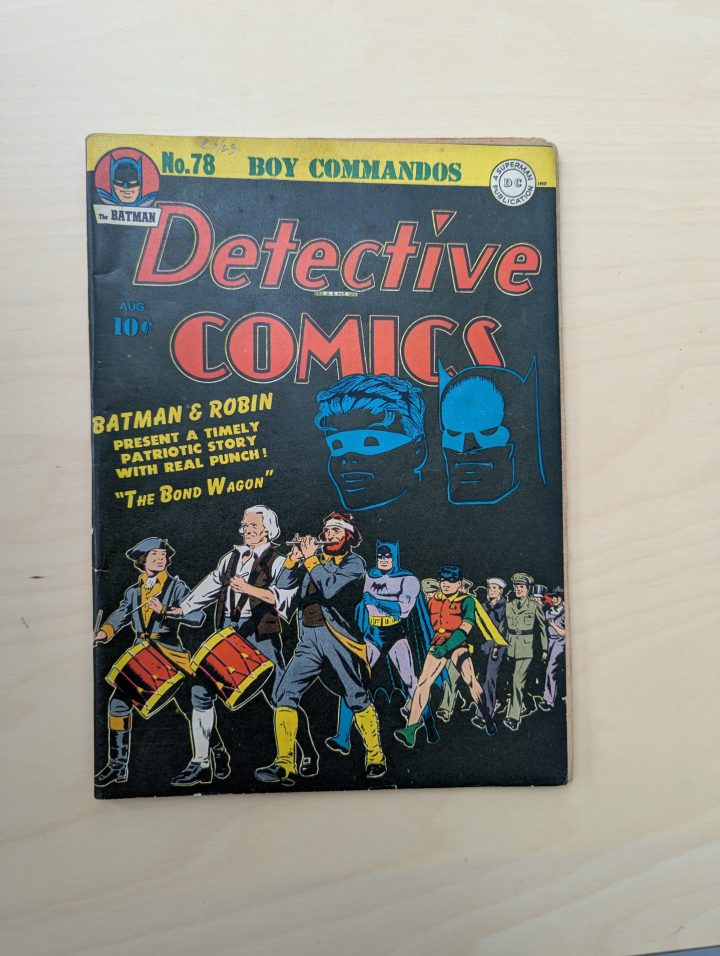
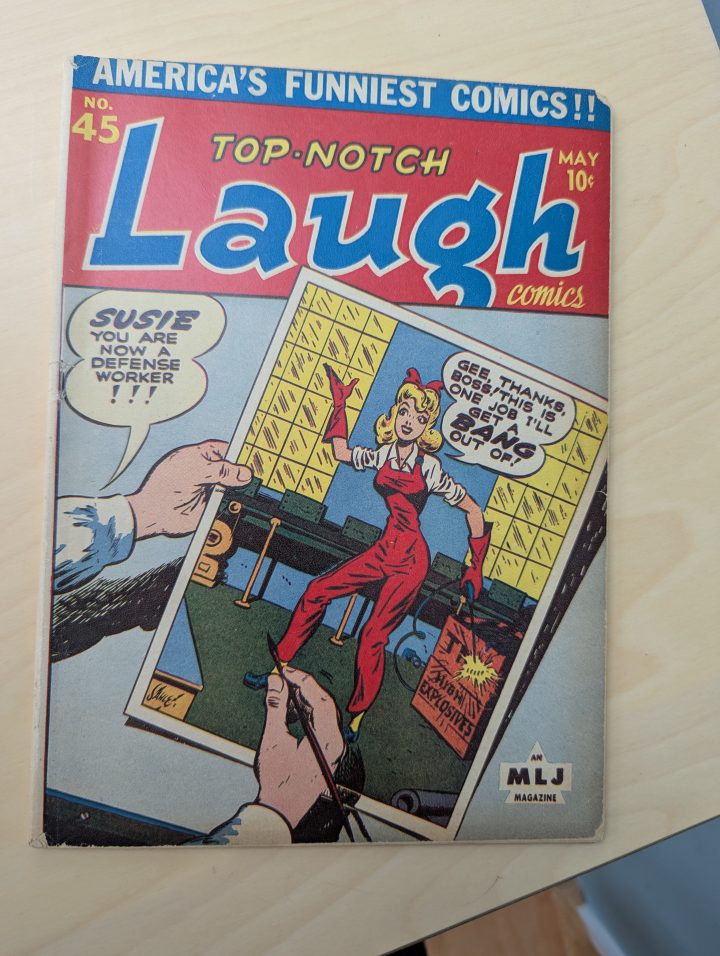
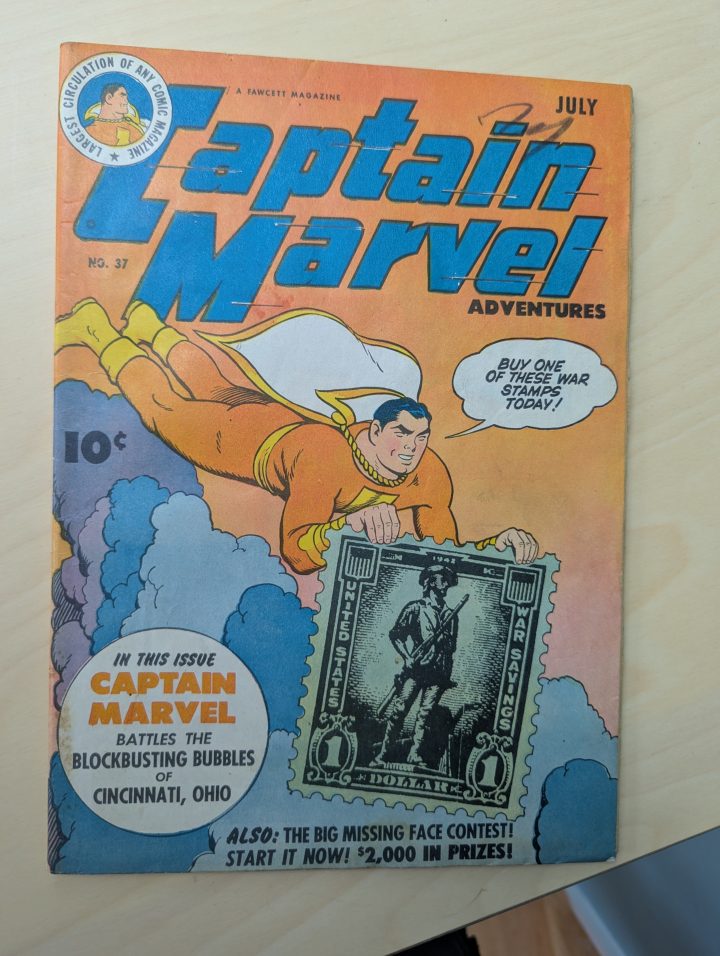
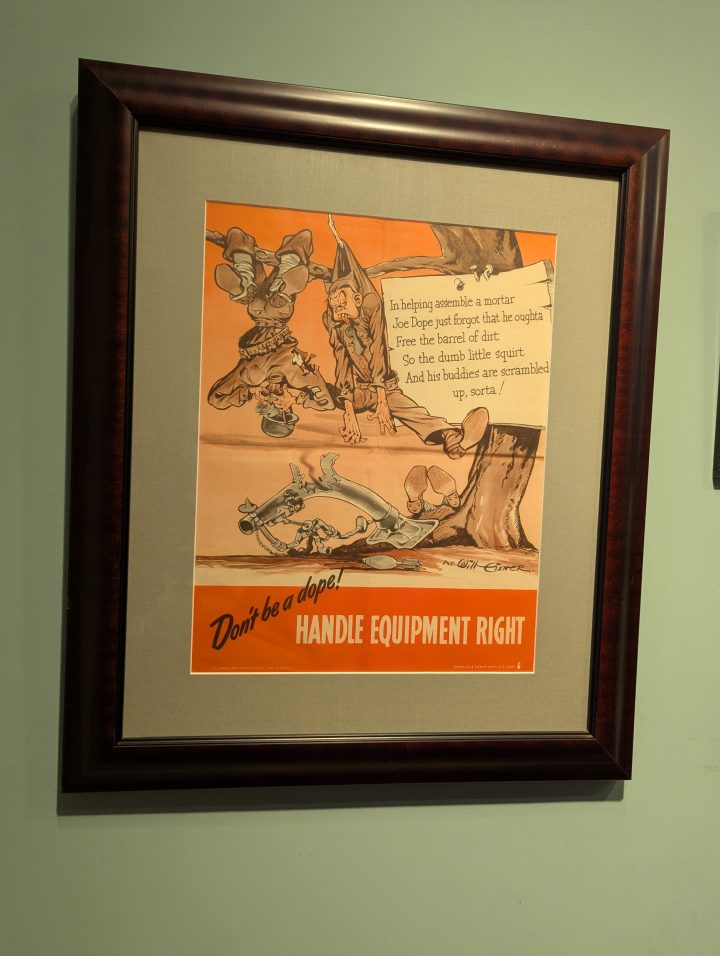
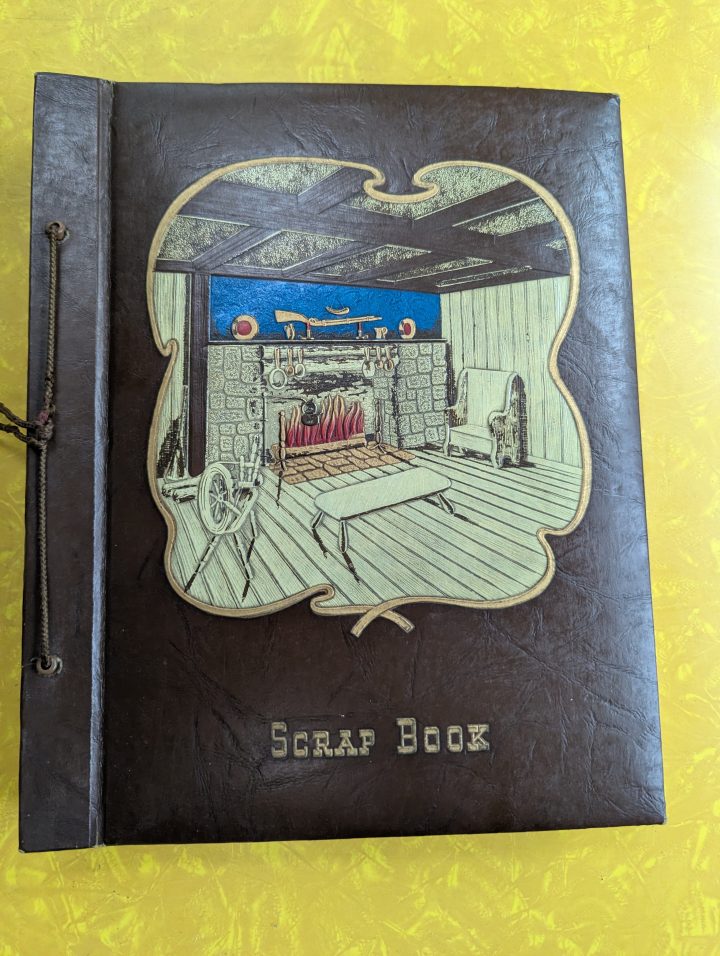
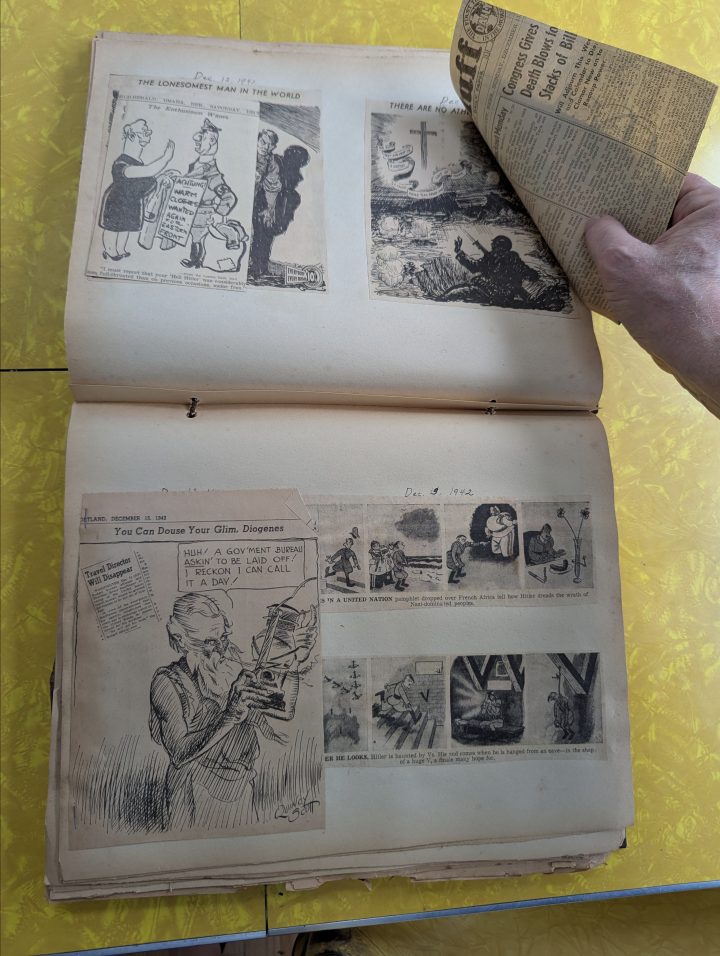
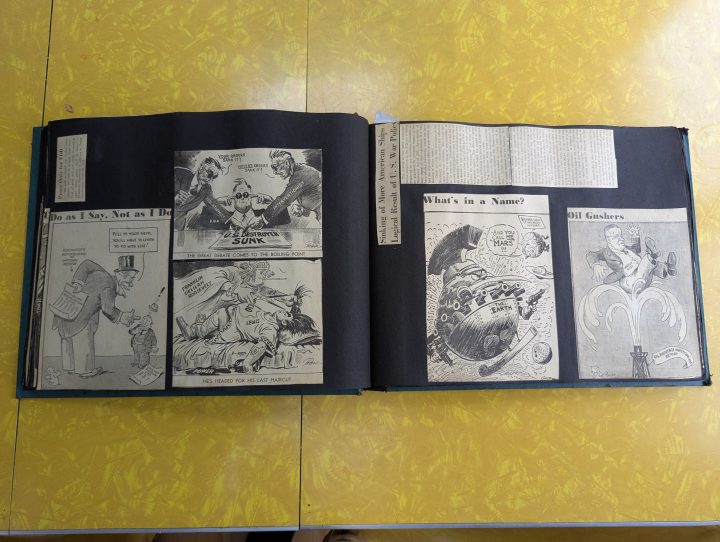
But one thing I didn’t have was comic books. Golden age comic books. Because those things ain’t cheap. For the really good ones, they’re very expensive. You just can’t dive into World War II comics because it’s an abyss. So what I decided to do was go ahead and build a comic book collection that paralleled the books. In other words, the covers of the comics had to reflect some level of social engineering at that time about war bonds. War loans. Rationing. Scrap drives. Saboteurs. Black market. You know, all of those things I started to go after and [laughs] I now have 75 golden age comics. I can teach you, or teach anybody about the homefront during World War II, just through the covers of comic books during World War II. There were some I would like, but some of the ones I would like start at $5,000 each. I think, Captain America#27 or something like that, with [Captain America] leading Russian tanks towards Berlin. I would love to have it. One of the other themes I’ve got is American superheroes fighting with the allies, and there aren’t as many of those as you would think. They’re very rare. There were two others with Americans fighting with the Russians. I have those, but I’ll never be able to get that one.10 So to me, my World War II collection is sort of complete. That’s the biggest and most extensive of the collections.
But looking back at it, I am glad I collected the Sunday comic sections and international cartoon books first for my WWII collection. The reason being those Sunday sections and international cartoon books are far rarer and much, much harder to find than golden age comics.
I also have a World War I collection. I also collected specific collections on Will Eisner, Harvey Kurtzman, Windsor McKay, and George Harriman. Because I felt that they were important, and they were [laughs]. So I went off and collected them. I went up to one of my favorite magazine places, up north of Philadelphia, and this just shows you the mentality of the collector. There was this big bin of all kinds of miscellaneous magazines that this guy has. And I’m flipping through, and I pull out an issue of Successmagazine. Successmagazine came out, late 1890s, through at least the ‘20s. And back during that time, they used to run articles about the old cartoonists. That’s another thing – I collect magazines with articles about cartoonists in them. Great social history stuff. So I open this issue of Success up, they didn’t have an article on cartoonists, but they had a double page spread on the Little Nemo in Slumberlandplay that was on Broadway. I got it home, and I took a picture of the double page spread, and I sent it out to Pete Maresca, Chris Ware, and Mark Wheatley. I said, “Has anyone ever seen these before?” And the answer was, no. This is totally new to the research field of Little Nemo. So fast forward, in 2024, Paul Gravett, to whom I graciously owe a favor or two, got me into the opening of the big comics, exhibit at the Pompidou. I went out to dinner with Paul and we talked about this, talked about that, and Paul says he’s working on a book that’s going to be the first Italian translation ofLittle Nemo. And I go, “Oh, you know, I’ve got this Little Nemocollection, and I turned up this double page spread.” And he goes. “Oh, Warren, would you be willing to allow us to use that?” I was like, “Sure, I don’t mind that.” So he put me in contact with the publisher. And I sent him that. I go, “Would you be interested in any of the sheet music?”And they were like, “What sheet music?” [Laughs] So I scanned all that, and then I go, “Oh, would you be interested in his obituary?” [Laughs] This just shows the threads that I work. So the book came out and I thought all of this stuff was going to get inserted into text, and that’s exactly what they didn’tdo. What they did was they had a special six or seven page section that basically reproduced almost at size all of that stuff from my collection. I was not expecting that at all. And then Paul’s essay talked about that McKay had a brother Robert who was institutionalized. They printed his essay, and then they had the obituary. At the end of the obituary, it just said Windsor McKay is survived by his wife and a couple of kids, and no reference to his brother. But anyway, there was an example of how my collection gets utilized. Some of this by accident.
I’ve had the pleasure of contributing to five or six of Pete Maresca’s fantastic and very big Sunday press books and one of them, The Crazy Quilt, I was honored, he made me associate editor. So I get an email from Pete a couple months ago, “Hey Warren. I’m doing a Bringing up Fatherbook. Do you have anything on McManus and Bringing up Father?” I sent him a note back, and I literally said this. “I’ve been waiting decades for someone to ask me this.” I sent him like 50 images. All the platinum age books that came out, I’ve got all this specialty art that hasn’t been printed anywhere else. I just sent it up to him. So he’s laying it out now.
And I’ve lectured! This is another thing in terms of where my collection has led me. Ben Katchor, when my World War II book came out, he had me come up and talk about it at the New York Comic & Picture Story Symposium. Which was a big honor. I’ve lectured at the Library of Congress. I lectured there three times. I lectured at the University of Pennsylvania. I’ve gone up to CCS and I’ve worked with and lectured the students up there.
So veering off to SPX and my public speaking career, one of my great thrills in terms of international comics is working with SPAIN arts and culture ever since 2015. That’s the cultural arm of the Spanish embassy. So every year someone comes over from Spain. They love us. We have this great relationship. Every year we get one or more Spanish cartoonists coming to SPX, this year we have three Spanish cartoonists coming to the show. A couple of years ago, I was asked to come down there to the old Spanish ambassador’s home on 16th Street. They asked me to do a talk with one of the artists that was having an exhibition there. And then [at the] beginning of 2025, they asked if I would go ahead and do a talk at a book signing for one of their Spanish creators. So I’ve got that kind of a great comics relationship also. I’ve done lots of talking on comics.
A current project I am working on is the zine Monograph. Run by Ivy Lynn Allie and E.B. Sciales, it is dedicated to the world of single panel gag cartoons. Every issue features a different woman single-panel cartoonist from the 20th Century. The first issue featured the great Hilda Terry, the second issue, that will debut at SPX, will feature the work Barbara Shermund drew for Esquire and the Hearst papers. This issue will also have some cool single panel cartoons from various members of the SPX Community. It is a great thrill to work with Ivy and E.B., very thankful to them for asking me to be part of this fun project.
So what’s next? Are you still expanding your collection? Are you focusing more on research? What’s the plan from here on out?
There are two very different things that are going on. Last year I gave stuff to the Library of Congress and to Columbia University. So every year a little bit will go out. But I do still collect. As one example as to my restless collecting, there was a Sunday insert section to the Hearst papers called Pictorial Review. Pictorial Reviewwas a magazine that Hearst had bought, that by the late ‘30s had run its course, and he integrated it into the newspaper side of the Hearst Empire. Post-world War II, into, I believe at least the mid-1950s, cartoonists used to do the covers to this section. The two that I collect, or try to collect because they’re very difficult to find, are E. Simms Campbell, really the first black mainstream comics/cartoon creator. People talk about Matt Baker, well, yeah, I’m not taking anything away from Matt Baker. But the first black man to really come into the cartoon world and break the whole barrier was E. Simms Campbell. His first work started in 1930, a good 10, 12 years before Matt Baker came along. I’ve collected a bunch of his stuff because I think I think he’s important. He’s also great in terms of his draftsmanship and his sense of humor. I started collecting those for E. Simms Campbell and Barbara Shermund, and I now have 16 covers by Barbara Shermund, none of them have been reprinted anywhere. I call these kinds of things nibbling around the edges. I haven’t bought a platinum age book in years. For the golden age collection, there are just odds and ends I’m looking for. So I’ll still noodle around and see if I can find various and sundry things.
I still look for World War II booklets and pamphlets, but there’s been this huge inflation in prices. Whether it’s gold or silver age comics, bronze age, even now some of what they call copper age. Original art. And now you’re starting to see it in the magazine world, this great expansion of the alleged value of these collectables..
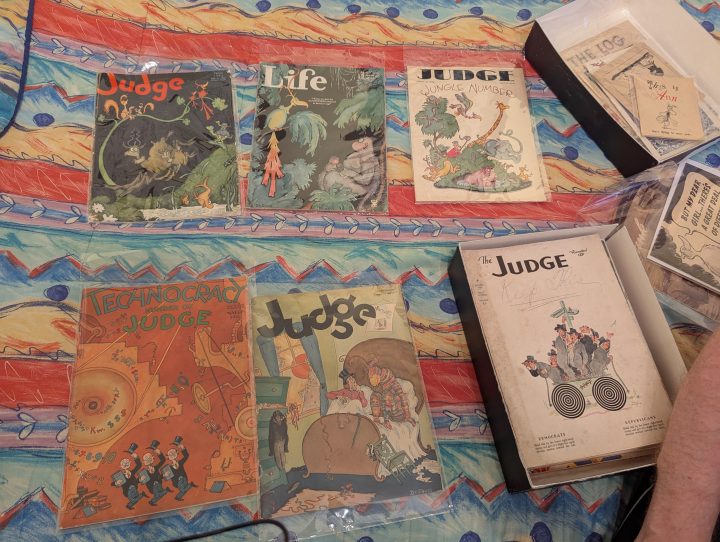
Another person I collect is John Held, Jr. I have about 35 of the covers that he did on Lifeand Judgeback in the ‘20s. Well, now if I want to add one to my collection, these people are asking $150, $200, $250. Like, that’s a $25 book! And by the way, I can afford it. It’s not that I can’t afford it, but I’m not going to give the thieves their money. I’m just not going to do it. If I don’t have the five or six John Held, Jr ones I’m missing, no one’s gonna notice it anyway.
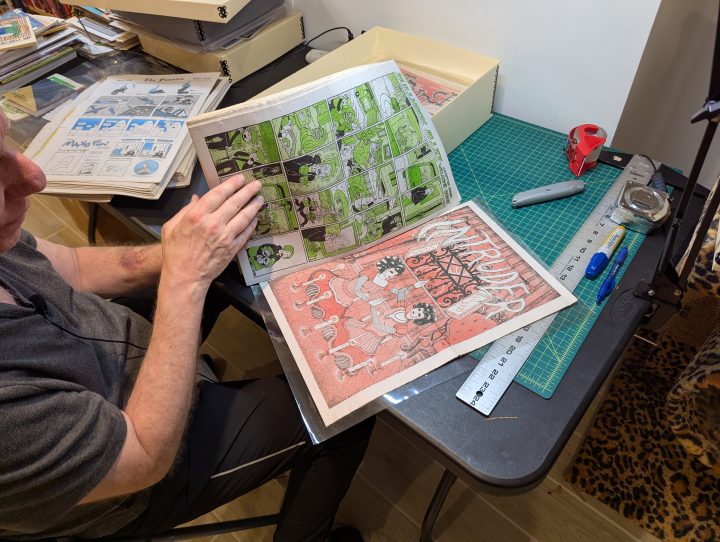
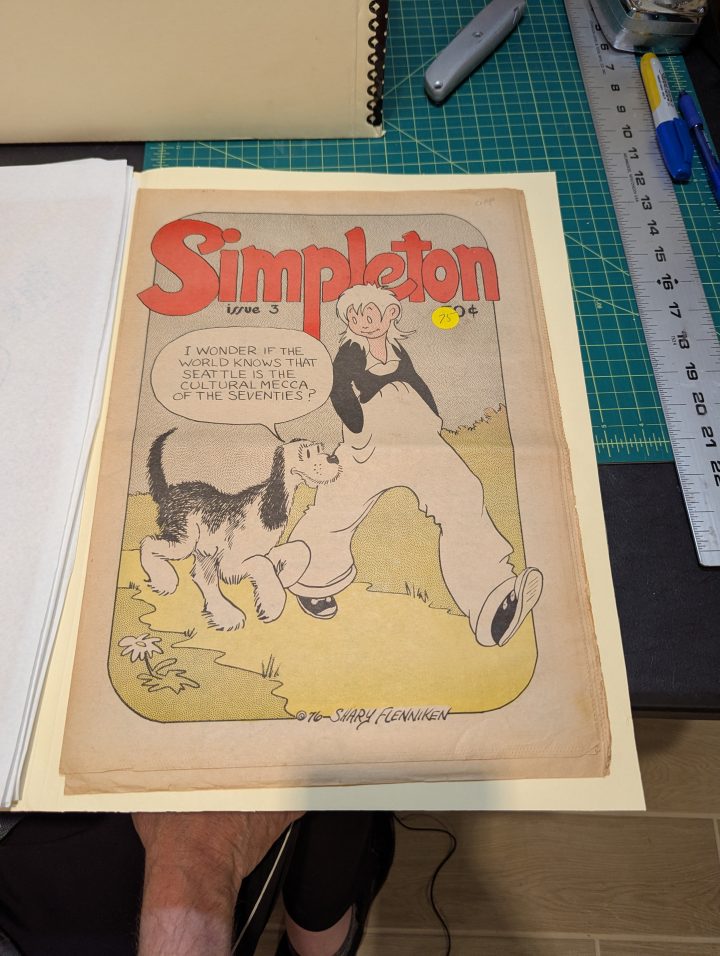
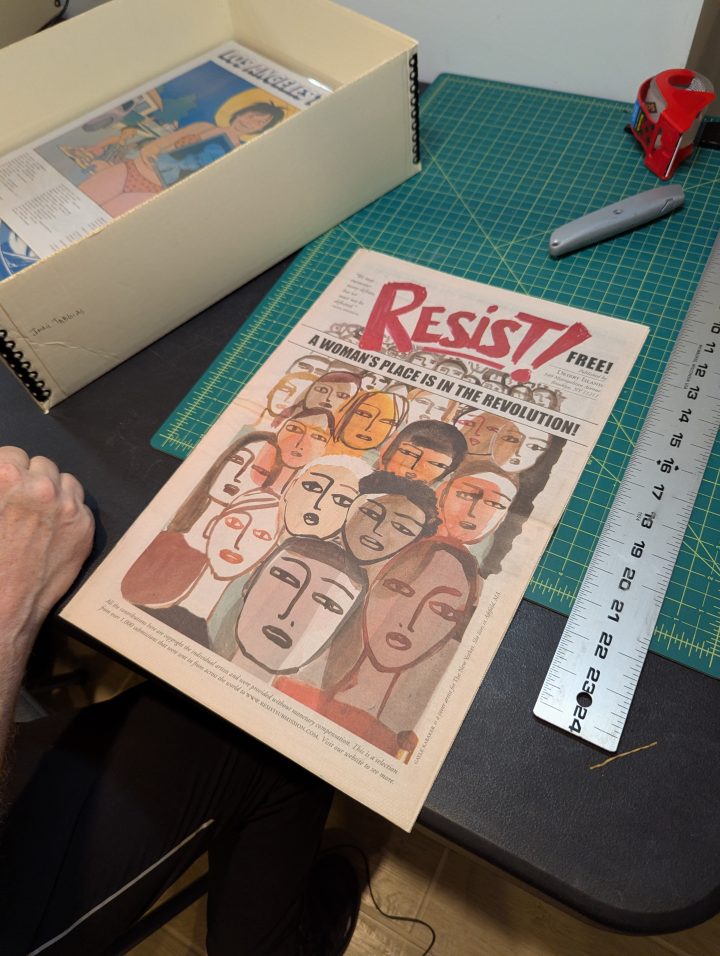
There’s stuff in the indie comics world I want to find. I don’t have a complete set of Smoke Signals, and I don’t have a complete set of Magic Bullet. And the problem is, those are very rare. In fact, I was very lucky, Gabe Fowler was very generous to me. Smoke Signalshad been out for about a half year at that point, he was kind enough to give me copies of the first two issues, or else good luck finding them. And by the way, this is one of the reasons why I got the SPX collection. In the indie comics world, the problem is, that stuff does evaporate. It disappears. You can’t find it.
There were two conversations I had that drove me to do this, to emphasize this point. I went to Lloyd Dangle, it was a Troubletownmini comic I was missing. And he didn’t have any. And I went to Keith Knight and I said, “Keith, do you have any of your mini comics?” And he goes “Well, I thinkI have a set.” So he has one set, and he sold me his three duplicates. Other people I’ve spoken to, these mini comics, even they don’t have copies.
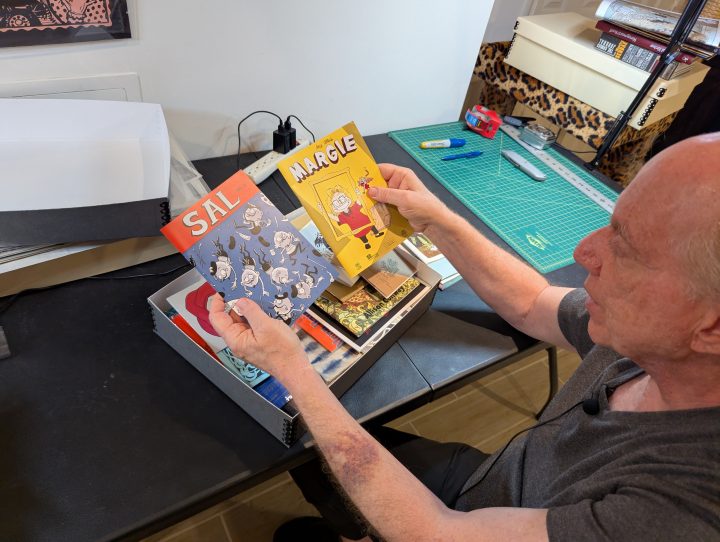
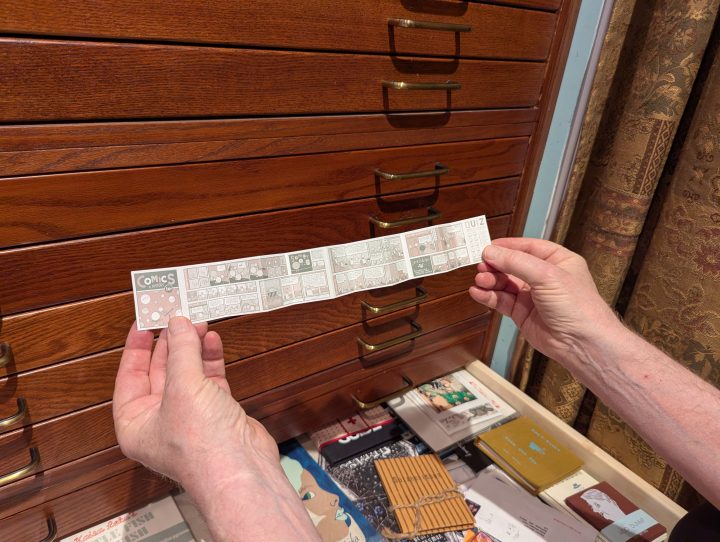
Last Christmas I went ahead and said, I’m going to try to organize my mini comics. I got some of it organized, but one of the things I wanted to pull out is, I really like accordion comics. Concertina comics. I love those things. I pulled out a bunch and I had them in a box, and then all of a sudden, I realized I had eight or nine boxes of mini comics to go through. I thought I had a couple of dozen accordion comics. But after going through all my boxes, I found out there are over 70 of them, which is totally fucking insane [laughs]. And a lot of these are one of ten or one of 30 or one of five or they just made it for that show or whatever it may be. As it is with mini comics, these things also disappear. So I really want to focus on the accordion part of the collection.
So I’ve got plenty to collect. Don’t worry about that, and at the same time, the older stuff is sort of moving out. The donation I gave to the rare book room last October, there was stuff there by Mark Ryden. I don’t know if you’re familiar with him. The book was just called Blood, and it was maybe four or five inches high, and I have the rare, limited edition in a clamshell box with a magnifying glass, so you can see everything. And an itty bitty print signed and numbered by Mark Ryden. So I gave them that. I gave this really cool thing, this limited edition thing that David Plunkert put together up in Baltimore. I gave them a Will Dinski. Will Dinski, he did a lot of his own binding, and he used to submit his stuff for local shows and local art book shows. And I got a copy of one of his books that were only 10 copies. I got the first one. That went to the Library of Congress. I still have one Will Dinski left. So they got those newer things, and I told Stephanie, head of the rare book division, I’m gonna drag you kicking and screaming into the 21st century. So in terms of collecting, some stuff is going out, but more is going to come in because I think that these parts of my collection in particular, the folio size indie comics, the tabloid, indie comics, and in particular the accordion comics, I’m going after them.
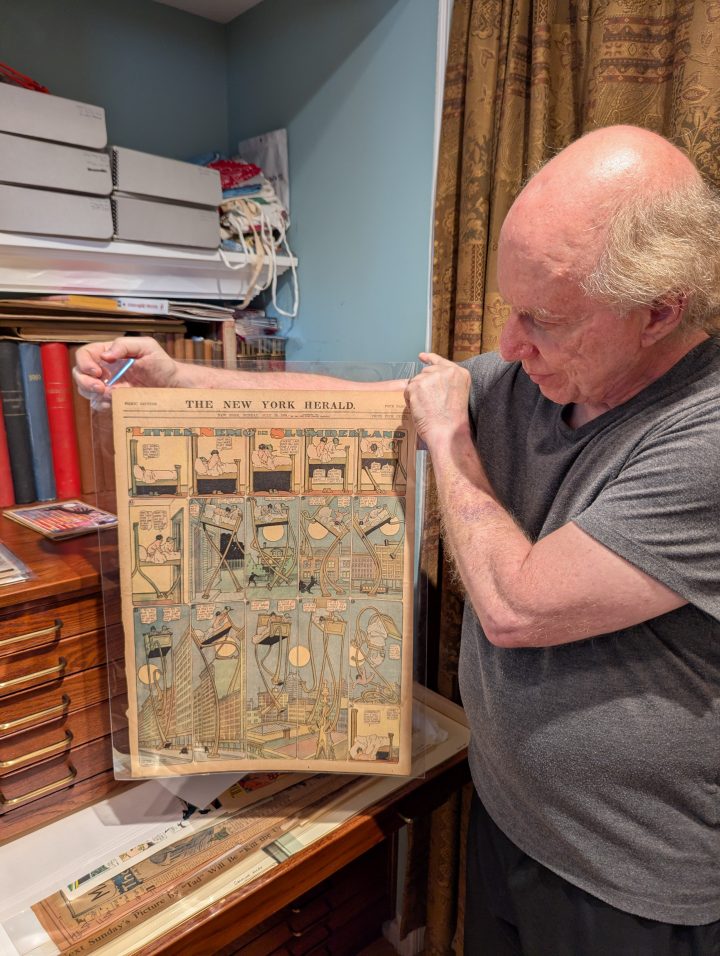
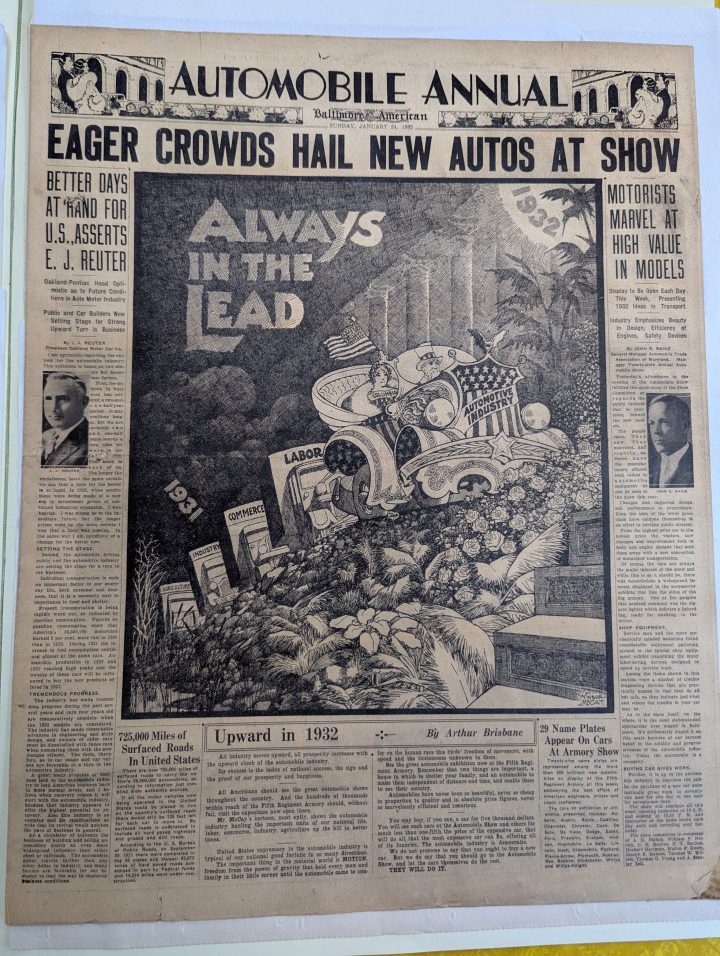
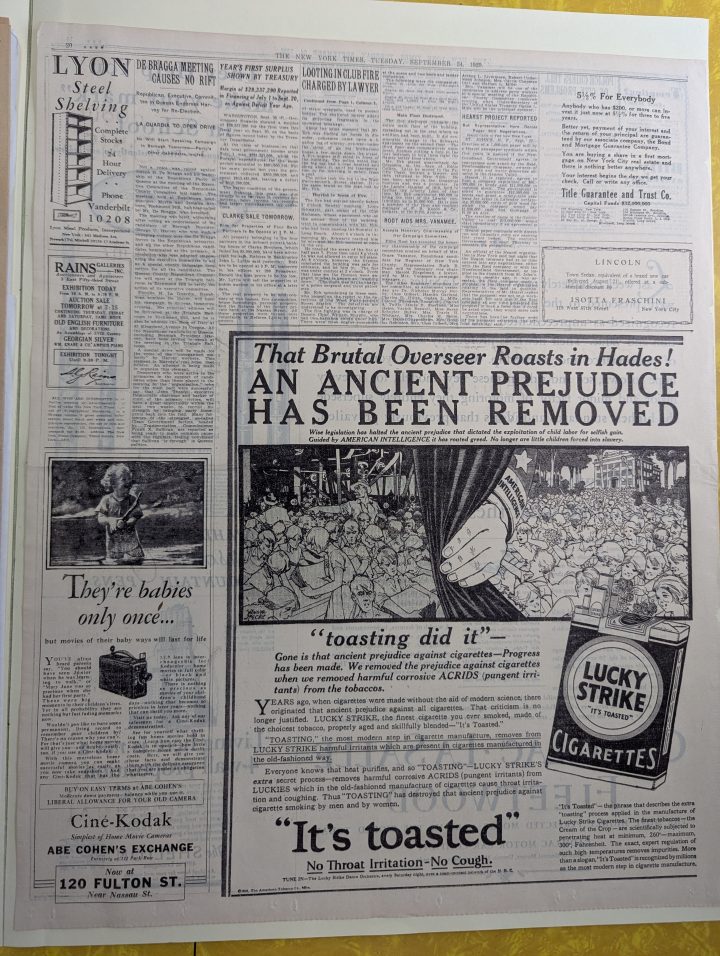
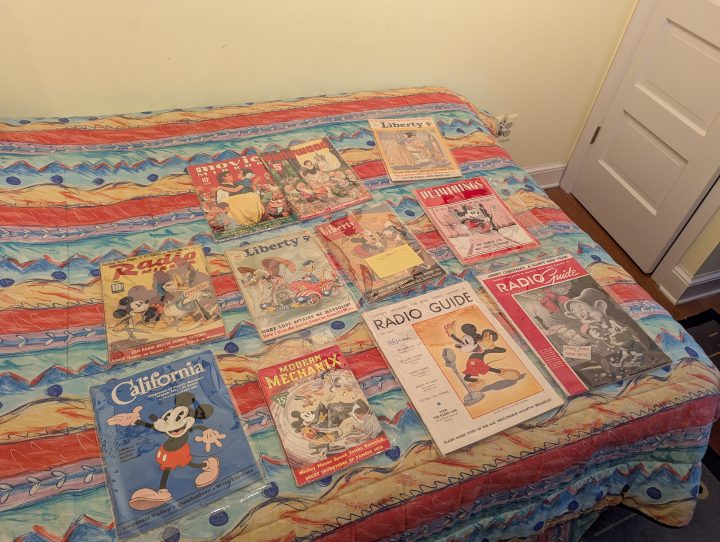
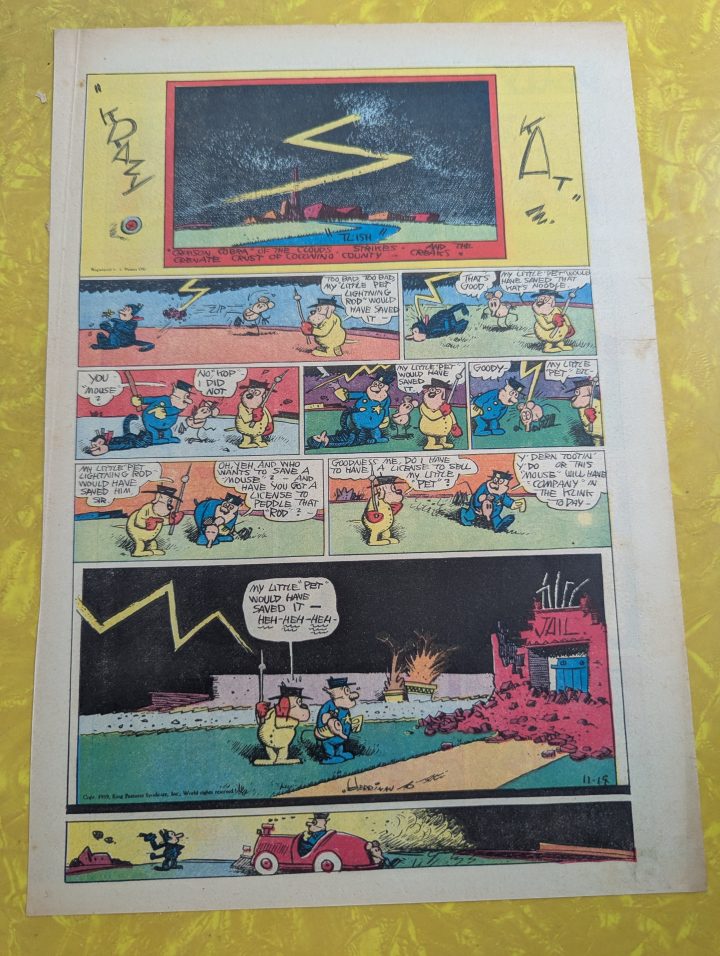
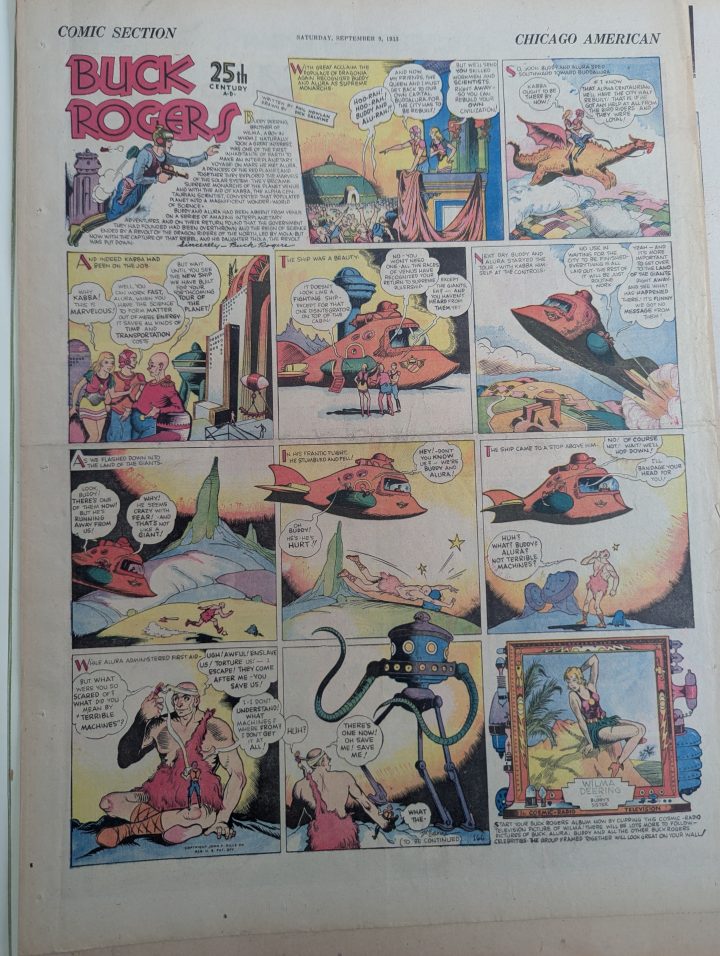
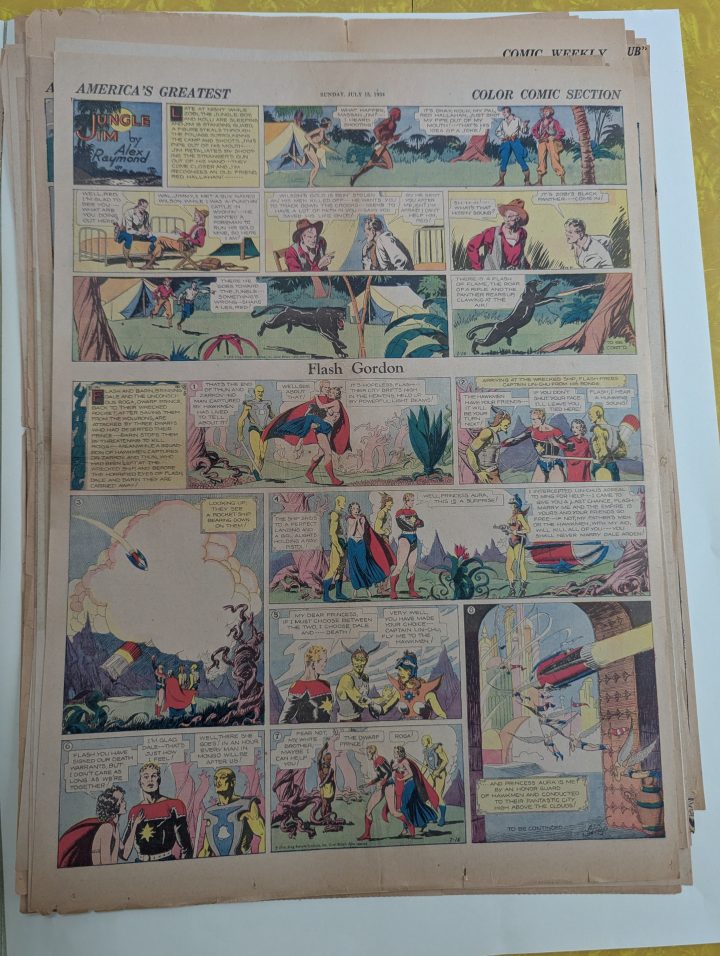
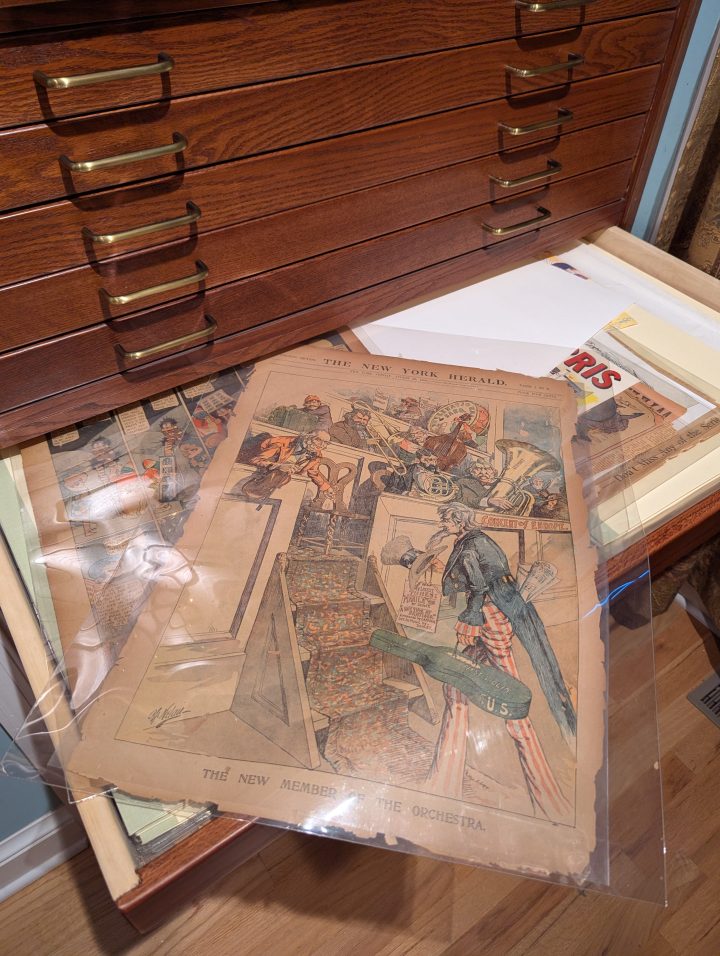
There was a very long extended period of time [where], I interacted with comics, but on a very basic level. Because I was in the corporate world. And so, from 1980 to 2000, I went to two SPXs, a World Fantasy Convention, one San Diego Comic-Con, and that was it. I just did not interact much. I would get Comics Buyer’s Guide,so on rare occasions, I would buy something. One occasion, about 1983 or 1984, there was an ad that said, “For sale: Half years. Little Nemo in Slumberland.” The guy’s name was I think Mike Barson, who’s done some books on pop culture. So I went up to his apartment, and on the floor in his little apartment in Manhattan, in front of the coffee table was a stack of all of Little Nemos from 1905 to 1912, except for like 10 or 12 that were missing. Some odd ones that were missing. And at that time, he was asking the then totally outrageous price of $13 each. So I bought basically a thousand dollars worth. I can show you some of those. The only other big, big buy I did during my corporate days was Mickey Mouse Magazine. This is the one that preceded Walt Disney’s Comics and Stories. Beautiful magazine. And this ad came up, saying we’ve got these for sale, most of these are file copies. In fact, one of them is stamped Walt Disney Productions. So I bought like, 15 of those.
But those are exceptions to the rule. The way I would collect during this period is I’d go up to Big Planet Comics. I’d see what’s going on there, once every couple of weeks because I wasn’t around a lot. And I would go through Previews,11 and whenever Kitchen Sink or someone else came out with a book that I really wanted, I would order the signed limited edition. So I’ve got all these signed limited editions, many of which you can’t find anymore.
I was out of touch. And what that cost me was, it cost me 20th century Dan Clowes. It cost me 20th century Chris Ware, 20th century Jaime Hernandez. I’ve done a little bit of catching up. There was a long period of time where I wasn’t that engaged with the current world of comics. When I’d go out of town I’d go to a used bookstore and stuff like that, so I was engaged with getting the older stuff, but I wasn’t engaged in what was going on at the time. I just didn’t have the bandwidth. There was one point, for about a three-year time frame, that I was on the road at least one to two weeks out of the month. And then, when I left my corporate job in early ‘99, about five or about five or six months later, I got another gig, but that was out in Texas. So I worked almost two years, commuting to Texas pretty much on a weekly basis. There was this extended period of time where I didn’t interact. John Kelly’s been putting a lot of stuff out of his collection up on his Instagram page. And I’m like, “Man, I wish I had that one. I wish I had that one.” Because you had to be there at the time to get it.
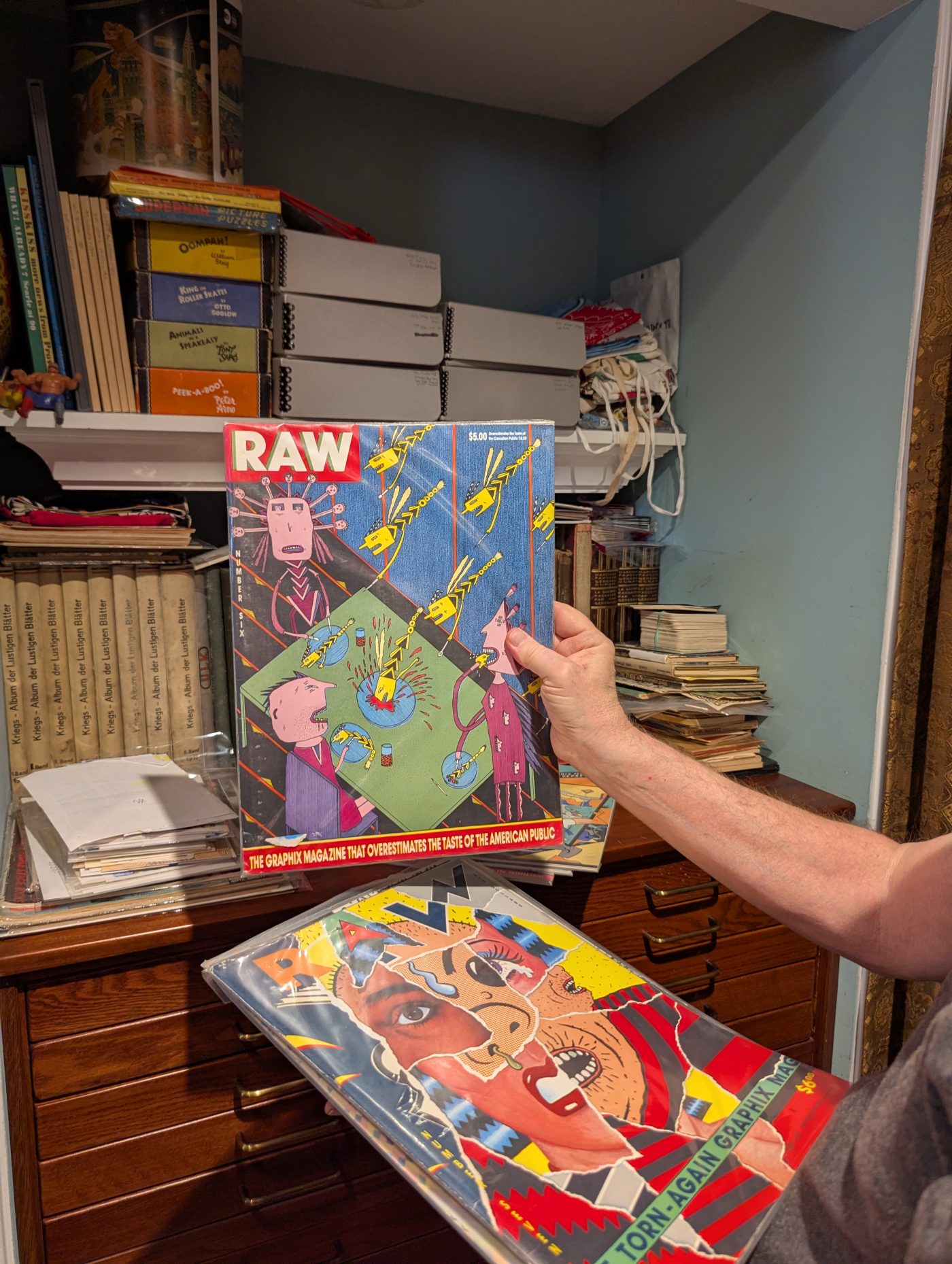
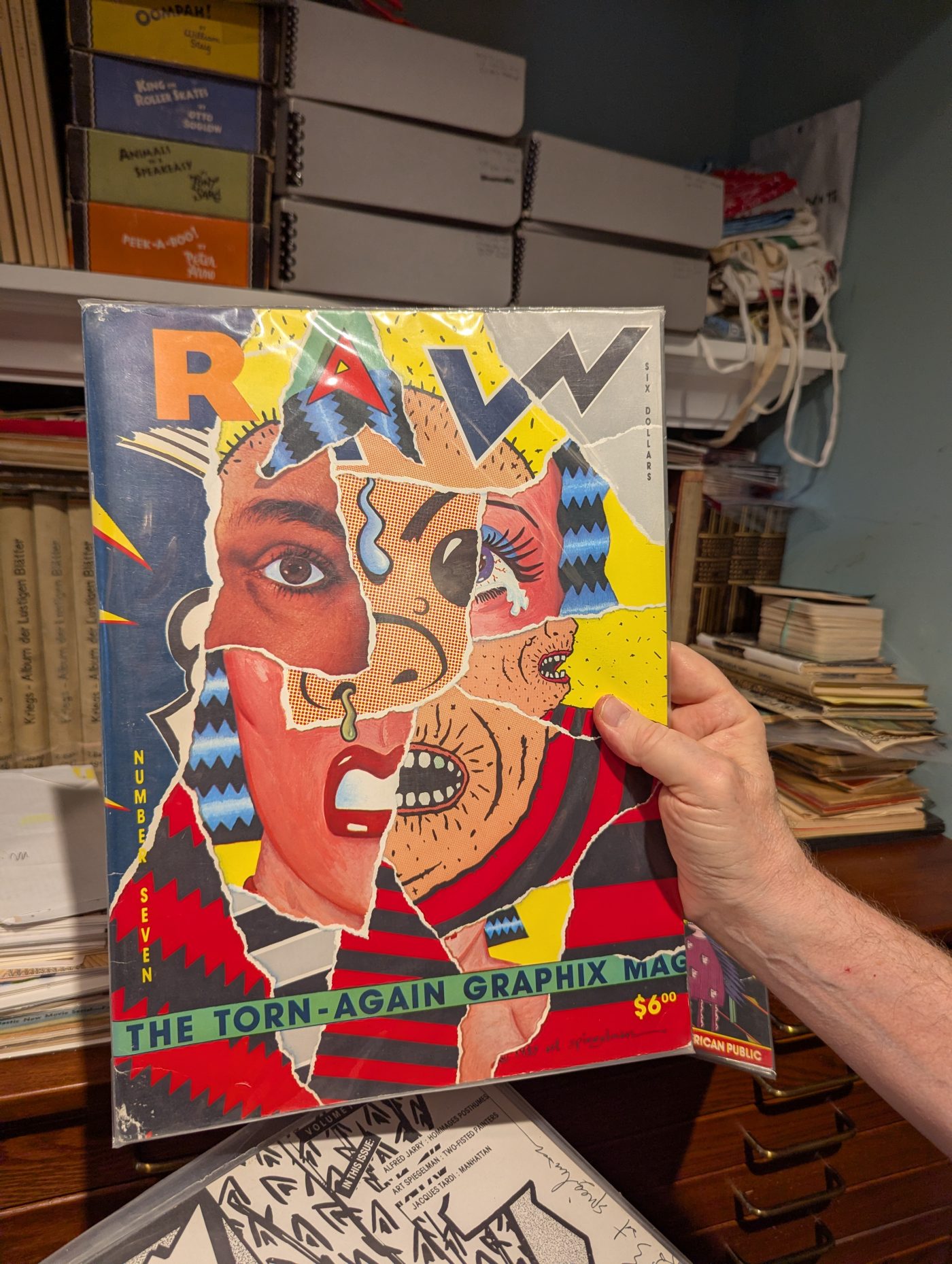
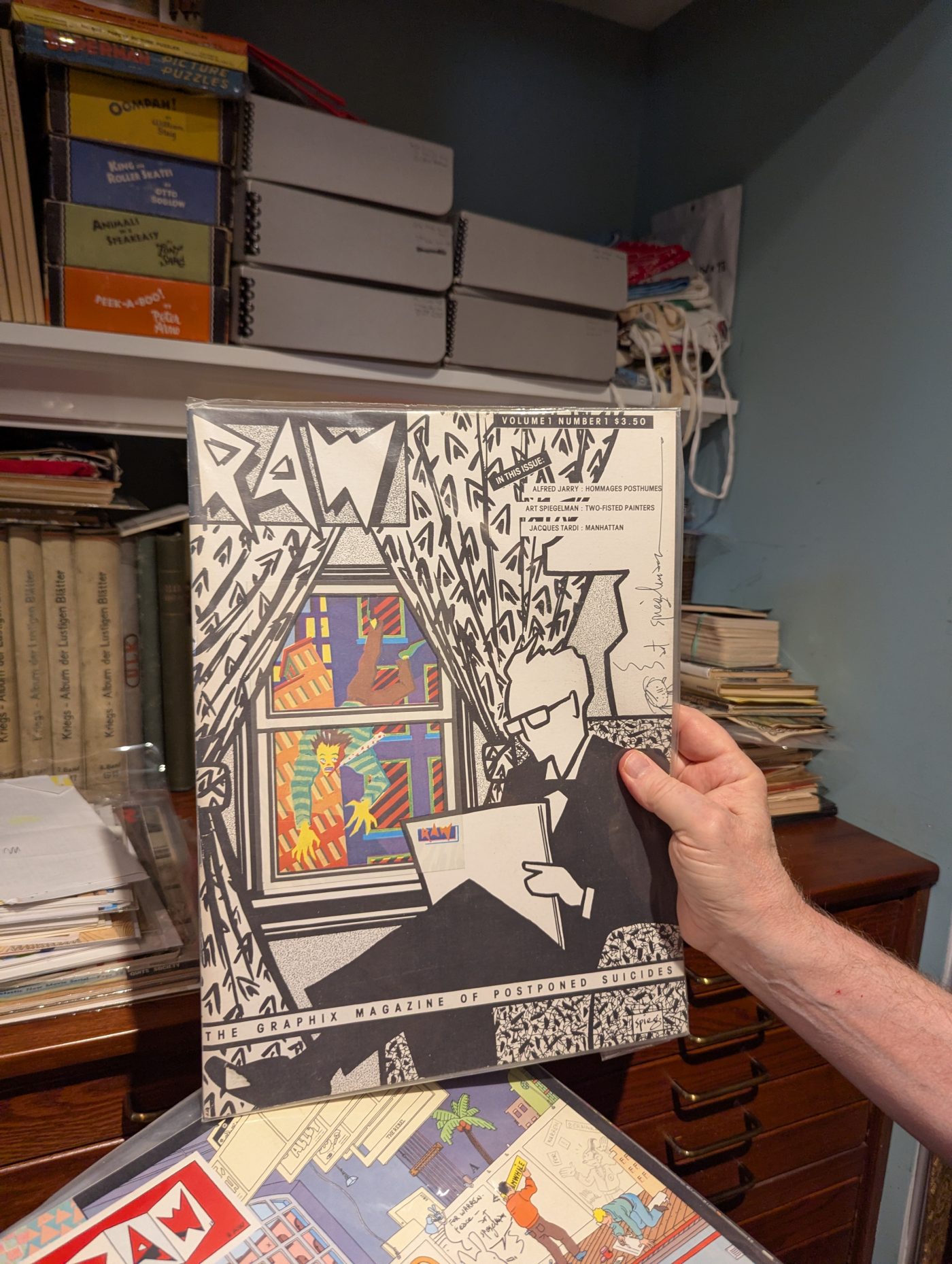
So did you miss theRAWyears?
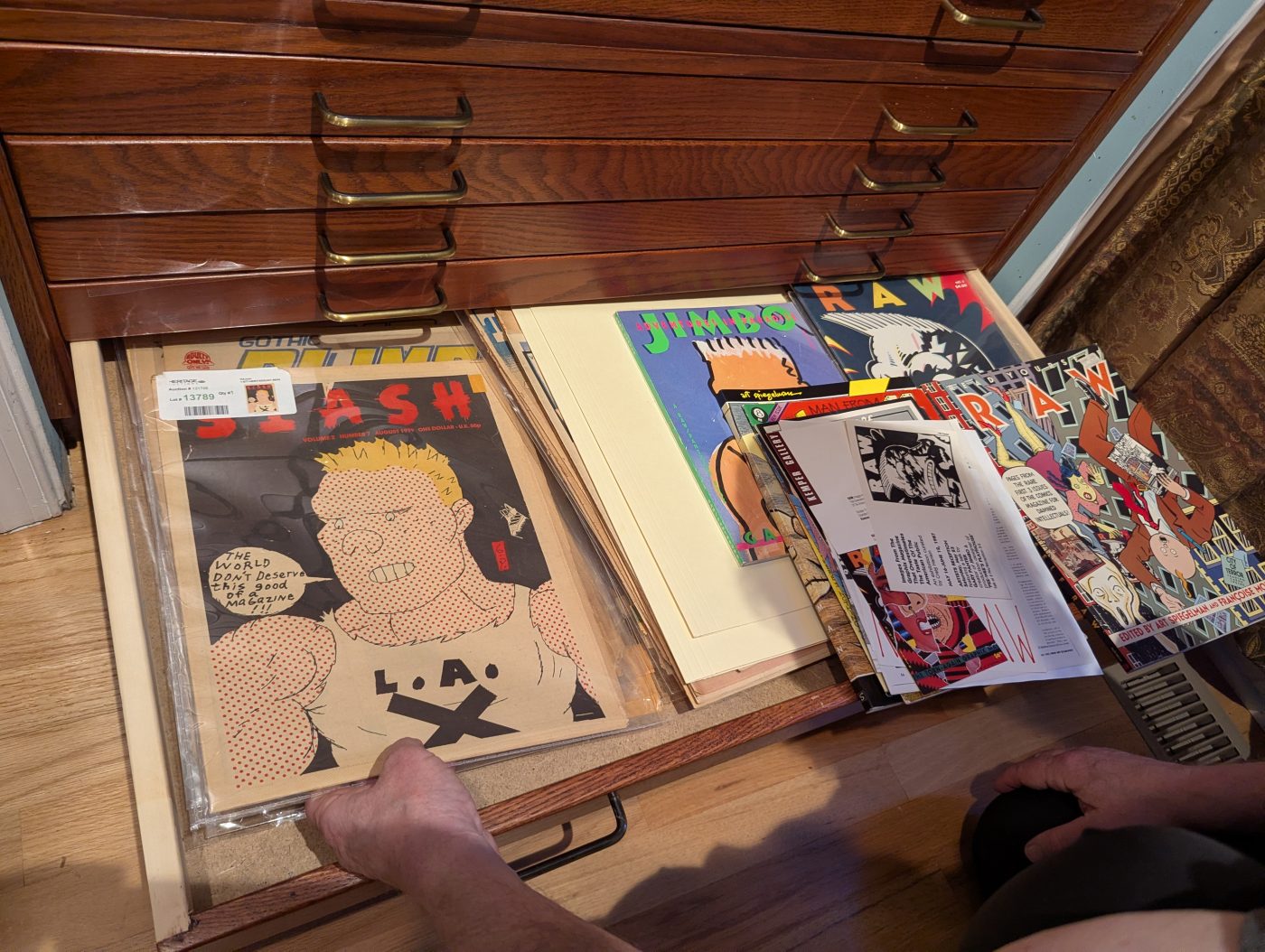
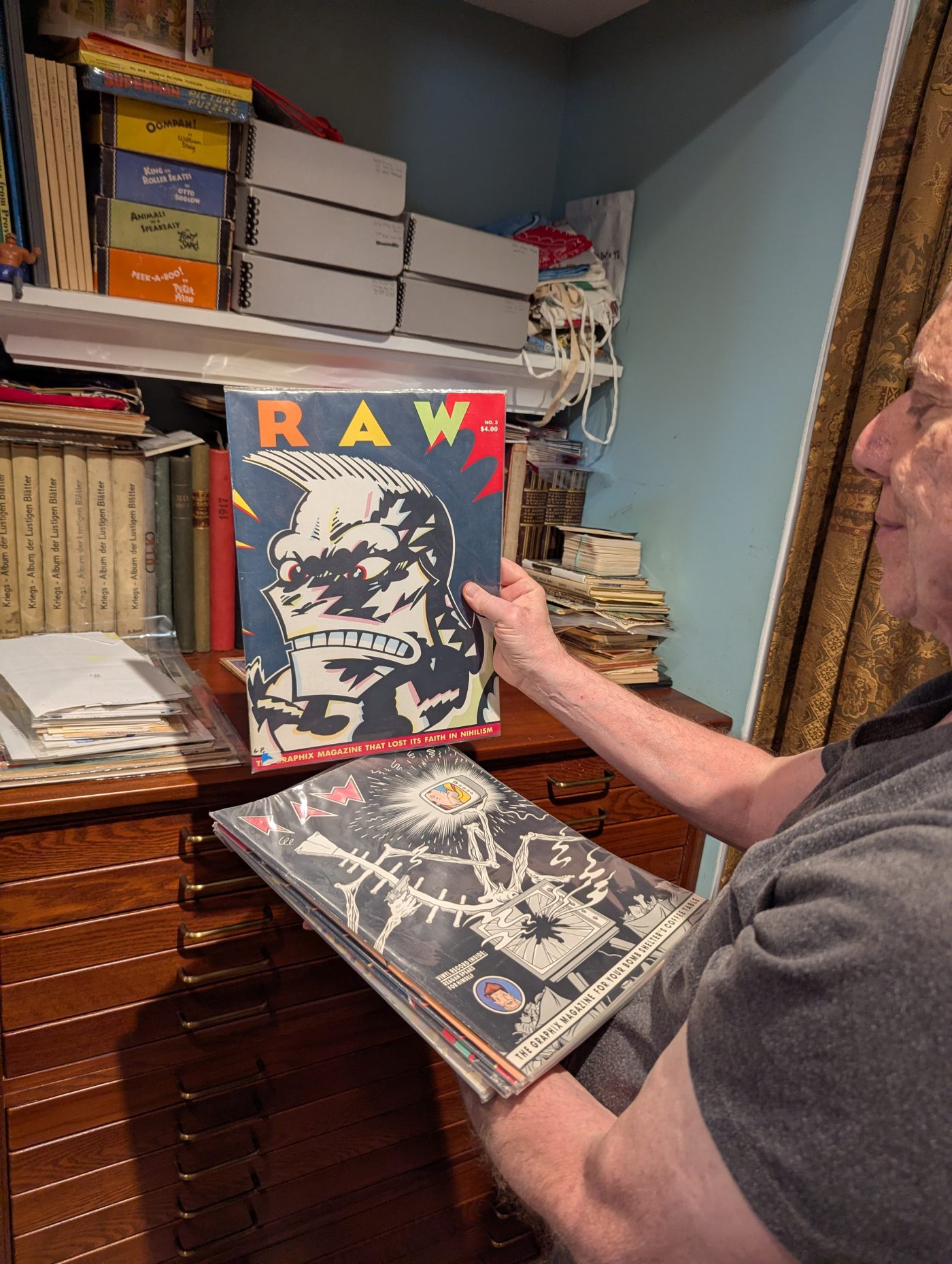
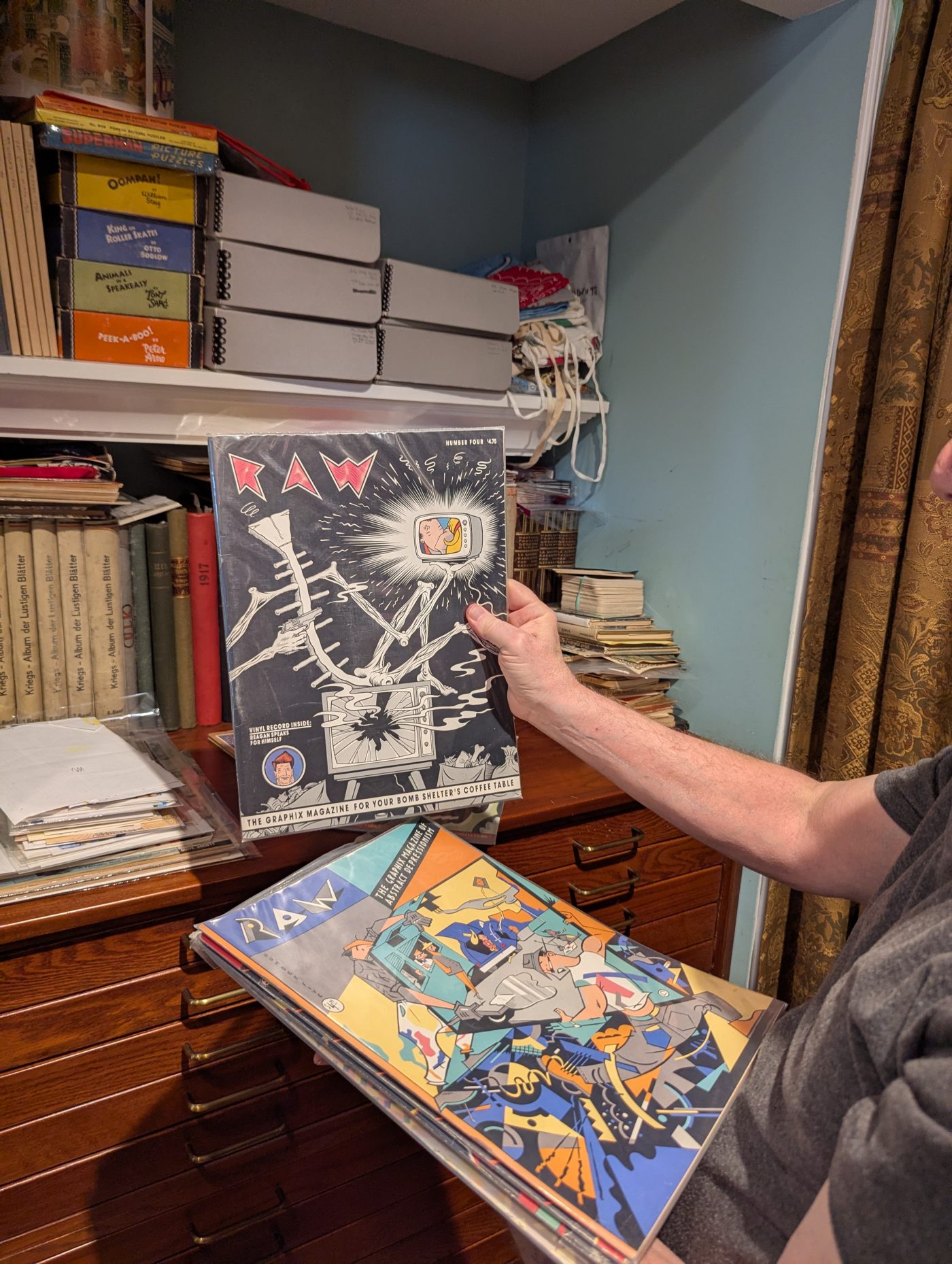
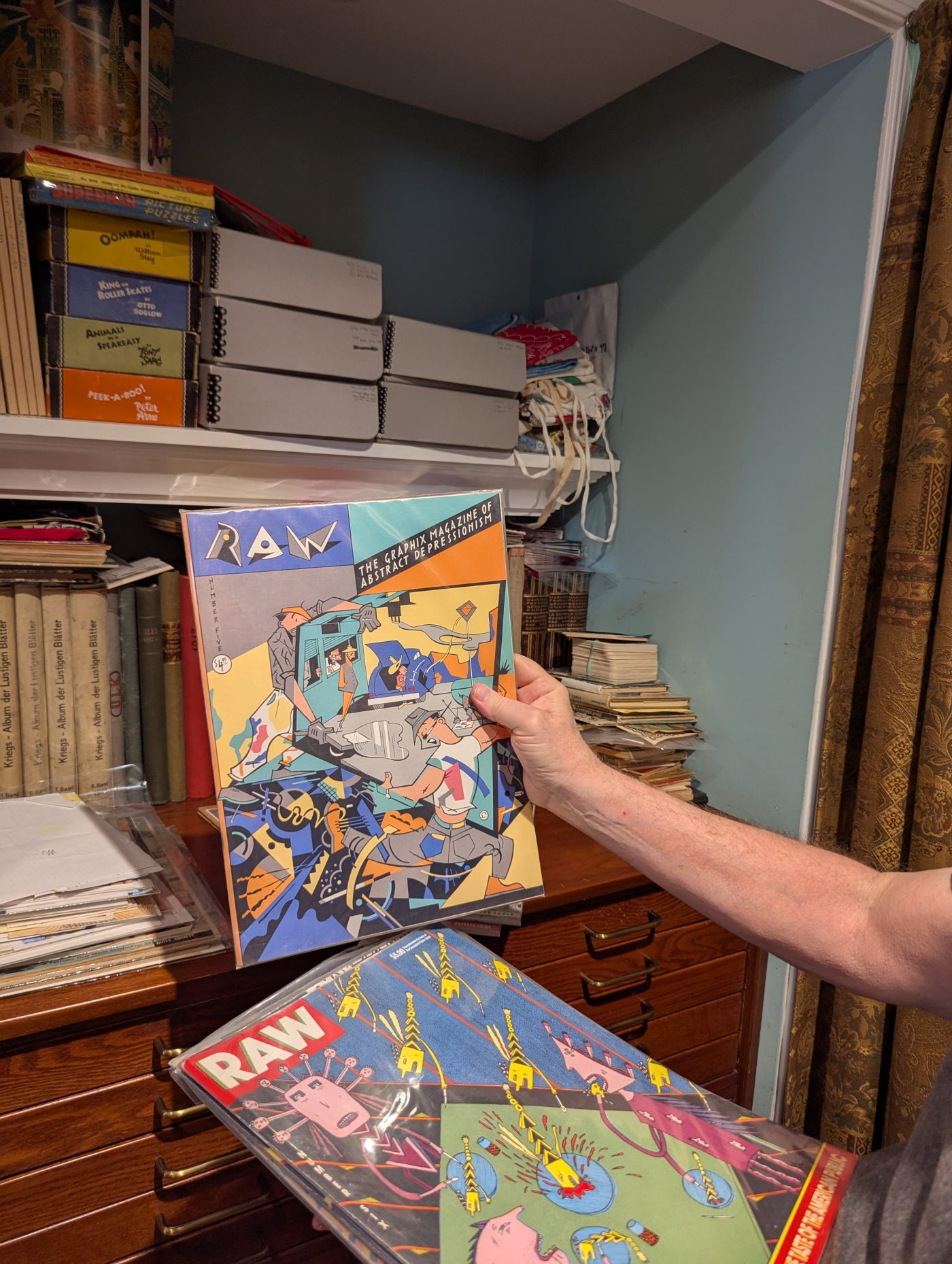
No, I got RAWbecause remember, that was different. That was sold in stores and bookstores. So I’ve got a complete set of RAW. I also have Breakdownsby Spiegelman. He came to an early SPX, and I was the only one in line with that version of that book, and he put a really beautiful drawing in it. And by the way, there’s another book that’s very difficult to find in first printing. I missed a lot. I’ve made up for some of it, and I’ve just resigned myself that I’d love to have that kind of a collection, but it’s not practical. If I do see stuff, I will buy it, but you don’t see that stuff. We were talking about the accordion books and stuff like that that I find. This is stuff that I’m living through, and I’m conscious of right now. These are the collections that I’m putting together to reflect that. I guess if I had been that aware during that 20-year time frame, I couldn’t fit all the stuff in my house [laughs].
There was a loss there, because I wasn’t reading it. So all the stuff I had to read, I had to go back. Looking back on it, my sister said it best, she says, “You know, Warren, you disappeared for about a decade.” I just wasn’t around. It prevented me from being there in the moment and collecting the things in the moment that I would have liked. But those shackles have been off for the last, like 20 years, and you’ll see some of the stuff that I’ve accumulated over that time.
How did you come to be director of SPX?
I’d been going to SPX for a couple years, and I said to myself, “You know, I wouldn’t mind volunteering”. So I volunteered behind the registration table for a couple hours. And then one year, it was like, let me go to one of the meetings. I came out of the corporate world, okay? I went to one of the meetings, and my eye rolling muscles got really, really, strong, really, really quick. So I started helping out on things. I started helping on PR, I started helping out on the exhibitors room. And then in 2010, issues came up and two people came and asked me if I would take over to clean things up. There was a lot of friction at that time with SPX. I just spent 20 something years in the corporate world, and I was this real background player in SPX. So I didn’t know any of the people. I had some ideas in terms of vision and what was going on, so I redid the corporate charter, changed the board. Brought in additional people. In fact, now, oh my god, we have got such a fantastic staff on SPX. It’s a program manager’s dream. Because all the people have their responsibilities. Didi [Blais] has got volunteers and Bailey [Kung]’s got the program guide, Rob [Clough] has got programming, I could go on, they are all great. All these people have their areas, and I don’t have to worry. I just go, “Do you have any problems over there that need to be taken care of?”
So on one side a team coalesced into what today is the backbone and foundation of pulling the show together. On the other side, the show was built up to the point that we’re in the space that we’re in now, which is literally over twice as much as what there was back in the old Holiday Inn. We have 283 tables. Anywhere between 450 and 500 creators come every year. But then the other thing that I did, was we got a lot more involved with the international community. Up until the budgets got cut, we got a lot of people coming over from the Netherlands. A lot of people coming over from Belgium. I talked previously about SPAIN arts & culture, they’re still around. Last year we had the cultural council from Estonia contact me about bringing an Estonian creator in. This year we’re gonna have more people from Spain. Taiwan – we’re getting our first people from Taiwan this year. We’ve got many more international people coming in.
We’ve got a great team, we put on a very favored show with a lot of people in attendance. I’ve been lucky. Well, luck is part of it, but also some of the things that I put into place. As a matter of fact, here’s a stat. Before I came along as executive director, the executive director only served three years. Next year, I will have served for exactly half of the life of SPX as executive director. My brain is still trying to comprehend that. I brought a little more business acumen because of my time in the corporate world. And I have really good people skills. I’ve gotten to know Denis Kitchen, Tillie Walden, Chris Ware and people like that. Chris has been here to see the collection a couple of times. When he was last here I caught him taking a picture of one of my shelves of Clare Briggs books. When Seth came here, he couldn’t believe I had all of the H. M. Bateman books on my shelf, he goes, “Oh my god, where’d you get all those?” So I’ve gotten to know all these people. My work background helped quite a bit in my tenure at SPX, and particularly the business stuff. Dealing with the contracts, dealing with the hotel, dealing with. I’ve handled large budgets. So I can do SPX. Cutting different kinds of deals.Between myself and this amazing team that we’ve got, we’ve been able to bring SPX to where it is today. And that is never a one person thing. It’s this team that we have. There’s about 15 of us. This team of 15 puts on SPX, and people have asked us actually, “How do you do it with so few people?” Now of course we have volunteers, and the day of the show that’s like 120 people. Part of it is being able to identify and help talented people do whatever their part is. The other part of it is being well organized. Anybody who works on SPX, they get a seat at the table. What that means is, something needs to be voted upon, they get a full vote. If they have an opinion on whatever the topic that’s being discussed they can go ahead and voice whatever that opinion is. You know, we’re running a comic book convention. We’re not in the Squid Gameworld of corporate America. We run this very egalitarian thing when we do have these monthly meetings, my job is to play moderator and facilitator. I normally don’t insert myself into the process. I just keep the gears oiled. It’s been fun. I’ve met amazing people. When I was in London recently, three or four people that I get together with, I met through SPX. When I go out west to L.A. there are people from SPX that I also see out there. And up in New York. A lot of these people I’ve met, I don’t know what my life would have been like without them. Because they’ve been such such great friends. To me, your life is made by the people you interact with. And if you do that well you’re going to have a happy life. I’ve got a really happy life and a lot of that happiness came from meeting cool people through SPX.
- First Fandom is an association of science fiction fans whose participation in the scene goes back to its earliest days.
- Two other notable members of the UMD Comic Arts Society at the same time were Gary Groth and Mike Catron, founders of The Comics Journal and Fantagraphics Books.
- I consider myself extremely well versed in comics history, but Arch Dale was new to me. As noted by the Lambiek Comiclopedia, The Doo Dads was a strip Dale created that was syndicated throughout the 1920s.
- Smoke Signalis a comics anthology from the Brooklyn, NY based publisher Desert Island, while Magic Bulletis from the DC Comics Conspiracy.
- Because this is the Library of Congress we’re talking about, you can actually browse details of that collection online. You can also browse the SPX Collection.
- LAAB Magazine was a tabloid series by Ronald Wimberly published by Behive Books. The numbering convention was indeed confusing. As best I can tell, it started with issue zero. Issue four was the second release, while #2 was the third. But I’m probably wrong about that. Comics!
- You won’t find a photo of it here (we don’t need that particular traffic at TCJ) but Warren has some extremely rare and historically interesting anti-semetic artifacts. Disgusting, yes, but at least it’s in good hands, and will stay that way.
- It was actually 2024. Regardless, you can read it right here at TCJ.
- Bill Blackbeard was a lifelong collector of comics, and donated his collection (comprising some 75 tons of material) to Ohio State’s Billy Ireland collection.
- Warren is correct is indeed thinking of Captain America Comics#27. Heritage Auctions recently listed a 7.5 graded copy for over $10,000.
- For many years Diamond Distribution’s Previewscatalog was how most comic shops in America chose what to carry.
