


ByContributor Content: Matthew Kayser
September 8, 2026
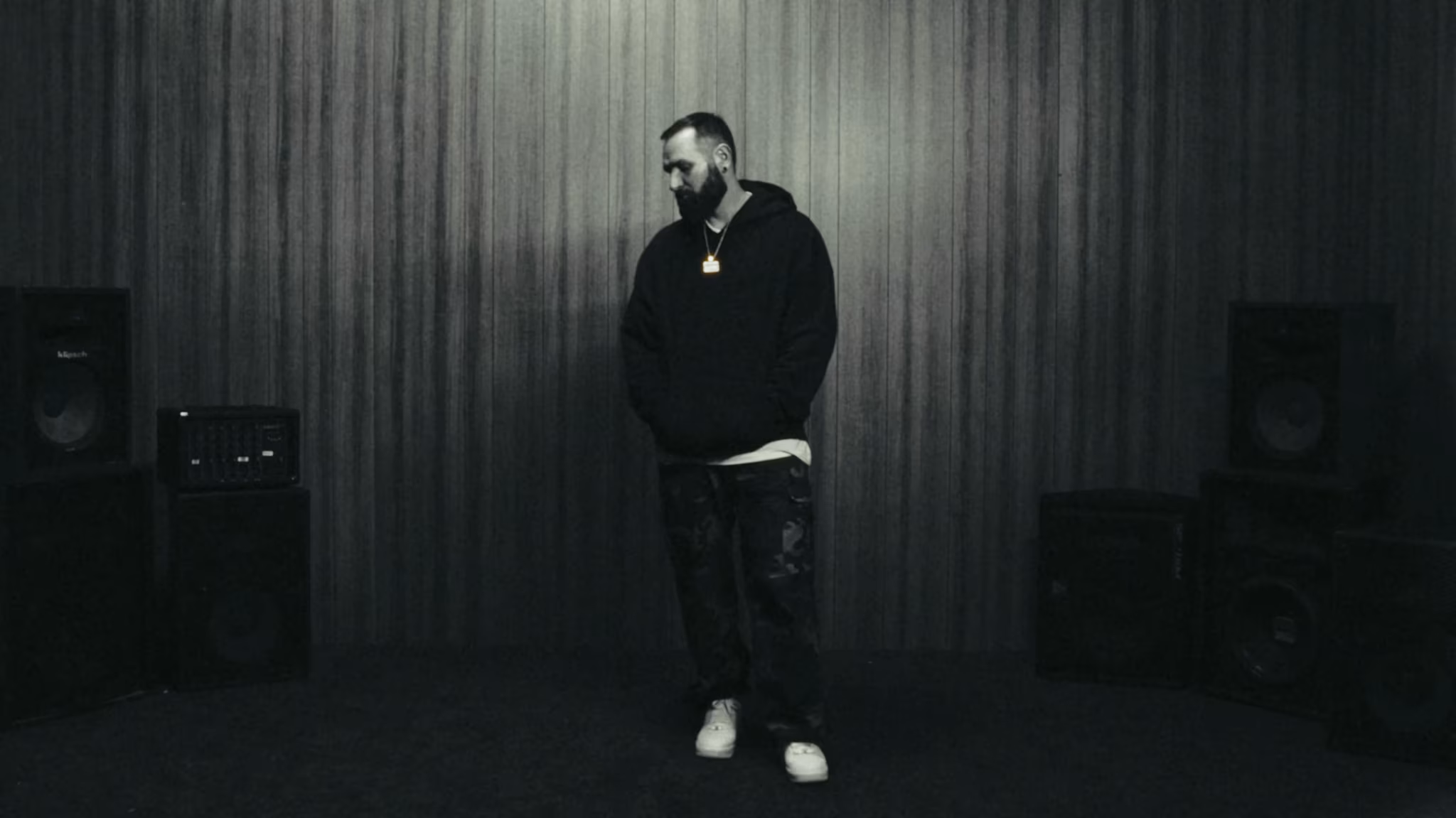
What are you really fighting for? This question sits at the heart of “Daily Bread,” the newest single from the independent artist BOTZY. It is an introspective track that explores the issues of ambition, betrayal, conflict, and looking for a deeper sense in everything.
The record was shaped in part by BOTZY’s growing relationship with faith, but its themes extend well beyond religion. While writing about betrayal and war, he began noticing connections between those subjects and the larger questions people have wrestled with for generations: What is worth sacrificing for? What makes a cause worth pursuing? And when does fighting for something begin to undermine the very thing you’re trying to protect?
One of the song’s most striking lines captures that tension: “Some pray for bread / Some pray for war.” For BOTZY, the contrast speaks to the things people choose to prioritize and the motivations that sit beneath those choices. “Maybe the prayer shouldn’t be for winning a war,” he says. “Maybe it’s for being fed enough that you never have to fight one.”
Finding a Reason Behind the Pursuit
The concept of purpose has become an important notion to BOTZY, especially as he advances in his career on his own terms. He is not concerned with the success of his music measured by industry awards or the validation he receives. Success for BOTZY lies in the impact of the music, which elicits a reaction in the listener.
“An impact. That’s really my fight at the moment,” says BOTZY. This doesn’t mean he has abandoned ambition; it just means his notion of it has shifted. A co-sign, or an award, might be meaningful within the industry, but not much compares to having your music help someone get through hard times, inspire someone, or simply make them feel understood.
That same philosophy informs the song’s exploration of relationships. BOTZY has experienced betrayal in different forms, times that have made him more attentive to the people he allows into his life. At the same time, he doesn’t believe the answer is to shut everyone out. Trusting people is something that involves risk, and denying yourself that risk leaves you alone. Trusting others and being willing to open up is necessary in order to build connections, even though those connections don’t always turn out favorably.
Looking Beyond the Battle
The idea of conflict expands throughout “Daily Bread,” giving the song a broader social dimension. BOTZY is interested in the amount of turmoil taking place around the world and how easily people can become consumed by opposing parties. His perspective isn’t rooted in choosing one side over another, but rather he questions the assumption that conflict automatically produces a winner.
BOTZY thinks that this idea extends into the way people interact and treat each other. The way that people act towards one another can make conflicts more probable because of opposition, different ideas, appearances, and behaviors. He wishes for “Daily Bread” to make people rethink their engagement in these conflicts and truly examine if they support what they are going against.
“If you fight for something and then act against it, you’ve already lost,” he says.
Turning the Message Into a Visual
As for the music video of “Daily Bread,” it becomes much more abstract and surreal. Directed by Nate Rose & David Piersaul, the video shows scenes of isolation with BOTZY surrounded by landscapes and elements of destruction such as burning bridges and wolves among sheep.
The imagery was designed to create tension rather than provide a literal interpretation of the lyrics. BOTZY wanted his isolated scenes to contrast with the scale of the destruction surrounding them, giving the video a sense of distance while keeping the focus on the individual. This technique reflects the way BOTZY wrote the song itself. He intentionally kept the writing for “Daily Bread” open-ended.
Watch the music video for “Daily Bread” on YouTube here:
