

Pioneering astronomer Carl Sagan once wrote that “The universe is a pretty big place. If it’s just us, seems like an awful waste of space.” On screen, the vastness of the universe and the possibilities of extraterrestrial life have provided endless fodder for storytelling. Over the last seven decades, writers and producers have turned aliens into a near-constant presence on television, turning the existential questions Sagan often pondered into must-see TV.
What we’ve come up with here is a list of the cream of the alien crop (circle) — our favorite TV shows concerning extraterrestrial life. While many of these series are straightforward science fiction, this list also includes comedy, as well as shows that mix genres to great effect. We’re covering cult classics, long-running TV institutions, trailblazing productions, familiar favorites, and a few newer entries. Board your spaceships now: these are the 15 best TV shows about aliens.
The X-Files
Has there ever been a show with more iconic alien-themed iconography than “The X-Files”? We’d be hard-pressed to think of one. Though the show isn’t entirely about aliens, Fox Mulder’s (David Duchovny) “I Want To Believe” poster serves as the central ethos of the series. As a semi-disgraced FBI agent, Mulder works alongside Dana Scully (Gillian Anderson), a scientist and alien skeptic. Together, they investigate bizarre cases for the FBI, ranging from extraterrestrial phenomena to mythical creatures.
Though the show’s monster-of-the-week formula includes supernatural occurrences of all types, the series-long “X-Files” lore, which concerns the mysterious Cigarette Smoking Man, the disappearance of Mulder’s sister, and a vast government conspiracy, has aliens at its center. Some of the best “X-Files” episodes are about aliens, including the classic baseball episode “The Unnatural” and the hilarious “Jose Chung’s From Outer Space.” Mulder and Scully’s skeptic/believer dynamic (and the entirety of their complex relationship) is the most compelling aspect of the show, and the supernatural genre wouldn’t be the same without the beloved duo.
Resident Alien
“Resident Alien” is a clever, hilarious mashup of genres, and one of the most unique shows on this list. Based on a comic book series of the same name, the show stars Alan Tudyk, who you’ve previously seen traversing outer space on “Firefly.” Tudyk plays an alien who travels to Earth on a mission to destroy humanity. He arrives in the town of Patience, Colorado, and assumes the identity of Harry Vanderspeigle. Living as Harry, he eventually grows fond of the residents of Patience and reneges on his destructive directive. Instead, Harry undertakes a new mission: protecting his neighbors from other alien invasions, often working alongside his BFF, Asta Twelvetrees (Sara Tomko).
The show features a wonderful ensemble, and Patience feels like a real, lived-in town. But Tudyk is driving this spaceship, and he delivers a career-best performance, imbuing Harry with (oddly enough) humanity and a delightful fish-out-of-water quality. The show is uproariously funny, featuring bold gags and gross-out humor, but also deeply heartfelt, asking questions about what it means to be human and a good neighbor. The show retains its quality all the way through, and is a rare sci-fi show without a bad season.
Star Trek: Deep Space Nine
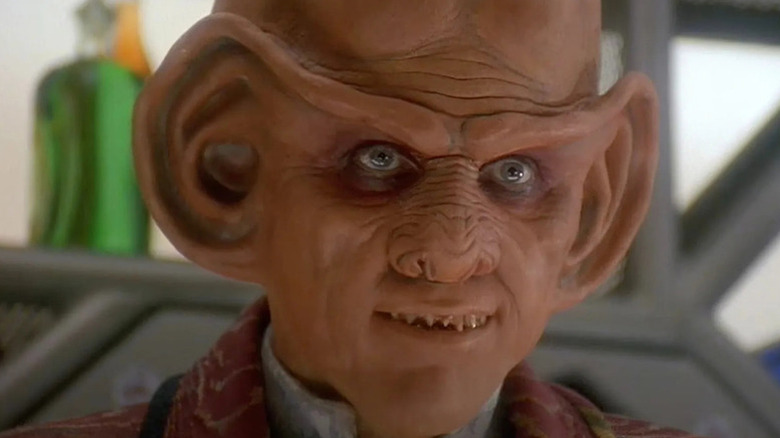
Picking a favorite “Star Trek” series is a subjective (and controversial) endeavor, but for this list, we’ve chosen the series that most profoundly speaks to the question of aliens, and that is “Deep Space Nine.” In many ways, “Deep Space Nine” was a departure from the typical “Star Trek” format. For one thing, the characters aren’t boldly going anywhere — they live on a static space station, where most of the action takes place. It’s also the first “Star Trek” series to regularly use serialized, long-form storytelling, with season-long and series-long arcs.
Because the “DS9” characters aren’t traveling to other planets, the aliens are aboard the space station itself, comprising many of the show’s main and supporting characters. “DS9” was the most morally complex “Star Trek” series to date, tackling war, religion, and genocide like never before. It uses its alien characters and the conflicts they face to comment on social ills like racism, homophobia, and fascism, and it suggests that Starfleet officers are not always in the right. As showrunner Ira Steven Behr argued in a DVD commentary, “even though it has the most aliens, it’s truly the most human [‘Star Trek’ show].”
Alien: Earth
We’ve only seen one season of “Alien: Earth” so far, but it’s already proven itself to be one of the best alien shows in the galaxy. Created by Noah Hawley, the man behind “Fargo” and “Legion,” the show is a continuation of the “Alien” franchise. Set two years before the first “Alien” film, the show takes place in a world where governments no longer exist — humankind is ruled by five massive corporations. A Weyland-Yutani ship carrying alien specimens crashes into Earth, landing on a territory run by Prodigy.
Meanwhile, the young CEO of Prodigy, Boy Kavalier (Samuel Blenkin), lives on a research island and is experimenting with implanting human consciousness into synthetic bodies. His first test subject is Wendy (Sydney Chandler), a terminally ill girl given a brand-new adult body. Other experiments follow.
While the show is about synthetics and cyborgs as much as it is about aliens, “Alien: Earth” offers up some fascinating new creatures that scare our socks off. The series features amazing production design, and the acting, particularly Chandler’s performance as a girl in a woman’s body, is top-notch.
Doctor Who
“Doctor Who” is undoubtedly the most beloved alien show in the British canon, though its vision of extraterrestrials is far from little green men. The BBC series, which first broadcast in 1963 and was revived in 2005, follows an alien also known as a Time Lord. Using their time machine (called the TARDIS), the Doctor travels across time and space, going on adventures and helping people in need. The Doctor is usually joined by a companion, most often an ordinary human, to help aid in these quests.
Because the Doctor regenerates into a new body after each lifecycle, fourteen different actors have played the character over the last 60 years. Owing to this clever narrative feature, the show is endlessly malleable, giving each actor space to put their own spin on the character. While “Doctor Who” is a science fiction show and the Doctor is indeed an extraterrestrial, this broad structure allows the show to experiment with structure, mixing different genres and taking creative leaps that keep fans coming back for more. The spinoff series “Torchwood” is another excellent entry in the alien canon.
The Mandalorian
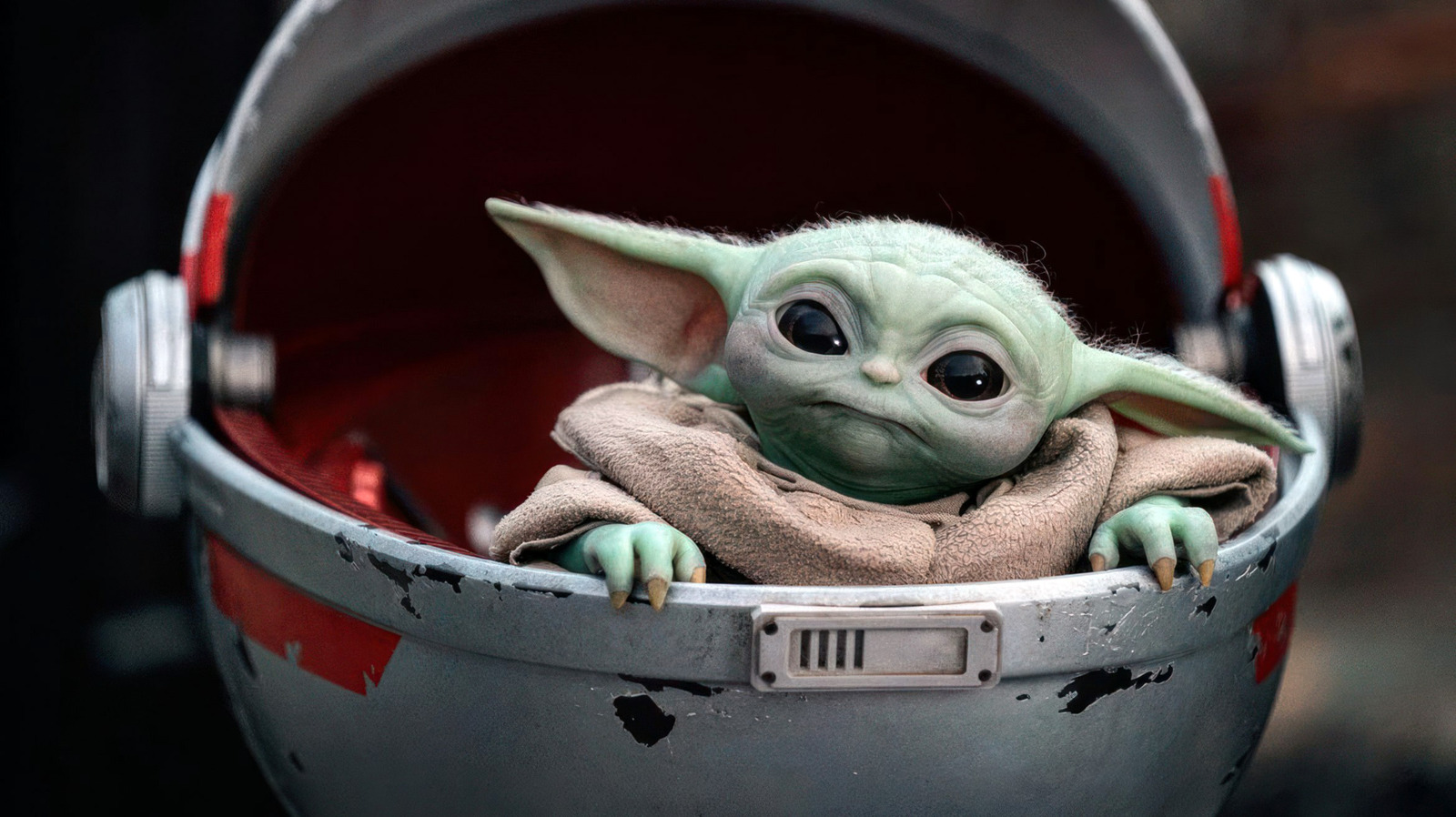
As the first live-action series in the “Star Wars” universe, “The Mandalorian” revived the franchise when it premiered on Disney+ in 2019. Opening with a fantastic sci-fi pilot, the series stars Pedro Pascal as Din Djarin, a bounty hunter tasked with hunting dangerous folks all across the galaxy. When he’s ordered to eliminate Grogu, an infant who comes from the same species as Yoda, he refuses the job and becomes Grogu’s protector instead.
“The Mandalorian” prioritizes fun above all else, and that’s what makes it such a successful “Star Wars” show. It’s essentially a space western, following Din and Grogu as they travel across the galaxy completing dangerous missions. The show is at its best when it maintains a small scope, focusing on Din’s adventures rather than the larger story of the “Star Wars” universe. Indeed, the show’s quality drops in Season 3 as it seeks to connect Din’s story to other elements of the franchise. Still, “The Mandalorian” gave us Grogu, one of the best (and cutest) “Star Wars” creations of the last two decades, so we can’t fault it too much.
The Outer Limits
“The Outer Limits” premiered in 1963 in the wake of the hugely popular “The Twilight Zone,” and it stands as one of the best TV shows of the 1960s. Like “The Twilight Zone,” it’s an anthology series, though it deals more explicitly in science fiction and horror themes. Many of the show’s best episodes revolve around aliens, including “The Zanti Misfits,” which centers on an alien penal colony, “Corpus Earthling,” about invading extraterrestrials who look like rocks, and “Demon with a Glass Hand,” which follows a man on the run from alien soldiers.
Created by Leslie Stevens, “The Outer Limits” featured a talented cadre of young writers and directors, including famed science fiction writer Harlan Ellison. On the acting side, the series boasts stars like Robert Duvall, William Shatner and Leonard Nimoy (in different episodes), Adam West, Martin Sheen, and Chita Rivera. The show is legitimately scary in a way that still holds up today, and it features innovative visuals, including an alien brought to life using a photo-negative effect in the pilot episode.
Babylon 5
Warner Bros. Home Entertainment
“Babylon 5” is an epic sci-fi series that feels shockingly relevant and prescient in the 2020s, and though it’s from the ’90s, it totally holds up today. The incredibly underrated sci-fi series takes place in the 23rd century, several years after humanity was almost annihilated by an alien race called the Minbari. The protagonists of the series live aboard the Babylon 5, a space station that acts as neutral territory for hostile forces and becomes increasingly central as intergalactic conflict brews.
An expertly plotted space opera, “Babylon 5” eschews typical case-of-the-week narratives of the era, instead delicately spinning a five-season-long arc that’s as ambitious as it is satisfying. Though the show places a lot of importance on plot, the character work is also essential, as villains change their tune and heroes lose their courage. Amidst profound stories about war, authoritarianism, religion, and propaganda, you get fun space adventures and characters you come to care about. It’s brilliantly executed, and expects viewers to use their brains while having a good time.
The Quatermass Experiment
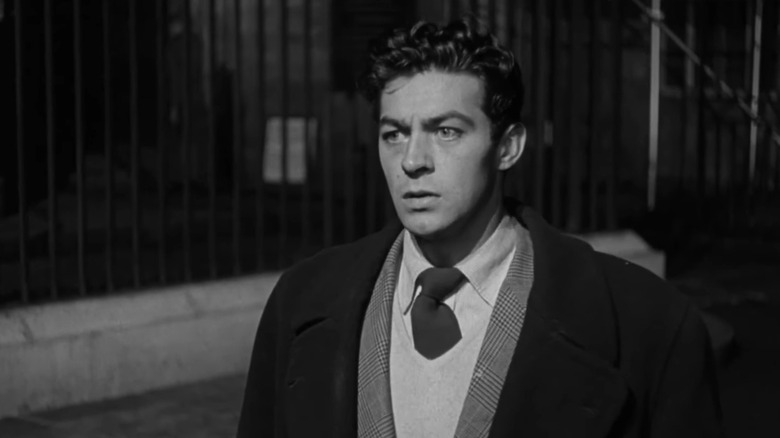
“The Quatermass Experiment,” which first aired in 1953, is one of the most important sci-fi programs of all time. Created by prolific British screenwriter Nigel Kneale and directed by BBC mainstay Rudolph Cartier, the British serial follows Professor Bernard Quatermass (Reginald Tate), a scientist overseeing the first astronauts to travel into outer space. Upon their return, it becomes apparent that something has gone awry, and that an alien has returned to Earth with the crew.
“The Quatermass Experiment” was the first sci-fi drama for adults to air on the BBC, and it’s been hugely influential for the genre and television in general. It was an early example of serialized storytelling, using cliffhangers to keep audiences hooked from week to week. Its influence can be seen in shows like “Doctor Who,” especially during the 1970s, and in the eerie atmosphere of “The X-Files.” The initial series spawned two more serials in the 1950s, as well as several movies (as seen above), miniseries, and radio programs. The show’s Cold War anxieties generated a creeping sense of dread and unease that would come to define the sci-fi and horror genres in years to come.
Stargate SG-1
“Stargate SG-1” is a great example of a TV show adapted from a film, having emerged from a 1994 movie and running for an impressive 10 seasons. The show follows soldiers and scientists working at a secret military facility known as Stargate Command. This intrepid team uses an alien portal called Stargate to explore the universe, traveling to other planets to rally support from allies and prevent attacks on Earth. Air Force veteran Jack O’Neill (Richard Dean Anderson) leads the group, which also includes Egyptologist Daniel Jackson (Michael Shanks), astrophysicist Samantha Carter (Amanda Tapping), and alien Teal’c (Christopher Judge).
Through their travels, the Stargate team learns about the surprising origin stories of ancient myths and religions on Earth, which are the result of intergalactic alien travel. Though the show features fascinating lore and world-building, it never loses track of what’s important. According to “Stargate SG-1” co-creator Brad Wright, the rule that guided the series was “A story must have heart,” and this emphasis on emotional storytelling and character growth is the key to the show’s success.
Alien invasions often emerge as incisive allegories for the rise of fascism, and few sci-fi shows make this allegory clearer than “V,” a two-part miniseries from 1983. Written and directed by Kenneth Johnson, creator of “The Bionic Woman” and “The Incredible Hulk,” the show follows a group of aliens, known as the Visitors, who land on Earth. They ask for help in procuring chemicals for their planet and offer scientific breakthroughs and education in return. They look mostly human, and their offerings of knowledge and power are too good to pass up, so most of the population, including the government, acquiesces.
It’s too good to be true, of course. An intrepid journalist discovers they’re actually terrifying reptilian creatures who munch on rats and birds, and a small group of resistance fighters works to expose the truth before it’s too late. “V” boasts memorable visuals and inventive character design, but it’s the eerily prescient storytelling that’s really stood the test of time. The 2009 remake cleverly updates the story for a new era, but the original is unbeatable.
3rd Rock from the Sun
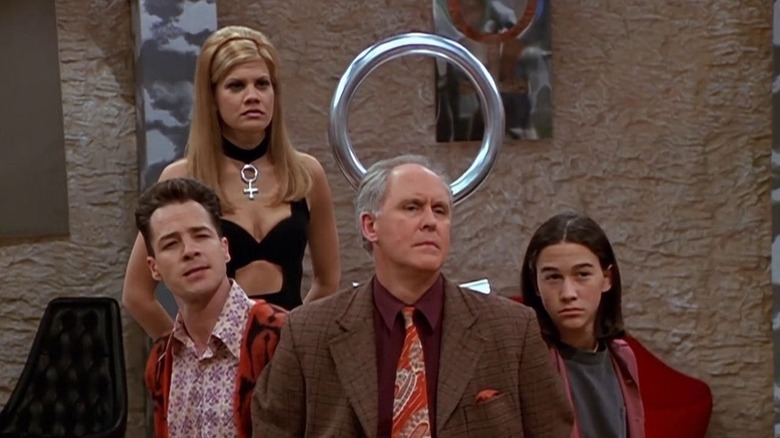
Created by Bonnie and Terry Turner, who also co-wrote “Coneheads” and created “That ’70s Show,” “3rd Rock from the Sun” is a great addition to the “aliens living as humans” genre. John Lithgow plays Dick Solomon, the alien commander of an expedition to Earth. He’s joined by Sally (Kristen Johnston), Harry (French Stewart), and Tommy (Joseph Gordon-Levitt), the eldest in the group who’s forced to live in a teenage body. The leader is known as Big Giant Head, and when he appears in person, he is played by William Shatner.
“3rd Rock from the Sun” is a classic fish-out-of-water tale played to maximum absurdity. The show is filled with hilarious misunderstandings and physical humor as the Solomons attempt to learn the ways of humans. Still, despite all of the hijinks, the series stays surprisingly grounded, centering on the very human experience of assimilating into a new culture and finding your identity.
Farscape
Instead of depicting a world striving for utopia like in “Star Trek,” where characters behave like the best versions of themselves and always fight for justice, “Farscape” features extremely flawed characters just trying to get by rather than save the world. The series follows John Crichton (Ben Browder), an astronaut from Earth who falls through a wormhole and winds up on the other side of the universe. He links up with a ragtag group of escaped prisoners on the spaceship Moya, on the run from the oppressive Peacekeepers.
Crichton and the Moya crew are just trying to survive and get home, but they inevitably get caught up in a dangerous conflict with the Peacekeepers. Meanwhile, all sorts of romantic entanglements, interpersonal conflict, and betrayal define life aboard the ship. The design of the alien characters was done by the Jim Henson Company, giving us some wonderfully creative makeup and costumes. “Farscape” is really strange in the best way, and has become a cult classic thanks to its consistently fun storylines and campy visuals.
Smallville
The CW series “Smallville” is one of the best superhero TV shows of all time. It’s also an alien show, as Clark Kent hails from the planet Krypton. In this iteration of the Man of Steel’s iconic origin story, Tom Welling plays Clark, who begins the show as a high school student in Kansas. Much of the series follows him as he reckons with his identity as a Kryptonian and his supernatural abilities, gradually coming into his identity as Superman by the series’ end.
The show also features Lana Lang (Kristin Kreuk), a popular cheerleader who becomes a love interest for Clark, and Lex Luthor (Michael Rosenbaum), Clark’s friend and later his biggest nemesis. Though the series is technically about an alien and tackles one of the most famous American superhero stories of all time, at its heart it’s a well-told coming-of-age tale that just happens to be about a super-powered extraterrestrial. Indeed, one of the reasons it’s such an enjoyable show was because the creators of “Smallville,” who rightly believe the show couldn’t be made today, weren’t constrained by lore and were able to tell the story they wanted to tell regardless of canon.
Mork & Mindy
“Mork & Mindy” is probably the most unlikely success on this list, though in hindsight, its popularity isn’t that surprising. The series began as a backdoor pilot on “Happy Days,” with Robin Williams playing Mork, an alien from the planet Ork who appears in Richie’s (Ron Howard) very vivid dream. The spinoff revealed that Mork wasn’t a figment of Richie’s imagination after all, and sees the dorky alien touch down in Boulder, Colorado, in his egg-shaped spaceship. He meets kind human Mindy (Pam Dawber), who offers him a place to stay.
Humor isn’t allowed on Mork’s home planet, so he takes the opportunity to let his freak flag fly while on Earth. The same is true of Robin Williams, who is often seen nearly bouncing off the walls with infectious oddball energy. According to “Happy Days” star Henry Winkler, “Mork & Mindy” scripts were unusually short, and often featured a note that simply read, “Robin will do something here.” His time on “Mork & Mindy” made Williams a star, as audiences everywhere fell in love with his zany comedic stylings. Dawber’s Mindy was also an essential part of the formula, playing the straight man to Williams’ odd duck. One of the goofiest alien shows to date, “Mork & Mindy” works because of Williams’ sheer brilliance.

1 Comment
Pingback: ‘Evil Dead’ star Bruce Campbell says he has five years to live after cancer diagnosis - Comic Vibe