

Video Games
How Capcom Cracked the Code of Game Development
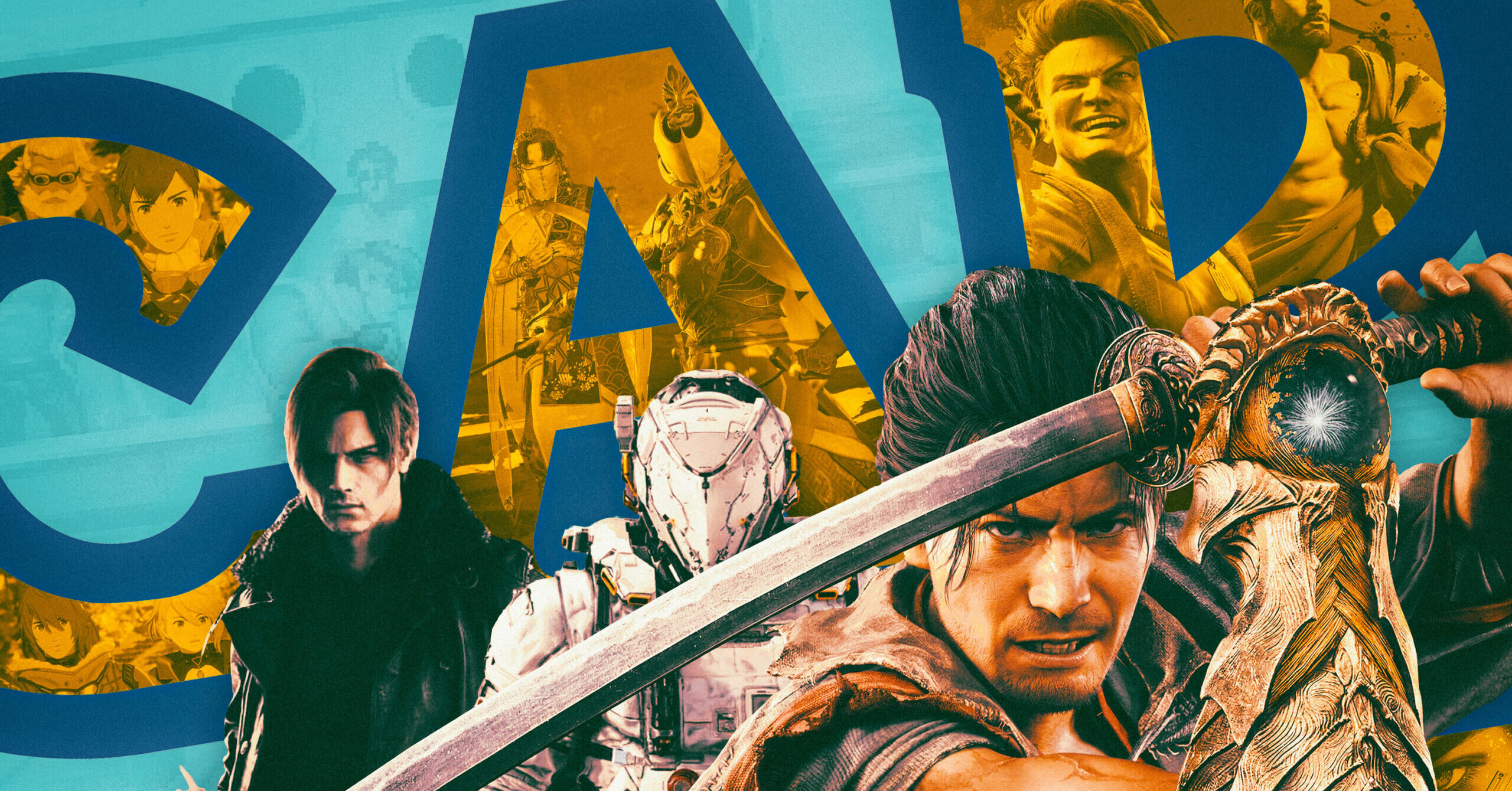
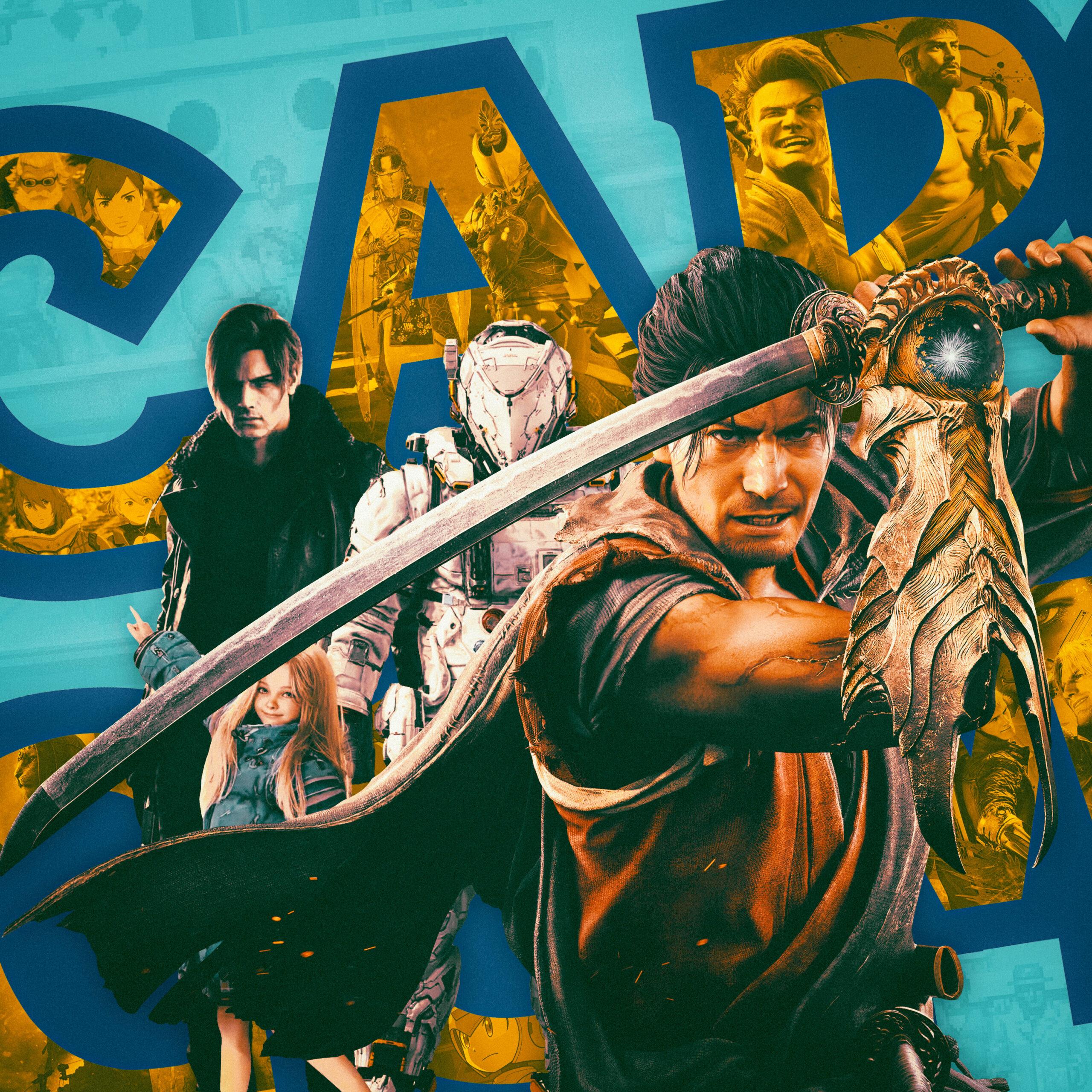
The video game industry is in turmoil, but 2026 could be Capcom’s career year. How does the company behind ‘Resident Evil Requiem,’ ‘Pragmata,’ and ‘Onimusha: Way of the Sword’ keep pumping out hits?
Video Games
The video game industry is in turmoil, but 2026 could be Capcom’s career year. How does the company behind ‘Resident Evil Requiem,’ ‘Pragmata,’ and ‘Onimusha: Way of the Sword’ keep pumping out hits?
ByLewis GordonSept. 3, 10:20 am UTC
• 21 min
Satoru Nihei knows there’s a lot riding on Onimusha: Way of the Sword. The new samurai action game, a scintillating fusion of cutting-edge swordplay and imaginative, often grotesquely realized Japanese folklore, is a reboot of a franchise that has lain dormant for 20 years. More than that, the game is the third major release of 2026 from Japanese giant Capcom: It follows the acclaimed launches (in February and April, respectively) of Resident Evil Requiem, the ninth mainline entry in the venerable action-horror series, and Pragmata, a brilliantly fresh sci-fi shooter starring astronaut Hugh and creepy-cute android girl Diana. That’s not even counting March’s Monster Hunter Stories 3: Twisted Reflection, the latest entry in a well-received series of Monster Hunter spinoffs. On their own, each of those games would be a tough act to follow. Taken together, the challenge verges on monumental.
“Players have been very happy with those titles,” says Nihei, Onimusha’s director, through an interpreter from the Capcom headquarters in Osaka, Japan. He is dressed sharply, in a floral shirt set above a crisp white tee, with chic glasses that forgo a top rim, and he speaks with understated modesty. “We definitely feel a bit of pressure on our side to be able to deliver something equally as interesting as those Capcom titles,” he says.
Nihei’s colleague, Onimusha producer Akihito Kadowaki, also admits to feeling a little anxious, although he isn’t really able to indulge such emotions on the cusp of the game’s release. In mid-August, the week I speak with Nihei and Kadowaki, Capcom is starting a marketing campaign that introduces expectant players to its hero, the battle-hardened though nonchalant Miyamoto Musashi, and a supporting cast of friends and foes including the big-bellied and handsomely bearded Ono no Takamura, a reassuring, fatherly presence in the otherwise demonic action experience. Soon after our video call, the team will jet off to Gamescom in Cologne, Germany, to preview the game for both press and the public. “We’ve really not had any time to worry about being nervous,” says Kadowaki. “We’re just excited for players to get their hands on the game and see what we’ve been working on.”
Whatever nerves may have existed before Way of the Sword’s release have presumably dissipated by now. When the review embargo lifted on Monday, the game scored glowing praise: IGN dished out a rare 10 out of 10, describing it simply as a “damn fine action game.” Eurogamer awarded it four stars, writing that “Capcom has once again shown us it is a master of its craft.” PC Gamer, meanwhile, referred to its deadly samurai duels as a “strong contender for the best combat of the year.”
The Onimusharevival, the first new major game in the series since 2006’s Dawn of Dreams, doesn’t just bookend a sparkling 2026 for Capcom; it’s the latest title in an all-time run of acclaimed releases. Almost every major gaming publication, including Kotaku, IGN, Game Informer, and Gamespot, has in the past few years published words to the effect of “hot streak,” “winning streak,” or “golden age” to describe the deluge of stone-cold action bangers that the revered Japanese outfit has produced with almost machinelike consistency. The run includes 2024’s open-world critical darling Dragon’s Dogma 2, whose quintessential fantasy adventure is borne by crystalline, airtight design logic, and crowd-pleasing 2019 romp Devil May Cry 5, which somehow upped the popcorn spectacle of the already ludicrously over-the-top action series. The hot streak even has room for a curio like 2025’s Kunitsu-Gami: Path of the Goddess, an odd though supremely captivating mingling of tower defense and hack-and-slash action with some of the most sumptuous visuals of the current console generation (the painstakingly 3D-scanned costumes are to die for).
Excluding remakes and remasters, there have arguably been only two creative misses in the past decade or so: 2023’s Exoprimal, an online-multiplayer dino romp, which received an aggregate rating of 69 on Metacritic across all platforms, and the 2021 reboot of action-platformer Ghosts ’n Goblins, which scored a 73.5. Everything else has comfortably scored north of 80. The sheer quantity of quality is striking.
“The current age is both a refinement and more experimental than we give it credit for,” says Will Borger, the IGNcritic who just gave Onimusha: Way of the Sword its perfect score. “Capcom is kind of unique in that they have their big franchises—Resident EvilandMonster Hunter are the elephants in the room—but they use them to subsidize smaller, riskier games. Dragon’s Dogma was a risk. Pragmata was a risk.”
You may have a soft spot for the era in which you first encountered games developed and published by Capcom, which was founded in 1983, with corporate predecessors that dated back to the ’70s. Perhaps you’re partial to its arcade heyday in the mid-1980s, which features action-platformer classics like Strider. Or its fighting game ascendancy in the early ’90s, spearheaded by Street Fighter II. I came to Capcom in the early 2000s, a little after the release of pioneering 3D efforts like the original Resident Evil, which arrived in 1996. On long, aimless weekends, I would fire up my PlayStation 2 and hunker down in the basement, spellbound by Capcom action magic. Specifically, I was enraptured by the fast and furious Devil May Cry and Viewtiful Joe games, which didn’t seem to be about only winning or completing a level, but were also about expressing oneself through spectacular, symphonic combat.
Capcom, then, has had many great eras. That is, except for the one from approximately the mid-2000s to mid-2010s, when the company’s output was so confused and lackluster that it was dubbed “Crapcom” by merciless fans. Still, Serkan Toto, a longtime analyst of the Japanese game industry, is unequivocal about the company’s current standing. “This is not a renaissance,” he says from his Singapore office. “Capcom was never as big as it is right now.”
Toto, who also provides advice to gaming investors, points to Capcom’s stock price in recent years. At the start of 2017, Capcom’s shares sat at a little over 375 yen, or $2.35 in today’s dollars. By 2025, it had bubbled up to more than 5,400 yen, some $33.70, an increase of approximately 14 times. “That tells you everything you need to know about how the market is appreciating Capcom’s earnings rise,” says Toto. Earnings jumped from $527.1 million in net sales for 2017 to $1.2 billion in 2026, with the latter financial year seeing more than 59 million units sold, a greater number than in any other time in Capcom’s 43-year history.
Context is everything: Capcom’s game makers and C-suite executives have pulled off this winning run while the wider video game industry, at least in North America and Europe, has become mired in successive crises. Sony has spent hundreds of millions of dollars pursuing a mostly failed live-service strategy; Microsoft, under new leadership, is shedding Xbox studios amid dwindling profits; and many of the outfits that were acquired a few years ago by companies like Embracer and Tencent have been either shut down or handed back to their owners. Since 2022, an estimated 42,400 video game workers have lost their jobs, a figure that led famed designer Brenda Romero to opine that the present feels “crashier” than the actual video game crash of 1983, when an estimated 90 percent of the industry’s total value was wiped out (with consumer spending shrinking from some $2 billion to roughly $200 million).
Yet Capcom seems stronger than ever, for a multitude of factors according to those who know best. “People talk about this hot streak,” says Masachika Kawata, the lead producer of both Resident Evil Requiem and Pragmata. “But, really, there isn’t a single reason for the success.”
Kawata has been with the company since 1995. He exudes confidence, sitting back in his chair while casually directing the flow of conversation, often teeing up his colleague Masato Kumazawa, to answer a question. Still, he continues, “If you want to zoom out to a more macro level, the RE Engine [Capcom’s in-house game-making software] is a huge factor.” The veteran producer’s perspective fits the timeline of Toto’s stock market analysis. “Before 2017, Capcom’s stock price was relatively flat,” says Toto. “Something big happened that year.”
That “something,” asserts Toto, was Resident Evil 7: Biohazard, the very first Capcom game to use the RE Engine and the catalyst for this ongoing period of “explosive” financial growth and sterling creativity. According to critics such as Simon Parkin for The Guardian, the game was an imaginative return to form, “breezily new, yet quintessentially in character with its illustrious forbearers.” The action was viewed in first person after two decades of third person, which coincided with an emphasis on immersive, claustrophobic terror and a decrease in the shotgun-blasting violence the series had become best known for since 2005’s Resident Evil 4.
Resident Evil 7, whose development began in 2014, might be seen as the start of Capcom betting big on itself by coming to the realization that it alone could engineer the company’s future success, as the in-house RE Engine attests to on a technical level.
The years prior, in the late 2000s and early 2010s, were, to put it plainly, a mess for Capcom, both commercially and creatively. The company closed 2009 with a 73 percent profit drop, and it had a further 43 percent profit loss at the start of 2010 following the underperformance of Lost Planet 2and Monster Hunter Tri. Taken in tandem with the high-profile failures of projects that Capcom had entrusted to international developers, such as 2012 shooter Dark Void, this led to public statements from Capcom to investors about “radical” R&D restructuring. This was a bid to centralize decision-making and production—in essence, to bring game development back home to Japan.
One former U.S.-based Capcom employee who prefers to remain anonymous recalls the time as one rife with soul-searching. It was a case of Capcom “recalibrating,” they tell me. “What are our strengths? We know we’ve had success. We know we have great people. We know we can do things right.”
The nadir of these wilderness years was 2012’s Resident Evil 6, which launched to almost unanimously lukewarm reviews. The game was emblematic of a broader Capcom identity crisis (not to be confused with Dino Crisis): It contains no fewer than six playable characters and three unique story lines, aiming to cater to every type of Resident Evilfan while spreading itself too thin to appeal to any of them. At the time, Kawata, who would achieve precisely that crowd-pleasing synergy with Requiem, was quoted as looking to Call of Dutyfor inspiration. According to the producer’s theory, the globally beloved Resident Evilshould be doing numbers similar to those of the juggernaut military shooter series. If it was going to achieve that, the series needed to break out of its niche survival-horror box. But sales failed to meet Capcom’s internal expectations: The game sold 4.5 million units initially, but there was a steep drop-off thereafter.
Yet it was that kind of dud that set the stage for Capcom’s comeback. “If someone on the outside looking in thinks, ‘Wow, Capcom is on a real hot streak,’ it’s only happened because Capcom has failed a lot,” says Kawata. He admits to having “failed” himself, although he tactfully deflects a question about specific bombs with a joke, perhaps out of respect to his colleagues. “I’ve failed so many times, it’s hard to pick a single one,” he says, laughing.
During this era, the early-to-mid-2010s, Capcom was simultaneously looking inward and outward. It looked inward by returning Resident Evil to its outright horror roots, and also, Onimusha: Way of the Sword producer Kadowaki says, by backburnering its mobile ambitions to refocus on its commercial heartland: the home console. “[Mobile] didn’t really go so well,” explains Kadowaki. “We felt there was a need to return to producing high-quality console games.” Nihei agrees, noting that there was a major company-wide effort to prioritize higher standards. “Rather than blindly just producing as many games as possible and hoping that some would stick, there was a shift in wanting to make less games but of higher quality,” he says.
Nihei’s comment echoes the words of former Electronic Arts CEO John Riccitiello, who coined the “fewer, bigger, better” strategy in 2009. Yet there is a crucial distinction: Unlike Electronic Arts, Ubisoft, et al., Capcom has largely forgone the “bigger” part of the commercial strategy. Bar the Dragon’s Dogma franchise, Capcom has stubbornly resisted the single-player open-world trend. This might also be viewed as something of an inward-looking approach: Capcom trusted in the action genre that it helped pioneer and enhanced its products rather than expanding their scope.
| Period |
| 2007–2016 |
| 2017–2026 |
But the company also began to look outward in important ways: first and foremost, by courting a genuinely global audience, exemplified by 2018’s creature-slaying online epic Monster Hunter: World. Up to that point, each Monster Hunter game had typically sold a few million copies, almost exclusively in Japan. Worldblasted past those figures, going on to sell more than 10 million copies worldwide in its first eight months. Capcom also looked outward by paying attention to PC, which could deliver visual parity with consoles thanks, in part, to the new RE Engine. Here, Capcom was a trailblazer, courting PC players long before any of its console-focused rivals did. In 2013, DmC: Devil May Cry was released on PC just a week after consoles. Four years later, Resident Evil 7launched simultaneously on all major platforms. Now, a little more than 60 percent of Capcom’s overall sales are on PC.
There is one further element of Capcom’s outward-facing perspective: its willingness to hire international talent, such as former senior manager of global production Peter Fabiano and former producer Matt Walker, who joined the company in 2008 and 2010, respectively. A few years later, Resident Evil 7 marked a shift in the recruitment of big-name creatives. Texas writer Richard Pearsey, who penned the acclaimed 2012 military shooter Spec Ops: The Line, introduced a more diverse set of influences, including Truman Capote’s harrowing nonfiction novel, In Cold Blood, and the 1974 slasher-movie classic Texas Chainsaw Massacre. Navid Khonsari, who worked on Rockstar titles Grand Theft Auto III and Manhunt, was hired as cinematic director. “Show me another big Japanese game company where foreigners are in such high positions,” says Toto.
Although it wasn’t nearly as splashy as those hires, Capcom management made another internal tweak throughout the 2010s by altering its approach to localization. “The localization team was always trying to make strides, but their purview was limited,” explains the anonymous former Capcom employee. In the 2010s, this remit broadened and deepened, leading to the “integration” of the localization team within development itself and the creation of a new localization director role. “When I first started, a game would be completed and then localized,” they say. “Now they’re actually part of the dev team.”
Nothing that Capcom has done in the past 10 years, from an institutional, technical, or creative perspective, has been remotely easy to pull off (as the ailing fortunes of its beleaguered rival Square Enix confirm). Yet now, with these changes firmly ingrained, Capcom resembles a humming military operation. Toto calls it a “battleship” while reserving special praise for what he sees as the company’s “astonishing” studio discipline. “At a management level, the Capcom guys have the juice,” he says. “They know how to manage all of these studios: keep them on budget, keep them on track, keep them focused on shipping.”
There’s a chance this may be a perception generated through savvy marketing: that Capcom announces a title only once it is confident that it can hit a release window. However, there is one game whose creation seemingly did not go entirely to plan and whose production perhaps lacked a little “discipline”: Pragmata, which was announced in 2020 before going dark for five years, languishing in so-called development hell, and then resurfacing in 2025 with a 2026 release date. During that limbo period, I would sometimes tweet wistfully about the game whose striking visuals—featuring burly Hugh and tiny Diana gallivanting about a 3D-printed lunar colony—immediately captured my and many other people’s imaginations.
“When that first initial trailer was revealed in 2020, the team had basically just made a prototype of the game,” reveals lead producer, Naoto Oyama. The most important elements of the game already existed (namely, Hugh, Diana, and the moon), but the hack-and-shoot gameplay had yet to be conceived. What followed were some three years, from 2020 to 2023, of “trial-and-error experiments,” says Oyama. The next three years, from 2023 to the game’s 2026 release, were spent “refining” and “brushing up” the puzzle-action concept. “Of course, the team never thought it would take six years,” admits Oyama. “It was very tough.”
Here is a tantalizing sidebar: Capcom’s seasoned producer Kawata reveals an alternative version of Pragmata that might have been created had development proceeded along a different path. It was not the game’s ultimate director, Cho Yonghee, who came up with the original lunar concept, but Jun Takeuchi, head of Games Development Division 1, the part of Capcom that oversees major franchises such as Resident Evil and Devil May Cry. “A lot earlier, Capcom experimented with what type of game it could be,” reveals Kawata. “At one point, there was an idea to make something a little bit more horror focused.” But that concept was discarded, he says, perhaps owing to the “discipline” identified by Toto. “Stepping back a little, this was going to be a new series, a new IP, and so horror, which seems to have a lot in common with Resident Evil, didn’t seem like the most compelling use of the new title,” says the producer.
Residual elements of Pragmata’s horror origins appear in the final game, particularly the grunt-level, zombielike robots that lumber forward in their attempts to chop down Hugh and Diana. To increase the damage that Hugh is able to deal to these foes, the player hacks their defenses with a simple Snake-like navigation puzzle. It sounds straightforward, and perhaps also a little cumbersome, but the result is a fizzing, thoroughly modern action experience. Playing Pragmata, which tickles both the left and right parts of the brain, is a little like rubbing your belly and patting your head, albeit while glittering particle effects and pulsating, Y2K-influenced techno and gabberpound your cerebral cortex.
For all its familiar third-person trappings, Pragmata’sfinal hack-and-shoot form is slyly experimental, and arriving at it required experimentation. Yet there was a further element of out-of-the-box thinking that contributed to the game’s creative success: the youth of the development team relative to those working on other Capcom games. “That was a very conscious decision,” says Kawata. “The idea was to try to create something innovative. In that sense, it seemed like a good idea to let younger staff members take the reins.”
Can Capcom’s Incredible Streak Continue?
Can Capcom’s Incredible Streak Continue?Button Mash
Button Mash• April 17• 1 hr 29 min
Can Capcom’s Incredible Streak Continue?
Can Capcom’s Incredible Streak Continue?Button Mash
Button Mash• April 17• 1 hr 29 min
Video Games
Can Capcom’s Incredible Streak Continue?
Can Capcom’s Incredible Streak Continue?Button Mash
Button Mash• April 17• 1 hr 29 min
One such developer is the director Cho, who stepped into Pragmata’s most senior creative role in his 40s, a relatively young age at which to do so. An artist by trade, he joined Capcom in 2016, having previously designed characters and weapons for acclaimed PlatinumGames titles such as 2013’s Metal Gear Rising: Revengeance and 2017’s NieR: Automata. His instinct for visual design is a big reason why Pragmata resonated so keenly with players. “You’ve got this little girl in a blue jacket on the moon,” says Oyama. “It just seems to strike a chord.” Cho also possesses a “unique” directorial style, recalls Oyama, and deftly communicates his ideas with pen and paper. “He was very quick to draw out manga panels of how he envisioned the game looking.”
The broader point is that directorial vision remains crucial to Capcom’s output, even though company president Haruhiro Tsujimoto outlined a pivot to what he described as a “team-based approach” to game development in an interview earlier this year. “In the game industry, when a title becomes a series, it often ends up depending heavily on a particular developer, becoming what you’d call an individual-driven title,” Tsujimoto explained. “If that person doesn’t make one, there’s no next installment. The direction of the series becomes tied to the ideas of a single creator.”
It sounds a little like the end of Capcom’s auteur-led days, which saw, some decades ago, Shinji Mikami helming the Resident Evilfranchise and, more recently, Hideaki Itsuno driving the Dragon’s Dogmaseries. (Itsuno departed Capcom in 2025 for startup studio LightSpeed Japan.) But according to its staff, Capcom is hardly pursuing a committee-led approach. “Obviously, we make games as a team, but there has to be someone that has that core vision, and that carries us through to the end working in concert with the producers and the development team,” says Onimushadirector Nihei. Kadowaki agrees. “For any game’s development, there needs to be someone that keeps things on task and keeps it consistent,” he says. “That is the responsibility of the director.”
In a way, Onimusha: Way of the Sword embodies the current Capcom era more than even Resident Evil Requiem, which, in its harmonious melding of action horror and survival horror, felt like a valedictory summation of everything the series is renowned for. The rebooted samurai game seems to exist simultaneously in the past, present, and future. It tells a folkloric story of historic Japan, although every traditional wooden building and ghastly ghoul is rendered with RE Engine’s gleaming high-fidelity graphics. In an even more daring postmodern mash-up, the game casts the late Japanese actor Toshiro Mifune, star of movie classics such as 1961’s Yojimbo, as its hero, summoning his likeness via some sophisticated deepfake trickery. Capcom has stressed that it did so with the blessing of his family estate.
But it is in the action itself that Way of the Sword most transcends eras. The game’s clashing blades will feel familiar to anyone who played a Capcom game in the 1980s, yet swordplay is presented here with technically intricate splendor. Blades, Nihei explains, are simulated to physically meet—steel on steel, so to speak. Just as impressive, although not quite as eye-catching, is how combat encounters now take place on uneven ground, which means that the blades meet at different heights. What the player experiences is a beguiling combination of sword physics and meticulously crafted animations, which blend seamlessly to produce a stream of unbroken swordplay across varied terrain. Two final flourishes sell the showstopping duels: the clanging, grinding sound of metal meeting metal and the cartoonish glint that flashes on the screen as the player executes a perfect parry. It’s the kind of game where one goes looking for fights simply because they feel so good.
So-called game feel, the collection of sensations experienced by the player through interactions with virtual worlds, has long been the calling card of Capcom’s action output. Matt Leone, founder ofDesign Room, a site that specializes in oral histories of beloved video games, articulates Capcom’s “game feel” better than most. He came to the Japanese giant in the late ’80s and early ’90s via the beat ’em upFinal Fight and fighting classic Street Fighter II. Leone’s description of those games is striking: He could very well be talking about a Capcom title today.
“Final Fightand Street Fighter II both had a certain combination of art and mechanics that just felt more polished and a step above most other similar games out there,” he says. Leone mentions key frames, the showstopping moments when the action freezes to show off a move. He cites Guile’s somersault flash kick in Street Fighter II, an animation in which the U.S. Air Force pilot’s legs flail like a propeller in midair. “Capcom are also masters of using visuals to indicate gameplay,” says Leone. “Having the animation sync up in such a way that it’s very clear when you are punching, when it connects with another player.”
These quintessentially Capcom details abound inOnimusha: Way of the Sword. One of the most memorable is the animation that occurs when you mistime your parry of an especially heavy blow from an enemy: In the seconds after, Musashi staggers back, his knees bending and the sword raised above his head horizontally, as if he has resisted the strike with all his strength. The animation drips with style, a miniature work of art in its own right, and it tells you everything you need to know about that particular moment of the fight.
For IGN critic Borger, a big part of why Way of the Sword feels so good is that there isn’t generic parry animation: Rather, Musashi parries specific moves. In general, the game’s combat soars because of the way it combines visual distinctiveness, well-tuned sound design, and classic action-genre flourishes like hit stops, the almost imperceptible pause in action as a blow lands that sells the heaviness of impact. “Capcom has a knack for finding the sweet spot where things just feel right,” says Borger.
More than four decades into Capcom’s history, it’s clear that many individuals at the company, including Onimusha director Nihei, take seriously not just its action-game heritage but all aspects of its legacy. The developers of Resident Evil Requiem were naturally “conscious,” says Kawata, of the fact that the game would be released less than a month before the 30th anniversary of the franchise. This explains its victory-lap feel: the return of Leon, the return to Raccoon City, the marriage of action-horror and survival-horror elements—all of which Kawata describes as Capcom “taking the opportunity to incorporate elements that would delight fans of the series.”
‘Resident Evil Requiem’ Reactions
‘Resident Evil Requiem’ ReactionsButton Mash
Button Mash• Feb. 27• 1 hr 17 min
‘Resident Evil Requiem’ Reactions
‘Resident Evil Requiem’ ReactionsButton Mash
Button Mash• Feb. 27• 1 hr 17 min
Video Games
‘Resident Evil Requiem’ Reactions
‘Resident Evil Requiem’ ReactionsButton Mash
Button Mash• Feb. 27• 1 hr 17 min
Of course, Capcom has also leveraged its legacy with a series of creatively and commercially successful remakes, including 2019’s Resident Evil 2and 2023’s Resident Evil 4. Next year, it’s Resident Evil—Code: Veronica’s turn for the remake treatment. These games sell like gangbusters: Earlier this year, the Resident Evil 2 remake surpassedResident Evil 5 as the bestselling series entry. “Look at the back catalog sales from Capcom, which is a big driver of the stock-price valuation,” says Toto. “Every single incremental unit that they sell into the market is pure profit.”
Remakes are the clearest examples of old and new colliding at Capcom, a strength reflected across all its titles, from the reptilian showdowns of last year’s Monster Hunter Wilds to Street Fighter 6’s triumphant 2023 comeback. This makes sense in the context of the company’s hiring policy, which calls for recruiting approximately 100 new graduates every year. “You’re bringing in new talent, fresh eyes,” says the former Capcom employee. “Sure, they need to be taught because they don’t have that practical experience. But you’re getting a lot of people that can add a new dimension.” Capcom’s recent-graduate hires find themselves in either its Osaka or Tokyo offices, not scattered across satellite locations. Maybe more than any other video game company on the planet (with the possible exception of Nintendo)—certainly more than Western studios decimated by layoffs—Capcom is intergenerational.
Philosophically, the company’s thinking seems progressive rather than reactive. Capcom is playing the long game rather than chasing short-term bumps in quarterly profits. “It’s not simply ‘We need five more artists, so let’s go hire five more artists,’” continues the former Capcom employee. “It’s more ‘How do we use and leverage the resources that are available to us? How do we use externalities that can support us?’ Capcom has done a really good job of balancing that out.” In every sense, from Capcom’s back catalog to its labor force and proprietary technology, the approach appears consistent. “You’re taking your strengths, repurposing them, and presenting them in a new way,” they say.
But the lessons to draw from Capcom may not be particularly replicable. Capcom, as of May 2026, has 3,976 consolidated employees: It operates at a gigantic scale, with a recognizable brand and an enviable wealth of beloved IP. It’s also based predominantly in Japan, where workers enjoy greater protections via employment laws. Capcom cannot easily fire large numbers of its workers to boost profits. Of course, that in itself is a lesson: Strong, incremental growth twinned with prudence and diligence yields both hearty economic returns and a resilience that most major companies can only dream of. One bomb can’t kill Capcom. It would take an extended streak of stinkers to existentially threaten the company.
There’s another critical cultural difference between how Capcom and companies in the U.S. and Europe operate. “There’s an overemphasis on project management in the West in terms of Jira [project management software], burn down [the monitoring of remaining work until a project concludes], data tracking, and task management that doesn’t necessarily turn into a game,” says the former Capcom employee. It’s not that Capcom doesn’t have project management, but the producer role there is more akin to that of a movie producer. Fundamentally, “the producer has creative oversight,” they say. “Obviously, the director has the final call, but you’re working with them to say, ‘This isn’t going to resonate with players,’ or ‘That’s going to take too long,’ or ‘We don’t have the timeline or budget to do that.’ Whereas in the West, production was more born from project management and Microsoft software development. It’s looking at timelines and looking at charts.”
The question now, after Capcom’s all-timer 2026, is where the company will go from here. More Resident Evil,certainly, and more Monster Hunter at some point, although the release slate for Capcom’s other major franchises and new IP is looking decidedly quieter. There is presumably a new Devil May Cry in the works, although without the involvement of its directorial guru, the recently departed Itsuno. Still, the Capcom express speeds on, albeit with a greater emphasis on scripted adaptations: Zach Cregger’s Resident Evil movie arrives in a few weeks (a PR rep steps in to nip any discussion of it with Kawata and Kumazawa in the bud); Street Fighter follows next month, and its new trailer is tremendous, boneheaded fun. (Director Kitao Sakurai seems to fundamentally get the games.) These big-screen adaptations follow two largely successful seasons of Netflix’s anime take on Devil May Cry, which helped catapult Devil May Cry 5 to record annual sales.
I ask longtime producer Kawata about the future of Capcom through the lens of Resident Evil. “There’s still things about the series that Capcom hasn’t yet decided. We’re still investigating, exploring in a multitude of ways,” he says. For Kawata, who sees himself as something of a “franchise custodian,” the question of the future is ultimately for another day, and it’s one that concerns him less than it does his younger colleagues.
“Within the bounds of respecting and treating the world of Resident Evilvery carefully, I’m most interested in where the next generation is going, what kind of games they will make,” says Kawata. With the younger producer Kumazawa sitting right next to him, it’s as if Kawata is both throwing down the gauntlet and passing the baton to Capcom’s new blood, challenging the company’s upstarts to create their own golden age.
Lewis Gordon
Lewis GordonLewis Gordon is a writer and journalist living in Glasgow who contributes to outlets including The Verge, Wired, and Vulture.

1 Comment
Pingback: EGT granted UAE vendor licence - Comic Vibe