

Reading Lists
7 Graphic Novels That Build Stories from Fragments
These authors use collage, photography, and handmade techniques to give physical form to memory and identity
I’ve always been captivated by artists’ sketchbooks. They’re wonderful places for experimentation: random drawings, collages, taped notes, found objects, and whatever else helps make sense of an idea before it’s fully formed. Memory has always felt much the same way to me: a collection of fragments, fleeting images, and moments that seem random, but rarely are.
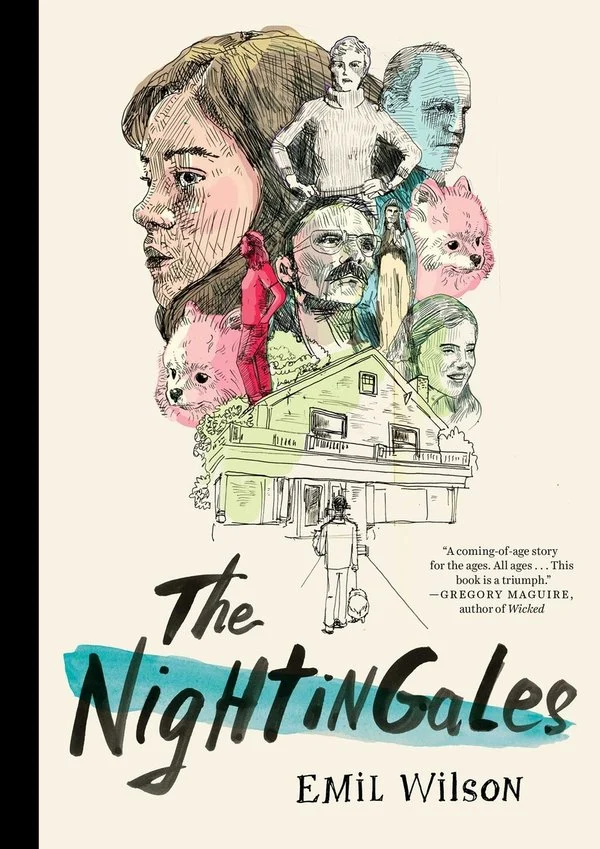
Because my debut graphic novel, The Nightingales, was inspired by a true story from my family’s history, I created it using the visual language of a sketchbook. Set in 1985, the novel reimagines the time my father invited a dying stranger and his two dogs to move into our home after they were evicted from their apartment.
I’m drawn to graphic novels and memoirs that use scanned materials, photography, and other layered techniques to give the page a sense of depth and texture. The pages almost beg to be touched. What I love most about the books below is that each one finds its own way to use those 3D elements in service of its narrative. Those tactile details aren’t just decorative—they’re an essential part of the storytelling.
Don’t Go Where I Can’t Follow by Anders Nilsen
After his fiancée Cheryl Weaver was diagnosed with terminal cancer, Anders Nilsen documented their life together through sketches, journal entries, letters, postcards, photographs, and bedside drawings. What’s remarkable is how inseparable the visual language is from the grief itself. The pages don’t feel designed so much as gathered, as though Nilsen is trying to hold onto every fragment before it disappears. The book moves seamlessly between living through Cheryl’s illness and looking back, becoming both an act of witness and an act of remembrance.
Belongingby Nora Krug
In Belonging, collage becomes a form of historical investigation. Confronting the possibility that members of her own family may have been complicit in Nazi Germany, Nora Krug pieces together the evidence, asking not only what happened, but what she owes that history. The pages rarely feel chaotic. Their construction suggests someone determined to separate fact from family mythology. Every page feels considered, every discovery feels earned. Rather than asking us to accept Krug’s conclusions, the book documents her investigation, inviting us to weigh the evidence along with her.
I Thought YouHatedMe by MariNaomi
MariNaomi uses collage to question memory itself. Decades after a 14 year friendship ended without explanation, she revisits the paper trail the relationship left behind—letters, notes, and other keepsakes—trying to understand not only what happened, but whether the relationship she remembers is the one that actually existed. The physical evidence doesn’t resolve those questions so much as complicate them. The fragments reveal as much about the narrator’s blind spots as they do about the friendship itself. Rather than offering answers, MariNaomi lets us follow along as she tries to make sense of a relationship that still resists easy explanations.
Pittsburgh by Frank Santoro
Frank Santoro isn’t just reconstructing his own past; he’s trying to understand the lives his parents lived before he was born and how those younger people eventually became the parents he knew. The handmade pages are essential to that feeling. Cream-colored construction paper, tape, and layers of felt-tip marker give the book the tactile quality of an artist’s notebook. I especially love Santoro’s use of tracing vellum. It doesn’t just add dimension to the page; it lets us literally see through one moment toward another, quietly suggesting that the past is always just beneath the surface of the present.
Alison by Lizzy Stewart
Rather than reconstructing the past, Lizzy Stewart uses collage to show someone gradually constructing herself. This story follows Alison from a lonely young wife in rural England to a successful artist, tracing the complicated relationships and discoveries that shape her creative life along the way. Taped drawings (and drawings meant to look like photographs), paint swatches, and handwritten notes create a world that feels less like a finished graphic novel than an artist’s studio wall. The visual language suggests that identity isn’t something we uncover all at once, but something we gradually assemble through experiences, mistakes, and small acts of creation. As Alison grows into herself, the book itself seems to find its form, blurring the line between making art and becoming oneself.
The Dancing Plague by Gareth Brookes
For his recounting of 16th century hysteria, Brookes burns, embroiders, and texturizes the paper not simply as stylistic choices, but as ways of making history feel physically present. Told through the eyes of a woman haunted by religious visions, the novel explores how faith, oppression, and collective fear can consume an entire town as a mysterious dancing epidemic spreads among its inhabitants. The pages don’t just depict the past; they carry its scars as though they’ve been weathered by the same forces they describe. Those handmade processes become another storytelling tool, revealing how belief and fear leave their mark on an entire community. Rather than calling attention to themselves, these details reinforce the sense that history isn’t something distant or abstract, but something lived by ordinary people.
Becoming Horses by Disa Wallander
Wallander takes perhaps the least literal approach to collage of any book here. Her dreamlike memoir examines trauma, identity, and the connection between the body, mind, and inner self, unfolding more through emotion and metaphor than through a conventional plot. She superimposes cartoons over blurred photographs and richly textured surfaces to create a world suspended somewhere between imagination and reality. The photographs don’t simply provide backgrounds; they become another layer of the artwork, making the characters’ inner lives feel inseparable from the world around them. It explores trauma unlike any other graphic memoir I’ve read. It’s a fitting reminder that in the best graphic novels, every artistic choice—from ink to collage to photography—can become another storytelling tool.

2 Comments
Pingback: Roblox shares AI child - Comic Vibe
Pingback: Video games get blamed for teen depression, but one may help prevent it - Comic Vibe