

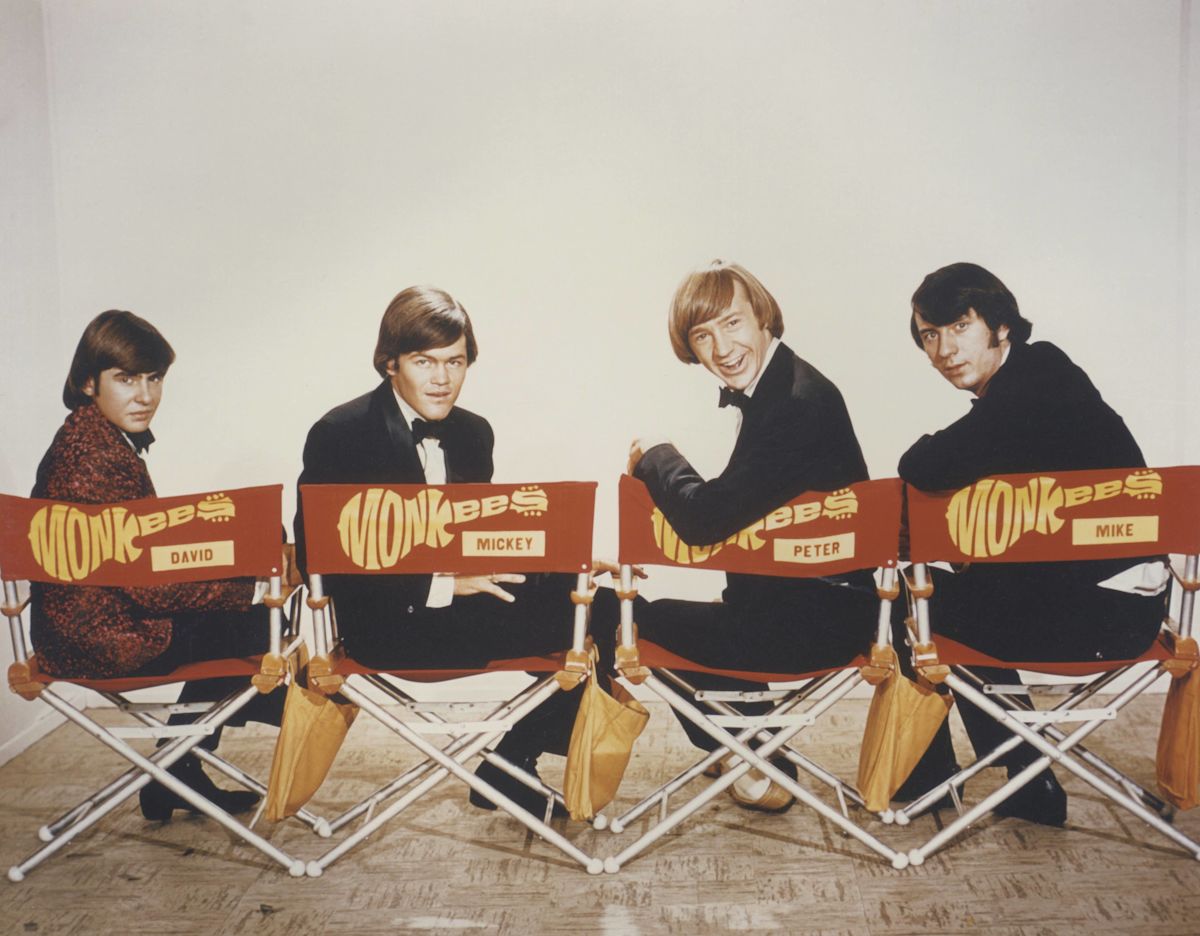
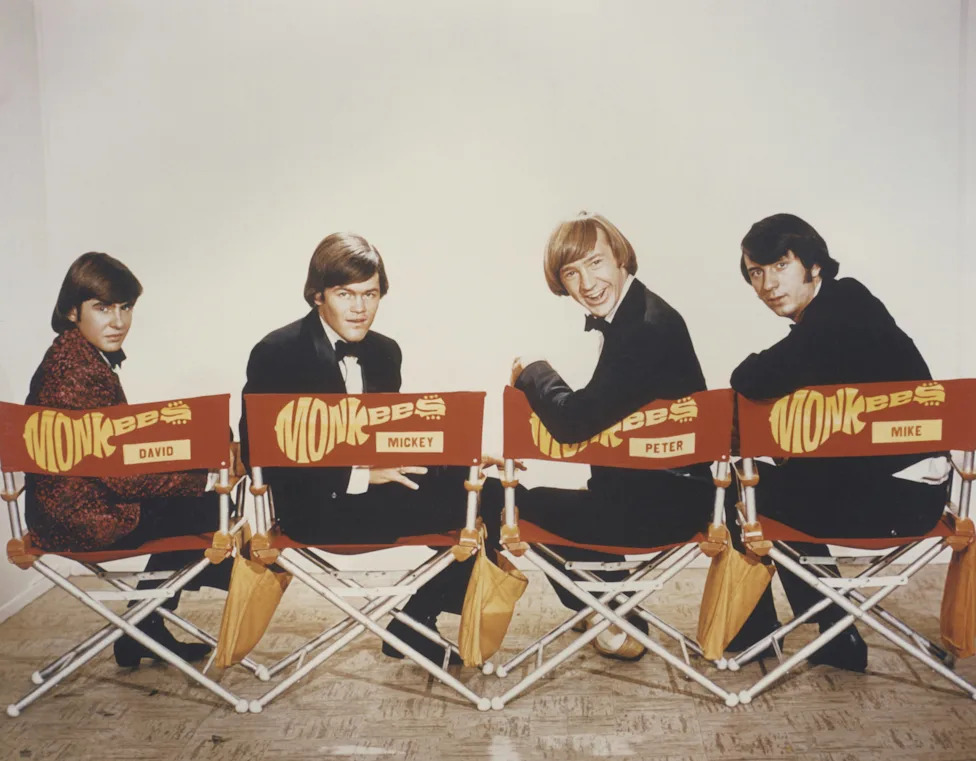
- The Monkees premiered on NBC in 1966 as a fictional band but quickly became a genuine pop phenomenon, with their debut album reaching No. 1 on the Billboard 200 and the series winning the 1967 Emmy for Outstanding Comedy Series.
- The Monkees transitioned from a manufactured band relying on professional songwriters and session musicians to a real band with greater control over their music, playing instruments themselves and helping write material on their 1967 album Headquarters.
- Despite the television series lasting only two seasons, The Monkees’ music, including hits like “I’m a Believer” and “Daydream Believer,” continued to resonate with audiences through reruns, reunions, and tours, with Micky Dolenz still performing their songs today.
Sixty years ago today, four young men ran onto television screens, sang about being too busy singing to put anybody down, and began turning into something they had only been hired to imitate.
The Monkees premiered on NBC on Sept. 12, 1966, built around Micky Dolenz, Davy Jones, Michael Nesmith, and Peter Tork as a struggling rock band forever stumbling into trouble, romance,e and whatever other plot could reasonably be solved before the next commercial break. Inspired by A Hard Day’s Night, producers Bob Rafelson and Bert Schneider envisioned what’s often been called a “musical Marx Brothers” — pop culture assembled on a conveyor belt, except the product turned out to have a mind of its own.
That is the part of The Monkees story that makes the 60th anniversary worth more than a rerun.
Before the show even debuted, “Last Train to Clarksville” was racing up the charts. Within weeks, the four men television had assembled as a fictional band were a genuine pop phenomenon. Their self-titled debut album reached No. 1 on the Billboard 200, while the series became a television success and won the 1967 Emmy for Outstanding Comedy Series.
And then came the awkward part. The Monkees wanted to be The Monkees.
The group had initially worked within a system that relied heavily on professional songwriters, producers, and session musicians. The project had been designed first as television, with the records serving the machine. Eventually, the four pushed for greater control over their own music and got it. On 1967’s Headquarters, they largely played the instruments themselves and helped write the material, turning what could have remained a very successful gimmick into something much stranger and more interesting: a manufactured band insisting on becoming a real one.
It is difficult not to hear echoes of that idea in everything that followed. Television would spend decades trying to turn casts, contestants and carefully assembled personalities into pop stars. The Monkees simply had the good fortune — or perhaps the audacity — to arrive when everyone was still pretending this sort of thing happened by accident.
The television series lasted only two seasons and 58 episodes, but the music proved much harder to cancel. Songs including “I’m a Believer,” “Daydream Believer” and “Last Train to Clarksville” long ago escaped the boundaries of the sitcom that helped launch them. MTV reruns introduced the group to another generation in the 1980s, and reunions and tours kept the music moving long after NBC stopped making new episodes.
Today, Dolenz, now 81 and the group’s last surviving member, still carries that history with him. He released a new six-song EP, Timeless, on Sept. 4 and will perform his 60 Years of the Monkees show tonight at the United Theater on Broadway in Los Angeles — on the exact anniversary of the series premiere.
Davy Jones died in 2012, Peter Tork in 2019, and Michael Nesmith in 2021. Dolenz recently told Billboard that performing the show keeps his old bandmates close because he sees and hears them every night through the music and video.
Maybe that is the final trick The Monkees pulled off. They began as four people playing characters in a television show about a band.
Sixty years later, nobody really needs the quotation marks anymore.
This story was originally published byMen’s Journalon Sep 12, 2026, where it first appeared in theEntertainmentsection. Add Men’s Journal as aPreferred

1 Comment
Pingback: The Culinary Chronicles of Acid Rayner: A Critic's Tasty Journey - Comic Vibe