

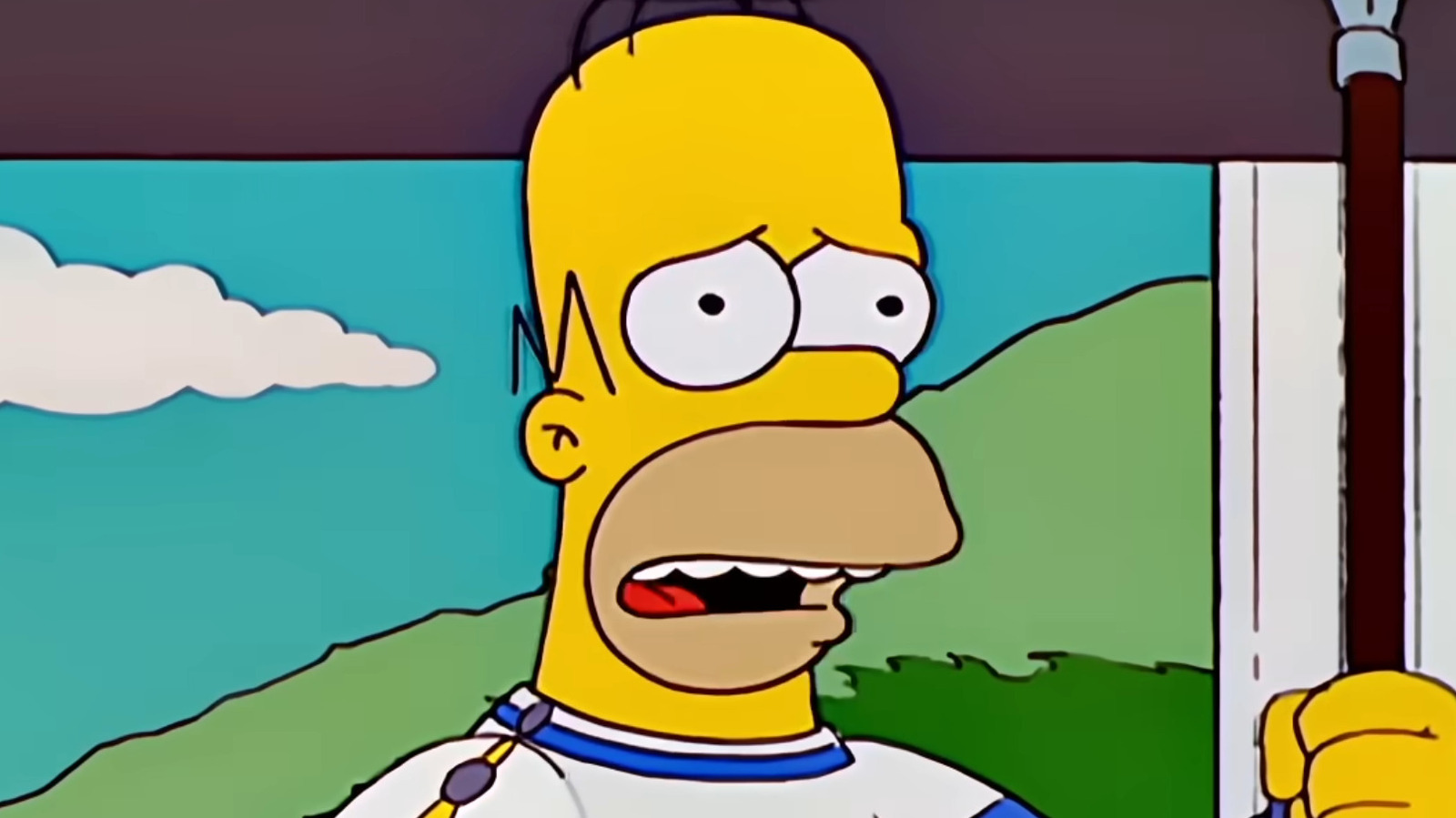
Homer’s “The Odyssey” is similar to Shakespeare’s most famous works in that it’s such an influential text that you can find its story structure nearly everywhere. For every time “The Odyssey” has been given an official movie, play, or TV adaptation, it’s been given countless more unofficial adaptations.
In a certain sense, it wasn’t even that ambitious of Christopher Nolan to adapt the story into film as he did this year; his previous films (especially “Inception” and “Interstellar”) already had a tendency to focus on brilliant, troubled men who must go on a fantastical journey to finally get back home to their family. Nolan’s been practicing for “The Odyssey” his whole career.
Four of the five TV shows on this list center around an episode that doesn’t explicitly namecheck “The Odyssey” but which nevertheless becomes a lot more fun once you note its roots in the famous poem. Whether you liked these episodes the first time around or not, they each make for a fun experience when you rewatch them with Odysseus’ journey in mind.
1. The Simpsons
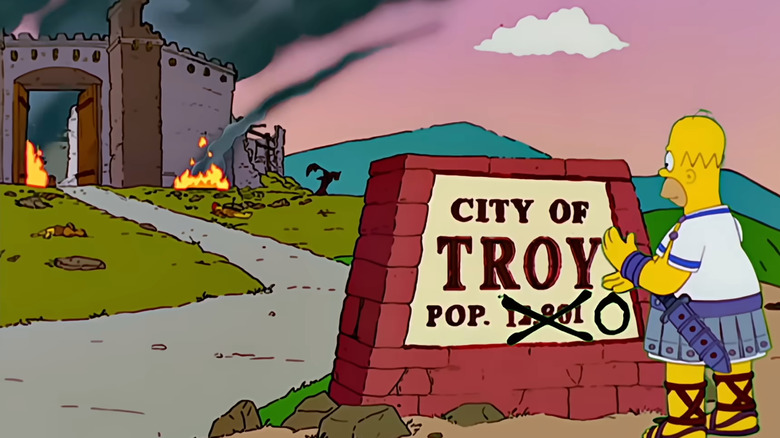
In the most straightforward “Odyssey” adaptation of the bunch, the first segment of this Season 13 anthology episode imagines Homer Simpson as the not-so-wily Odysseus. This segment takes a similar approach to Christopher Nolan’s recent film by portraying the sacking of Troy as barbaric and unethical; the only difference is that here, Odysseus’ war crimes are played for laughs instead of pathos.
Is “D’oh, Brother Where Art Thou?” as strong as the anthology segments of the show’s golden era? Maybe not, but it’s a quick and breezy segment that serves as a fun reminder of which parts of the poem have the most cultural weight. The segment streamlines Odysseus’ journey by jumping quickly from the Trojan War, to the Sirens, to Circe’s island, and finally to Odysseus’ killing of the suitors.
The segment also sprinkles in a few scenes of the Greek gods, who talk about Odysseus and are shown directly interfering with his journey home. Nolan’s film may have kept the Greek gods on the sidelines in his adaptation, but “The Simpsons” had no such qualms about embracing the otherworldly.
2. Ted Lasso

This controversial Season 2 episode sidelines the rest of the cast to focus on the mysterious Coach Beard (Brendan Hunt). While Odysseus begins his odyssey while recovering from a devastating war, Beard is recovering from a particularly brutal football game loss. Odysseus spends much of the poem trying to return to his wife, plagued with worry that his marriage might’ve fallen apart in his absence; Beard goes through a similar struggle, just with toxic girlfriend Jane (Phoebe Walsh) instead.
The parallels to “The Odyssey” don’t end there. The bars and clubs Beard goes to (filled with bizarre characters with troublesome motives) function like the dangerous islands Odysseus lands on. And just as Odysseus’ pride and bad luck force him to spend an agonizingly long time away from home, Beard too must suffer through a series of improbable misfortunes. Even when he reaches his apartment, the key breaks in the lock and his journey is once again drawn out further.
The writers of “Ted Lasso” have never explicitly cited “The Odyssey” as an influence for the episode, but the episode is filled with allusions to Martin Scorsese’s 1985 film “After Hours,” which was itself a modern New York City-based version of the epic poem. “Beard After Hours” may be a controversial episode of “Ted Lasso” due to how extraneous it feels to the surrounding episodes, but maybe some fans will enjoy it more if they rewatch it under a Homeric lens.
3. The Leftovers
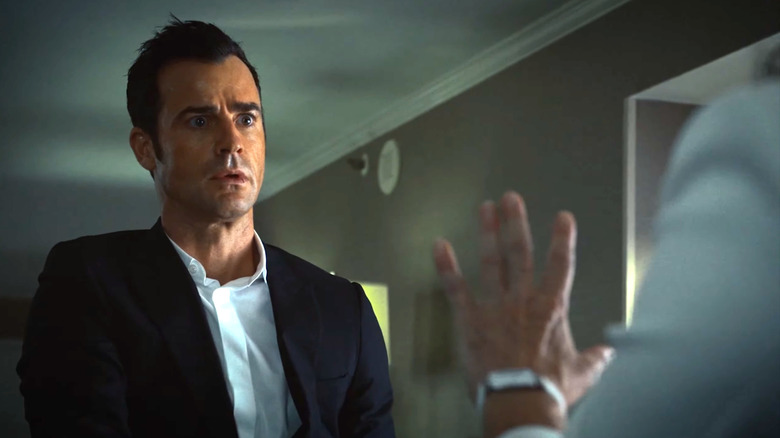
In this ambitious episode of “The Leftovers” Season 2, Kevin Garvey (Justin Theroux) must travel to a string of mysterious locations and navigate a series of mystical characters, all in the hopes of returning to his girlfriend, Nora (Carrie Coon). There are a lot of “Leftovers” episodes that feature a character going on a life-changing odyssey, but none of them feel quite as epic and Homeric as this one.
Perhaps the clearest parallel to “The Odyssey” is the running plot point with the water. In this mysterious world, Kevin can’t drink the water because it’ll erase his memory and he won’t remember that he needs to return home. The water plays the same role as the lotus flowers in Book IX of “The Odyssey,” offering the hero a chance to surrender to peaceful oblivion rather than continue on his harrowing journey home.
The episode is often considered one of the best of “The Leftovers,” with TVLine’s recap writer praising “International Assassin” for its surreal qualities. Showrunner Damon Lindelof has mentioned “The Sopranos” as a major source of inspiration, particularly the show’s Season 6 coma episodes wherein Tony must similarly resist the urge to succumb to death. With that two-episode storyline — “Join the Club” and “Mayham” — the writers of “The Sopranos” can definitely make the case that they’ve pulled off their own subtle adaptation of “The Odyssey.” Still, nothing quite beats Lindelof’s take on the concept.
4. Curb Your Enthusiasm
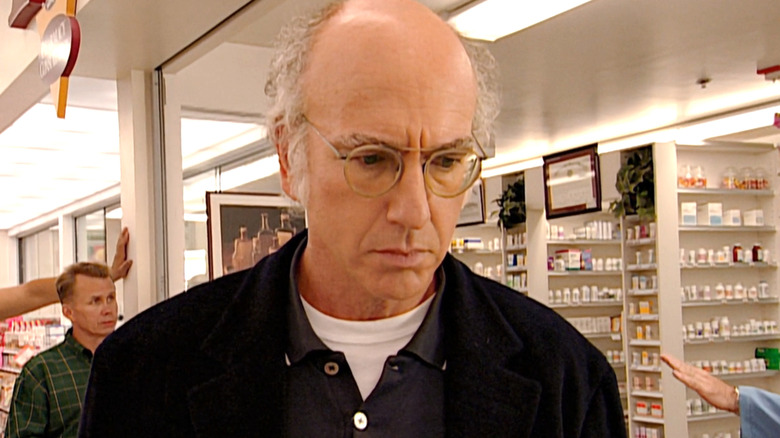
A core part of what makes “The Odyssey” so memorable is how reminiscent it is of a stressful dream. Just as simple tasks are often rendered impossible in a dream, Odysseus’ journey from Troy to Ithaca is frustrating because it really should not have taken him 10 years. As the internet loves to point out, the two cities are not that far apart even by the standards of ancient travel; Odysseus is always so close yet so far from achieving his goal.
Such is the case in “Affirmative Action,” an early “Curb Your Enthusiasm” episode in which literally all Larry has to do is go to the pharmacy to pick up a prescription for his ailing wife. It’s a task that should take Larry five minutes; it takes him the entire episode. As Larry’s journey is complicated by one misfortunate after another, it’s hard not to feel like the gods are out to get him. Larry would continue being unlucky up to the “Curb Your Enthusiasm” series finale, but few episodes are as agonizing as this one.
“Affirmative Action” is the biggest stretch on this list, but it makes it due to how much it reminds us of Book X of “The Odyssey.” That’s where Odysseus is about to make it back to Ithaca, only for one crew member to open a magic bag that sends them off course again. It’s an incredibly frustrating plot point, and it happens to poor Larry multiple times here.
5. Lost — Desmond Hume’s entire storyline
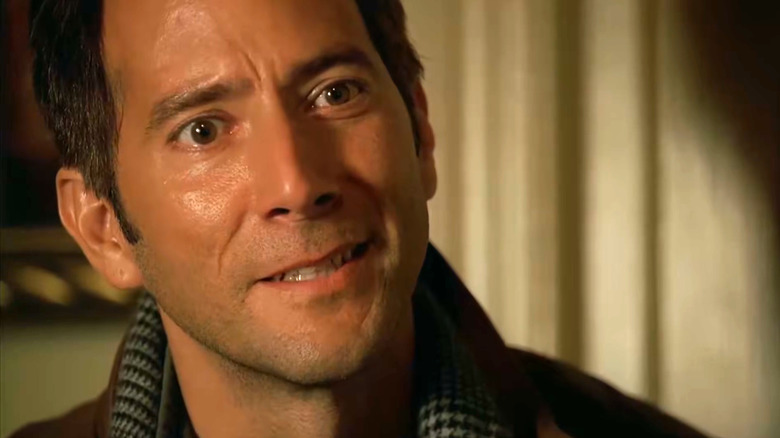
It’s easy to miss in the moment, but looking at the big picture of Desmond’s storyline, it’s shocking how much it parallels Odysseus’. Desmond (Henry Ian Cusick) is trying to get home to his true love — a woman named Penelope — but he can’t because he’s trapped on a magical island. Like Odysseus on Calypso’s island, he’s stuck there for years and tormented by all the lost time.
Desmond is also plagued by worries that Penny has moved on, which is what helps make “The Constant” one of the best episodes in the show’s history. Desmond and Penny’s romantic over-the-phone reunion is beautiful because, just like Odysseus and Penelope’s reunion, it puts years of Desmond’s worries to rest. He’s finally got confirmation that Penny still loves him, even though it would’ve been perfectly reasonable for her to have moved on by now.
The parallels don’t end there. Like Odysseus, Desmond is plagued by supernatural-induced memory issues, must battle a cyclops (well, a one-eyed man named Mikhail), and gets lost at sea after leaving the army. Another fun connection: The number of suitors Penelope must fend off in the poem is exactly 108, which is famously the sum of the magic number sequence that Desmond spent years typing into that magic computer. Showrunner Damon Lindelof may not have explicitly confirmed Desmond’s Homeric roots, but it’s impossible to deny them.

4 Comments
Pingback: Yoshitaka Amano On the Artistic Direction of His Upcoming Dark Fantasy Anime ZAN - Comic Vibe
Pingback: Physical Video Game Dollar Sales Plunged to an All-Time July Low of Just $85 Million in the US - Comic Vibe
Pingback: Kaiju Girl Caramelise Episode 9 Story & Preview Cuts Released - Comic Vibe
Pingback: Ariana Grande slams Trump for using her song in anti - Comic Vibe