

Image
Image Credit
Bob Berg/Contributoring the 1994n
center
- Angie Martinez initially withheld most of her 1996 conversation with Tupac out of concern that his comments could incite further violence.
- The archival recordings capture the rapper explaining the motivations behind several of his most publicized conflicts, including his issues with The Notorious B.I.G. and Mobb Deep.
- Contemporary commentary helps contextualize Tupac’s ambitions for financial independence, community advancement, and collaboration between artists.
For three decades, Angie Martinez held onto a recording that could have changed the course of Hip Hop history. In 1996, the then-25-year-old HOT 97 personality traveled to Los Angeles to interview Tupac Shakur amid growing tensions between artists on opposite coasts. Their two-and-a-half-hour conversation came about after Martinez declined an invitation to appear in his “I Ain’t Mad at Cha” music video. She witnessed the backlash her colleague Monie Love received for appearing in Tha Dogg Pound’s “New York, New York” visual and worried about her own safety.
Although Martinez aired portions of the interview, she kept much of the conversation private. Speaking with <a href="https://www.netflix.com/tudum/articles/the-tupac-tapes-with-angie-martinez-interview” rel=”nofollow noopener” target=”_blank”>Netflix’s Tudum, she explained, “There were things said in that conversation that could have hurt people, damaged relationships, and added fuel to an already dangerous situation.”
On Friday (Nov. 27), Martinez finally opened her vault with “The Tupac Tapes with Angie Martinez,” a four-part video podcast. Contributors including Charlamagne Tha God, Joe Budden, RZA, Big Boy, and Wallo helped contextualize the recording and the circumstances surrounding it.
Recorded months before his death, the conversation offers a portrait of an artist grappling with betrayal, commercial success, regional allegiance, and the responsibilities that accompanied his influence. Below, REVOLT breaks down five revelations from the interview.
1. Tupac explained why he claimed the West Coast over New York
Despite New York being his birthplace, Tupac considered California where he developed the skills and relationships that helped him succeed. When Martinez questioned his allegiance to the West Coast, the rapper distinguished his childhood experiences from the opportunities he encountered after relocating.
“That’s where I was born, but that’s not where I learned how to make money,” he explained. Tupac recalled returning to New York after finding success with Digital Underground and finally having the financial means to enjoy things he couldn’t afford growing up. He also credited the mentorship he received in California with shaping his identity. “This is where I learned. This is where I became a man,” he added.
However, Tupac recognized the financial and creative benefits of cooperation between artists from opposite coasts. “I think that East Coast versus West Coast is corny. I do think it’s corny,” he declared before explaining how musicians from both regions could learn from one another.
“We should all make money,” he said before adding, “If we got together, we can shake the world.”
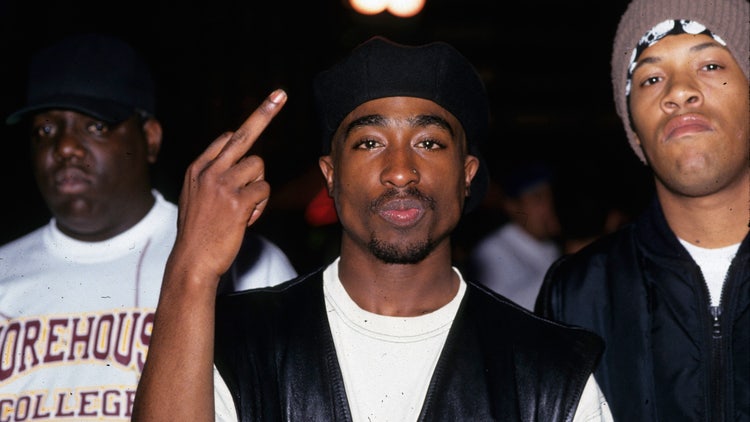
Throughout the interview, Tupac challenged the notion that his grievances extended to an entire coast. He questioned why Biggie could proudly represent Brooklyn without attracting the same criticism Tupac received for shouting out the West Coast. He also argued that New York’s Hip Hop community struggled to separate his issues with individual artists from his feelings about the city itself.
When Martinez asked whether his conflict centered on Bad Boy’s leadership and its biggest artist, Tupac responded, “No doubt.”
The rapper alleged that individuals were extorting the label and explained his desire to deprive his perceived enemies of their financial re
“Biggie don’t get no money. Puffy don’t get no money. I get all the money, and they be out the rap game,” he declared.
Tupac also distinguished his relationship with New York’s music community from his issues with Bad Boy, expressing respect for artists including Wu-Tang Clan, Freddie Foxxx, and Naughty By Nature. “New York is an innocent bystander,” he insisted.
3. Tupac explained how fear and betrayal ended his friendship with Stretch
Among the personal relationships Tupac discussed with Martinez was his friendship with Randy “Stretch” Walker, a member of Live Squad and one of his former Thug Life collaborators. Stretch was with Tupac during the November 1994 shooting at Manhattan’s Quad Recording Studios, an incident that ultimately fractured their relationship.
Tupac recalled financially supporting Stretch and questioned why someone he considered a close friend failed to visit him during his incarceration. He attributed their falling-out to what he perceived as Stretch’s fear for his own safety and that of his loved ones. “I can’t understand him tryna protect his family because fear is not supposed to be stronger than love,” he told Martinez.
Ed Lover, who helped Live Squad secure a record deal with Tommy Boy Records and became the godfather of Stretch’s child, challenged Tupac’s characterization of their friendship. The radio personality disputed the suggestion that their financial relationship was entirely one-sided. He also attributed Stretch’s absence during Tupac’s incarceration to restrictions surrounding prison visits for convicted felons rather than a lack of loyalty. Stretch died on Nov. 30, 1995, exactly one year after the Quad Studios shooting.
4. Tupac detailed his falling-out with Biggie and the motivations behind “Hit ’Em Up”
Tupac traced his deteriorating friendship with The Notorious B.I.G. to the Quad Studios shooting and its aftermath. Although he acknowledged that Biggie had cautioned him about certain individuals, Tupac felt his former friend had not adequately communicated the seriousness of the danger.
Outlawz member E.D.I. Mean suggested that Tupac expected the same protection he had extended to others who encountered difficulties on the West Coast. During a separate November 2026 appearance on “Drink Champs,” Mean recalled Tupac helping New York rapper Tim Dog escape a potentially dangerous situation in the Bay Area, despite Tim’s controversial diss track “F**k Compton.”
JAY-Z offered another perspective in September’s HBO docuseries “JAŸ-Z in 8.” Speaking with Rick Rubin, Hov recalled his understanding that Biggie warned Tupac about the people surrounding him. According to Hov, Tupac subsequently relayed that warning to those individuals, creating problems for Biggie.
As their friendship deteriorated, Tupac also targeted Biggie’s then-wife, Faith Evans, on “Hit ’Em Up.” Martinez heard the diss track during their interview, and Tupac alleged that he had slept with Evans, explaining that his interest in her stemmed from her marriage to his rival.
Evans has repeatedly denied having a sexual relationship with Tupac. In a 2015 interview with VladTV, she recalled recording music with him and rejecting his request for a sexual favor.
https://www.instagram.com/reel/DOQ9oMUFGRI/?utm_
Some of Tupac’s most inflammatory remarks concerned Mobb Deep. In addition to questioning Havoc and Prodigy’s commercial accomplishments, he made graphic threats against the Queensbridge duo and accused them of disrespecting him and California.
Martinez challenged his reasoning, questioning whether his hostility stemmed from personal insults or their involvement in Capone-N-Noreaga’s “L.A., L.A.,” a response to Tha Dogg Pound’s “New York, New York.”
“They dissed my town, and they dissed me. That’s why I got beef,” Tupac responded.
His grievances also extended to the Quad Studios shooting. Tupac alleged that Mobb Deep introduced someone onstage as the person responsible for shooting him, providing further insight into why he considered their conflict more than a musical rivalry.
Notably, Tupac took her line of questioning as a defense of Mobb Deep and offered to produce an article that he claimed contained personal insults toward him.
