

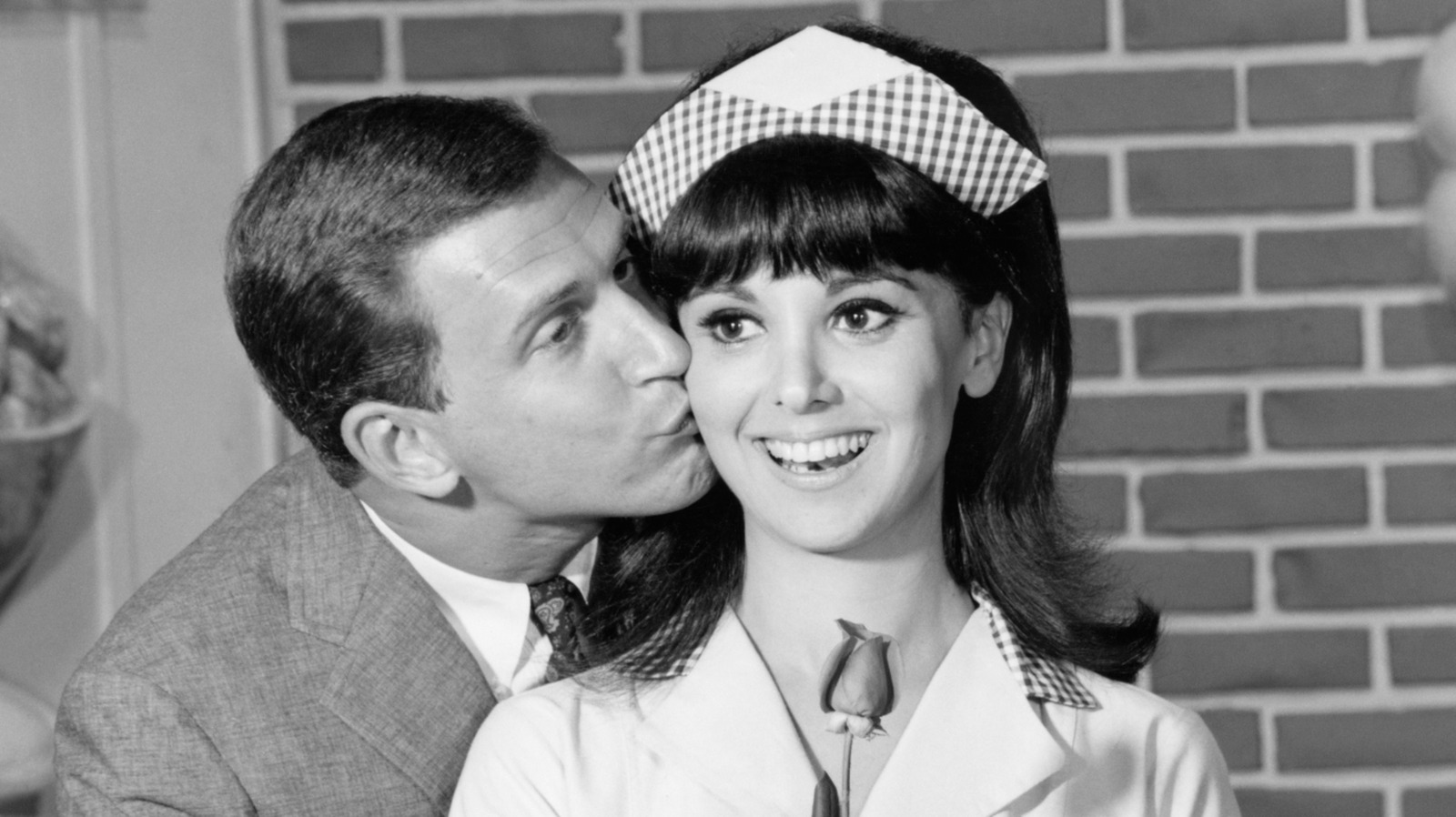
The 1960s were an especially creative time for sitcoms, and shows like “Bewitched” and “The Addams Family” remain part of pop culture conversation 50-plus years later. Even so, this anything-goes era of TV created some shows that were, perhaps, a little too offbeat. For instance, Jerry Van Dyke turned down the title role on “Gilligan’s Island” to star on “My Mother the Car.” The wild premise of a mom’s spirit inhabiting a vintage vehicle never built a fandom and was quickly forgotten, except to be playfully panned every now and again.
Then there’s a third category: ’60s sitcoms that, although they were super-successful in their day, have somehow faded into obscurity over the years. In some cases, an even more popular show stole their thunder. In other instances, it’s not immediately clear why these shows were forgotten. Either way, those who still remember these sitcoms think of them fondly. Even though streaming makes these gems accessible, viewers might not think to look for these titles among the plethora of options. But these five shows are definitely worth a second look thanks to their acting talent, pure zaniness, and serving as a way for modern audiences to experience a slice of ’60s life.
The Patty Duke Show
“The Patty Duke Show” couldn’t have been done in the era of live TV, since it used production magic to have its star, the late Patty Duke, play two characters who often appeared together. The show ran from 1963 to 1966, and its catchy theme song introduced viewers to its unusual premise of identical cousins. While this concept is semi-explained by the fact that Patty Lane and Cathy Lane have fathers who are twins, the point of the series is really to showcase Duke’s versatility as an actor. Co-creator Sidney Sheldon invited her to his house while he brainstormed show concepts. “He wanted . . . both sides of my personality to be represented,” Duke recalled to The Television Academyin 2013.
Duke preferred playing the sophisticated Cathy to the boisterous Patty, even though Cathy’s fashion sense was decidedly less trendy. “I liked the earnestness of her,” she explained. “She seemed more mature.” The Patty character was also a stretch for the actress, since as a child star, she was far removed from the world of regular teens. However, Duke won an Oscar in 1963 for “The Miracle Worker,” so she was clearly up to the task. Although “The Patty Duke Show” sometimes pushed the premise a little too far (with a third identical cousin in a single episode), Duke’s acting holds up all these years later.
My Favorite Martian
Like “Bewitched,” “My Favorite Martian” featured a main character who was more than meets the eye. Ray Walston stars as Uncle Martin, a visitor from Mars. Bill Bixby co-stars as Tim O’Hara, the reporter who helps keep his secret. Fortunately, Martin is able to blend in pretty seamlessly with the humans, since his telltale antennae are retractable. Conveniently, when his antennae do appear, he becomes invisible. Surprisingly, the show nearly missed its chance to hit screens, since many TV execs thought the premise was ridiculous. Fortunately, producer Jack Chertok saw the charm and got “My Favorite Martian” off the ground.
The show aired from 1963 to 1966, and was a hit from the start, with one early reviewer pleased to see a comedic sci-fi option. “It has an originality . . . that may easily capture the viewers’ fancy,” declared “The Los Angeles Evening Citizen News” in July 1963. Despite Walston getting tired of the grueling production schedule and the silly scripts, the camaraderie between him and Bixby was a mainstay.
Although a 1999 feature film remake failed to captivate audiences, the original show is worth checking out on streaming. Longtime fans maintain this ’60s classic still holds up to modern day viewing. It’s also a great opportunity to see Bixby’s work before his fame as Dr. David Banner on “The Incredible Hulk.”
My Three Sons
“My Three Sons” ran from 1960 to 1972, and its lengthy shelf life is a testament to the sitcom’s popularity at the time. Fred MacMurray plays widower Steve Douglas, and “I Love Lucy” alum William Frawley plays his father-in-law/co-parent, “Bub” O’Casey. “In the very early years, it was kind of cutting edge,” Barry Livingston (Ernie Thompson Douglas) recalled to Woman’s World in 2026. “A single dad raising three boys, that was a novel idea back in 1960.”
The series weathered some major changes over the seasons and kept evolving. In 1965, Tim Considine, who played oldest son Mike Douglas, left by his own choice, while Frawley lost his job due to studio concerns about his health. The show also switched networks from ABC so CBS could finance a production in color rather than black and white. William Demarest filled the void as Uncle Charley, and Ernie was adopted by the Douglas family. Eventually, Steve got remarried to Barbara Harper (Beverly Garland) in a late 1969 episode, and adopted her young daughter, adding to the blended family.
While the status quo changed over the course of the show, it just helped “My Three Sons” resonate with a lot of viewers as they grew up alongside the cast.
Hogan’s Heroes
Surprisingly, “Hogan’s Heroes” was originally supposed to take place in a U.S. prison. However, when series creator/writer Bernie Fein transferred his premise to World War II Germany, he created a hit. With a cast that included Bob Crane and Werner Klemperer, the show’s unexpected blend of humor between Allied POWs and their clumsy captors made it a fan favorite from 1965 to 1971. Years after the show ended, Klemperer (Colonel Klink) noted that he was delighted when fans recognized him and greeted him as his character when he was out and about in New York.
Week after week, viewers were treated to wildly elaborate schemes where Hogan and his fellow inmates used the camp as a convenient base of operations while they left as needed to do their part to help win the war. Suspension of disbelief was the name of the game for Robert Butler, who directed some of the earliest episodes. Rather than delve into the horrors of that historic time period, Butler was all about light-hearted entertainment. Even so, real life had some unexpected impacts on the comedy. As a Jewish person who left 1930s Germany, Klemperer specifically wanted his character to be hilariously ineffective rather than cruelly competent.
Unfortunately, the series ended rather abruptly due to a wave of mass cancellations on CBS, which might be part of the reason why it stopped being discussed as widely.
That Girl
From 1966 to 1971, Marlo Thomas starred as Ann Marie on “That Girl.” Ironically, this role about an actor trying to get her big break led to Thomas becoming a household name and a female TV trailblazer. Thomas came up with the concept and was adamant about staying true to her vision. “The network wanted me to live with my aunt,” she recalled to HuffPost in 2024. “I said, ‘No girl goes to the big city and lives with her aunt. And that’s not the point. The point is to be independent.'” Fortunately, Thomas held her ground, and the show earned high ratings with its very first episode.
She also took creative control over the conclusion of “That Girl.” In spite of its popularity, she felt the story had reached its natural conclusion, and refused to pander to network demands about having her character get married in the finale. In some ways, the series’ success also caused it to fall off many people’s radar. Despite opening up more possibilities for female leads, “That Girl” was overshadowed by the success of “The Mary Tyler Moore Show,” which ran from 1970 to 1977. Fortunately, modern audiences can catch “That Girl” on streaming and see for themselves how it still resonates today.

1 Comment
Pingback: 15 Best Political TV Shows Of All Time, Ranked - Comic Vibe