

Consoles get a lot of attention, but PCs have always been at the forefront of the gaming industry. In general, developers can rely on PCs having more power and functionality than the average console. Grand strategy games can make full use of a PC’s keyboard, and cutting-edge games take advantage of high end graphics cards to offer the most mindblowing visuals in gaming. PC gaming also has a relatively low bar to entry for developers, which is why there are so many amazing indie PC games that fans rave about.
There are literally thousands of games on PC, and there are more coming out every year. Keeping up with the PC gaming scene is a full time job, and playing through the best PC games ever made will keep you busy for a lifetime. With that kind of back catalog, it’s only natural that some games slip through the cracks and get forgotten about even though they’re utterly amazing. Sometimes PC games land on the scene, wow critics and gamers, and then vanish when a new attention-grabbing title soaks up the limelight. These classic PC games were once all the rage but now only tend to get brought up on low-traffic Reddit threads.
Black & White
“Black & White” takes the idea of top-down city builder games to its logical conclusion and casts players into the role of a literal god. At first the player-deity rules over small, disparate groups of people scattered across islands, with the assistance of an avatar-like creature whose behavior must be nurtured. Whether by kindness or iron-fisted demands, players can transform their unsophisticated tribes into a powerful civilization. The catch is that your equally powerful nemesis is also vying for control of the world, and players will need to prepare their people and bolster the ranks of their worshippers if they don’t want to lose the planet.
Reviewers showered “Black & White” with praise for its innovative game design. The game has deep strategic systems that feed back into questions about the nature of good and evil. Are you a loving god who helps build defenses and food supplies for your people, or are you the kind of ruler that forces citizens to put all their re
Players can forge their own path in the world, and not many games of the time allowed for so much freedom and had such nuance in their storytelling. A quarter-century later and “Black & White” is still an incredible game, but tragically it is one of those PC games that are unplayable today. Tracking down a functional copy of “Black & White” is no small task, but anyone who goes through the effort will absolutely be rewarded.
Planescape: Torment
CRPGs are typically top-down adventures with strategic, team-based combat and narratives that encourage roleplaying. The genre used to be massively popular in the PC gaming space, but today they’re few and far between. “Baldur’s Gate 3” is a masterpiece based on a beloved CRPG series from the ’90s, but the fame of that series has overshadowed the true best CRPG of that decade.
“Planescape: Torment” is the result of a partnership between developer Black Isle and publisher Interplay, the same dynamic duo that gave us the “Fallout” series. In “Planescape,” players step into the shoes of The Nameless One, an immortal man exploring the fantasy city of Sigil while trying to reclaim his lost memories. Like the “Baldur’s Gate” games, “Planescape” is also based on the core “Dungeons & Dragons” ruleset, incorporating familiar concepts into its systems. The combat isn’t exactly the same as in the tabletop game, but “Planescape” goes out of its way to encourage players to resolve conflicts with dialogue and roleplaying (more like an actual tabletop encounter) instead of murder and mayhem.
The dialogue trees in the game form a jungle, and to this day there aren’t many games that let you sink into a role as fully as “Planescape” does. Sigil is one of the most fascinating video game settings ever, and the NPCs and party members you meet are wonderfully written. Though it’s not as well-remembered today as other more mainstream CRPGs, “Planescape” is unforgettable once you play it.
Myth: The Fallen Lords
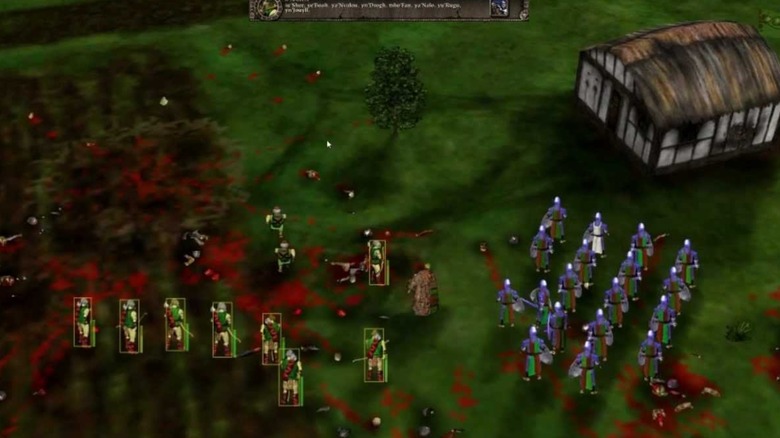
Bungie is one of the most celebrated game developers of all time, thanks largely to both their “Halo” and “Destiny” series, but languishing in their vault (hidden behind the revitalized “Marathon”) is another late ’90s Bungie game that we think deserves a resurgence. “Myth: The Fallen Lords” is a 1997 real-time tactics game where players have to lead a small squad of soldiers through missions in a fantasy world.
“Myth” follows a war between a mysterious evil being called Balor and the last remaining forces of Light. Balor is winning at the outset of the game, and the battlefield dominance of the forces of the Dark has an effect on the gameplay. Unlike full-scale strategy games, “Myth” doesn’t give players an opportunity to gain resources or grow their ranks. Instead players guide their small team as they navigate the battlefield and fight enemies in real time, and every loss makes the mission significantly more difficult.
Battles are surprisingly complex thanks to a physics engine that ensure both the weather and terrain matters in how you fight. Victories are hard won but incredibly rewarding, and that applies to both the single-player and multiplayer battles that the game offers. “Myth” was popular enough to earn itself a sequel and a prequel, but today it — and real-time tactics games in general — aren’t nearly as talked about as they once were.
Unless you played the game when it debuted in 2000, “Nox” is an ARPG unlike any you’ve played before. The game follows a modern day human named Jack who is transported into a fantasy realm and must defeat an evil sorceress in order to return home. When creating their version of Jack, players choose between three classes with varying playstyles. Warriors are heavily-armored melee fighters, Conjurers fight alongside animals and summonings, and Wizards have access to a massive list of spells. More than most ARPGs, “Nox” strives to have a deep magic system, allowing players to teleport, lay down traps, and create magical combos that deal serious damage.
The class choice in “Nox” actually goes beyond playstyle. In the game’s single-player mode, each class follows its own storyline, and each gets a unique ending to the game. Considering how fun each one is to play, it’s especially satisfying that developer Westwood Studios came up with a way to make replaying the game feel so fresh.
In the game’s multiplayer mode, the classes really come to life. Modern players would need a set of friends and ethernet cables to set up an old school LAN party, but “Nox” makes all the hassle worth it. A quarter-century after its release, “Nox” has lost the spotlight to other ARPG series like “Diablo” and “Path of Exile,” but no other game has ever gotten competitive ARPG gameplay so right.
FreeSpace 2
From developer Volition and publisher Interplay — the company behind the original “Fallout” games — comes 1999’s “FreeSpace 2.” The game is a sequel to “Descent: FreeSpace — The Great War” that improves on the original and gives players epic-scale battles that few games since have managed to top. “FreeSpace 2” has a wealth of ships, weapons, and eye-popping visuals that garnered serious praise from reviews of the time — though some also complained about the game’s unbelievably large 1.2GB install size.
Sticklers might argue that “FreeSpace 2” is a dogfighting game like “Star Wars: Squadrons” rather than a true space flight simulator, but technicalities don’t make the game any less fun to play. It’s true that you can’t point your ship in a direction and let it coast on zero-gravity like you would be able to in real life, but you can also outfit your ship with so much fun weaponry that you’ll likely forget about anything else. Ships use primary cannons, secondary missiles, and bombs, and with enough work, players can unlock massive capital ships that can call in devastating beam weapons.
From the cockpit, battles feel like a chaotic mess of high-velocity danger, and players need to master maneuvering different types of ships while choosing the correct weapon for the shots they open up. Luckily, even when you get blown up, the visuals of navigating through nebulae, asteroids, and wrecked ships look great, so sharpening your skills in “FreeSpace 2” is always a treat. Nearly 30 years on, “FreeSpace 2” is one of the best examples of the niche space flight genre.
