

Sony made a huge splash when it entered the home console market with the original PlayStation in 1994. Even competing with established companies like Nintendo and Sega, Sony quickly carved out its own dedicated fanbase with a robust library of games. By the end of its lifecycle, Sony’s PlayStation accomplished something no other console could at the time by becoming the first console to sell over 100 million units. While the console offered more casual fare, it also featured numerous celebrated titles powered by rich and engrossing narratives for gamers to get invested in.
Some of the best PS1 games of all time boast some of the strongest storytelling of their generation. These plots aren’t necessarily complex ones or revolve around epic stakes, but draw gamers in with strong characters and a rewarding narrative. From RPGs to survival horror titles, the original PlayStation offered a robust variety in story-driven games. Here are the five best-written PS1 games ranked, each providing players with their own riveting stories.
5. Silent Hill
Not every stellar story needs to offer a sweeping scope. In fact, horror arguably works best when it keeps its narrative focus tight and intimate. With that in mind, the original “Silent Hill” is a spooky masterpiece and still sets the broad narrative formula for the series. The 1999 game follows Harry Mason as he searches for his missing daughter Cheryl in the small, remote town of Silent Hill. Navigating its unnaturally foggy streets, Harry encounters both monsters and a monstrous cult looking to revive their unholy deity.
Even in some of its lesser entries, “Silent Hill” always excelled at crafting an unsettling atmosphere for players to explore. Those qualities are present in the 1999 original game, as well as offering a moody story that would be followed up on directly in “Silent Hill 3” for the PlayStation 2. At their narrative core, the “Silent Hill” games are mysteries. That’s certainly true of its first title as it draws players in with creepy details meted out at a perfect pace. A melancholy little tour of small-town Americana that punctuates its engrossing story with plenty of scares, “Silent Hill” launches its franchise in style.
4. Final Fantasy VII
Starting during the Super Nintendo era, all the mainline “Final Fantasy” games have featured sweeping epic stories. When the franchise came to the PlayStation with 1997’s “Final Fantasy VII,” the game’s scope was so big that it was shipped on three discs. The game revolves around a sinister megacorporation greedily exhausting the planet’s resources, with protagonist Cloud Strife among a group of resistance fighters trying to derail their efforts. This places Cloud in conflict with his former colleague Sephiroth who intends to ascend to godhood at the expense of the planet’s wellbeing.
While elements of the narrative, like the true nature of Cloud’s origins and conflicting memories can feel convoluted at times, “Final Fantasy VII” connects where it counts. Any doubts about the story’s quality should be dashed by just how emotionally resonant moments like the death of Aerith Gainsborough feel, even knowing those scenes are coming. “Final Fantasy VII” is the creepiest of the series at times, but also gently sentimental in its own way for a tale about ecoterrorists and villains with messiah complexes.
3. Vagrant Story
Go figure that a game titled “Vagrant Story” would have one of the best developed plots on the PlayStation. But moniker choices aside, the best narrative that Square developed for a PS1 game is that very 2000 title. Set in the fantasy realm of Ivalice, as introduced in “Final Fantasy Tactics,” the game follows a protagonist named Ashley Riot as he investigates a far-reaching conspiracy. This quest involves him confronting a mysterious cult while delving deep into the catacombs beneath his city.
In contrast to other Square games released for the original PlayStation, “Vagrant Story” features a darker and more mature story at its heart. Taking advantage of its fantasy setting, the game’s plot leans heavily into atmosphere as Ashley’s arc progresses, derived from its sumptuously rendered environments. The narrative is also far less convoluted than most “Final Fantasy” games of its era, with the story punctuated by flashbacks explaining the emotional significance. An overlooked gem from the PS1 era, “Vagrant Story” deserves a modern remake for a new generation to experience its tale.
2. Resident Evil 2 (1998)
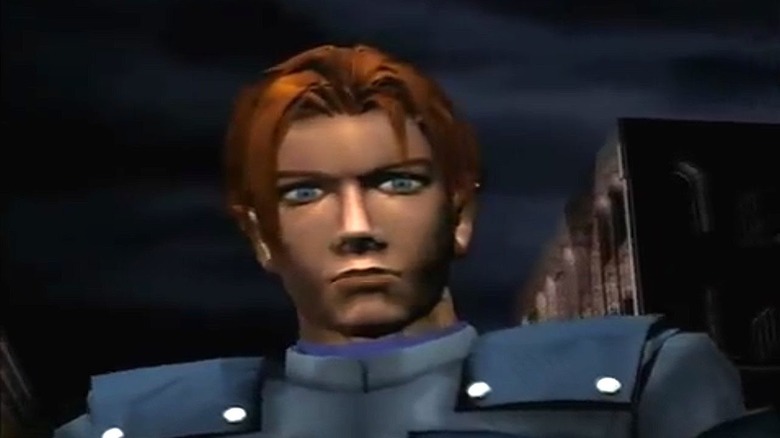
While the original “Resident Evil” offered its own zombie-filled twist on a haunted house setting, the story contained in the sequel completely blew it out of the water. 1998’s “Resident Evil 2” reveals that the zombie outbreak from the first game has spread to the nearby Raccoon City, with the Midwestern metropolis overrun by the ravenous undead. New protagonists Leon Kennedy and Claire Redfield are caught in the chaos and try to escape from the city in one piece. Each character offers their own perspective on the narrative, which is further developed by notes found throughout the playthrough.
There’s a reason why the franchise keeps revisiting the fall of Raccoon City depicted in “Resident Evil 2,” even as recent as 2026’s “Resident Evil Requiem.” The story is much more ambitious than its predecessor but before it reaches the ludicrous levels of spectacle that its sequels would adopt. The untold truth of “Resident Evil 2” is that the game was retooled heavily during its development, becoming the familiar tale that fans know and love today. The defining entry of the series, “Resident Evil 2” provides a crucial chapter in the convoluted “Resident Evil” story that continues to influence it nearly 30 years later.
1. Metal Gear Solid
When it comes to why Hideo Kojima’s contributions to the gaming industry matter, it’s because the celebrated developer changed how sophisticated storytelling could be in the medium. One of Hideo Kojima’s best games, 1998’s “Metal Gear Solid” perfectly encapsulates those qualities and redefined its franchise. The game takes the top-down perspective from prior games and shifts to third-person as Solid Snake emerges to stop terrorists who have seized a nuclear facility on a remote island. As Snake confronts the various colorful enemies leading the takeover, he discovers his own origins are linked to the group’s enigmatic leader, Liquid Snake.
With “Metal Gear Solid,” Kojima essentially creates a taut action thriller for the PlayStation, bringing a real cinematic quality to the storytelling. The attention to detail and memorable cutscenes advance the story considerably while the game features a distinct ensemble cast. The narrative also showcases Hideo Kojima’s penchant for predicting the future regarding technology and society, something that he only developed further in subsequent installments. Punctuated by tautly staged set pieces and a story full of twists and turns, “Metal Gear Solid” redefined what Kojima’s tactical espionage action series could be.

1 Comment
Pingback: Play pool, video games and more at new store in outlet mall at Tanger Outlets - Comic Vibe