

Some games need to be massive epics that take dozens, or even hundreds of hours to complete. But sometimes, less is more. There’s something to be said for a game that doesn’t overstay its welcome. It’s easy to overstuff a game with repetitive fetch quests, a meandering storyline, and an empty open world that is big but vapid.
A smaller-but-denser game can be far more impactful than one that is bloated for the sake of silly fools who erroneously believe that “hours spent” on a single playthrough is somehow equal to “value.” It may be old-fashioned, but a game that fires on all cylinders for its entire length can be much better than one that’s padded out with meaningless fluff.
There’s room for all kinds of games of varying size and scope, but for today, let’s look at the best games you can play through in a single weekend. These games aren’t necessarily bite-sized, but they’re not hundred-hour odysseys, either. They’re perfect for starting on Friday night and finishing by Sunday morning.
However, like all great games, don’t be surprised if you end up returning to do it all again the following weekend. We don’t replay games in order to make our power levels go up or to farm “legendary gear” or whatever; we replay them because they rock!
Batman: Arkham Asylum
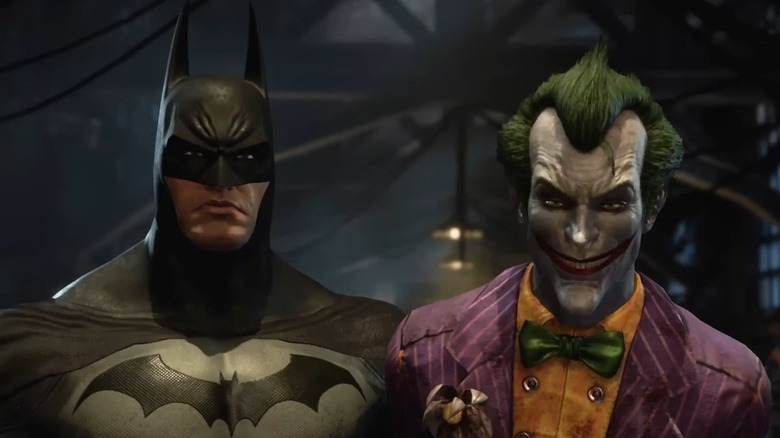
While some people prefer the open world of “Arkham City” or the sheer grandeur of “Arkham Knight,” a lot of players will always have a special place in their hearts for the 2009 original, “Batman: Arkham Asylum.” Simply put, it’s the game that changed superhero games forever, and played just as much a role as Christopher Nolan’s “Dark Knight Trilogy” in cementing Batman’s place as a pop culture icon in the 21st century.
Rather than the urban sprawl of Gotham City, “Arkham Asylum,” as the name suggests, is confined to the hallowed and horrific halls of the titular mental hospital. The premise is simple: The Joker has taken over Arkham, and only Batman can stop him while going up against the likes of Bane, Killer Croc, Poison Ivy, Victor Zsasz, and more, using a combination of stealth, gadgets, and combat that started as a full-on rhythm game.
You’re not gliding across the city looking for sidequests. You’re exploring Arkham in a Search Action style inspired by “Metroid” and “Castlevania.” Don’t make us say “Metroidvania.”Anyway, even when going for 100% completion, the game shouldn’t take more than a weekend. “Arkham Asylum” has the type of palpable narrative momentum that sucks you in and doesn’t let you go. You feel compelled, much like Batman himself, to stay up late to see this long night through to its righteous conclusion.
Alpha Protocol
Sure, “Mass Effect” and “Dragon Age” got all the attention, but they weren’t the only action RPGs around during the PS3 era. While certainly not perfect, “Alpha Protocol” makes up for its janky gameplay and lack of polish with deeply interactive storytelling and a whole lot of charm.
A big part of that charm comes from the ability to play however you want. There are a ton of dialogue options, nearly all of which allow you to play like one of the three “JBs,” those being James Bond, Jason Bourne, and Jack Bauer. You get perks and rewards no matter your approach, so there’s no “right” or “wrong” way to play.
A single playthrough takes about 13 hours or so, but with a variety of backgrounds to choose from, as well as a full-on cavalcade of variables that can impact how the game plays out. It’s the kind of game you’ll want to revisit again and again. It’s hard to argue that “Alpha Protocol” didn’t deserve the middling-to-negative reviews it earned at launch, but fans know the game has an intangible “je ne sais quoi,” an undefinable “X-Factor” that makes it special to the fans who love and appreciate its unique qualities and ignore its various rough spots.
Amerzone: The Explorer’s Legacy
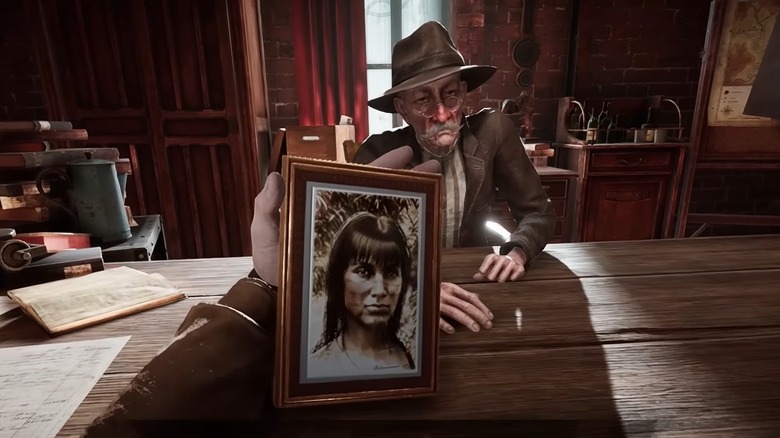
Everyone has their favorite point-and-click adventure game. “Myst” is a popular choice, and the “Monkey Island” games are fantastic, but I must tip my hat to the works of French writer Benoît Sokal. While best known for his work on “Syberia” and its numerous sequels, his first video game was “Amerzone,” released in 1999.
In 2025, a remake of the game, “Amerzone: The Explorer’s Legacy,” was made for modern platforms. This remake hews extremely close to the point-and-click gameplay of the original, but with a major facelift courtesy of the ever-popular Unity engine. It doesn’t look quite as cutting-edge as “Syberia: The World Before,” but it’s still gorgeous and a great way to experience “Amerzone” looking its best during the 11-hour journey.
Like the “Syberia” games, “Amerzone: The Explorer’s Legacy” is set in a fictionalized version of a real-life locale, in this case the Amazon River in South America. The player takes on the role of a journalist looking for a story. However, after interviewing an old explorer on his deathbed, he sets out to complete his last mission: to return a White Bird egg he foolishly stole decades before. The story is whimsical, tragic, and a lovely companion to the Syberia series, all of which also qualify as games that are great to play over the course of a weekend.
Any Episodic Telltale Game
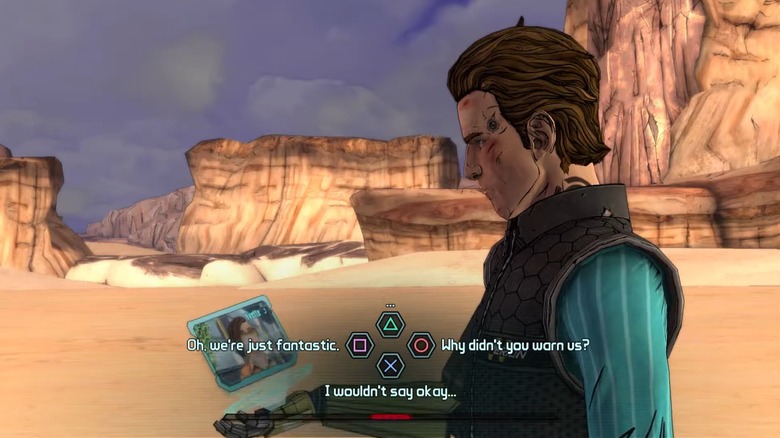
There’s a sheer number of Telltale games out there, spanning a plethora of different franchises. Do you love zombie horror? Then try out “The Walking Dead.” Into superheroes? There are two seasons of “Batman,” and even a “Guardians of the Galaxy” game. If you’re looking for the greatest Borderlands story ever told, then “Tales from the Borderlands” will be right up your alley.
But that’s just naming a few. There’s also great stuff like “The Wolf Among Us,” “Game of Thrones,” “Minecraft: Story Mode,” and even games from the pre-“Walking Dead” era, like “Back to the Future,” “Tales from Monkey Island,” and multiple seasons of “Sam & Max.”
For the most part, Telltale games are episodic adventure games. The older titles were essentially the “next-generation” version of LucasArts point-and-click games, but then the breakthrough success of “The Walking Dead” (which, by the way, was nearly a “Left 4 Dead” spin-off) caused the developer to adopt a more cinematic approach. For better or for worse, the puzzles and inventory systems were stripped back and all but removed entirely, with QTE action sequences and dialogue choices taking their place, with player choice being a highlight. It’s something of a dirty secret that in-game choices often don’t matter as much as you think they do, but if you go into any of these games completely blind and just ride the momentum without researching the ramifications of your decisions, you’ll have a blast. You’ll feel like your choices really matter, whether they actually do or not.
Metal Gear Solid
If you’ve never played “Metal Gear Solid” and you have a free weekend coming up, you now have your assignment. You know how there are a bunch of songs every musician is expected to know? If you pick up a guitar, you’d better be able to strum along to “Proud Mary,” you know what I mean? Likewise, if you consider yourself a video game enthusiast, you’d better know “Metal Gear Solid.”
“Metal Gear Solid” was a seminal achievement when it first released on PlayStation back in 1998, and it holds up remarkably well to this day. It helps that the game had a unique control scheme lifted pretty directly from “Metal Gear 2: Solid Snake” on the MSX. Sneaking around enemies is quick and responsive, and it plays like nothing else before or since.
Even with all that in mind, the gameplay is arguably not the main draw of “Metal Gear Solid,” which earned arguably more acclaim for its storytelling and cinematic ambitions, blurring the line between video games and movies. The game features numerous extended cutscenes that use the in-game graphics, which means the game doesn’t switch over to a pre-rendered FMV scene. Likewise, the game also features excellent voice acting from actors like David Hayter, Cam Clarke, Jennifer Hale, and Paul Eiding, among others. If “Metal Gear Solid” strikes your fancy, the numerous sequels are also masterpieces in their own right, but let me warn you now: It’ll take you more than a weekend to get through “Metal Gear Solid V: The Phantom Pain.”
