

Some people might be under the false impression that anthology shows are a quintessentially contemporary TV phenomenon; sure enough, between episodic confections like “Black Mirror” and “Modern Love” and season-divided ones like “American Horror Story” and “True Detective,” the format of shows that tell separate, individual stories from installment to installment is all the rage right now. But anthologies have actually been a staple of television for decades; in fact, they were arguably even more prevalent in American TV as early as the 1950s.
The most accurate way to situate anthology shows within television history would be to say that it has always been an ubiquitous format, and that the different ways in which that format has been utilized over the decades is directly reflective of the trends and styles of each era. From drama to comedy to horror to sci-fi to animation (and to the various possible combinations thereof), the best anthology TV shows of all time all rank among the best shows of all time, full-stop; below, we’ve put together a ranking of the 20 absolute greatest — though this list might be best enjoyed if you consider each entry as its own self-contained shout-out.
20. Tales of the Unexpected
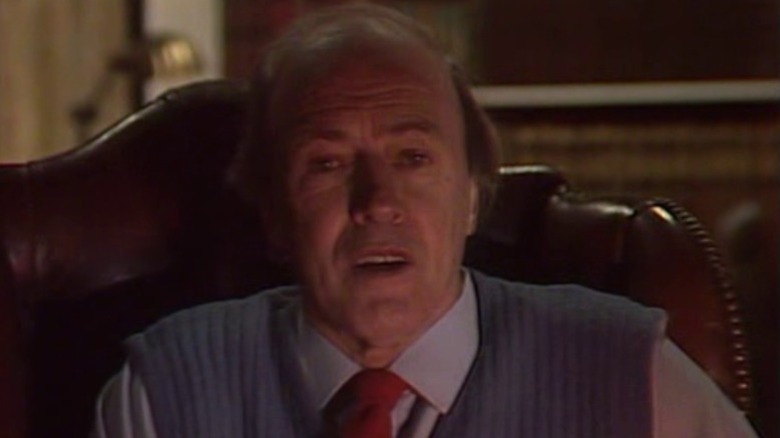
Originally aired on ITV between 1979 and 1988 and syndicated in the U.S., the British series “Tales of the Unexpected” started out as an adaptation of Roald Dahl’s anthology books, with each episode of its first season porting over a different Dahl short story. Over time, the series grew beyond the bounds of that premise and began to tell a wide array of strange and beguiling stories bound together by their proclivity for twist endings, while Dahl himself stayed on as the presenter.
Laced with Dahl’s signature blend of quaintness, eccentricity, and dark comedy, these stories — 112 in total, released across nine seasons — are as impossible to predict as they are invariably fascinating. The sense of refinement and cinematic expressiveness that marked a lot of ’70s and ’80s British TV is on full display here as well, and it makes each episode of “Tales of the Unexpected” feel like its own transporting, hard-to-shake movie even at just 24 minutes.
19. The White Lotus
One of the biggest TV phenomenons of the 2020s, HBO’s “The White Lotus” began as an off-kilter miniseries about the passive-aggressive class tensions between guests and staff at a luxury resort on Maui, Hawaii. It ultimately became such a hit that HBO made it an anthology series; now, each season of “The White Lotus” (including the upcoming Season 4) places a colorful cast of characters at a different hotel of the fictional White Lotus chain somewhere in the world — always opening with a flash-forward to a mystery death, and always with Mike White writing and directing all episodes.
All three seasons of “The White Lotus” manage the improbable feat of being scathing, soothing, and satisfying in equal measure. With deft, detail-oriented writing that makes every character feel vivid, White weaves together tapestries of complicated drama that build slowly but surely across each year’s resort stay; it’s a great class satire, a great vicarious travelogue, and a first-rate serving of gripping one-percenter intrigue all rolled into one.
18. Tales from the Darkside
Paramount Television/Syndication
Created by horror legend George A. Romero, who helmed the “Night of the Living Dead” series as well as numerous other movie classics, “Tales from the Darkside” is an American episodic anthology that aired 90 chapters on syndication between 1983 and 1988. Spanning genres like horror, sci-fi, and dark fantasy, the show tells a variety of tales involving people whose lives are disrupted by supernatural occurrences — several of them penned by or based on the work of prolific genre writers.
It’s another fabulous example of a show that managed to pack impossible amounts of tension, pathos, and all-out creepiness into just over 20 self-contained minutes. The strongest episodes have an eerie sense of familiarity, as though those gruesome calamities could burst out from the TV and infiltrate the viewer’s own seemingly normal life. And the dark sense of humor that became the show’s trademark brings out the very best in the writers who created or adapted stories for it.
17. Fargo
In 2014, FX aired “Fargo,” a miniseries created by Noah Hawley that transposed the chilly, wickedly funny, morbidly existential small-town criminal intrigue and grisly violence of the eponymous 1996 Coen brothers movie to a whole new story, set in a different pocket of the same shared universe. After it became a critical and commercial sensation, Hawley expanded the series to an anthology, with each subsequent season traveling to a new place and time to follow the exploits of a different group of overwhelmed cops, charismatic psychopaths, and trigger-happy eccentrics.
All five seasons of “Fargo” exist within a single overarching continuity, as revealed by occasional story-bridging details, but their plots are otherwise mostly disconnected. What really remains consistent from season to season is the singularity of the show’s tone and the absurdism of its philosophical outlook, both of which incorporate all the best lessons not only from “Fargo” but from the Coens’ oeuvre at large. The people of “Fargo” rarely know what they’re doing or where they’re headed, but it’s enthralling to watch them bumble their way through it all.
16. Thriller (1960)
As anthology premises go, it doesn’t get much more straightforward than NBC’s short-lived “Thriller.” Simply put, this is a show that endeavors to rack your nerves and scare you out of your wits — and pulls off an incredible success rate across its 67 episodes. Presented by none other than Boris Karloff (and sometimes even billed as “Boris Karloff’s Thriller”), “Thriller” focuses mostly on the titular genre in its early going, with crime and mystery tales making up most of its first few episodes; later installments, meanwhile, incorporate increasing levels of creepiness in the Gothic horror tradition.
In both its more grounded and more fanciful eras, the show is a masterclass in genre storytelling: Never tacky, never overdetermined, and always attuned to the importance and the mechanics of tension-building as a conduit for emotional investment. It carries off with cinematic aplomb numerous high-concept stories that could just as well have resulted in unintentionally funny schlock on a lesser show — yet isn’t above puncturing its own seriousness with a sense of delectable camp.
15. Love, Death & Robots
There’s something particularly rewarding and thrilling about an animated anthology. By its very nature, the animated medium can allow the personality of each episode’s creators to shine through even more strongly and idiosyncratically than on live-action shows — and this is aptly demonstrated by “Love, Death & Robots,” a Netflix anthology of sci-fi and fantasy shorts on which each chapter its own unique, incomparable beast.
Not only do the episodes across the show’s four seasons (billed as “volumes”) vary greatly in length, mostly clocking in at 20-odd minutes but sometimes running as short as six, but they also take up a wide array of different conceptual persuasions. Some consist of brainy speculative sci-fi; some are exercises in lush visual experimentation; some are concentrated shots of grimy, violent horror; some are disarmingly light and goofy. And those varied styles are accomplished through equally varied animation techniques crafted by a global lineup of studios — all of which do stunning work when it’s their turn to show off.
14. Inside No. 9
“Inside No. 9” proves that it doesn’t take much more to link the episodes of an anthology than a vague commonality and a little bit of creativity. Created by and starring British comics Reece Shearsmith and Steve Pemberton (who play different characters on each episode), this BBC Two series tells various self-contained tales, each mostly limited to a single setting and somehow involving the number 9.
Beginning with ostensibly mundane situations, Shearsmith and Pemberton weave shocking, absurdist plots that frequently escalate into violence and horror — all with a healthy dose of bizarro humor. Half the fun of the show lies in wondering just how things will go haywire each time around; somehow, the answer is always fresh and disarming, and often comes so out of left field that there’s barely any time to even expect the swing. Few half-hour shows out there do so much with their 30 minutes.
13. The Shivering Truth
In the same way that an animated anthology like “Love, Death & Robots” can reflect the diverse creative personalities of a wide array of artists, “The Shivering Truth” demonstrates that animation can also be a great sounding board for the scattered ideas of a single mad genius. Written and narrated entirely by Vernon Chatman, who also co-directs all episodes along the similarly brilliant Cat Solen, “The Shivering Truth” tells three different stories per episode, each one exaggerating common human anxieties and insecurities into surreal, horrifying extremes by way of gorgeously gnarly stop-motion animation.
11 minutes per installment are plenty enough for “The Shivering Truth” to cobble together dazzling concertos of dramatic irony, with Chatman’s gravelly narration tying it all together like excerpts from a cursed storybook. It’s hard to even wrap your head around how frequently this show is capable of eliciting laughter, revulsion, and raw emotional identification all at once; it’s one of the most underrated animated shows of all time, and a shining example of the delirious creative heights that live-action couldn’t possibly reach.
12. Documentary Now!
“Documentary Now!” is one of the most singular TV shows of the 2010s and 2020s, as well as one of the best at leveraging the concept of one narrative per episode. Created by Fred Armisen, Bill Hader, Seth Meyers, and Rhys Thomas, and aired on the film-focused cable network IFC, the show presents individual self-contained mockumentaries, each one spoofing the style of a famous documentary film, series, or director in movie and TV history.
It’s an unabashedly niche premise, and the show embraces that fact with gusto, delving deep into the narrative and stylistic peculiarities of its various parody subjects in ways that will invariably delight any cinephile with a taste for nonfiction. But even if your knowledge of classic documentaries is nonexistent, “Documentary Now!” is so funny, snappy, and well-written that it tickles the brain in the same way a great mockumentary sitcom does — and with the added benefit of a whole new roster of kooks per episode, including several guest appearances by game superstars.
11. Black Mirror
It wouldn’t be any kind of exaggeration to say that “Black Mirror” is one of the defining shows of the 21st century — not only for the exacting eye it applies to societal trends of our time as refracted through the trappings of technology, but for the massive degree to which its seven seasons and 33 episodes (plus one interactive movie) have captured the cultural zeitgeist.
Originally a Channel 4 show (released on Audience Network in the U.S.) before moving to Netflix from its third season onward, the Charlie Brooker-created series has become notable for the sheer darkness of its speculative scenarios, which lay bare the worst of humanity and ask discomfiting questions about the extent to which we’ve become desensitized to our own present-day dystopian realities. Yet “Black Mirror” can just as often be funny, romantic, and even hopeful; what really defines it as a series is not the sourness of its outlook, but the attention and creativity with which it makes emotionally feasible fables out of science and tech.
10. Studio One
The grandparent of all great anthology shows is “Studio One,” a classic from back when television entertainment was largely conceived as an extension of theater. Presenting a variety of “television plays” that were mostly performed and broadcast live, the CBS series was wide-ranging in style and storytelling focus; the one constant was the unflagging quality of its acting and writing, which brought the tautness, focus, and live-wire immediacy of stage drama to the new aesthetic realm opened up by television.
Only a handful of the show’s 467 aired episodes have been preserved, but the ones that can still be watched today remain testaments to the refined brilliance that American television could produce in the Golden Age of the ’40s and ’50s. “Studio One” is widely noted today for having originated Reginald Roses’s “Twelve Angry Men” prior to Sidney Lumet’s theatrical film adaptation, and indeed the first production of Rose’s play is a brilliant audiovisual achievement nearly on par with the movie — but it’s just one of the seminal hours that this towering classic bequeathed to TV history.
9. Tales from the Crypt
Based on the eponymous ’40s comic series by EC Comics, HBO’s “Tales from the Crypt” is arguably the most iconic of all full-blown horror anthology shows — not least because, as an HBO show, it has no constraints on the extremity of its content. Helmed by a rotating roster of name directors across its seven seasons, this quintessentially ’90s production stars the voice of John Kassir as the Cryptkeeper, a snarky undead corpse who introduces viewers to various tales of wickedness and perversity.
Despite the campy Gothic framing device with which it’s frequently associated, “Tales from the Crypt” mostly tells stories set in a familiar, seemingly ordinary version of late-20th-century America; the chief object of interest is the violent darkness lurking under the surface, which erupts in outbursts of brutality that were shocking coming from a TV show in the ’90s, and in fact remain shocking to this day. Horror TV has seldom been grislier, scarier, funnier, or more accomplished.
8. The Outer Limits (1963)
Often overshadowed by its CBS competitor “The Twilight Zone” in tellings of midcentury TV history, ABC’s “The Outer Limits” is a brilliant show in its own right — one that manages to wring incredible quantities of intrigue, horror, and suspense out of strictly sci-fi narratives. Each episode presents an entrancingly out-there concept, and then explores it to the very last consequences (or as close to them as ’60s standards and practices permitted); while not all those episodes are winners, the batting average is stunning for a series that had to come up with new loopy ideas each week.
Some of the very finest achievements in ’60s sci-fi filmmaking can be found on this show, which upended expectations for television at the time not only with its glossy production values and the gorgeous noir-esque sheen of its cinematography (largely provided by future three-time Oscar winner Conrad Hall), but also, most crucially, with the sturdy blockbuster structuring it applied to the writing of each individual episode — such that any one installment of “The Outer Limits” could be enjoyed as a rip-roaring action thriller in addition to its numerous philosophical ideas.
7. Alfred Hitchcock Presents
At the height of his fame as a Hollywood director, Alfred Hitchcock played a major part in helping to legitimize television as a cinematic medium on par with movies by creating, producing and hosting “Alfred Hitchcock Presents.” Presented in self-contained installments, the show was only occasionally directed by Hitchcock himself, but nonetheless committed consistently to his philosophy of grabbing viewers by the throat; all episodes, from the half-hours of the first seven seasons to the bigger one-hour stories of Seasons 8 through 10 (a period in which it was renamed “The Alfred Hitchcock Hour”), are exercises in white-knuckle tension.
If ever a show offered a bounty of case studies in the power of careful writing and staging, it was this one; week after week, it managed to effectively work magic in just a few minutes, yielding a succession of near-impeccable short films in which nary a second was wasted on anything other than precise buildup and haunting release. Its best episodes still rank among the greatest that television has ever seen.
6. Infinity Train
An endlessly inventive and expectation-defying animated series from the mind of Owen Dennis, “Infinity Train” never quite achieved the fame it deserved, in either its Cartoon Network or HBO Max runs. But it’s impossible to give a chance to its tale of a physics-bending train of endless wagons and not fall in love. While some plot elements remain consistent, each of the show’s four 10-episode seasons tells a different story, keyed to a different corner of the train’s vast mythology, and starring a different character whose troubled inner life will be laid bare by their surreal adventures aboard each wagon.
The first season alone marked down “Infinity Train” as one of the best Cartoon Network shows of the 2010s — and that was just the buildup season, before the series took a dauntless leap into experimentation in the 2020s that made it one of the most exciting and incomparable works of animation of the entire 21st century thus far. Every season its its own wild, heartrending, convention-defying triumph, made up of installments that run just 11 minutes each yet make perfect use of episodic portioning to structure a gripping two-hour story.
5. What a Cartoon!
Some of the most iconic animated series of all time were born on “What a Cartoon!” This ’90s Cartoon Network program produced by Hanna-Barbera brought on various talented animators to create short one-off comedy cartoons with creative freedom; 16 episodes were aired between 1995 and 1997, with three segments each, totaling 48 cartoons. Those cartoons, in turn, ran the gamut from dry slice-of-life observation to quirky surrealism and back — it was here that the Cartoon Network “house style” was effectively born, with all that entailed for the history of TV animation.
Several of the best ’90s cartoons, including the likes of “The Powerpuff Girls,” “Dexter’s Laboratory,” “Courage the Cowardly Dog,” “Johnny Bravo,” and countless other turn-of-the-century Cartoon Network classics, were born here. But the artistic environment fostered by “What a Cartoon!” was so vibrant that even the shorts that never got picked up into full series still make for hilarious, galvanizing watches. There’s a very serious argument to be made that this show was the best and most important thing to happen to cartoons since the ’50s.
4. American Crime
Not to be confused with the similarly-titled FX series “American Crime Story” (which isn’t on this list due to the inconsistency of its quality between seasons), ABC’s “American Crime” was created by Oscar-winning screenwriter John Ridley (“12 Years a Slave”), and tells three different season-long stories centered around grueling criminal trials. Felicity Huffman, Regina King, Timothy Hutton, Lili Taylor, and others play different characters from season to season; each time over, they embody complicated people whose identities and interconnected relationships are dramatically impacted by issues of gender, race, class, and general 21st-century American social mayhem.
Of the many, many seasonal anthologies that television brought us from the 2010s onward, “American Crime” is handily the best. Rare for the format, it maintains the same rarefied quality across all three of its seasons, and manages to make each story feel vital and revelatory in its own way while still echoing the spirit of the others. The writing of Ridley and company is rivetingly complex and confrontational, and the actors tear into it with the perfect balance of sobriety and intensity. It’s just incredible television all around.
3. Playhouse 90
“Playhouse 90” stands tall among the numerous theater-esque anthology dramas that defined the early years of American television, beginning with the upscaled ambition evinced by its title: With an hour and a half to tell each weekly story, the CBS series had room to put together veritable classics of filmed storytelling that could be placed on par with, and in many cases served as the basis for, the most acclaimed of theatrical movies.
Directed and written by some of the industry’s most notable midcentury talents, “Playhouse 90” began as a live broadcast before the challenges of mounting a real-time 90-minute presentation spurred a shift to videotaping; across both eras of its existence, it was the gold standard to which all dramatic television was compared, and remained for many decades the de-facto benchmark for what the medium could accomplish at its most artistically outreaching. Episodes had little in common other than the titular length, the dramatic tone, and the adherence to a certain expected baseline of quality control; a film in the “Playhouse 90” vault could be anything, and indeed many were, and are, bona fide masterpieces.
2. Small Axe
In 2020, renowned British filmmaker Steve McQueen put together an innovative storytelling project: A cycle of five self-contained films, each spanning one to two hours, released both on television via BBC One and Prime Video and in theaters via various film festivals around the world, and alternatively understood by critics as a television anthology series or as five distinct Steve McQueen movies that just happened to come out in the same calendar year. Strengthening the “It’s an anthology” camp is the fact that all five “Small Axe” films share the same general subject: The lives of West Indian immigrants in the London of yesteryear.
Creatively speaking, McQueen truly does approach the five episodes as distinct movies, and that is very much to their advantage: “Mangrove” is a gripping fact-based legal drama; “Lovers Rock” is an impeccable slice-of-life hour with gorgeous music and visuals; “Red, White and Blue” is a biographical thriller that speaks urgently to the here and now; “Alex Wheatle” brings crucial history to life by locating its human rhythms; “Education” brings the series’ themes full-circle by approaching them from the point of view of kids. All told, this prism of tonally varied perspectives adds up to one of the finest accomplishments in the career of one of the very best working directors.
1. The Twilight Zone (1959)
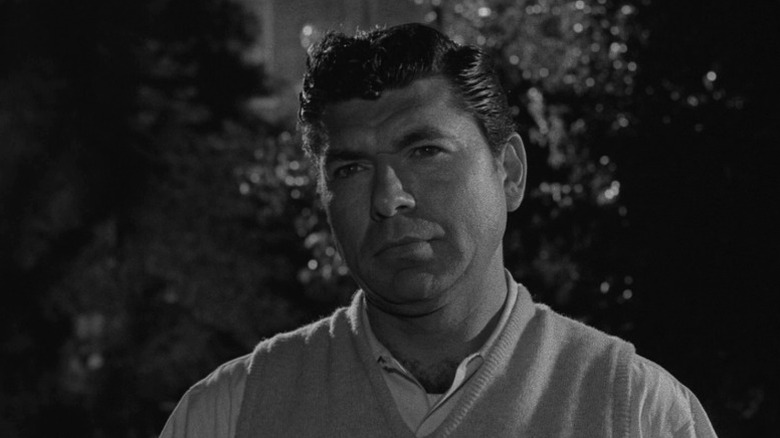
Among English-language anthology shows, there really could be no other option but the original iteration of “The Twilight Zone” for the #1 spot. Created by Rod Serling on the winning assumption that the realm of sci-fi and fantasy could allow for more incisive commentary on political, moral, and existential matters than most TV shows at the time could get away with, the legendary CBS series showcased some of the most enthralling and unforgettable stories ever aired on American television, bound together by nothing narrower than a flair for the uncanny.
The number of “The Twilight Zone” episodes that have passed into TV legend is nearly too great to count, and what makes this embarrassment of riches even more impressive is that a great many of those episodes don’t have anything outwardly in common on a narrative level; some are science-driven, some are horror stories, some are full-fledged fantasy, some are minimalist moral parables, some are knowingly cheeky and hilarious. In its five-season, 156-episode totality, it’s a show that epitomizes TV’s ability to reduce great storytelling down to bare, timeless essentials, and to keep finding new ways to experiment with them.

2 Comments
Pingback: Before Lioness, Laysla De Oliveira Played A Marvel Mutant On A Forgotten X-Men TV Show - Comic Vibe
Pingback: You Can Digitize Your Xbox Game Library Now - Here's How - Comic Vibe