

Most successful television shows change over time. Characters leave, new writers arrive, relationships evolve, and ideas that seemed important in the first season may eventually disappear. That’s simply what happens when a story lasts for years.
Every once in a while, though, a television show does something much more dramatic. It changes portions of its DNA so significantly that it becomes a different show.
Sometimes the transformation is deliberate. Producers realize the original premise isn’t working and rebuild the series around the pieces that are. Sometimes a major cast departure removes the relationship that once powered the entire program. Occasionally outside circumstances force writers to destroy the status quo and figure out what their series looks like afterward.
And sometimes a sitcom about a working-class family introduces a nerdy neighbor and somehow ends up doing stories about cloning and transformation chambers.
For this list, ordinary creative evolution isn’t enough. These aren’t simply shows that got better, worse, darker, or funnier as they aged. The series had to undergo a significant change to its premise, storytelling engine, tone, genre, or center of gravity. If the description that accurately explains the early version of the show no longer adequately describes what it eventually became, it qualifies.
Some of these transformations saved struggling series. Others happened after successful shows lost central characters and needed a new reason to exist. A few became so thoroughly associated with their reinvented versions that it’s easy to forget they ever started differently.
Here are 12 TV shows that completely reinvented themselves.
M*A*S*H (1972–1983)
Watch an early episode of M*A*S*H immediately after one from its later seasons and the difference can be startling. The setting remains the 4077th Mobile Army Surgical Hospital, familiar characters remain, and wounded soldiers continue arriving by helicopter. But the series gradually changes from a fast-moving, anarchic military comedy into something considerably more reflective about the psychological cost of living through a war.
The early M*A*S*H is heavily influenced by the 1970 Robert Altman film and Richard Hooker’s novel. Hawkeye Pierce and Trapper John McIntyre are rebellious surgeons surrounded by military authority figures they delight in tormenting. Henry Blake is an ineffective commander, Frank Burns is an incompetent hypocrite, and Margaret Houlihan initially functions largely as Frank’s equally rigid ally.
The comedy can be broad, chaotic, and frequently aimed directly at the absurdity of military rules. Hawkeye and Trapper drink, chase women, play elaborate practical jokes, and attempt to preserve their sanity by refusing to treat the Army with the seriousness it demands.
The transformation happens gradually as the original ensemble changes. Henry Blake leaves and is replaced by Colonel Sherman Potter, a career Army officer whom Hawkeye actually respects. Trapper disappears and B.J. Hunnicutt arrives as a devoted husband and father. Frank Burns eventually gives way to Charles Emerson Winchester III, an arrogant but extraordinarily talented surgeon capable of challenging Hawkeye intellectually and professionally.
Those replacements change the show’s chemistry. The easy targets disappear. Potter isn’t a fool simply because he’s regular Army. B.J. isn’t another version of Trapper. Charles can be pompous and infuriating, but he’s neither incompetent nor cowardly.
Margaret changes as well, developing far beyond the character defined largely by her relationship with Frank.
The comedy never disappears, but increasingly it shares space with stories about trauma, exhaustion, loneliness, death, and the compromises people make to survive something they cannot control.
Yet the transformation works because the fundamental target never changes. M*A*S*H always believed war was absurd. Over 11 seasons, it simply became increasingly interested in what living inside that absurdity does to people.
Where to watch:Available to stream; sold on physical media and digitally.
The Facts of Life (1979–1988)
The Facts of Life eventually became one of the defining sitcoms of the 1980s, built around Mrs. Garrett and four teenage girls whose dramatically different personalities made them an unlikely family. That isn’t the show NBC originally put on the air.
A spinoff of Diff’rent Strokes, the first season follows Edna Garrett as she becomes housemother at the fictional Eastland School for Girls. Instead of the familiar group of Blair, Natalie, Tootie, and Jo, Mrs. Garrett initially oversees a much larger collection of students.
The crowded ensemble makes the first season feel considerably different from what follows. Seven girls are regular characters, including Blair, Natalie, Tootie, Nancy, Sue Ann, Molly, and Cindy, while school administrators and staff also occupy significant portions of the show.
There are pieces of the eventual series in place, particularly Mrs. Garrett’s role as the compassionate adult helping teenagers navigate problems, but there are simply too many characters competing for attention. When NBC renewed the struggling series for a second season, the producers dramatically reworked it.
The student cast was reduced primarily to Blair, Natalie, and Tootie, and Nancy McKeon’s Jo Polniaczek was introduced as their new classmate. The four girls get into trouble together and are required to work in the school cafeteria to pay off damages, putting them under Mrs. Garrett’s supervision and giving the series a much tighter central group.
Jo was particularly important to the new chemistry. Her working-class background and confrontational personality immediately put her at odds with the wealthy and image-conscious Blair, creating a relationship that could generate conflict without requiring either character to become a villain.
The smaller cast also gave the series room to develop its characters beyond whatever trait could distinguish them in a crowded ensemble. Blair, Jo, Natalie, and Tootie could disagree, make mistakes, grow up, and gradually develop relationships that felt more like those of sisters than classmates who happened to attend the same school.
The series would reinvent its setting again as the characters aged, moving beyond Eastland and eventually placing Mrs. Garrett and the girls together in the businesses Edna’s Edibles and Over Our Heads. Those changes worked because the crucial reinvention had already happened after Season 1. The Facts of Life stopped being a sitcom about a housemother supervising a dorm full of girls and became a show about one specific group growing up together.
Where to watch:Check current streaming availability; sold on physical media and digitally.
A Different World (1987–1993)
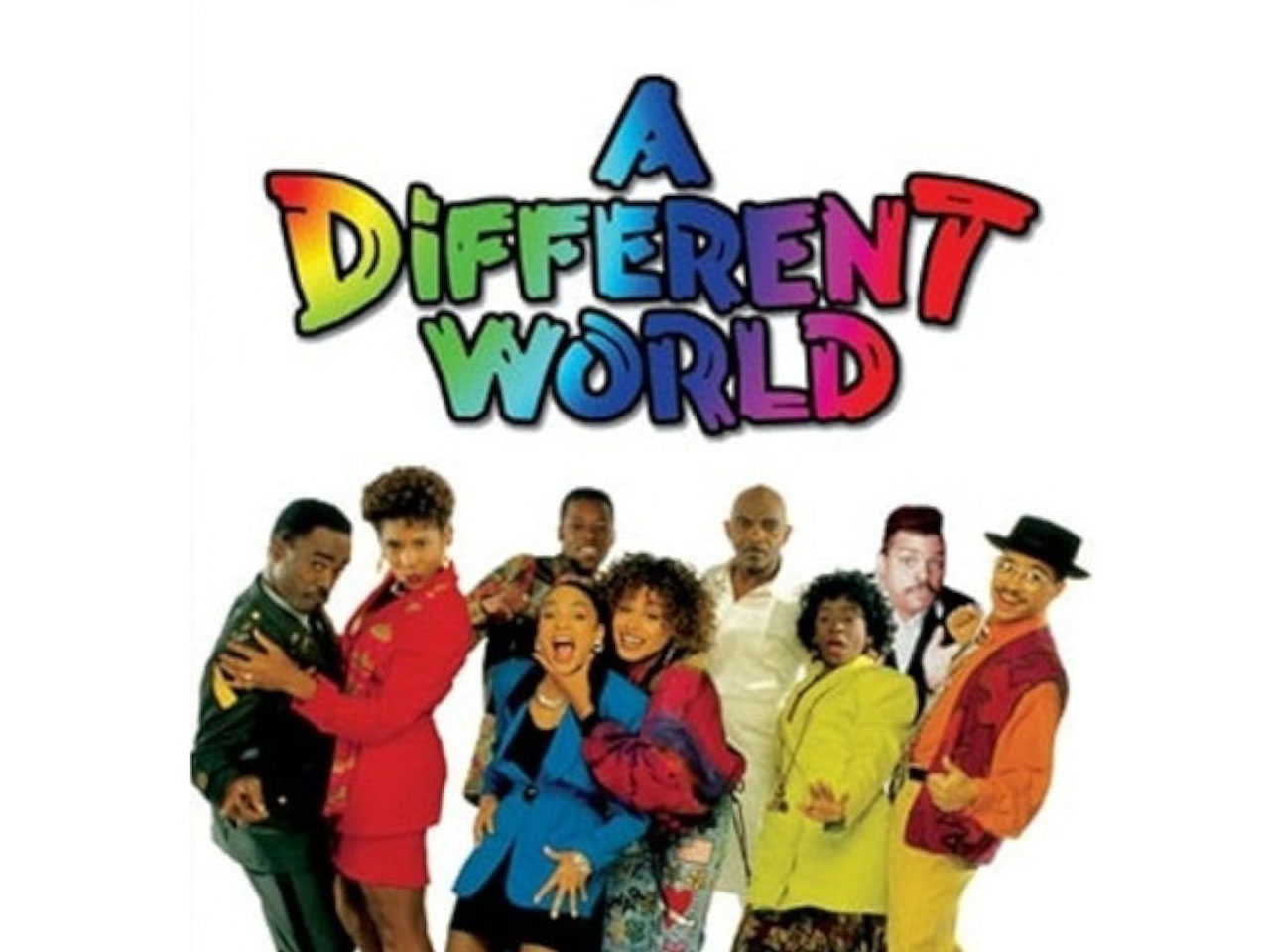
A Different World was created to follow Denise Huxtable from The Cosby Show to college, making Lisa Bonet the obvious center of the new series. One season later, Bonet was gone and the show had to decide whether there was any reason for A Different World to exist without the character it had been created around. The answer ultimately produced a far more distinctive series.
The first season sends Denise to the fictional Hillman College, a historically Black college also attended by her parents and grandparents. The supporting cast includes Whitley Gilbert, Dwayne Wayne, Jaleesa Vinson, and Maggie Lauten, Denise’s roommate played by Marisa Tomei.
The college setting gave the series possibilities beyond its connection to The Cosby Show, but Denise remained its primary point of entry. When Bonet left after the first season, simply substituting another central character would have missed the opportunity created by her departure.
Instead, the series underwent a substantial creative overhaul.
Debbie Allen became a major creative force beginning with Season 2, drawing partly on her own experience attending Howard University and pushing the series toward a richer portrayal of life at an HBCU. The focus expanded beyond any single student, allowing Hillman itself and the community surrounding it to become central to the show’s identity.
Whitley and Dwayne, initially supporting characters, became increasingly important, with their evolving relationship eventually providing one of the series’ strongest continuing stories. Other members of the ensemble received room to develop their own ambitions, relationships, political views, and experiences.
The revamped series also became more willing to address subjects affecting Black college students and young adults directly. Racism, colorism, class, sexism, HIV/AIDS, apartheid, and other issues could become part of the characters’ lives without transforming Hillman into merely a setting for weekly lessons.
What began as a vehicle designed to extend the story of one enormously popular sitcom character became an ensemble series with an identity independent of the show that created it. Denise Huxtable brought viewers to Hillman, but A Different World survived because it eventually realized Hillman was the reason to stay.
Where to watch:Check current streaming availability; sold on physical media and digitally.
Cheers (1982–1993)
For its first five seasons, Cheers had one relationship at the center of nearly everything. Sam Malone and Diane Chambers were attracted to each other, infuriated by each other, repeatedly drawn together, and seemingly incapable of building a stable relationship. When Shelley Long left the series after Season 5, Cheers lost half of the pairing that had provided its most important continuing story. Rather than attempting to recreate Sam and Diane with someone else, the series changed its center of gravity.
Diane enters Cheers in the pilot after her fiancé abandons her and reluctantly accepts a job as a waitress. Her intellectual personality immediately clashes with Sam’s more instinctive approach to life, and their mutual attraction gives the series a romantic engine that runs through its first five seasons.
The bar already has a terrific ensemble around them. Coach, Carla, Norm, Cliff, and later Frasier can all carry stories and generate comedy of their own, but Sam and Diane provide the larger question hanging over the series. Whether they’re together or apart, their relationship keeps pulling them back toward each other.
Diane’s departure at the end of Season 5 removes that question permanently.
Season 6 introduces Kirstie Alley as Rebecca Howe, the corporate manager now running Cheers after Sam has sold the bar. The obvious move would have been to make Rebecca another romantic counterpart for Sam and recreate the old formula with a different actress. Instead, Rebecca develops into a very different character whose professional ambitions, insecurities, romantic disasters, and eventual unraveling provide comedy without turning her into Diane’s replacement.
That gives the rest of the ensemble more room. Frasier and Lilith’s marriage becomes increasingly important. Woody, who had replaced Coach following Nicholas Colasanto’s death, develops into a major character. Carla, Norm, and Cliff continue generating stories that have little or nothing to do with Sam’s romantic life.
Sam changes as well. His pursuit of women remains part of the character, but the series increasingly treats Cheers itself as his most important relationship. By the finale, Diane can return and briefly revive the possibility that the original love story might finally receive its happy ending. Instead, Sam ultimately recognizes that leaving the bar would mean walking away from the life he actually built.
The early Cheers asks whether Sam and Diane belong together. The later version broadens that question into something more important: why do all of these people belong together? Losing one of its two central characters forced Cheers to answer that question, and the ensemble that had always surrounded Sam and Diane became the heart of the show.
Where to watch:Available to stream; sold on physical media and digitally.
Newhart (1982–1990)
The first season of Newhart introduces Dick and Joanna Loudon as New Yorkers who purchase an old Vermont inn and begin adjusting to life in a small town. That premise remains technically accurate throughout the series, but it does a poor job of describing the increasingly strange comedy Newhart eventually becomes. The transformation happens gradually as supporting characters disappear, replacements arrive, and the town surrounding the Loudons becomes considerably more eccentric.
Early Newhart is relatively grounded. Dick is an author of how-to books, Joanna runs the Stratford Inn with him, and much of the comedy comes from their adjustment to innkeeping and the peculiarities of small-town life.
The original supporting cast includes handyman George Utley and Kirk Devane, the owner of the neighboring Minuteman Cafe. Kirk is a habitual liar whose schemes and romantic problems provide many of the early stories. Leslie Vanderkellen works at the inn during the first season, with her spoiled cousin Stephanie arriving later.
Several of those pieces don’t last. Leslie leaves after Season 1. Kirk eventually disappears. Stephanie stays and is joined by television producer Michael Harris, while Dick begins hosting the local interview program Vermont Today.
Those changes gradually shift Newhart away from a relatively conventional fish-out-of-water sitcom. Dick remains the sensible center, but the world around him becomes increasingly ridiculous. Michael and Stephanie form an aggressively self-absorbed couple who seem to operate according to their own understanding of reality. Town meetings become showcases for bizarre local personalities, while Dick’s television career gives the show another
Then there are Larry, Darryl, and Darryl. Introduced as three odd brothers from the woods, they become recurring characters and eventually take over the Minuteman Cafe. Larry does all the talking while both Darryls remain famously silent for almost the entire series. What could have been a one-joke appearance becomes one of the show’s defining elements.
The increasingly surreal tone is what ultimately makes the famous finale possible. When Dick is struck by a golf ball and wakes up as Bob Hartley beside Suzanne Pleshette from The Bob Newhart Show, revealing the entire series as Bob’s dream, the joke works partly because viewers have spent years watching Dick Loudon inhabit a world that became progressively less tethered to normality.
Newhart never formally abandons its original premise. Instead, it quietly replaces enough of the machinery surrounding that premise that the later seasons feel like a different kind of comedy. The Vermont inn remains in exactly the same place while the television show built around it becomes wonderfully stranger.
Where to watch:Check current streaming availability; sold on physical media and digitally.
Family Matters (1989–1998)
Anyone who remembers Family Matters primarily as the Steve Urkel show might be surprised by its earliest episodes. Urkel isn’t part of the original cast, and the series begins as a relatively grounded family sitcom centered on the Winslows. His arrival midway through the first season changes the chemistry almost immediately, and over the following years the transformation becomes far more dramatic than simply promoting a popular supporting character.
Family Matters itself begins as a spinoff of Perfect Strangers, where Harriette Winslow worked as an elevator operator. The new series moves the focus to her Chicago home and family, including police officer husband Carl, children Eddie, Laura, and Judy, Carl’s mother Estelle, and Harriette’s sister Rachel and her son Richie.
The early stories revolve largely around recognizable family problems. Carl worries about money and his children. Eddie gets into trouble. Laura deals with school. Harriette balances work and family while frequently serving as the most sensible person in the house.
Then Jaleel White appears as Steve Urkel, originally intended as a guest character.
Urkel’s enormous popularity quickly makes him a recurring character and eventually the figure most closely associated with the series. His unrequited love for Laura, friendship with Carl, inventions, accidents, and ability to turn an ordinary Winslow afternoon into a catastrophe increasingly drive the stories.
At first, those stories can still fit comfortably inside a family sitcom. Steve breaks something, annoys Carl, or creates an embarrassing situation. As the series continues, however, Urkel’s scientific abilities push Family Matters into territory that would have seemed absurd during its first season.
Steve creates a transformation chamber that turns him into the suave Stefan Urquelle. He builds robots. Characters are cloned. Personalities and appearances can be altered through inventions, while increasingly elaborate stories treat impossible technology as another normal part of life in the Winslow house.
The shift in focus affects the original family as well. Judy Winslow disappears without explanation after Season 4, while Rachel becomes less prominent. Carl, Laura, and Eddie remain important, but Steve increasingly connects the major pieces of the series.
Family Matters didn’t merely discover a breakout character. It gradually rebuilt its entire reality around him, transforming a grounded family comedy into a show where science-fiction inventions could sit comfortably beside stories about dating, school, work, and family life.
Where to watch:Available to stream; sold on physical media and digitally.
Roseanne/The Conners (1988–2025)
Few television reinventions have been forced by circumstances as unusual as the transformation of Roseanne into The Conners. The 2018 revival was explicitly built around the return of Roseanne Barr and the working-class family whose sitcom had originally ended more than 20 years earlier. Within months, ABC canceled the revival, Barr was gone, and the remaining cast faced the challenge of continuing a show that had literally carried its former star’s name.
From its 1988 premiere, Roseanne centers Roseanne Conner as the dominant personality in the Conner household. Dan, Jackie, Becky, Darlene, D.J., and the rest of the family have substantial stories of their own, but Roseanne is the gravitational center.
The 2018 revival restores that structure. Roseanne and Dan are older, their children have adult problems of their own, and multiple generations now occupy the family home, but the series is unmistakably a continuation of Roseanne.
After Barr posted a controversial tweet in May 2018, ABC canceled the series. The network subsequently moved forward with a new show featuring the remaining cast, leaving the writers with a fundamental storytelling problem: how do you remove Roseanne Conner from Roseanne?
The Conners begins after Roseanne has died from an opioid overdose. Her death isn’t treated merely as an explanation for why an actor is missing. The family has to grieve her, confront the circumstances surrounding her death, and determine how their lives function without the person who previously occupied the center of them.
The solution is an ensemble structure. Dan remains the family patriarch, but Darlene and Becky become increasingly central, Jackie continues as a major presence, and the younger generation receives stories that allow the Conner family to keep expanding rather than existing primarily around memories of Roseanne.
The working-class concerns that defined the original series remain. Jobs disappear, bills pile up, relationships fail, health problems create financial pressure, and several generations rely on one another because independence isn’t always economically possible. What changes is the perspective. No single character owns the family story anymore.
That distinction ultimately allows The Conners to run for seven seasons, longer than anyone could reasonably have assumed when ABC first announced the emergency reworking of the canceled revival.
Roseanne and The Conners technically have different titles, but narratively they form one continuing family story. The house remains, the characters remember everything that came before, and life continues after the person who once defined the series is gone. The reinvention works because the producers discover that Roseanne Conner may have been the original center of the show, but the Conner family was always large enough to survive her.
Cougar Town (2009–2015)
The title Cougar Town eventually became one of television’s most persistent reminders of a premise its own series had abandoned. ABC launched the sitcom as a vehicle for Courteney Cox playing a recently divorced woman navigating dating in her 40s. Before long, the writers realized the characters surrounding Jules Cobb were considerably more interesting than the dating concept, and the series evolved into an ensemble comedy about friendship, relationships, and drinking an impressive amount of wine.
Early episodes concentrate heavily on Jules adjusting to being single after years of marriage. Her younger employee Laurie encourages her to enjoy her newfound freedom, while Jules begins dating younger men and worries about aging in a Florida community filled with attractive younger women.
The premise explains the title directly. Jules is the “cougar,” and the show initially derives much of its comedy from the contrast between her dating life and the younger romantic competition around her.
The supporting characters are already present, including Jules’ ex-husband Bobby, teenage son Travis, neighbors Ellie and Andy, and eventual love interest Grayson. As those relationships develop, however, the original premise becomes increasingly unnecessary.
The series gradually stops caring about Jules dating younger men and concentrates on the entire group. Jules and Grayson become a committed couple and eventually marry, eliminating the romantic setup that originally defined the show. Ellie and Andy’s marriage, Bobby’s eccentric lifestyle, Laurie’s relationships, and Travis growing into adulthood all become parts of a larger ensemble.
The characters spend so much time together that Jules’ kitchen and cul-de-sac effectively become the show’s primary gathering places. Elaborate games, recurring jokes, invented traditions, oversized wine glasses, and increasingly ridiculous competitions give the group its own peculiar culture.
The producers were well aware that the title no longer made sense. Beginning in Season 2, opening credits regularly included jokes underneath the Cougar Town logo acknowledging the problem and suggesting alternative titles. Instead of disguising the reinvention, the series turned its outdated name into another running gag.
The title never changed, but almost everything it originally described did.
Where to watch:Check current streaming availability; sold on physical media and digitally.
Person of Interest (2011–2016)
The original premise of Person of Interest sounds like a high-concept CBS procedural. A mysterious billionaire has access to a machine capable of identifying people connected to future violent crimes, and he recruits a former CIA operative to help prevent them. Early episodes largely deliver exactly that format, but the technology behind those weekly cases gradually becomes more important than the cases themselves, transforming the series into a serialized science-fiction story about artificial intelligence, surveillance, and who gets to control systems capable of watching everyone.
Harold Finch created the Machine for the U.S. government after the Sept. 11 attacks. It analyzes enormous amounts of surveillance data to predict acts of terrorism, but it also identifies ordinary violent crimes that the government considers irrelevant to national security.
Finch secretly receives the Social Security numbers of people the Machine believes will be involved in those crimes. The number doesn’t reveal whether someone will become a victim or perpetrator, leaving Finch and John Reese to investigate and intervene.
That structure gives the series a dependable weekly engine. A number arrives, Reese investigates, Finch searches through data, and the pair tries to prevent whatever the Machine has predicted.
The larger mythology steadily moves forward until it becomes impossible to treat the Machine as merely the device that generates each week’s story. The series begins exploring what Finch actually created, whether an artificial intelligence can develop something resembling morality, and what responsibilities its creators have toward it.
Then another artificial intelligence enters the picture.
Samaritan isn’t governed by Finch’s cautious philosophy. Once operational, it can observe, manipulate, and reshape society on an enormous scale. The conflict between the Machine and Samaritan transforms the series from a procedural about preventing individual crimes into a covert war between competing artificial intelligences and the humans who serve them.
The ensemble expands along with the premise. Root evolves from antagonist to one of the Machine’s closest human connections, while Sameen Shaw becomes essential to Finch and Reese’s operation. Detectives Carter and Fusco also demonstrate how the series can take characters who initially appear to occupy familiar procedural roles and give them much larger places within the story.
Person of Interest begins with two men using an artificial intelligence to save one person at a time. It eventually asks what happens when artificial intelligence decides it can save humanity from itself.
Where to watch:Check current streaming availability; sold on physical media and digitally.
Agents of S.H.I.E.L.D. (2013–2020)
Agents of S.H.I.E.L.D. began with one of the clearest premises imaginable for a television series connected to the Marvel Cinematic Universe. Agent Phil Coulson was alive again, he had assembled a small team of specialists, and every week they would investigate unusual people, objects, and events emerging in a world increasingly populated by superheroes. Then a Marvel movie dismantled the organization named in the show’s title, forcing the series to rebuild itself while it was still on the air.
The first season introduces Coulson’s team aboard the Bus: Melinda May, Grant Ward, Leo Fitz, Jemma Simmons, and hacker Skye. Early episodes frequently follow a mission-of-the-week structure as the agents investigate technology, enhanced individuals, alien artifacts, and other consequences of the rapidly expanding MCU.
The series also operates from the assumption that S.H.I.E.L.D. is an enormous, established institution. Coulson and his team may encounter internal bureaucracy and secrets, but they have bases, re
That stability disappears after the events of Captain America: The Winter Soldier.
The revelation that Hydra has infiltrated S.H.I.E.L.D. changes the television series immediately. The organization collapses, trusted relationships become suspect, and Ward is revealed as a Hydra operative. Coulson’s team goes from working within a powerful international agency to trying to determine whether S.H.I.E.L.D. can or should exist at all.
That upheaval frees the series from its original procedural structure. Subsequent seasons repeatedly rebuild the status quo around new threats and genres. The Inhumans become central to the story, particularly after Skye discovers her identity as Daisy Johnson and develops powers of her own. Later stories send the characters into a virtual reality controlled by Hydra, into space and a dystopian future, and eventually through different periods of history.
The tone evolves along with the premise. What initially looks like a television companion designed to investigate the corners of the MCU between movies develops its own mythology, villains, relationships, and increasingly elaborate science-fiction concepts.
The destruction of S.H.I.E.L.D. could have removed the foundation the series needed to function. Instead, it gave Agents of S.H.I.E.L.D. permission to discover how many different shows it could become.
Where to watch:Check current streaming availability; sold digitally.
Legends of Tomorrow (2016–2022)
The first season of Legends of Tomorrow takes itself surprisingly seriously. Rip Hunter assembles a team of heroes and villains to travel through time and stop the immortal Vandal Savage from conquering the world. The stakes are enormous, the mythology is complicated, and the characters spend much of the season pursuing one primary enemy. The series that eventually features a giant blue stuffed animal fighting a demon is still some distance away.
Built from characters introduced on Arrow and The Flash, Legends of Tomorrow initially resembles a superhero version of a time-travel adventure series. Rip recruits Sara Lance, Ray Palmer, Leonard Snart, Mick Rory, Martin Stein, Jefferson Jackson, Kendra Saunders, and Carter Hall because Savage poses a threat to the future Rip is trying to prevent.
The season is heavily serialized around Savage and the reincarnation mythology surrounding Kendra and Carter. Rip is the authority figure, the mission provides the structure, and the team spends much of its time attempting to repair the consequences of traveling through history.
The ingredients for something stranger are present, particularly in the personalities of the mismatched crew, but the series hasn’t yet decided that those ingredients should become the main course.
After the first season, the show begins loosening its attachment to conventional superhero storytelling and increasingly embraces comedy, absurdity, and the fact that its protagonists are frequently terrible at protecting the timeline.
That willingness to become ridiculous eventually defines the series. Historical figures mingle with magical creatures, puppets, alternate realities, musical sequences, aliens, and increasingly bizarre threats. The Legends routinely create as many problems as they solve, and their unconventional solutions become part of the show’s appeal rather than evidence that they’re failing to behave like traditional superheroes.
Beebo provides perhaps the perfect symbol of the transformation. Introduced as a fuzzy blue toy worshipped by Vikings who mistake it for a god, Beebo eventually becomes the form the team uses to battle the demon Mallus. It’s difficult to imagine a better demonstration of how thoroughly the series stopped worrying about whether anyone would consider it ridiculous.
The cast also becomes increasingly fluid. Original members leave and new Legends arrive, allowing the Waverider itself and the dysfunctional family aboard it to become more important than any particular lineup.
The transformation gives Legends of Tomorrow an identity distinct from the Arrowverse shows that created it. It begins as a superhero team trying to save history and becomes a comedy about a found family of lovable disasters whose ability to save history frequently depends on their willingness to make it considerably weirder.
Where to watch:Check current streaming availability; sold on physical media and digitally.
Search Party (2016–2022)
Search Party begins with a missing woman and a group of self-absorbed twenty-somethings trying to find her. That setup could easily sustain a dark comedy-mystery for several seasons, but the series has almost no interest in remaining within a single genre. Instead, each major consequence of the characters’ actions pushes the story into another kind of television show.
Dory Sief becomes obsessed with the disappearance of Chantal Witherbottom, a former college acquaintance she barely knew. Her boyfriend Drew and friends Elliott and Portia eventually join the search, although their motivations aren’t always as selfless as they would like to believe.
The first season operates largely as a mystery. Dory follows clues, tracks Chantal’s movements, develops theories, and becomes increasingly convinced that she has discovered a meaningful purpose missing from her otherwise directionless life.
The comedy comes from the enormous gap between how seriously Dory takes the investigation and how spectacularly ill-equipped this group is to conduct one. Yet the mystery itself remains compelling enough that finding Chantal provides a genuine storytelling engine.
Solving the initial mystery doesn’t provide the characters with closure. Their increasingly terrible decisions create consequences that force the series into new genres.
The second season plays more like a paranoid psychological thriller as the group attempts to conceal what happened during their search. The third turns their predicament into a courtroom story and media circus. Later seasons push into kidnapping, psychological horror, cult behavior, and eventually an apocalyptic storyline so far removed from the original missing-person investigation that describing both as the same television series sounds almost implausible.
The constant reinvention works because Dory, Drew, Elliott, and Portia remain the connective tissue. Their capacity for rationalizing selfish behavior, creating disasters, and then convincing themselves they’re responding reasonably to those disasters allows the show to change genres without losing its identity.
In that sense, Search Party doesn’t reinvent itself once. Reinvention becomes part of its structure. Each season asks what kind of story these characters have created through the consequences of the previous one, then commits aggressively to the answer.
The series begins with Dory desperately searching for meaning by trying to find someone else. By the end, her search for purpose has taken her and everyone around her somewhere the first season could never have reasonably predicted.
Where to watch:Check current streaming availability.
More Television History
Television has spent decades changing its rules, surprising audiences, and finding new ways to keep viewers watching.
Television series are usually built to provide audiences with something familiar. Successful characters, relationships, and formats become valuable precisely because viewers know what they’re returning to each week. Changing too much can destroy the reasons people were watching in the first place.
These shows demonstrate that sometimes changing is exactly what keeps a series alive. The Facts of Life discarded most of its original ensemble. Cheers lost half of the relationship that had driven five seasons. A Different World continued without the character it was created to showcase, while The Conners had to imagine the Conner family without Roseanne at its center. Other shows simply discovered that their original formats were preventing them from becoming something more interesting.
The most successful reinventions didn’t erase everything that came before. They identified which pieces of the original series were worth preserving and built something new around them. Sometimes that meant changing the cast or storytelling structure, and sometimes it meant accepting that a superhero show was much more entertaining once a giant blue stuffed animal could become humanity’s best hope against a demon.
All hail Beebo.

2 Comments
Pingback: Fortnite Sprites Just Got Harder to Collect With New Update - Comic Vibe
Pingback: The Legend Of King Arthur Inspired A Failed Modern Day CBS Sitcom - Comic Vibe