

Premiering in 1972, “M*A*S*H” is one of the best TV shows of the 1970s, mixing comedy with wartime medical drama. But despite its venerated status and what hardcore fans may tell you, not every episode needs to be seen more than once. Running for 11 seasons, it’s a basic law of averages, that the sitcom delivered some absolute clunkers before coming to an end in 1983. These are the episodes that we’re highlighting this time, the ones to give a miss after watching them once when doing a repeat viewing.
Simply put, not every adventure involving the personnel around the 4077th mobile army hospital during the Korean War is worth retelling. These episodes are not only mediocre in overall quality but lack any real impact on the overarching character arcs. Many of these stories are so utterly forgettable, that omitting them hardly registers when revisiting the series. These are 10 “M*A*S*H” episodes to skip on a rewatch rather than suffering through again for completion’s sake.
Edwina (Season 1, Episode 13)
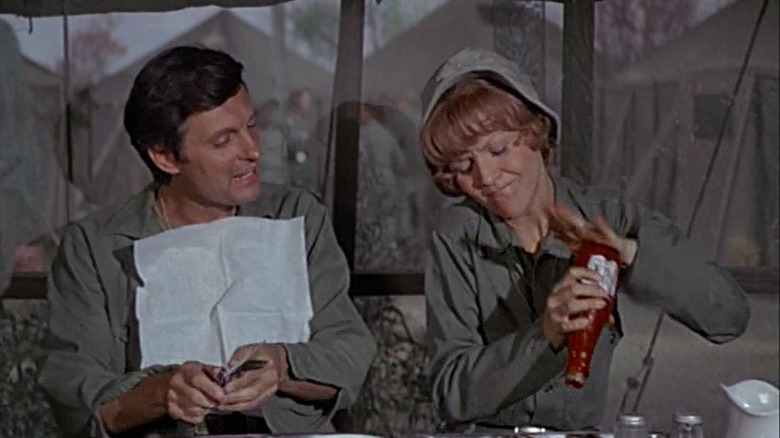
“M*A*S*H” is a show that recovered from a bad season, with its inaugural run of episodes opting for a wackier comedy tone. Those uneven qualities are on full display in the first season episode “Edwina,” named for new nurse Edwina Ferguson (Arlene Golonka). The camp’s chief surgeon Hawkeye Pierce (Alan Alda) goes on a date with her, only to find his charms thwarted by her klutzy nature. With the other nurses refusing to be romantically involved with other personnel around camp until Edwina’s lovelorn woes are resolved, Hawkeye has to carry through with the date.
While it’s nice to see Hawkeye, the perpetual ladies’ man, get his comeuppance, “Edwina” is all over the place in its execution. There had been episodes before it that had leaned heavily into screwball comedy, but the attempts at slapstick gags here never elicit the desired laughs. This extends to the weird ways that the sexual frustration of the other characters manifests until Edwina gets some intimate fulfillment. A prime example of why the first season of “M*A*S*H” is its worst, “Edwina” is an eye-rolling slog to get through.
Major Fred C. Dobbs (Season 1, Episode 22)
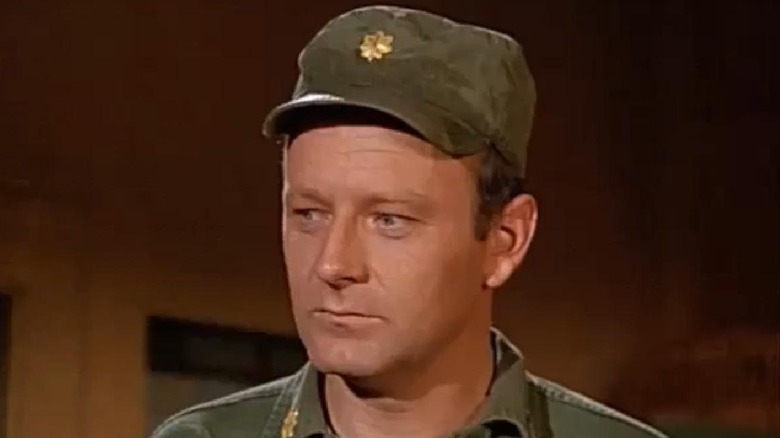
The closest thing that Hawkeye has to an overarching nemesis around the 4077th is Frank Burns (Larry Linville). Because of his stuck-up nature and poor treatment of other personnel, Frank is a frequent target of pranks by Hawkeye and his best friend Trapper John McIntyre (Wayne Rogers). In Season 1’s “Major Fred C. Dobbs,” the duo seemingly succeed in getting a frustrated Frank to request a transfer to another posting. However, when the pair realize that this means they’ll have to work double shifts until a replacement is found, they trick Frank into retracting his request.
As the audience, we never buy that Hawkeye and Trapper John would have a change of heart and try to get Frank to stay, which fundamentally undercuts the entire episode. Yes, there is the threat of extra work for the two of them but the camp’s contempt for their longtime rival is so pronounced that the premise feels disingenuous. Similarly, the pair’s scheme to get Frank to stick around is so half-baked and contrived that it feels out of character for everyone involved. Alan Alda once referred to “Major Fred C. Dobbs” as a low point for the series and, in watching the episode, he definitely has a point.
Henry in Love (Season 2, Episode 16)
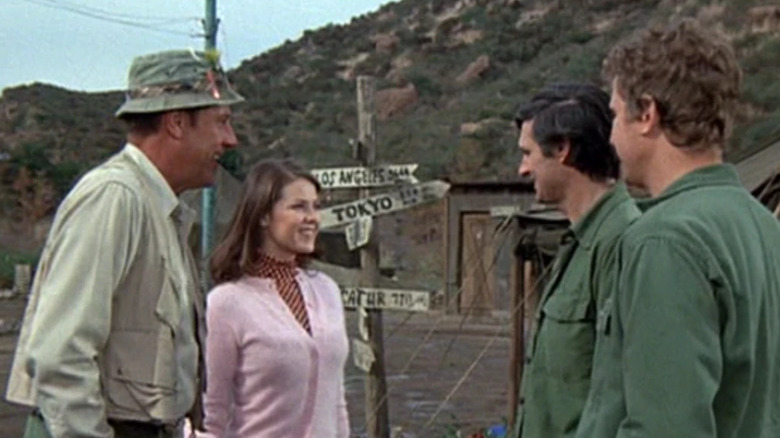
Infidelity is a common element throughout “M*A*S*H,” usually justified as a means to escape the horrors of war. Season 2’s “Henry in Love” takes this trope into an especially uncomfortable direction as married commanding officer Henry Blake (McLean Stevenson) enters an affair with a much younger woman. With his new paramour Nancy Sue Parker (Kathrine Baumann) visiting the camp, Henry tries to prepare to impress her. Disgusted by the age gap and Henry contemplating leaving his wife, Hawkeye and Trapper John try to break up the extramarital couple.
There is just all kinds of ickiness going on here, with Nancy Sue revealed to be only 20 years old compared to the visibly middle-aged Henry. That he would also contemplate ditching his wife and three children to rob the cradle makes him even more of an irredeemable lout. We understand that “M*A*S*H” characters aren’t perfect, it’s a big part of what makes them so endearing and relatable. But episodes like “Henry in Love” makes us wish McLean Stevenson quit “M*A*S*H” in less than three seasons.
Hawkeye (Season 4, Episode 19)
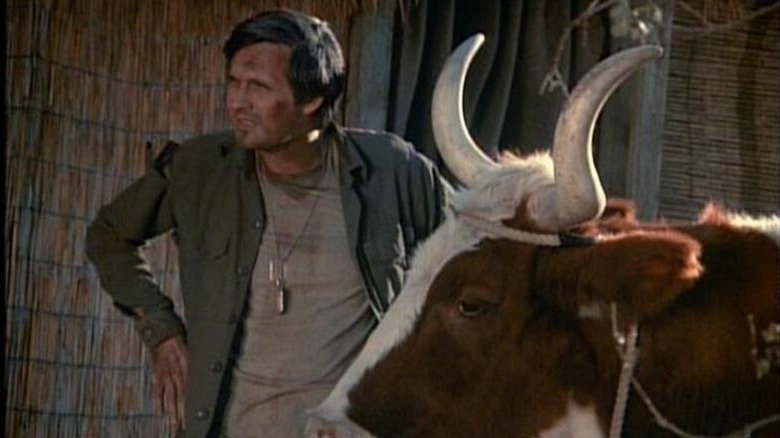
In playing the de facto protagonist, Alan Alda was an invaluable in elevating “M*A*S*H” both both in front of and behind the camera. However, a big part of why the series works is because it’s primarily an ensemble piece rather than a one-man show. The fourth season episode “Hawkeye” exemplifies this, with the good-natured surgeon crashing a Jeep while driving alone and suffering a concussion. Taken in by a Korean family, Hawkeye tries to stay conscious until help arrives, communicating with his benefactors despite neither understanding each other.
Alda certainly does his admirable best trying to carry “Hawkeye” but the absence of the rest of the main cast is felt. While it’s nice that the Korean family isn’t played for stereotypical laughs, the episode never handles the communication disconnect as well as it should. By the end, we’re just relieved that Hawkeye is inevitably rescued, spared seeing him manically trying to avoid falling unconscious any longer. An interesting one-off experiment at best, “Hawkeye” reminds us that “M*A*S*H” is much bigger than any single character.
Hanky Panky (Season 5, Episode 19)
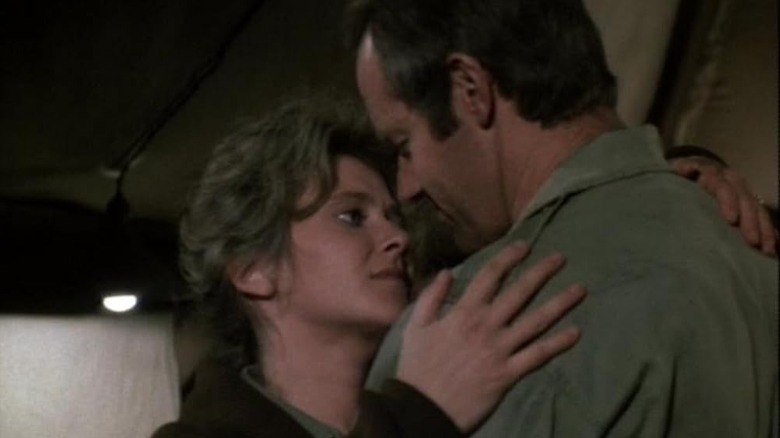
As mentioned with “Henry in Love,” infidelity is a recurring element in “M*A*S*H,” largely carried out by Henry, Trapper John, and Frank. One character that we personally hate to see cheat on their spouse is BJ Hunnicutt (Mike Farrell), who replaced Trapper in Season 4. Fortunately, this really only happens once, in the fifth season episode “Hanky Panky,” with BJ getting close to Nurse Carrie Donovan (Ann Sweeny). Initially consoling Carrie after she learns her husband is leaving her, BJ falls into a brief fling with her, leaving him guilt-ridden.
To the episode’s credit, “Hanky Panky” deals with infidelity in a much more mature manner than preceding seasons of the show. But for fans of BJ and his enduring love for his wife, the story still stings and feels like a gross misstep committed by the character. BJ revisits the temptation of cheating on his wife in Season 8 episode “War Co-Respondent,” but this is handled more effectively, with BJ restraining himself while exploring similar themes. Overall, “Hanky Panky” is best left swept under the carpet by comparison.
Our Finest Hour (Season 7, Episodes 4/5)
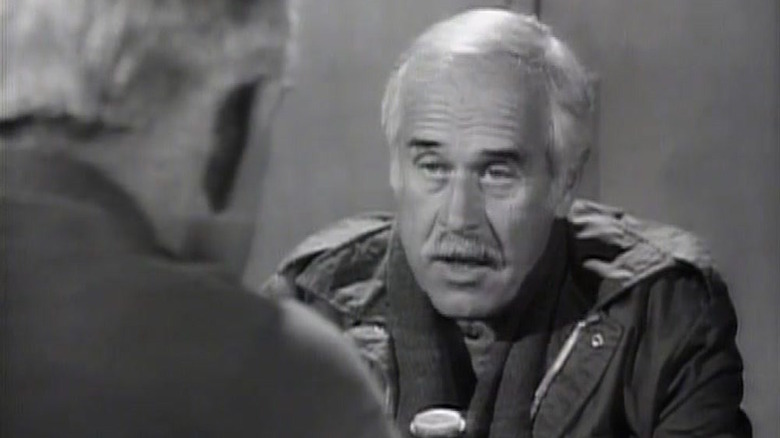
There’s an easy and specific reason why the seventh season two-parter “Our Finest Hour” is a no-brainer to skip. The episode is a double-sized clip show, the only official “M*A*S*H” episode to heavily reuse footage from past seasons. The new sequences framing the greatest hits montage is that the 4077th is being filmed by war correspondent Clete Roberts, playing himself, for newsreel footage. These black-and-white scenes, mimicking ’50s news cinematography, juxtaposed by the color archival footage to follow, showcases how much the unit has endured.
If you’re doing a rewatch of “M*A*S*H” from the beginning, you’ve likely seen the material included in “Our Finest Hour” relatively recently. These episodes’ original contexts don’t outweigh their usage in the extended clip show, reminding viewers of better past episodes. The one highlight is that the episode contains footage of Trapper John, Henry Blake, and Frank Burns, all of whom having since left the show. But aside from those friendly familiar faces, “Our Finest Hour” is a skippable walk down memory lane that doesn’t even evoke a rewarding sense of nostalgia.
Inga (Season 7, Episode 17)
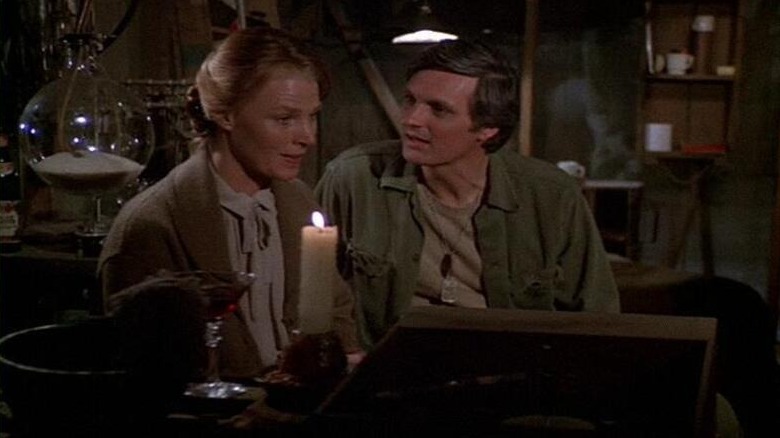
As one of the best war shows in TV history, “M*A*S*H” often juxtaposes love and conflict, whether it’s pining for loved ones back home or romances struck around the camp. One particular love story from across the series that’s better left forgotten is the seventh season episode “Inga.” The episode is named for a visiting Swedish physician Inga Halverson (Mariette Hartley), who quickly takes charge among the medical staff. As Hawkeye romances her, he has to come to terms with his own misogynistic tendencies while Charles Winchester (David Ogden Stiers) bristles over being shown up by a woman.
Hawkeye had been established as a womanizing cad since the start of the series, so “Inga” doesn’t necessarily bring anything new to the table in that regard. Seeing Hawkeye reconcile with that behavior doesn’t quite have the pathos that the story is clearly going for, especially as that development is quietly discarded after this episode. More uncomfortable is witnessing how much of a boorish figure Winchester is, with the late great David Ogden Stiers deserving better material than he’s given. Just an odd episode all around, “Inga” never quite succeeds in fully deflating the commonplace misogyny around the camp.
Dear Uncle Abdul (Season 8, Episode 12)
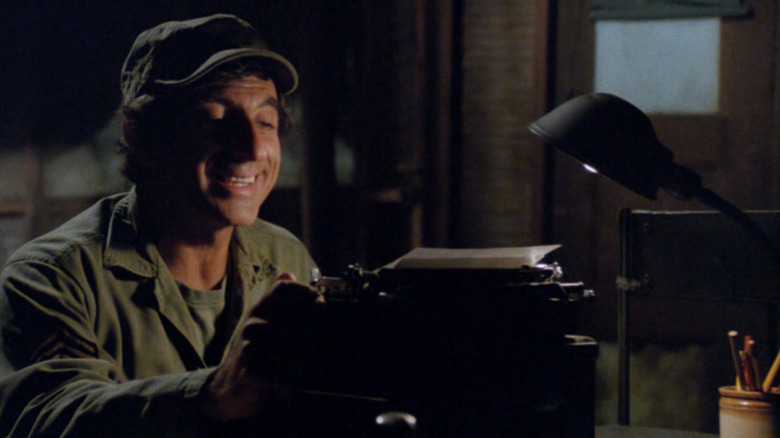
After starting out as a well-received recurring “M*A*S*H” character, Max Klinger (Jamie Farr) became part of the main cast in Season 4. Steadily growing beyond his one-note joke of cross-dressing in an unsuccessful attempt to be discharged from the military, Klinger becomes the unit’s company clerk in Season 8. Later in the season, Klinger writes about his new role around camp as the framing device for the episode “Dear Uncle Abdul.” This correspondence and day-in-the-life for Klinger approach is punctuated by Hawkeye and BJ trying to determine who’s the funnier of the two.
The letter-writing framing device is a major staple throughout “M*A*S*H,” with everyone from Hawkeye to BJ getting their own episodes using the trope. “Dear Uncle Abdul” isn’t a forgettable episode because it centers on Klinger; if anything, that’s the only memorable thing about this installment. Instead, the episode is all over the place tonally and much more unevenly than usual, especially for a story featuring an underlying comedy contest. There are better episodes in the later seasons of “M*A*S*H” showcasing how far Klinger has come, making “Dear Uncle Abdul” largely a disappointment.
That’s Show Biz (Season 10, Episodes 1/2)
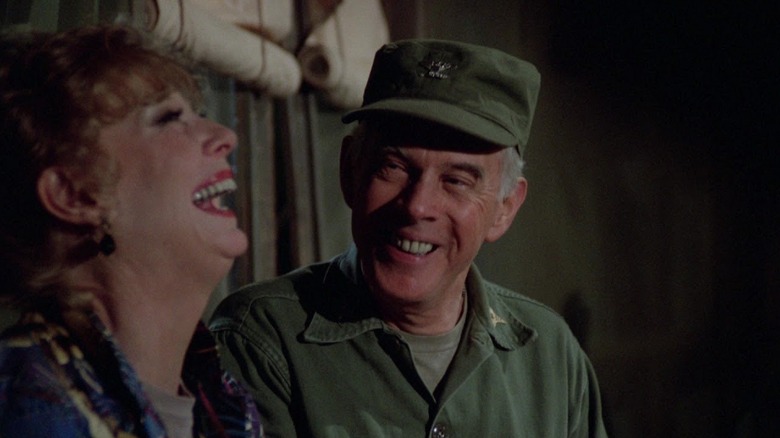
“M*A*S*H” Season 10 kicked things off with the two-parter “That’s Show Biz,” bringing a wayward USO troupe to the 4077th. The episode splits into a group of narratives as various members of the troupe interact with the usual personnel around camp. This includes dancer Brandy Doyle (Gwen Verdon) trying to hook up with Colonel Sherman Potter (Harry Morgan) and Hawkeye turning down another performer’s advances. Not all of these vignettes are romantic in nature, fortunately, with friendships forming between the staff and the traveling ensemble.
“That’s Show Biz” is a two-part story that didn’t need to be double-length, much less exist at all. What the two-parter does best is give all the main characters something substantial to do, albeit with varying levels of success. Among the weaker subplots is Potter nearly getting a love interest, with actor Harry Morgan doing his best to make the most of it without betraying his character. A subplot that could’ve been deleted altogether to streamline this story into a single episode, “That’s Show Biz” noticeably overstays its welcome.
Snap Judgment (Season 10, Episode 8)
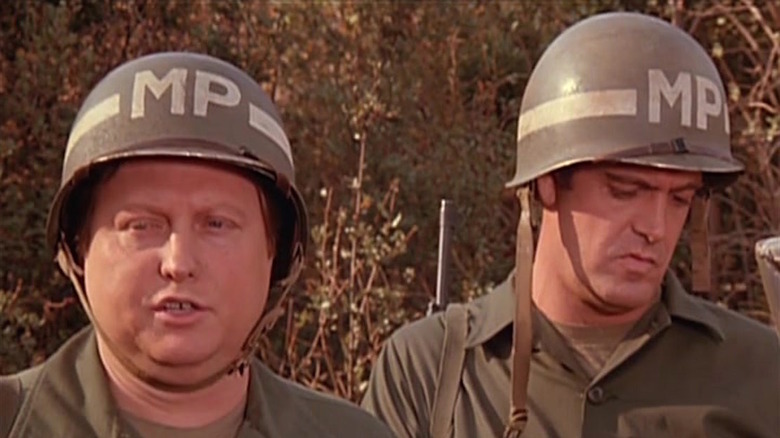
The first half of a two-parter, the 10th season episode “Snap Judgment” has the 4077th endure a string of petty thefts. When Hawkeye’s new camera is stolen, Klinger takes it upon himself to try to get it back, searching the local black market. However, this leads to Klinger being implicated as the camp’s thief, placing him under arrest and the threat of court-martial. But rather than being the ticket out of the military that Klinger wanted all along, he faces the prospect of having his entire life ruined.
Compared to the other two-parters on this list, “Snap Judgment” makes this list over its second half because of how contrived it is. The aptly titled follow-up, “Snappier Judgment,” at least features Winchester trying his hand at practicing law with comedically disastrous results. However, this first half brings nothing particularly interesting to the table on either a dramatic or comical level of quality. Revolving around a forced way to get Klinger into legal hot water, “Snap Judgment” feels less fully realized in its execution than intended.

1 Comment
Pingback: 'Growing Pains' actress Betty McGuire, who played Kate Malone, dies at 100 of natural causes - Comic Vibe