

Why Spider-Man speaks to us
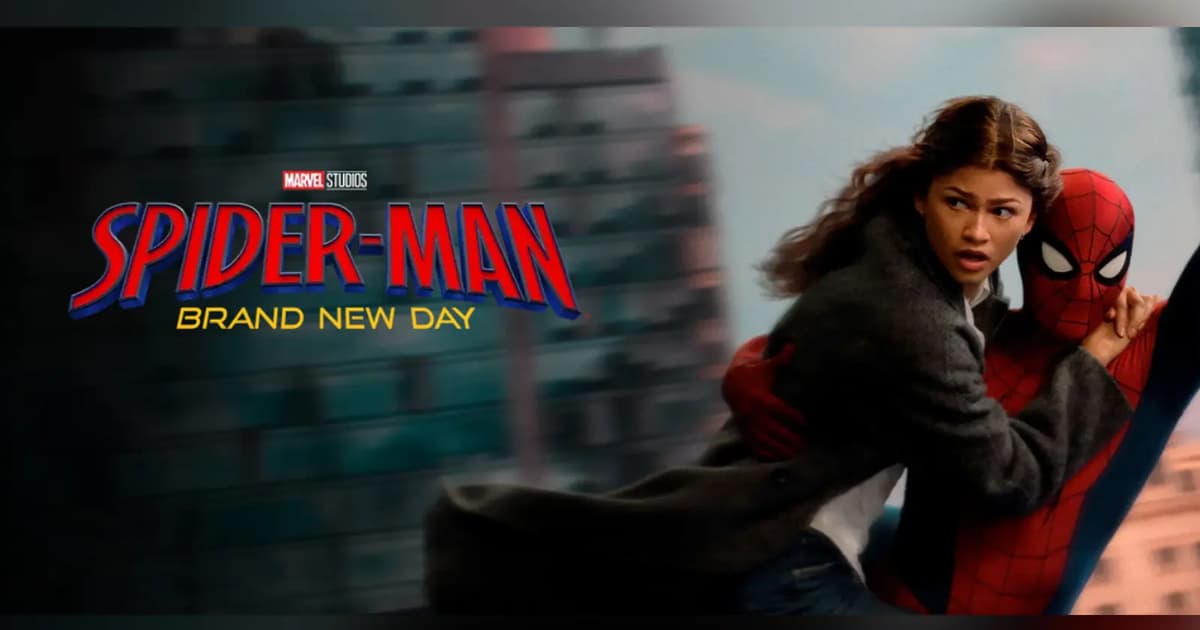
As I sat watching the movie Spider-Man: Brand New Day, I could not help but feel the spirit of Stan Lee, who created the character with artist Steve Ditko. Not because he is the creator of Spider-Man, but because the storytelling was closer to his style, and the ethos of the original Spider-Man.
I bought my first Spider-Man comic in 1967, although I had read a few issues earlier, and over the years – because I could relate to him and Peter Parker, the young man behind the mask – I developed a liking for him.
If memory serves me right, each issue in those days cost 65 cents. I didn’t always get pocket money for school as my mother would usually pack rolled-up thosai to eat during recess. When I did get money, I would save up and buy a comic or two, sometimes from a second-hand bookstore near Rex theatre in Taiping.
I would also visit the two book shops along Main Road or the Taiping railway station book stall to furtively read a few pages at a time in my teenage years.
I later learnt that legendary creators Lee and Ditko introduced Spider-Man in the final issue of Amazing Fantasy #15 in August 1962. At that time, the comic book landscape was dominated by an array of unblemished, god-like potentates from DC Comics such as Superman and Wonder Woman, and also Batman.
Marvel publisher Martin Goodman demurred initially when Lee presented his idea, saying a “spider” character was too bizarre to ever sell and that a teenager would only be accepted by readers as a sidekick to a hero.
But, Lee and Ditko persuaded him to let them include it in the last issue of Amazing Fantasy, as they had nothing to lose. It became a hit.
The duo did not realise then that they had midwifed a cultural phenomenon that would burgeon into one of the highest-grossing and most lucrative superhero franchises globally.
The Lee-Ditko creative partnership sparked something revolutionary, with Lee bringing an energetic, populist optimism, and Ditko infusing the artwork with a high-contrast, psychologically tense and shadowy aesthetic.
The late Ditko, still one of my favourite artists, deliberately broke away from the traditional, muscular strongman silhouette of heroes, drawing Peter as wiry and awkward – whether huddled on cold New York tenement roofs or web-slinging through rain-slicked canyons of concrete.
And the late Lee, also a favourite, brought realism to comics, infusing his characters with human failings and hopes; they were not merely masked heroes who zapped the bad guy or prevented a world catastrophe.
Spider-Man’s success saved Marvel Comics and paved the way for a new era of complex, flawed heroes such as the X-Men. It also established the “Marvel Universe” as a place where heroes had real lives, real problems, and faced real consequences.
But why does an American hero in a red-and-blue costume resonate so deeply across borders, languages, and cultures?
The answer lies not just in the grand cinematic spectacles, but in the quiet, relatable humanity embedded in his comic book origins. The very thing that drew me into his world.
Unlike celestial beings endowed with innate supremacy or brooding, wealthy vigilantes backed by vast fortunes, Peter stumbled into his extraordinary powers through sheer happenstance at a local science exhibition. He was bitten by a radioactive spider.
Peter was a bookish adolescent hobbled by the banal indignities of overdue rent, falling grades, romantic rejection, feeling like an outsider, and an aunt who fretted over trifles. It is this very misery, this exquisite, grinding ordinariness that makes him feel human in New York, Paris, Brasilia, Tokyo, Lagos, London, Shanghai, Chennai and Kuala Lumpur.
Although he remains a localised product of New York City streets, his psychological struggles, his humanity and humility, his ability to remain a good guy despite the odds, and his struggle to rise after each fall are entirely universal.
Crucially, this precarious existence was anchored by a defining, lifelong psychological wound: his initial selfish failure to stop a fleeing criminal, soon after discovering his powers, culminated in the tragic murder of his Uncle Ben. That singular catastrophe forged an inescapable moral compass – a crushing, guilt-ridden burden that made responsibility less a noble ideal than a daily penance.
And Spider-Man is endearingly funny and witty, even in the midst of a do-or-die situation.
Through subsequent legendary comic runs by writers such as Roger Stern, Peter David, Gerry Conway, and J M DeMatteis, and artists such as John Romita Sr, his son John Romita Jr, Gil Kane, Sal Buscema and Todd McFarlane, Spider-Man became Marvel’s best-selling character.
Marvel expanded this cultural footprint over the years by introducing diverse iterations such as Miles Morales (a black guy, created by Brian Michael Bendis and Sara Pichelli) and Miguel O’Hara in the futuristic Spider-Man 2099 (a Hispanic guy, created by Peter David and Rick Leonardi), proving that the character’s core ethos is universal and belongs to everyone.
In fact, a Miles Morales: Spider-Man series is launching this month, after an earlier successful run.
Unlike heroes who battle cosmic conquerors, Spider-Man’s classic comic book rogues’ gallery – such as Doctor Octopus, the Green Goblin, or the Vulture – were frequently mirrors of his own life. Often starting as mentors, scientists, or ordinary men corrupted by hubris or desperation, they reinforced a vital comic book truth: the line between a hero and a villain is razor-thin.
In Spider-Man’s world, a hero is defined by how one retrieves oneself from the dirt following a chastening defeat.
This is most clearly illustrated in my favourite Spider-Man story arc: Kraven’s Last Hunt Spider-Man is defeated and literally buried alive by Kraven but claws his way up
(And yeah, I still have those six issues, published in 1987. ‘Nuff said, as Stan Lee would say).
While cosmic champions like Thor or the Avengers busy themselves with the grandiose spectacle of intergalactic salvation, Spider-Man concerns himself with the immediate, the tactile, and the vulnerable individual in the neighbourhood.
He shows up even when he is tired, broke, or battling the consequences of his own mistakes.
Spider-Man doesn’t just swing in and save the day. He gets beaten up, embarrassed, misunderstood, or forced to choose between two bad options. He may lose the fight, miss the date, fail the class, disappoint someone, or blame himself for something that wasn’t fully his fault. But he keeps going anyway.
And in a modern world where ordinary people frequently feel powerless against massive, impersonal systems – whether corporate greed, economic instability, or political disillusionment – Peter represents a comforting truth: you do not need to be a god or a titan to make a difference. You simply need to care and to keep going.
This dynamic strikes a particularly powerful chord internationally, including right here in Malaysia.
The image of a young man trying to do the right thing despite overwhelming odds mirrors the local struggle of the small person against a large, indifferent system.
There is also a profound psychological resonance to his mask, more so today. In an era defined by social media presence, we wear metaphorical masks at least some of the time.
We stitch them together out of societal expectations, our constant pressure to conform, our anxieties, our compromised ideals, our desire to pass unnoticed in the crowd or to seek attention, and our relentless imperative to project perfectionism.
But Spider-Man’s mask does something quite different.
Beneath those white lenses is an ordinary, struggling human being who is grappling with his manifold insecurities and it reminds us that our true self – with all our vulnerabilities and flaws – is where our real strength lies.
Excelsior! (again, as Stan Lee would say).
The views expressed are those of the writer and do not necessarily reflect those of FMT.
Stay current – Follow FMT on WhatsApp, Google news and Telegram
