

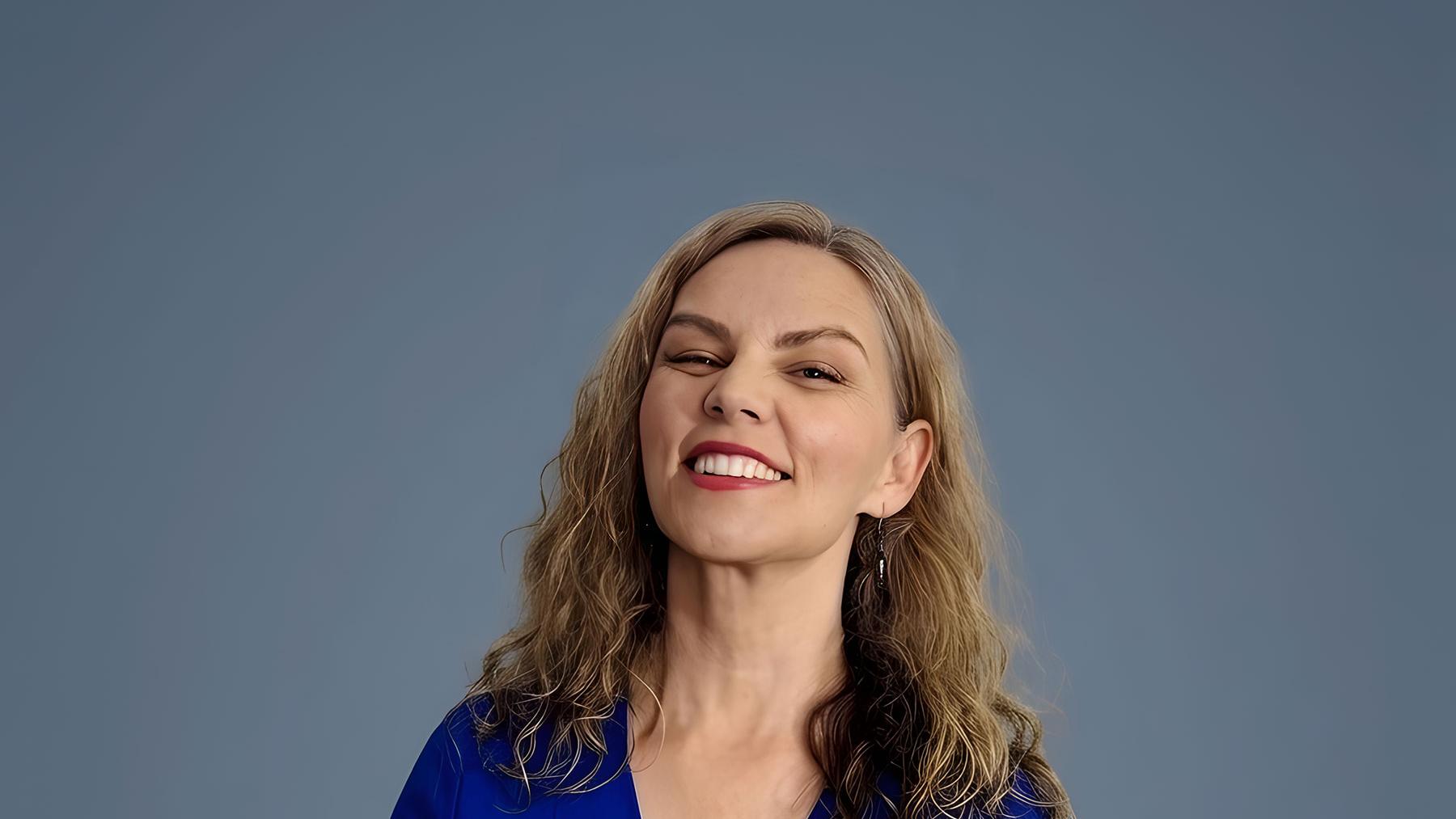
Marine biologist Dr. Erika Woolsey once led a 450-person dive on the kaleidoscopic coral reefs of Palau, a tropical archipelago nation east of the Philippines. How was a group expedition of such scale possible? Each participant was in fact seated in a Washington, D.C., National Geographic auditorium with an Oculus Go virtual reality (VR) headset strapped to their face.
Woolsey is chief scientist and CEO of the nonprofit The Hydrous, which creates augmented and virtual reality experiences that connect people with the marine environment. She has guided many such virtual dives over the years. In fact, some 2.75 million “virtual divers” have experienced The Hydrous’ immersive ocean experiences. Usually a backup screen provides two-dimensional visuals for anyone who gets cybersick. In one experiment, some young students got the full treatment—Woolsey narrating as they interacted with the 360-degree underwater footage—while others just watched the 2D screen. Kids without the VR asked her the typical questions: “What’s your favorite fish?” “How much money do you make?” But for those who experienced the VR, there was a distinct shift. “The students asked questions about what they saw,” Woolsey says. “This young girl said, ‘I could see inside the manta ray’s mouth, and it looked hollow. Where are its organs?'” As Woolsey puts it, instead of just seeing a scientist on stage, these students became scientists themselves.
TIME Trailblazers: Erika Woolsey
Woolsey’s goal is to make the ocean more accessible to the masses so that they might strive to protect it. After all, it’s “our life-support system on Earth,” she says. Indeed, humans rely on the ocean for food security, economic stability, marine-derived medicine, and climate regulation. Yet “our ocean is overexploited, underprotected, and pretty much out of mind,” she adds, recalling the unprecedented global mass-bleaching event that inspired her to join The Hydrous as a cofounder in 2016: “It was really shocking to see how an ecosystem or a site that I had studied for years could be essentially destroyed in a really short period of time, and yet the public response was not proportional to what was really happening.”
For the past few years, Woolsey has been touring North America with National Geographic Live to help more people experience virtual dives. Now The Hydrous is teaming up with Silverback Film –the natural history production company behind Netflix’s “Our Planet” and “The Dinosaurs”–and immersive production studio Submersa Studios to bring innovative and interactive ocean experiences to new audiences in museums, aquariums, and other venues.
An affiliate at Stanford’s Virtual Human Interaction Lab, Woolsey has also been conducting research that suggests immersive tech bolsters not just education but empathy. “We’re seeing significant increases across both ocean literacy […] as well as emotional connection,” she says.
The research supports something Woolsey has observed first-hand in her work with The Hydrous. “When people come out of the VR headset, it reminds me of people taking off a dive mask, when you’re floating with your buddy on the surface of the water, and they just want to tell you what they saw,” she says. “Sometimes, people have tears in their eyes when they come out of the VR.”
