

What happens when a video game result carries over to a basketball court, football pitch or combat arena? That is the central idea behind phygital sport, which combines digital and physical competition within a single match. As Astana hosts the Games of the Future 2026 powered by Samruk Kazyna (GOTF 2026) from July 29 to Aug. 9, athletes and organizers told The Astana Times how competition, technology and live production are being brought together across the city
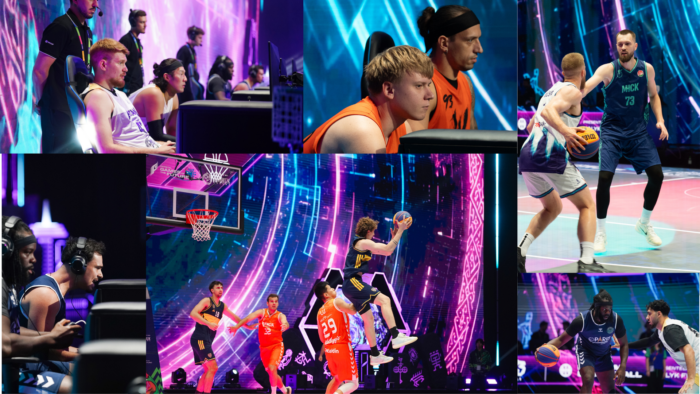
Phygital Basketball Presented by Halyk Fund. Photo credit: GOTF 2026 / Collage is created by The Astana Times
More than 800 athletes representing over 50 nationalities are competing in eight disciplines across four venues. The combined prize pool exceeds $4.5 million, with payouts extending beyond the medal positions, allowing teams to earn prize money based on their final placement.
Reaching audiences across markets and platforms
According to preliminary estimates provided by the organizers, broadcasts from the first five days of GOTF 2026 generated approximately 185 million views across television, streaming and community-streaming platforms. Thetournamentis being distributed in more than 16 languages through 54 media-rights partners and 120 community streamers, approximately twice the distribution network used for the 2025 edition in Abu Dhabi.
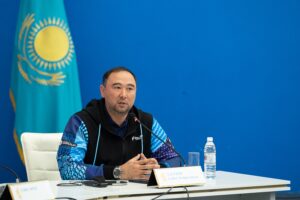
Alibek Khassenov. Photo credit: GOTF 2026
Alongside major platforms such as Huya, Bilibili, DouYu, VK, Rutube and Play TV, community streamers bring the competition to audiences through the creators, teams and games they already follow. This allows GOTF 2026 to reach viewers beyond conventional sports broadcasting.
“What makes the Astana edition distinctive is not only its size, but the number of different competition formats operating simultaneously. Each discipline has its own technical requirements, rules and audience expectations, yet all eight must function within one coordinated event system across several venues,” the head of the Games of the Future 2026 powered by Samruk Kazyna Directorate Alibek Khassenov told The Astana Times.
“The scale lies in bringing those separate environments together without losing the identity or competitive integrity of each discipline,” he added.
Those disciplines can attract markedly different audiences. Established esports titles arrive with international fan bases and professional players who are already well known within their gaming communities. Newer hybrid formats, by contrast, must introduce their rules while building recognition around their clubs and athletes.
Among the audience was Vladislav Bakhmetev, who traveled to Astana primarily to attend the PUBG tournament. He began playing the game in 2020 and has since closely followed its professional competitions.
“I play PUBG and am a big fan of the game. I follow the professional scene closely, so I learned about the tournament almost immediately after it was announced. I am glad major competitions are happening in this region, and I am especially happy to see how Kazakhstan has organized the PUBG tournament,” Bakhmetev told The Astana Times.
How phygital competition works
In the hybrid disciplines, athletes begin with a digital competition before moving into a physical contest. Their results from the two stages are connected and contribute to the final score.
In Phygital Basketball Presented by Halyk Fund, teams first compete in the 3on3 FreeStyle video game and then play a live two-on-two basketball match. Phygital Football UFL Presented by Samruk Kazyna moves from the UFL football simulator to a five-a-side match.
Phygital Fighting Presented by Kazzinc combines a fighting video game with mixed martial arts, while Phygital Shooter CS 2 Presented by Yandex GO connects Counter-Strike 2 with a physical laser-tag contest. In Phygital Dancing Presented by Solidcore Res’ live performances
Phygital Shooter CS 2 Presented by Yandex GO connects Counter-Strike 2 with a physical laser-tag contest. Photo credit: GOTF 2026 / Collage is created by The Astana Times
A strong digital result can give a team an advantage before the physical stage begins, but it does not guarantee victory. Teams must treat both stages as parts of the same match, adjusting their tactics as the combined score develops.
GOTF 2026 also include established esports titles that remain entirely digital, including Dota 2, Mobile Legends: Bang Bang and PUBG: Battlegrounds. The program therefore places hybrid competition and conventional esports side by side, linked by their reliance on gaming, strategy and technology.
Because results in the hybrid disciplines depend on performance in two different environments, clubs must also prepare their athletes for both.
Professional basketball or football players may arrive with extensive experience in the physical sport but less familiarity with its digital version. Experienced gamers, meanwhile, must be ready for the tactical and physical demands of the live stage.
Samson Arakelyan, CEO of Astana Basketball Club, said PBC Astana spent approximately one month preparing for the tournament, with much of its additional training focused on the digital component. The team represented the host city in the Phygital Basketball Presented by Halyk Fund competition and reached the quarterfinals.
“I had no concerns about the physical stage because all our players are professionals and were ready to compete. The digital component is something we still need to develop and continuously improve,” Arakelyan told The Astana Times.
For that to happen, Kazakhstan needs to hold more domestic phygital competitions and not only qualifying events, but regular tournaments within the country,” he added.
Digital competition requires its own playbook
The entirely digital disciplines demand a different form of preparation, but their tactical depth is no less extensive.
PUBG carried one of the largest prize pools at the Games, bringing together 16 invited professional teams competing for $1 million. The field included globally recognized organizations such as Team Falcons, Twisted Minds, Team Vitality, T1 and Virtus.pro.
It also featured players with years of experience at the highest level. Team Falcons’ James “TGLTN” Giezen and Tristan “Shrimzy” Nowicki, for example, have each earned approximately $1 million in career prize money. With that level of experience in the field, success depends on detailed preparation as much as shooting accuracy or reaction speed.
“There is a lot of strategy involved in PUBG beyond simply shooting. You have to study all the teams around you because each team usually loots in a particular location or landmark. Every zone and every game is different, so there is a lot of preparation involved,” Team Falcons head coach Owen Andrew Monaghan told The Astana Times.
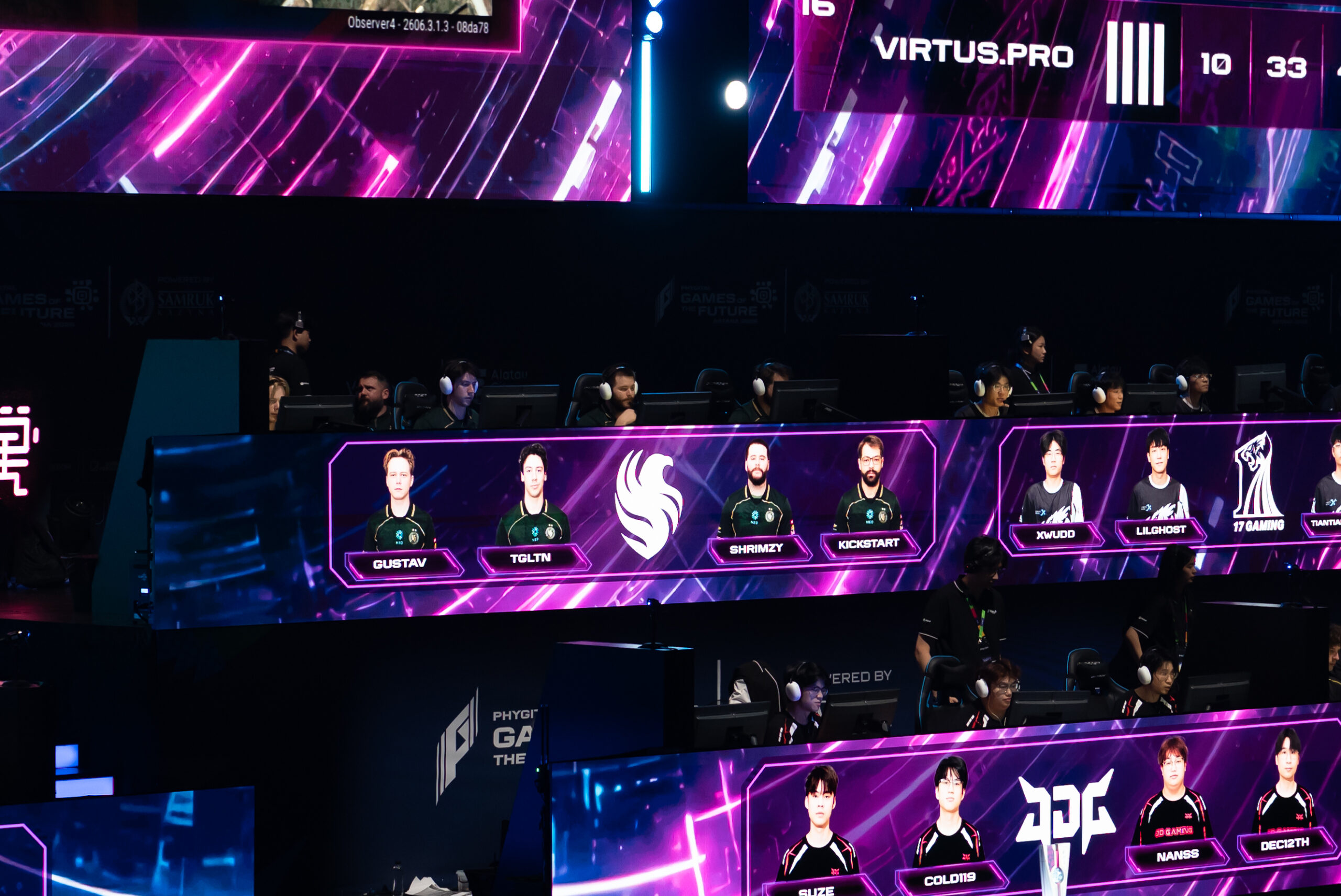
Team Falcons at the Battle Royale PUBG: Battlegrounds presented by Alatau City Bank. Photo credit: GOTF 2026
That preparation continues after each match. Team Vitality manager Sergei Britok said teams can review recordings of complete maps and trace the movements of every opponent.
“We analyze our own movements and assess how we could have entered a particular location more effectively. We discuss where a grenade should have been thrown, which route would have been better and what position the players should have taken,” he told The Astana Times.
“In some areas, players can even dig their own cover. There are many factors that we review to understand what could have been done better and how to increase the team’s chances of remaining in the game longer,” he added.
Beyond the tactics of an individual title, Monaghan said events such as GOTF also show how the professional communities surrounding esports and traditional sport are becoming increasingly interconnected.
“Here we see many professional athletes playing video games, while many professional gamers grew up playing traditional sports. As esports continues to develop, we are seeing more crossover between the two worlds. That is why an event like this is so interesting. It shows the public that gamers can be interested in traditional sports, while traditional athletes can also be interested in esports. It is great to see those communities coming together,” he said.
How Astana is staging the tournament and what remains afterward
The Games of the Future is organized around clubs rather than national teams. Athletes compete under professional sports clubs, esports organizations and specialist phygital teams, often alongside teammates of different nationalities. Once those teams arrive in Astana, however, their separate competitions must operate as one coordinated event. Digital gameplay, physical scoring and international broadcasting take place simultaneously across four venues.
Each venue uses a different combination of gaming equipment, competition areas, cameras, lighting, sound and communications systems. Game data must be synchronized in real time with live footage, commentary, arena screens and broadcast graphics.
Phygital Football UFL Presented by Samruk Kazyna. Photo credit: GOTF 2026 / Collage is created by The Astana Times
“From a technical standpoint, this is one of the most complex projects. Many modern technologies are combined in this project, and all these separate solutions must work as one coordinated ecosystem,” said Khassenov.
According to the organizers, the production system includes approximately 1,750 square meters of LED screens across the competition venues, more than 1,200 controlled lighting fixtures and augmented-reality graphics displaying scores, statistics and virtual elements during broadcasts. The venues draw on a combined 7.5-megawatt power system, supported by 17 diesel generators that provide backup for tournament servers, scoring systems, communications and live coverage.
Organizers also expect GOTF 2026 to produce an immediate economic return for the city. Approximately 10,000 foreign visitors are projected to attend, with their spending expected to generate between $10 million and $12 million in turnover for airlines, hotels, restaurants, taxis and other services.
The longer-term value will depend on how the equipment and expertise developed for the Games are used after the final competition.
According to the organizers, technology purchased for the tournament is expected to support future international competitions, planned phygital centers, an esports academy and new training facilities. The infrastructure could also contribute to preparations for the International Esports Federation World Esports Championship, which Astana is scheduled to host in 2027.
Get The Astana Times stories sent directly to you! Sign upgram, YouTube and Tiktok!
