

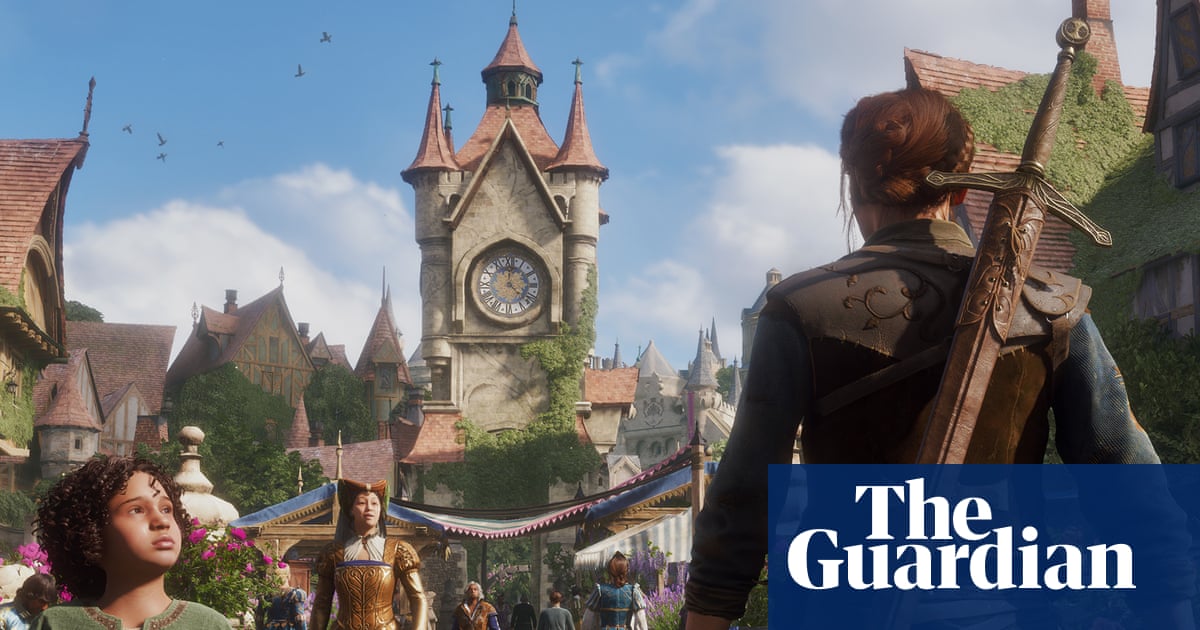
‘We were bored of traditional fantasy cliches’: inside Playground Games’ 10-year effort to revive Fable
The distinctively British RPG is returning courtesy of the makers of Forza Horizon – with comedy talent such as Richard Ayoade and Natasia Demetriou voicing sweary characters. We had our first play and spoke to its developer
When Playground Games was founded in 2010, its objective was straightforward: to make the best cars in video games. Operating out of an unassuming white building in Leamington Spa, the studio sought to challenge Gran Turismo with its critically acclaimed British racing alternative: the acclaimed free-roaming Forza Horizon series. Yet as the team grew, so did their ambitions. Now they are making the most intriguing British fantasy game we have seen in many years.
For those who have never ventured into Albion, Fable is a quintessentially British role playing game. Created by Lionhead Studios for the original Xbox in 2004, it boasted cheeky charm alongside world-altering player choices, and its droll writing was brought to life in later iterations by national treasures such as Stephen Fry and Simon Pegg. Thanks to its unique blend of farce and fantasy, Fable grew into a globally beloved franchise – before Microsoft unceremoniously shuttered Lionhead in 2016, after mandating that the studio turn its star series into a multiplayer game. The result, Fable Legends, was never released.
Fable at 20: a uniquely British video game with a complex legacy
Read more
Now, following a 10-year limbo, Playground is resuscitating the dormant series. “As a developer and a player, working on this has made me think about games more deeply than anything else I’ve done,” reflects Ralph Fulton, Playground Games co-founder and Fable’s game director. “I think it will have that same effect on the people who play it.”
Whoever picked up Lionhead’s mantle would inevitably face some scepticism. And despite their commercial success, driving games rarely command the same reverence or critical respect as blockbuster narrative games. For Fulton, taking on an action RPG was an opportunity to prove that Playground belong among the world’s best. “I think there was a little bit of pride in proving we could cut it in a different genre,” he says. “It made sense not to fall too far from Horizon. This project definitely wasn’t going to have cars, but open worlds felt like an area where we had transferable skills.” Playground was an independent studio at the time, but given that Xbox was the home of the Forza Horizon series, Microsoft seemed an obvious choice of partner. “When Xbox mentioned Fable, every other opportunity dissolved into the background. It was all we could think about.”
After signing the deal in 2017, Playground suddenly needed to build a massive team overnight, and scrambled to merge their talented torque-heads with developers well-versed in Tolkien. “Building a team from scratch is the hardest thing you can do in video games,” Fulton says. “You can hire the people with the best CVs, but if they don’t gel, six to nine months later you’re back in the market. The human cost meant bringing hundreds of people from all over the world, many of whom relocated solely because they were fans of Fable.”
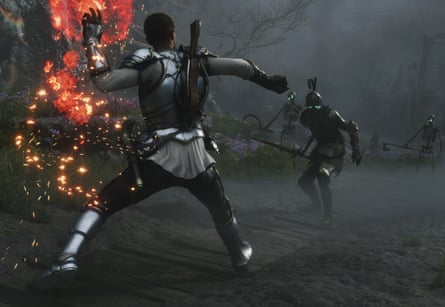
At the Gamescom expo in Germany, I play the result of the studio’s efforts. While I don’t get to explore much of Albion in this demo, as I fight my way through a dungeon, the combat soon dispels any lingering doubts about Playground’s action chops. Thrust into a wraith-ridden mine, my hero faces an ambush of crackling skeletal knights. Every attack lands with tactile weight, from the heavy crunch of a hammer to the crisp thwick of a bowstring, sending skeletons exploding into bone splinters. When floating wraiths descend in the aptly named Wraithmarsh, fireballs and lightning spells land with spectacle. I fell the swamp’s final foe by transforming them into a squawking rooster.
The writing is sharp. Between smashing skeletons, I stumble upon a dust-coated love letter penned with authentically British awkwardness, in which a dying miner’s struggle to channel the earnestness needed to say his goodbyes is clear on the page. “We were a bit bored of traditional fantasy cliches and the way characters usually speak in those settings,” says Fulton. “I love media, particularly in period settings, that use a modern tone of voice, idiom, and phrasing … I don’t think we could have gotten Matt King to play a cliched fantasy character.”
Peep Show’s King stars as the retired former “greatest Hero of Albion” Humphry, who guides me through this haunted mine shaft with signature sarcasm. King is just one of the big names among Fable’s cast: a who’s-who of British comedy talent including Richard Ayoade (The IT Crowd) and Natasia Demetriou (What We Do in the Shadows). “Richard Ayoade virtually improvised a new script for his scenes on the spot. Listening to him conjure that dialogue was one of my favourite days on this project,” smiles Fulton. “Natasia Demetriou brought a level of British swearing to her character that honestly shocked us, but it’s brilliant and we let her run with it.”
skip past newsletter promotion
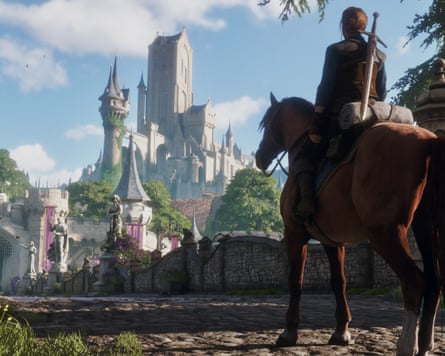
Beyond the swears, satire and sorcery, Fulton stresses that the core of the Fable series remains in this reboot: meaningful player choice. For much of the game, Fulton says, the main quest will feel low-stakes enough to keep players feeling comfortable to mess around in Albion. You will only be locked into the main story during its climatic ending.
“Most importantly, we stick the landing,” Fulton says. “It’s easy to look at industry metrics saying 100% of people start a game and only 25% finish, and decide not to invest heavily in the finale. But we relentlessly pursued quality here. In great Fable fashion, it culminates in a choice that really challenges you to think about who you are, with a real personal cost to weigh against the outcome.”
Playground’s long-gestating project carries immense weight, both for nostalgic fans and for Xbox itself, given that it was Microsoft that killed off the series and its original creator. Since the Fable reboot started production in 2016, the industry has weathered a disastrous pivot to live service games, a global pandemic, and more than 6,000 layoffs at Playground’s parent company, Xbox.
“I genuinely think Fable is an important game.What has protected us over a long development cycle is that so many people within Xbox view Fable as vital to the DNA of the platform,” Fulton says. “I would go a step further and say it’s important to video games as a whole. It offers a combination of elements that simply doesn’t exist anywhere else.”
- Role playing games
- Games
- features
