

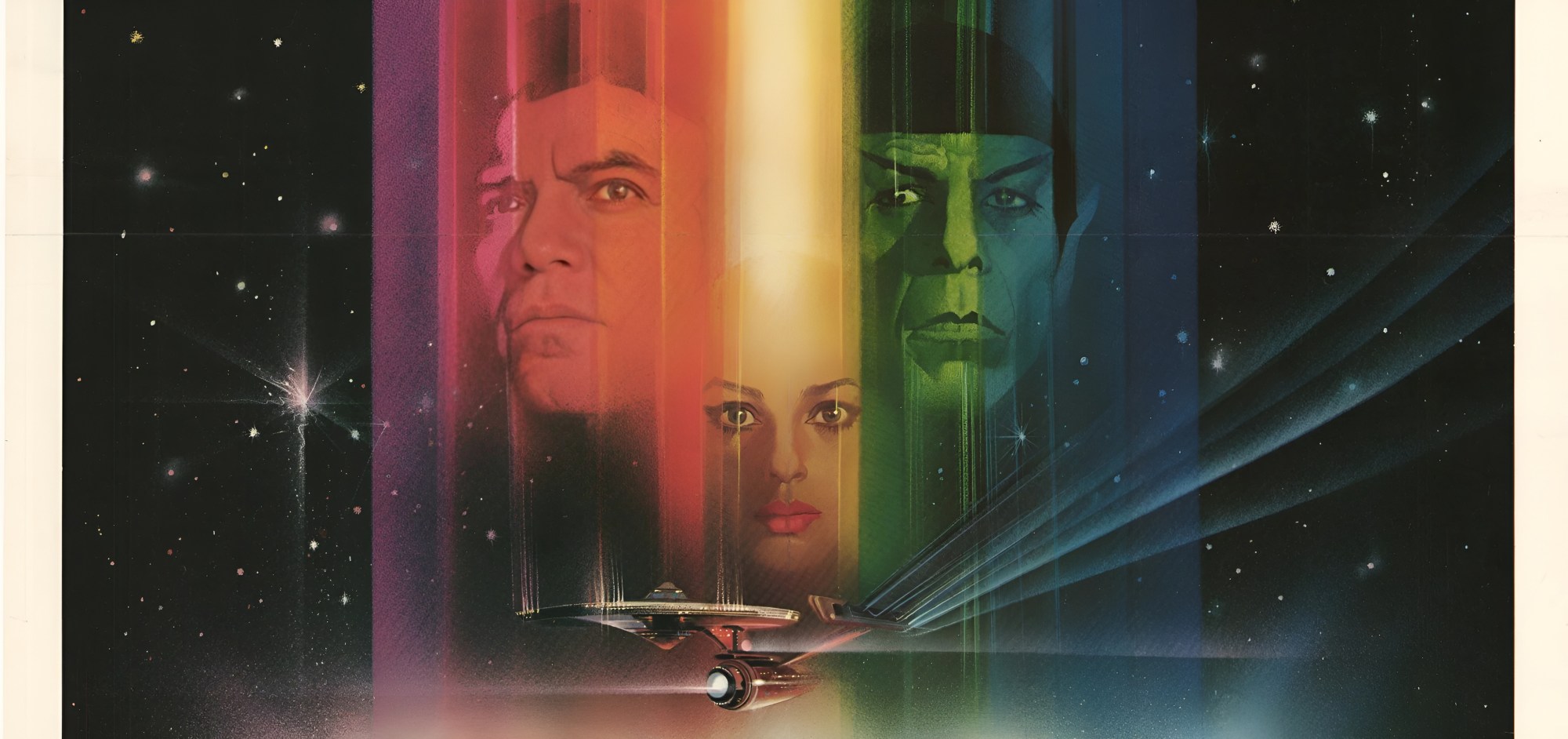
When a young filmmaker named George Lucas approached top toy companies with the rights to merchandise his upcoming science fiction film Star Wars, he was more or less laughed out of the room. The only company to take Lucas up on the offer, the small Cincinnati-based Kenner Toys, laughed all the way to the bank. Star Warsbroke box office records, and Kenner’s accompanying action figure line was so in-demand that they were famously able to sell an empty box for Christmas in 1977. Other companies took notice, rushing to license virtually every upcoming science fiction film or television series in sight.
Videos by ComicBook.com
The most feverish of these companies was Mego, who had dominated the action figure market for most of the seventies with science fiction properties like Star Trekand Planet of the Apes. Fortunately, 1979 looked like it had a can’t-miss opportunity for Mego to recover: a big screen motion picture revival of their most popular toy property, Star Trek. With the entire cast of the original series reunited and a budget higher set than Star Wars, there was no way Star Trek: The Motion Picturewouldn’t be a smash hit with fans and critics. Three years later, Mego was bankrupt, and their Star Trek: The Motion Picture action figures were still hanging on store pegs. What went wrong?
How Mego’s Star TrekMovie Line Was Doomed Before It Even Hit Shelves
Originally, Star Trek: The Motion Picturewas going to be Star Trek: Phase II, a television revival of the original series that would have served as the flagship program on a Paramount Television Network (at the time, there were still only three national TV stations). When the idea was deemed financially inviable, Paramount pivoted to a Star Trek movie. This languished in the script phase for years, with numerous ideas pitched and no one able to reach a consensus on which to make. Eventually, the decision was made to adapt Phase II’s feature-length pilot, “In Thy Image” into the feature film. With veteran director Robert Wise (The Day the Earth Stood Still) at the helm, Star Trek: The Motion Picturewas set for a December 1979 release date. Mego held the master license for the Star Trek property, and hurried to have a full complement of 3.75” figures and playsets on shelves in time for Christmas, along with a separate line of 12” dolls and a line of vehicle model kits.
Adapting “In Thy Image” to the big screen posed a problem: the scale and pace of the script were designed for television. It had little action and many long, expository dialogue scenes designed to ensure viewers were still following the plot after a commercial break. Paramount was aware of these problems, but didn’t want to delay the film’s release, and pressed on despite the problems with the script. The result was catastrophic. Audiences, primed for a fast-paced, action-oriented space opera after Star Wars, found the cerebral Star Trek: The Motion Pictureponderous and difficult to sit through, earning it the nickname “Star Trek: The Motionless Picture.”
Mego knew this spelled trouble. Apocryphally, on exiting an advance screening of The Motion Picture, Mego’s head of research and development, Neal Kublan, turned to president Marty Abrams and said “Well, we just lost forty million dollars.” The line, along with Mego’s The Black Holefigures, was one of the most expansive and costliest the company had ever developed. Together with a failed entry into the electronic toy market, these two lines lost Mego an estimated $40 million dollars in 1980 and 1981 – making Kublan’s wisecrack surprisingly prescient. Another $20 million dollar loss in 1982 finally killed the company, who filed for Chapter Eleven bankruptcy in June of that year.
An Overview of Mego’s Star Trek: The Motion Picture
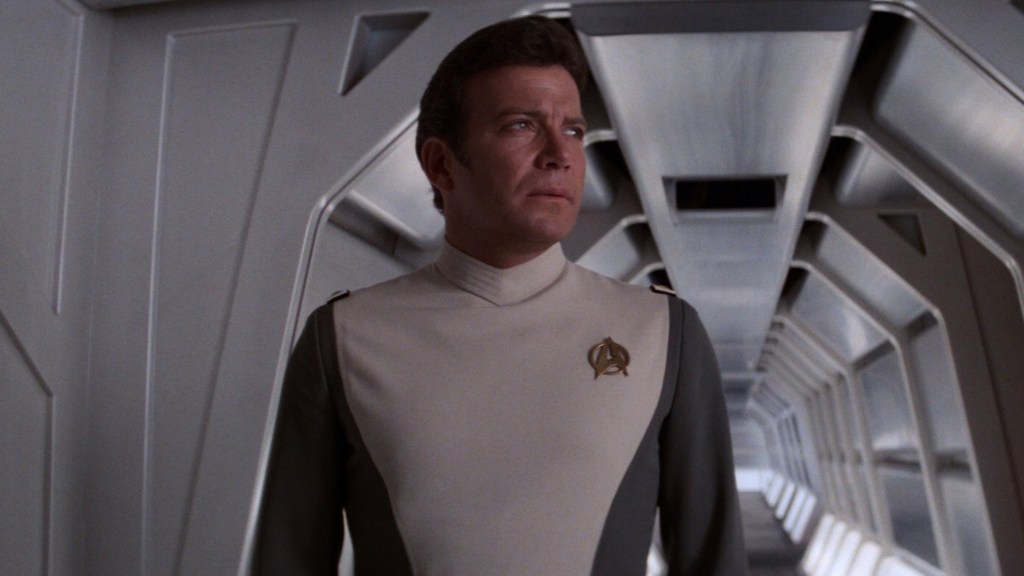
The decision to produce Star Trek: The Motion Picturefigures at two scales was likely influenced by Kenner’s Star Wars line, which also included a range of 3.75” figures and a range of 12” dolls. It is also a major factor in the production costs for the line being so high, as it saw Mego abandon many of the cost-saving strategies that made their earlier 8” figure lines such a success. Twelve figures were made in the 3.75” line, and six in the 12” line. Three vehicles were made for the model kit line, the first and only model kits Mego ever produced.
The 12” line featured a mixed assortment of three Enterprise crew and three aliens. Representing the crew were Captain Kirk and Mister Spock (naturally), along with newcomer Commander Decker. All three were clothed in faithful recreations of the newly-designed Star Trek: The Motion PictureStarfleet uniforms, which many collectors point to as another factor in the line’s failure. These uniforms were drab shades of white, navy blue, and grey, and have been likened by fans to pajamas. They made significantly less exciting toys than the colorful Starfleet uniforms of the original series.
The three aliens included a Klingon, an “Arcturian,” and the “Ilia Probe,” an android duplicate of a deceased Enterprise crewman rebuilt by the film’s antagonist, V’Ger. The Arcturian was a background alien seen only in a few crowd scenes aboard the Enterprise, Mego’s equivalent of the Kenner Mos Eisley Cantina aliens. Decker and the Klingon are the rarest of the set, worth up to a couple hundred dollars mint in box. Regardless of condition, the other four are worth less than one hundred dollars apiece.
How These 3.75” Figures Became Mego’s Biggest Flop
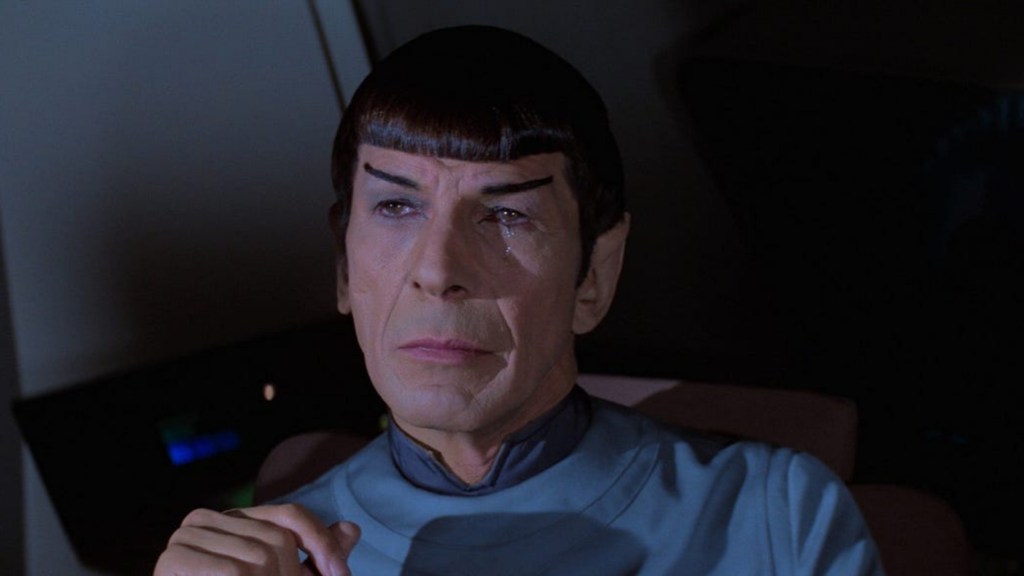
The 3.75” Star Trek: The Motion Pictureline is Mego’s best remembered offering for the film – although perhaps not for the right reasons. Some of the figures (Decker and Ilia) were available well into the eighties at department and toy stores, with fans recalling that stores were unable to get rid of the figures for literal pennies on the dollar. The twelve characters were split into two assortments, the second of which only saw very limited release, mostly in Italy and Canada.
The first assortment was comprised of six Enterprise crewmen: Kirk, Spock, Doctor McCoy, Scotty, Decker, and Ilia. For this series, Mego was able to make employ much more reused tooling, with four of the six figures (Kirk, Spock, Scotty, Decker) sharing the same body with a different headsculpt and different color scheme. Ilia necessitated a new mold, as did Doctor McCoy and his very-seventies v-neck. Curiously, none of the figures included accessories, which significantly reduced their play value. All came packaged on an identical card, with painted artwork depicting Kirk, Spock, McCoy, Ilia, and Decker.
The scarce second wave consisted of six aliens, headlined by a highly-detailed Klingon. Only three were only available in the United States: the Klingon, Rigellian, and Arcturian. As with the Arcturian, the Rigellian is only glimpsed very briefly in the film, sporting a lizard-like design. These three were sold by mail order in a set through J.C. Penney’s catalogue, arriving in a plain brown cardboard box. Carded samples are found through the international release of the second wave, and fetch a price-tag in the $300-$600 range.
The Rarest Star Trek: The Motion PictureToys & The Line’s Legacy
Even rarer are the three international-only aliens, the Betelgeusian, Megarite, and Zaranite. These three are the most valuable, with the Betelgeusian selling for up to $900. Like the Arcturian and Rigellian, you’d be hard-pressed to find these characters in the film without the aid of a pause button. The aliens are more elaborate than the humanoids figures, each requiring dedicated sculpts, and the Betelgeusian and Megarite even featuring soft-goods cloaks.
The coolest item in the line was a U.S.S. Enterprise Bridge playset, cast in white vacuform plastic with stickers for its consoles and viewscreen. The playset features six bridges stations, one to house each of the produced Enterprise crewmen. There was also a revolving door, meant to serve as a docking bay to an unproduced Vulcan Shuttle vehicle. The plastic used for the playset was extremely brittle, making it prone to breakage and difficult to find today – though at the time of release, it lingered in stores’ clearance sections well into the next decade.
Today, the line is best remembered for its place in toy history, representing the decline of one action figure giant as it tried and failed to replicate the success of a rising star. The toys themselves were well-designed, and the line is well-liked among Mego and Star Trekcollectors precisely because it was such a retail flop: most of the toys can be readily found today at affordable prices, making it one of the easiest entrees to Mego collecting.
Do you collect Mego Star Trekfigures? Leave a comment below and join the conversation now in theComicBook Forum!
After 60 Years, Star Trek Reveals Just How Dangerous Its Most Famous Tech Really Is
More Collectibles
-
Collectibles
1 day agoNew LEGO Harry Potter Set Officially Announced, And It’s One of the Largest Ever
-
Collectibles
1 day agoOne Simple Mistake Turned This Background Character into One of the Rarest Figures in Kenner’s Star Wars Line
-

Collectibles
2 days agoThis Spider-Man Comic Introduced His Greatest Rival, and It Also Changed Marvel History Forever
-

Comics
2 days agoAmazing Spider Man (Vol. 7) #15 Took Spider-Man Out of This World
-
Gaming
2 days agoNew LEGO Report Reveals 2 Popular Gaming Collabs Will Be Ending Soon
-

Collectibles
2 days ago40 Years Ago, One Toy Company Used DC Comics to Rip-Off Masters of the Universe And They Got Away With It
-
Luke Skywalker AM Headset Radio by Kenner. Collectibles
2 days agoThis Strange Kenner Star Wars AM Radio Has Finally Found Its Way Back Into the Spotlight
-
Collectibles
3 days agoRare Kenner Aliens Prototype Found, and It’s Being Given Away
