


Joseph Illidge
Newsweek is a Trust Project member
See more of our trusted coverage when you search.to see more of our trusted coverage when you search.
For more than three decades, Joseph Illidge has moved between the creative and corporate engines of comics, and while his résumé includes Milestone Media, Batman, Spawn Universe, and a slate of original graphic novels, his latest venture begins with a deceptively simple question: What if the story someone has carried for years finally received the architecture, talent and business strategy required to become real?
Illuminous, Illidge’s production and creative-services company, is built for those dormant epics, whether an entrepreneur has imagined a sprawling fantasy saga or an experienced comics creator wants to strengthen a new world before publication.
“There are so many people out there” with a “nagging idea,” Illidge told Newsweek, and because many cannot see a path from private inspiration to publishable intellectual property, he wants the company to make such possibility tangible.
The company grew out of a career spent protecting established characters while opening doors for new ones. Illidge began at Milestone, whose founders created an inclusive superhero universe amid an industry that had marginalized them and their identities, and he sees a direct connection between that entrepreneurial example and Illuminous.
“It really stems from starting my career at Milestone,” he said. “Starting my career at a company like that really led in a straight line to Illuminous, and founding that company so it could provide empowerment for a new generation of creators [and] veteran creators.”
While film, streaming, animation and video games demand immense capital and long production cycles, a comic book can place a fully formed idea before readers comparatively quickly, where sales, conversation and community begin revealing its reach.
“Comic books are the fastest and relatively least expensive way to get an idea to market, to start identifying and growing an audience and building a community,” Illidge said. “It is the beginning of how intellectual properties and projects are identified by other companies for adaptations.”
Illidge sees opportunity in an entertainment economy whose attitude toward originality can shift with a pair of hits. He pointed to Sinners and Weapons, two 2025 films whose success followed an era of “peak IP” thinking, when studios favored reboots and familiar franchises.
“Suddenly the narrative changed, and Hollywood wanted original ideas again,” he said. “We’re not at a time of fatigue of stories. What people do want is an original take on the familiar genres.”
For Illidge, comics remain uniquely suited to meet such demand because the medium can test a concept, establish its visual language and prove an audience exists before an adaptation enters development. Marvel Studios, DC Studios and Skybound Entertainment all draw power from stories first developed in sequential art, and although their franchises now span screens and merchandise, the comic remains the creative nucleus.
“It’s really the perfect storm of opportunity,” he said.

Finding the Story Beneath the Pitch
A creator’s first meeting with Illidge moves quickly past spectacle, since he begins with two questions whose answers expose the story’s emotional foundation: “Why this story?” and “What’s the theme of your story?”
Half of his clients, he said, arrive without a clear theme, while others treat premise and theme as interchangeable; once the distinction emerges, however, the entire project gains direction.
“We’re going to discover [the theme] together,” he tells them. “Once you know what your theme is, which is really the underpinning of your story, you’re truly off to the races.”
His framework is ICWTC: idea, character, world, theme and cast. The idea defines the project; the lead character gives readers someone to follow; the world creates pressure; the theme clarifies the story’s deeper argument; and the cast either supports or challenges both protagonist and theme. “
In any story, you need a primary character for the audience to care about,” Illidge said, adding, “For drama, the world has to create tension for the character. The world cannot be in the character’s favor; it has to be the character’s macro enemy.”
To illustrate the difference between premise and theme, Illidge turns to Daredevil. The Marvel comic’s premise concerns Matt Murdock, a lawyer whose blindness accompanies heightened abilities and whose nights are spent fighting crime. The theme, Illidge argues, concerns the little guy facing forces too powerful to defeat alone.
“Someone has to fight for the little guy,” he said. “Every time he goes out there as Daredevil, he’s fighting for his dad.”
Once a pitch enters development, Illidge practices what he calls “archaeology into the characters,” and as motives become clearer, choices create consequences that reshape the plot. One current client arrived with a pitch, yet weekly meetings soon expanded the work toward a second volume because Illidge encourages creators to conceive long-form possibilities even when publishers prefer five-issue limited series.
“Audiences are sophisticated,” he said. “We can tell when it’s part of the plan, and we can tell when it’s an artificially created plan.”
The lesson is visible in The Walking Dead, which had accumulated years of story before AMC adapted it into a television show, allowing producers to see multiple seasons already embedded in thein enough carefully planned possibility to grow without stretching a closed story past its natural end
Art as Partnership
As the story takes shape, Illidge begins looking for artists whose work carries the project’s tone while inviting readers into its world. “Art brings people to stories, and the writing keeps them there,” he said.
The right collaborator can also reveal possibilities a writer never envisioned, which is why Illidge urges clients to reject a command-and-control relationship with the person drawing their book.
“Try to think of the artist as your partner,” he said. “They are going to do things you could not have conceived, and it’s going to surprise you.”
Brian Hitch provides Illidge’s clearest example of visual authorship becoming industry architecture. Hitch’s naturalistic work on The Ultimates, created with Mark Millar, helped establish a cinematic vocabulary later associated with the Marvel Cinematic Universe, while his earlier work on The Authority demonstrated how forceful design and widescreen composition could make superhero spectacle feel immediate.
“One artistic vision was literally the nucleus for an entire studio apparatus,” Illidge said.
Style, availability and the human texture of ordinary scenes all shape the choice, so Illidge presents options and asks clients to remain flexible. An unconventional artist may need a looser script, since greater room can produce a richer visual contribution.
“The more eclectic and unconventional the artist is, the more you want to give them the opportunity to express themselves and take some kind of project co-ownership of the idea,” he said.
What Batman Taught Him About Guarding a World
Illidge’s years editing Batman comics trained him to balance interpretation with the nonnegotiable principles that make a character recognizable across generations. Readers arrived through Adam West’s colorful television version of Gotham, Frank Miller’s harder-edged comics, Tim Burton’s 1989 film and Batman: The Animated Series, yet each audience expected an essential core to survive.
“As a caretaker of the intellectual property, which is what an editor is, you have to be the guardian of those rules,” Illidge said.
Batman’s rejection of guns and killing offers the clearest boundary, though Illidge frames such rules as engines for drama. A gun destroyed Bruce Wayne’s family, while his parents’ lives in medicine and social work anchor his reverence for life; therefore, a writer can push him toward a moral precipice while preserving the choice which defines him.
“Don’t think of this as a limitation,” Illidge tells creators. “Think of it as a dramatic opportunity.”
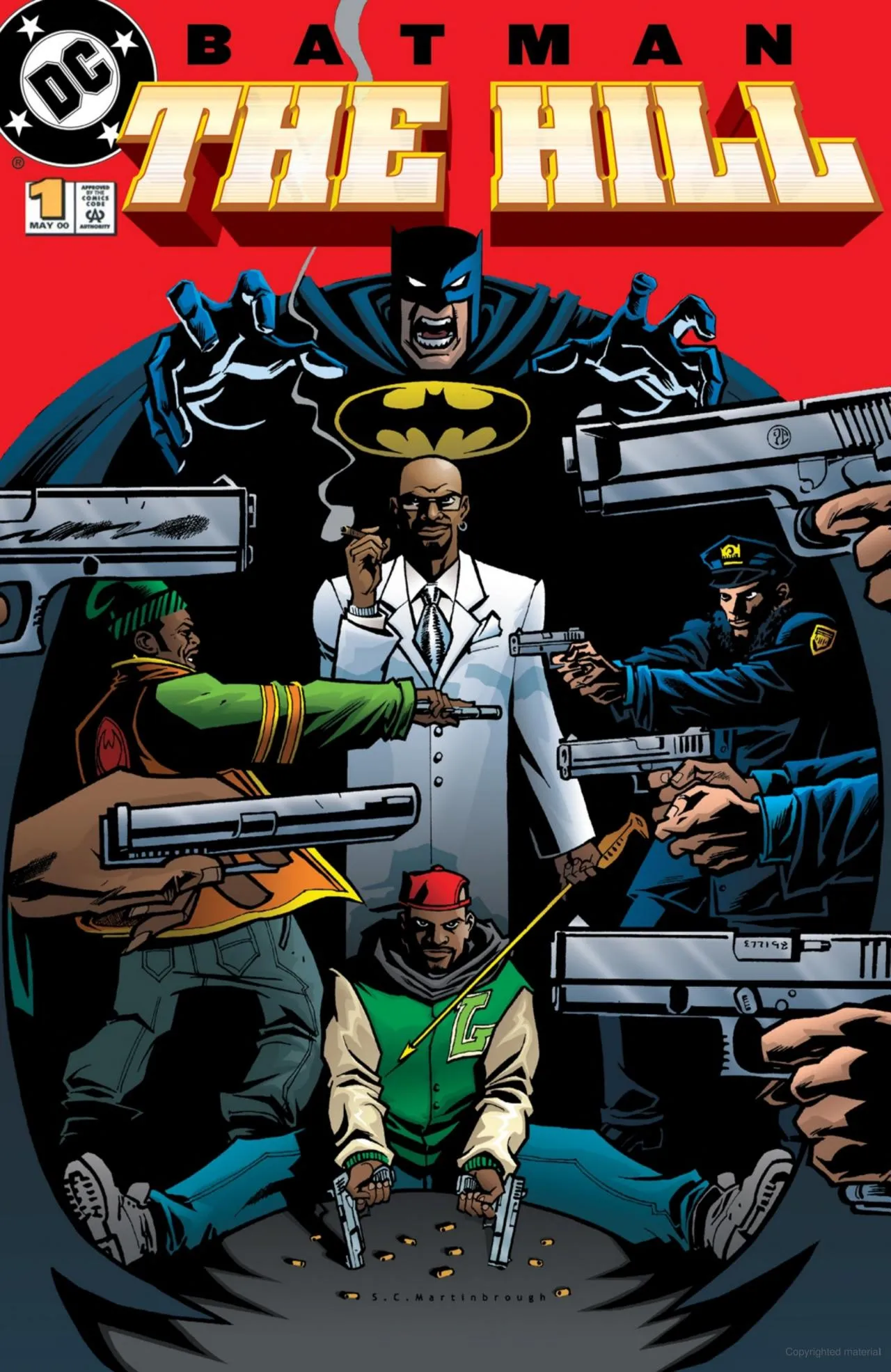
His work shepherding Christopher Priest’s 38-page story Batman: The Hill into print sharpened another principle: enduring universes grow when their blind spots become story. Batman enters a predominantly Black, working- and middle-class Gotham neighborhood where his legend carries little weight because he has rarely appeared there. Confronted with his inattention, he must learn the community before he can serve it.
The story risked remaining inventory during the expansive “No Man’s Land” publishing period, yet Illidge pushed for its completion and publication in 2000.
More than two decades later, the neighborhood has returned in other books, including Red Hood: The Hill, and its questions about race, class, policing and civic responsibility feel newly resonant. Illidge saw the original as “something which could be timeless,” and its growing legacy supports advice he now gives every client: build beyond a passing cultural moment.
“Make something [so] 20 years from now people can read it, and it can still land for them,” he said.
Character Before Ego
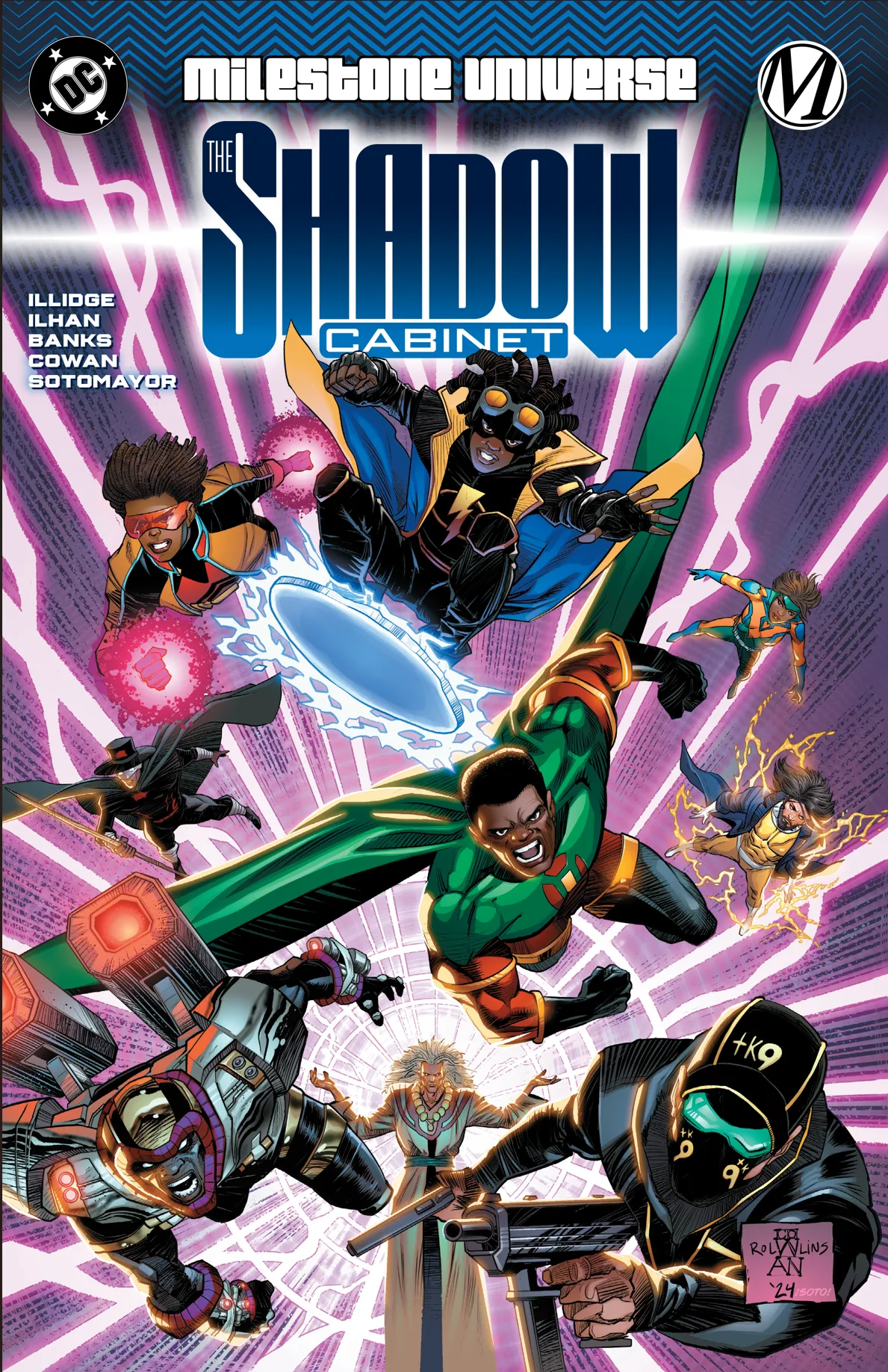
Across editing and writing, Illidge has learned to trust characters once they become vivid enough to resist a predetermined plot. While draftingShadow Cabinet, he changed a major character’s direction even after DC approved a 21-page outline because her established psychology demanded another choice.
“She was like, ‘Nope,’” he recalled. “This would [send] me on the road I’m on. I said, ‘OK,’ and I changed it.”
Such responsiveness requires creators to place story above ego, especially when a cherished scene has no honest path into the finished work. Illidge listens to the cool moments clients hope to stage, and then he guides them backward toward structure, where a stronger scene may emerge.
“We’ll get to the cool stuff, and let’s figure out the story so we can figure out where those cool things go,” he said. “Maybe when we do the story, the cool moment won’t work, and a better one will emerge.”
The editorial relationship succeeds only when both sides accept perspective as a shared tool. Clients remain open to change, while Illidge immerses himself deeply enough to become an ally without sacrificing the distance which lets him see the whole.
“I have to be invested enough in the story to be your ally, [while remaining outside enough to retain] the perspective you don’t have,” he said.
Building a Universe Other People Can Strengthen
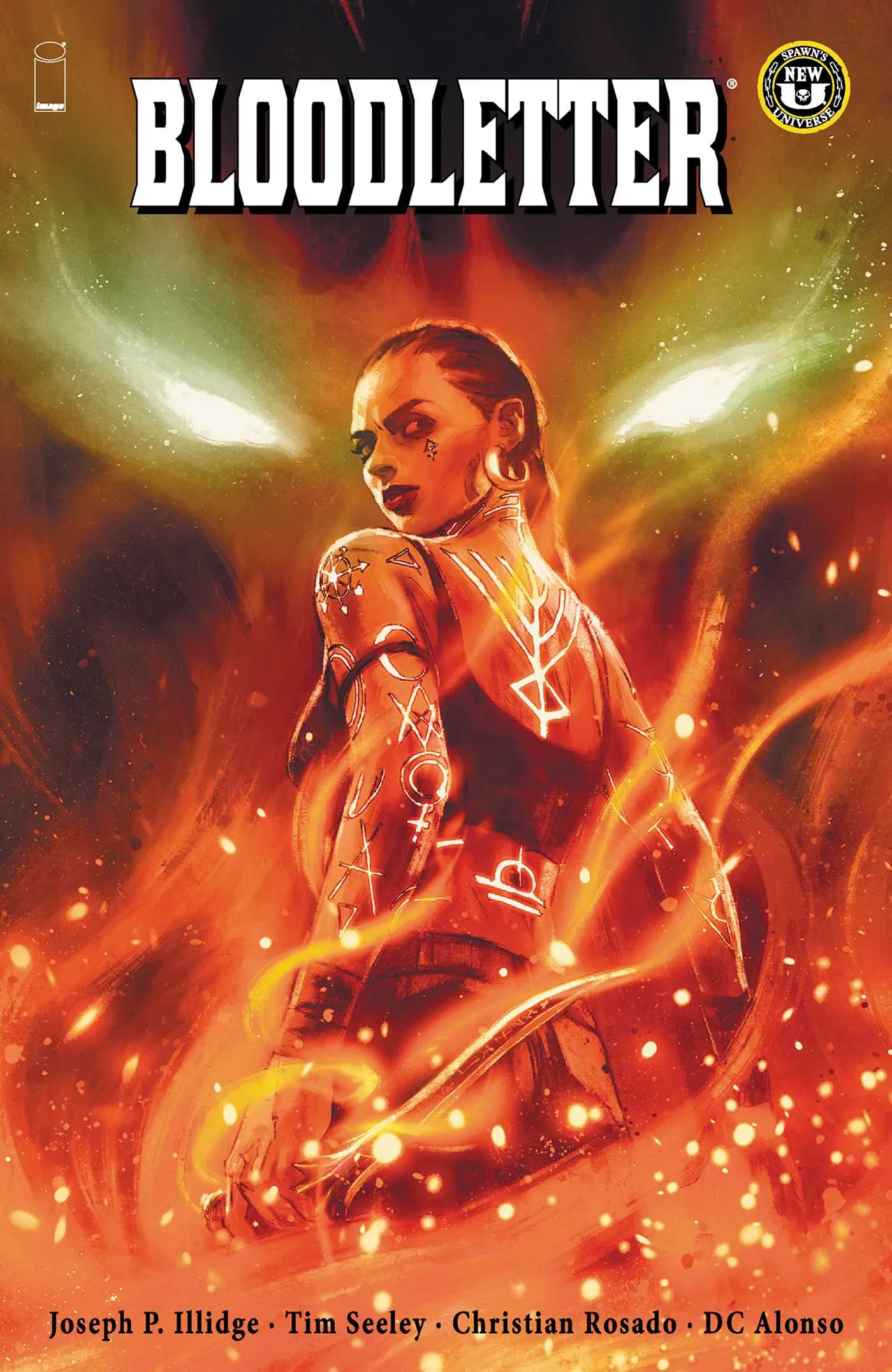
Writing Bloodletter inside Todd McFarlane’s Spawn Universe showed Illidge how a new creation can honor a franchise while filling a space its founder has yet to imagine. After McFarlane explained the universe’s rules, Illidge and his co-writer found the final piece of their story.
“The job was to create something additive,” he said, describing the goal as an idea the universe “hasn’t even occurred to [its creator] it needs until we present it.”
A mature intellectual property, in Illidge’s view, eventually becomes large enough to welcome other writers, artists and producers, whose additions create fresh dimensions without erasing its identity. Robert Kirkman wrote The Walking Dead comic, while its television incarnation grew through a larger creative team; David Chase created The Sopranos, whose writers included Terence Winter and Matthew Weiner before they built major series of their own.
“Part of the grand scope and long-term vision is to create something [where] you don’t have to directly contribute all the time,” Illidge said, “where you can bring in other people, and they can make it better.”
From Manuscript to Marketplace
Illuminous extends beyond story development because a finished comic still needs legal guidance, publicity, marketing and a route to readers. Illidge’s network becomes part of the service, connecting clients with specialists once the project is ready to enter the market.
“If I work with you to develop your idea and realize your idea, and then cast you to the wind, and you don’t know what to do with it in the landscape, then I’m not being of service,” he said.
Crowdfunding, especially Kickstarter, has widened access by letting creators reach audiences directly, while webcomics and vertical reading formats offer additional entry points for projects which may never fit a traditional publisher’s list. Even so, Illidge cautions against launching an entire universe at once. Marvel’s interconnected mythology grew over decades, whereas a new creator still has to earn attention one powerful story at a time.
“Start with the one story, the one potent story, and then work your way out,” he said.
The Genres Still Waiting to Be Expanded
Illidge’s own curiosity remains central to his work because he reads voraciously across comics, novels, animation, film and video games, and as he absorbs storytelling from North America and around the world, he looks for forms whose definitions have grown too narrow.
“I’m a sponge,” he said. “I’m soaking it up, and so I’m able to take what I’ve soaked up and pass it along.”
Science fiction interests him most where hard science and science fantasy leave a gap: “I think there’s something in the middle,” he said. “I don’t think we’re exploring it enough.”
He wants stories whose speculative ideas remain welcoming to readers who find hard science fiction intimidating, and he also wants romance to move through superhero, horror and other genres with the contradictions of lived relationships intact.
“Romance in all its real complexities, for those of us who are in relationships and the ups and downs and the nuances of it all—that’s where things get more and more human,” Illidge said. “Can we bring that more to the superhero? Can we bring that more to horror? I’d like to explore that as well.”
Contact Newsweek editors on this story: Mark Muir and Sam Wilson.
Request Reprint & Licensing
View Editorial & AI Guidelines
