

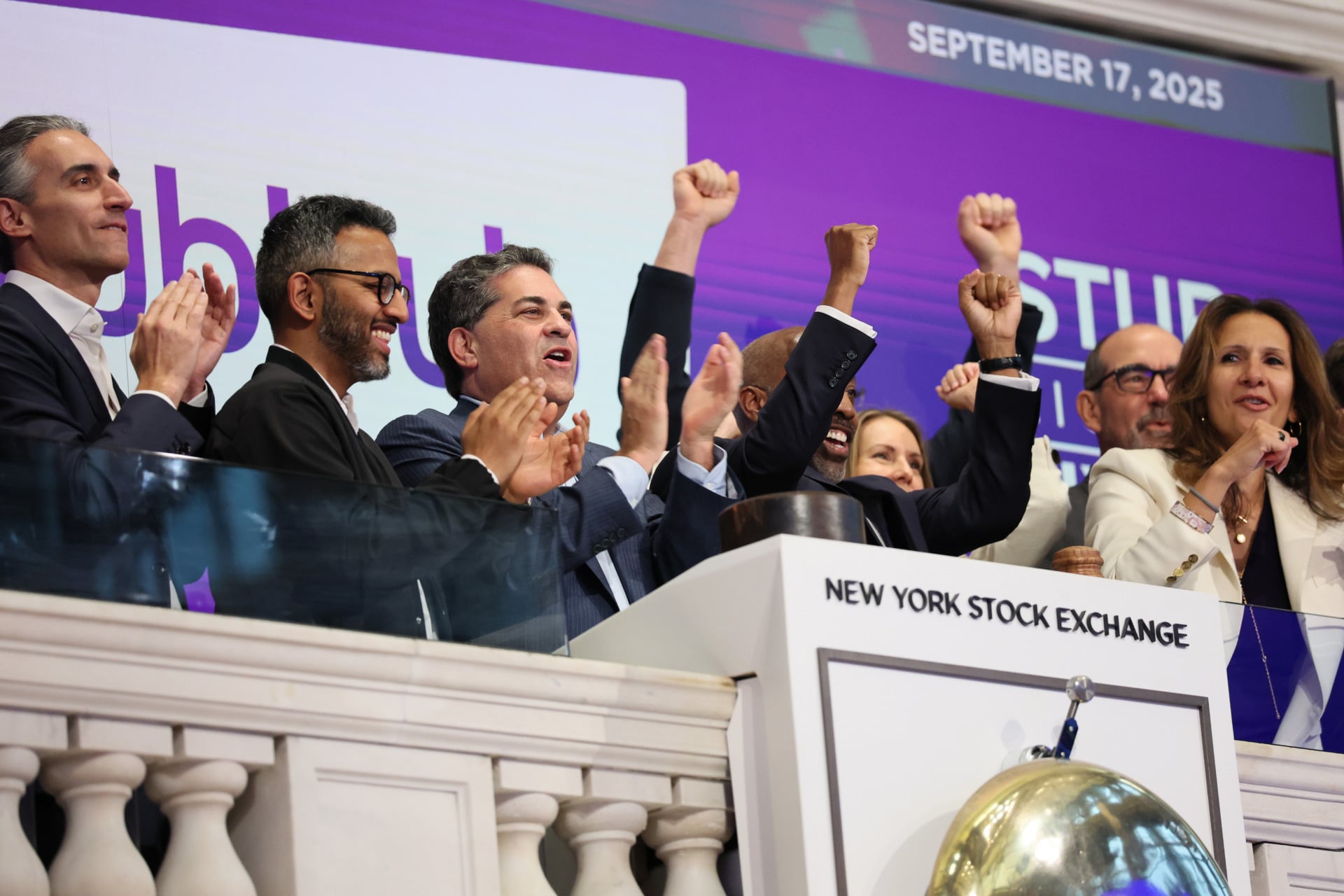
tubHub CEO Eric Baker disclosed in a required Securities and Exchange Commission filing that he is a part owner and managing director of Andro Capital, a hedge fund that sells millions of tickets on StubHub’s platform.
After an investigative report by the CBC, Canada’s public broadcaster, a class action lawsuit was filed in federal court in New York alleging that StubHub and Baker were not transparent about the links to the professional reseller and says the company’s claims to be a “neutral marketplace for fans to buy and sell tickets” are incorrect.
Baker’s SEC filings also disclosed that StubHub paid fees to Andro and covered some of its ticket-management costs. Further, the filings revealed agreements with Andro affiliate Colloquy Capital.
Colloquy provides short-term financing to mass resellers to buy tickets. StubHub refers potential clients to Colloquy.
The information was included in the 185-page filing required by the SEC ahead of StubHub’s IPO in September 2025. SEC disclosure filings are notoriously dense and arcane.
StubHub makes the case that it is a vehicle by which individuals can resale their tickets, but both industry and government investigations have found that upwards of 70 to 80% of tickets listed for resale are held by large-scale resale operations.
The District of Columbia Council unanimously approved the RESALE Act July 14, overhauling ticketing in the nation’s capital.The legislation establishes a resale price cap of 10% above face value, bans speculative ticketing, requires fee transparency and bars ticketers from using “surveillance pricing,” a tactic that uses buyers’ personal data to establish pricing.
Further, anyone advertising the sale of more than 50 tickets annually is required to register with the District. The law also beefs up enforcement and consumer protection.
Public Comment Period Opens For LN Settlement
The settlement between Live Nation and the U.S. Department of Justice and six states has been officially published in the Federal Register, opening a 60-day public comment period required by the Tunney Act, the Nixon-era legislation designed to give judicial oversight to antitrust settlements and prevent corruption.
Under that law, U.S. District Judge Arun Subrmanian must approve the agreement. He has said he’s likely to make his decision on the settlement between mid-September and mid-October.
While the announcement of the settlement was a surprise, coming just days into the trial, the terms formally published in the Register are not.
Ticketmaster must open up its back-end to other ticketers and allow so-called “major concert venues” to contract with other ticketing companies. Live Nation must divest or otherwise terminate booking contracts with 13 amphitheaters. Live Nation must also terminate its ticketing services contract with Oak View Group (Pollstar‘s parent company) and allow any venue which signed a deal with Ticketmaster under that contract to re-bid the contract.
Live Nation will also pay the six states that signed on to settlement a combined $18.5 million. After the settlement was announced, more than 30 states chose to press on at trial, ultimately winning a jury verdict that Live Nation and Ticketmaster operated as an illegal monopoly.
Subramanian will issue remedies and penalties in light of that verdict, as well.
The public comment period ends Sept. 4.
Rolling Stones Latest Act On Roblox
Roblox — the massively popular online game, which features its own game-creation system — is an increasingly popular venue for virtual concerts, with Bruno Mars’ event earlier this year drawing nearly 13 million concurrent viewers.
Typically the acts who feature in the game are, naturally, of the generation that plays the game.
Obviously, the Rolling Stones are timeless icons but it’s fair to say Gen Z isn’t spinning Sticky Fingers with the same enthusiasm as their parents (or grandparents).
Nevertheless, Mick, Keith et. al linked up with Roblox for an immersive collaboration in conjunction with the release of the band’s latest Foreign Tongues.
Players travel through six stages, each representing a different decade in the band’s career and featuring tracks from the appropriate time period. Players collect crystals which open a portal — shaped like the tongue logo, of course — leading to the next decade.
There’s an interesting merch angle as well: the collectibles in each stage can be purchased in tangible form through an in-game Shopify link.
