

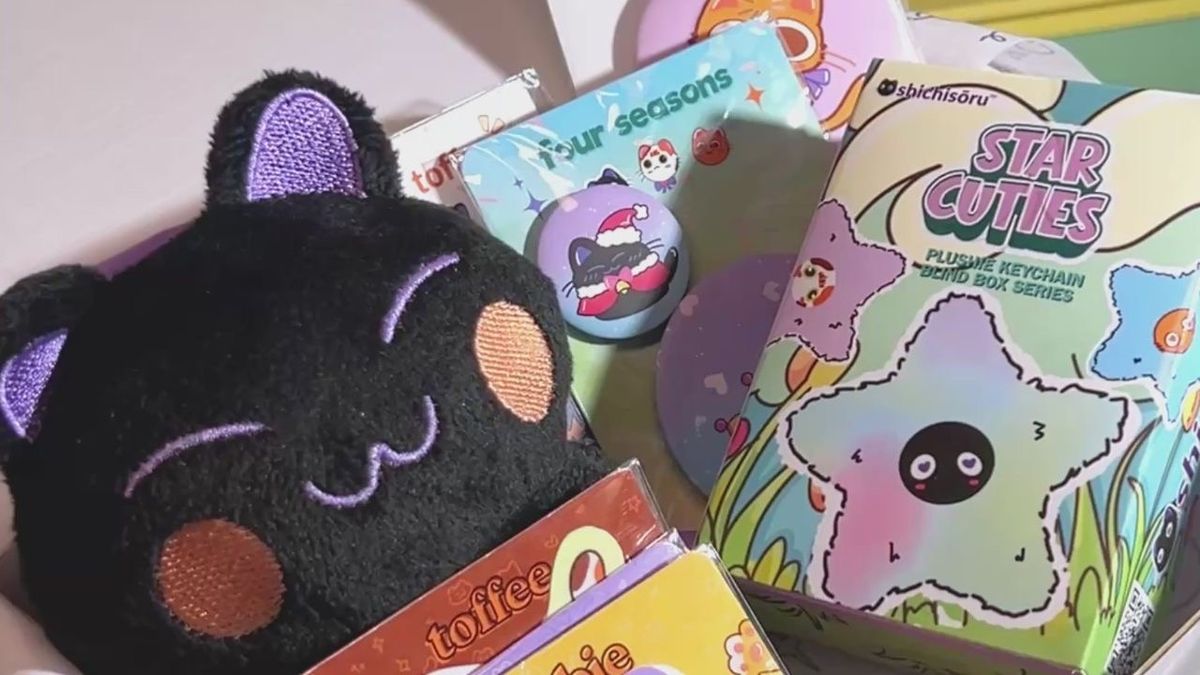
From cute quirky charms to Pokémon packs, Hot Wheels hauls and homegrown art toys, collecting has become the way Indian kids and teens show who they are. We look at what drives the boom, who profits, and where the risks lie.
Sahil Pradhan14 Nov 2026
09:00IST
New Update
Walk through any mall in Delhi or Mumbai and a small, toothy, furry monster is likely to be dangling from a teenager’s bag. Labubu, the elfin character sold by Pop Mart in sealed blind boxes, has become the face of a global collecting boom. It brought in roughly $700 million, around 40 per cent of Pop Mart’s 2024 revenue, and Blackpink’s Lisa wearing one on her bag in 2024 sent demand into overdrive.
The mechanic is simple. You pay for a box without knowing which figure is inside, and a rare “secret” variant hides among the common ones. In India, the format first spread through niche gatherings such as AnimeCons, Comic Cons and art toy fairs, before reaching celebrity Instagram feeds. Pop Mart says its core customer is the “kidult”, a millennial looking to collect things that remind them of childhood. Adults still set the tone, with one 34-year-old Mumbai collector telling Elle India that she carefully opens blind boxes and even posts those “surgeries” on Instagram. Teenagers copy the ritual.
The format has filtered down to younger buyers too. Pandas Box, an Indian soft-toy brand, claims blind-box plushie sets are growing in popularity among the 5 to 10 age group. That is a brand’s own claim rather than independent data, but it shows where the market is heading.
“A blind box sells an emotion before it sells an object,” saysDr MeeraKulkarni,a child psychologist based out of Pune. “The anticipation is the product. It is almost like the trend before this that of the Harry Potter collectibles inside Kinder Joy or Kinder Joy in general. The unknown mystery of what toy you will get and then the wish to collect all of them.”
Collecting as an identity
Not every craze comes sealed. Diecast cars, trading cards and licensed figures run alongside the mystery boxes, and often matter more to children in smaller towns. Hot Wheels is one of the most popular entry points for new collectors, thanks to its affordability, variety and rare editions. Specialist retailers such as Toy Marche stock Hot Wheels, Mini GT and Hasbro alongside Indian names like Funskool.
Pokémon cards have become a street-level economy. In Bengaluru, a 23-year-old runs a viral shop called Paxi from the boot of his car, tapping into a multi-million dollar hobby after returning to India with around 500 cards of his own. The point is as much community as commerce, and trades, swaps and meet-ups happen in DMs before they happen in person.
“We often come out to check the new stuff at the KOJA store in Humayunpur, its almost a monthly ritual now. Charms hanging around our bags are a thing now,” says Mansi Arora, a 17 year old who often visits and trusts the store in Humayunpur to give her the best charms for her to collect and swap through.
Cricket is the obvious gap, and a Pune startup has moved into it. Infinity Toy Tronics launched Cricket Icons, billed as India’s first officially licensed cricket collectables, with miniature figurines of players from four IPL teams: Mumbai Indians, Kolkata Knight Riders, Rajasthan Royals and Gujarat Titans. The range sells on Amazon, Flipkart, Swiggy Instamart and Zepto, and in Hamleys and toy outlets in Tier 2 and Tier 3 cities. Quick commerce has made the impulse purchase a ten-minute delivery.
A generation that cannot afford homes is spending on small, tactile collectibles that become markers of identity and emotional investment. “Teenagers are building a shelf because they cannot build much else yet,” saysRhea Malhotra, 16 a collecting enthusiast in Delhi.”It is the one thing they fully control.”
The homegrown underground
Alongside the Pop Mart behemoth, a small Indian scene is emerging, much of it born on Instagram. Most of it is priced and pitched at older teens and adults, but it is shaping the aesthetic younger buyers pick up.
Mumbai’s Ramukru, founded in 2024, calls itself India’s first designer toy company, and its name comes from the Parsi-Gujarati word for toy. Its debut, FULLPOWER Puffgirl, is a hand-cast resin figure limited to 50 pieces. The character is a psychedelic riff on a 1990s cartoon and is aimed squarely at adults, but it shows how fast a limited-run “drop” can build hype. Homegrown’s coverage of the scene also points to Muddra, an art toy merging Indian tradition and spirituality with sci-fi storytelling, artist Amrit Pal Singh’s toy faces, and Zankla Studio’s sustainable heritage dolls telling the stories of Assam’s Bodo community.
Others lean on craft and nostalgia. Play Staples, founded by an architect-turned-toy-designer in Bombay, makes handcrafted wooden vehicles from responsiblyhback. Maachis turns vintage Indian matchbox labels into tactile, design-forward prints. Calling‘s InYu range offers unglazed ceramic characters in terracotta, beige and powder-blue tones
Access remains the sore point. There was no official Pop Mart store in India at the time, so Amazon, Flipkart and collector sites like WackoWacko and Toyzone India listed Labubu at a premium. A Labubu costs about Rs. 1,200 in a Pop Mart store, yet Indian buyers often pay Rs. 3,000 to Rs. 4,000 or more through resellers. Some sellers will even open the box and ship the doll for a little extra, which removes the surprise. Fakes, colloquially called “Lafufus,” fill the gap for those who cannot pay.”Half my customers are still in school uniform,” saysKaran Sethi, a Pokemon card reseller and collector in Delhi.”They know the rarity odds better than they know their timetables.”
Big brands pile in, and the questions follow
Established names have noticed. In June 2026, Lenskart announced Pop Mart’s first official collaboration in India, an eyewear range across 1,000 stores with prices starting from Rs. 3,000. Buyers of compatible frames also get magnetic charms packed in surprise blind packets. Rivals are following. Competitors are launching cheaper, easier-to-find blind-box products to capitalise on the craze, and the format is spreading beyond toys, with Miniso and hair-accessory brands selling sealed assortments. One report puts Asia-Pacific, led by China and India, as the fastest-growing blind-box region, at a 7.8 per cent compound annual growth rate.
“Blind boxes turn a one-off purchase into a habit,” saysNeha Bhasin, a retail analyst in Delhi.”Expect Indian brands to copy the format across categories, from stationery to snacks.”
The darker question is whether a sealed box is a toy or a bet. Child-safety guides note that blind boxes use variable reinforcement, the unpredictable-reward tactic behind slot machines. The American Academy of Child and Adolescent Psychiatry says the brain regions controlling urges and risk are not fully mature until the mid-20s. Abroad, regulators are moving. China has, since 2023, barred blind-box sales to children under eight and required guardian consent for those over eight. Singapore has announced plans to regulate blind boxes over gambling inducement risks, including possible odds disclosure. Fraud is a parallel worry, with Business Today flagging scams and thefts around high-value Pokémon cards.
India has yet to have that debate, but the ingredients are here: inflated resale prices, counterfeits and children spending pocket money on repeated chase purchases. “My son did not want the toy, he wanted the chance of the rare one,” saysAnjali Rao, a parent and school counsellor in Bengaluru.”That is when I realised we were talking about money habits, not toys.”
Whether the craze fades or settles into a lasting hobby, it has shown how much young Indians will pay for a little uncertainty, and how little most adults understand about the machinery behind it.
Blind BoxesPokémon cardsdesigner toyminiature figurines
