

<img src="https://comicvibe.com/wp-content/uploads/2026/09/image-17.jpg” alt=”img1″>
Directed by Zach Cregger
It should come as no surprise that digital natives would appropriate the stylistic vernacular of video games and YouTube in their cinema. The former involves building a specific atmosphere through architectural design, music, color, and, crucially, play patterns; the feelings of exploration, discovery, progression, and reward are very rarely, if ever, captured well holistically outside of the medium. Still, filmmakers successfully utilize each of these tools à la carte and with increasing regularity, from the apocalyptic racing-game-style car chase at the end of techno-horror Pulse (2001), to the upgrade treadmill and literal mini-map, complete with video game sprites, used throughout Hundreds of Beavers(2022).
Accurate game adaptations often fail because they eschew characterization in lieu of fan service, and “safe” reinterpretations of the material marry staid screenwriting conventions with games best known for vivid imagery. The original Resident Evil(2002), for example, is written and shot like a Syfy original, which is surprising given director Paul W.S. Anderson’s Event Horizon(1997)pedigree; though not based on an existing property, Anderson’s use of extra-dimensional demons and evocatively dark spaceship corridors in that film render it a better Doomfilm than the actual 2005 attempt. Thankfully, video game movies have since evolved well past the flavorless Hitman (2007) or Assassin’s Creed (2016)-style adaptations common in the early and mid-aughts.
Take arguably the biggest “video game movie” of 2026:Backrooms. Rather than an adaptation, the film is an extension of the world twenty-one-year-old YouTuber-cum-film-director Kane Parsons built in his original series of the same name, which openly repurposes the language of games. Teens “noclip” into the Backrooms (an exploit in a game to pass through physical boundaries), a parallel world akin to the house from Susanna Clarke’s 2020 novel Piranesi built in Minecraft; an infinitely expanding world of random rooms constructed from the architectural detritus of our own, reassembled through alien logic, complete with discrete biomes and unique enemies in each that chase down interlopers. In Parsons’s film, hallways stretch on forever, loop, and turn ninety degrees, while furniture clips through walls like misplaced game assets. Because the Backrooms are a warped reflection of reality, his choice to explore the psychological horror of being unable to break out of abusive patterns is a logical extension of the premise.
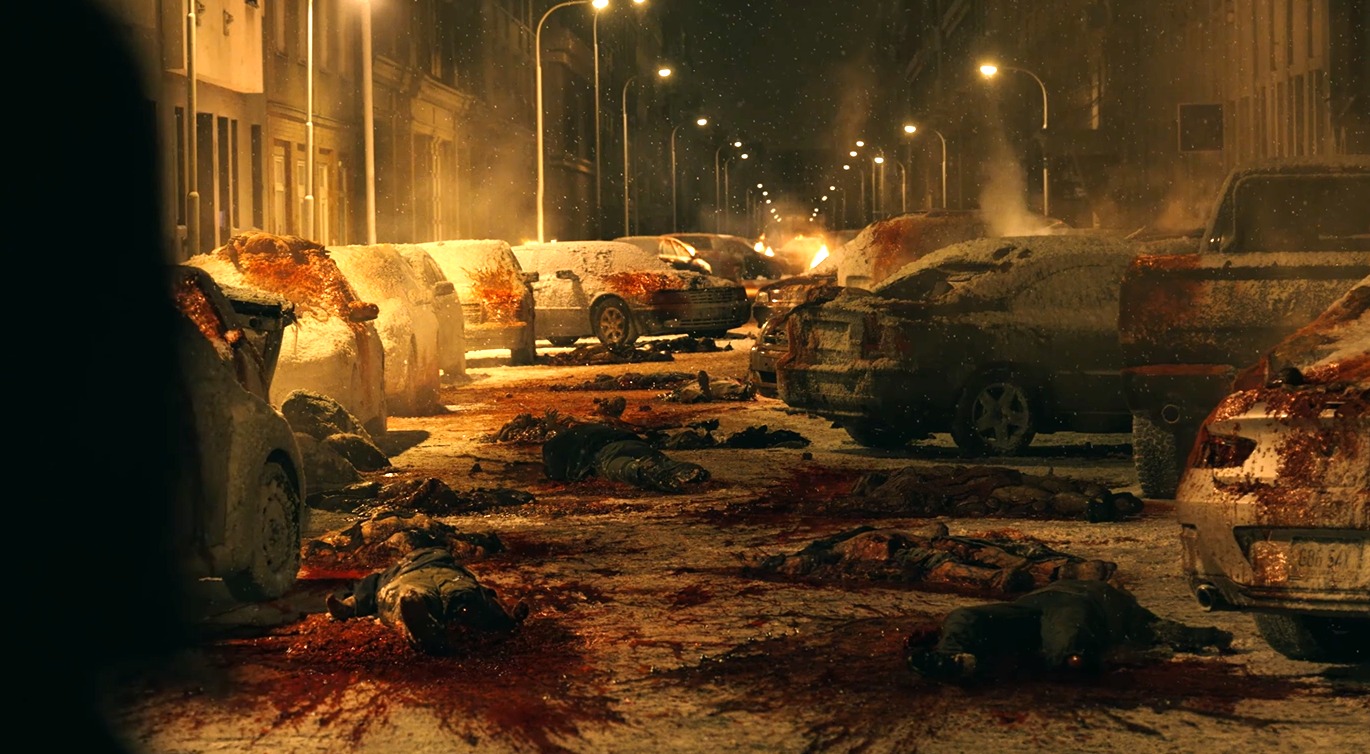
Deployment of video game techniques haven’t always been as seamless, however. Rather than appropriate the survival-horror spirit of the original game, for example, Resident Evil follows security forces mowing down hordes of zombies in flatly lit concrete tunnels and warehouses. Anderson opts for weightless butt-rock action over clever uses of architecture or a building sense of dread. It’s notable, then, that Zach Cregger’s latest, a new adaptation of the Resident Evil 2(1998) game, like Backrooms, focuses on isolation and survival, with an aesthetic sensibility to match.
From its first wave of marketing, trailers for Cregger’s Resident Evil immediately established rhythms that gamers have found familiar for years: As society collapses, Bryan (Austin Abrams), crosses a snowy, moonlit field toward an abandoned house before attempting to call someone on a landline, then scrambles for a weapon as a lone zombie runs screaming across a field; he finds a shotgun and, to his dismay, discovers it’s empty; as he pokes at a corpse in the street, it writhes out of his grasp; scrambling into an into an open manhole, Abrams drops into a sewer and confronts a zombie bloated to the proportions of Baron Harkonnen. A descent into Hell is teased through quick cuts—a fractalized ring of torsos bursts through a dark doorway, hordes of undead scrabble to break free from a hospital, and eventually, zombies throw themselves off of rooftops in pursuit, exploding on impact below.
Cregger’s broader oeuvre likewise grounds narrative significance in geographies of place in much the same way that video game developers build environments, lending dark, cramped corridors and abandoned houses cinematic, metaphorical double meanings. Cregger sets Barbarian (2022) in a pristine house in a Detroit neighborhood otherwise hollowed out by capitalist extraction; it’s no coincidence the building has only been maintained for use as an Airbnb. In the booby-trapped tunnels below, the Mother (Matthew Patrick Davis), a giant malformed baby produced by generations of sexual-assault-induced inbreeding, searches for victims to mime maternal care towards, literalizing the Lynchian rot lurking below small-town America. These choices recall his latest film’s source material: corporate malfeasance and subterranean secret passages full of monsters are the Resident Evilseries’ bread and butter, and Resident Evil 2’s most iconic enemy, the unstoppable Mr. X, relentlessly follows players and bursts through walls similar to the Mother.
Cregger’s Weapons (2025) uses these kinds of self-contained architectural nightmares and tightly plotted, highly choreographed chases to even greater effect. Maybrook, Pennsylvania, where seventeen bewitched third-graders run off into the night, might be fictional, but Cregger efficiently maps the small town out and lets characters run wild within its confines like a twisted game of Animal Crossing(2001– ). Josh Brolin’s grieving father triangulates the trajectories of the missing children over a town minimap, revealing the house that Gladys the witch (Amy Madigan) has nested in like a parasitic wasp—or another false Mother. The building eventually degrades into a dismal final boss’s lair, complete with magical traps and praetorian guards.
As much as games have influenced the internet-derived horror currently surging to the forefront, so too has a return to an analog aesthetic based in the Y2K nostalgia wave that’s arrived concurrently to the mainstream adoption of modern gaming. In the prehistoric internet period before cellphones and high-resolution satellite imagery demystified the world, it truly felt like anythingcould be lurking in the dark stretches of desert just off the highway. Doctoring a YouTube creepypasta to look like low-resolution security camera footage—such as the Backrooms web series, or Alan Resnick’s This House Has People in It(2016), where hidden cameras in a suburban home capture a couple’s horror as their daughter gradually clips through the floor—masks technical and budgetary limitations while creating a tone unmoored from time.
Parsons in particular understands this, choosing to set Backrooms very specifically in the year 1990. Chunky computers, hand-drawn maps, and a found-footage segment courtesy of a doomed attempt to document the labyrinth with a VHS camcorder make the film feel lost to history, and the weighty tactility of its largely practical sets adds a lived-in quality to Parsons’s world. These same techniques inherently add a powerful amount of gravitas even when stretched over a hollow premise—a contrast to Kyle Edward Ball’s 2022 low-fi horrorshow, Skinamarink, which remains divisive precisely for its meager plot-to-vibes-ratio.
This year’s Buffet Infinity, a Lovecraftian indie in a similar vein,is exemplary of this analog format as well. Although some new material was shot, most of this horror-comedy is comprised of stock footage altered with filters by comedian-turned-director Simon Glassman. The endearingly awkward series of low-budget local commercials that make up its narrative—for jewelry, a sandwich chain, a pawn shop with a rapping clerk, a specious, ambulance-chasing lawyer—is soon revealed to depict a fight for survival after ads for the eponymous “Buffet Infinity” start crowding the channel. Buffet Infinity is a sentient business, capable, like the Backrooms, of mining desires and regurgitating imperfect commercial simulacra to entice customers to stop in and sample a never-ending buffet (before they’re devoured in turn). Riffing on the ongoing decimation of local businesses by big-box chain stores, Amazon, and now AI, Buffet Infinity could only live in an analog era when brick-and-mortar stores were plentiful, competitive, and uneclipsed by the shadow of internet commerce. One imagines that the extra-dimensional predator masquerading as Buffet Infinity wouldn’t have to work very hard to snare prey if it could shoot out viral video clips like digital tendrils.
Cregger’s take on Resident Evil seems to synthesize both of these trends, the analog and the “video game film” aesthetic, making it a potential harbinger of analog horrors to come. Like these other strategically Y2K-set horrors, it is peppered with uncanny throwbacks to the 1998 release period of the game. Consider the use of landlines, the dial tones worked into the soundtrack, or the Polaroid camera the film features despite the contemporary setting. Rather than rely on mere wink-and-nod references, the film is an explicitly tactile take on its source material that engages with gaming seriously, on the level of Cregger’s past work. The continued success of traditional game-to-film adaptations may seem all but assured, but films like Resident Evilspeak to the exciting ways in which the integration of digital techniques originally honed in more interactive, collaborative mediums is expanding filmmaking, wielded by the digital natives who love them.

1 Comment
Pingback: 5 Ways To Stop Your GPU From Degrading - Comic Vibe