

REDMAGIC continues its six-month flagship release cycle with the REDMAGIC 11S Pro, a refreshed version of the REDMAGIC 11 Pro launched in November 2025. After reviewing the REDMAGIC 11 Pro in May, I had the chance to spend several weeks testing the REDMAGIC 11S Pro. The two Gaming Smartphones share almost the same design and features, so the changes are mainly focused on internal hardware. Rather than introducing a new design, REDMAGIC has updated the processor and cooling system to improve the phone’s performance during demanding gaming sessions.
The REDMAGIC 11S Pro uses the Snapdragon 8 Elite Gen 5 Leading Version, with overclocked Prime CPU cores reaching up to 4.74GHz, compared with 4.61GHz on the standard version. The difference in clock speed is relatively small, but gaming performance depends on more than processor specifications alone. Sustained frame rates, power consumption, and heat management also play an important role, especially when running demanding Android games for extended periods.
REDMAGIC has also improved its AquaCore liquid-cooling system, which works alongside an internal Turbo Fan to manage heat during heavy workloads. The updated system features a larger heat-transfer area and a more durable fan. The cooling hardware remains an important part of the phone’s gaming-focused design, helping it handle extended sessions. The fan is also fully visible on the 256GB model, allowing users to see more of the cooling system in action.
After several weeks of testing, the REDMAGIC 11S Pro has proven to be a capable gaming smartphone with the hardware to handle demanding mobile titles. It also works well as an everyday flagship, although its camera capabilities may not appeal to users who prioritise photography.
Purchase NowBuy REDMAGIC 11S Pro
In this review, I’ll examine its design, display, gaming performance, cooling system, battery life, and everyday use to see how it compares with the REDMAGIC 11 Pro and whether the changes are worth considering.
1Specifications
2Unboxing
3Design and Build Quality
4Screen, Under-Display Camera & Fingerprint Scanner
5Performance & Benchmarks
5.1Benchmark Results
5.2Storage Performance
5.3Gaming Performance
5.4Temperature and Thermal Performance
6REDMAGIC OS 11.5 Based on Android 16
6.1GameSpace
7Camera
7.1Video Performance
8Battery & Charging
9Conclusion
Specifications
| Category | Specifications |
| Basic Parameters | Height: 163.82 mm, Width: 76.54 mm, Depth: 8.9mm Weight: 230 g Material: Metal Middle Frame + Corning Glass Rear Cover Color: Subzero, Nightfreeze Protection: IPX8 Water Resistance with Unique Dust-Proof Design |
| Display | Size: 6.85-inch BOE X10 FHD+ AMOLED Refresh Rate: Up to 144 Hz Touch Sampling Rate: Up to 3000 Hz, Multi-Finger 360 Hz Resolution: 2688 × 1216 Pixels Aspect Ratio: 20:9 Peak Brightness: 1,800 Nits Max Material: Corning Gorilla Glass Color Gamut: 100% DCI-P3Color Accuracy: ΔE < 1 |
| Hardware | Processor: Snapdragon 8 Elite Gen 5 Leading Version CPU Cores: 2+6 Oryon™ Architecture CPU Frequency: Up to 4.74 GHz GPU: Adreno™ Gaming Chip: RedCore R4 |
| Memory | RAM: 12 GB / 16 GB LPDDR5X Ultra Storage: 256 GB / 512 GB UFS 4.1 |
| Cooling System | Cooling System: REDMAGIC AquaCore Vapor Chamber: 13,116 mm² Turbo Fan: Up to 24,000 RPM, Waterproof Liquid Metal: Composite Liquid Metal 3.0 Additional Cooling: Copper Foil, High-Conductivity Graphene, Thermal Gel Frame: Aircraft-Grade Aluminum Alloy Air Duct: High-Speed Aerospace Aluminum Liquid Cooling: Flowing Liquid Cooling |
| Rear Cameras | Resolution: 50 MP + 50 MP + 2 MP Main Sensor: OV50E40, 1/1.55-inch, 7P, f/1.88 Secondary Sensor: OV50D40, 1/2.88-inch, 6P, f/2.0 Stabilization: OIS Lens: 7P, APL-Coated Anti-Glare |
| Front Camera | Resolution: 16 MP Sensor: OV16A, 1/2.77-inch, 5P, f/2.0 AI Algorithm Enhancement |
| Sensors & Security | 3D Ultrasonic Fingerprint Sensor, Accelerometer, Electronic Compass, Gyroscope, Proximity Sensor, Ambient Light Sensor, Infrared Sensor Authentication: Fingerprint and Face Recognition |
| Software | Operating System: REDMAGIC OS 11.5 Android Version: Android 16 |
| Battery & Charging | Battery: 7,500 mAh, Single Cell Wired Fast Charging: 80 W Wireless Fast Charging: Up to 80 W Reverse Charging: Wired and Wireless |
| Ports | USB Type-C: USB 3.2 Gen 2 DisplayPort: Supports 4K Video Output Audio Jack: 3.5 mm SIM Slot: Dual Nano-SIM HDMI: Requires Converter |
| Connectivity | Dual nano-SIM, 5G Network Wi-Fi: Wi-Fi 6, Tri-Band 2.4 / 5 / 6 GHz Bluetooth: 5.4 GPS: Dual GPS (L1 + L5) NFC: Yes SIM: Dual Nano-SIM, No eSIM |
| Gaming Features | Shoulder Triggers: 520 Hz Touch Sampling Rate Haptics: 0815 X-Axis Linear Motor Magic Key: Customizable Shortcut, GameSpace by Default RGB Lighting: Customizable Fan, Shoulder Triggers, Logo, and Side-Frame Lights Magic Key Functions: Camera, Video Recording, Flashlight, Voice Recorder, Mute, Vibration Mode |
Unboxing
We received the REDMAGIC 11S Pro in the Nightfreeze color variant for this review. Inside the retail box, REDMAGIC includes the phone and the accessories you need to get started. The package contains an 80W charger, a red USB Type-C to Type-C cable, a clear hard plastic protective case, and a SIM tray ejector tool.
The included 80W charger supports the REDMAGIC 11S Pro’s fast-charging capability, while the red USB Type-C cable handles charging. The transparent case provides basic protection against scratches and minor impacts without hiding the Nightfreeze finish. With these accessories included, the REDMAGIC 11S Pro is ready to set up straight out of the box, without needing a separate purchase for basic protection or charging.
Design and Build Quality
The REDMAGIC 11S Pro retains the futuristic design of its predecessor, although the rear panel has a cleaner look with fewer decorative patterns. We received the Nightfreeze version, which combines a transparent glass back with silver and blue accents around the circular cooling assembly.
Measuring 163.82 × 76.54 × 8.9mm and weighing 230g, the phone is relatively large and heavy compared with conventional flagship smartphones. It features a metal middle frame and a Corning glass rear cover, with Subzero and Nightfreeze available as colour options. REDMAGIC also specifies IPX8 water resistance alongside a dust-resistant design, although the IPX8 rating itself does not certify protection against dust.
The main attraction on the back is the AquaCore liquid-cooling system, visible beneath the rear glass. Rather than relying solely on a vapor chamber and internal heat spreaders, the REDMAGIC 11S Pro uses a miniature ceramic pump to circulate a specialised cooling liquid through the system. Small bubbles are visible moving through the blue channels, making the cooling hardware part of the phone’s appearance.
The circular assembly has a mechanical look, with silver and blue accents surrounding a central metallic plate that supports wireless charging. Despite the visible components, the rear panel maintains a relatively smooth finish, with the camera module and cooling system integrated into the overall design.
REDMAGIC combines liquid cooling with several other thermal components to manage heat during demanding gaming sessions. These include a 13,116mm² 3D vapor chamber, Liquid Metal 3.0 thermal material, copper foil, graphene, thermal gel, and an aluminium middle frame. The system also features a Turbo Fan rated at up to 24,000 RPM, with an aluminium air duct directing airflow through the chassis.
At maximum speed, the fan produces a noticeable high-pitched whistling sound, which is worth considering if you prefer gaming in a quiet environment. REDMAGIC has also incorporated measures intended to prevent leaks and protect the cooling assembly during everyday use. I’ll examine how well this cooling system performs under load in the performance section.
RGB lighting adds to the REDMAGIC 11S Pro’s gaming-focused appearance. The REDMAGIC logo, cooling fan, shoulder triggers, and illuminated Game Mode markings feature customisable lighting. Users can adjust the colours and effects or switch individual lighting zones off. I prefer a more restrained look, so the option to disable the lights is useful when using the phone outside gaming sessions.
The Snapdragon 8 Elite Gen 5 branding on the rear identifies the processor powering the device, while the lighting and visible cooling hardware give the phone a different appearance from a conventional flagship.
The rear camera module sits above the circular cooling assembly and houses three cameras: a 50MP main sensor, a 50MP ultra-wide sensor, and a 2MP depth sensor. The main camera has an f/1.88 aperture, while the ultra-wide camera uses an f/2.0 aperture.
The rear flash is integrated into the glass panel, helping maintain a cleaner finish without a separate protruding flash housing. Although the camera module is not as prominent as the cooling system, its placement keeps the rear components visually consistent. The camera setup is also worth considering for users who want a gaming smartphone that can handle everyday photography.
The side controls follow the same gaming-focused approach. The right edge houses the power and volume buttons, capacitive shoulder triggers, and a dedicated switch for entering Game Mode. A microphone and ventilation opening are also positioned along the side, while the opposite edge features additional ventilation and the illuminated Game Mode marking.
The shoulder triggers operate at a reported 520Hz and have a wider touch-sensitive area, allowing players to map additional actions in supported games. They also support portrait-mode use, making them useful beyond landscape gaming. In shooters and racing games, these controls can help keep your thumbs on the display while handling additional actions with your index fingers.
REDMAGIC has retained several features that are becoming less common on flagship smartphones. The 3.5mm headphone jack sits on the top edge, while the bottom houses the speaker, microphone, SIM card tray, and USB-C port.
The USB-C connection supports USB 3.2 Gen 2 data transfer and reverse charging, while the stereo speakers support DTS audio. These features are useful for wired headsets, gaming accessories, and media playback without relying entirely on wireless connections.
The REDMAGIC 11S Pro is still a relatively heavy handset, and its active cooling hardware gives it a different feel from a typical flagship. However, the combination of dedicated gaming controls, visible liquid cooling, configurable RGB lighting, and practical connectivity makes its priorities clear: it is designed primarily for mobile gaming while retaining the features needed for everyday use.
Screen, Under-Display Camera & Fingerprint Scanner
The REDMAGIC 11S Pro uses a 6.85-inch BOE X10 AMOLED display with a resolution of 2688 × 1216 pixels. The 20:9 panel supports a refresh rate of up to 144Hz, which is higher than the 120Hz refresh rate found on many flagship smartphones. While some competing devices offer faster panels, 144Hz provides smooth motion for gaming, scrolling, and navigating the interface. The display also supports a 100% DCI-P3 colour gamut and a rated colour accuracy of ΔE below 1. Corning Gorilla Glass protects the screen, while the slim bezels and under-display front camera keep the viewing area free from a notch or punch-hole cutout.
In everyday use, the AMOLED panel delivers rich colours, deep blacks, and wide viewing angles. Text looks sharp, and the 2688 × 1216 resolution provides enough detail for reading, browsing, and watching videos. The 144Hz refresh rate keeps scrolling and animations smooth, while compatible games can take advantage of the higher refresh rate for fluid motion. The touch sampling rate reaches up to 3,000Hz, with 360Hz multi-finger touch sampling, helping the screen respond quickly to taps and swipes during gameplay. Actual refresh rates and touch response depend on the game, software settings, and operating conditions.
REDMAGIC rates the display at up to 1,800 nits of peak brightness, which helps maintain visibility outdoors and under bright lighting. Indoor brightness is also suitable for extended use, and the screen can be adjusted to match different environments. The panel supports 2,592Hz PWM dimming, which is designed to reduce flicker at lower brightness levels. This may help users who are sensitive to display flicker, although results vary between individuals. Overall, the display works well for gaming while remaining suitable for everyday tasks and media consumption.
The 16MP front camera sits under the display, allowing REDMAGIC to avoid the cutouts found on most modern smartphones. It uses an OmniVision OV16A sensor with a 1/2.77-inch format, a five-element lens, and an f/2.0 aperture, alongside AI-based image processing. During normal use, the camera remains hidden well enough that it does not interfere with games, videos, or other full-screen content.
Under certain lighting conditions or viewing angles, the area above the camera can become slightly visible, but it generally blends into the panel. The main advantage is the uninterrupted viewing area, although image quality from the under-display camera needs to be considered separately.

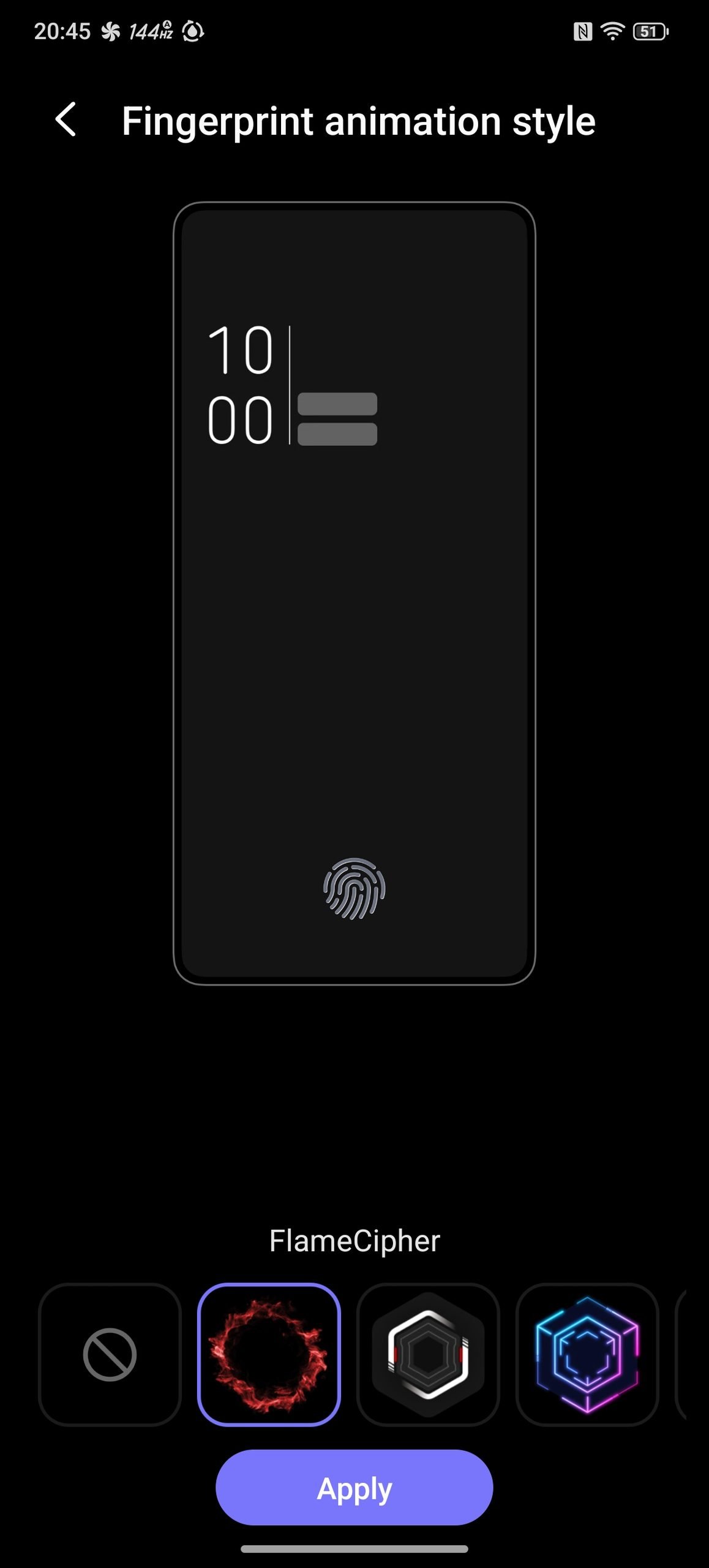
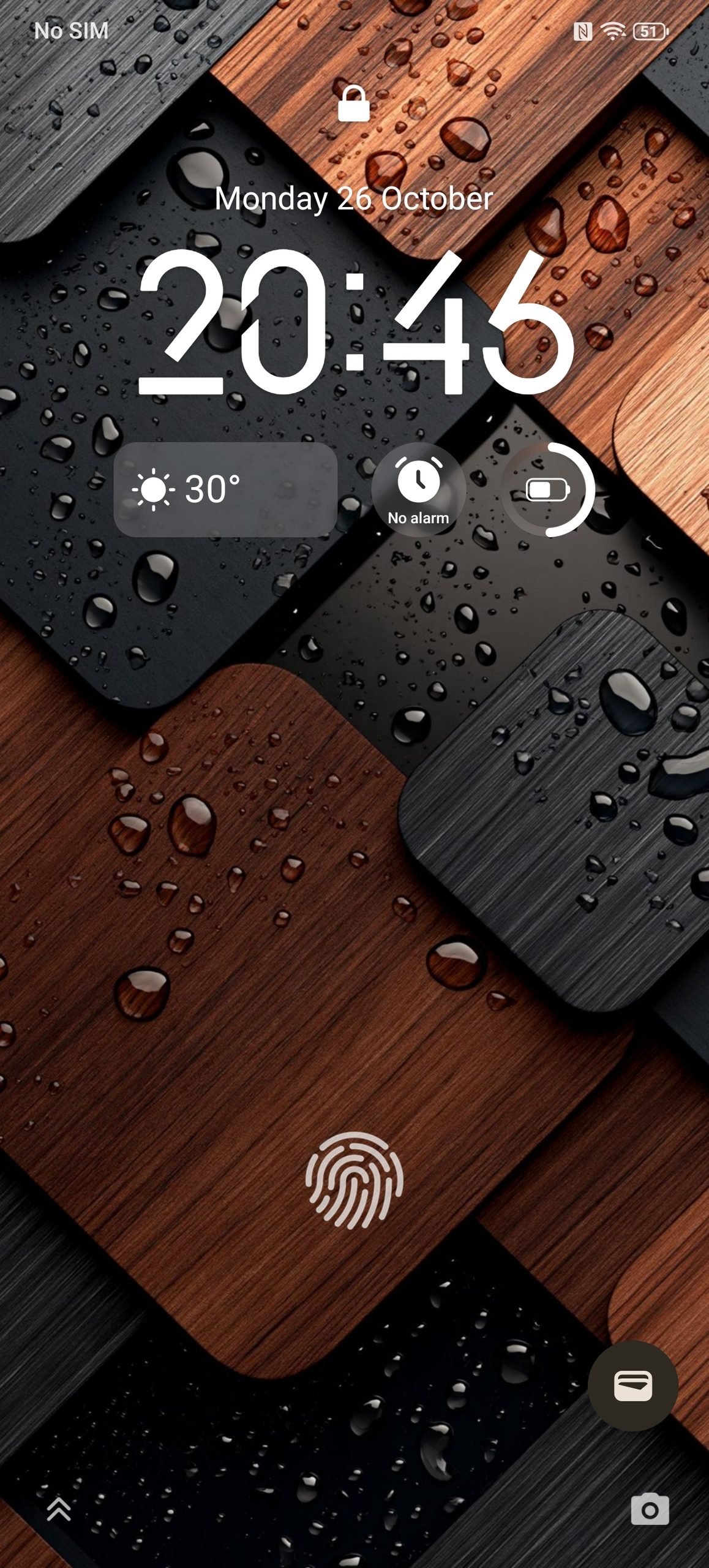
The REDMAGIC 11S Pro also features an ultrasonic fingerprint scanner built into the display. It unlocks the phone quickly in most situations, making it convenient for everyday use without requiring a physical sensor on the frame. Face unlock is available as an alternative. Haptic feedback feels precise when typing and interacting with the interface, although the vibration strength could be higher for users who prefer more pronounced feedback.
With its high-refresh-rate AMOLED panel, under-display camera, and in-screen fingerprint scanner, the REDMAGIC 11S Pro offers a clean front design that suits both gaming and regular smartphone use.
Performance & Benchmarks
The REDMAGIC 11S Pro is powered by the Snapdragon 8 Elite Gen 5 Leading Version, featuring a 2+6 Oryon CPU configuration with clock speeds of up to 4.74GHz. Compared with the standard Snapdragon 8 Elite Gen 5 in the REDMAGIC 11 Pro, which reaches approximately 4.6GHz on its fastest cores, the Leading Version offers a modest increase in CPU frequency. Graphics processing is handled by an Adreno GPU, while REDMAGIC’s RedCore R4 chip assists with gaming optimisation and system-level processing.
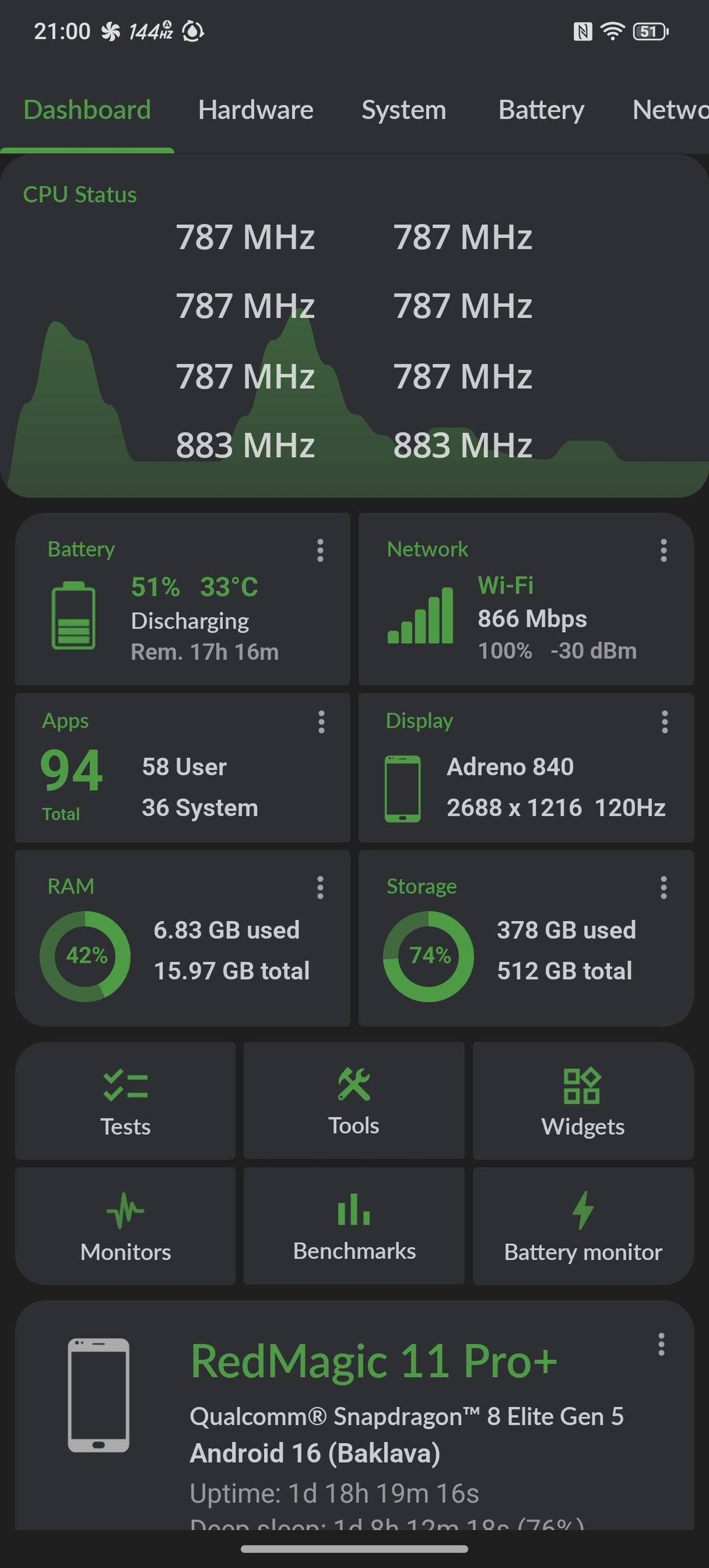
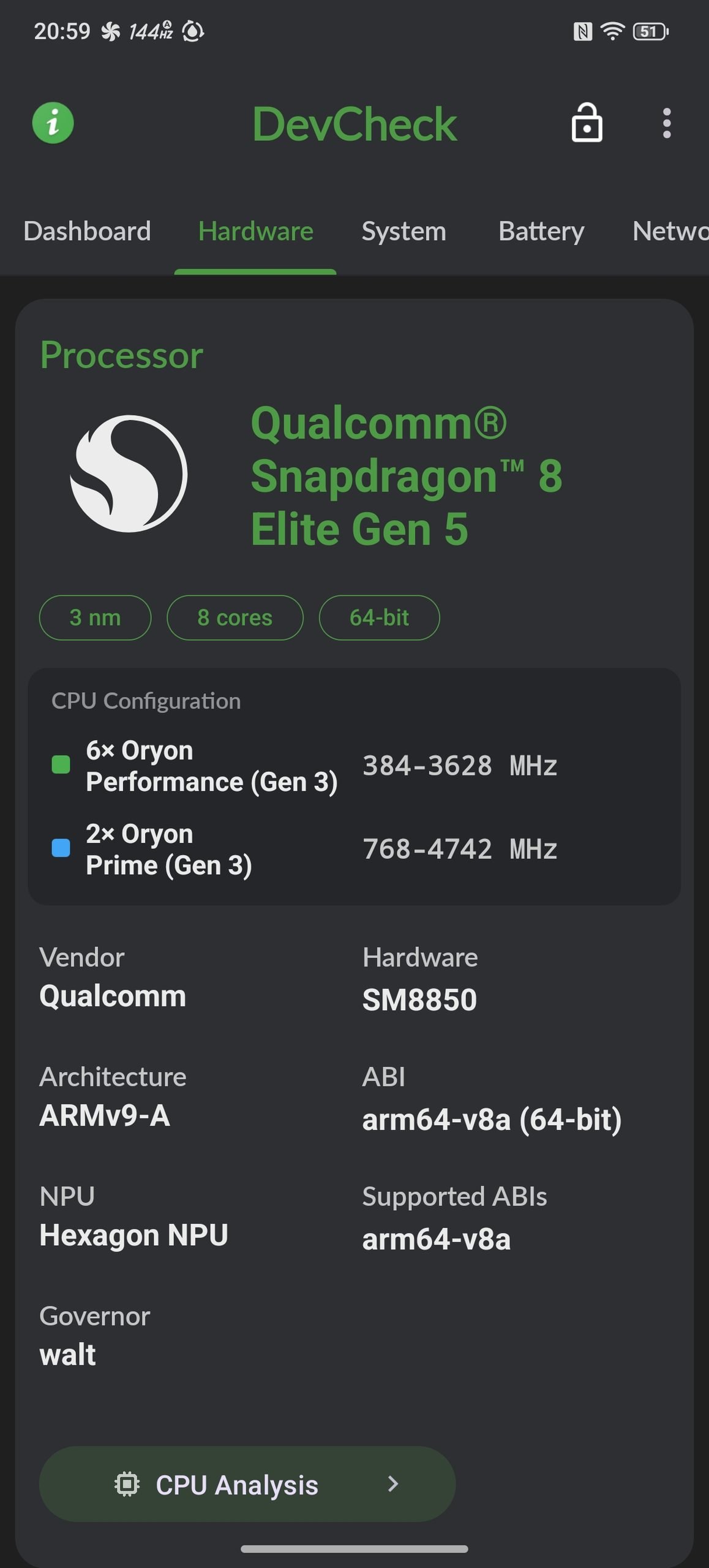
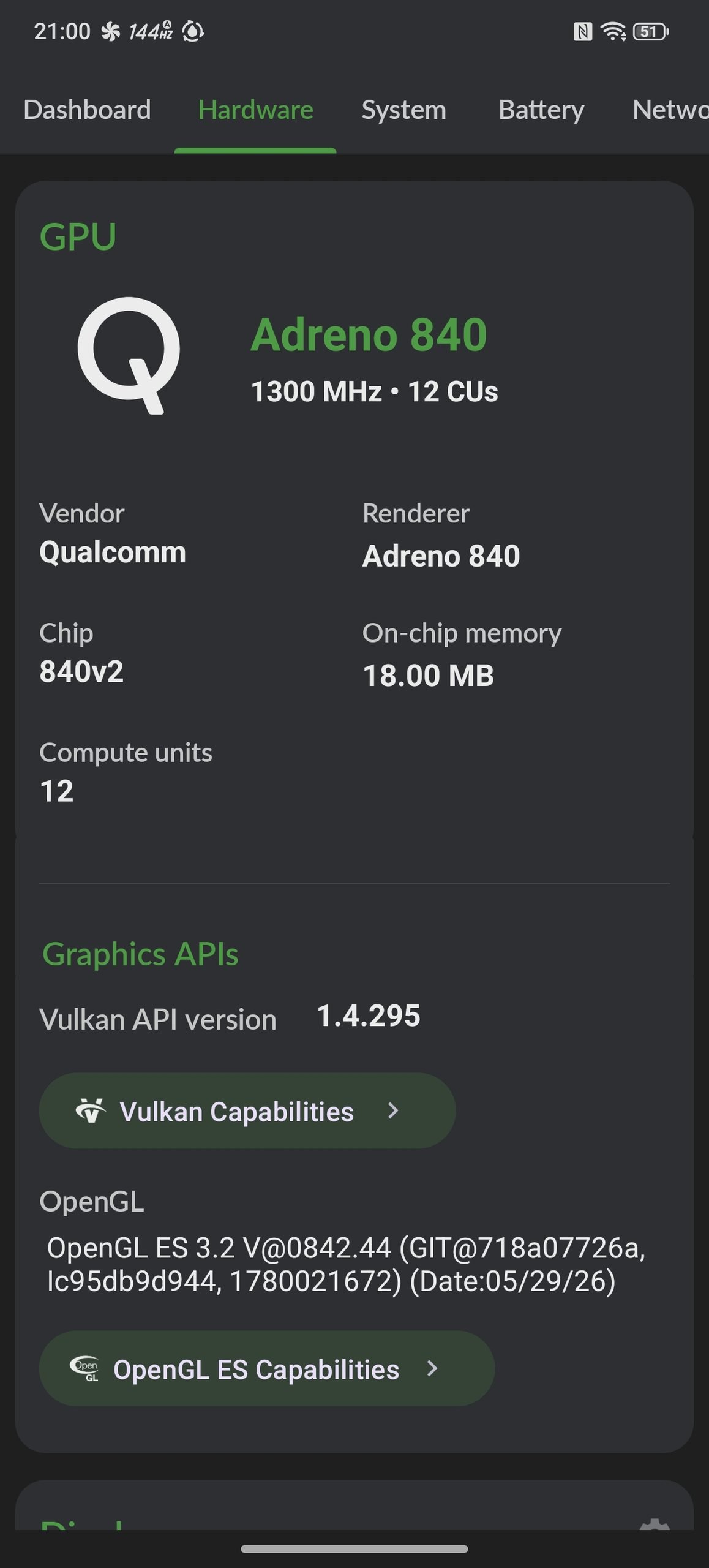
Our review unit comes with 16GB of LPDDR5X Ultra RAM and 512GB of UFS 4.1 storage. This configuration provides enough memory for demanding games, multitasking, and running several applications without frequently closing them. The 512GB storage capacity also leaves plenty of room for large games, screenshots, videos, and other files. As usual, the available storage is lower than the advertised capacity because the operating system and pre-installed applications occupy part of the internal drive.
Benchmark Results
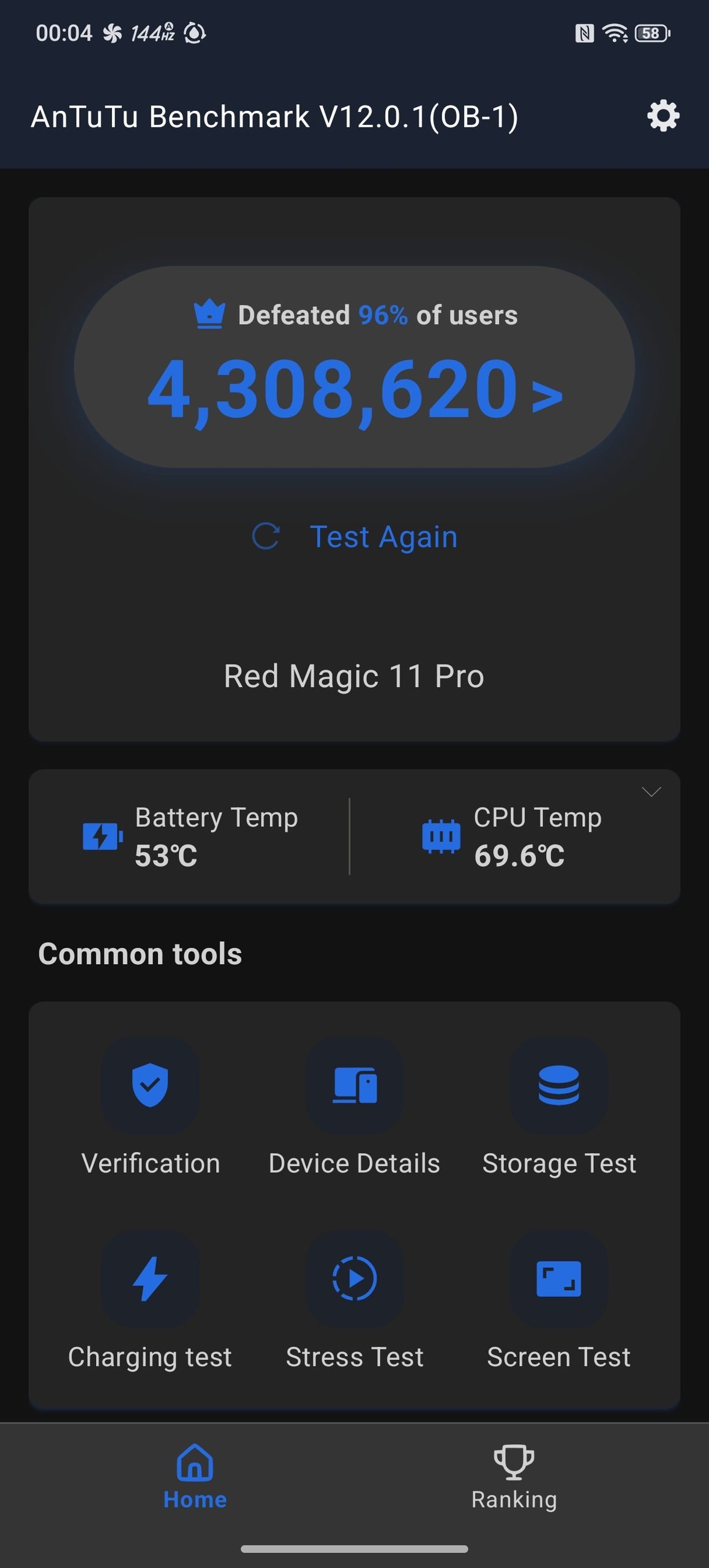
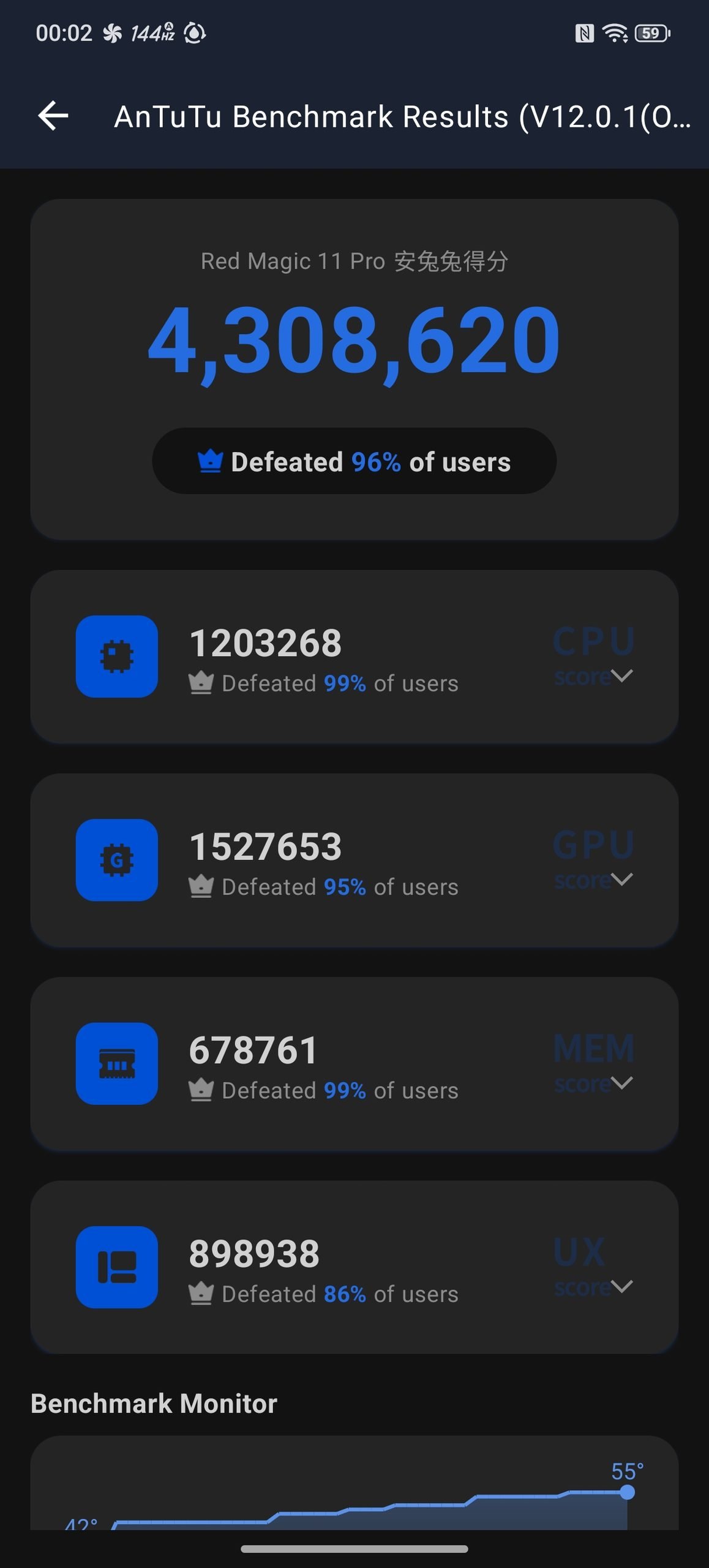
In AnTuTu Benchmark V12.0.1, the tested device scored 4,308,620 points overall. The CPU contributed 1,203,268 points, while the GPU scored 1,527,653. Memory performance reached 678,761 points, and the UX score came in at 898,938. These results cover several areas of performance, including processing, graphics, memory, and interface-related workloads.
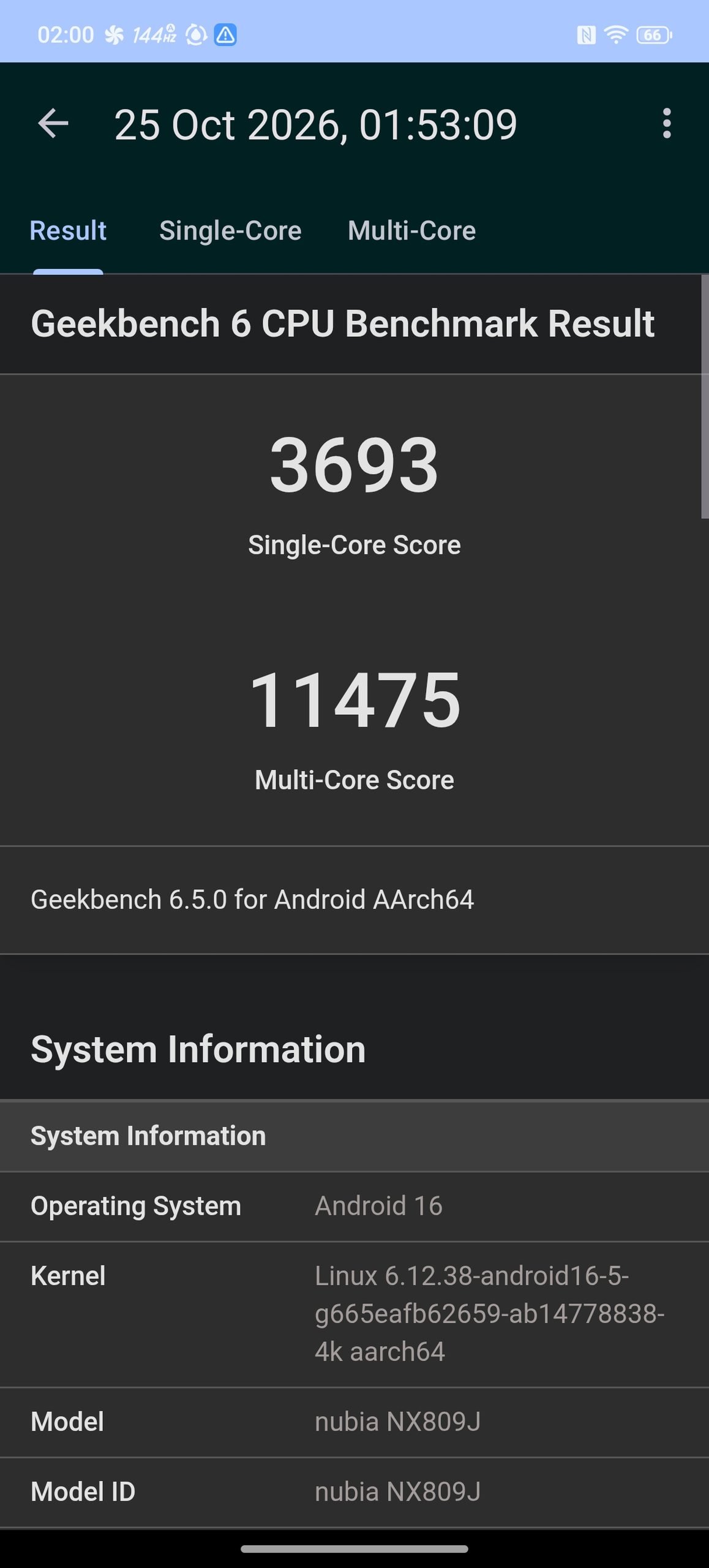
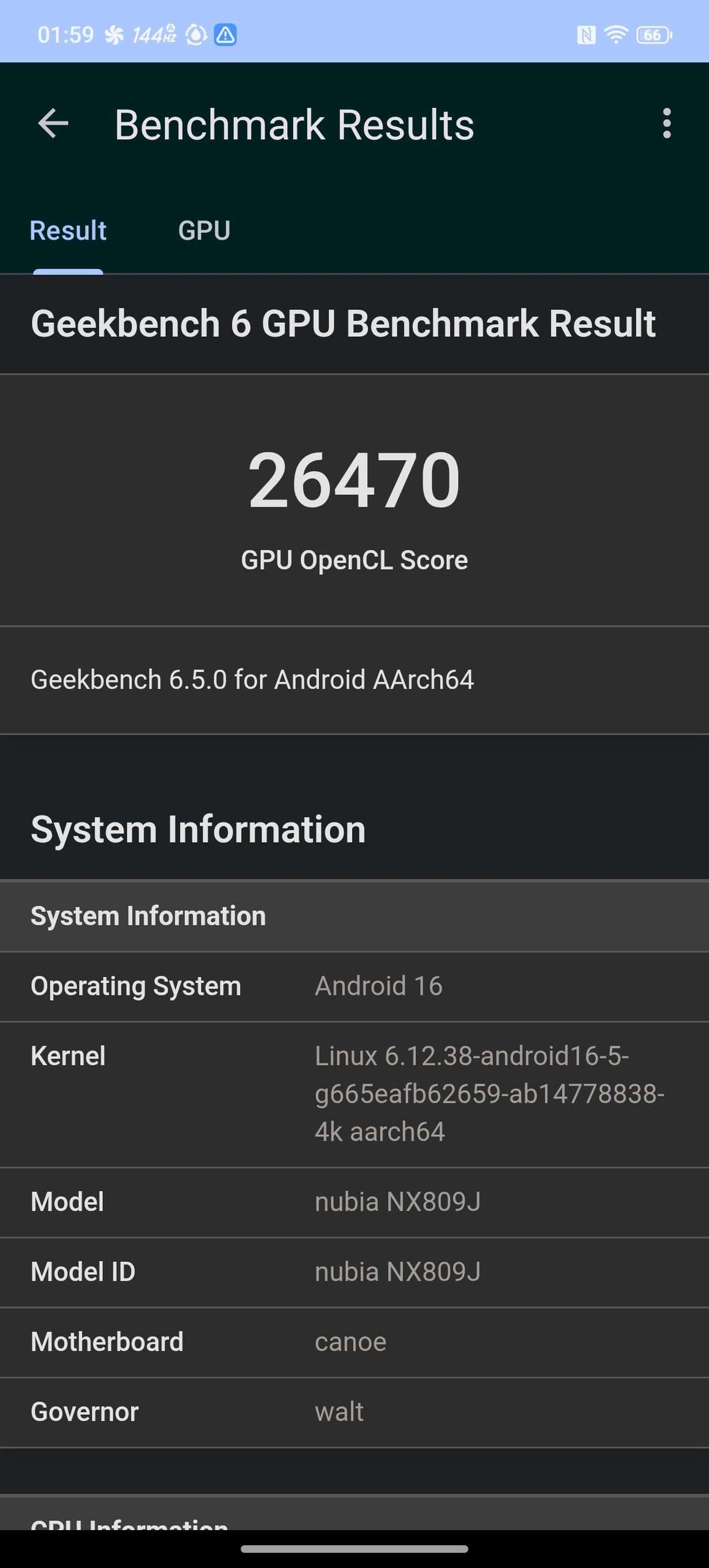
Geekbench 6.5.0 returned 3,693 points in the single-core test and 11,475 points in the multi-core test. The single-core result reflects performance in workloads that rely on individual CPU cores, while the multi-core score measures how well the processor handles tasks that can use several cores simultaneously. The Geekbench 6 GPU compute test recorded 26,470 points using OpenCL, providing an indication of the Adreno GPU’s compute performance.
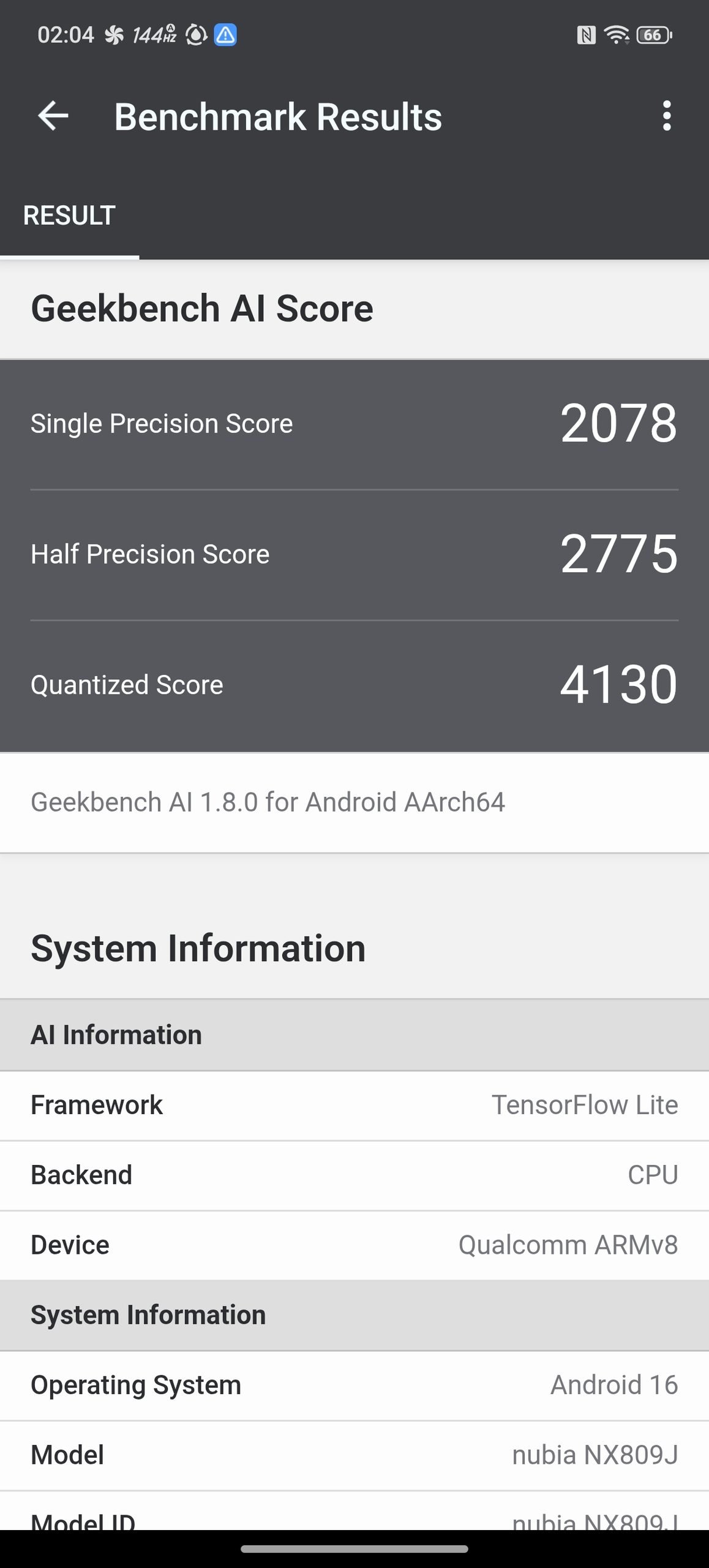
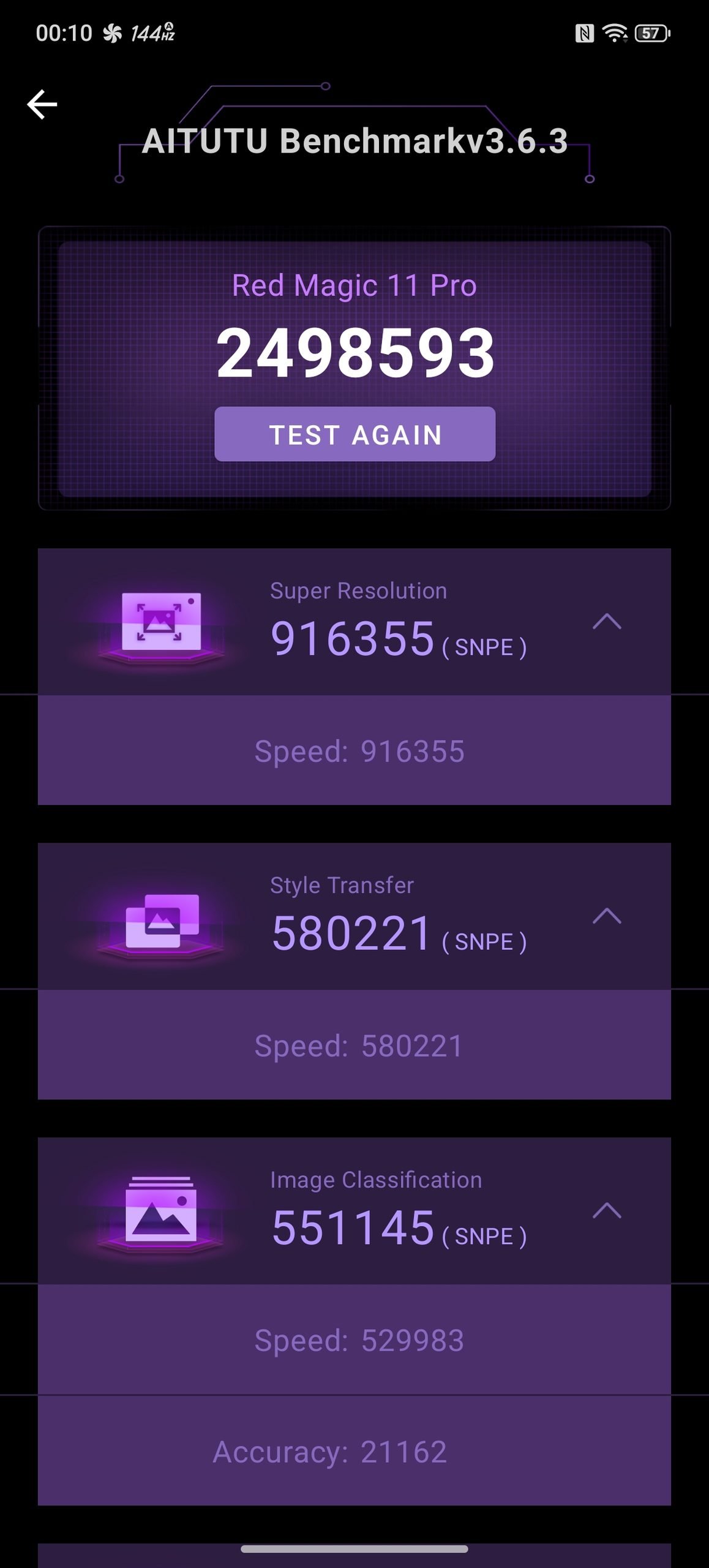
The device also completed Geekbench AI 1.8.0 testing, scoring 2,078 in single precision, 2,775 in half precision, and 4,130 in quantized workloads. These tests evaluate AI processing using different numerical formats, with results depending on the software backend and hardware acceleration. In AITUTU Benchmark V3.6.3, the overall score reached 2,498,593 points, including 916,355 for Super Resolution, 580,221 for Style Transfer, and 551,145 for Image Classification.
Storage Performance
The REDMAGIC 11S Pro uses UFS 4.1 storage, and our 512GB review unit recorded a sequential read speed of 4,153.4MB/s and a sequential write speed of 4,230.0MB/s in the supplied storage test. Random access read and write speeds reached 2,499.8MB/s and 2,097.2MB/s, respectively. Fragment access measured 352.3MB/s for reading and 218.1MB/s for writing, while the overall storage test score was 138,949.
These results indicate that the storage system can handle large transfers quickly and provide fast access to game files and applications. In everyday use, storage performance can affect game loading times, application launches, and the handling of large files. Actual results will vary depending on available storage space, workload, and testing conditions.
Gaming Performance
Gaming is the main focus of the REDMAGIC 11S Pro. Its Snapdragon chipset, Adreno GPU, RedCore R4 chip, and 144Hz AMOLED display are designed to handle demanding mobile titles while providing responsive controls. The high-refresh-rate screen can deliver smoother motion in compatible games, although not every title supports 144FPS. Some competitive games remain limited to 120FPS or lower, depending on the game version and supported settings.
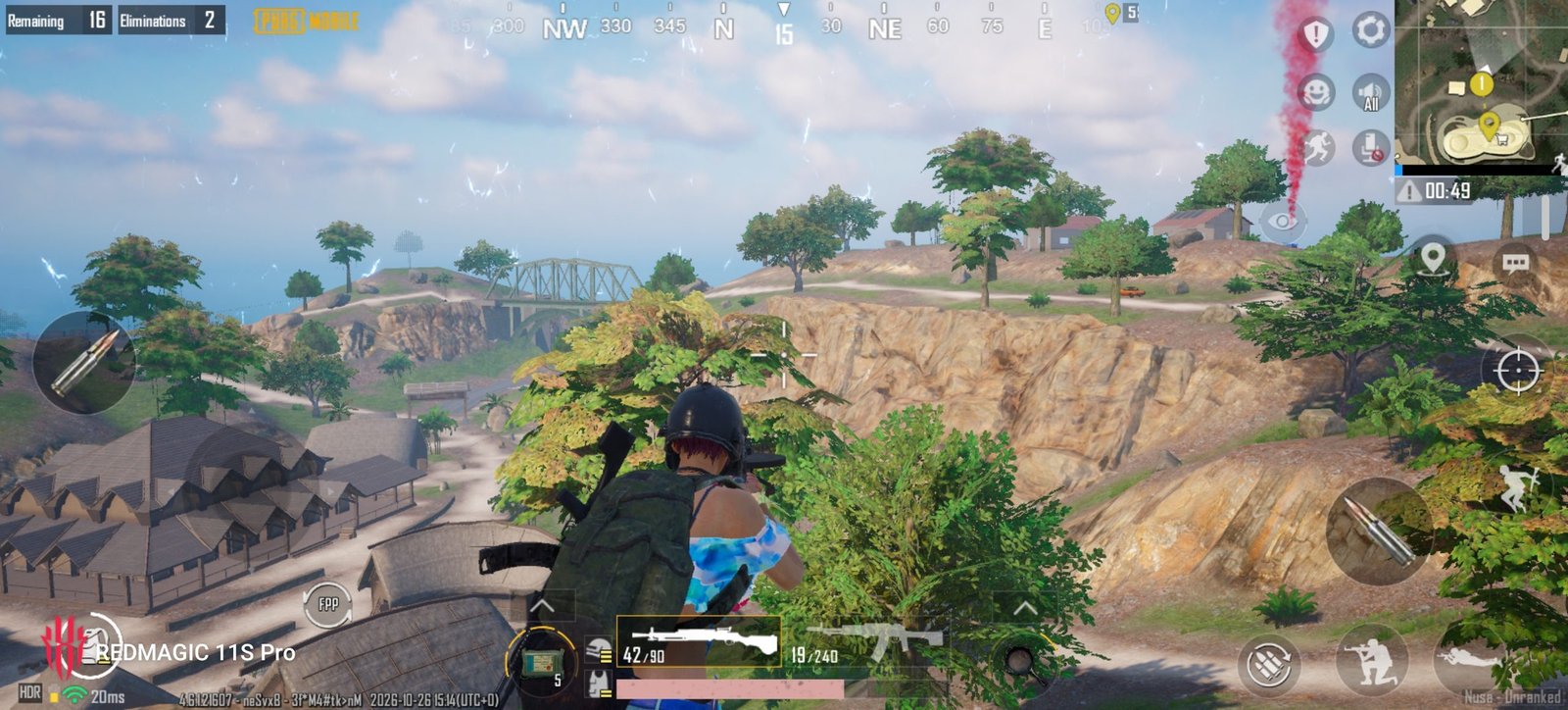

Games such as PUBG Mobile, Genshin Impact, Destiny: Rising, and Delta Force are suitable for evaluating the phone under demanding conditions. Testing at high graphics settings helps show how the CPU and GPU handle complex scenes, while longer gaming sessions reveal whether frame rates remain consistent as temperatures rise. The benchmark results indicate strong processing and graphics capabilities, but individual frame-rate measurements are needed to establish performance in each game.

The capacitive shoulder triggers provide additional control options in supported titles. Players can assign actions to the triggers rather than relying entirely on touchscreen controls, which can be useful in shooters and racing games. Stereo speakers and haptic feedback also contribute to gameplay, while the 144Hz panel provides room for smoother output in games that support higher frame rates.
Temperature and Thermal Performance
The REDMAGIC 11S Pro uses the AquaCore cooling system, combining a 13,116mm² 3D vapor chamber, circulating liquid cooling, Liquid Metal 3.0, copper foil, graphene, thermal gel, and an aluminium middle frame. An upgraded Turbo Fan rated at up to 24,000 RPM moves air through the chassis to help dissipate heat during demanding workloads.
The supplied benchmark monitor shows a temperature reading rising from approximately 42°C to 55°C during testing. However, the screenshot does not identify the exact sensor being measured, so these figures should not be treated as confirmed processor or external surface temperatures.
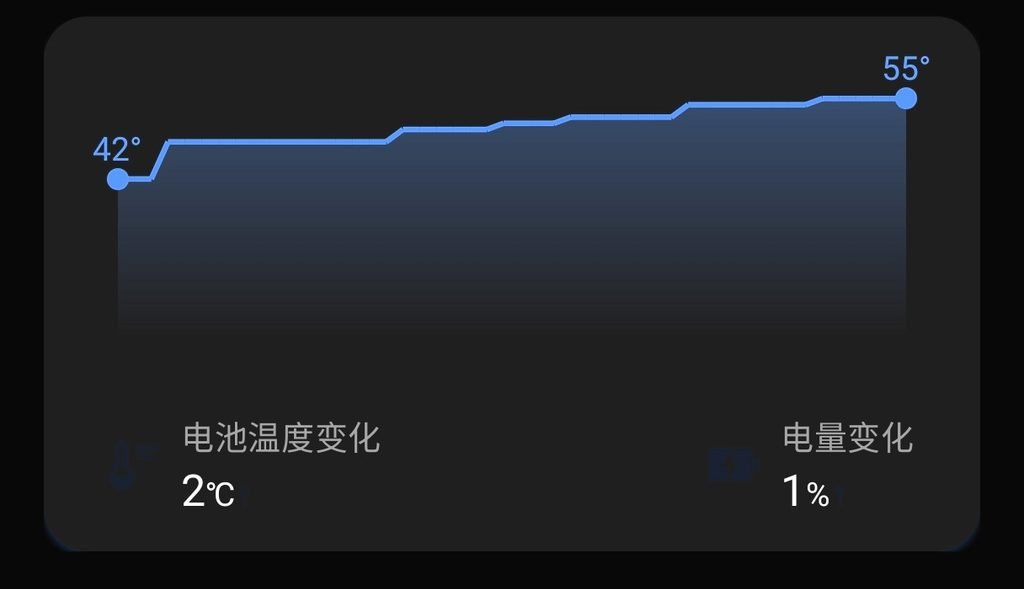
The cooling system is designed to reduce thermal throttling during extended gaming sessions. To assess its effectiveness, sustained stress tests and longer gaming sessions are more useful than a single benchmark run. Frame-rate consistency, benchmark stability, temperature readings, and fan noise all help determine how well the phone manages heat over time.
Overall, the REDMAGIC 11S Pro combines a higher-clocked Snapdragon chipset with fast storage, generous memory, and an extensive cooling system. The supplied benchmark results show strong performance across CPU, GPU, AI, and storage workloads.
REDMAGIC OS 11.5 Based on Android 16
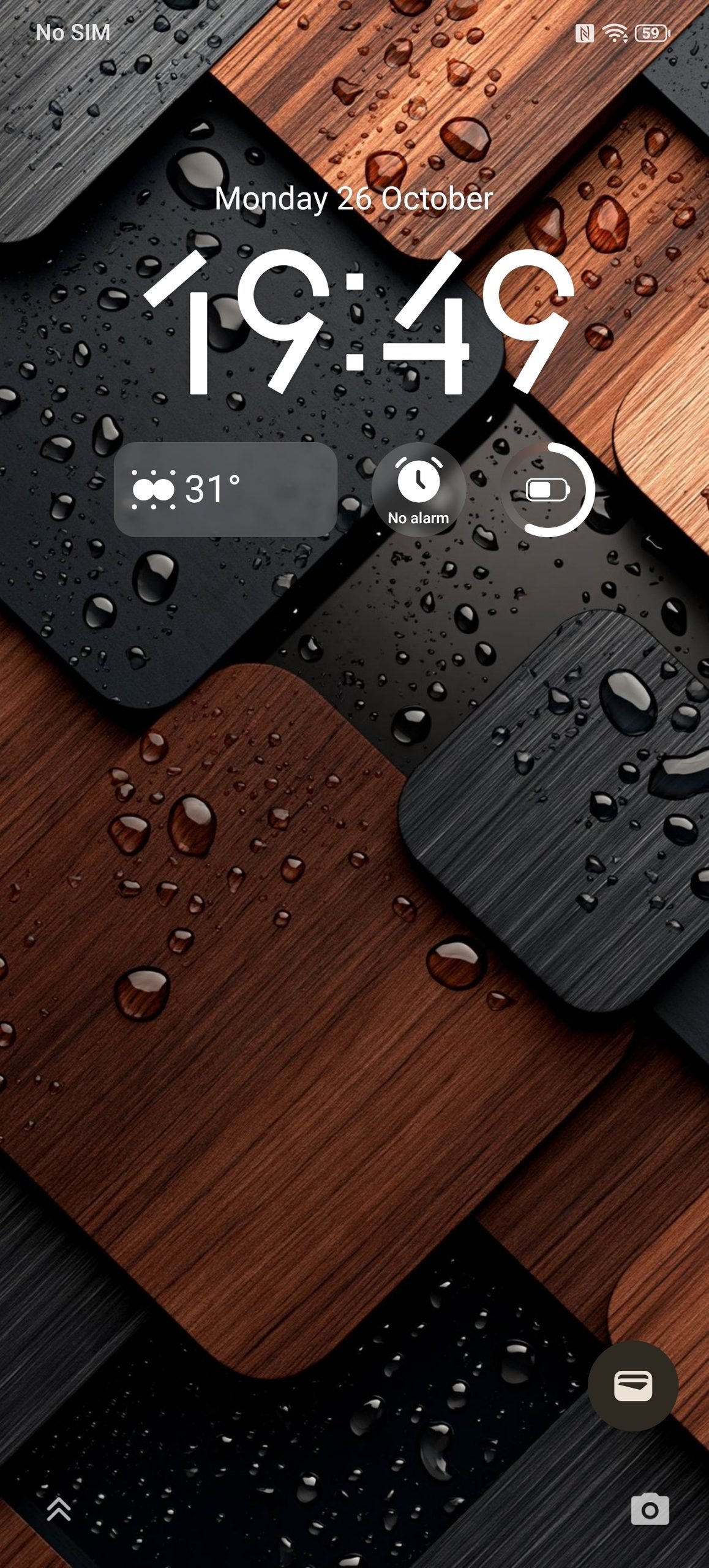
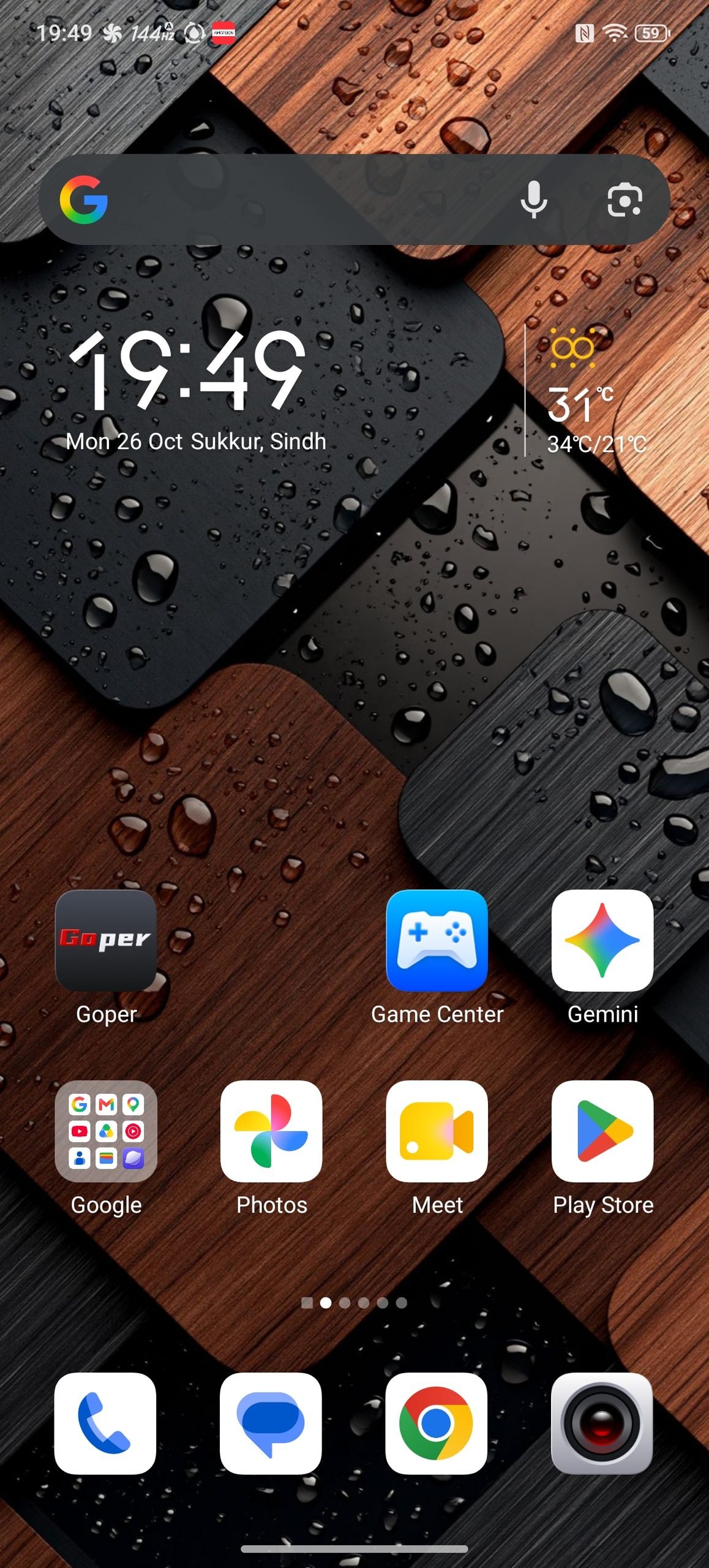
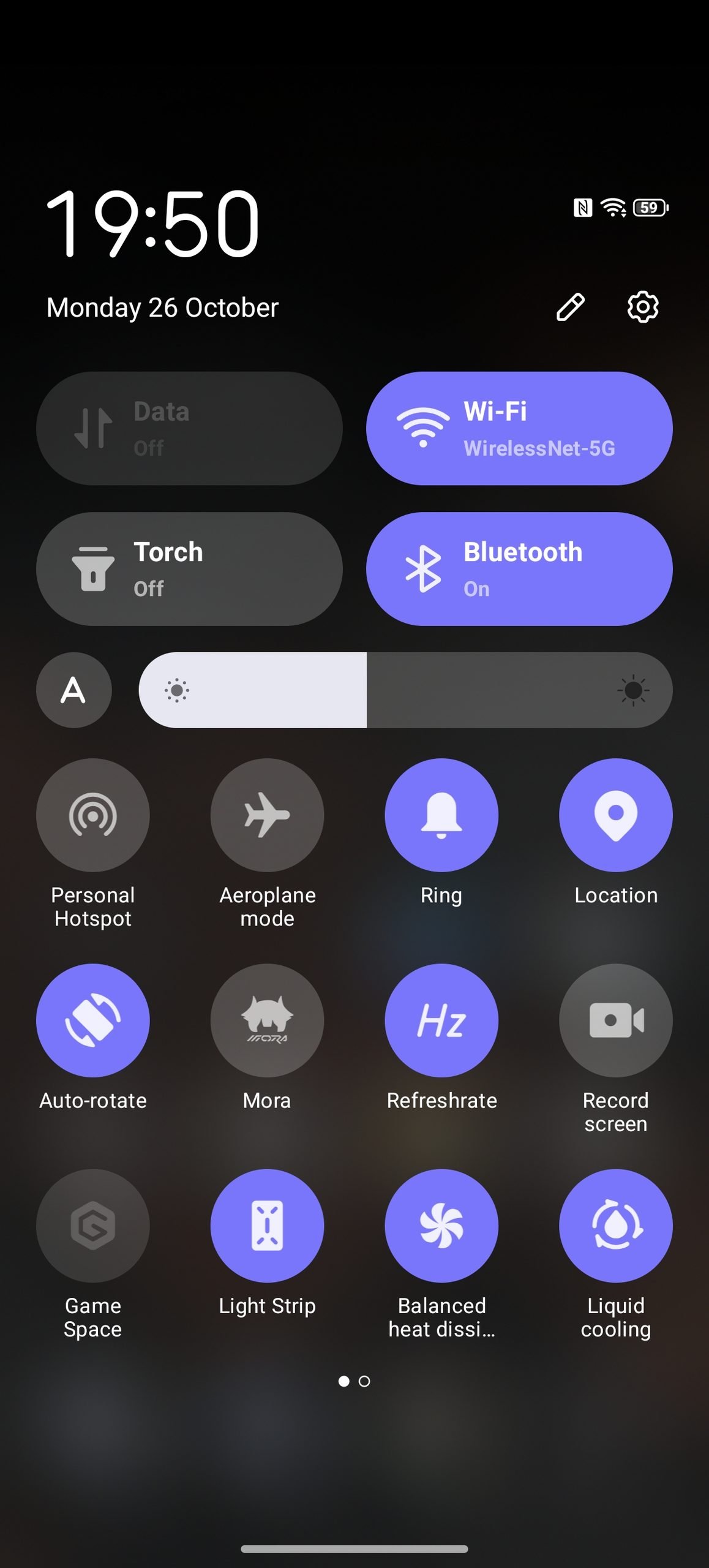
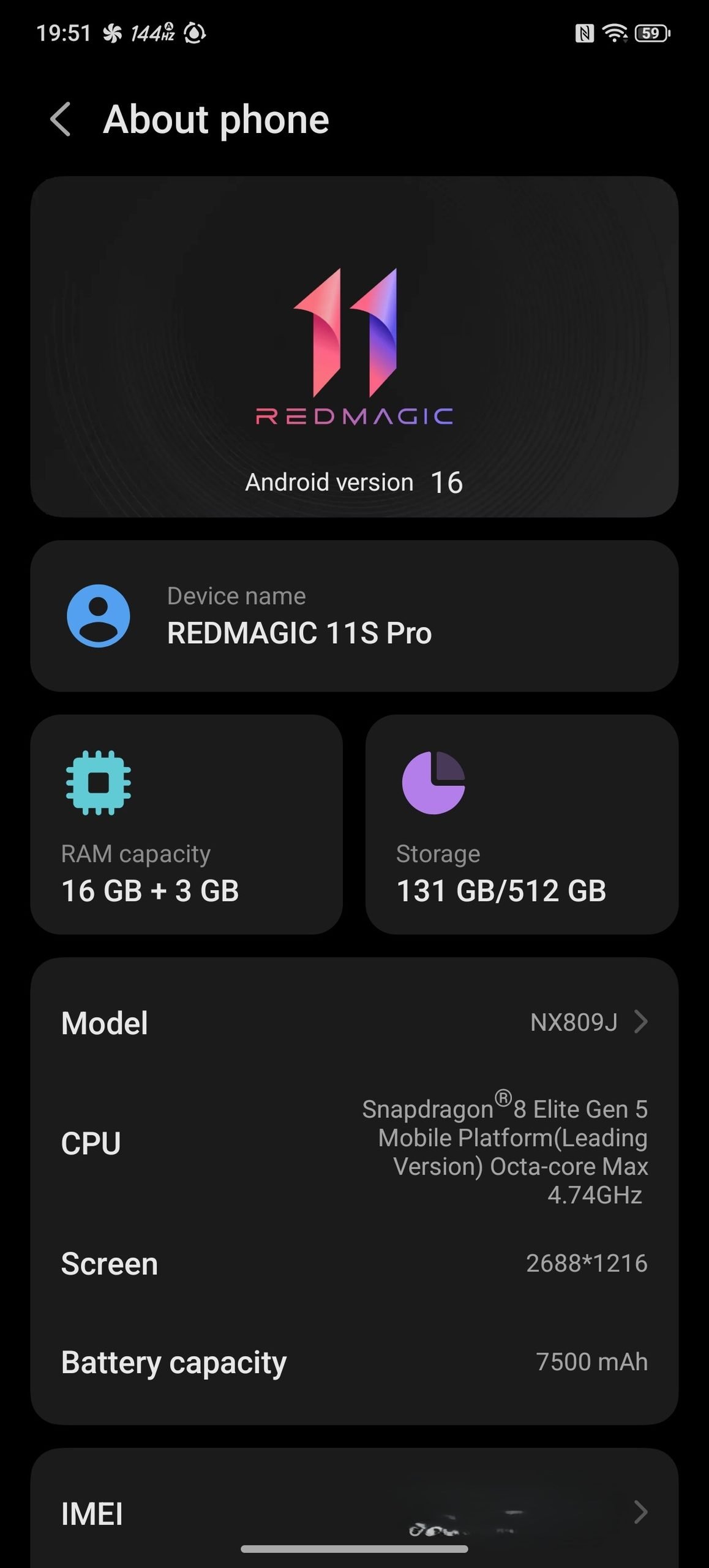
The REDMAGIC 11S Pro runs REDMAGIC OS 11.5 based on Android 16, bringing familiar Android features alongside tools designed for mobile gaming. The interface includes an app drawer, notification shade, and quick settings panel, making navigation easy for anyone familiar with Android. Moving between apps and menus feels responsive, and system animations remain smooth during everyday use. REDMAGIC also provides customisation options for wallpapers, icons, themes, and interface colours, allowing users to adjust the appearance to their preference.
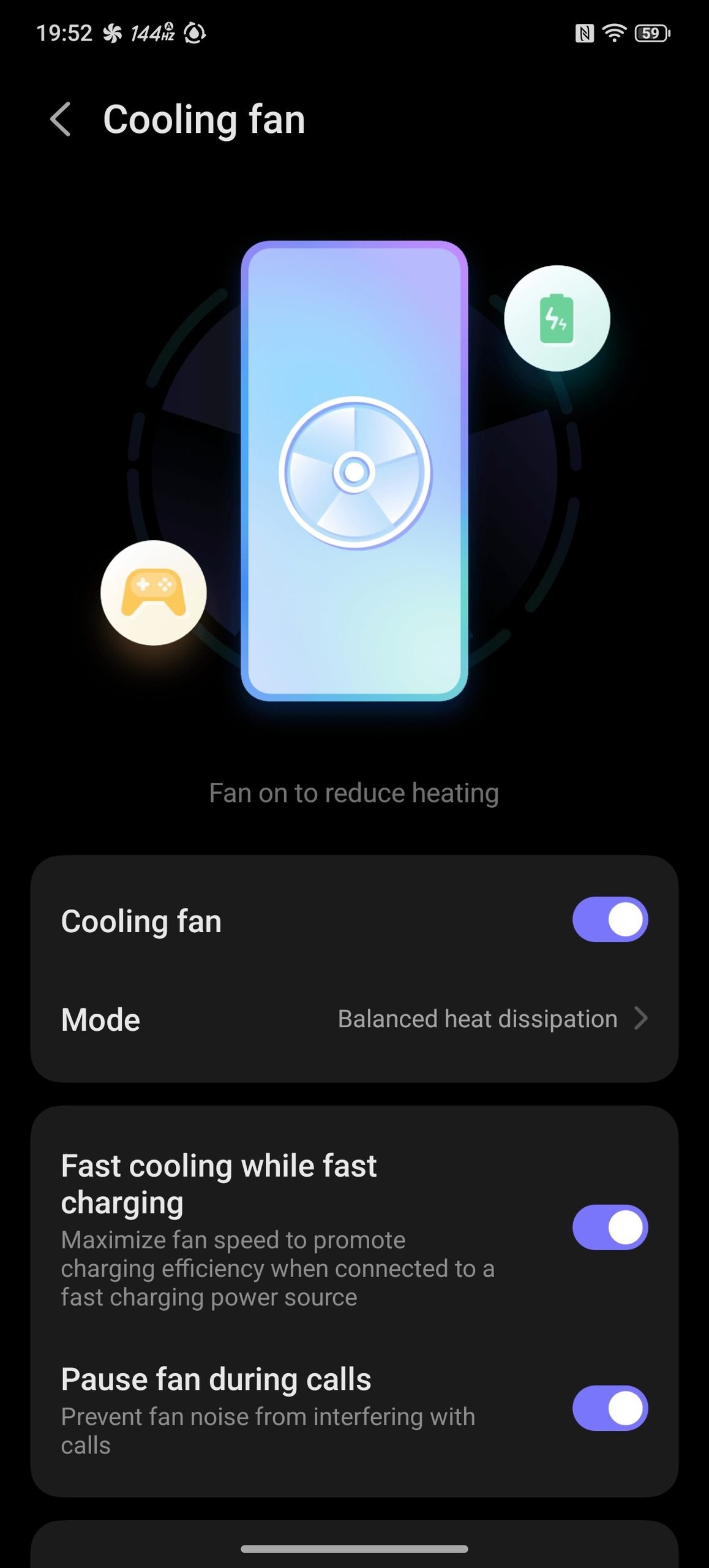
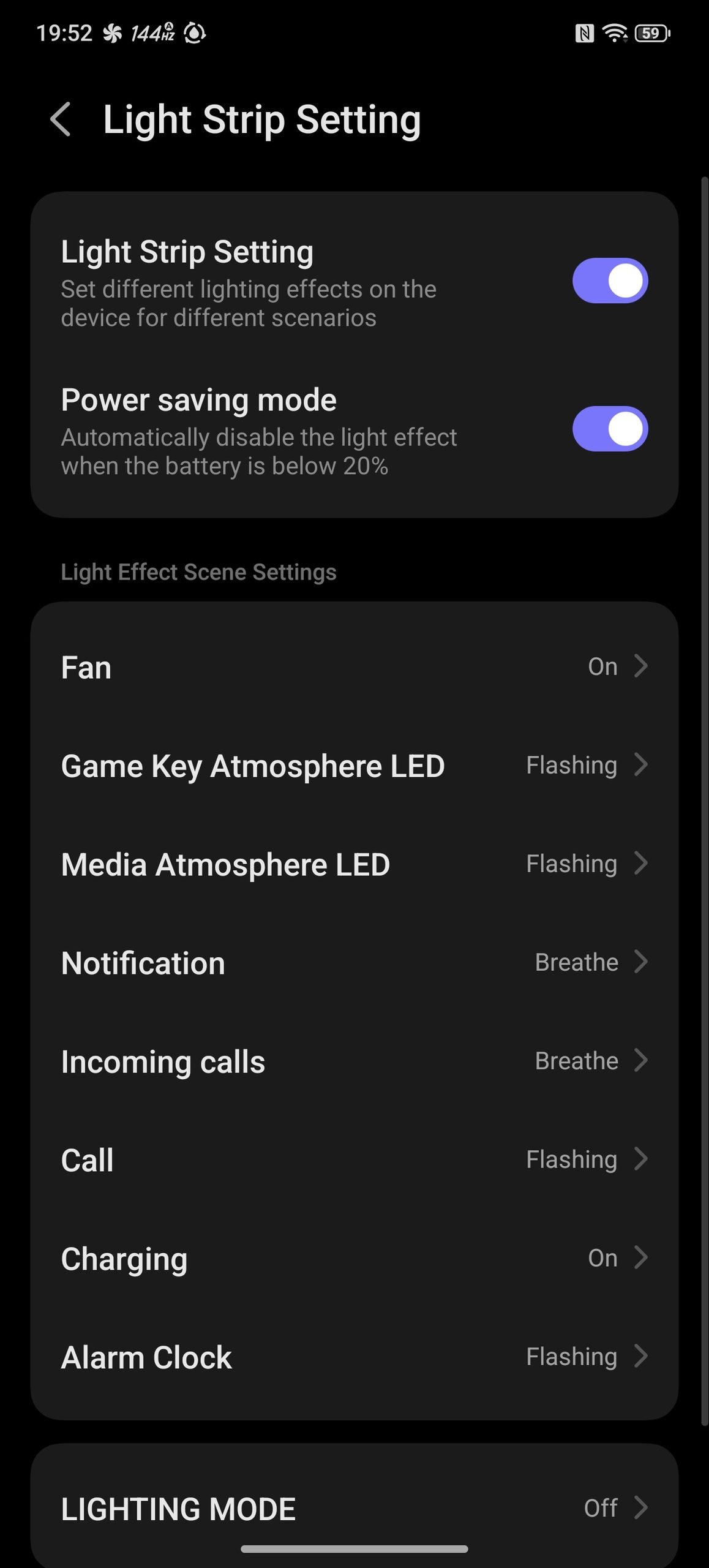
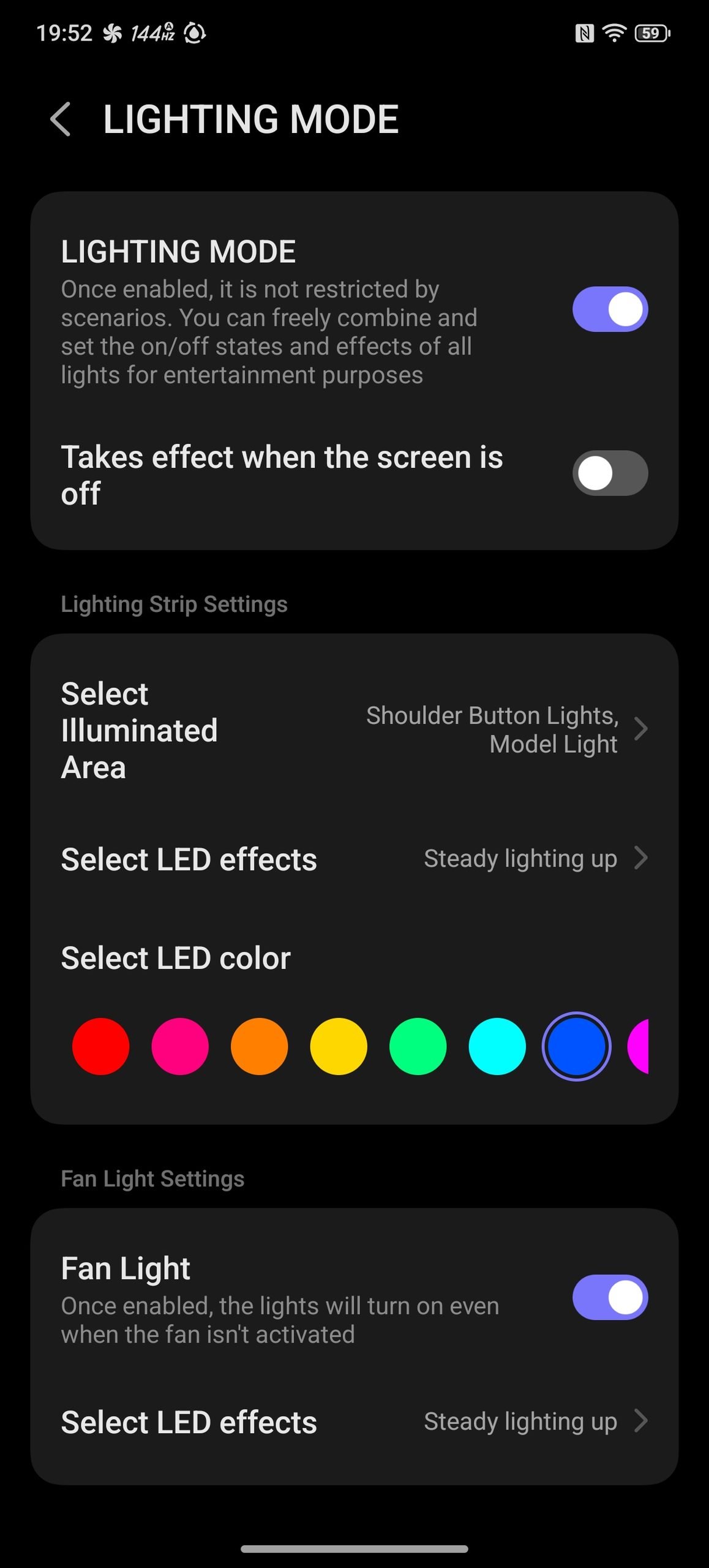
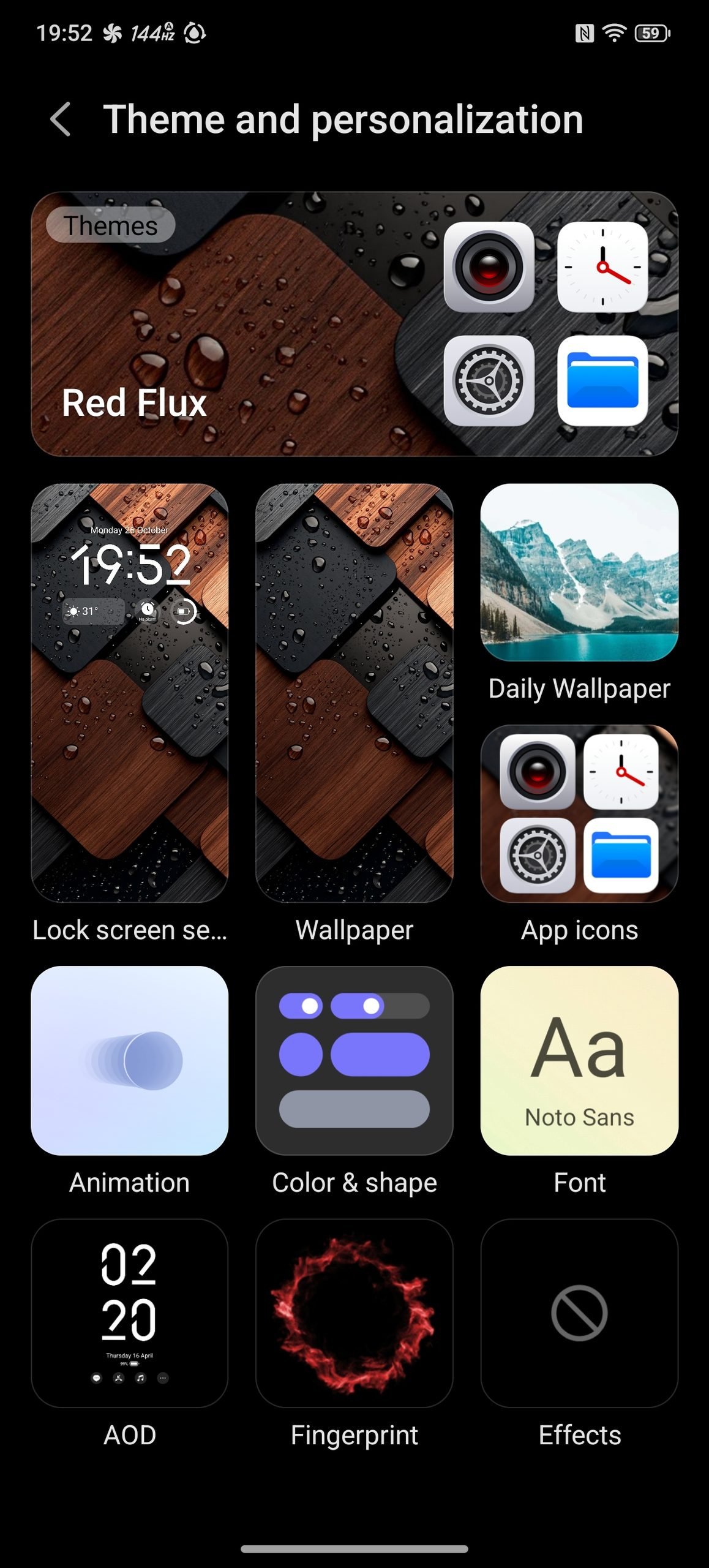
REDMAGIC OS keeps the pre-installed third-party apps to a relatively small number, while including useful features such as GameSpace, performance controls, and a built-in screen recorder. For security, the phone offers an in-display fingerprint reader and face unlock. Streaming support is worth checking, particularly for users who watch Netflix and other video services, as Widevine certification determines the available playback quality. If the device is limited to Widevine L3 rather than L1, supported services may restrict playback to standard definition. Software support also matters for long-term use, so REDMAGIC’s promised Android upgrades and security patch period are worth considering before purchasing.
GameSpace
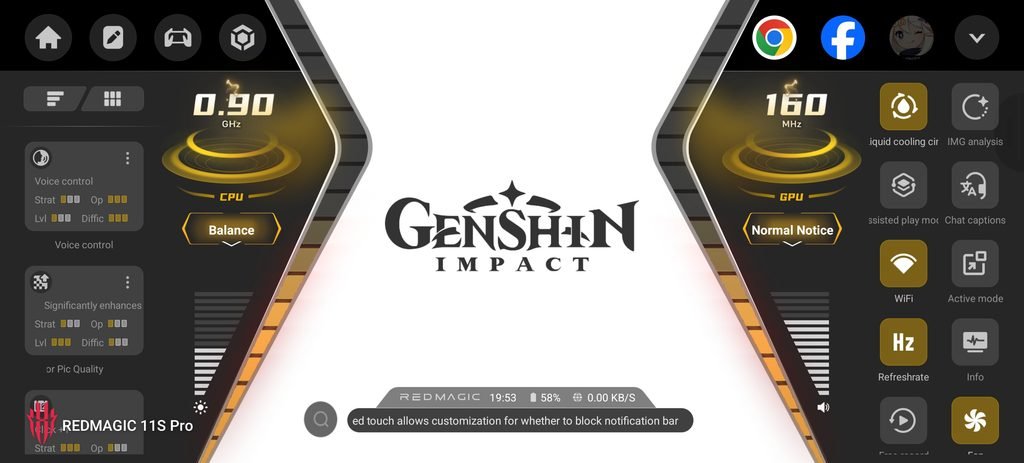
GameSpace is the main gaming hub on the REDMAGIC 11S Pro. It can be opened using the dedicated gaming switch or launched manually, providing access to installed games and performance settings in one place. Users can configure supported options for individual titles, including performance modes, display refresh rates, and touch response. This makes it easier to adjust the phone for different games, whether you prefer competitive shooters or graphics-intensive action titles.
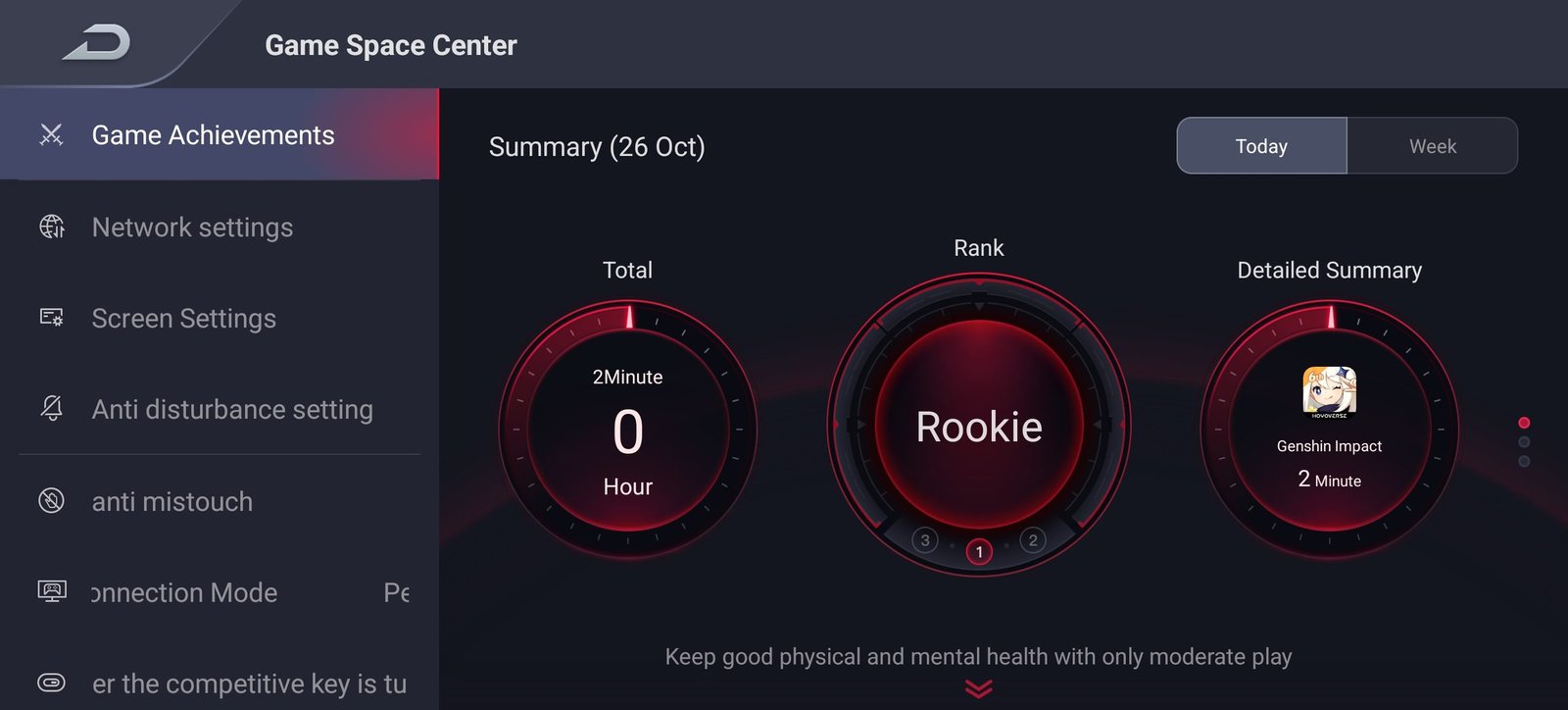
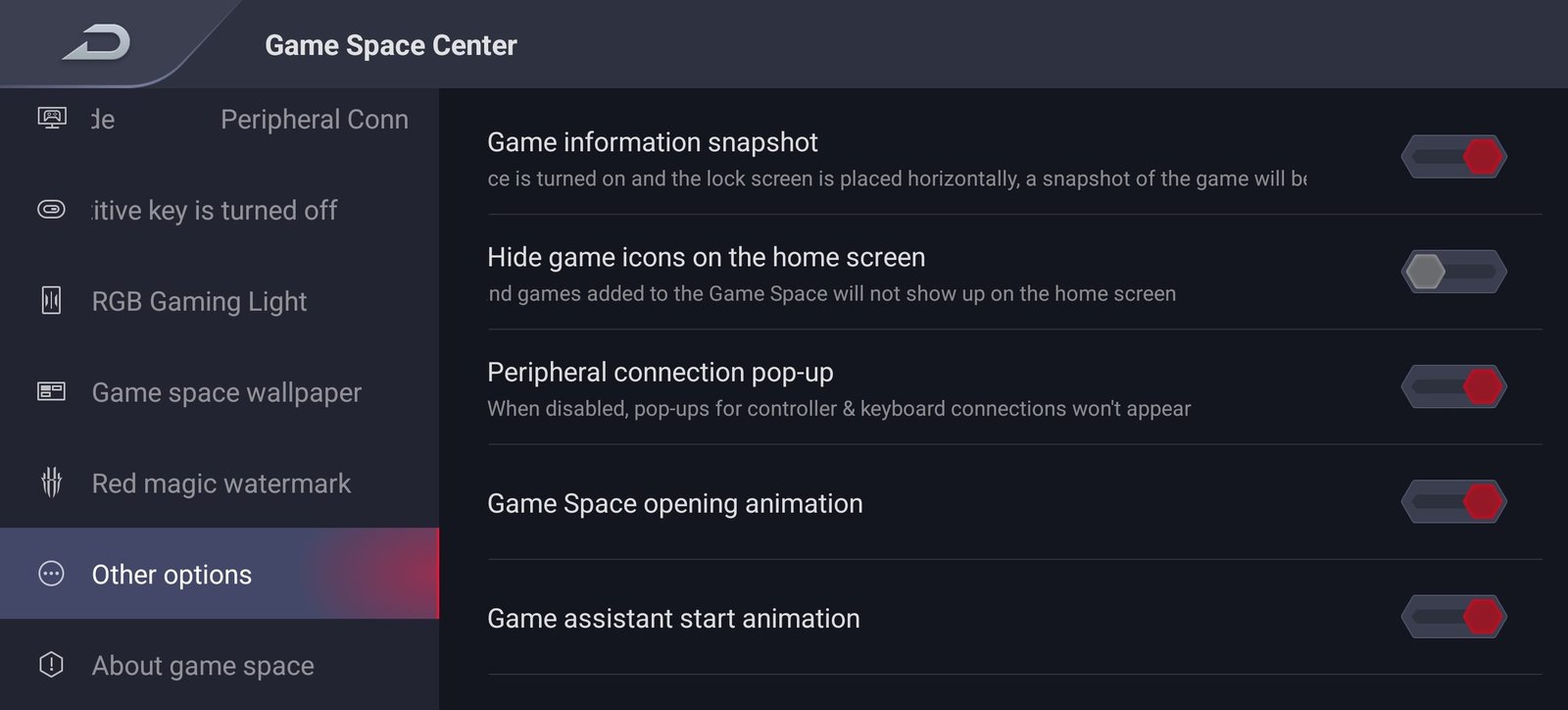

During gameplay, the GameSpace overlay provides access to performance information, including frame rates, CPU and GPU frequencies, and device temperature. Supported performance and cooling settings can also be adjusted without leaving the game. Gravity-X features add options for connecting to larger displays and mirroring content, while compatible gamepads, keyboards, and mice can be configured for supported games. Additional tools, including Auxiliary Line, AI Trigger, and a crosshair overlay, offer further control over gameplay. Their usefulness depends on the game and feature support, but they give players more options than the standard touchscreen controls alone.
Camera
The REDMAGIC 11S Pro keeps its camera hardware beneath the rear glass, maintaining a flat finish that fits the phone’s gaming-focused design. The rear setup consists of a 50MP OmniVision OV50E40 main camera with optical image stabilisation (OIS), a 50MP OmniVision OV50D40 ultra-wide camera, and a 2MP depth sensor. There is no dedicated telephoto lens, so zoom relies on the main camera’s sensor rather than a separate optical zoom system. REDMAGIC prioritises gaming hardware over camera versatility, which becomes apparent when you compare its imaging capabilities with those of camera-focused flagship smartphones.




In daylight, the 50MP main camera captures reasonably sharp photos with vibrant colours. Image processing leans toward higher saturation, which makes pictures look lively but can make some colours look less natural. Fine textures are not always well preserved, and the limited dynamic range can lead to clipped highlights in bright scenes or a loss of detail in darker areas. The ultra-wide camera performs adequately in good lighting, with colour reproduction that remains fairly close to the main sensor. However, sharpness drops towards the edges, and image quality declines as lighting conditions become more challenging.


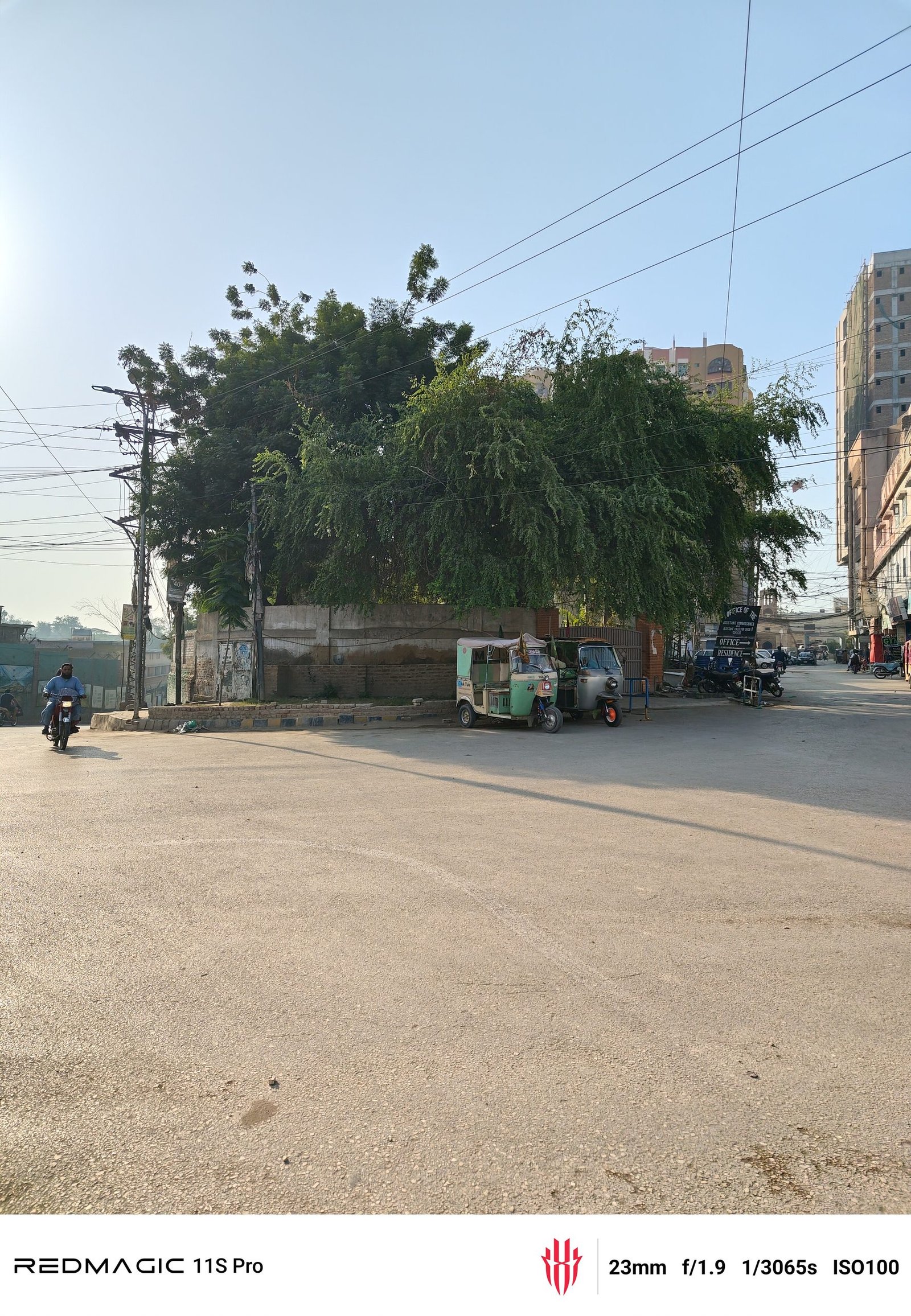
Low-light photography reveals the limitations of the REDMAGIC 11S Pro’s camera system. Noise becomes more visible, while fine details are lost in darker areas. Noise reduction helps clean up images but can also make textures appear soft. Digital zoom is available up to 10x, although image quality deteriorates quickly beyond 2x. For better results, it is best to stay closer to the main camera’s native view or use modest zoom levels. The 2MP depth sensor has limited value for standalone photography, and the main camera is generally the more useful option for everyday shots.


The 16MP front camera sits beneath the display, keeping the screen free of a visible punch-hole cutout. This design works well for gaming and video playback, but selfie quality is less impressive. Images can look soft, with reduced contrast and visible processing, particularly in challenging lighting. It is suitable for occasional video calls and basic selfies, although users who frequently take self-portraits may prefer a phone with a conventional front camera. The camera app includes additional shooting modes such as star trails, light painting, slow motion, and multi-camera shooting, giving users a few extra options beyond standard photography.
Video Performance
The REDMAGIC 11S Pro supports video recording at up to 8K at 30fps and 4K at 60fps, giving users flexibility when choosing resolution and frame rate. In daylight, footage delivers usable colours and exposure, while electronic image stabilisation helps reduce minor hand movements. However, autofocus can be inconsistent when recording moving subjects or scenes with multiple objects at different distances. Video quality also drops in low light, where noise increases, and fine details become harder to preserve.
The REDMAGIC 11S Pro is suitable for everyday clips, gaming content, and casual recording, but users who prioritise video quality, reliable autofocus, and low-light performance will find better options among camera-focused flagship smartphones.
Battery & Charging
The REDMAGIC 11S Pro features a 7,500mAh battery designed to handle demanding games alongside everyday tasks. With this capacity, the phone has enough power for extended gaming sessions, browsing, messaging, and video playback. In PCMark’s battery test, the REDMAGIC 11 Pro lasted just under nine hours with GPS and Bluetooth enabled and the display set to 144Hz. While synthetic battery tests provide a useful reference, actual endurance depends on screen brightness, network conditions, refresh rate, and the applications being used. For lighter workloads, the large battery should allow users to go longer between charges.
Gaming puts more pressure on the battery, especially when running demanding titles at high graphics settings and refresh rates. In Call of Duty: Mobile, a one-hour session on the REDMAGIC 11 Pro consumed slightly more than 10% of the battery in the supplied test results. Power consumption will vary depending on the game, performance mode, and display settings. REDMAGIC also includes a battery protection option that allows users to limit charging to 80%, which can help reduce battery wear over time. This is useful for those who regularly leave their phone connected to a charger while gaming or working at a desk.
The REDMAGIC 11S Pro supports 80W wired charging, with the included charger taking the REDMAGIC 11 Pro to around 80% in approximately 38 minutes and a full charge taking close to 55 minutes in the supplied results. Wireless charging is also supported at up to 80W with a compatible charger, reducing the need to connect a cable. The phone further supports two-way reverse charging, allowing it to supply power to other devices through a cable or wirelessly. This can be handy for charging accessories such as wireless earbuds when needed.
Conclusion
The REDMAGIC 11S Pro is designed for mobile gamers who want flagship processing power, responsive controls, and cooling hardware built for extended gaming sessions. Its Snapdragon 8 Elite Gen 5 Leading Version, 144Hz AMOLED display, and 24,000 RPM Turbo Fan make it a capable gaming smartphone, while the AquaCore liquid-cooling system gives it a different approach to thermal management. The 7,500mAh battery, 80W charging, 3.5mm headphone jack, and 512GB storage on our review unit also make it practical for everyday use.
However, the REDMAGIC 11S Pro is a modest update over the REDMAGIC 11 Pro rather than a complete redesign. The faster processor may offer performance gains, but existing owners have limited reasons to upgrade without a clear improvement in real-world gaming. The camera system remains behind camera-focused flagships, the under-display selfie camera produces softer images, and the cooling fan becomes audible at high speeds. At 230g, the phone is also heavier than many conventional flagship devices.
For users upgrading from an older gaming smartphone, the REDMAGIC 11S Pro offers a strong combination of gaming hardware, customisable controls, a high-refresh-rate display, and a large battery. It is less appealing for buyers who prioritise photography or already own the REDMAGIC 11 Pro.
The REDMAGIC 11S Pro is a good choice for gamers seeking powerful hardware, dedicated controls, and active cooling. Its camera limitations and small generational upgrade keep it from being the best fit for every user.
- Snapdragon 8 Elite Gen 5 Leading Version
- 6.85-inch 144Hz AMOLED display
- AquaCore liquid cooling and 24,000 RPM Turbo Fan
- Dedicated capacitive shoulder triggers
- 7,500mAh battery with fast charging
- 3.5mm headphone jack and UFS 4.1 storage
- Customisable RGB lighting and GameSpace features
- 80W Wired Charging & 80W Wireless Charging
- Limited upgrade over the REDMAGIC 11 Pro
- Camera performance trails camera-focused flagships
- Under-display selfie camera lacks detail
- Cooling fan produces noticeable noise at high speeds
- 230g weight may feel heavy during extended use

1 Comment
Pingback: Korea consolidates traditional arts agencies to amplify cultural reach - Comic Vibe