

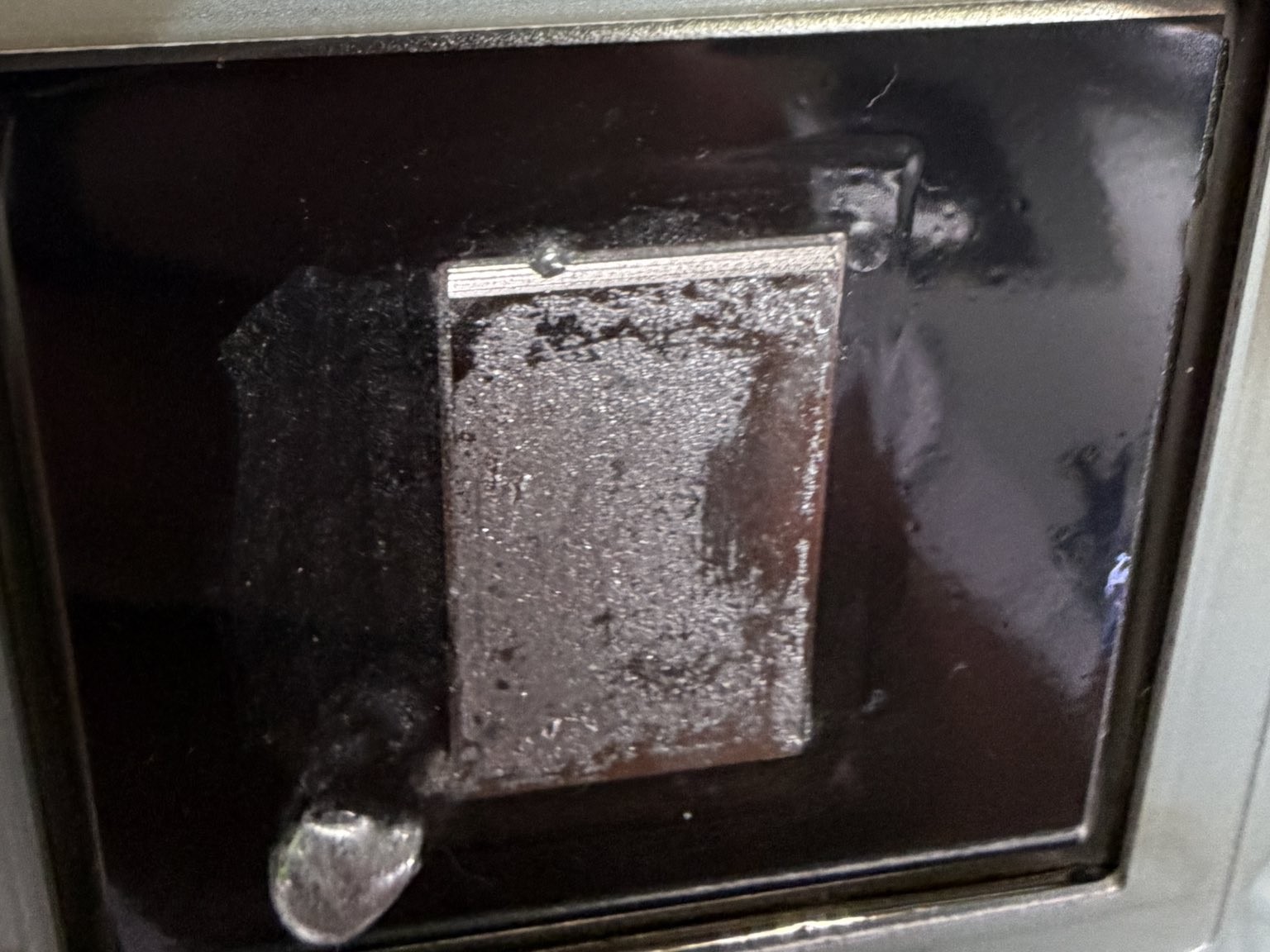
An older PlayStation 5 has developed a severe overheating problem that appears to be linked to degradation around its liquid metal thermal interface. The affected console is a CFI-1116 model, although other PS5 owners have reported similar symptoms after several years of use.
Polish console repair technician Modyfikator89 has shared images of a CFI-1116 PlayStation 5 suffering from what appears to be a particularly severe case of liquid metal degradation. According to the technician, the console was overheating, while the images show substantial discolouration around portions of the APU and heatsink contact surfaces.Liquid metal was one of the more notable under-the-hood changes offered by the PlayStation 5. On paper, it offers excellent thermal conductivity, but its behaviour over extended periods is somewhat more complicated than that of conventional thermal interface materials.
In a follow-up, the technician reported that cleaning away the crust-like residue revealed a pristine, mirror-smooth APU die. The heatsink contact surface was another matter, however, with what he described as permanent scarring in areas where the plating had apparently been compromised. He consequently questioned whether fresh liquid metal should be reapplied to the damaged surface or whether PTM7950 would now be a safer replacement.
Gallium can gradually diffuse into and react with certain metals, including copper. Nickel plating is commonly used as a barrier against this process, meaning damage to the PS5 heatsink’s plating could expose the underlying metal to further interaction with its gallium-based liquid metal. iFixit notes in its PS5 liquid metal replacement guide that the material can oxidise or become unevenly distributed across the APU and heatsink over time. Over time, oxidised liquid metal may take on a dried or cracked appearance, while overheating and throttling are among the potential symptoms.
There is also anecdotal evidence from other ageing PS5 consoles that appears consistent with this failure mode. In one Reddit report, an owner described an original PS5 that had begun overheating and shutting down after 20 to 30 minutes. Another July 2026 Reddit discussion includes an owner of a launch-day PS5 who says the console began shutting down despite having its dust removed. In both instances, replacing the liquid metal and thermal pads reportedly restored normal operation.
On the other hand, some people reported continued overheating even after paying for a liquid metal replacement. It prompted discussion about whether corrosion had been properly removed from the die before the new material was applied and the actual liquid metal application process. The case is hardly conclusive by itself, but it provides another example of repair technicians and owners encountering visibly degraded surfaces around the PS5’s liquid metal interface.
That does not establish a widespread defect with the CFI-1116, however. The model arrived as Sony’s second major PS5 hardware revision and attracted considerable attention at launch because of its substantially lighter heatsink. The latest case therefore provides evidence of what can happen to the thermal interface in an ageing PS5, rather than evidence that all CFI-1116 consoles are destined to suffer the same fate.
Nevertheless, the issue is particularly interesting in light of Sony’s subsequent changes to the PS5 cooling system. Later consoles have adopted further revisions intended to control the distribution of liquid metal across the APU. As the oldest PlayStation 5 consoles approach six years in service, long-term degradation of their unusual thermal interface is consequently becoming easier to observe in the wild.
⟨
Previous article
Surprise: Google Pixel 11 and Pixel Watch 5 will be available 8 hours before the official launch event today
Next article
Citizen’s new limited-edition Tsuyosa Shore “Time Slip” automatic goes on sale in the US and UK
⟩
> Expert Reviews and News on Laptops, Smartphones and Tech Innovations > News > News Archive > Newsarchive 2026 08 > Older PS5 develops severe overheating as liquid metal leaves permanent scars on heatsink
Anil Ganti, 2026-08-12 (Update: 2026-08-12)
