

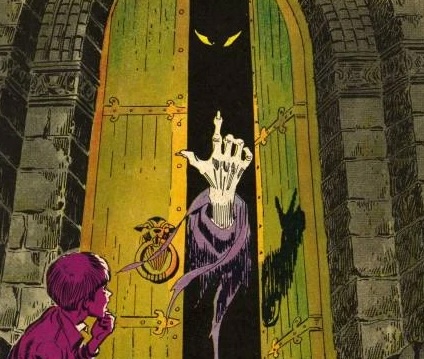
Oh, Vertigo. Back once again, I see. Just like Kim Novak.
Or perhaps merely a chance resemblance.
The original Vertigo was born, leastwise on stands, in early 1993. An era of tempest. These were the boom months of the boom years, and it would be strictly incorrect to assert that the early Vertigo wasn’t buoyed by the same waves that lifted Spawn. More people were buying comic books, of all kinds. More people were buying X-Men and Spider-Man, more people were buying the early Image — and indeed, more people were buying Doom Patrol, Swamp Thing, and, yes, Sandman.
Of course, the actual advent of Vertigo as a distinctive publishing imprint was preceded by many decades of evolution. To begin with the grandfather of the notion we must look to Joe Orlando — yes, the same Orlando who began his career working for Wally Wood, and became a mainstay staff artist for EC, and later worked for Classics Illustrated and the National Lampoon, before serving as an editor for Warren’s Creepy. In 1968, after being hired by National as an editor, he took over the company’s horror line.
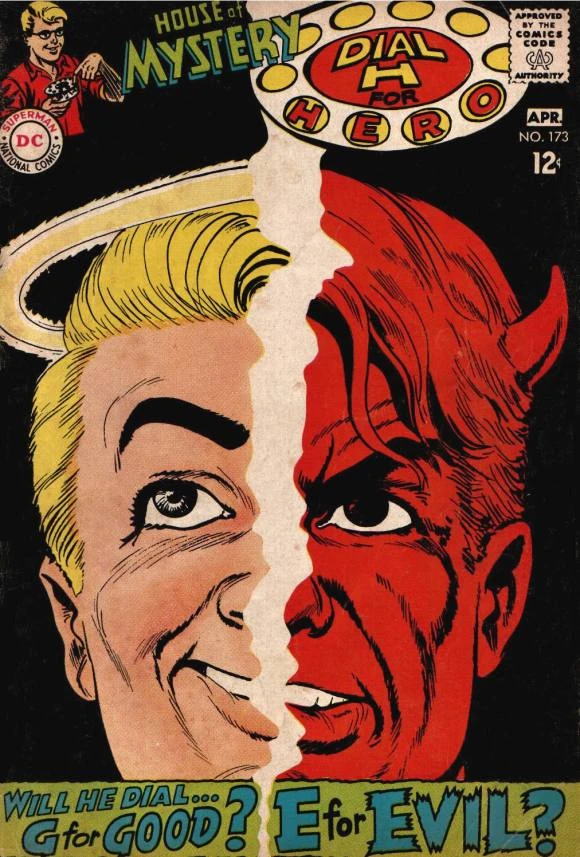
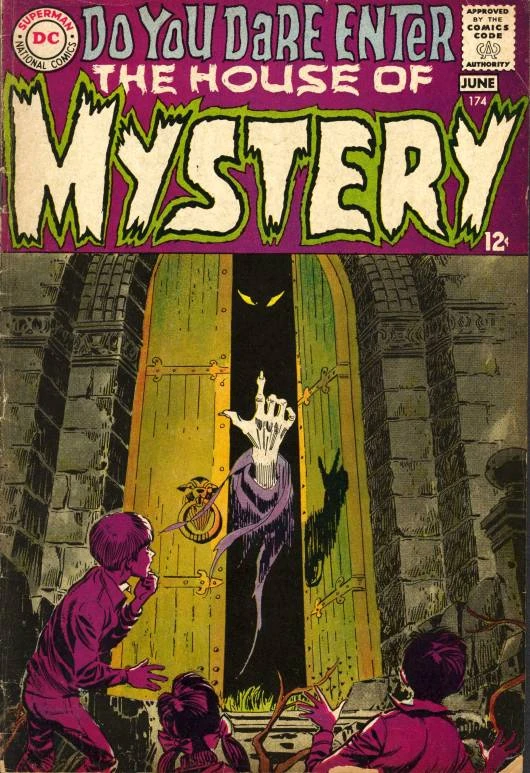
Or perhaps its would be more accurate to say, he founded their horror line. Prior to Orlando’s arrival, House of Mystery was a goofy book, split between ongoing co-features “Dial H for Hero” and the Martian Manhunter. Orlando arrives in early 1968 like a curtain rising. The books still carried the Comics Code, of course, but within the strictures of the same Code once forged to destroy the upstart EC, the spirit of the company lived on. If slightly exsanguinated.
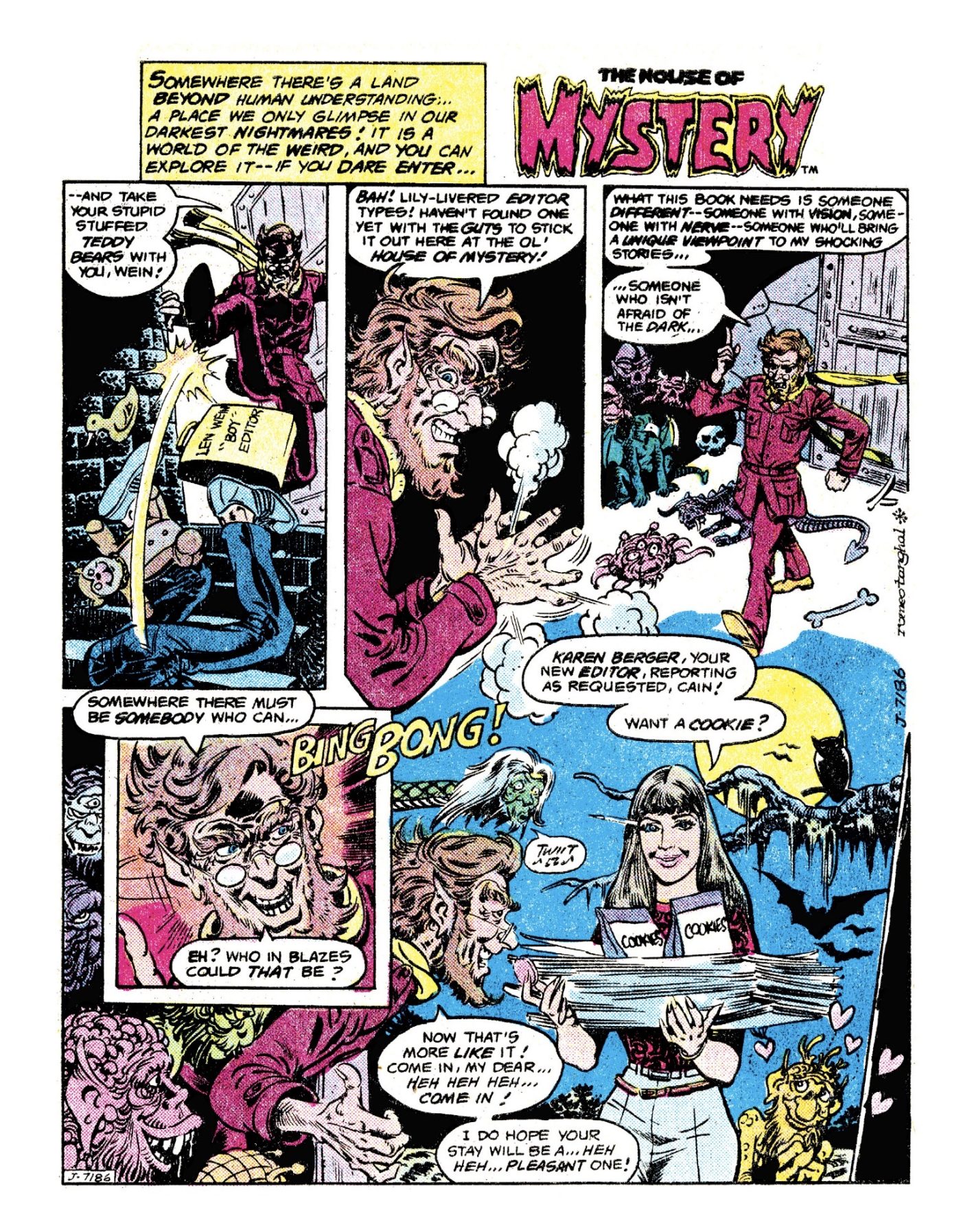
Orlando trained a generation of the industry’s most influential editors, managing the horror titles that were subsequently directly overseen by the likes the Paul Levitz, Jack C. Harris, Len Wein, and finally — beginning spring 1981 — a woman named Karen Berger, the ultimate heir to Joe Orlando and the EC school of comic book editing. The switchover from Wein to Berger occurred in House of Mystery #292, which shipped late winter 1981. That issue also features the first printed work from Marc Silvestri, incidentally, a passing detail that serves the larger point: by the early ’80s DC’s horror books were perhaps the most well-curated line in comics, an editorial achievement easily verified by the sheer mass of talent discovered and nurtured by staff directly chosen and trained by Orlando and Orlando’s lieutenants.
You know who was closely reading DC’s horror anthologies in the early ’80s? Todd MacFarlane. He was a letterhack in the last evening of the horror anthology as a presence on the American newsstand. Of course, no one was reading them, because they gradually disappeared from the market, alongside the company’s war books. The last issue of House of Mystery was #321, shipping late Summer 1983.
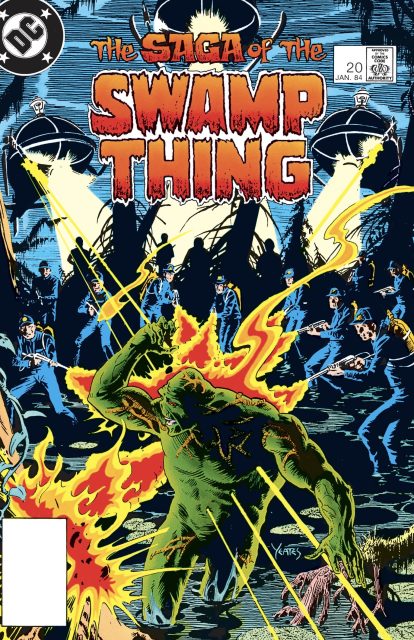
Of course, that’s not where the story ended. It picks up just a few months later, in the late fall, with the publication of issue #20 of The Saga of the Swamp Thing, edited by Wein. That was the first issue of Alan Moore’s run onSwamp Thing, although you’d be quite justified in beginning with issue #21. Issue #20 is mostly a table clearing exercise, putting away the previous version of the book with as much respect as possible before going in a markedly different direction the very next issue.
Markedly different, and decidedly lucrative. Swamp Thing was about to be canceled, again. The book had been relaunched to coincide with Wes Craven’s 1982 film. (Probably a lot better than you remember if you haven’t seen it in a while. I’m biased because they ran it on HBO a lot back in the day, and I must have seen it a dozen times if I saw it once.) By late 1983 the tank was down to fumes in regards to that particular eruption of the venerable swamp creature. There was absolutely nothing to be lost by letting the book putter off to oblivion with a new kid at the helm. It wasn’t going to last another year in any event.
Or maybe it would set off an eruption that might change the shape of comics for generations, in so many different ways. No one was buying horror anthologies, for one. It wasn’t a genre that survived contact with the age of the Direct Market. It was built for browsing and impulse buying. But a new angle on one of the old monster hero books? Well, that might just have some legs.
Anyway, you’ve heard this story before. You know what happened. The industry created a superstar, he produced a small heap of work for DC in a remarkably brief period of time, and left justifiably pissed off at the whole bloody experience. Alan Moore was gone from DC before Vertigo was even a twinkle in Berger’s eye. If Moore can be said to be Vertigo’s father, it cannot be said that he left to get cigarettes and never came back. No. Moore made sure the baby knew he was flipping it off as he left the house.
But even as Vertigo has many fathers — and many we still have not mentioned, such as the fictional John Constantine, and the all too real Neil Gaiman — it only ever had one mother. The same person who first appeared in the doorway of the House of Mystery way back in 1981. That’s no figure of speech: Karen Berger gets a full page premiere, bearing an armful of cookies for Cain. It’s not standard for editors in most books to get full page premieres, then or now. DC’s horror books carried themselves a bit different.
If you were to ask me, during an afternoon’s margarita, what I believe to be the sum of wisdom inherited from EC and smuggled through Berger’s establishment of Vertigo, it would be the understanding of the role of editor as not dissimilar to that of a curator. It’s a different way of looking at the assignment, but look for yourself to see how Berger built her brand, a publishing brand strong enough to be resurrected again today.
It must be remembered: there was no stopping the DC of the early to mid 1980s. The company entered the Age of Reagan completely, categorically chastened, and creatively inert. The wrong people had been at the helm when the market suddenly turned against them in the early ’70s, and that failure of imagination consigned them to a period in the wilderness. They furthermore lost a lot of things in the subsequent DC Implosion, a big one being a generation of editorial talent that went over to Marvel, people like Larry Hama and Al Milgrom. Imagine the world in which DC never fires Hama! Maybe that’s the world where Bucky O’Hare is a DC book. Imagine Bucky O’Hare among the heroes at the Crisis on Infinite Earths, or given a crucial role in The Rann-Thanagar War.
They made up for that lost ground across the following decade. They entered the 1980s with the understanding that All-Star Squadron was maybe their best book, if you squinted, and left the 1980s with Vertigo basically already in the chamber. Maybe just waiting for the right catalyst. That’s a considerable achievement. (I told another angle on this same story last year.)
It must be understood that the Vertigo imprint and Image Comics were answers to the same fundamental questions of talent management that had bedeviled both entities since their respective founding. To wit: how do we get away with paying these people as little as possible while still leaving them enough to reproduce themselves, in the strictest Marxian terms? I’m certain that was precisely Harry Donenfeld’s thought processes.
Put Alan Moore and the founders of Image Comics next to each other in your minds. Believe me, the comics press of the early 1990s did not flinch from the comparison. Nor did the primaries themselves, for that matter! Alan Moore was writing for Image by 1993. That had to sting, back in New York. Just a little bit.
Of course, it must also always be remembered that the contract for Watchmen was hailed as a triumph for creator rights, at the time it was signed. Celebrated as a milestone, even, for at least a couple months. Before they realized, oh, this one book is basically going to jumpstart an entire retail model that didn’t really exist last year.
Trade paperbacks were nothing new. There had even been mainstream publishing crossover success in the past, stuff like the Origins of Marvel Comics series from the 1970s. But for the most part Marvel’s puny trade program was completely focused on the Direct Market. DC changed that at the end of the 1980s. Watchmen wasn’t the only wheel on that truck, of course. Bat-mania is an important factor as well, with the collected edition of The Dark Knight Returns similarly popular to Watchmen, then and now, to say nothing of Year One, Arkham Asylum, or the venerable Greatest Batman Stories series. The 1989 Tim Burton film wasn’t popular out of a vacuum. People had been going nuts about Batman for almost half a decade by that point. By 1990 the first Sandman softcover — for The Doll’s House — featured an introduction by Clive Barker. And suddenly DC had a nice little trade backlist of books that sold in regular bookstores to regular people.
So: Alan Moore was caught with his foot in the door of an emerging new retail model, in which the very book that he had produced with the understanding that it would not be in print forever would go on to be in print forever. And there was going to be no making good on that given the understanding that Watchmen was a money printer. It’s still a money printer, for that matter. Ultimately the crappy sequels and even more profoundly crappy DC Universe crossover, nor even its creator’s profound sorrow, could dim its star. It still sells better than just about anything else. Maybe even more than Hush, which is a lot.
And that’s the original sin at the heart of Vertigo. That’s also the reason why the next generation of writers to follow in Moore’s proverbial footsteps got the red carpet treatment in perpetuity. I’m sure nothing bad would ever come of feeding the egos of the pale narcissists who write the comic books.
Across the street, as I said, Marvel was having trouble with the people who drew the comics. Todd McFarlane made a lot of money for Marvel Comics, and for what it’s worth, made a lot of money for himself while working at Marvel Comics. But he knew he could be making a lot more money elsewhere, with the additional added benefit of not being treated like a gigantic piece of shit by his bosses. It was in Marvel’s medium- and long-term interests to keep Todd happy and they refused to do this as a matter of principle. They left Marvel and also DC as well — don’t forget, at the outset of that endeavor Todd had made a point of flipping off both companies. Todd went scorched earth and DC was included in the firestorm.
That would have been the very beginning of 1992, when Marvel’s labor problem exploded the industry. I can’t imagine it didn’t strengthen Berger’s hand within her company to be able to point to the fact that Marvel treated their talent so poorly DC also got soaked in the splash zone.
What if the company … didn’t try to strangle the golden geese? Is that even a thing they can do?
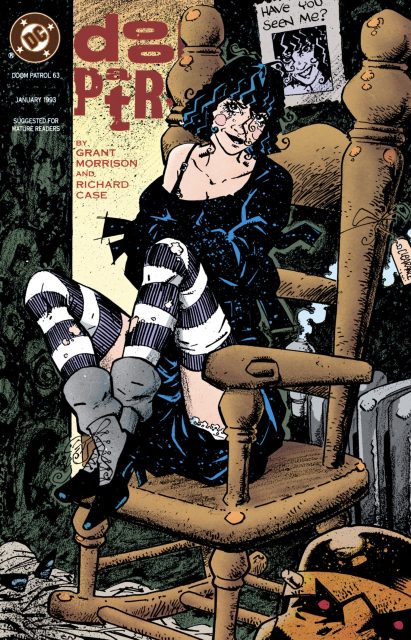
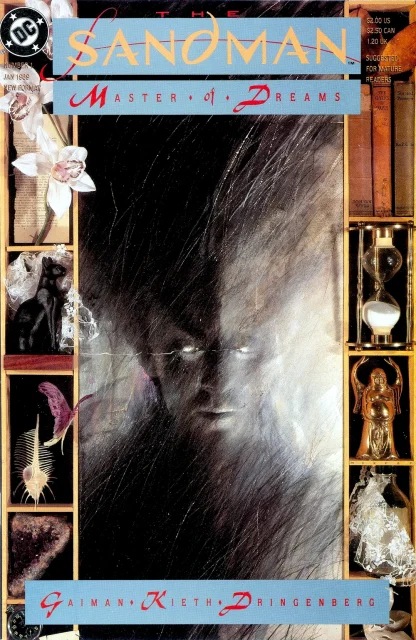
The first Vertigo books shipped in late Winter 1993, but a big part of the magic trick was that a chunk of the line was already in place. The core was composed of a nucleus of DC books that had, over the course of the last few years, already functionally separated from the common run of the company’s superhero fare, if still connected on paper — Swamp Thing, of course, and its offspring Hellblazer, Shade the Changing Man, Doom Patrol, and Sandman. They were all mid-storyline during the switchover, save for Doom Patrol, which saw the natural ending of Grant Morrison and Richard Case’s run the month before. The first Vertigo issue ofDoom Patrol, #64 cover dated March 1993, was also the debut of Rachel Pollack on the series, with Case sticking around for a few issues after the turnover.
Morrison wasn’t going anywhere, mind. For Vertigo’s launch they led with Sebastian O, a three-issue fopsploitation number with Steve Yeowell that served as but a prelude for Morrison’s opus The Invisibles. That began a year and a half into the imprint’s lifespan, in the Summer of 1994. Long after the boom had bust.
The story of Vertigo at its inception and for its first decade would be, improbably, that of a life raft. No one knew it back in the winter of 1993 but everything built over the previous half-decade of growth was about to go away, and take with it a significant chunk of the direct market retail environment and a little thing called the American newsstand. As it turned out, the idea of Vertigo as a creator-forward publisher of genre material aimed at a slightly older cohort — and consequently of material designed to sell well in collection — was quite timely. It may very well have saved the North American comics industry from absolute desolation in the decades that followed. Berger blazed that trail by consolidating and codifying the company’s late ’80s inroads into conventional bookstores.
No one in 1993 could have foreseen the imminent death of the newsstand, nor the sudden leapfrog of imported manga over domestic offerings. Manga was a reliable but tiny niche within our domestic comics market for fifteen years, until a sudden sharp shift around the turn of the century. Just ten years after Vertigo launched, our entire domestic industry had reoriented itself around Berger’s vision, because there was no longer any viable alternative to the hard work of building a readable backlist.
And now here we are again, this time with feeling.
Oh, man. Man, oh man. Vertigo in 2026. Things must be getting rough out there.
Vertigo in the first place was, as I said, a life raft. What did I mean by that? Partly in that it served as an outlet for a lot of creator-owned, and/or left-of-center genre work, by big name and developing creators at a time when the market for independent comics was getting tight as fuck. Image was there — they had proven that point, and many previously independent creators did go to Image in the mid-90s, most notably Jeff Smith and Bone. But Image wasn’t gonna pay your colorist, yo. By the way, since you’re in the building, here’s some work on Batman.
Karen Berger didn’t get lucky. No. Not at all. She had good teachers, she paid attention, and over the course of her first decade at that company she slowly and surely built something no one else could have foreseen. She’s the common denominator behind the whole thing. Do not minimize her achievement. She didn’t just see an opening in the market, though she most definitely did. She didn’t just have an eye for talent, though again, absolutely no flies. No, she created an actual, verifiable, historically documented scene, out of the offices of a comic book publisher.
Imagine the foresight. The planning and the patience.
Vertigo was, unfortunately, also built on a star system. That was a prerequisite. That was the system they built in the wake of Moore’s departure. No one ever wanted anything like that to happen again. The lines were going to be drawn much more clearer, for one thing. But they were willing to pamper in what ways they could.
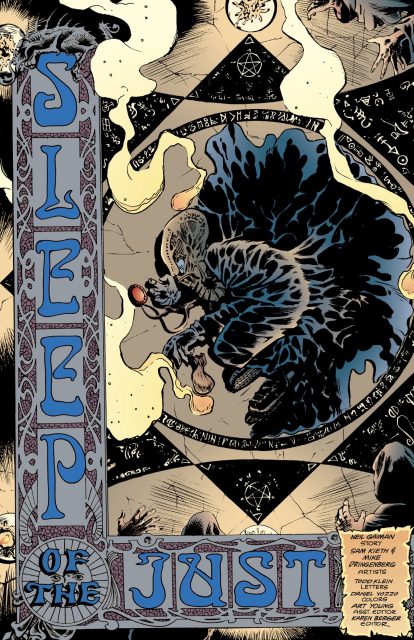
Berger figured out that sometimes the writer of a comic book could matter quite a bit for the marketing of a comic book. That had never really been true before, with the exception of literally a handful of people in the medium’s history, up to that point. So the golden geese were pampered. And boy, you want to talk about golden geese! Why not just bring the man out, since we keep circling around the question. It’s Mr. Gaiman himself, certain to be counted one of the Vertigo imprint’s great founding fathers, if that number must indeed be counted. Because, yes, people liked Morrison’s Doom Patrol, but that book was only printed under Vertigo after the fact. Sandman was the line’s flagship at inception. Sandman was the literal proof of concept for Vertigo.
For what it’s worth, I loved Sandman at the time. Funny thing about Sandman: it’s actually a spin-off of the aforementioned All-Star Squadron, directly picking up plot lines from Infinity, Inc — where’s Roy Thomas when you actually need him to take credit for something? Also worth mentioning that Neil Gaiman did not draw a single page of Sandman! One of the reasons why Sandman was hot out of the gate was that the first stretch was drawn by Sam Kieth. Of course, Kieth hated the experience, and his negative associations would go on to heavily influence The Maxx. He left Sandman and would go on to draw the fourth ever Alien comic book story for Dark Horse, and then follow-up Barry Windsor-Smith as the artist for the Wolverine serial in Marvel Comics Presents. Please hearken: Sam Kieth was not just following up Weapon X — which he did, with writer Peter David on a rather absurd yarn called “Blood Hunt” — but he didn’t embarrass himself. “Blood Hunt” was awesome.The Maxx was awesome.
So yeah, getting Sam Kieth to draw those first half-dozen issues, that was luck. Look at how fertile that design and that aesthetic, as he specifically defined it, would prove to be: they got 75 fucking issues, specials, follow-ups, graphic novels … even a goddamn TV show which, bless its heart, came about ten years too late for a lot of reasons. A lot of reasons. But Sam Kieth wasn’t a part of Vertigo, and found the experience of working with Neil Gaiman to be so unsettling that he had nothing to do with DC for well over a decade after. That’s true, documented history. Karen Berger had an eye for talent, but Vertigo would be a writer’s label.
No, we know who the golden goose was for Sandman. And they built an imprint around Gaiman as a model: this is where the Dream King hangs. That was the whole sales pitch. Gaiman was by far the biggest draw — even by the early ’90s he was working in prose, and clearly didn’t have a future as a “jobber” angling to get a run on Batman. But he wasn’t the only one. Morrison was there, of course, but they were nowhere near as prominent then as later. They struggled to get anyone to buy The Invisibles, do not doubt. Don’t forget Shade the Changing Man by Peter Milligan, either — always the sleeper of that cohort. In so many ways still a challenging work.
Morrison is, famously, semi-retired, though they did come out of the fog to write Deadpool, so I guess anything’s possible. Milligan still works quite a bit, actually, a steady stream of high-concept genre minis from smaller publishers, folks like AWA, Aftershock, Vault, and Bad Idea. Milligan can still work get any artist in the industry, to judge from the quality of his collaborators. He even popped up at Marvel to do more X-Statix work with Michael Allred, few years back.
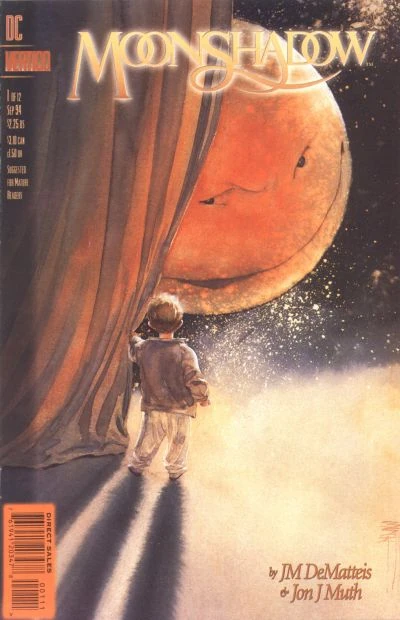
As mentioned, Rachel Pollack was part of that first cohort, alongside Nancy Collins towards the end of her substantial, under-read run on Swamp Thing, soon to be replaced by, in order, Grant Morrison and Mark Millar, and then just Mark Millar. And, of course, Garth Ennis, a fellow who’d go on to great fame in the world, but who was in 1993 merely the guy writing Hellblazer, after having taken over from Jamie Delano, who was also still around. J.M. DeMatteis, who had started at DC around the same time and in the same office as Berger, back in the early ’80s, showed up towards the very beginning, with various projects. Moonshadow received a monthly reprint series in 1993, ratifying the suspicion that DeMatteis and J.J. Muth’s sui generis mock epic can be counted as a kind of Vertigo avant le lettre. Steve Gerber showed up for Nevada. Berger set out to define an aesthetic turn and it was deeper than just one or two superstars, built atop decades of history.
That was quite an opening salvo. The original Vertigo was a moment in time, man. It was a place to be. It’s been tainted, downright soiled in places. I mean ‚ set aside Neil Gaiman for a minute, and we’re still left with Warren Ellis. He wrote a book called Transmetropolitan that began life at an imprint called Helix, before Helix imploded because as it turned out there was no market for a sci-fi-tinted Vertigo clone in 1996. It ended at Vertigo, in 2002, after an influential five-year run. I am no mere lamb here. No, I tell you true, I was online in the early 2000s. I own two copies of Come in Alone. The second one was an accident, but still. I was there. We all made these mistakes together in real time.
There is no reason whatsoever for there to be so many megalomaniacal comic book writers in this world. One is a problem, two is a trend, and friend: there are more than two.
So we don’t really have that kind of star system anymore, and good riddance. But the question for comic book publishers in 2026 then becomes: did you think to replace it with anything? Vertigo was a scene, remember. It sprouted more or less organically out of the aesthetic guidance of one woman with a long-term vision. The original model had a lot of problems but was still enormously successful. There was clearly something there worth preserving.
What do you have to offer us today?
Anyway, I know what you’re thinking: what a wonderful way to commemorate the launch of the new Vertigo, by healing an old wound and welcoming the flagship character of the entire tendency back into the mix. Yes, yes, I nod sagely, except they released it on Black Label. Vertigo isn’t doing any DC characters this go around.
Oh, goodness me. So, they didn’t start up Hellblazer with its Legacy numbering? No, dear heart. They did not. This does not necessarily surprise us on the face of it. Although the line began with a clutch of DC characters at its heart, that was gradually reduced over time. There are any number of interesting DC projects scattered across the line’s later years, like Jason Hall and Cliff Chiang’s Beware the Creeper reimagining from 2003, one of the best in the imprint’s history, and one you’ve almost certainly not read. But as the years went by the tendency was diminished before being softly discontinued.
The company itself rebelled against siloing any characters off the mainstream line. They don’t like doing it so they don’t. People in the company complained that they couldn’t use the Doom Patrol in crossovers in the 1990s, or so I recall. The Doom Patrol were at that time in a fertile period, one that has proven remarkably lucrative. They made a Doom Patrol TV show that ran four seasons drawing overwhelmingly from the Grant Morrison and Richard Case run. (I saw all of one episode and bailed, because I happen to know for a fact Rita Farr was dead long before Kay Challis joined the team. Fuck you, television.) They wouldn’t have gotten anything anywhere near as lucrative out of that franchise without the foresight to silo the book when it started to spark.
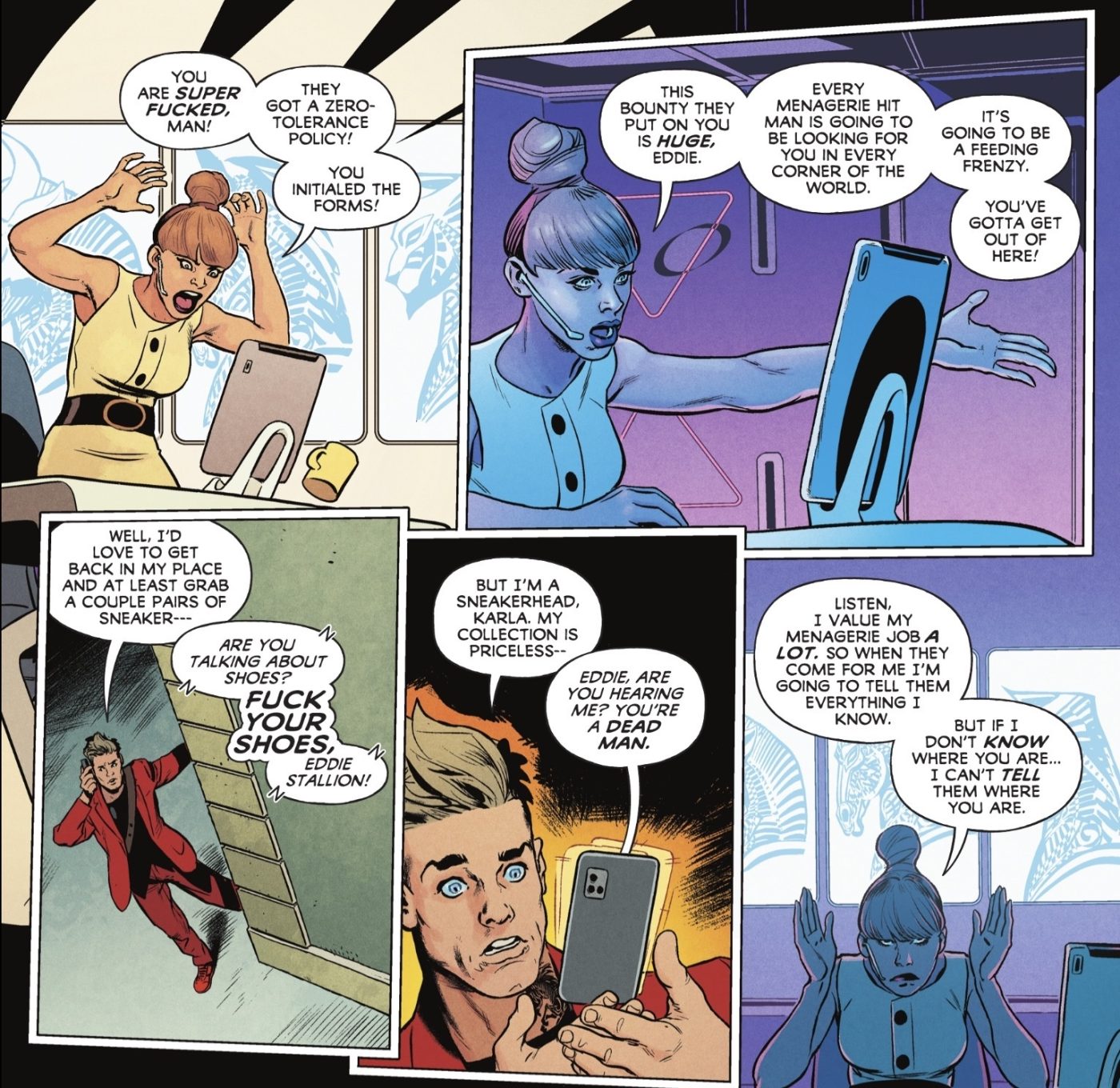
It’s not like DC doesn’t know this, either. Gerard Way, bless their heart, took time out of their busy schedule to prove this simple point a few years back. The Young Animal line ran from 2016 to 2021 and it was dedicated solely to doing precisely the same type of character rehabbing that was Vertigo’s early bread and butter. It’s not a hard concept: periodically you have to let the freaks clean out the bilge filter. How else do you get something like Cave Carson Has a Cybernetic Eye? You need to keep a little walled garden on-site to grow the weird plants that aren’t going to thrive in the regular fields. Vertigo used to be that thing, but it’s not anymore.
Black Label certainly doesn’t do that, not at all. Black Label does publish good books, don’t get me wrong — we’re a long way from when they launched the office with a book about Batman’s penis (kids, ask your parents about that one). What they do is to put out prestige projects with the company’s biggest characters. Vertigo didn’t do that. They couldn’t do that because they were forbidden from touching Superman or Batman, that one panel in “The Wake” notwithstanding. (Later on they did publish a single Superman project, 2004’s It’s A Bird … by Steven T. Seattle and Teddy Kristiansen. It’s not like any Superman book you’ve ever read, most likely.)
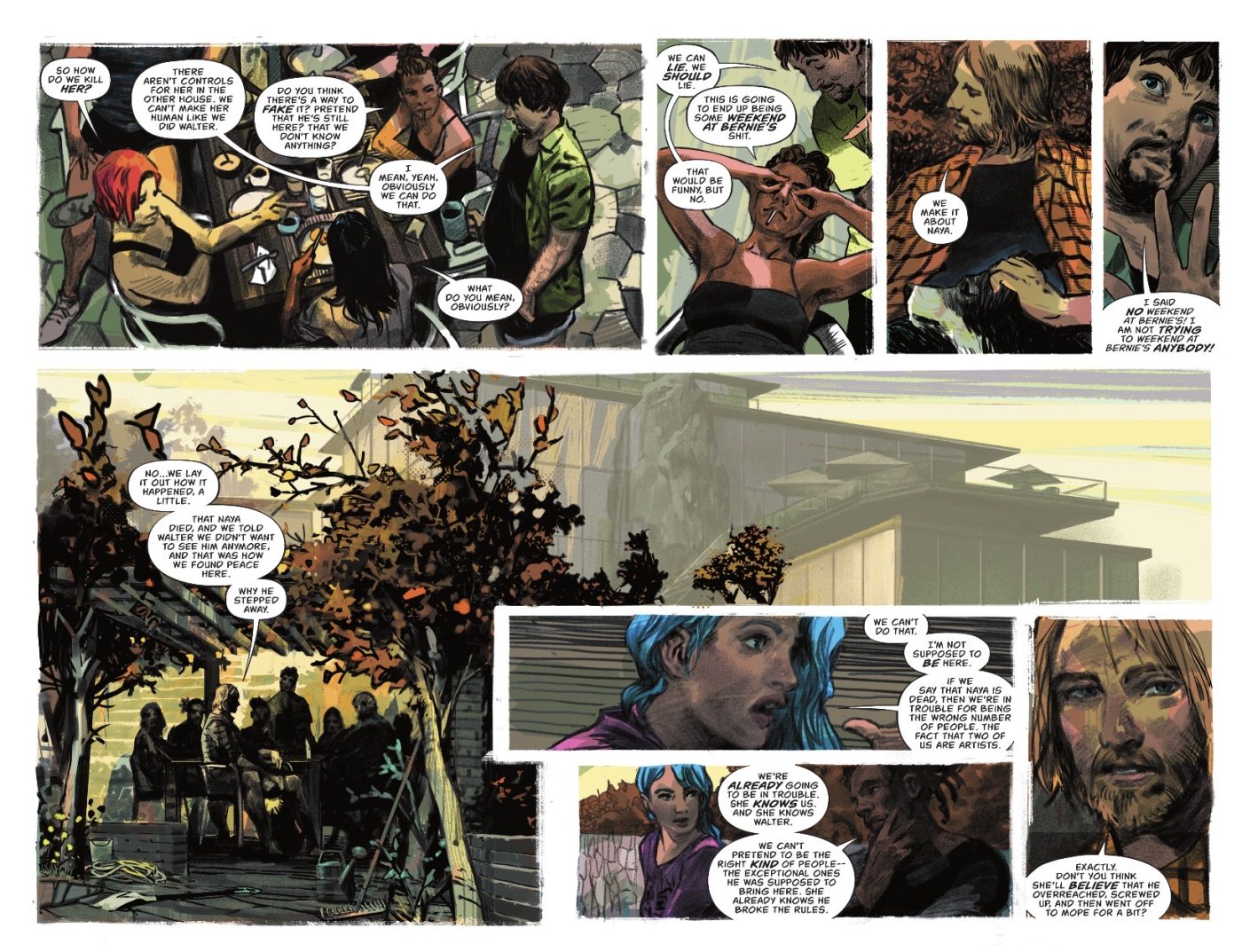
Perhaps I’m belaboring the point, but it leads to another even more specific elision. I am curious: does anyone at DC know we are in the middle of a renaissance of horror anthologies in the Direct Market? Certainly, the one of the new Vertigo books to switch over at the launch of the line is The Nice House on the Sea (née Lake), from James Tynion and Álvaro Martínez Bueno, so the company clearly knows horror is doing well. But I wonder if anyone there is actually counting to see how many horror books Oni is selling under their rented EC label? Even without actually relaunching Tales From the Crypt (one must assume a separate copyright than just the company’s logo) they’re doing quite well. So is the superior Hello Darkness from Boom, edited by Bryce Carlson, perhaps the best curated anthology of the decade. Even Creepshow is pretty good, from Image’s Skybound imprint.
Just to put some context on this: the last issue of House of Mystery shipped in 1983. For a decade and a half DC led the market in horror anthologies, and then that category disappeared. Cain and Abel are still right there. They’re not Neil Gaiman creations! In the first place, they’re both from The Bible, but in the second case Cain & Abel were both created for DC’s horror titles under the direct supervision of Orlando, in the late 1960s, by Bob Haney and Jack Sparling, and Mark Hanerfeld and Bill Draut, respectively, in House of Mystery #175 and DC Special #4. So for the first time in over forty years horror anthologies are selling, and DC is bringing back the precise label where you’d expect to see a House of Mystery revival … and yet here we are.
Why does it matter, to go down the list of things the new Vertigo isn’t? Isn’t the idea to judge what we have in our hands versus the version that could exist in our minds? Perhaps. But this isn’t a book, this is a business. Presumably a fair amount of money went into putting this new line together, and it’s reasonable to think they want it to succeed. The first question everyone was ever going to ask was going to be who the new writer for Hellblazer was going to be, or Swamp Thing, or Doom Patrol. Not doing that, not leading with any of the small handful of characters who aren’t entangled with a problematic creator but who are still part of the public memory of the imprint’s salad days, those are conscious decisions they made. They do have one revival in the pipeline, it should be said: a return to the world of 100 Bullets by Brian Azzarello and Eduardo Risso. They chose not to lead with that, for whatever reason.
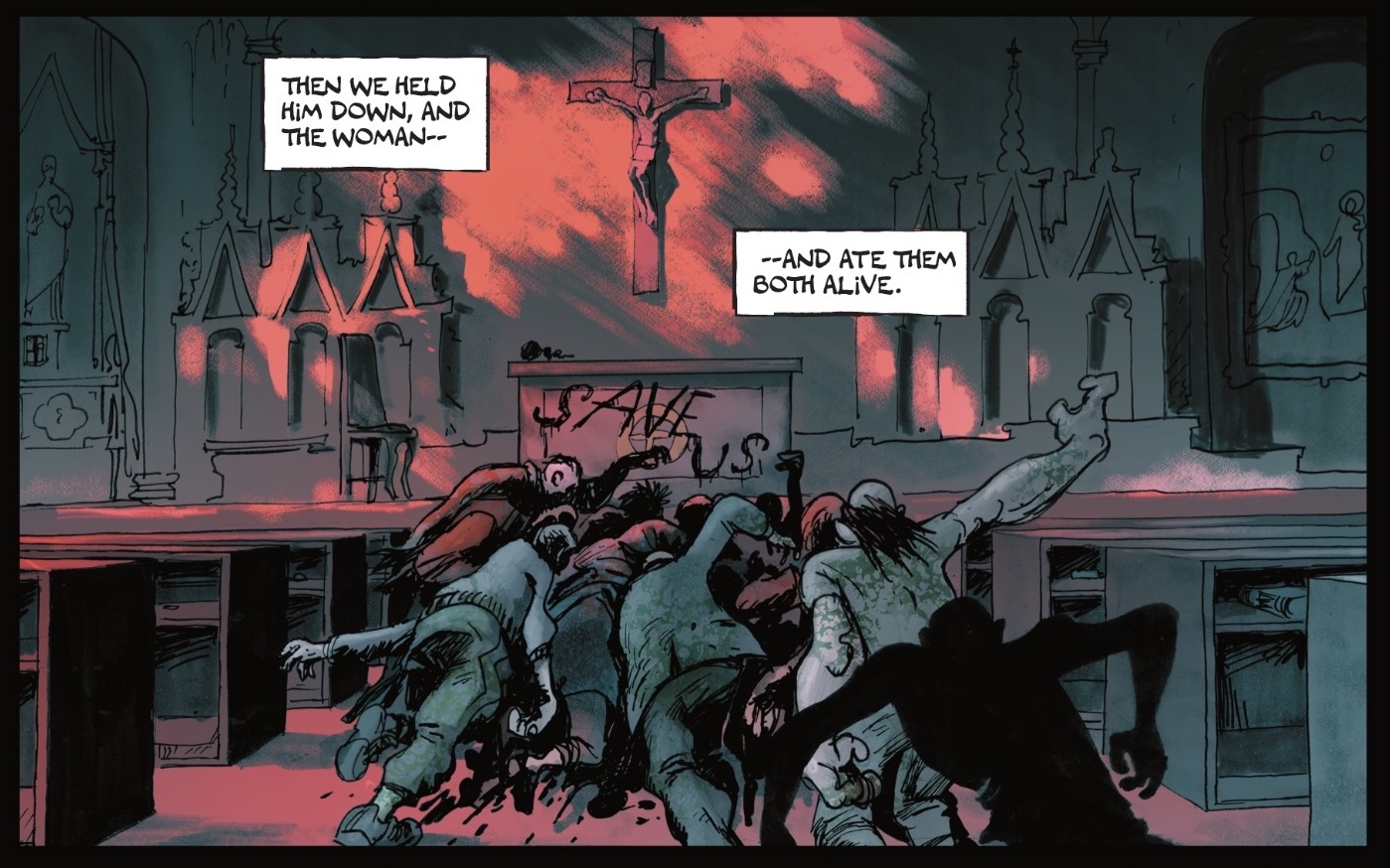
The new line is not bereft of interest, mind. They’re leading out of the gate with a new series from Deniz Camp and Stipan Morian, Bleeding Hearts. A zombie story — yes, yes, I know. It’s about a zombie who starts coming back to life and despite the familiarity of the milieu it still looks fantastic. But of course it would. The new book from the team behind20th Century Men was always going to be a big deal. But by that same token, it would look just as good coming from Boom, or Image, or Aftershock.
Likewise, Kyle Starks and the great Steve Pugh are doing a lighthearted crime book called End of Life, about a hitman laying low who decides to go back to his hometown and reconcile with — wait, you ask, breathless, isn’t that Grosse Pointe Blank? Yes, indeed, but you’re forgetting one important thing: Grosse Pointe Blank was released twenty-nine years ago, and you are very, very old now. Anyway. Starks & Pugh did a well-received Peacemaker series a couple years back, coming out of that character’s improbable television success. Pugh can draw anything, so it’s at least worth a look on that basis. The colors are sharp, courtesy of Chris O’Halloran. I am pleased to announce, at the very least, that the “Vertigo Browns” are a thing of the past.
The Peril of the Brutal Dark: An Ezra Cain Mystery, is a long title for a book by Chris Condon and Jacob Phillip that seems cut from the Brubaker/Philllips mold, noir with a bit of supernatural intrigue. Not terrible, if that’s your cup of tea, but also a rather dominant note at the moment. There are no shortage of people plowing these fields.
Ultimately, however — and forgive me for burying the lede so deep into this piece, but it deserves to be mentioned as the climax of the whole endeavor — the operation got off to a terrible, terrible start that only portends further disaster in the near future. Because I am willing to bet, based on simple statistical observation, that the first time many prospective readers heard there was going to be a new Vertigo line was September 2025, when they canceled a book that had been in development, a horror series written by novelist Gretchen Felker-Martin.
In the first place it must be said, none of what happened could not have been predicted in advance, and that makes the company’s actions all the more damning. A podcaster of such meretricious ignominy that it would sully my fingers to type his name was murdered in public. The resulting overreaction on the part of every corporate entity eager to wipe the slate of malcontents has already itself backfired to the degree that sound effects taken from publicly available recordings of the murder are now ubiquitous as memes. Our society has taken a dark turn, it must be said, but not necessary away from sympathy with those harmed by public expressions of bigotry.
Anyone with any familiarity to Felker-Martin’s incendiary social media presence must have known that a serious breach with a corporate parent was only a matter of “if” and not “when.” Surely the legal brain trust at DC and Warner Brothers conducted a detailed cost-benefit analysis prior to extending any offer of employment, noting precisely what they had to gain and lose from going into business with someone who, it must also be noted, needed to work at DC far less than DC needed to bask in her prestige.
Ultimately the industry rests on one unimpeachable bedrock foundation: people won’t rock the boat if you let them play with Batman. Well, Felker-Martin’s first — and only! — book for the company was more or less that, a Red Hood series of which one issue was published and pulped. Pulped! What an honor. They usually only pulp Moore. The controversy certainly doesn’t seem to have done her career any harm: she shipped a book the month before the murder and firestorm, it sold quite well and got nominated for a British Fantasy Award. DC Comics used to respect that sort of thing.
Now, me — as in Tegan O’Neil, the writer of this article — I felt a great deal of shame for having been so public in my admiration of the company in recent years. Absolute Wonder Woman is already and unimpeachably one of my favorite comic books of ever. They publish good books that I want to read, which hasn’t always been true, and is worth noting when it is. But in September 2025 they took all that hard-earned goodwill and flushed it down the shitter. All gone. Back to zero — less than zero, actually. They still publish many good people, people who don’t deserve the ignominy to have their reputations soiled by the association with the company DC Comics has become, and yet who are unavoidably soiled nonetheless.
The story isn’t over yet. Because as I type these very words Paramount is trying to buy Warner Brothers, a corporate merger which would, on the face of it and separate from any political considerations, decimate the entertainment industry to a degree that beggars even previous rounds of consolidation. The current administration appears to be trying their best to shepherd the merger even as there are still lawsuits pending. It’s poorly conceived for a number of reasons, not the least of which being every single company that has ever tried to purchase Warner Brothers has met the fate of Chronos devouring his children. Warner Brothers is historically a poorly-run company that makes money almost despite itself, and while that might make the company itself quite slow and cumbersome, it also provides ample natural defenses against predators.
But politically motivated raiders can do an immense amount of damage because of, not despite, their disregard for the long term. The same outfit recently purchased CBS and have spent the last few months dismantling the organization for parts. For all that the world has apparently moved on from terrestrial broadcast television, The CBS Evening News, The Late Show, and especially60 Minutes, are all still comfortably profitable brands — or at least, they were. They aren’t any more, and that was done on purpose, by malicious actors in broad daylight. People who manifestly do not care about making money so much as making a point.
It’s all happening out in front, where we can see it, and where they know we can see it. That’s the point.
So while I don’t actually believe Warner Brothers can be killed, at least not how we mortals might recognize death, the same cannot be said of literally anything or anyone under the Warner Brothers umbrella. They have already shown under current leadership they see no value in the Looney Tunes library above their ability to be licensed out. If the merger goes through, you need to ask a simple question: what does DC Comics have that 60 Minutes does not? It turns out, in the scheme of things, DC only owns one thing of actual value, and that’s the piece of paper that says they own Batman. Everything else, from the furniture up to the names on the corporate masthead to the well-being of the Direct Market itself, is up for negotiation.
Return then to September 2025 and events take a different cast. It’s not simply that DC was throwing out the sum of their institutional integrity for bad reasons. They were essentially laying down a chit for the beginning of the next round of negotiations. The organization’s pain points have been precisely mapped, and anyone wishing to dismantle them will merely need ask out of the gate for every trans employee to be fired, all their projects, canceled, and their backlist deleted. Galaxy and Dreamer and all the rest, thrown in a big hole along with, one assumes eventually, all the gay creators and characters, and soon enough all the brown and black and Methodist — well, you get the idea.
And if they don’t? If the good people at that company refuse to bend? Let me ask: do you know who’s publishing Archie these days? Oh, you were going to say Archie, weren’t you! No, it’s Oni. Oni is publishing new Archie stories just like they bought the EC logo to make new horror comic books.
Hopefully, I’m wrong about my most pessimistic speculations. That’s the point of pessimism: you need to be aware of the worst thing that can possibly happen and plan accordingly. More often than not, even today, you’ll be pleasantly surprised by the outcome if you do that. But first you need to plan. If the people who make the money at DC Comics don’t expect to be going to war for the survival of their company and everyone in it sooner rather than later, they need to step aside in favor of people who do.
Now, of course, the necessary corollary to all of this doom-mongering is to point out that all of this — from the dramatic institutional overreaction to the death of a latter-day Father Coughlin, to the accelerated pace of corporate mergers, to unprecedented encroachment on the free expression of private entities to please the whims of an autocrat — is tremendously, thunderously unpopular. It may not seem like it makes a difference today, and it won’t for quite some time still, but on the longest of time scales it’s the only thing that will matter. Cold comfort for those of us in the here-and-now who have to survive the evisceration of the public sphere, to know that things will be different at some indeterminate point in the future. But they will be, because no intolerable situation persists indefinitely, especially when people are losing money on purpose to prove a point not actually supported by the market.
The first Vertigo was a lot of things: the last redoubt of the ancient EC Comics editorial philosophy, the vision of one powerful woman who inculcated a genuine scene by force of will, an unprecedented star system that ultimately led to harrowing ends, a creative outlet for DC to refurbish underperforming IP through oddball reinvention, a revolutionary system of production designed to bypass the financial incentives of both the newsstand or the Direct Market in favor of traditional booksellers. The new Vertigo is none of these things, despite standing on the shoulders of all these things. It is not an organic eruption of any kind, it is a conscious attempt to inculcate a similar vibe from a kit.
In theory, at least, the domestic comics industry is actually experiencing something of a boom period, which is of course precisely when you need to cast new seeds. All to the good. But there could very well be a storm brewing. All of this could be swept away in a moment. I really hope I’m wrong, and for what it’s worth, I think I probably am wrong, because the most pessimistic supposition usually is. But in that context, given that the very first public move the new imprint made was in the direction of acquiescence to the authoritarian impulse — well, friend, these are not auspicious augurs. You’d be forgiven for writing the whole thing off.
For all that they don’t have this time around they do seem to have a fairly vigorous new contract for creator ownership, to judge from the caliber of talent they’ve snagged. Of the as-yet unreleased slate, I’m most looking forward to Necretaceous, an ongoing dinosaur zombie book by Tom Taylor and Derick Robertson. The cover for the first issue has a big honkin’ zombie T-Rex on it. Maybe not something Berger would have signed off on, but it looks fun. I hope it runs for years and years. Ram V and Mariko Tamaki have books coming out in the near future as well.
Like I say, no shortage of good people on books that will most likely range from good to great. But if none of it seems like it amounts to all that much as a whole, well, at this point the blame can only rest on the company itself. They figured out how to publish good comics no one is talking about.
I wish I could grab Jonni DC — you know, the personification of the brand itself — by the lapels and give her a good shaking. She needs to be screamed at because I don’t think she’s quite gotten the message yet: “Don’t you see, they’re trying to kill you? They are measuring your coffin as we speak. Now is not the time for half measures. What the fuck is this weak shit?”

2 Comments
Pingback: Lionel Richie Hospitalized in ICU After Concert - Comic Vibe
Pingback: Dell Laptop, Nintendo Switch, and Dyson Vacuum Get Last-Minute Price Drops to All-Time Lows for Dorm Move - Comic Vibe