

Nazara Technologies Success Story: India’s Only Listed Gaming Company Explained
At seven, a Mumbai boy sat before the computer his father gave him, more interested in writing code than playing the games on it. That habit grew into the Nazara Technologies success story that students of India’s gaming industry still study today.
Nitish Mittersain built the company behind this Indian gaming success story, India’s first listed gaming company. Raised in a Mumbai family with textile-trade roots, he picked up business discipline early, long before the Nazara Technologies business model took shape.
Today, Nazara spans mobile gaming, esports, and children’s edutainment, with a global footprint. This piece traces the Nazara Technologies history, breaks down the business model, unpacks the Nazara Technologies IPO, and pulls out lessons from this gaming company in India.
Quick Glance
| Founder | Nitish Mittersain |
| Company | Nazara Technologies Limited |
| Founded | 1999 |
| Sector | Gaming, esports, gamified early learning |
| Key Stat | Revenue of roughly ₹1,100 crore in FY24 (Entrepreneur, 2025) |
| Current Status | Listed on BSE and NSE; India’s only listed gaming company |
How It All Started
Mittersain’s fascination with computers began in childhood, and by his teens he was running a small web design business, Internet 3000 Technologies the earliest chapter of Nazara Technologies history.
In 1999, at just 19, he launched Nazara, right at the peak of the dot-com frenzy, long before India’s gaming industry existed in any recognizable form.
The crash that followed within two years left the company with debt worth an estimated ₹20–30 crore in today’s money, per Exchange4media (2026).
Instead of folding, Mittersain shifted toward mobile value-added services like ringtones, a move that kept the company alive until smartphones created a real market within India’s gaming industry, and that shaped the core of the Nazara Technologies business model: cash flow first, scale second.
The Business Model Behind Nazara
A Wide Product Spread
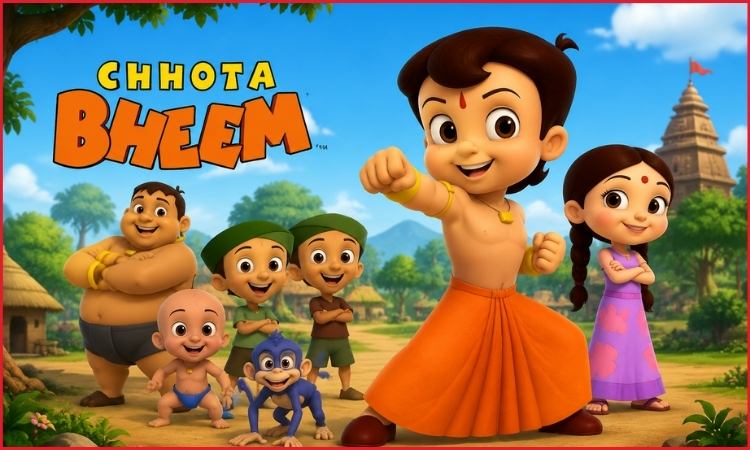
Rather than betting on one game, the Nazara Technologies business model spreads across mobile titles, quiz apps, sports simulations such as World Cricket Championship, and licensed-character games like Chhota Bheem, so one weak title rarely threatens the whole company.
Growth Through Acquisition
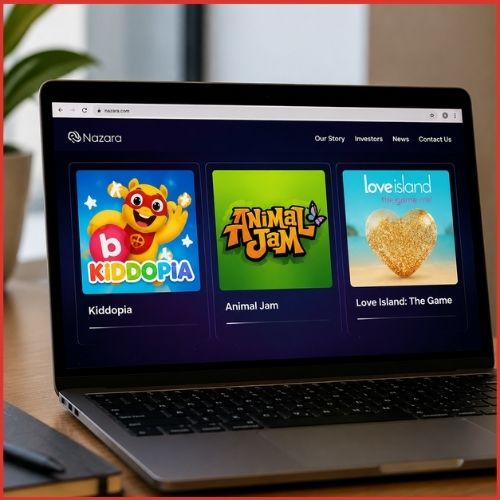
From 2015, Mittersain adopted a “House of Brands” approach loosely borrowed from Berkshire Hathaway, buying majority stakes in founder-led firms such as Sportskeeda and Paper Boat Apps (Kiddopia), and largely letting those teams keep running things. This let Nazara expand into esports, early learning, and ad-tech without overloading one leadership team, a pattern seen elsewhere in India’s gaming industry.
Multiple Revenue Channels
Nazara earns through app-store purchases, in-game ads, telecom-bundled subscriptions, and licensing a mix that keeps it less dependent on any single channel than many rivals leaning on real-money formats.
Six connected segments make up the business:
- Gaming – freemium titles on owned IP (World Cricket Championship, Chhota Bheem) plus ZeptoLab’s CATS and King of Thieves
- Esports – Nodwin Gaming’s tournaments and events, now an associate company
- Sports media – Sportskeeda and Pro Football Network, monetized via content and ads
- Ad-tech – Datawrkz, programmatic advertising for Nazara and outside clients
- Gamified early learning – Kiddopia, a subscription app for ages 2–8
- Digital/interactive entertainment – Fusebox Games and Curve Games, extending into console and PC publishing
In one recent quarter, gaming brought in about ₹156 crore and ad-tech about ₹148 crore; no single division carries the company’s fate, the practical result of the Nazara Technologies business model.
The “Friends of Nazara” Approach
Nazara calls its group of businesses the “Friends of Nazara” network its core operating model since 2018.
How it works: Nazara buys a controlling stake in a founder-led business, gives founders equity in Nazara, and lets the original team keep running operations.
Why: Betting on one hit game is risky for a public company; spreading capital across founders limits exposure to any single title or market swing an idea loosely inspired by Sweden’s Embracer Group.
What diversification gets Nazara:
- Faster entry into new categories without overloading one team
- Motivated founders, since they still run their own businesses
- Shared access to user acquisition, data, and publishing resources
Major Acquisitions That Built Nazara
| Company | Segment | Year / Deal | What It Brought |
| Nextwave Multimedia | Cricket gaming | 2018, majority stake | World Cricket Championship franchise |
| Nodwin Gaming | Esports | Jan 2018, 55% stake | India’s leading esports platform; de-subsidiarised to an associate company in Aug 2025 |
| Paper Boat Apps (Kiddopia) | Gamified learning | 2019, 51% for ₹83.5 cr; full ownership by FY25 | Subscription-led early-learning app |
| Sportskeeda | Sports media | 2019, 67% for ₹44 cr; full ownership by FY25 | Sports and esports content platform, later added Pro Football Network |
| Datawrkz | Ad-tech | 2021-22, 55% for ₹124 cr | Programmatic advertising and monetization |
| Curve Games | PC and console gaming | May 2025, 100% for £21.7 million | Human Fall Flat, For The King, and cross-platform publishing |
| Fusebox Games | Narrative gaming | 2024, $27.2 million all-cash | UK studio behind Love Island and Big Brother licensed titles |
Milestones Along the Way
The defining moment came in March 2021, when Nazara priced its IPO between ₹1,100 and ₹1,101 a share, becoming the first gaming company in India to list on the BSE.
The Nazara Technologies IPO was oversubscribed nearly 170 times, per Exchange4media (2026), inviting comparison with Nykaa’s record IPO and Freshworks’ Nasdaq debut.
Revenue grew from around ₹450 crore at listing to about ₹1,100 crore by FY24 (Entrepreneur, 2025). By mid-2026, market value crossed ₹10,000 crore (~$1.2 billion), per AFK Business (2026), a scale few companies in India’s gaming industry had reached.
Growth Timeline
| 2017 | Rakesh Jhunjhunwala invests, becoming a long-term backer |
| 2019 | Acquires 67% of Sportskeeda and 51% of Paper Boat Apps (Kiddopia) |
| 2021 | Completes the Nazara Technologies IPO on the BSE, India’s first for a gaming company |
| 2022 | Takes a majority stake in WildWorks, a US kids’ gaming studio, for $10.4 million |
| 2024 | Acquires Comic Con India through subsidiary Nodwin Gaming for ₹55 crore |
The Thinking Behind the Growth
Early start. Mittersain was coding as a child and ran his own venture by 15 – shaping a founder comfortable rebuilding after setbacks.
Away from in-house development. After 2015, Nazara shifted toward publishing, licensing, and acquisitions instead of building every title from scratch – faster and safer than betting on a new hit each time.
Local content, local audiences. A 2016 tie-up with Amar Chitra Katha brought Tinkle characters into mobile games, while World Cricket Championship tapped into cricket’s outsized pull in India – much like Gameskraft built its base around rummy and fantasy sports rooted in Indian habits.
Ecosystem over product. By 2015, Mittersain had settled on a structural idea: not one company making games, but a group of gaming businesses sharing capital, distribution, and monetization infrastructure.
Where Things Got Difficult
The dot-com crash nearly ended the company before it began, forcing a rebuild from debt rather than growth.
A first IPO attempt in 2018 stalled despite clearing regulatory approvals, pushing the eventual listing back three years, echoing BlueStone’s rocky 2025 debut, where a weak opening was followed by recovery.
More recently, Nazara’s real-money gaming push through OpenPlay ran into tightening regulation, forcing a pullback a reminder that even a diversified gaming company in India carries category-specific regulatory risk.
Closing Thoughts
The real lesson from this Nazara Technologies success story isn’t tied to one game or deal; it’s about structuring a company so no single product, investor, or regulatory shift can sink it.
Nazara’s edge was never one breakout title; it was treating gaming as a portfolio rather than a gamble. That discipline, built over two decades of Nazara Technologies’ history, carried it through a crash, a delayed IPO, and a regulatory pullback and still left it as India’s only listed gaming company, echoing the diversification playbook behind OfBusiness’s growth in a very different sector.
Its next test, as India’s gaming industry pushes past the $1 billion revenue mark, is whether that same discipline scales further.
Frequently Asked Questions
1. Who founded Nazara Technologies, and when?
Nitish Mittersain founded it in 1999, as a teenager, during India’s early dot-com boom.
2. What makes the Nazara Technologies IPO significant?
The March 2021 listing made Nazara the first gaming company in India to trade publicly.
3. How does Nazara make money?
Through the Nazara Technologies business model: game purchases, advertising, subscriptions, and licensing across majority-owned subsidiaries.
4. Is the company still run by its founder?
Yes, Mittersain remains founder and CEO; his family holds roughly a tenth of the shares.
5. What role did Rakesh Jhunjhunwala play?
He invested in 2017 and stayed a long-term backer through the IPO.
6. Why did Nazara pull back from real-money gaming?
Tightening regulation within India’s gaming industry made the segment riskier, prompting a scale-back of OpenPlay.
Read also: Charge Up Raises An Undisclosed Amount in its Ongoing Pre-Series A Fund Raise Led By Mapmyindia
- Tags:
- Business Success Stories
- Entrepreneurship
- Esports
- Gaming Companies in India
- gaming industry
- Indian Gaming Industry
- Mobile Gaming
- Nazara Technologies
- Nazara Technologies IPO
- Nitish Mittersain
Recent Published

Most Influential CEOs
Achievers of the Year 2026
Iconic Brands of the Year 2026
Business Leaders of the Year 2026

The Visionary Peoples Leader 2026
TOP STORIES
-
Nazara Technologies Success Story: India’s Only Listed Gaming Company Explained
HCL Technologies Success Story: Shiv Nadar’s Garage-to-Global-Giant Journey
Thermax Success Story: The Family That Powered India’s Industrial Boiler Business
