

Read more in the below note from executive editor Joe Kahn and managing editor Carolyn Ryan.
We’re living through a media maelstrom like never before. Vertical video has swallowed the internet. Podcasts have become TV shows. Viral deepfakes have degraded trust. Forecasters predict the end of reading. Publishers plan for the end of internet search. And a media-hostile White House seeks to intimidate journalists on a regular basis.
In other words, it’s time to bring back our vaunted media column.
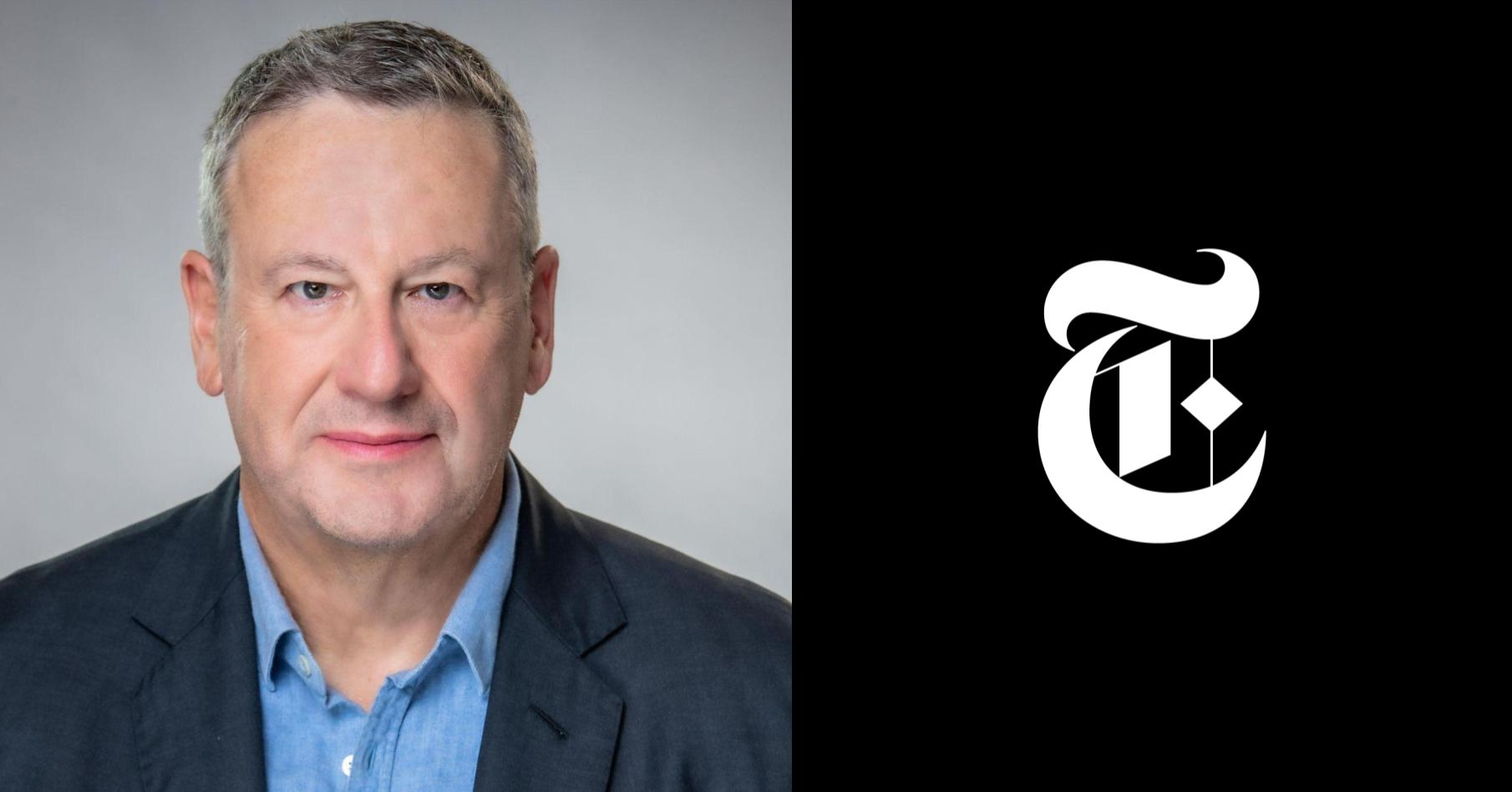
We are excited to announce that we have tapped Michael Hirschorn, an insightful, mischievous, forward-looking writer and media executive, to lead it. Michael will be our fourth columnist in this role, which was pioneered and developed by David Carr two decades ago. Our two subsequent columnists, Jim Rutenberg and Ben Smith, only deepened the column’s impact with their investigative muscle and analysis.
Michael has been both a player in the ever-changing media ecosystem as well as a keen observer of it for the past 20 years. He’s produced reality TV shows, navigated the cable and streaming wars, produced documentaries, including one on John McAfee that premiered at the Toronto International Film Festival, and even edited David Carr at the media industry website Inside.com.
Michael’s observations have often been prescient, outlining theforthcomingcultural hegemony of reality TV, exploring the genre-bending<a href="https://www.theatlantic.com/magazine/archive/2006/11/thank-you-youtube/305285/” rel=”nofollow noopener” target=”_blank”>valueof D.I.Y. video and discussing whether truth itself was becomingcommoditized.
He’s brought that piercing insight over the past year to a number of standout columns for The Times, covering everything from the left’ssearchfor its own Joe Rogan to analyzing the flames of revoltstokedby billionaires’ bragging about their self-dealing.
Beyond Michael’s reporting prowess and thoughtfulness, one of the things that drew us to him was his wide-ranging curiosity, which extends to revisiting his past reporting.
“Back in 2008, Iwrotethat The New York Times could plausibly go out of business,” Michael told us. “I’m thrilled to have not only been proven wrong, but so wrong that you guys were able to turn around and hire me.”
Michael’s industry-shaping roles have included time as the features editor at Esquire, executive editor of New York magazine and editor in chief of the alternative music magazine Spin.
In 1999, he co-founded Inside.com. Later, Michael pivoted to television, becoming a groundbreaking, EmmyAward–winningreality TV and documentary producer. He started at VH1, where he became head of programming in the early 2000s and oversaw series like “I Love the 80s” and “Flavor of Love,” as the network pioneered the celebreality genre. In 2008, he started his own production company, Ish Entertainment, which produces unscripted series and documentaries. In 2011, when YouTube launched abidto be more like TV by paying mainstream celebrities to produce original content, Michael was there, too,helpingthe likes of Jay-Z, Skrillex and Diplo create their own channels.
As his horizons expanded across the media landscape, Michael kept one foot planted in journalism, frequently contributing writing on media, politics and culture to outlets includingTheAtlanticand The TimesBook Review,T magazineand theOpinionsection. He tells us that he’s thrilled to be returning to journalism full-time.
Readers of the column can expect to find curiosity, deep reporting and research, and a clear-eyed perspective. The Media Equation will be much like Michael himself: sharp, enterprising and deeply attuned to the moment.
Please join us in welcoming Michael, who will start in November.
