

Meta VR <a href="https://comicvibe.com/metas-new-vr-glasses-are-lighter-smaller-and-cant-record-video/” title=”Meta's New VR Glasses Are Lighter, Smaller And Can't Record Video”>Glasses were just officially announced. Priced at $1300, they have 2.4K micro-OLED displays, weigh 100 grams, and are powered by a tethered puck with Qualcomm’s Snapdragon Reality Elite chipset.
0:00/1:10
The puck runs the same operating system as Quest 3, and supports all the same content, rendered at notably higher resolution thanks to a combination of the more powerful chipset (essentially an XR2 Gen 3 by a different name) and eye-tracked foveated rendering. It features 12GB of RAM and 128GB of storage, and there’s a microSD slot in the puck to expand it.
The caveat to the content compatibility is that Meta VR Glasses do not come with controllers by default, but you can buy Touch Plus controllers separately (available in a new all-black color), or pair the controllers from your existing Quest 3 or Quest 3S, and there’ll be a bundle with controllers “in some retail channels”.
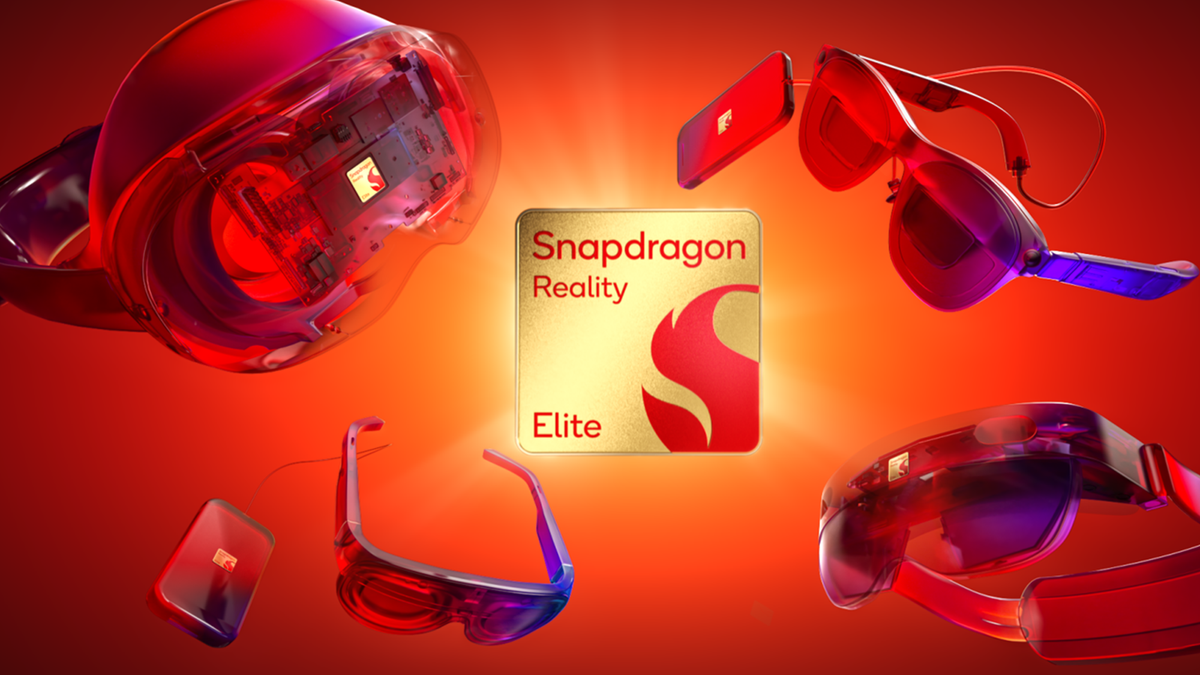
Qualcomm just announced Snapdragon Reality Elite, its new flagship XR chipset, and it will debut in the compute puck of Xreal’s Aura Android XR device this fall.
UploadVRDavid Heaney
The stark difference between Meta VR Glasses and any Quest, however, is the split architecture, and the dramatic reduction in weight and bulk this enables.
Meta VR Glasses have no onboard computing, not even a tracking coprocessor, and thus entirely rely on the 300-gram puck, which is roughly the size of two phones stuck together and provides both power and data over a thin and flexible fiber optic cable.
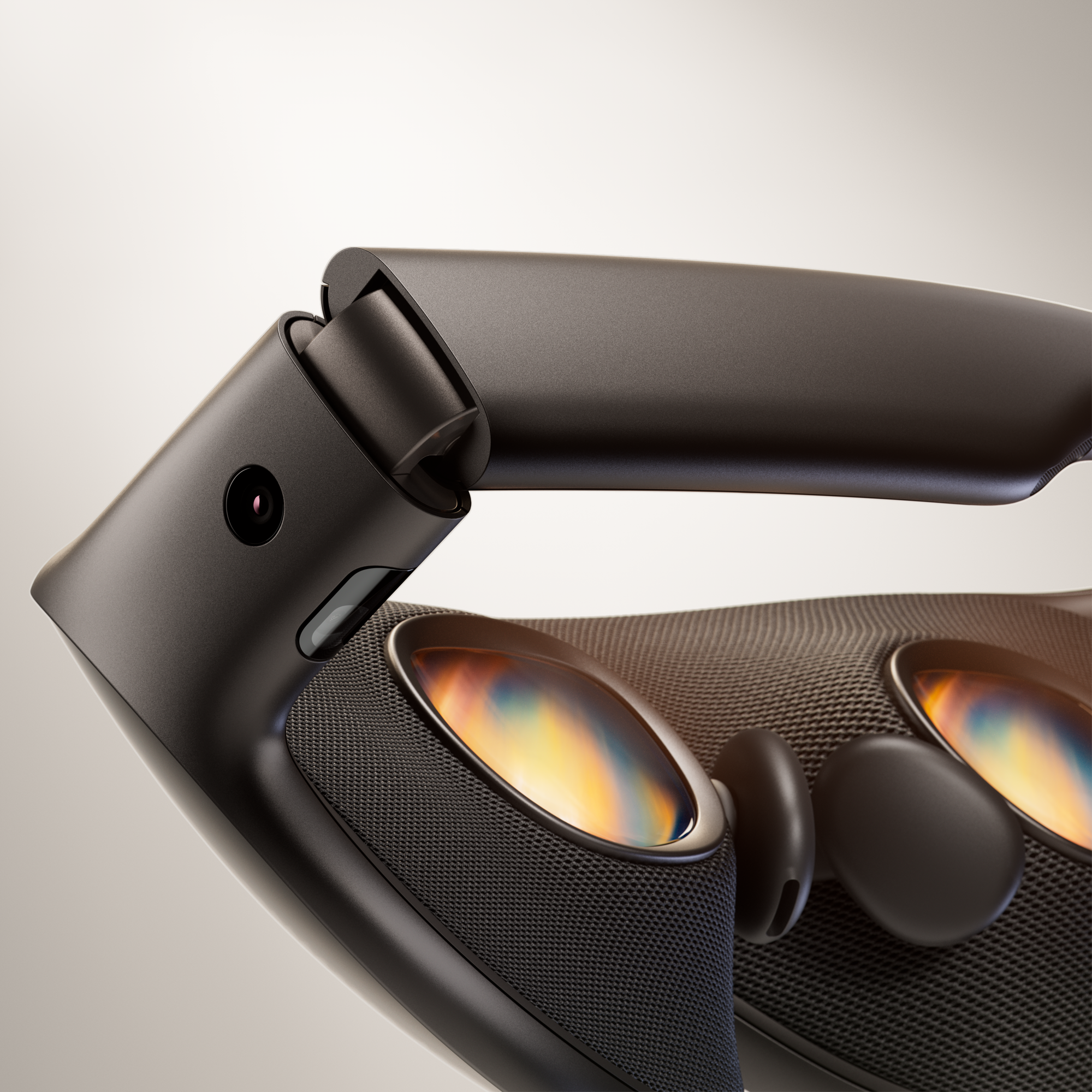
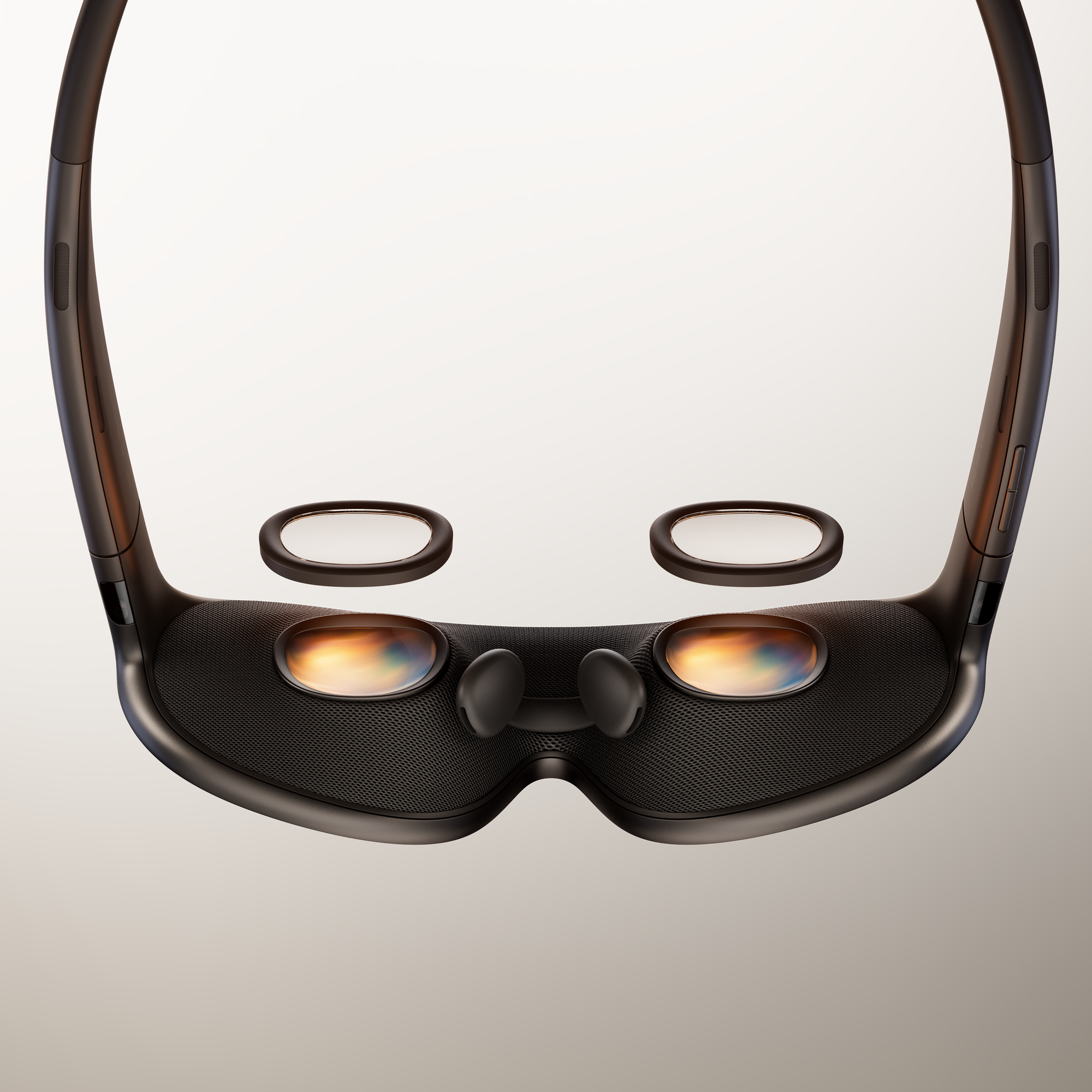
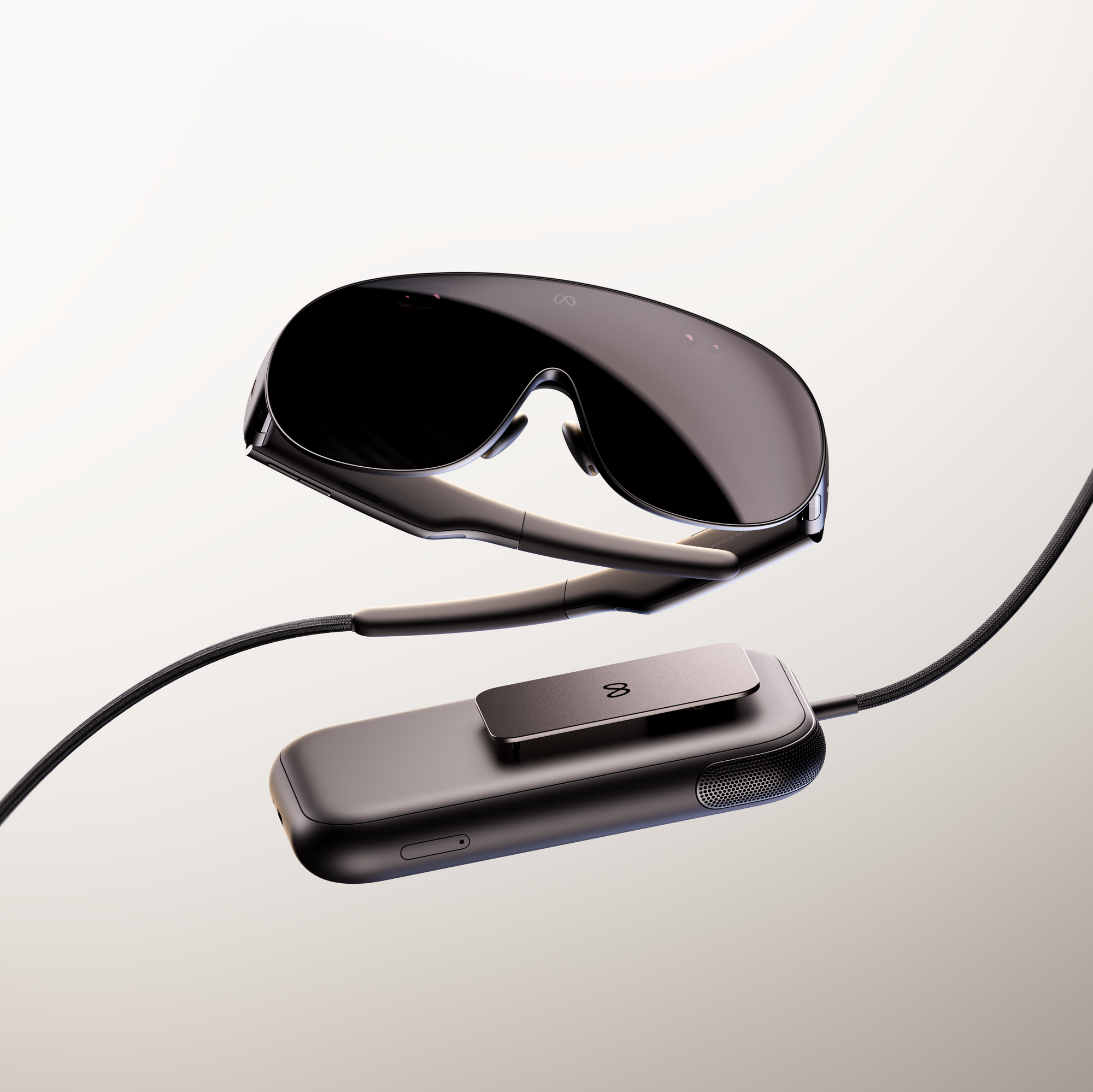
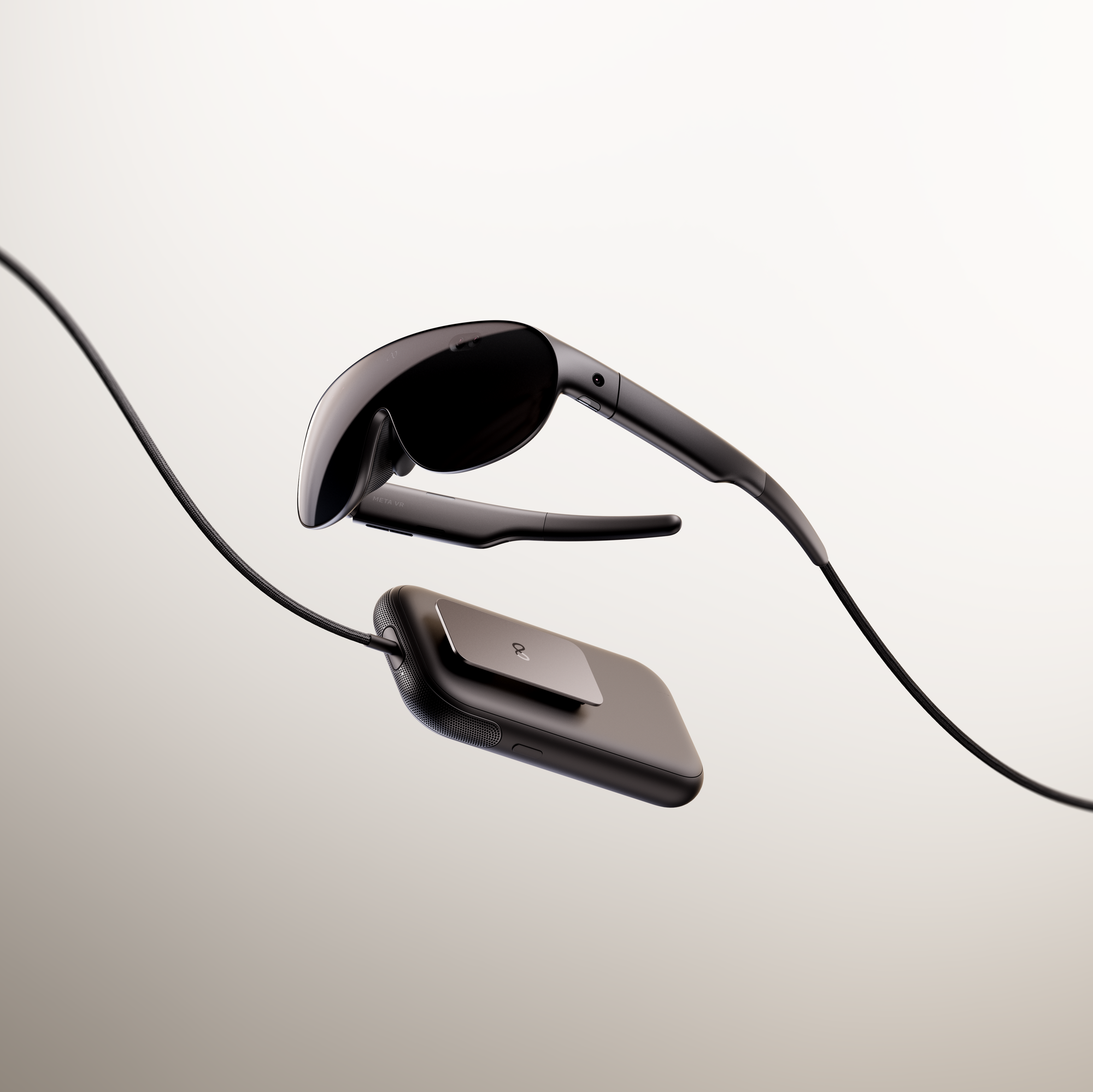
The visor has an open-periphery design, so you naturally see the real world to your sides and below you. It’s built with a magnesium alloy that minimizes weight while also enabling a fanless, passively cooled design that weighs “around” 100 grams.
Another key difference is the display and field of view. With dual 120Hz 2412×2288 HDR micro-OLED displays, Meta VR Glasses have the highest resolution of any Meta headset to date, and are the company’s first non-LCD headset since the original Oculus Quest.
The displays support the Dolby Vision HDR format, Meta says it’s the first VR device to be IMAX Enhanced certified.
The form factor brings a major optical compromise, though: the field of view. Meta advertises 70° horizontal × 66° vertical (equating to ~87° diagonal) compared to the roughly 110° horizontal × 96° vertical of Quest 3.
| Meta VR Glasses | Quest 3 | Steam Frame | Apple Vision Pro | |
| Display Type | Micro-OLED | LCD | LCD | Micro-OLED |
| Pixels Per Eye | 2412×2288 | 2064×2208 | 2160×2160 | 3660×3200 |
| Field of View | 70° × 66° | 110° × 96° | 110° × 110° | 100°× 73° |
| Angular Resolution (central) |
37 PPD | 25 PPD | ~25 PPD | 44 PPD |
| Chipset | Snapdragon Reality Elite |
Snapdragon XR2 Gen 2 |
Snapdragon 8 Gen 3 |
Apple M5 |
| RAM | 12GB | 8GB | 16GB | 16GB |
| Passthrough | Color 26 PPD |
Color 18 PPD |
Monochrome Low-res |
Color |
| Hand Tracking | ✅ | ✅ | ❌ | ✅ |
| Eye Tracking | ✅ (4-camera) |
❌ | ✅ (2-camera) |
✅ (4-camera) |
| Face Tracking | ✅ | ❌ | ❌ | |
| Tracked Controllers |
Optional | Included | Included | Optional |
| Price & Storage | $1300 (128GB) |
$600 (512GB) |
$1059 (256GB) |
$3700 (256GB) |
| MicroSD Slot | ✅ | ❌ | ✅ | ❌ |
The lower field of view will make Meta VR Glasses feel far less immersive than a Quest headset when the optional light blockers are attached for fully immersive experiences. But, somewhat ironically given the name of the product, Meta VR Glasses should shine without the light blockers in passthrough mixed reality, where a natural view of your periphery is often preferable to darkness.
Meta plans to market the product as “a private cinema, multiple monitor workspace, and game console in one device that fits in your bag”.
0:00/0:12
0:00/0:14
Essentially, Meta VR Glasses at its core is the same market proposition as the Xreal Aura Android XR glasses but with a VR-style passthrough display system that offers a larger field of view (~87° diagonal vs Xreal’s 70°), higher resolution, and full opacity, alongside the inclusion of eye tracking and optional tracked controllers. We do not yet know the price of Xreal Aura.
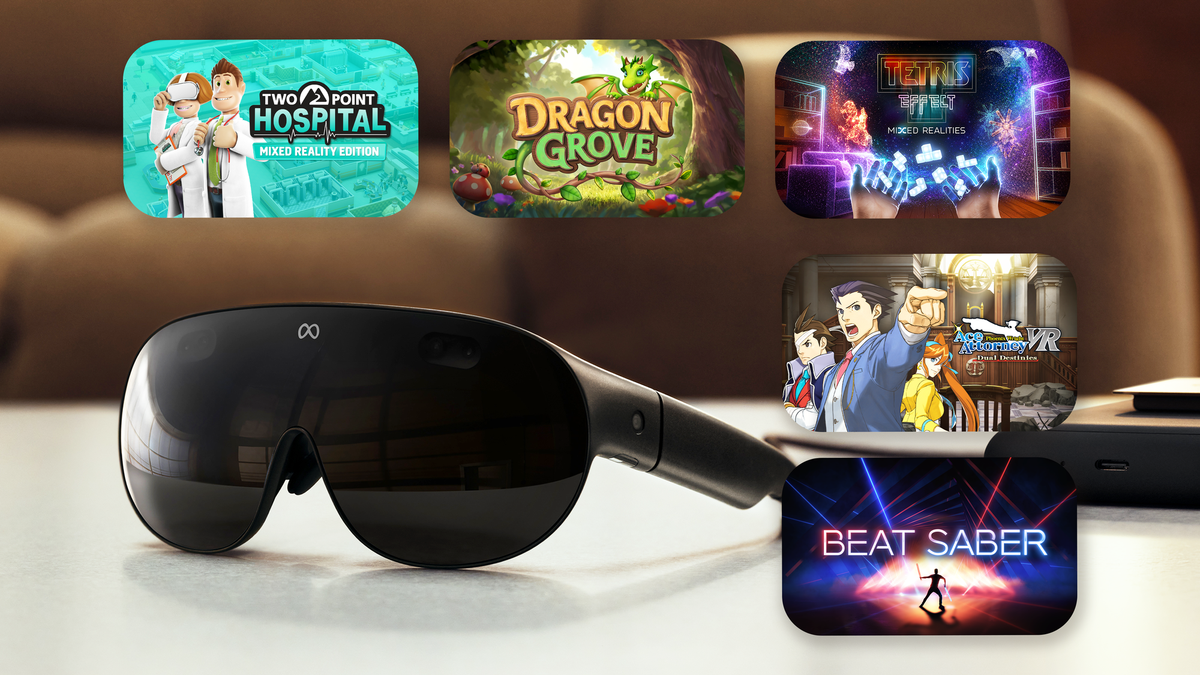
To expand the library of content available to Meta VR Glasses owners who don’t buy Touch Plus controllers, Meta announced a swathe of new hand tracking VR and mixed reality games, including a new hand-tracked Beat Saber mode called Flux. You can read about the gaming announcements here.
For the first time for a Meta standalone device, you can also plug in any USB-C DisplayPort device to the puck, including a phone, laptop, or gaming handheld, and have it shown as a huge virtual screen in Meta VR Glasses, without the need for a capture card.
Several new games are coming to Meta VR Glasses as early as Spring 2027, alongside major updates to existing games.
UploadVRJames Tocchio
Meta VR Glasses will also feature the first implementation of Hologram, the company’s productization of its Codec Avatars research. Similar to Apple Vision Pro’s Personas, it will let you join flatscreen WhatsApp video calls as a photorealistic face-tracked avatar, and appear as a full-scale realistic avatar in calls with other Meta VR Glasses (and eventually Quest 3) owners.
However, at launch in spring, your spatial Hologram will be a “2.5D” stereoscopic video stream, at true scale but only seen as a front-angle view. Even if you change your perspective, the Hologram will stay as a head-on perspective, like billboarded assets in a video game. Meta says it plans to evolve Hologram over time post-launch to become a truly 6DoF 3D system, at which point it will become the default platform-level avatar experience for its VR platform, effectively superseding the cartoon Meta Avatars.

1 Comment
Pingback: The Paradise Movie Review: Nani powers a striking world that loses its way - Comic Vibe