

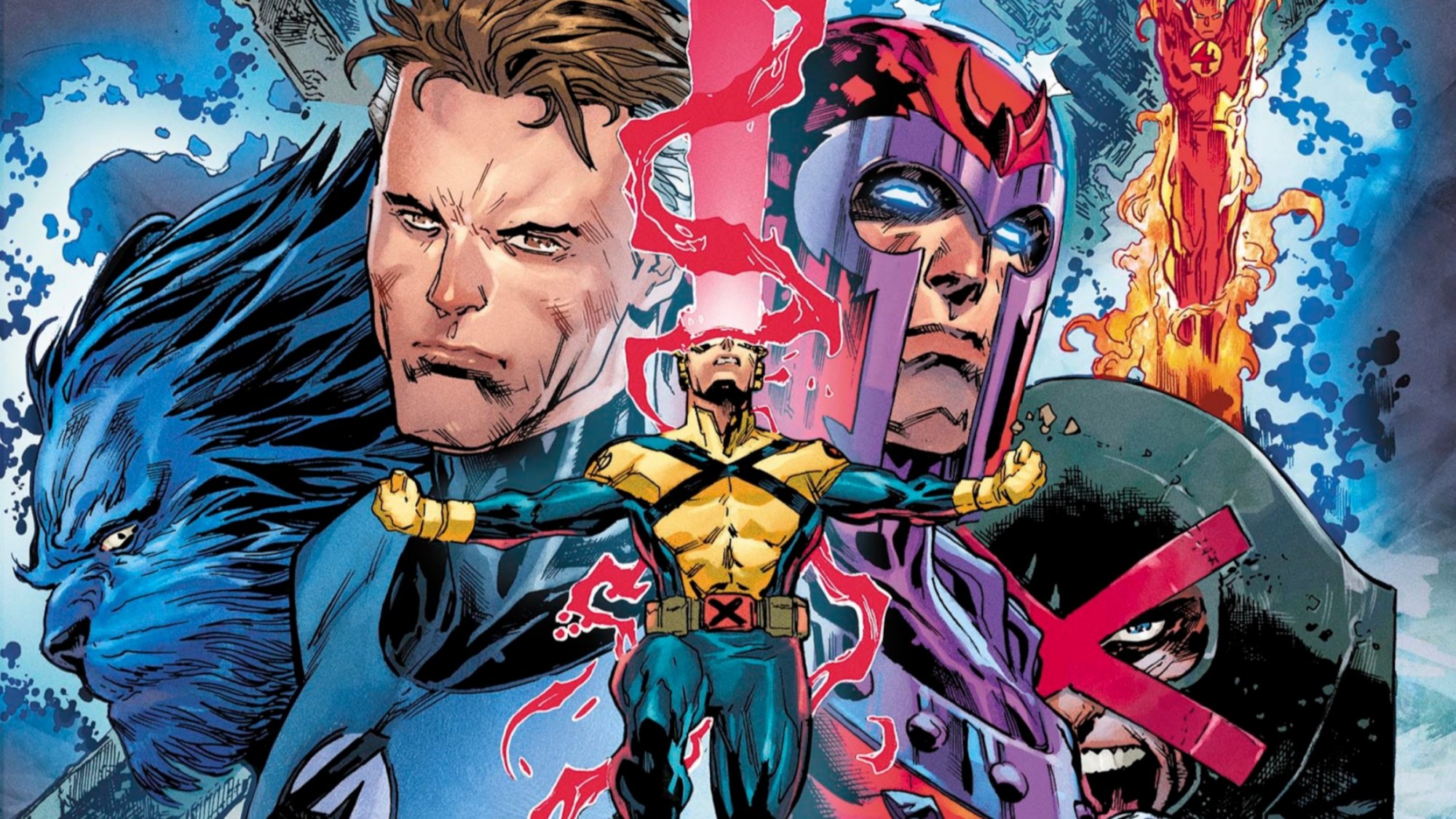
The X-Men are one of Marvel’s biggest IPs, hands down. This eclectic, ever-evolving team of heroes have been topping Marvel’s charts for decades, pushing the universe forward with countless classic stories and beloved characters. Of course, the X-Men are best-known for being an incredibly versatile allegory for confronting differences and discrimination. Mutants are a broad, varied group of people whose powers and stories can reflect everything from race to disabilities. The mutant allegory isn’t a perfect one-to-one for any one thing, but that lets it work for everything. Their stories always boil down to being a call for empathy and open-mindedness for those different from the norm.
Videos by ComicBook.com
Of course, this allegory works so well under the assumption that mutants are, at the end of the day, just a different flavor of humanity. Mutants are just as human as anyone else, which has always been the basis from which the X-Men argued. However, Marvel has apparently forgotten that fact. The past several years have been spent driving an even bigger wedge between Homo-Sapiens and Homo-Superior, and the X-Men’s newest upcoming event, DNX, has already fallen into that old trap in X-Men (2024) #36.
Drawing Lines Where There Are None
This prelude to DNXsaw 3K attack the X-Men so the Chairman, the evil version of Beast, could steal the secrets to the Mutant Virus from the Age of Revelation, which was encoded in Magneto’s DNA. He tried to recruit Magneto with the promise of making a utopia for mutants, but Magneto rejected the idea, yet still found himself unable to stop the Chairman. The X-Men realized that they only had days until the Mutant Virus wiped out millions, if not billions, of lives, and decided it was time for all out war against 3K. Cyclops’s final statement, however, drew my attention. Specifically, he said that mutants, unlike humans, wouldn’t gain their home through genocide.
This sentiment reinforces the idea that mutants aren’t humans, when they always have been. This isn’t a throwaway line, either, but a repeated sentiment throughout this entire era of X-books. There are humans and there are mutants and there is a clear distinction between the two, with them being different species entirely, but that’s not how this works. We’ve already estbalished why it kills the metaphor, but it also fails on a scientific reasoning in-universe. Most mutants are born to human parents, and even two mutants can have a human baby. Speaking genetically, the only thing seperating mutants and normal humans is a single gene. Unfortunately, this new divide is the norm for the X-Men, and it seriously ruins their stories.
Falling Into Mistaken Rhetoric and Assumptions
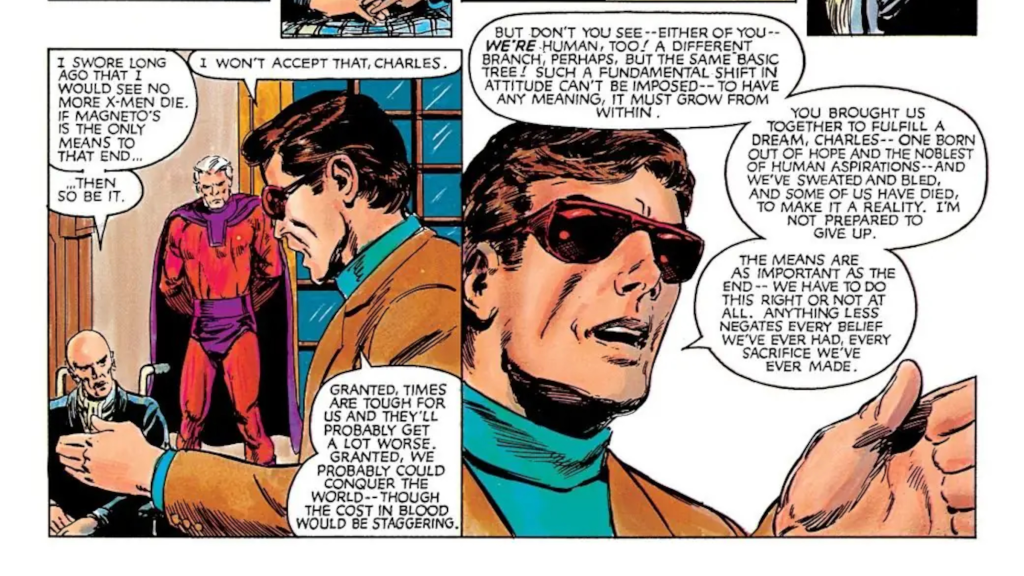
The X-Men stopping people from committing genocide is a standard, great story for them, and the fact that this is centered around them specifically saving non-mutants is a great change of pace for a team that has gotten shockingly insular. However, them pushing the idea that mutants aren’t humans, and that mutants have an obligation to be better than humanity, is absurd. It furthers the “us versus them” mentality that the team was founded to tear apart. The X-Men have always said that there is no them, but that it’s all us, which is the foundation of their message of coexistence.
Of course, like all great and terrible things about the X-Men this decade, this problem goes back to Krakoa. The Krakoa Saga pitched a mutant-only ethnostate, which Hickman very clearly depicted as a bad thing, only for future writers to shout that separation from humanity was what the X-Men needed. Nowadays, mutants are seen as the “perfect victims” and humanity is the “genetic oppressor,” painting the idea that mutants are, in fact, fundamentally different from humanity, and that’s why they need to be better. I don’t need to explain how this goes against everything the X-Men have said for sixty years.
Heck, seven out of ten times, the X-Men are fighting evil mutants, so this idea of mutants having a responsibility to be better than humanity just feels strange. Overall, repeating the rhetoric that mutants are irreconcilably different from humans just builds walls where the X-Men exist to tear them down. Mutants have always been humans, and saying otherwise just reinforces the idea that differences matter far more than similarities. The X-Men aren’t even an all-mutant team, for crying out loud, given that Juggernaut is literally in the room when this is said. The X-Men are supposed to champion differences, but never allow those to be more important than people’s actions.
What do you think of this new divide that Marvel has implemented for the X-Men? I’d love to see them return to a classic God Loves, Man Kills depiction of mutations, but how about you?
X-Men #36 is on sale now!
10 X-Men Who Became Hosts of the Phoenix Force (Who Weren’t Jean Grey)
More Comics
-
Image Courtesy of DC Comics Comics
10 hours ago49 Years Ago Today, DC Introduced Deadman, and His Return Proves This Ghost Hero Never Left
-
Image Courtesy of Marvel Comics Comics
11 hours agoOne X-Men Threat Did the Impossible and Created the Team We Didn’t Know We Needed
-
Courtesy of the Walt Disney Company Comics
14 hours agoThis Spider-Man Grail Proves Condition Isn’t Everything When a Comic Is This Important
-

Movies
1 day agoMarvel Unveils Jack Kirby Plaque at Avengers Campus to Mark Iconic Creator’s Birthday, And the Right Hero Was Present
-

Image Courtesy of DC Comics Comics
1 day ago40 Years Ago Today, One of the DCU’s Most Dangerous Villains Made Her Comic Book Debut
-
Image Courtesy of Marvel Comics Comics
1 day ago42 Years Ago Today, Spider-Man Got the Costume That Changed His World Forever
-
Image Courtesy of Marvel Comics Comics
1 day ago13 Years Ago, Marvel Created an Almost-Perfect Ultron Story and It’s Still a Huge Missed Opportunity

2 Comments
Pingback: Fantastic Four #16 Preview: Alien Vinyl Has the Freshest Beats - Comic Vibe
Pingback: More Marvel Universe Midnight Retailer Exclusive Variant Covers - Comic Vibe