

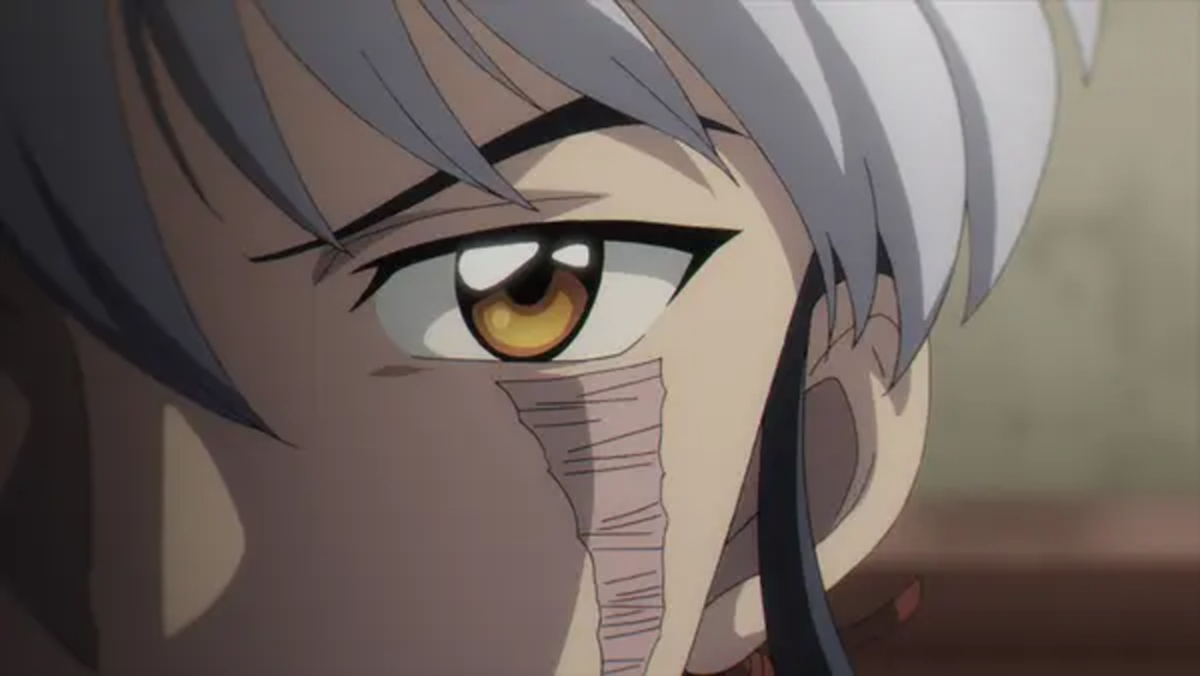
Thirteen episodes of MAO dropped on Hulu at midnight PT today — August 24, 2026 — and what English-speaking audiences are gaining access to is not simply the latest anime from the creator of InuYasha. Rumiko Takahashi has embedded six independently verifiable scientific and historical systems inside a story that presents as supernatural folklore: a real banned government science, a genuine toxicological ritual, a philosophy of feedback control that modern researchers recognize as systems theory, two documented biological mechanisms of extended longevity, and an ancient conception of autonomous agents that maps with unnerving precision onto contemporary AI alignment research. The dub is produced by Bang Zoom <a href="https://comicvibe.com/5-best-entertainment-stocks-for-2026-and-how-to-invest/” title=”5 Best Entertainment Stocks for 2026 and How to Invest”>Entertainment and directed by Tony Oliver. MAO is streaming in the United States on Hulu and internationally on Disney+ in Canada, Latin America, Australia, and New Zealand, as Viz Media’s licensing agreement confirmed at the series’ April launch. A second cour covering episodes 14 through 26 will arrive dubbed in November 2026.
What MAO Is Actually About
Nanoka Kiba is a present-day middle schooler who has been, technically, dead since age eight. She survived an accident that should have killed her, and she has never understood why. When she stumbles into an abandoned Showa-era shopping arcade and passes through a portal into Japan’s Taisho period — the modernizing, spiritually contested years between 1912 and 1926 — she encounters Mao, an exorcist who has been alive for approximately nine centuries. His longevity is not a gift. It is a curse, tied to a cat demon named Byoki — a nekomata born from a kodoku, an ancient ritual venom-concentration practice — whose blood runs in both Mao and Nanoka alike. Mao wields a sword called Hagunsei, named for the star Eta Ursae Majoris — “Star of Broken Army,” associated in traditional East Asian astronomy with misfortune and military destruction — a blade fatal to any hand except his own. Nanoka picks it up anyway. That is the series’ central image: a modern girl, carrying the blood of a thousand-year curse, wielding a star-named sword in a century that has just outlawed the entire belief system that explains her existence.
The emotional register is melancholy and wonder beneath a horror surface — the specific sadness of living too long, belonging to two eras, and being marked by purposes you did not choose. This is Takahashi at her most historically grounded. Where InuYasha transported Kagome to the Sengoku period, a war-era whose supernatural powers were publicly acknowledged, MAO places its protagonist in a Japan in active denial of its own supernatural substrate. That tension is not decorative. It is the intellectual architecture of the series.
Onmyodo Was Banned Science, Not Folklore
The protagonist of MAO is not a wizard. He is a practitioner of onmyōdō — the “Way of Yin and Yang” — and that distinction carries more historical weight than the series’ supernatural framing initially suggests.
Onmyōdō was the official cosmological and divinatory system of the Japanese Imperial Court, codified in the Taiho Code of 701 CE into a state bureau — the Bureau of Onmyō — staffed by professional civil servants called onmyoji. These were not folk magicians operating in the margins. They were government-credentialed practitioners responsible for astronomical observation, calendar science, geomantic city planning, and the spiritual protection of the capital. The most famous of them, Abe no Seimei (921–1005 AD), functioned as the court’s most indispensable scientific adviser — roughly the Merlin of the Imperial Court, except that his real-world counterpart actually existed and held a named government post.
The Bureau of Onmyō’s intellectual content was genuinely sophisticated: practitioners mastered the jikkan junishi cyclical time system (the ten heavenly stems and twelve earthly branches underlying the East Asian calendar still in use today), geomancy applicable to urban planning, classical Chinese astronomy, and medical diagnosis through elemental imbalance. What it lacked — the reason it did not eventually become modern science — was experimental methodology. Its framework was the right shape for systems thinking. Its testing protocol was not.
In 1872, during the Meiji-era modernization that preceded the Taisho period, the Japanese government formally prohibited onmyōdō as superstition. That prohibition was not a scientific verdict. It was a political act, part of the same program that separated Buddhist and Shinto institutions, outlawed folk healing, and mandated Western medicine. By the time Mao is practicing in the Taisho era, he is working in a tradition that has been illegal in Japan for forty years — continuing to use 900 years of accumulated empirical knowledge in a society that has officially classified it as fraud.
The irony Takahashi has encoded is structural, not cosmetic: the most technically sophisticated practitioner in the story is operating in a period whose official epistemological position is that his entire discipline is nonsense. MAO is, at one level, about what it looks like when a banned proto-science encounters the civilization that banned it.
Kodoku Has a Real Toxicological Basis
Mao’s curse originates in a kodoku (蠱毒), a practice documented since the seventh century in Chinese texts and prohibited in Japan under both the Taiho Code and the later Yoro Code as a capital offense. The core ritual: seal multiple venomous creatures in a jar without food, allow them to kill and consume each other, harvest the surviving creature as a concentrated curse agent.
From a modern toxicological standpoint, this is not pure superstition.
Venom concentration through predation is a documented biological phenomenon. When a venomous predator kills and consumes another venomous animal, it can bioaccumulate the prey’s toxins alongside its own. Poison dart frogs sequester their defensive alkaloid toxins from poisonous arthropods they eat; certain sea slugs (nudibranchs) store intact stinging cells from their cnidarian prey for defensive use against predators. The kodoku survivor — having killed and consumed multiple venomous competitors — would carry a mixed venom cocktail of genuinely unpredictable composition.
The selection pressure is also real. The kodoku jar functions as extreme artificial selection: the surviving animal is, by definition, the most aggressive, venomous, or poison-resistant specimen in the original cohort. That is exactly what the ritual’s folklore attributes to it.
In MAO, Mao uses a kodoku jar not as a weapon but as a healing device — a regenerative reservoir. That inversion maps onto a principle the pharmaceutical industry has independently validated: the most lethal biological agents are frequently the most pharmacologically potent. The FDA has approved at least eleven toxin-based drugs derived directly from animal venoms. Ziconotide (Prialt), derived from the cone snail Conus magus, treats severe chronic pain. Captopril, derived from the venom of the Brazilian pit viper Bothrops jararaca, is one of the most widely prescribed antihypertensive drugs in history — approved by the FDA in 1981 and still generating billions in annual sales. Tirofiban, derived from the saw-scaled viper Echis carinatus, is used to prevent the blood clots that cause heart attacks.
The kodoku jar in MAO is not a fantasy prop. It is a 1,300-year-old pharmaceutical concept.
The Wuxing System Is a Real Feedback Control Model
The surviving disciples of the Goko clan — the antagonist practitioners of MAO‘s first cour — are each assigned to a single element from the Chinese wuxing (五行) system: fire (Hyakka), wood (Kamon), water (Shiranui), metal (Hakubi), earth (Natsuno). Their elemental alignment governs which opponents they can suppress and which can overcome them. This is not an invented power-system. It is an application of classical Chinese cosmological philosophy that has been in use, in roughly this form, since the Warring States period.
Wuxing describes five phases of energy transformation — Wood (木), Fire (火), Earth (土), Metal (金), Water (水) — interacting through two cycles. In the generative sheng cycle, Wood feeds Fire, Fire creates Earth (as ash), Earth produces Metal (as minerals form), Metal enriches Water (through condensation), Water nourishes Wood. In the controlling ke cycle, each element suppresses another: Water extinguishes Fire, Fire melts Metal, Metal cuts Wood, Wood breaks Earth, Earth dams Water. These are not metaphors for narrative convenience. They are the logical structure of a feedback control system.
The philosopher Zou Yan (approximately 350 BCE) systematized wuxing as a cosmological framework during the Warring States period, and Han dynasty thinkers including Dong Zhongshu further developed it into the comprehensive correlative scheme applied to medicine, politics, astronomy, and geography. What wuxing describes — generating and inhibitory feedback loops between five interacting processes — is structurally analogous to what systems biology now models in metabolism: networks of reactions with positive regulation (generating) and negative regulation (controlling) that maintain homeostasis. The framework’s failure to achieve scientific predictive validity stems from its lack of experimental methodology, not from incoherence in its systems-thinking approach.
In the Goko clan’s elemental assignments, MAO is applying an actual systematic framework — one that took Chinese and Japanese scholars over a thousand years to develop — as its power-system logic.
Biological Immortality Is a Real Biological Category
Mao has lived for approximately 900 years. The series attributes this to his contact with the byoki’s concentrated energy halting his normal biological aging. This is the premise that sounds most purely fantastical — and it maps most precisely onto real scientific research.
Biological immortality, in the technical sense, refers to negligible senescence: the absence of increasing mortality rates with age. The immortal jellyfish Turritopsis dohrnii demonstrates this most dramatically: when stressed or injured, it can revert from its adult medusa form back to its juvenile polyp stage through a process called transdifferentiation that mature cells undergo, in which mature cells shift to a completely different cell type and the organism rebuilds itself from an earlier developmental state. A 2022 genomic study in PNAS compared the T. dohrnii genome to its non-immortal relative and found unique duplications in genes associated with DNA repair, telomere maintenance, and stem cell renewal.
The naked mole rat (Heterocephalus glaber) offers a mammalian parallel. Living more than 32 years in captivity — far beyond what its body size would predict — the naked mole rat displays negligible senescence: its mortality rate does not increase measurably with age. Its cancer resistance is attributed to high-molecular-mass hyaluronan, a substance five times larger than the equivalent found in humans that accumulates in tissues and inhibits tumor growth.
The biological aging mechanisms most relevant to Mao’s situation — telomere shortening, accumulation of senescent cells, mitochondrial dysfunction — are all now understood as processes rather than fixed programs, and interventions targeting each of them extend healthy lifespan in animal models. Telomerase, the enzyme that extends telomeres and is associated with the cellular immortality found in cancer cells, must be continuously expressed to maintain its effect. Remove it, and the cell resumes normal senescence. Mao’s curse maps onto this model: his immortality is not a passive gift but an active metabolic obligation — he must continuously manage and replenish the byoki’s presence, or the curse resolves lethally. The “curse” is, in biological terms, a maintenance protocol for a system that would otherwise decay.
Shikigami Map Onto AI Autonomous Agent Theory
Mao deploys shikigami — spirit constructs bound to his will. Otoya has the appearance of a boy and serves as Mao’s rational assistant; Funa Uozumi is a shikigami sent to monitor Nanoka in the present day. In the onmyōdō tradition, shikigami are not free-willed entities. They are bound agents: given a task, a domain, and constraints — and deployed, as onmyoji deployment records confirm.
The scholar Carolyn Pang, writing in the Japanese Journal of Religious Studies (Vol. 40, No. 1, 2013), conducted the definitive academic investigation of shikigami and found that the historical documentary record is thin — a single diary entry from 1000 AD attributing an illness to a shikigami — while the folklore tradition, built through medieval narrative literature, shows increasingly autonomous shikigami capable of turning on their summoners. That autonomy risk is the core traditional warning about shikigami: an unoccupied or improperly managed shikigami, left without clear task assignment, becomes dangerous to its master.
This is an exact functional description of what AI alignment theory calls the principal-agent problem: an autonomous system optimizing for an underspecified or misaligned objective causes harm to the principal it was designed to serve. The onmyoji deploying a shikigami performs what contemporary AI practitioners call prompt engineering and parameter-setting: specifying the objective, the operational domain, and the behavioral constraints. The historical prohibition against leaving shikigami unoccupied is, in systems terms, a warning against running an autonomous agent without a complete specification. MAO‘s shikigami characters are not magic familiars. They are the world’s oldest documented autonomous agent deployment problem.
The Taisho Era Is the Right Setting
Takahashi’s choice of the Taisho period (1912–1926) as Mao’s present is her most historically precise worldbuilding decision. This is the era in which Japan’s rapid Meiji-era Westernization — which had formally banned onmyōdō in 1872 and outlawed folk spiritual healing in favor of Western medicine — collided with a generation of ordinary citizens who still consulted folk healers, feared yokai, and navigated the world through cosmological frameworks their grandparents had inherited from the Heian court.
The Taisho period also saw Japan’s first mass media revolution: radio, phonograph records, and mass-circulation newspapers all brought both Western scientific reporting and traditional folklore into the same urban cultural marketplace simultaneously. For the first time, ordinary Japanese citizens could read a newspaper article debunking supernatural belief and purchase a folk talisman at a shop on the same block. The supernatural and the scientific competed as public epistemologies, and the outcome was genuinely uncertain.
Mao, practicing as a Taisho-era physician using his nine-century onmyōjutsu knowledge to treat problems that Western medicine cannot diagnose — because the etiology is supernatural — is operating in precisely this space. He is, in structural terms, an alternative medicine practitioner with a 900-year evidence base working in a society that has just outlawed his entire epistemological tradition. What MAO dramatizes in its Taisho setting is what happens to a banned proto-science when the modernity that banned it encounters problems the new epistemology cannot solve.
That is a more interesting premise than “girl and boy fight demons.” It is also why the series’ first cour rewards careful attention.
Where MAO Fits in Takahashi’s Franchise Logic
MAO is Rumiko Takahashi’s seventh major serialized manga, following Urusei Yatsura, Maison Ikkoku, Ranma ½, Inuyasha, Rin-ne, and Mermaid Saga. All of her supernatural works share a structural signature: a contemporary protagonist displaced into a world governed by a cosmological system the modern world has suppressed or forgotten, forced to navigate both the practical demands of the supernatural world and an unresolved emotional situation in their home era.
MAO is the most historically grounded iteration of this template. Where InuYasha‘s Sengoku-era Japan acknowledged its supernatural powers openly, and Ranma ½ placed its cosmological system in a contemporary comedic context, MAO locates its protagonist in the specific historical moment when Japan officially decided that the supernatural explanation of the world was wrong. Mao is not fighting demons in a world that accepts demons exist. He is fighting demons in a world that has passed laws saying they don’t.
Takahashi received the Grand Prix de la ville d’Angoulême in 2019, the Will Eisner Award Hall of Fame in 2018, the Harvey Awards Hall of Fame in 2021, and France’s Order of Arts and Letters in 2023 — the first female mangaka honored with that distinction. Her work has 200 million volumes in circulation worldwide. MAO, serialized since 2019 and with 29 volumes released as of mid-2026, is reaching its international streaming audience for the first time today.
The Bang Zoom Entertainment dub under Tony Oliver began with all thirteen first-cour episodes available simultaneously on Hulu in the US. The original Japanese production is directed by Teruo Sato — who also directed Yashahime: Princess Half-Demon at Sunrise — with scripts by Yuko Kakihara and character design by Yoshihito Hishinuma. The opening theme for the first cour is “HEARTLOUD” by Kis-My-Ft2; the ending theme is “Juai” by TRUE.
What the Portal Actually Is
One element of MAO worth examining separately is the portal itself — the abandoned shopping arcade that connects Nanoka’s present to the Taisho era. Takahashi frames it not as a mechanical device but as a liminal threshold: a place between states of being (economically alive and dead, historically present and past), sustained by accumulated spiritual residue rather than physical mechanism.
In theoretical physics, the closest analogue to a stable, traversable temporal pathway is the Einstein-Rosen bridge — a wormhole predicted by general relativity as a potential connection between two distinct regions of spacetime. For a traversable wormhole to remain open, it would require exotic matter with negative energy density; the Casimir effect provides indirect evidence that negative energy density is possible at quantum scales, though nowhere near the magnitudes required for a macroscopic wormhole.
The ER = EPR conjecture, proposed by Maldacena and Susskind, suggests that quantum entanglement (EPR pairs) and wormholes (Einstein-Rosen bridges) may be fundamentally the same phenomenon. Under this framework, Nanoka’s ability to traverse the portal while others cannot maps onto selective entanglement: she is entangled with the Taisho era’s temporal coordinates because of what the byoki’s blood did to her at age eight.
Stephen Hawking’s Chronology Protection Conjecture posits that quantum effects would systematically destroy any wormhole before it could be used for backward time travel. MAO‘s fiction implicitly answers this: the portal is not a physical aperture but a spiritually maintained threshold, sustained by the ongoing byoki curse. The curse does the work that exotic matter would need to do physically. This is not scientific fact. It is a coherent speculative framework — and the coherence is not accidental.
Where to Watch and What Comes Next
The MAO English dub launched today, August 24, 2026, with all thirteen first-cour episodes now streaming on Hulu in the US and on Disney+ internationally, as Viz Media’s Anime Expo announcement confirmed in July. A Hulu subscription is required for US access; the series is included with Disney+ in international markets. The original Japanese simulcast with English subtitles is also available on Hulu and Disney+, with the second cour (episodes 14–26) currently airing in Japan.
The second-cour dub arrives in November 2026. As of this writing, the second-cour’s English voice cast has not been announced. The first cour’s dub director is Tony Oliver; Bang Zoom Entertainment is the production house.
The manga, published in English by Viz Media, has 24 volumes translated as of mid-2026, with a new volume released on August 11, 2026.
Frequently Asked Questions
Is MAO related to InuYasha?
MAO is not a sequel or spinoff of InuYasha, but it shares structural DNA. Both series follow a modern girl who passes through a time portal into a historical Japanese era governed by supernatural cosmology; both involve an exorcist with a complicated relationship to a half-demon heritage; both are produced by Sunrise and adapted from Rumiko Takahashi’s manga by Shogakukan. MAO is set in the Taisho period (1912–1926) rather than the Sengoku era, and its tone is markedly darker — where Kagome found a world that accepted demons, Nanoka has arrived in a Japan that has officially outlawed belief in them. The series can be watched without any prior InuYasha knowledge.
What is onmyodo, and why does it matter for understanding MAO?
Onmyōdō was the Japanese Imperial Court’s official system of esoteric cosmology — a genuine state discipline combining astronomy, calendar science, geomantic city planning, and exorcism, institutionalized by the Taiho Code of 701 CE. Its practitioners, called onmyoji, were civil servants in the Bureau of Onmyō. The Meiji government formally prohibited it in 1872 as part of Japan’s modernization program. Mao practices a Heian-period variant in the Taisho era — nearly forty years after his profession became illegal. Understanding onmyōdō as a banned proto-scientific institution rather than folk magic clarifies why MAO‘s setting choice is historically precise: Takahashi placed her protagonist in the specific moment when Japan decided that the entire explanatory framework governing Mao’s existence was officially wrong.
What is kodoku, and is it real?
Kodoku (蠱毒) is a historical Japanese magical practice derived from Chinese gu magic, documented since the seventh century CE and prohibited in Japan as a capital offense under the Taiho Code. Its core ritual — sealing venomous creatures in a jar, forcing competitive predation until one survivor remains, then using that survivor as a curse agent — has a genuine biological basis: venom bioaccumulation through predation is a documented phenomenon, and competitive selection for venom potency under artificial pressure is real. The modern pharmaceutical industry has independently validated the core logic of kodoku by approving at least eleven drugs derived from animal venoms, including captopril (from pit viper venom, the foundational ACE inhibitor for hypertension) and ziconotide (from cone snail venom, for severe chronic pain). In MAO, Mao uses the kodoku jar regeneratively rather than offensively — a pharmacological inversion that the venom-to-drug research pipeline has since made scientifically coherent.
How does MAO differ from other Takahashi anime already on streaming?
InuYasha, Urusei Yatsura, Ranma ½, and Rin-ne are all available on streaming platforms with English dubs. MAO is distinct among them in three respects: it is set in a specific, precisely chosen historical period rather than a generic fantasy past or a comedic contemporary setting; its supernatural premises are each grounded in real historical practices (onmyōdō, kodoku) or natural phenomena (biological immortality, systems theory) with documented scholarly and scientific literature behind them; and its tone is Takahashi’s most sustained attempt at genuine dramatic horror and melancholy rather than comedy. For viewers who know Takahashi’s earlier work, MAO is what those series would look like if they took their own cosmological premises entirely seriously.
ⓒ 2026 TECHTIMES.com All rights reserved. Do not reproduce without permission.
