

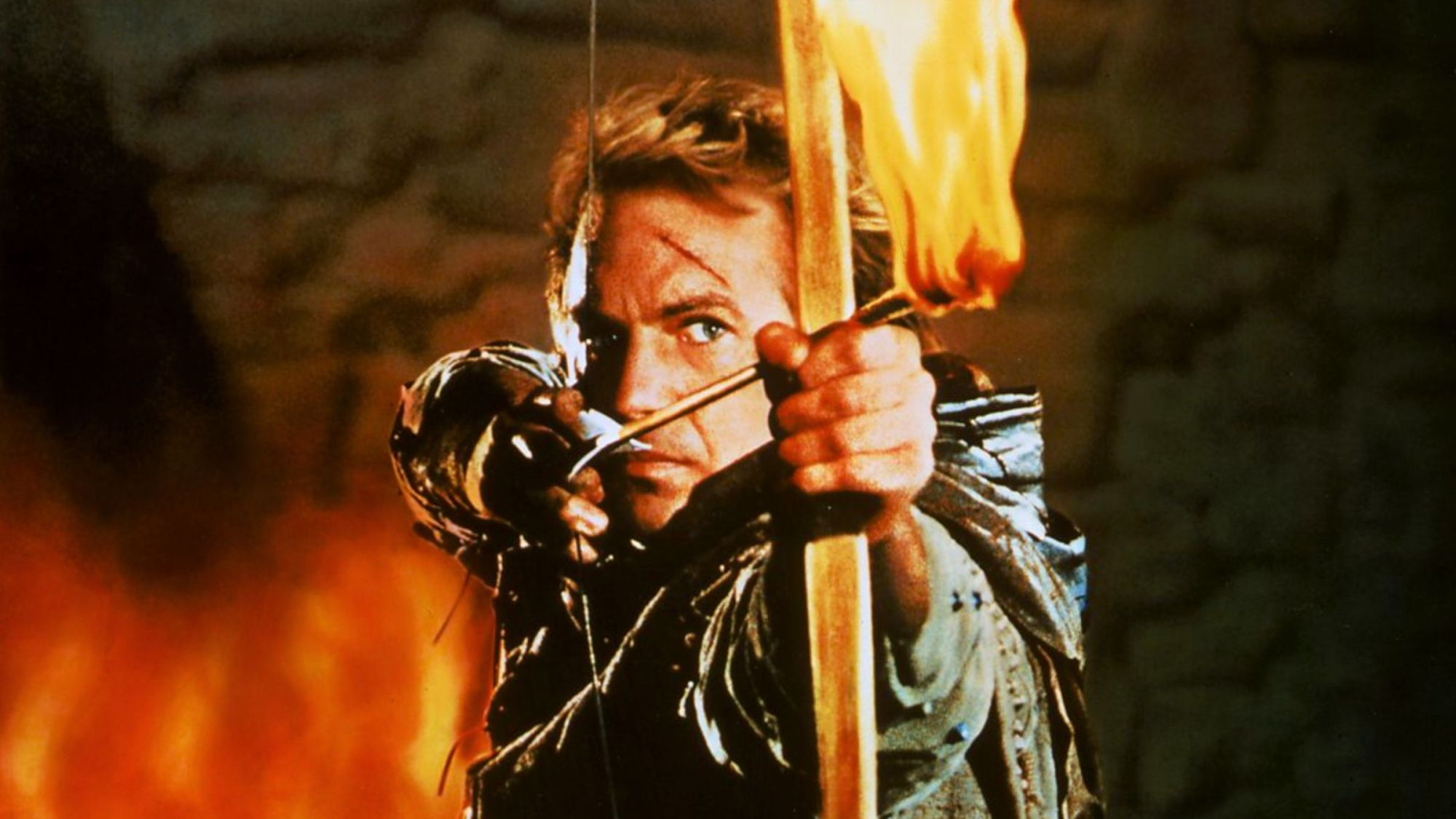
Kenner’s part reuse for this 1991 toyline was so widespread, sometimes it can be difficult to tell the original and the newer version apart. If you held up Kenner’s 1983 Return of the JediGamorrean Guard and their 1991 Robin Hood: Prince of Thieves Friar Tuck, you’d be surprised to see they’re the same figure from the neck down – just with a different coat of paint. For any of the line’s other figures, a close examination would reveal that they’re clever reuse from Kenner’s Super Powersline. The most expensive part of the toy-making process is “tooling,” the sculpting and production of molds for figures. To amortize tooling, toy companies will frequently try to reuse it across figures, an especially common practice with super-hero lines, with the skin-tight costumes worn by many characters making it easy to turn a Captain America into a Cyclops into a Taskmaster. Inter-toyline reuse is less common, owing to the difficulty of finding ways to make sculpts work across themes or brands. But in 1991, Kenner found a way, cannily utilizing almost exclusively re-used parts for their Robin Hood: Prince of Thievestie-in toyline.
Videos by ComicBook.com
Today, the film is a relatively forgotten piece of early nineties nostalgia, but the toyline holds a deep fascination for toy collectors. A close look at the line’s figures, playsets, and vehicles is a peek behind the curtain at one of the most controversial processes in the world of toy manufacturing. Some collectors aren’t even fans of the movie, and just want to get ahold of these figures so that they can hold them up side-by-side with their Star Warsor Super Powersfigures and spot the similarities. However, the line’s Sherwood Forest playset and Battle Wagon vehicle are double-edged swords for collectors. They’re almost straight reuse of playsets and vehicles from Return of the Jedi, and can be tough to tell apart from the older, more valuable releases out of box. For some collectors, this represents a low-cost way to own and display iconic Kenner Star Warsitems. For others, it means the possibility of buying the Robin Hoodissue item by mistake. Regardless, the line is a cult favorite with collectors, and always popular at auctions like this one, upcoming through Hakes.
How Kenner Made Entire Action Figures Without Sculpting a Single New Part
Although largely forgotten today, Robin: Prince of Thieveswas a major hit on release, the second biggest film of the year behind Terminator 2: Judgment Day. The toyline was also a success for Kenner, making the figures ubiquitous on the second market – aided by the fact that the film’s lack of long term pop cultural impact means limited demand for the toys. Eight figures were produced for Kenner’s Robin Hoodline, encompassing seven characters and including two variants of Robin Hood. The reuse of tooling in this line runs a gamut of “logical” to “required some artistic license.” In many cases, it’s actually impressive how seamless the process is, as with Friar Tuck, whose reused Gamorrean Guard body is covered over with a newly-tooled soft goods robe. Other figures, like the Sheriff of Nottingham, are a confused Frankenstein of pieces from other figures, and you’d never guess who they were supposed to be if the packaging didn’t tell you. For many, Kenner’s sculptors lightly retooled an existing part, adding design motifs to help Lex Luthor’s armor or Green Arrow’s costume blend in with a medieval toyline.
Both Robin Hood figures are (appropriately) almost straight reuse of Kenner’s Super PowersGreen Arrow, and even still sport a “G” on their belt buckle. Minor changes have been made to the design of the figures’ boots, and leather wrist bracers have been sculpted onto the arms. Besides Robin Hood, the most direct copy is Will Scarlet, who marries the torso and arms of DC’s Robin with the legs of Darkseid’s minion Desaad. Little John and the “Dark Warrior” both use the arms and torso of Hawkman, Little John is coupled with resculpted legs from Batman. The last of the Merry Men, Azeem, is a combination of parts from Shazam and Green Arrow. As alluded to above, however, the most bizarre is the Sheriff of Nottingham, who, right down to the headsculpt, is all pre-existing parts. The Sheriff’s head is taken from a RoboCopbad guy figure, and his body and legs from Lex Luthor. His arms are the same resculpted Green Arrow arms that appear across four of the eight figures.
Why Kenner’s Robin HoodPlayset Has Confused Collectors For Decades
The Robin Hood: Prince of ThievesBattle Wagon is a hybrid of two Return of the Jedi items, the Ewok Battle Wagon and the Ewok Assault Catapult. The Battle Wagon was one of the last items issued during Kenner’s short-lived Power of the Forcerebrand in 1985, and is one of the rarest pieces in the classic Kenner Star Warsline. The Robin Hood Battle Wagon ditches the ornamental animal skull on the roof for the catapult, as well as adding ornamental shields to the side of the wagon. Loose and incomplete, it’s easy to confuse the two vehicles, which are distinguished by plastic color and their copyright stamp. Even tougher to tell apart are the Sherwood Forest and Ewok Village playsets, which are almost identical. The key differences are, again, the color of plastic used, and the addition of tree canopies for the Sherwood Forest version. In both cases, it’s a surprise to see how well the cross-line reuse works, given that the Robin Hoodfigures were made in a larger, 4.5” scale than the 3.75” Star Warsfigures.
Thirty-five years later, Kenner’s Robin Hood: Prince of Thieves is largely a curiosity. For fans interested in the art and business of action figure production, it’s a fun line to take a closer look at, with whole articles dedicated to sleuthing out the parts reuse from earlier toylines. The line’s wide secondary market availability makes it easy to collect, even with the cloth-goods outfits providing something of a challenge when tracking down loose samples. And the Battle Wagon vehicle gives many collectors the best chance they’ll ever have to play with an Ewok Battle Wagon, which sells for literally hundreds of dollars more than the Robin Hood version on the secondary market. Although the Robin Hoodfigures on offer in the upcoming Hakes auction are unlikely to be the most expensive or most fought-over item sold, they’re certain to leave a satisfied collector with a new shelf whose history is just as interesting as the toys.
What’s your favorite obscure nineties toy-line? Leave a comment below and join the conversation now in the ComicBook Forum!
This Masters of the Universe Figure Is a Collector’s Dream — With One Unusual Catch
More Collectibles
-
Courtesy of The Walt Disney Company Collectibles
3 days agoOne of Star Wars’ Most Divisive Characters Is Behind This Unusual Auction Find — and It’s More Affordable Than You’d Think
-
Collectibles
3 days agoThe Green Goblin’s Origin Is a Spider-Man Classic, and This Silver Age Lot Has Eight More Issues to Explore
-
Collectibles
3 days agoStar Wars Had a Very Strange M&M’s Collaboration and One Leia Figure Makes It Even Weirder
-
Collectibles
4 days agoAn MCU Fan Favorite’s First Appearance Is Hiding in This Unexpected Piece of Marvel History
-
Collectibles
4 days agoStar Wars Once Gave Away Boba Fett for Free, But That Surprising History Makes This Jawa Even More Valuable
-
Collectibles
5 days agoReturn of the Jedi Inspired One of Star Wars’ Rarest Toys, & You’ve Probably Never Heard
-
Collectibles
5 days agoA Forgotten Pokémon Card Collection Just Sold for Millions, and Collectors Will Wish They Had One
-
Collectibles
5 days agoNew LEGO Report Reveals Extensive Details on 2027’s Huge Superman Set
