

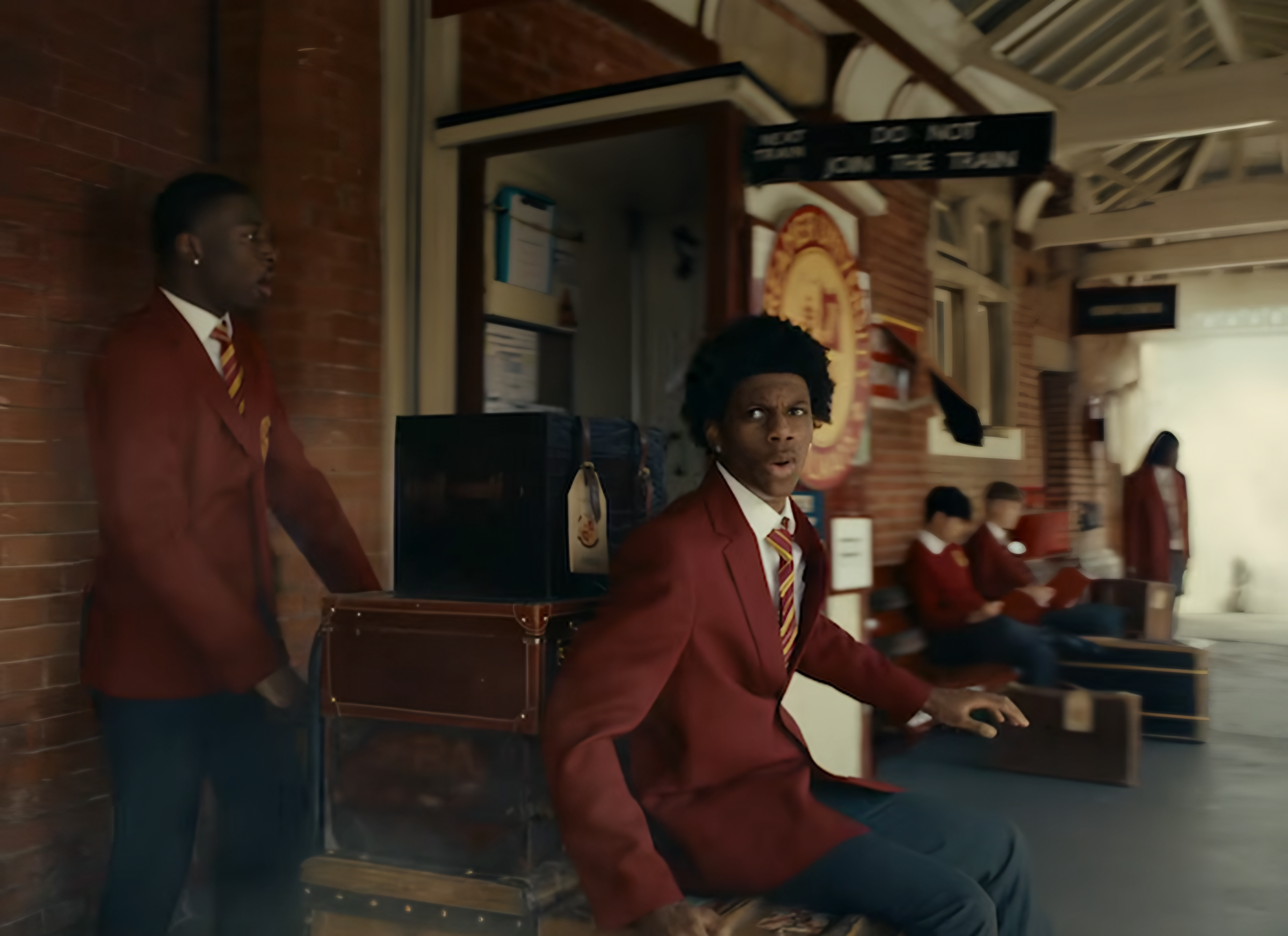
Streamer University 2026 closes its doors today, July 20, with an award ceremony streaming live on Kai Cenat’s Twitch and YouTube channels simultaneously — and a franchise-defining announcement already on record: Streamer University 2027 will take place in Europe. The six-day creator bootcamp at Hendrix College in Conway, Arkansas drew millions of live viewers, generated viral moments across every major platform, and confirmed what Cenat’s July 6 return stream first signaled: the era of Twitch exclusivity for the world’s most-subscribed streamer is over. For aspiring creators who applied by the millions and the brands that committed eight-figure sponsorship resources to the event, that platform pivot carries implications that go well beyond audience numbers.
Streamer University Becomes a Franchise on Its Closing Day
Streamer University 2027 is going international. At the closing award ceremony — live now on Twitch and YouTube — Cenat confirmed the third installment will be held in Europe, and that selected alumni from the 2025 and 2026 classes will be eligible to participate in full.
The confirmation transforms what began in 2025 as a viral experiment into a documented annual franchise with returning characters, expanding geography, and a growing alumni network. The 2025 inaugural edition at the University of Akron in Ohio ran three days and reached 27 million watch hours on Twitch, according to Tubefilter, and 23 million according to People magazine. The 2026 edition extended the format to six days, relocated to a dedicated liberal arts campus, and introduced simultaneous streaming across two platforms — structural escalations at every level.
For the student creators whose individual channels accumulated audiences during the event’s round-the-clock multistream, the closing ceremony marks not an end but a conversion problem: can the viewership spike that came from proximity to Cenat’s 20 million followers turn into durable, retained audiences on their own channels?
Why Cenat’s Platform Move Matters More Than the Audience Numbers
When Cenat returned from a nine-month streaming hiatus on July 6 to reveal the Streamer University 2026 lineup, the broadcast aired simultaneously on Twitch and YouTube — marking his first-ever simultaneous broadcast on both platforms. The stream peaked at 711,386 concurrent viewers on Twitch and 403,959 on YouTube, taking the combined live audience past one million.
The raw numbers are significant. But the structural implication is larger.
Twitch ended its exclusivity clause for Partners and Affiliates in October 2023, when CEO Dan Clancy announced the change at TwitchCon Las Vegas. Since then, multistreaming — broadcasting a single stream to multiple platforms simultaneously — has become technically straightforward for any creator willing to set it up. What had not happened was the world’s most-followed Twitch streamer actually doing it.
The economic reason is direct. YouTube pays creators a 70/30 split on channel memberships, while Twitch’s standard baseline for Partners is 50/50 — though Twitch’s Partner Plus program offers up to 70/30 for creators who sustain 350 or more paid subscribers. At Cenat’s scale — he accumulated over one million subscriptions during Mafiathon 3 across its run — a 20-percentage-point per-subscriber differential against Twitch’s baseline is not a rounding error. A creator receiving $5 per subscriber takes home $2.50 per sub on Twitch’s standard rate and $3.50 on YouTube. Over a subscriber base of hundreds of thousands, that gap is worth millions of dollars annually. Cenat’s move to multi-home is therefore as much a monetization decision as an audience-reach one — and the two platforms serve structurally different discovery functions: Twitch’s algorithm surfaces content to engaged communities in real time, while YouTube’s search-and-recommendation system reaches audiences who did not already know they wanted to watch, a different acquisition funnel with its own value.
What Is Streamer University, and Does It Actually Work?
Streamer University is a free, application-based, multi-day in-person creator bootcamp. Accepted participants receive housing, meals, and this year a Ch@mobile phone and one year of wireless service from the creator-first mobile platform. The 2026 class of 120 student creators was selected from millions of applications through a process that included in-person auditions in New York City, Los Angeles, and Atlanta.
The faculty model structures the event around established creators serving as “professors” and club directors. This year’s professor roster included Agent00, Duke Dennis, Kaiya Cenat, Cinna, Ludwig, Kai Cenat himself, Poudii, FaZe Adapt, and Lizzo, among others. Club directors covered Fraternity (Nick Nayersina), Basketball Club (Lethal Shooter), Cheerleading (Markell Washington), Film Club (Oliver Cannon and Gibson Hazard), Science and Engineering Club (Proto), Musical Arts Club (T-Pain), Debate Club (Markus King), and Drama Club (Yonna Jay).
Two announced professors did not attend. Pokimane withdrew after her grandfather passed away, with the news announced on July 11, days before the event began. Valkyrae stepped in as a replacement and brought an additional opportunity: she announced that QTCinderella had authorized her to select eight student creators from her class for a reserved table at the upcoming Streamer Awards. Maya Higa, also originally announced as a professor, withdrew because of a commitment to a sperm whale conservation project.
The practical measure of the event’s educational mission is not the curriculum but the audience data. The 2025 edition’s 27 million Twitch watch hours were not generated solely by Cenat — they were distributed across 120 student streams, with spikes concentrated around viral moments. For students who arrived with small followings and left with documented audience growth, the mechanism of the event is exposure arbitrage: borrowed proximity to an established audience, converted into retained viewers on independent channels. Whether that conversion holds at scale remains the open question the event has not yet answered in the longitudinal data.
A $100,000 Treasure Hunt, a Fortnite Collab, and the Week’s Defining Moments
The event’s most widely clipped moments illustrated the formula that has made Streamer University a branded content vehicle as much as a talent incubator.
On Day 2, Kai Cenat played a video message from Jimmy “MrBeast” Donaldson revealing that ten briefcases, each containing $10,000, had been hidden across the Hendrix College campus — a $100,000 real-life treasure hunt that immediately dissolved the day’s planned programming as students scattered across campus on stream. The unscripted stampede generated clip volume across every student’s individual channel simultaneously, demonstrating the event’s core mechanic: a single intervention by a high-profile guest multiplies across 120 simultaneous streams.
On Day 3, Epic Games formalized a brand partnership through the Fortnite Sprite Hunt. Thirty-one Fortnite Sprites were hidden across campus. Students had to find one Zero Point Sprite and one additional variant while following on-stream rules that prohibited post-curfew searching and property damage. Three winners each received a $7,500 brand deal from Epic Games and a custom in-game cosmetic. By embedding a live gameplay mechanic into the event’s social dynamics — including the permitted trading, bartering, and stealing of Sprites between students — Epic turned 120 individual streams into a week of organic Fortnite content from the summer‘s most-watched creator event.
Cenat also sent a private jet to student creator Kanel Joseph after Joseph posted on X that he had missed his flight.
The sponsor footprint — Meta, Dell, Red Bull, Shopify, State Farm, Ch@mobile, and Epic Games — confirms that Streamer University has moved beyond the creator space into mainstream branded event budgets. These organizations do not commit re
What the Creator Economy Data Says About This Moment
Streamer University 2026 arrives in a creator economy that just reached new scale. YouTube’s creative ecosystem contributed more than $60 billion to US GDP in 2025, supporting the equivalent of 540,000 full-time jobs, according to an Oxford Economics study commissioned by the platform. The creator economy as a whole is projected to reach $480 billion by 2027.
That macro growth does not flow evenly. The same research found that the top 10% of YouTube creators captured 62% of ad payments in 2025, and most full-time creators earn below a living wage. Streamer University sits at the intersection of these two data points: it is simultaneously a genuine opportunity for exposure and a reflection of a structural economy where reach is heavily concentrated at the top.
Does Streamer University Have a Legal Problem?
A federal lawsuit filed before the event began adds context that the event’s production polish does not address.
In June 2026, musician Caleb Gottfried — also known as SNVRK — filed a federal complaint in the US District Court for the Southern District of New York against Kai Cenat LLC and Night Media, Inc., the management company that represents Cenat. The case is docketed as Gottfried v. Night Media, Inc. et al., No. 1:26-cv-05471. Gottfried alleges he attended the June 12 Streamer University audition at John Jay College of Criminal Justice in Manhattan, where he claims to have experienced two near-heatstroke incidents in a poorly ventilated enclosed space. He also alleges his likeness was used without authorization in promotional content, in violation of New York Civil Rights Law §§50–51, and that he was never asked to sign a release or waiver. He is seeking $330,000 in compensatory damages, punitive damages, and deletion of all recordings depicting him.
Kai Cenat LLC was served with the complaint on July 16, and must respond by August 6. Neither Cenat nor his company has publicly addressed the allegations. The claims have not been proven in court.
Separately, TMZ reported that the NYC audition drew such large crowds that some applicants slept outside overnight in the surrounding neighborhood, with NYPD officers managing the crowd and a police helicopter monitoring the area from above. The audition’s scale — and the conditions Gottfried alleges — are consistent with a documented pattern in events tied to Cenat: his 2023 Union Square giveaway drew thousands and resulted in dozens of arrests, a precedent that TechTimes reported at the time.
How Does Someone Watch Streamer University 2026 Live Right Now?
The closing award ceremony is streaming live on Kai Cenat’s official Twitch channel (twitch.tv/kaicenat) and his YouTube channel simultaneously. This dual-platform approach has been in place since the July 6 return stream. For viewers who follow only one platform, both feeds are running the same content in real time.
Frequently Asked Questions
Will Streamer University 2027 actually happen in Europe, or is this just an announcement?
The announcement came directly from Kai Cenat during the Streamer University 2026 award ceremony, which is confirmed independently by multipled today. Cenat has also stated publicly that Streamer University is an annual event he intends to continue for the rest of his streaming career. No venue or dates for the European edition have been confirmed as of this writing
What does Kai Cenat streaming on both Twitch and YouTube mean for his earnings and for other streamers?
At scale, it means significantly higher per-subscriber revenue. YouTube pays creators a 70/30 split on channel memberships, compared to Twitch’s baseline 50/50 for standard Partners. For a creator with Cenat’s subscriber volume, the difference amounts to millions of dollars annually. It also signals to other top streamers — many of whom had maintained informal Twitch loyalty even after the platform ended its exclusivity clause in 2023 — that multi-homing is now the financially rational default, not the exception.
What is the Gottfried lawsuit against Kai Cenat LLC about, and where does it stand?
Caleb Gottfried, a New Jersey-based independent musician known as SNVRK, filed a federal complaint on June 26, 2026 alleging that he experienced two near-heatstroke incidents at a June 12 Streamer University audition in Manhattan and that his likeness was used in promotional content without his consent. He is seeking $330,000 in compensatory damages plus punitive damages. Kai Cenat LLC was served July 16 and must respond by August 6. No court verdict has been issued, and the allegations have not been proven. Neither Cenat nor Night Media has publicly commented on the case.
What happens to the student creators after Streamer University ends?
That depends entirely on how many viewers they retained from the event. Participating in Streamer University gives a creator direct access to Cenat’s combined 20-million-plus Twitch following and his newly activated YouTube audience — but that access lasts only for the duration of the event. Durable career impact depends on whether the exposure spike converts to retained subscribers on their independent channels. The 2025 alumni have had a year to test that conversion; the 2026 class starts that clock today.
ⓒ 2026 TECHTIMES.com All rights reserved. Do not reproduce without permission.
