

JULY 12, 2026 05:50
Whatever happened to Manofim?
Charting the progress of the contemporary arts festival since its founding, all of 18 years ago, one could get the impression that someone behind the organizational-programmatic scenes has been taking steroids or some consciousness-changing substances
Not that one would even consider the possibility of festival co-founder and artistic director Rinat Edelstein or Art Cube Artists’ Studios – aka Artists’ Studios – CEO and Manofim co-founder and director Lee He Shulov dabbling in narcotics, but the trajectory and scale of this year’s event (July 14-18) are truly astounding
Perhaps that is, at the very least on a linguistic level, only natural. After all, Manofim does translate as “levers” or “construction cranes,” so, in that sense, reaching for the sky seems a perfectly logical ethos. The moniker also feeds off insightful and syllable-flexing wordplay
“The name… comes from a pun – Ma Hanofim – (What are the views?). With the help of a crane, we seek to lift the art field in Jerusalem, in order to see the view of the city,” as the festival website elucidates
Verbal quipping aside, the forthcoming five-day program makes for mightily impressive perusal. What started out as basically a plastic arts festival offering platforms for local artists to display their creations to the public at various galleries around Jerusalem has now taken on far grander proportions
There are a multitude of disciplines and areas of creative endeavor in the rollout: from theatrical and filmic fare, performance art, live musical entertainment, multidisciplinary works presented at all manner of locations, and guided tours to hands-on activities for kids and families
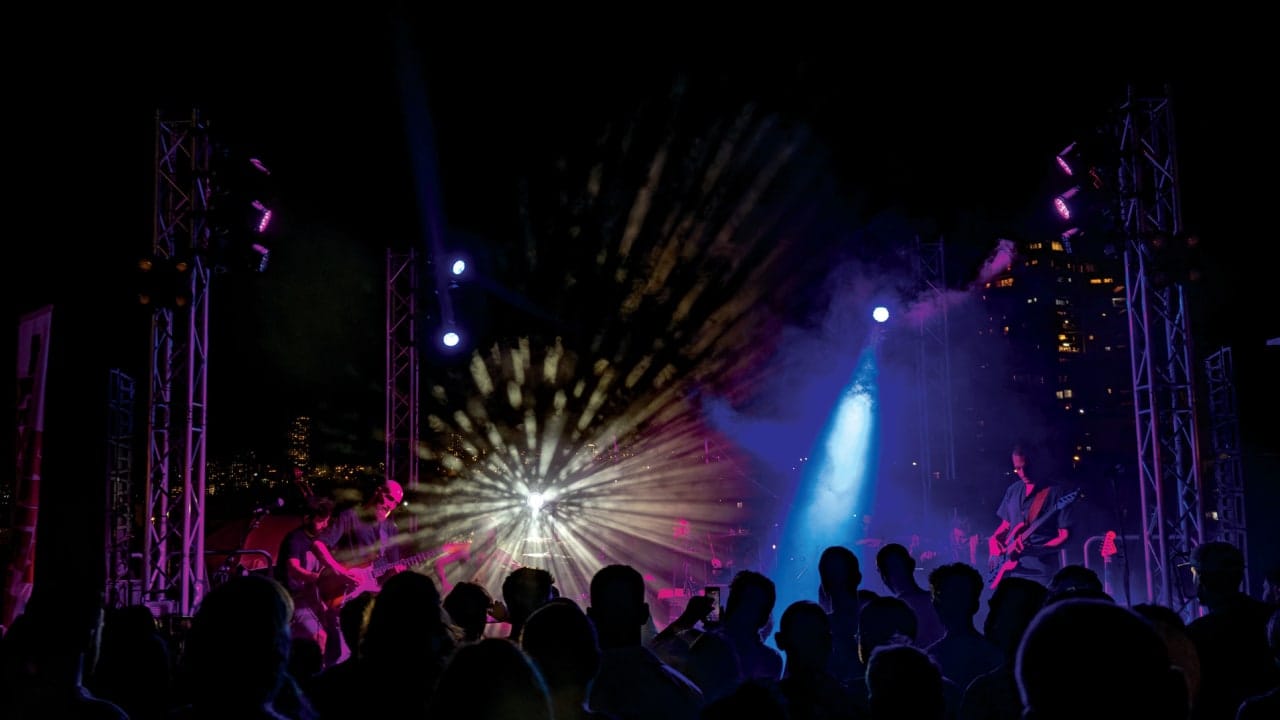
The highly variegated music shows include an eastern-style opera fronted by musician-storyteller Nitai Kallay, called The Fallow Deer Lift. It is based on the hardly believable tale of how several specimens of the titular animal were airlifted on the last flight out of post-Shah Iran in 1979 to be rehoused on Mount Carmel.
The genre mix avenue of programming thought comes through in Shkula, an intriguing production described as “a musical-linguistic performance,” fronted by Neomi Hashmonai and Neta Weiner, which looks at language and identity, and the relationship between words and sounds
And for those worried about missing some of the soccer action while imbibing the cultural riches in Manofim, there will be screenings of World Cup matches on the roof of the Artists’ Studios building on HaUman Street in Talpiot
The latter venue, besides hosting a variety of festival slots, also offers a spectacular panoramic view of Jerusalem, whence you can cast an eye over central spots, such as the YMCA building on King David Street with its iconic bell tower, as well as Bet Safafa, Rehavia, and beyond the city limits into the surrounding afforested hills. The idea of finding connections, interfaces that draw us together rather than political and other dogmas that divide us and spawn rifts, which generally lead to violence and suffering, has been a constant Manofim undercurrent since its inception in 2008.
That given, the official theme of the current edition – Hakara – makes total sense. It is a word that can go manifold definitional directions, such as recognition, acceptance, affirmation, respect, and awareness. The concept is core to the way Edelstein and Shulov go about their business and is part and parcel of the artistic venture. That informs even the most prosaic technical side of the Manofim events – including free admission slots – such as having one half of the rooftop screened soccer matches broadcast with Hebrew commentary and the other in Arabic.
It clearly suits the festival philosophy and the thinking behind the Artists’ Studios
“We are always looking to connect,” says Edelstein. “Hakara involves accommodating everything, including other opinions, other points of view, and taking in the different aspects of life here. Some people may, for example, feel that the situation here is desperate, while others may believe that divine redemption is at hand.”
That is, as we all painfully know, a highly salient point. “We have to take stock and take another look at everything,” Shulov suggests. “There are lots of parts [of Israeli society] with which we are not familiar. We don’t know their story.”
Some of those off-limits areas may be tough to come to terms with. Regardless of political stance or historical justification, for example, the fact is that many Palestinians view one of this country’s most joyous and celebrated events – victory in the War of Independence – as a painful chapter in their lives and bio backdrop
“We need to recognize the history and accept other ways of life that exist here,” Edelstein notes. “We have to recognize what went on in the war [of Independence], what it did to people.” Again, irrespective of the rights or wrongs of the brand new Jewish state’s fight for survival, against almost insurmountable odds, the fact is that hundreds of thousands of Arabs became displaced. To a greater or lesser degree, whether we like it or not, it colors all our lives in this beleaguered country.
On a less challenging and more morale-boosting note, Manofim continues to have an impact on the arts scene around the country as it proffers a broad swathe of works by artists from across the disciplinary spectrum: “We felt that the festival has already developed and is well-established. It is setting the tone [in the national art scene]. We no longer need to ask if there is art in Jerusalem,” Edelstein declares
As technological advances have continued to inform the way we ingest and view the fruits of artists’ creative labors, they have also enabled us to gain some insight into the processes that led to the birth of the work in front of us. That is palpably conveyed at the Hazira Interdisciplinary Performance Center (Hazira), just up the road from the Artists’ Studios in the now mostly deserted shopping mall that many Jerusalemites remember once housed the Rav Chen cinema complex. Its proximity to the Artists’ Studio makes it an easy ambit for anyone looking to take in a diverse sweep of disciplines on the same day of the festival.
As per its delineating boundary-leaping wont, Hazira will host a rich spread of items for its sophomore inclusion in the Manofim lineup, marking the 40th anniversary of the founding of the Zik Group, an interdisciplinary art collective that crafts indoor and outdoor performances that fuse sculpture, music, and theater
Fire is a constant of the troupe’s oeuvre, as befitting the group’s penchant for burning large-scale structures they slaved long and hard to put together. “Zik,” by the by, translates to “spark.”
“That predates Burning Man,” Edelstein pertinently adds, referencing the popular annual gathering in the United States founded in 1986, shortly after Zik, that climaxes with the burning of a towering human figure
Zik is an adventurous, envelope-pushing concern fueled by the individual and collective free-flowing thoughts, ideas, and skills of graduates of the Bezalel Academy of Arts and Design. Their go-for-broke line of artistic attack consummately resonates with the way Amit Drori views the aesthetics and dynamics that underpin the output of the art world.
Drori is the artistic director and heart and soul of Hazira
“We engage in the creative process, from the beginning through to completion,” he states as he leads me into a hall which, in a previous life, was furnished with plush red seats where cinemagoers ensconced themselves for an hour and a half or so of filmic entertainment
The former screening space is currently home to an intriguing smorgasbord of items that represent different milestones in Zik’s four decades (and counting) output. The exhibits are mostly precisely scaled down models of works that did service at various Zik theatrical performance events
“This one is exactly one tenth of the original, and this is exactly one twentieth,” Drori illuminates me with unbridled passion and excitement, pointing to miniature skeletal wooden tower shapes
Three or so decades into his artistic career path, he continues to give off a radiance born of total devotion to his craft and an unflinching quest to keep on taking leaps of faith. It is a viewpoint shared by the whole Hazira crew and the members of Zik
That entails, he explains, getting down and dirty with every single aspect of the continuum that takes the seed of an idea through the germinating stage to the finished item, on stage or at some surprising al fresco location. Painfully aware of the paucity of state funding for cultural pursuits, perhaps the hands-on approach is simply the natural result of having to make do with the available re
Drori sets me right on that: “It is not about budgets. Zik doesn’t have budgets and neither do we. But it is not about that. It is about choices, about choosing how to work with your art.”
Zik has managed to put together a bunch of multilayered offerings for its birthday event in Manofim, called Zik Galaxy. In addition to the exhibition, which also includes posters designed for events that dot the group’s four-decade timeline, there will be screenings of a documentary film with footage of Zik’s films, video art, and performances
And there is a live staged show called At Sunset in Our Area, which older folk may recall references a daily slot on The Voice of Peace Radio station which broadcast from a hardly seaworthy ship off the coast of Tel Aviv, founded by late peacemonger Abie Nathan. All in all, Zik Galaxy should provide the Manofim visitor with a succinct idea of what the group and its daredevil approach to art is about
Back down HaUman Street, at the festival hub, the dusty, winding, potholed road traveled by many an artist en route to the visual or sonic bottom line ultimately presented to the public is a central tenet of the Drift exhibition at the Artists’ Studios. Curated by Shulov and Einav Ziv-Ayalon, the expansive collection features works by 17 artists, taking in an abundance of materials, aesthetic approaches, and cultural thought patterns.
It is, says Shulov, very much a sign of the times. “That is very present as we are living in a period of uncertainty,” she responds when I ask her about the reverberating impact of Oct. 7 on artistic endeavors in this country. That, she notes, is integral to Drift. “Einav and I asked the artists to react to this situation of uncertainty, how that drives creation.”
That is also a fundamental element of the artistic continuum, as the creator sets out on a journey to the unknown, never really knowing what they will end up with as they follow their muse along their trip to aesthetic and deeply personal discovery
“This exhibition talks about artists acting from a position of not knowing, which is basically a constant here,” Shulov adds wryly and, it must be said, more than a little superfluously. “We wanted to explore how that fuels the creative dynamic.”
Getting some understanding of the gradual unfolding of works of art, rather than merely observing and – hopefully – admiring the end product, is a leitmotif of the whole Manofim shebang. Visitors will be able to talk to some of the artists about their work. Yael Serlin, who has a solo multidisciplinary exhibition calledFour Cubits, will add emotive depth to that art consumer experience as she shares her family’s grief and experience of dealing with her son’s death during his IDF service.
The dynamics behind the evolution of the finished article are central to the exhibition and the festival. In this day and age, with the ever-accelerating pace of technological strides, we are being conditioned to exploit the means at our ready disposal to access the information we seek at the touch of a button, rather than working our way through an exploratory phase. Going through the latter would enable us to learn from the process itself and hone valuable skills that could stand us in good stead as we make our way through life.
As AI takes ever-encroaching hold on all aspects of life, students at universities, for example, now frequently bypass the illuminating challenge of working out how to obtain the knowledge they seek and simply arrive at the bottom line quickly and efficiently with none of the labor pains and accompanying grassroots perspicacity-inducing life-affirming rewards to be gained along the way
Bringing that into an activity in which I indulge almost to the point of obsession, arriving in Eilat from the Jerusalem Hills by bicycle is a very different sensorial and emotional kettle of fish compared with getting there by car, plane, or even by bus. Yes, it requires a lot more effort on my part, which I gleefully embrace and enjoy the simple corporeal pleasure of the journey
“We live in a world in which we have to produce results in double quick time, and be active all the time,” Shulov observes. “We asked the artists [in Drift] to refer to [20th-century French philosopher] Guy Debord,” she adds. Among his multifarious lines of thought and work, theorist and filmmaker Debord railed against “the spectacle” as the be-all and end-all, and promoted a Situationist Marxist-leaning critique of art and life that opposed capitalism and the consumer society. Again, this implies an approach which relates to real tactile life.
So, perhaps, alongside the stated festival theme of recognition, acceptance, acknowledgment et al, attending this year’s Manofim might get us to stop for a moment and ponder how we got to where we are today. That implies some invaluable introspection – not just about the artistic-cultural domain around us, but other existential areas, such as the political and security-related morass in which we find ourselves.
Maybe, just maybe, taking a step back to consider the bigger picture and the possibilities afforded by the bonding universal language of art, albeit poorly supported by the taxes we channel to the state, could point us all in a more enlightened and positive path through life. Who knows?
For more information about Manofim: manofim.org
